Are Oregon Teachers Underpaid ?

When educators from across the Portland Public Schools (PPS) district’s 81 schools began their strike on Nov. 1, they had a lengthy list of demands, with a focus on teacher salaries.

“As costs have risen here, teachers’ salaries haven’t kept up,” the National Education Association asserted in a news release supporting the PPS strike.

Data suggests, however, that Portland’s teachers were actually doing fairly well in comparison with other teachers across the country, though there is no question inflation has eroded their financial position. The same is true of Oregon teachers in general.

During the strike, PPS said the average salary for a Portland teacher was $87,000; the Portland Association of Teachers (PAT) union said it was about $83,000.  Pay can vary widely depending on multiple factors, including amount of education, certifications, additional skills, and the number of years spent in the profession.

PAT also raised concerns about pay for new teachers, with the lowest annual base salary in the district for a teacher with a BA starting at $50,020.

When the strike began, PAT wanted a 23% cost-of-living adjustment over three years; PPS offered about 11%. In the new contract, educators will receive a 14.4% compounded increase over the next three years (6.25% the first year, 4.5% the second and 3% the third) and about half of all educators will also earn a 10.6% bump from yearly step increases.

To get a handle on how all this translates into actual dollars, I asked PPS and PAT for their numbers on the current average and median salaries of educators in the district and what they expect the average and median salaries of teachers will be in the first year of the new contract?

PAT never responded. PPS responded to an initial request with a commitment to provide the data. Repeated follow-ups, however, brought nothing but excuses for the delay. Eventually my entreaties just went into a black hole. So much for public accountability.

In 2018, The Oregonian reported that in 2016-17, the average Oregon teacher made nearly $61,900 a year, higher than the national average of $59,700. Oregon ranked 13th highest for average teacher pay among the 50 states. “Oregon teachers have long been better compensated than most of their peers around the country,” the paper reported. 

In 2023, according to the National Education Association (NEA), the average Oregon teacher made $70,402 a year, higher than the national average of $66,745, and again Oregon ranked 13th highest for average teacher pay among the 50 states.

In other words, Oregon has actually been holding its own in average salaries, although the numbers for starting teacher pay are not as favorable for Oregon.

In 2023, the average salary for a starting teacher in Oregon with a bachelor’s degree and no experience was $40,374 (31st in the USwhere the average was $42,844). Under the PPS contract with PAT, the salary for a starting teacher with a bachelor’s degree and no experience in 2023 was $50,020.

Averages, however, can be deceiving. Very high or very low salaries can skew the numbers. Median compensation represents a more accurate picture of how much Portland’s teachers are being paid, but neither PPS nor PAT agreed to provide median salary numbers.

The Oregon Center for Public Policy, a progressive economic research organization, argues that Oregon public school teachers are underpaid by about 22%. Even after accounting for the more generous benefits earned by public school teachers, the Center claims Oregon public school teachers are underpaid by about 9%. 

But the analysis is not based on compensation for other teachers. Rather, the Center claims Oregon teachers are underpaid “relative to comparable private-sector workers (in Oregon)…with similar levels of education and experience”.  The claim that public-school teachers endure a salary penalty with this comparison is dubious.

Less dubious was PAT’s assertion before the strike that recent inflation has eroded teachers’ wage gains over time. 

In an annual report that ranked and analyzed teacher salaries by state, the NEA estimated that the national average teacher salary for the 2021-22 school year was $66,397 — a 1.7 percent increase from the previous year. But when adjusted for inflation, the average teacher salary actually decreased by an estimated 3.9 percent over the last decade. 

In other words, teachers were making $2,179 less, on average, than they did 10 years earlier when the salaries are adjusted for inflation. A similar NEA report issued in 2023 concluded that teachers made on average $3,644 less than they did 10 years ago, adjusted for inflation.

However, comparing over a longer period, the average Oregon teacher’s salary in 1970 was $8,818. Inflation adjusted, that figure would have been $66,509.99 in 2022. In other words, although there has been a decrease in inflation-adjusted pay in recent years, average teacher salaries in Oregon have kept up with inflation over the long term. 

 

Hamas Even Hates Rotary Clubs

Do I have your attention?

Most media coverage of the war in Israel has inexorably shifted from the Oct. 7 barbarism of Hamas[1] to civilian casualties from Israel’s response. Hamas knew this would happen.

“After dealing with reporters through many rounds of violence since coming to power in Gaza in 2007, Hamas understood that most can be co-opted or coerced, and that coverage of Gaza would reliably focus on civilian casualties, obscuring the cause of the war, portraying Israel’s military operations as atrocities, and thus pressuring Israel to stop fighting,” Matti Friedman, a Canadian-Israeli journalist and author, wrote today in The Free Press. This has allowed Israel’s critics to claim the high ground without shame.

It is critical that this shift be challenged by going back to the reality of Hamas’ aims. 

The reality is in the Introduction to Hamas’ original 1988 charter.[2]

“…our struggle against the Jews is extremely wide-ranging and grave, so much so that it will need all the loyal efforts we can wield, to be followed by further steps and reinforced by successive battalions from the multifarious Arab and Islamic world, until the enemies are defeated and Allah’s victory prevails.”

Hamas perceived from the outset that it would have many enemies. 

“The enemies” who must be confronted “…stood behind the French and the Communist Revolutions and behind most of the revolutions we hear about here and there,” said Article 22. “They also used the money to establish clandestine organizations which are spreading around the world, in order to destroy societies and carry out Zionist interests. Such organizations are: the Free Masons, Rotary Clubs, Lions Clubs, B’nai B’rith and the like.”

“All those secret organizations, some which are overt, act for the interests of Zionism and under its directions, strive to demolish societies, to destroy values, to wreck answerableness, to totter virtues and to wipe out Islam,” added Article 28.

The shift in media coverage has allowed the reality of Hamas, as highlighted above, to recede into the background,

As one critical observer, Kevin Diamant, recently wrote in a Letter to the Editor in the Wall Street Journal, “”Hospitals and civilians are entangled in the fighting because the terrorist cowards want them to be — images of civilian casualties are the tool Hamas uses to turn weak minds to its cause.” 

Never forget.


[1] The New York Times reported on Nov. 28, 2023, that it had uncovered new details showing a pattern of rape, mutilation and extreme brutality against women in the Oct. 7 attacks on Israel.

[2] This is from a translation of the original 1988 charter of Hamas. A revised Hamas Document of General Principles and Policies was issued in 2017.

An Educator’s Painful Lesson in Microaggressions

I don’t know whether to laugh or cry.

Vito Perrone was an elated finalist for the position of Superintendent of the Easthampton, Massachusetts school district earlier this year. One member of the School Committee that voted to hire him said he had a unique skill set, a “special sauce” that made him the best choice. For Perrone, the job was a special homecoming, since he’d served as Easthampton High School’s principal eight years ago and coached football there.

But The Times They Are A-Changin’.

After he was offered the superintendent position, Perrone and the School Committee entered into contract negotiations. Perrone made several requests in an email to the School Committee’s Chairperson, Cynthia Kwiecinski, and the executive assistant to the committee, Suzanne Colby.

Then, out of nowhere, the School Committee delivered the news that they had rescinded his offer after taking a vote during an executive session.

The reason? He had addressed Kwiecinski and Colby as “Dear ladies” at the beginning of his earlier email.  According to Perrone, Kwiecinski said that using “ladies” was hostile and derogatory, a microaggression and “the fact that he didn’t know that as an educator was a problem.”

“I was shocked,” Perrone told the local newspaper, the Daily Hampshire Gazette.“I grew up in a time when ‘ladies’ and ‘gentlemen’ was a sign of respect. I didn’t intend to insult anyone.”

What a treacherous path microaggression warriors are taking us down. Their purity tests and lack of coping skills are corroding the body politic and doing lasting harm.

Could Sale of the Pamplin Media Group Threaten Local News?

The word is Pamplin Media Group, publisher of the Portland Tribune and 23 other local community papers in Oregon, is being shopped around for sale. 

Simultaneously, the Group is closing its Gresham Outlook printing facility and laying off its approximately 20 employees, an indicator of financial stress.

A Portland Tribune story noted earlier this year that the Pamplin Media Group “…has weathered numerous upheavals in the journalism business, three recessions that reduced advertising revenues and the COVID-19 pandemic that reduced revenues even more than the previous recessions.”

With all the bruising changes affecting the local newspaper industry, sale of the group may well lead to another upheaval. 

In early 2023, when Mark Garber handed off the position of president of the Pamplin Media Group to become president emeritus, he commented that when he’d started his newspaper career as a reporter in 1979, “We used manual typewriters and handed our copy to an editor, who marked it up, literally cut and pasted it, and then sent it to a human typesetter.”

The changes in the local newspaper business since those days have been massive, butchering a once robust news ecosystem in the United States.

The loss of local news has had far reaching implications. “As everyone knows, the internet knocked the industry off its foundations, ” James Bennet,  former editorial page editor at The New York Times, wrote in The Economist in mid-December. “Local newspapers were the proving ground between college campuses and national newsrooms. As they disintegrated, the national news media lost a source of seasoned reporters and many Americans lost a journalism whose truth they could verify with their own eyes.”

Just since 2005, the country has lost one-third of its newspapers and two-thirds of its newspaper journalists. So far in 2023, an average of 2.5 newspapers have closed each week according to a State of Local News Report by Tim Franklin, Senior Associate Dean and John M. Mutz Chair in Local News and Director of the Medill Local News Initiative at Northwestern University.  Most were weekly publications, in areas with few or no other sources for news.

“The underlying infrastructure for producing local news has been weakened by two decades of losses of newsrooms and reporting jobs,” noted an October 2022 report from the Agora Journalism Center at the University of Oregon’s School of Journalism and Communication. “And news organizations today…often sense they are swimming against the tide of economic, technological, political, and cultural changes that threaten the long-term viability of local news production.”

In Oregon’s current troubling time, when misinformation is on the rise, the civic damage from a decline in trusted, quality local newspaper coverage can be particularly severe. Even more so when local papers rip more of their content from national news outlets or run stories to satisfy distant corporate owners. “Communities that lack robust local news also tend to experience lower rates of civic engagement, higher rates of polarization and corruption, and a diminished sense of community connection,” the report said.

The recent acquisition of many legendary local newspapers by hedge funds and private equity groups shows what could await the Pamplin Media Group. 

The Register-Guard in Eugene was locally owned until 2018 when it was sold to GateHouse Media Inc.  In 2019, GateHouse Media’s parent company, New Media Investment Group, acquired Gannett, the parent company of USA Today and more than 100 other dailies, creating the largest newspaper company in the country, with the combined company adopting the Gannett name. 

Management of the new company was left to Fortress Investment Group, a private equity firm in New York City. Fortress, which controlled New Media Investment Group, the parent of GateHouse, was owned by SoftBank, a Japanese conglomerate. 

There were about 21,255 employees at Gatehouse and Gannett at the time of the merger; Gatehouse had 10,617, Gannett 10,638. Gannett has since dramatically cut costs, reducing its headcount to 11,200 at the start of 2023.

Over the years, the Register-Guard has suffered right along with Gannett. At the time of its sale to Gatehouse in 2018 the Register-Guard had over 40 employees. Its website currently lists just 3 News reporters, 3 Sports reporters and 1 Multimedia Photo Journalist. Hardly enough for robust local coverage.

The Alden Global Capital hedge fund is another company eviscerating local newspapers. Alden, which owns about 200 publications, including the Chicago Tribune, is the second-largest newspaper publisher in the country, behind Gannett. Alden is perhaps best known for acquiring and then gutting the Denver Post.

In July 2023, Los Angeles billionaire Dr. Patrick Soon-Shiong sold The San Diego Union-Tribune to an affiliate of the MediaNews Group, which is owned by Alden, for an undisclosed amount. The Voice of San Diego called Alden “the most terrifying owner in American journalism” and said the sale put the Union-Tribune “back in the American newspaper doom loop.” 

Word of cutbacks was swift. The same day as the sale announcement, the MediaNews Group sent an email to the paper’s employees saying cutbacks would be needed to “offset the slowdown in revenues as economic headwinds continue to impact the media industry” and informing staff that the new owner would be offering buyouts. If enough employees didn’t take buyouts, the company said it would lay off additional employees. 

As of the end of October 2023, employees estimated that somewhere between 60 and 80 people were left from the 108-person newsroom under Soon-Shiong.

The Voice of San Diego said the sale of the Union-Tribune to Alden put it “back in the American newspaper doom loop.” Let’s hope the sale of Pamplin Media Group doesn’t put its community newspapers in the same place.

Oregon’s EV Predictions Are A Pipe Dream

Oregon’s hyper-projections for electric vehicle adoption are proving to be wishful thinking.

On Nov. 6, 2017, Gov. Kate Brown signed Executive Order 17-21 stating “It is the policy of the State of Oregon to establish an aggressive timeline to achieve a statewide goal of 50,000 or more registered and operating electric vehicles by 2020.” (emphasis in original). 

In 2019, Senate Bill 1044 restated the Zero Emission Vehicle (ZEV) adoption target as 50,000 registered on Oregon roads by 2020.

It didn’t happen.

According to information provided by the Oregon Department of Transportation on Dec. 25, 2023, there were just 5,537 registered and operating electric vehicles in Oregon in 2020, 13,572 in 2021 and 23,163 in 2022.

Senate Bill 1044 also set a target of 250,000 registered Zero Emission Vehicles on Oregon roads by 2025.

That ain’t gonna happen either.

As of July 2023, there were 51,355 Battery Electric Vehicles (BEVs), vehicles powered solely by an electric battery, with no gas engine parts, registered and operating in Oregon, according to the Oregon Department of Energy.[1] The number of Oregon-registered zero emission vehicles on Oregon roads as of September 2023 was just 70,000.  The likelihood that this number will grow to 250,000 over the next 12 months is nil.

In December 2022, Gov. Brown, in a burst of environmental overreach that slavishly followed California’s lead, announced that all new cars sold in Oregon would have to be emissions-free starting in 2035.

The way things are going, that’s a pipe dream.

The fact is adoption of zero emission EVs is falling far behind earlier exuberant expectations. Sales are growing, but the rate of growth is slowing and unsold inventory is piling up for multiple brands., despite car companies offering discounts and low-interest rates in an attempt to propel demand. The only segment seeing significant growth in demand is hybrids, which are not zero emission vehicles.

“The first wave of buyers willing to pay a premium for a battery-powered car has already made the purchase, dealers and executives say, and automakers are now dealing with a more hesitant group, just as a barrage of new EV models are expected to hit dealerships in the coming years,” according to the Wall Street Journal.  

Some resistance to EVs may also be emerging because of their environmental costs, particularly the need for minerals for the batteries. And as The Washington Post has pointed out, mining the minerals is only the first step. 

“The ore is almost never pure and needs to be refined, or processed, to become the minerals that go into batteries, the Post reported. ” When it comes to processing, there is one major player: China, which handles more than half of the minerals critical to EV batteries. These elements aren’t used only to power EVs; they also appear in everything from building materials to toys. But as the demand for EV components soars, so could dependency on China’s refining infrastructure.”

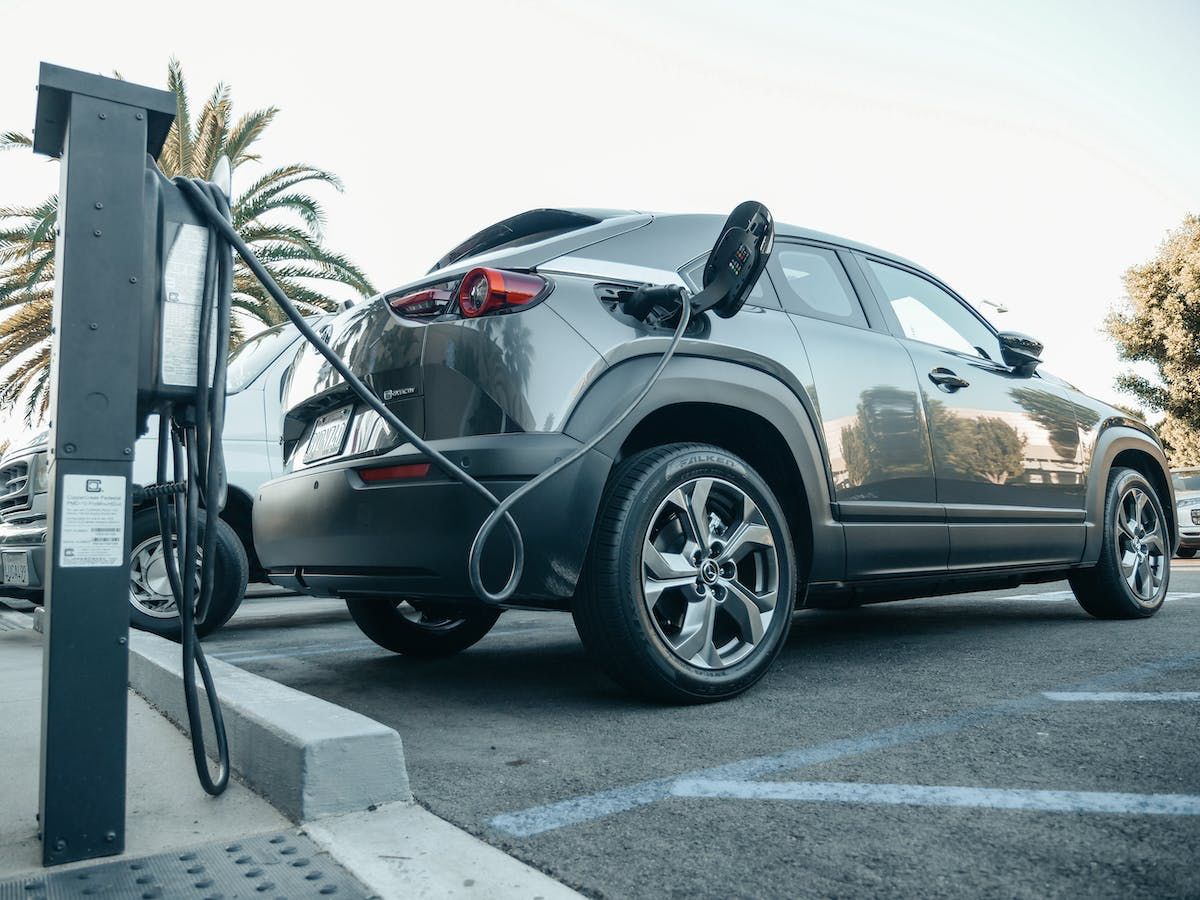
Resistance to EVs in Oregon may also be related to the insufficiency of charging ports. Oregon is hoping to install about 370 new electric vehicle charging ports across the state in 2024 as part of an Oregon Department of Transportation rebate program.

In the meantime, car companies are cutting back on plans for battery plants and EV production. 

In mid-December, for example, Ford announced it was cutting its 2024 F-150 Lightning products by half. Ford has delayed about $12 billion in new EV investments, reducing some Mustang Mach-E production and postponing opening one of two planned Kentucky planned battery plants. 

The high cost of EVs is one major factor that will likely continue to hold back their widespread adoption in Oregon. EVs remain much more expensive than internal combustion engine vehicles, especially in North America. High interest rates will also restrain purchases. Consumer frustrations with the availability of EV chargers, excessive charging times, questions about reliability and high repair costs are also undermining early robust sales predictions. 

While maintenance costs for EVs are proving to be lower than for internal combustion vehicles (EV-owners spend half as much maintaining their vehicles as their gasoline-owning counterparts, according to Consumer Reports), repairs after collisions can cost thousands of dollars because the fixes tend to require more replacement parts, the vehicles are more complicated and fewer people do such repairs.

The market is reflecting the concerns about EVs as investors have responded to the changed outlook for them. The iShares Self-Driving EV and Tech ETF | IDRV, set up in July 2019, seeks to track the investment results of an index composed of developed and emerging market companies that may benefit from growth and innovation in and around electric vehicles, battery technologies and autonomous driving technologies. A $10,000 investment at the fun’s inception would have more than doubled in value to $22,815 as of Nov. 2, 2021, but had declined to $14,432.58 as of Dec. 13, 2023.

So don’t bet the farm on EV predictions by politicians and bureaucrats. Their track record so far isn’t great.


[1] There were also 23,328 Plug-in Hybrid Electric Vehicles (PHEVs) similar to a Hybrid, but with a larger battery and electric motor, plus a charging port and a gas tank, which cannot truly be considered Zero Emission Vehicles. 


Messages of Doom Aren’t Reaching Trumpers

A friend recently praised the The Atlantic’s January/February 2024 edition for turning over an entire issue to 24 writers offering dystopian warnings about a second Trump presidency. 

“In his first term, Trump’s corruption and brutality were mitigated by his ignorance and laziness, “ wrote David Frum. “In a second, Trump would arrive with a much better understanding of the system’s vulnerabilities, more willing enablers in tow, and a much more focused agenda of retaliation against his adversaries and impunity for himself.”

“Trump’s bullying of military leaders, journalists, and judges was never merely the ranting of an attention seeker, and that behavior—backed by the credible threat of violence from radicalized supporters—will likely become even more central to his governing style,” wrote Juliette Kayyem.

That should have a real impact on public discourse about Trump, my friend said.

Not likely.

The Atlantic, The New York Times, The Washington Post, The New Yorker, Vanity Fair, The Washington Monthly and multiple other elite liberal/progressive/left-leaning publications are preaching to the choir in covering politics and so much more of the cultural landscape. Far too often, their attention is on things the vast majority of Americans are simply not focusing on. 

As former New York Times editor James Bennet wrote in The Economist, “The reality is that the Times is becoming the publication through which America’s progressive elite talks to itself about an America that does not really exist.”

The New York Times illusions are reflected in its coverage of the HBO show “Succession”, described by one critic as “an amoral look at the stupidity of capitalism”. The paper droned on about the show interminably after its debut in June 2018. 

“…time has hardly dulled the beige sheen of “Succession”, New York Times reporter Alexis Soloski effused in the paper’s Dec. 3, 2024 edition. “In January it will likely dominate the Emmy Awards — all of the main cast received nominations and Armstrong earned two, for writing and as an executive producer — and no other show has come to replace it in the cultural consciousness.”

But the fact is Succession was a niche show, not even on the radar of most Americans. Succession’s May 2023 finale drew 2.9 million viewers, a series high. Even counting delayed viewing, “Succession” averaged just 8.7 million viewers per episode in its fourth and final season.

That’s with a total U.S. population of 341 million, with just about every household having a television or computer screen for streaming.

That’s how it is with the New York Times. Even though it now has about 10 million subscribers, and still claims it runs “All the News That’s Fit to Print”, it’s not really talking to America. 

According to the paper’s readership demographics, 91% of its readers identify as Democrats, only 7% of the readership doesn’t have a higher education degree and most of its readers are white and well-off. 

In other words, most people who read the New York Times and other liberal-leaning publications do so because they already share the political sensibilities of these publications.

And frankly, there’s not much incentive for pundits to go off the beaten track. As Osita Nwaney put it in a Columbia Journalism Review article about political writing, “…What’s worth writing about and how? The morsels of rage and misery we offer might not have much political effect, but they do feed an online writing economy that rewards speed, quantity, and deference to algorithms designed for the profit of three or four tech companies—an economy that offers few incentives to generate writing that lingers in the mind longer than half a day or half an hour…The whole system is one of the bleakest forms of entertainment imaginable.”

Similar limiting factors are present with most “elite” news outlets in the United States. 

Even television news and opinion shows reach a narrow audience. The days when Walter Cronkite dominated the scene,  reaching an estimated 27-29 million viewers per night, when the nation’s population was just over 200 million, are long gone. 

ABC World News Tonight with David Muir finished the week of November 27 at No. 1 in the evening news ratings race with an average of just 8.45 million viewers. That same week, NBC Nightly News with Lester Holt averaged 7.075 million viewers and The CBS Evening News with Norah O’Donnell averaged 5.05 million total viewers. In other words, the combined viewership of all three top evening network news shows totaled 20.56 million, about one third fewer viewers than Cronkite alone reeled in more than 40 years ago when America’s population was much smaller.

The proliferation of liberal political comment on social media  and in reams of political punditry also likely has less of an impact on the broad public than is often assumed. 

This is likely one big reason why all the hand-wringing about Trump in progressive publications and network news shows, isn’t denting Trump’s support. He’s still crushing his GOP presidential primary opponents and surpassing President Biden in the polls, even in a poll pitting Trump against Biden, Kennedy, West and Stein. 

Put simply, Trump’s supporters just aren’t listening. 

A Message to Protesters: Show Your Face

A group of more than 40 interns working in President Biden’s  White House and other executive branch offices have sent a letter to Biden and Vice President Harris accusing them of having “ignored” the “pleas of the American people” and calling on the Administration “…to demand a permanent cease fire.”

“We, the undersigned Fall 2023 White House and Executive Office of the President interns, will no longer remain silent on the ongoing genocide of the Palestinian people,” 

But despite the “We the undersigned” start to the letter, there were no names and signatures included. 

The demand for anonymity among protesters these days is cowardly, frustrating and annoying.

When Patrick Henry implored “Give me liberty, or give me death!” on March 23, 1775, he didn’t wear a face mask or send an anonymous letter to King George. He spoke up in a speech to the Second Virginia Convention at St. John’s Church in Richmond, Virginia.

But many of today’s most virulent protesters want no such personal exposure. They’d rather blend in with the mob, obscuring their individual responsibility. They want free speech without consequences. 

Observe the videos and photographs of ““From the river to the sea!” protests around the United States. 

In early October, the Harvard Undergraduate Palestine Solidarity Committee put out a statement on its Instagram page that was originally co-signed by 33 other Harvard student organizations saying they “hold the Israeli regime entirely responsible for all unfolding violence” in the wake of a deadly invasion of Israel by the Islamist militant group Hamas. 

But after an intense local and national backlash from lawmakers, professors, and other students, the organizers removed the list of student organizations from the open letter.

At a pro-Palestinian “Vigil for the Martyrs of Palestine,” by Georgetown University students, nearly every one of the students hid their face with a mask. Similarly, when Several hundred people gathered in Bruin Plaza at UCLA for a walkout and march in support of Palestine, and when pro-Palestinian students at Princeton staged a walk-out and demonstration, many wore masks. 

Come on now. Wouldn’t it be better for people to stand behind their convictions?

Oregon’s K-12 Public Schools Are Failing Their American Indian Students

Shana McConville Radford of the Confederated Tribes of the Umatilla Indian Reservation has joined Gov. Tina Kotek’s administration as Oregon’s first Tribal Affairs Director.

Shana McConville Radford

I have a job for her. 

Tackle the embarrassingly poor academic achievement and embarrassingly high absenteeism rates of K-12 American Indian and Alaska Native students in Oregon.[1]

Some truth-telling is essential here. It is painfully clear that Oregon’s schools are failing these young people and that somebody needs a good kick in the shins to set things right.

We need to give kids, all kids, the tools they need to make their own way. Allowing academic failure is not the way to do that.

The numbers from tests given during the 2022-2023 school year tell the story. A predominant share of the American Indian/Alaska Native students taking the tests were American Indian.

All the academic achievement numbers come from reams of data posted online by the Oregon Department of Education showing downloadable files of state assessment results in English Language Arts (ELA)Mathematics, and Science. Absenteeism figures come from data posted online by the Oregon Department of Education in Annual Performance Progress Reports on Attendance and Absenteeism. 

Some of the more egregious low proficiency scores were at districts that also have chronic student absenteeism, defined by the Oregon Department of Education as absent from school for more than 10% of the academic year.

The Department requires that there be no fewer than 265 consecutive calendar days between the first and last instructional day of each school year at each grade level, so missing 10% of school days would mean missing at least 26 days. 

It’s a lot of numbers, but they are worth examining closely..

SubjectStudent GroupGrade LevelPercent Proficient
English Language ArtsAmerican Indian/Alaskan NativeAll Grades25.6
English Language ArtsAmerican Indian/Alaskan NativeGrade 320.5
English Language ArtsAmerican Indian/Alaskan NativeGrade 424.0
English Language ArtsAmerican Indian/Alaskan NativeGrade 527.2
English Language ArtsAmerican Indian/Alaskan NativeGrade 622.1
English Language ArtsAmerican Indian/Alaskan NativeGrade 728.7
English Language ArtsAmerican Indian/Alaskan NativeGrade 825.6
English Language ArtsAmerican Indian/Alaskan NativeGrade HS (11)31.1

SubjectStudent GroupGrade LevelPercent Proficient
MathematicsAmerican Indian/Alaskan NativeAll Grades13.6
MathematicsAmerican Indian/Alaskan NativeGrade 322.2
MathematicsAmerican Indian/Alaskan NativeGrade 418.2
MathematicsAmerican Indian/Alaskan NativeGrade 514.7
MathematicsAmerican Indian/Alaskan NativeGrade 610.0
MathematicsAmerican Indian/Alaskan NativeGrade 713.7
MathematicsAmerican Indian/Alaskan NativeGrade 810.9
MathematicsAmerican Indian/Alaskan NativeGrade HS (11)5.7
SubjectStudent GroupGrade LevelPercent Proficient
ScienceAmerican Indian/Alaskan NativeAll Grades16.3
ScienceAmerican Indian/Alaskan NativeGrade 514.1
ScienceAmerican Indian/Alaskan NativeGrade 814.7
ScienceAmerican Indian/Alaskan NativeGrade HS (11)20.8

A review of the performance of American Indian/Alaska Native students at individual districts is also revealing.

The details below show all Oregon school districts reporting enrollment of American Indian/Alaska Native students, in all grades, 2022-2023 and the % of students proficient of those tested.

Not all districts administered the Science test. Less than 5% means fewer than 5% of students who took the test achieved Level 3 or 4 / Meets or Exceeds. Absenteeism rates for American Indian/Alaska Native students in selected districts are also noted.

Athena-Weston SD 29RJ       

English language arts.  40%

Mathematics.  Less than 5%

Beaverton SD 48J

English language arts.  43.3%

Mathematics. 31.8%

Science. 21.2%

Bend-LaPine Administrative SD 1

English language arts.  33.3% 

Mathematics. 31.3%

Science. 36.8%

Bethel SD 52

English language arts.  25.9% 

Mathematics. 20.8%

Science. 9.1%

Brookings-Harbor SD 17C

English language arts.  20% 

Mathematics. Less than 5%

Science. 27.3%

Cascade SD 5

English language arts.  42.9% 

Mathematics. 21.4%

Science. 20%

Centennial SD 28J

English language arts.  17.4% 

Mathematics. Less than 5%

Central Point SD 6

English language arts.  32.1% 

Mathematics. 17.9%

Central SD 13J

English language arts.  31.3% 

Mathematics. 5.9%

Coos Bay SD 9

English language arts.  20% 

Mathematics. 8.9%

Science. 25%

Corvallis SD 509J

English language arts.  Less than 5% 

Mathematics. 8.3%

Creswell SD 40

English language arts.  30.8%

Mathematics. 21.4%

Crook County SD

English language arts.  26.3% 

Mathematics. 16.7%

Dallas SD 2

English language arts.  29.5% 

Mathematics. 14.8%

Science. 12.2%

David Douglas SD 40

English language arts. 16.1%

Mathematics. 10.0%

Science. 9.1%

Dufur SD 29

English language arts.  10.5%

Mathematics. Less than 5%

Eagle Point SD 9

English language arts.  47.4% 

Mathematics. 31.6%

Science. 40%

Eugene SD 4J

English language arts.  37.8%

Mathematics. 31.6%

Science. 38.5%

Forest Grove SD 15

English language arts.  25.0%

Mathematics. 16.7%

Grants Pass SD 7

English language arts.  50% 

Mathematics. 7.1%

Greater Albany Public SD 8J

English language arts.  26.7% 

Mathematics. 21.4%

Science. 27.3%

Gresham-Barlow SD 10J

English language arts.  35.5%

Mathematics. 17.2%

Science. 28.6%

Harney County SD 3

English language arts.  13.3%

Mathematics. 6.7%

Hillsboro SD 1J

English language arts.  32.6%

Mathematics. 23.3%

Science. 13.6%

Hood River County SD

English language arts.  29.4% 

Mathematics. 5.9%

Jefferson County SD 509J

English language arts.  17.5%

Mathematics. 6.4%.

Science. 8.4%

NOTE. 49.7% of American Indian/Alaska Native students in Jefferson County SD 509J were chronically absent in the 2022-23 school year.

Junction City SD 69

English language arts.  60%

Mathematics. 30%

Klamath County SD

English language arts.  27.1%

Mathematics. 14.6%

Science. 17%

NOTE: 38.5% of the American Indian/Alaska Native students in the  Klamath County SD were chronically absent in the 2022-23 school year..

Klamath Falls City Schools

English language arts.  20.8% proficient

Mathematics. 11.3%

Science. 9.1%

NOTE: 69.5% of American Indian/Alaska Native students in the Klamath Falls City Schools district were chronically absent in the 2022-23 school year.

Lincoln County SD

English language arts.  16.5%

Mathematics. 5.9%

Science. 9.3%.

NOTE: 57.9% of the American Indian/Alaska Native students in the Lincoln County SD were chronically absent in the 2022-23 school year.

McMinnville SD 40

English language arts.  45.9%

Mathematics. 40%

Science. 47.1%

Medford SD 549C

English language arts.  51.3%

Mathematics. 21.1%

Science. 29.4%

Molalla River SD 35

English language arts.  16.7% 

Mathematics. 15.4%

Myrtle Point SD 41

English language arts.  30%

Mathematics. 10%

Newberg SD 29J

English language arts.  Less than 5%

Mathematics. Less than 5%

North Bend SD 13

English language arts.  32% 

Mathematics. 36%

Science. 33.3%

North Clackamas SD 12

English language arts.  20%

Mathematics. 17.6%

Science. 10%

North Wasco County SD 21

English language arts.  26.1%

Mathematics. 8.7%

Science. 9.1%

Oregon Trail SD 46

English language arts.  42.9%

Mathematics. 28.6%

Pendleton SD 16

English language arts. 27.8% 

Mathematics. 9.1%

Science. 14%

NOTE: 51.3% of the American Indian/Alaska Native students in the Pendleton SD 16 district were chronically absent. in the 2022-23 school year.

Phoenix-Talent SD 4

English language arts.  9.1% 

Mathematics. Less than 5%

Portland SD 1J

English language arts.  17.2% 

Mathematics. 11.6%

Science. 15.2%

NOTE: 66.1% of the American Indian/Alaska Native students in the Portland SD 1J district were chronically absent in the 2022-23 school year. 

Redmond SD 2J

English language arts.  40.0% 

Mathematics. 26.7%

Reynolds SD 7

English language arts.  23.3%

Mathematics. 13.3%

Science. Less than 5%

Salem-Keizer SD 24J

English language arts.  21.8%

Mathematics. 8.5%.

Science. 18.3%

NOTE: 58.2% of the American Indian/Alaska Native students in Salem-Keizer SD 24J district were chronically absent in the 2022-23 school year.

Santiam Canyon SD 129J

English language arts.  20%

Mathematics. 20%

Sheridan SD 48J

English language arts.  12.9%

Mathematics. 6.7%

Science. Less than 5%

South Lane SD 45J3

English language arts.  12.5%

Mathematics. 12.5%

South Umpqua SD 19

English language arts.  20%

Mathematics. 10%

Springfield SD 19

English language arts.  31.4%

Mathematics. 13.9%

Science. 29.4%

St Helens SD 502

English language arts.  18.8%

Mathematics. 6.7%

Sutherlin SD 130

English language arts.  13.3%

Mathematics. 13.3%

Three Rivers/Josephine County SD

English language arts.  27.9%

Mathematics. 11.6%

Science. 5.3%t

Tigard-Tualatin SD 23J

English language arts.  33.3%

Mathematics. 33.3%

Umatilla SD 6R

English language arts.  20%

Mathematics. 10%

Willamina SD 30J

English language arts.  25.4%

Mathematics. 8.7%

Science. Less than 5%

Winston-Dillard SD 116

English language arts.  23.1%

Mathematics. 16.7%


[1] American Indian/Alaskan Native – As defined by the Oregon Department of Education, includes all students identified as having origins in any of the original peoples of North America and not Hispanic.

Fraud on Overseas Bank Credit Cards Worries Oregon Businesses

Expelled New York Congressman George Santos, who has been indicted for stealing the identities of campaign donors and using their credit cards to rack up tens of thousands of dollars in unauthorized charges, isn’t the only master of credit card fraud.

The latest identity theft and credit card fraud statistics paint a bleak picture. There were 1.108 million reports of identity theft in 2022 and 805,000 instances of identity theft were reported from January through September 2023.

Aggressive fraudsters are active throughout the United States, including in Oregon.

In February 2023, Mariam Gevorkova was sentenced to five years in federal prison and required to pay $2.5 million in restitution for her involvement in a fraudulent credit-card scheme that funded two illegal marijuana grows in Oregon and cannabis shop in Corvallis. 

The newest broad appearance of credit card fraud in Oregon involves a slew of Japan, Singapore, Italy, Thailand, Australia, Taiwan, Hong Kong and United Arab Emirates- based banks. The fraud has become so pervasive that some local businesses are refusing to even the accept credit cards of specific banks.

The A&W fast-food outlet in Sherwood, OR, for example is serving up more than its namesake root beer. It’s also serving up credit card warnings. Posted at its counter is the following advisory:

A&W, Sherwood, OR

An employee at the restaurant said the posting was necessary because of fraud associated with the credit cards at the listed banks.

Complaints by customers of these banks are also piling up. 

In March 2023, one victim reported receiving 11 notifications of unauthorized transactions on his Tokyo, Japan-based AEON Financial Services Co. credit card, each for the same amount of $549.74 within two minutes. The total amount of unauthorized transactions reached over $6,014.33.

A customer of Singapore-based United Overseas Bank (UOB), complained of multiple fraudulent payments made on his card. “Disgraceful.  Tried to call their so -called fraud hotline 5 times. Wait ten minutes each time and get automated voice saying call back, operators too busy. In the meantime another fraudulent transfer happened…” 

“I have 12 fraudulent transactions on the same day to the same US based company and not a single OTP (one-time passcode) received,” reported another UOB customer. “Your security systems of protecting customer’s money are a joke!!”

UOB recently acquired Citigroup’s consumer banking businesses in four key the Association of Southeast Asian Nations (ASEAN) markets. 

A US customer of Dubai-based Emirates NDB Bank reported fraudulent transactions totaling $12,000. “2 transactions (were) done in Russia while I was in Dubai,” he reported. “As soon as I got the WhatsApp notification about the purchase, I called the bank and reported the fraud. On the phone the agent told me my credit card was cloned.”

If you have a credit card issued bv one of these banks and discover fraud on your account, you’re encouraged to report it to local law enforcement and the Federal Trade Commission (FTC). The FTC tracks incidents in a central database to help law enforcement investigate and prosecute these crimes.