Liberal Media Jump on the Kamala Harris Bandwagon

Gag me with a spoon.

Talk about shifting on a dime.

President Biden withdraws from the 2024 race, Vice President Kamala Harris picks up the mantle and the liberal media jump on board.

Even Biden’s withdrawal statement is being cast mostly as a brave, selfless, patriotic effort, like a “don’t speak ill of the dead” obituary, rather than an admission that the Democratic Party’s leaders and wealthy donors had abandoned him. 

It wasn’t long ago that the press delighted in portraying Harris as a largely ineffectual, slightly dim and somewhat daffy politician with a habit of speaking in a kind of garbled incoherent word salad and a failed policy effort as Biden’s border czar.  

Last week, New York Times columnist David Brooks cautioned that “…as of 18 months ago, she would not have made an effective president or even a good candidate. She ran a disastrous presidential campaign and has been a mediocre vice president, even measured by the low standards of the office. She could always repeat the normal Democratic positions but had no distinctive view for where the country needed to go.”

Now, with Biden out, the media is transforming Harris from a somewhat awkward and cringy figure in the Democratic Party to a “cool” pop culture personality with a sterling reputation in a matter of days, commented CNN commentator Van Jones. 

New York Magazine went over the top in its latest issue with this cover:

The New York Times has even attempted to turn the tide on Harris’ sometimes derided laughter, saying “The Trump campaign sees Harris’s laugh as a vulnerability to exploit. But far from a liability, it is one of her most effective weapons.”

In a flash, Harris has gone from an unaccomplished player in foreign affairs to a widely admired wonderkind. A New York Times story on her foreign policy chops was even headlined, “A Global Reputation For a Steely Resolve And Deft Diplomacy.”

“…the consensus among foreign officials and diplomats is that Ms. Harris has a firm grip on international affairs,” the Times enthused in a July 27 article quoting Chancellor Olaf Scholz of Germany: “She is a competent and experienced politician who knows exactly what she is doing and has a very clear idea of her country’s role, of developments in the world, and of the challenges we face.”

When Biden tweeted his exit, the Democratic Party and its acolytes “…declared a triumph of democracy and the end of popular “disillusionment,” observed author and reporter Matt Taibbi. “Attention shifted to the real candidate, Kamala Harris, who was not only MLK, Gandhi and Captain America, but a woman of color with a Jewish husband…” 

Party stalwarts are jumping on board with superlatives, too. “I’ve known Kamala Harris a long time,” wrote Hillary Clinton. “This brilliant prosecutor will make the case against convicted felon Donald Trump.”

On July 28, Lydia Polgreen, an opinion columnist with the New York Times, wrote that “…Harris had been significantly underrated, that the chatter about her flaws for the past four years maybe didn’t tell her full story and that she had some unique talents and traits that made her a stronger candidate than her record might suggest.”

Rather than hold Harris’ missteps against her, Polgreen turned them into positives. 

“I see a woman who struggled to compete for power against her peers, buried under an array of vague and unstated expectations about whether she gave the right answers, had the right ideas, was smart or specific enough,” Polgreen wrote. “Like any woman of ambition, I deeply relate to these experiences. As strange as it might seem, I have come to think these experiences could make her the ideal candidate in a surreal campaign against a man who is so certain of himself, who admits to no mistakes, who has no humility and who, for many of us, is utterly unrelatable.”

Jenny Holland, who writes “Saving Culture (from itself)” on substack, says “The establishment blob is so desperate to avoid a Trump presidency that they are willing to support a woman who is so flippant and unserious that she would embrace a youth culture trend of “brat”, which means being “just that girl who is a little messy and maybe says dumb things sometimes, who feels herself but then also maybe has a breakdown but parties through it.” 

Still, Harris may want to tread lightly before embracing her newfound adulation as a given. The press can be your friend, but it can also turn on you. 
Identity Politics is Alive And Well at The New York Times

I’m a member of Tau Kappa Epsilon fraternity, one of the largest men’s collegiate fraternities in North America.  If I ran for office, would you assume all 12,000 voting-age collegiate members of my fraternity and all the living TKE alumni would support me?  

Ronald Reagan was a member of Tau Kappa Epsilon fraternity, too. When he ran for president, did the news media assume the votes of all his TKE fraternity brothers were a sure thing?

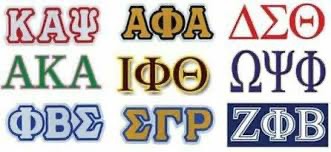
The New York Times seems to think that members of all the Black Greek-letter sororities and fraternities at US colleges are a ready-made bloc of Kamala Harris supporters in her quest for the presidency because she’s been a member of the Black sorority Alpha Kappa Alpha since her undergraduate days at Howard University. 

“As Vice President Kamala Harris’s presidential campaign rushes to shore up its base, its efforts will be bolstered by a ready-made coalition: the more than two million members of Black Greek-letter organizations who have quickly united to mobilize Black voters nationwide,” the Times reported today.  

“A united Black Greek front has the potential to offer even more significant political advantage, as their voter engagement programs reach millions every four years,” the Times added. 

Maya King, the Times reporter who wrote the story, says in her bio, “As a native Southerner, I have been most fascinated by the ways the region has changed politically, culturally and demographically over the last few presidential election cycles — and how those changes are connected.”

But King barely acknowledged those changes in her article. The cheerleading article barely mentioned that there have been signs of deteriorating Black support for the Democratic ticket and growing Black consideration of Donald Trump. 

In November 2023, the Times reported that Black voters were  more disconnected from the Democratic Party than they have been in decades, frustrated with what many saw as inaction on their political priorities and unhappy with President Biden, a candidate they helped lift to the White House. Polls by the Times and Siena College found that 22 percent of Black voters in six of the most important battleground states said they would support former President Trump in the 2024 election, and 71 percent would back President Biden.

Erosion of Black support for the Democratic Party has also been found by the Pew Research Center. The Center reports that although the majority of Black voters across education levels are Democrats, there has been a decrease in affiliation with the Democratic Party in recent years. While 93% of Black voters with college degrees identified with or leaned toward the Democratic Party in 2012, that number decreased to 79% in 2023.

Biden’s withdrawal from the 2024 presidential contest and Harris’  ascension may well change some Black voters’ preferences, but it’s not likely to be a universal shift. Harris, for example, is a progressive Democrat, but only 28 percent of black Democrats consider themselves liberal, according to the Pew Research Center, while 70 percent identify as moderate or conservative.

On June 25, the Times reported on data  captured by a new Harvard study that shows Black voters  have slightly shifted toward Trump since 2020. “One possible explanation is that some Black voters’ economic gains have allowed them to focus more on noneconomic issues — such as abortion and L.G.B.T.Q. rights — on which they are more conservative than typical Democrats,” the Times said.

The fact is, Black candidates can’t rely on group solidarity. “It’s certainly true that black voters support black Democratic candidates at higher rates, … but analysis of past elections and campaigns shows that black voters have never prioritized simple descriptive representation over other factors, like party affiliation, campaign viability, candidate electability, preexisting relationships with the black community and a sense of authenticity,” according to the New York City-based Brennan Center for Justice. 

For the New York Times to publish a story assuming Black solidarity for a Black presidential candidate who’s a member of a Black sorority is irresponsible journalism.

As James Bennett, who was the editorial page editor at The New York Times from May 2016 until his forced resignation in June 2020 over a controversial op-ed, has said, “The reality is that the Times is becoming the publication through which America’s progressive elite talks to itself about an America that does not really exist.”

Trump/Vance Threaten The Competence of the Federal Civil Service

Donald Trump has made it clear he wants to overhaul the federal civil service and erode merit system principles. Sen. J.D. Vance, R-Ohio, Trump’s pick for vice president, has said that if Trump wins re-election, he should “…fire every single mid-level bureaucrat” and “replace them with our people.”

At campaign events, Trump has promised to “obliterate the deep state,” what he believes is a network of non-elected government employees working under cover to bypass elected officials and further their own contrary agenda.

I’m sure it sounds straightforward, simple and appealing to Trump’s ideological followers who think career civil servants would work to stymie Trump’s conservative policies if he’s re-elected.

But firing all the federal government’s mid-level bureaucrats and replacing them with political appointees would be a disaster for America.

I know that because I’m a former mid-level federal bureaucrat. I know that much of the work in multiple government agencies by U.S. civil servants is highly specialized, complex, and essential for an efficient government that serves the people. 

Under the U.S. General Service (GS) pay scale, the GS-1 through GS-7 range generally marks entry-level positions, mid-level positions are in the GS-8 to GS-12 range and top-level positions (senior managers, high-level technical specialists, or physicians) are in the GS-13 to GS-15 range.

I served in that mid-level band. As a Foreign Affairs Officer with the National Marine Fisheries Service during part of my professional career, I worked with the Department of State on international fisheries negotiations, principally with Russia, Canada and Asian nations. In preparing for that job, I earned a bachelor’s degree in International Relations, a master’s degree in Political Science and a master’s degree in Marine Affairs. I had also written a proposal for the United Nations Conference on the Law of the Sea and worked for an international marine conservation non-profit in Canada.

Many others on my team had similar backgrounds. During my time in government I worked with a wide range of exceptional people with broad experience and academic backgrounds doing specialized work that advanced American interests. 

“Almost all Western democracies have a professional civil service that does not answer to whatever political party happens to be in power, but is immune from those sorts of partisan wranglings,” says Kenneth Baer, who served as a senior Office of Management and Budget (OMB) official. “They bring… a technical expertise, a sense of long history and perspective to the work that the government needs to do.”

Gutting the civil service and replacing experienced workers with political hacks, as Trump and Vance advocate, would be irresponsible.

Don’t let it happen.

The Oregon Food Bank Antagonizes Oregon Jewish Groups Over Gaza

Non-profit groups, like many academic institutions and corporations, have gotten in the unfortunate habit of opining on sensitive political and cultural issues. And they are paying a price. They often learn, too late, that their outspokenness is like stepping on a landmine.

A Portland-area non-profit taking issue with Israel’s actions in Gaza, to illustrate, is facing a backlash from local Jewish groups.

.In April the Oregon Food Bank drafted a statement calling for a ceasefire in the Israel-Hamas war. 

The statement also accused Israel of perpetuating a “war against Palestine,” and said the Israeli military was “indiscriminately” hindering relief efforts in the region.

“As Oregonians, our tax dollars are funding the Israel army’s violence”, the statement said. “We call for immediate humanitarian aid and an end to Israel’s violence against Palestinians…”

The Food Bank’s president, Susannah Morgan, wrote to Oregon Public Broadcasting (OPB) that this kind of stance on an international conflict was a first for the organization.

The Food Bank has not expressed similar concerns about Russia’s indiscriminate killing of Ukrainians, the conflict in Sudan or Bashar al-Assad’s brutal war in Syria.

On June 4, the Food Bank issued a “statement to our community” thanking its supporters after its pronouncement generated controversy and a protest from local Jewish groups. . “Over the past few days, many of you have reached out, commented, posted, published written statements, signed petitions and donated in solidarity with Oregon Food Bank. Thank you for your support. We are touched by the overwhelming support we’ve received from community members…” 

But a dozen local Jewish organizations[1] persisted in their condemnation of the Food Bank’s actions. In a letter, they expressed their “deep disappointment” in the Food Bank’s statement and asserted, “In our view, the false accusations serve to further the flames of Jewish hatred.”

The letter made clear that financial support for the Food Bank from the organizations would cease and be directed, instead, to other organizations until such time as the Oregon Food Bank “…retracts its statement and issues one indicating it will maintain its focus on hunger and its root causes here in Oregon.”

You’d think the Oregon Food Bank would have been smart enough to have foreseen the consequences of stepping out front on the Gaza war., a divisive issue if there ever was one. 

A little knowledge of history would have given the Food Bank caution. 

In July 2023, for example, the CEO of Goya Foods said at a White House roundtable of Hispanic leaders, “We’re all truly blessed to have a leader like President Trump.” All hell broke loose, as his comment sparked ire against Goya from Trump opponents. 

Some employees, particularly young college educated ones, may push organizations to take strong public stances on controversial issues, but it can have devastating consequences in the public arena. If institutions fail to stand above divisive issues, choosing, instead, to add to public divisiveness, society becomes poorer for it. 

In April 2024, Bloomberg reported that a new survey of 600 C-suite leaders showed that nearly nine in 10 are now wary of wading into world events. Some 87% said that taking a public stance on current issues poses a greater risk for their company than not saying anything.

With 501(c)(3) non-profits, there is also the fact of restrictions on their political activity. They are generally not permitted to get involved in political issues and are permitted very limited lobbying. They may engage in general voter education about issues, including those which affect its mission, but only so long as all viewpoints are represented.Failing in that respect by taking a stand on current issues can affect a non-profit’s tax-exempt status.

Nonprofits should take heed, including whoever replaces  Susannah Morgan when she leaves her post in December.


[1] Jewish Federation of Greater Portland; Jewish Family and Child Service;  Mittleman Jewish Community Center ; Oregon NCSY;  Oregon Jewish Community Foundation; Portland Jewish Academy;  Portland Kollel; Congregation Beth Israel; Congregation Neveh Shalom; Congregation Shaarie Torah; Congregation Keser Israel; Congregation Ahavath Achim

Words of Wisdom From Kamala Harris

Concerned about President Biden’s cognitive decline? If you believe president Biden. Is unfit to lead the United States for another term, one option is his vice president, Kamala Harris. If you think Harris , despite her 37% approval rating, is a better alternative and can speak with eloquence to heal this troubled nation, consider how she has addressed the issues of the day during her term in office.

“The governor and I, we were all doing a tour of the library here and talking about the significance of the passage of time, right, the significance of the passage of time. So, when you think about it, there is great significance to the passage of time…” Harris speaking in Sunset, Louisiana.

“We got to take this stuff seriously, as seriously as you are because you have been forced to have taken this seriously.”Harris speaking in the wake of the Highland Park High School shooting.

“I think it’s very important…for us, at every moment in time and certainly this one, to see the moment in time in which we exist and are present.” Harris speaking about efforts to lower home buying costs and efforts to lower energy prices.

“I think the first part of this issue that should be articulated is AI is kind of a fancy thing. First of all, it’s two letters. It means artificial intelligence, but ultimately what it is, is it’s about machine learning. And so, the machine is taught — and part of the issue here is what information is going into the machine that will then determine — and we can predict then, if we think about what information is going in, what then will be produced in terms of decisions and opinions that may be made through that process.”  Harris explaining artificial intelligence. 

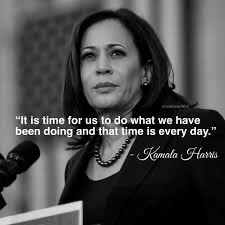
“It is time for us to do what we have been doing. And that time is every day.” Harris speaking on the urgency of immediate action on COVID-19.

“We invested an additional $12 billion into community banks, because we know community banks are in the community…”  Harris speaking about community banks.

“We will assist Jamaica in COVID recovery by assisting in terms of the recovery efforts in Jamaica …We also recognize just as it has been in the United States, for Jamaica, one of the issues that has been presented as an issue that is economic in the way of its impact has been the pandemic.” Harris on diplomacy re. Jamaica.

“I think that, to be very honest with you, I do believe that we should have rightly believed, but we certainly believe that certain issues are just settled. Certain issues are just settled.” Harris speaking on the Supreme Court overturning Roe v. Wade.

“So, during Women’s History Month, we celebrate and we honor the women who made history throughout history, who saw what could be unburdened by what had been.” Harris speaking on Women’s History Month.

“You know, when we talk about our children — I know for this group, we all believe that when we talk about the children of the community, they are a children of the community.” Harris speaking at Children’s National Hospital in Washington, D.C.

“That is especially true when it comes to the climate crisis, which is why we will work together and continue to work together to address these issues, to tackle these challenges, and to work together as we continue to work, operating from the new norms, rules, and agreements that we will convene to work together on to galvanize global action.” Harris speaking at the State Department before the Association of Southeast Asian Nations.

‘Culture is – it is a reflection of our moment and our time. Right? And present culture is the way we express how we’re feeling about the moment, and we should always find times to express how we feel about the moment. That is a reflection of joy. Because, you know, it comes in the morning.” Harris speaking at the 2023 Essence Festival of Culture at the Caesars Superdome.

President Biden: Stay or Go?

Option 1: Everybody just throw up their hands in dismay and let the fur fly.

Option 2: Adopt a “Stand by your man” attitude. Treat the current controversy as much ado about nothing, just “one bad night”. It wouldn’t be the first time the party ignored obvious personal failures by prominent members. Regardless of the current sturm and drang over Biden’s well-being and mental stability, just hang in there and hope the furor will dissipate, relying on the American public’s inability to focus on anything for more than a few days (or minutes). Count on spineless, wishy-washy electeds, such as Rep. Jerry Nadler (D-NY), to back off their calls for Biden to step aside. Ignore the fact that Biden, even if he hangs on, may not be well enough to lead for another four years even if he wins. 

Option 3: Keep up the practiced deception, despite the evidence. The Wall Street Journal reported today that aides, in order to protect the president from scrutiny (and keep their jobs and influence), kept a tight rein on his travel plans, news conferences, public appearances and meetings with donors. Ignore the fact that hordes of aides and elected Democrats have deceived the public and that most voters think Joe is just too damn old. Oliver Wiseman wrote today in The Free Press, “As Biden geared up for a second run, it was clear that any young, ambitious Democrat who dared to challenge him would be all but disowned by their party… In poll after poll, Democratic voters told the party they wanted someone other than Biden at the top of the ticket. But the party apparatus ignored them. Now look where we are.”

Option 4:  Convince Biden to step down before the convention, making Kamala Harris President. Anoint Harris as the nominee at the party’s convention, in the midst of riotous pro-Palestinian demonstrations  (Shades of the riots at the 1968 Democratic convention in Chicago, which lead to Hubert Humphrey’s loss to Richard Nixon in the general election) On June 27, the day of President Biden’s debate, Harris’ approval rating was 39.4 percent, while her disapproval rating was 49.4 percent.. ignore the fact that her approval numbers have actually fallen since the first presidential debate sparked calls for Biden to quit the race. According to FiveThirtyEight’s average, on June 27, the day of the debate, Harris’ approval rating was 39.4 percent, while her disapproval rating was 49.4  percent. On July 5, Harris’ approval rating stood at 37.1 percent and her disapproval rating was 51.2 percent, not a hopeful sign if she runs against Trump, whose approval numbers have actually been rising.

Option 5: Convince Biden to withdraw as the party’s nominee at the Democratic Convention and initiate an open convention, releasing the pledged delegates he has accumulated to date (3,894 of 3,937 committed so far). All those delegates could then vote for whomever they chose. That might, of course, run the risk of alienating minority voters who would resent the party automatically not elevating Kamala Harris (she wouldn’t even be assured of keeping the No. 2 job),  setting off chaos on the convention floor and leaving the party’s eventual nominee just weeks to make his/her case to voters before the Nov. 5 election.  

Option 6: Back to Option 1.

The Oregon People’s Rebate: Another Misguided Idea from Wealthy California Progressives

It wasn’t Oregonians who financed the campaign for the ill-advised Measure 110. 

Out-of-state money financed the 2020 campaign for the measure that rashly decriminalized drug possession in the state. Of the nearly $6 million in cash and in-kind contributions received by the ballot measure committees, the New York City-based Drug Policy Alliance contributed over $5 million, one-third of its total revenue in 2020 according to its filing with the IRS.

Out-of-state money is also behind Initiative Petition 17, a 2024 ballot measure in support of a universal basic income (UBI) that would feature a $750 payment to every Oregonian, regardless of their income, every year, paid for by an increase in the minimum tax rate for high earning Oregon businesses.

The measure, called the Oregon People’s Rebate, would increase the tax on corporations making more than $25 million a year in revenue (not profit) in Oregon, increasing their minimum tax rate from less than 1% to 3%. According to the measure’s backers, the increase would generate about $3 billion a year. Oregon’s current population is 4,237,256. A $750 payment to each resident would total $3,177,942,000

“So your favorite local business won’t feel a thing,…other than every single one of their local customers, and employees, having an extra $750,” the backers say. “It’s that simple”.

‘Fact: The largest corporations pay less than 1% in Oregon tax,” the Oregon People’s website asserts. “We all pay between 5-10% in Oregon tax. Is that right? No! So we start to fix that.”

Oregon People’s Rebate was formed in Sept. 2022. It has received $425,696.50 in contributions to date in 2024, according to the Oregon Secretary of State. 

Following a long tradition Hollywood and Silicon Valley political activism, the biggest 2024 contributors are affiliated with investor and universal basic income proselytizer, Josh Jones of Los Angeles, CA. An early adopter of cryptocurrency, Jones says on his LinkedIn site, “I’m a programmer/entrepreneur/investor/retiree who likes Universal Basic Income, National Popular Vote, Groo the Wanderer, (aerial) Gondolas, basketball, lunch, programming, the internet, robots, space, movies, and starting up stuff!”

Jones Holding LLC, a corporation based in Los Angeles, has donated $425,000 in 2024 and Jones Parking Inc. has contributed nearly $95,000. The next largest 2024 contributors are the foundation (Gerald Huff Fund for Humanity) and the mother of Gerald Huff, a former software engineer from California who was an ardent proponent of Universal Basic Income before  he died in 2018. They have contributed a total of $90,000.

Calling the initiative a rebate is, of course, the first deception. Corporate taxes would cover the cost and the recipients of the largesse would be everyday Oregonians.

The assertion that Oregon corporations pay less than 1% in Oregon tax is dubious as well. According to the Tax Foundation,  Oregon C corporations face a 7.6 percent corporate income tax and a 0.57 percent gross receipts tax, and if they’re in the Portland area, they are subject to a 2.6 percent business license tax, a 2 percent business income tax, a 1 percent Supportive Housing Services Tax, and a 1 percent Clean Energy Surcharge, all of which are additional taxes on net income. 

The $750 payment might sound good,” the Tax Foundation says, “but if it raises the cost of goods, drives jobs and economic activity out of state, and puts Oregon-based businesses at a massive disadvantage with their out-of-state competitors, it’s likely to be an awful deal for Oregonians.”

Universal Basic Income is also far from a proven concept in addressing society’s ills.

“A UBI looks alluringly simple on the surface, since it provides cash unconditionally and with no targeting involved,” says a recent study by the staff of The World Bank.” But its implications are complex and largely unknown…It may affect, for instance, several labor market issues such as unemployment insurance, severance pay, unionization, contributory pensions, and minimum wages.”

“…hopes around a UBI as a societal revolution may be tempered by prosaic forces. After all, the ultimate generators of inequities may lie elsewhere, for example, in uneven access to education and health systems, low-paying and low-productivity jobs, poorly functioning markets, corruption, regressive tax codes, unequal pay, and social discrimination, among others.”

New York Times columnist Nicholas Kristof recently wrote a scathing critique of West Coast ideologues driving social policy. “…my take is that the West Coast’s central problem is not so much that it’s unserious as that it’s infected with an ideological purity that is focused more on intentions than on oversight and outcomes,” he wrote. It shows “indifference to the laws of economics.”

Oregonians would be wise to firmly reject the ham-fisted efforts of wealthy Californians to mess with our economy.  

Street of Dreams Rolls Over Neighbors

The NW Natural Street of Dreams has long been a showcase for over-the-top homes in the Portland area. Thousands of curious visitors descend on the sites to explore unique residences during the event and nearby homeowners and local media have generally enthusiastically welcome them. 

This year may be different as hordes of looky-loos descend on surprised nearby residents. 

Produced by the Home Building Association of Greater Portland, the 2024  NW Natural Street of Dreams will feature  more than 12 builders and 18  custom homes, luxury remodels, condominiums, and apartments scattered in and surrounding the Portland area, including including Portland itself, Hillsboro, Sherwood, Lake Oswego, and more. A ticket will provide entrance to all the locations to visit any time during the show hours.

The event, which will run from August 1 to August 18, 2024, will be open extended weekends only, Thursdays through Sundays, with varying hours and different open weekends.

Likely anticipating nearby homeowners and renters will be less than pleased with an invasion of their neighborhoods, the addresses for all homes on the tour are going to be a closely held secret until the eve of the event. They won’t be disclosed until emails are sent out the week before the show to all ticket holders.

Nan Binkley and Alec Holser of Lake Oswego have already sounded the alarm.

Four of the tour’s homes will be in established residential neighborhoods in Lake Oswego, they say, including one right next to their home. “We are sure our neighbors know next to nothing about this upcoming event,” they wrote in a June 19, 2024, Letter to the Editor published in the Lake Oswego Review. “Since when is it okay to let a commercial venture operate at such a large scale in small neighborhoods?” they wrote. “…it feels like the Home Builders Association is waiting until the last minute to apply for an event permit for something that will need shuttles, blocked roads and police oversight.”

Whose idea was this anyway? NW Natural and the Home Building Association of Greater Portland clearly didn’t think this through. As a result, they are likely in for a very public shellacking.