
“Minneapolis Residents Wear Their Passports, Desperate to Ward Off ICE” said the headline of a recent New York Times story.
That’s a mistake.
The fact is U.S. citizens do not have to carry proof of citizenship and you have the right to refuse to show documents. In my opinion, if Americans start wearing their passports to ward off seizure by ICE agents, they are ceding to ICE unprecedented and unjustified authority.
South Africa remembers that lesson.
Pass laws in South Africa were the cornerstone of apartheid, laws restricting the movement, employment, and residence of Black people. The laws created, in effect, an internal domestic passport system aimed at restricting movement. Black people over 16 were required to carry a passbook at all times, with non-compliance leading to arrest, fines, or imprisonment. Blacks were routinely humiliated by police who treated them as second-class citizens who did not belong.
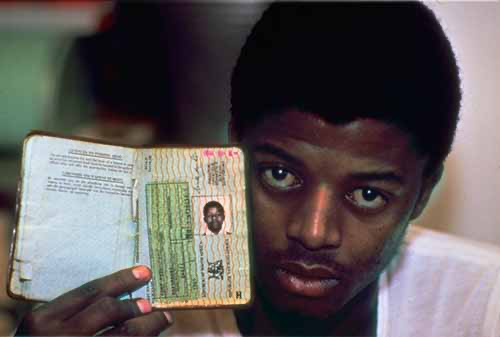
A pocket-sized document known as a reference book, or pass., was an everyday threat for Blacks. The book contained a condensed history of the carrier’s life‐including birthplace, legal places of residence and employment, tax payments and marital status. The details, along with the fingerprints of every adult Black, were recorded and saved by the government.
“Now, many people here are asking a question that is a novel one in America: Is it safe to leave home without proof of citizenship,” the New York Times story said.“Has the United States turned into a show-me-your-papers nation? For many Minnesotans, the answer has been an unequivocal yes.”
The defiant answer should be an unequivocal NO!
The catch-22, of course, is if you refuse to provide proof of citizenship or are suspected of being undocumented, the result may be your detention by ICE until your status is verified. Joseph Heller’s book may be an absurdist comedy, but you may find yourself in a cold, filthy ICE detention center,
But, as happened in the 1950s and 60s, when civil rights activists were arrested for sit-ins, marches, and demonstrations, victory will eventually be yours.
 ThinkingOregon