“If you’re blue, and you don’t know where to go to Why don’t you go where fashion sits? Puttin’ on the ritz”
Can you think of anything more incongruous than the Ritz and Stumptown?
Like a diamond in the rough, The Ritz-Carlton Residences Portland at 550 S.W. 10th Ave. are set to open for occupancy in July 2023.
Owners of the 138 residential condominiums on floors 21-35 atop The Ritz-Carlton, Portland will enjoy magnificent views as the $600 million building becomes a landmark in a dynamic Pacific Northwest city, the developers exult.
Keller Williams Realty Professionals is already marketing 39 of the individual condos at prices ranging from $1,1000,000 for a one bedroom 2 bath 1,105 sq. ft unit to $8,999,000 for a 3 bedroom 4 bathroom 3,256 sq. ft unit. Principal and interest on the mortgage, plus property taxes and condo fees, could translate to an $8000 a month expense for the 1 bedroom.
“We are seeing interest from folks that have made businesses in other cities that are spending more time in Portland,” he said, “and they want to be here. They like the lifestyle of Portland and the quality of life that we have here,” Brian Owendoff, owner’s representative for the tower, told KGW-TV in March.
Is he serious? Is “…the quality of life that we have here…” in Portland going to be a magnet for well-heeled luxury-seeking sophisticates?
In 1992, journalist and urban criticPhilip Langdon marveled at how “this courteous, well-kept city of 453,000, and especially its downtown, has become a paragon of healthy urban development.” Nobody’s saying that now.
With Ineffectual government at all levels, property crime more than double the national average, motor vehicle thefts through the roof. (More than 11,000 vehicles were stolen in 2022, up from 6,500 in 2019; and it’s not just individuals being hit. International Auto Sales on Southeast 82nd Avenue in Portland has had twenty two vehicles stolen in just two years, costing near a quarter million in damages.), homeless encampments sprouting like weeds, used hypodermic needles littering the sidewalks and parks (In 2022, crews collected 176,962 used needles in the 213 block Downtown Enhanced Service area), open air drug markets, routine store break-ins, routine homeless camp fires (Portland Fire & Rescue responded to more than a thousand tent or tarp-related fires during 2021-2022), gun violence, homicides (2022 was a particularly bloody year for Portland, with homicides climbing from 36 in 2019 to 97 in 2022 – a record), bicycle thefts galore (More than 1,000 bikes are reported stolen in the city each year, according to Willamette Week), public urination and defecation, Portland is far from the magnet it once was.
Businesses in the Ritz-Carlton area are already up in arms over Multnomah County’s new Behavioral Health Resource Center on S.W. Park Ave. between Oak and Harvey Milk Streets. Willamette Week recently reported business owners are asking the county to do more to keep the neighborhood free from what some of the center’s clients are bringing, including threats of violence and drug use. Painting a bleak picture of the situation, the businesses are frustrated to no end and question how the Ritz-Carlton will be able to attract customers to its $518 a night and up hotel rooms.
Polls conducted in 2022 showed only 11% of voters thought Portland was heading in the right direction — a steep drop from 76% in 2000.
There’s a reason why an outpost of the upscale Saks Fifth Avenue at Portland’s much-heralded Pioneer Place Mall abruptly closed in 2010 and was replaced by Off Fifth at Bridgeport Village in the suburbs, a discount venue that offers closeouts, clearance items and private-label goods. “Saks didn’t quite fit in with our fleece and flip-flops,” Kathleen Healey, senior associate broker with Urban Works, told The Oregonian.
That’s another way of saying Portland has a reputation for being kind of quirky, dismissive of pretense, leery of brazen displays of wealth. Drenched in wetness and lefty idealism, where people wait till the “Walk “ sign lights up even if no cars are coming, it is hardly a haven for moneyed showoffs or a welcoming place for a Ritz-Carlton.
Like with Saks Fifth Avenue, the prognosis isn’t promising.
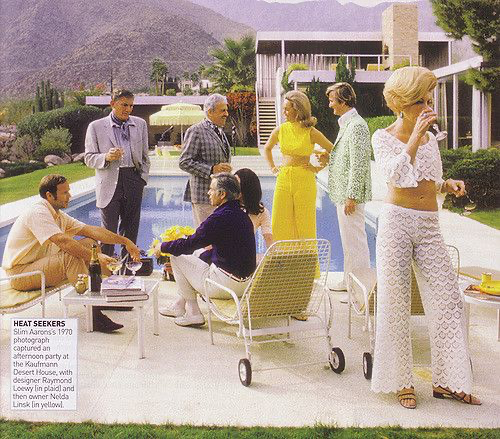
There just aren’t enough of Slim Aaron’s beautiful people in Portland
Thank you for reading ThinkingOregon. If you liked this post and think others would find it interesting, why not forward it to a friend?
“A man is known by the company he keeps,” wrote Aesop. So’s a woman.
In their pursuit of power, Tina Kotek and the Democratic Party of Oregon chose to keep company with Nishad Singh, the 27-year-old wunderkind director of engineering at FTX, the disgraced and now bankrupt crypto company.
They welcomed Singh’s 2022 $500,000 contribution to the party’s campaign coffers.
But the wheels of justice have turned since Singh made the contribution.
On Feb. 28, Singh pleaded guilty to six criminal counts, including conspiring to commit securities and commodities fraud, during a hearing in federal court in Manhattan.
He also pleaded guilty to defrauding the U.S. in a campaign-finance scheme in which he made illegal donations to political-action committees and candidates using funds from disgraced cyypto manager Sam Bankman-Fried’s crypto hedge fund Alameda Research. Singh has also allegedly taken part in a straw donor scheme to funnel money to left-leaning candidates and causes Bankman-Fried didn’t want connected to his own name, according to the Wall Street Journal.
John Ray III, the new boss of the bankrupt crypto exchange FTX, wants the $500,000 back.
I asked the party whether it intended to do so, but got no response.
Campaign finance records with the Oregon Secretary of State show the Democratic Party of Oregon has been merrily spending money, $166,424.05 so far in 2023, but none of it has been a refund to FTX. That has left the party’s account with just $37,128.95, down substantially from the $691,532 it had on hand as of Nov. 28, 2022.
Frankly, it looks like the party is deliberately trying to avoid building a balance sufficient to repay Singh’s donation. It may also be hoping time will diminish the public pressure to return Singh’s donation.
Oregonians shouldn’t let Kotek and the Democratic Party of Oregon off the hook. It’s time for them to pay the piper.
Lawyers may not all infest dimly lit moldy offices “like maggots in nuts”, as Charles Dickens wrote, but far too many have a habit of being pompously boastful without reason. Among those are surely lawyers who claim to be “Lawyers of Distinction”.
With inescapable regularity, an Orlando Florida-based company runs ads every year promoting the latest “Lawyers of Distinction”. The newest ad, congratulating the 2023 winners, ran in the Sunday New York Times today, Feb. 26, 2023.
This time there were nine winners listed from Oregon:
Joshua Callahan, Personal Injury Law, The Callahan Law Office, Clackamas, OR
Alice Cuprill-Comas, Healthcare Law, general counsel for Oregon Health and Science University, Portland, OR
Thomas Howe, Howe Law Firm, Portland, OR
Nicole Lemieux, Personal Injury Law, Portland, OR
Gregory Oliveros, Criminal Defense Law, ))& Law, Oliveros Law Group PC, Clackamas, OR
Maryanne Pitcher, Family and Divorce Law, RISE Law Group, Medford, OR
Phillip Williams, Estate + Injury Attorney, Eugene, OR
Kali Yost, Disability Rights & Estate Planning, Kali Yost Law, Portland, OR
Lawyers of Distinction says on its website it “Recognizes Excellence in The Practice of Law.”
Sounds impressive, until you dig deeper.
About all that’s required to be named a “Lawyer of Distinction” is to apply yourself or be nominated, fill out some online forms and pay a fee. It’s like diploma mills that claim to be higher education institutions, but only provide illegitimate academic degrees and diplomas for a fee.
“There’s a sucker born every minute,” is a phrase often attributed to P. T. Barnum, an American showman. It’s apparently true with respect to the attorneys who buy “Lawyers of Distinction” memberships as well as members of the public who are misled by them.
The Lawyers of Distinction website makes the application and review process sound complex.
According to the website, it includes a review and vetting process by a Selection Committee. That involves an analysis of a candidate’s work, experience and abilities based upon 12 independent criteria using a platform spelled out under U.S. Provisional Patent #62/743,254. Once a final score is generated, an applicant is subjected a final background check and Ethics Review. Applicants who achieve a minimum passing score and have no disqualifying ethical violations within a 10-year period prior to completion of the application are then eligible for acceptance to Lawyers of Distinction.
Sounds tough and thorough.
Don’t believe it.
Essentially, it’s just pay-for-play. It’s selling badges. It’s paying for meaningless accolades. Apply, pay the annual membership fee and you’re in.
According to the Florida Division of Corporations, “Lawyers of Distinction Inc.” is a private for-profit company with a principal address of 4700 Millenia Boulevard, Suite 175, Orlando, FL 32839.
Robert (Robbie) Brian Baker at the same address is listed as the President in the company’s 2020 Annual Report. But don’t go there expecting to be ushered into an office with a clean, modern aesthetic that communicates success. The address is identified online as nothing more than an “Orlando Virtual Business Address & Live Receptionist Answering Service.”
Lawyers of Distinction is a sign of the overabundance of lawyers, leading some to try to elevate themselves with impressive, but meaningless, awards. The ads the organization places in multiple publications are fake news at its most blatant and deceptive.
Some lawyers may want the Lawyers of Distinction plaque on their wall to bolster their self-esteem, even though in their heart they know the plaque is meaningless piece of junk. Maybe they want to add a plaque to their office brag wall. Maybe the “honor” adds glamour to what some lawyers describe as mind-numbing work.
Whatever their reasons for signing up, Oregon’s lawyers Lawyers of Distinction shouldn’t be proud; they should be embarrassed.
“For more than 150 years, Pendleton has set the standard for American style,” Pendleton Woolen Mills proudly proclaims.
But is the iconic family-owned and operated Portland, OR-based company, rooted in late 19th century Salem, OR, still an American institution?
The honest answer, “Yes, but barely.”
Just as Made in Oregon’s ubiquitous stores have opened their shelves to products manufactured offshore if they are “designed” in Oregon, an exception you can drive a truck through, Pendleton has shifted its production, without much fanfare, almost entirely out of America.
Merchandizing is all about branding, after all, and not much is what is seems to be anymore. Pendleton Whiskey, which proudly proclaims it was “…born in the Great Northwest”, for example, isn’t even made in Pendleton, but in Hood River, OR.
“The history of Pendleton Woolen Mills is one of opportunity, exploration and innovation.,” the company’s website declares. It is also a history of succumbing to market pressures and accepting the steady and troubling erosion of its American foundation.
It’s a story of survival, but also, to be honest, a sad story. A quintessential American company with big dreams, it grew to as many as 18 manufacturing sites spread across the country, only to be whittled down in the face of global competition.
In writing the following, I pored through countless online and printed documents, company blogs and websites, magazine articles and newspaper stories, many in old and dusty archives, a truly daunting task. In an effort to verify information, I also reached out to Pendleton Woolen Mills by email and phone, but to my disappointment the company did not respond. If this led to some errors, I apologize.
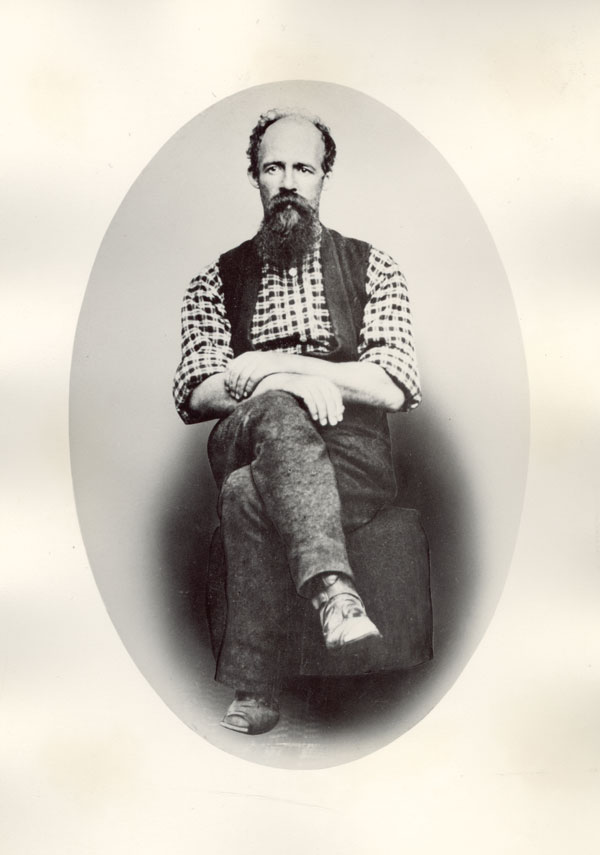
The Pendleton saga started with Thomas Kay, born in 1838 in the heart of England’s textile weaving center near Bradford and Leeds.
Thomas Kay
After working in woolen mills as a youth, starting as a bobbin boy replacing the spindles of thread on the looms, Kay immigrated to the United States in 1857. For the next six years he worked in two New Jersey woolen mills until heading west with his family in 1863 to be a loom boss at new mill in Brownsville, Oregon.
While in Brownsville, his oldest daughter, Martha Ann “Fannie” Kay, learned weaving and mill management at his side. She also began “keeping company” with Charles P. (C.P.) Bishop, a clerk and salesman at the Brownsville Woolen Mills store. They married on Oct. 8, 1876 and had three sons: Clarence Morton, Royal “Roy” Thomas, and Robert Chauncey.
Fannie and Charles Bishop (front) with their sons, Clarence, (L), Roy, and Robert
In 1889 an opportunity arose for C.P. Bishop to partner with his father-in-law to build a woolen mill in Salem, Oregon.
The Thomas Kay Woolen Mill (TKWM) began full operation in March 1890. (The mill is now a museum—the Willamette Heritage Center—open to the public)
Thomas Kay Woolen Mill
The Mill produced woolen blankets and fabric for more than seventy years and was managed by four generations of the Kay family until it closed in 1962.
As the Bishop boys grew, their parents prepared them for the wool business. “They learned the rudiments or beginning of the business under their grandfather, and they were then sent to Philadelphia, where they took a course in scientific woolen manufacturing, they having a large vision of the building up of the woolen manufacturing industry in the northwest,” a History of the Columbia River Valley noted.
In 1900, Fannie’s father died. Even though Fannie had run the mill at his side, the misogyny of the time drove the selection of her brother Thomas B. Kay to be the mill’s president and general manager. “This was a hard blow for Fannie and her sons, who had been trained by their Grandfather Kay for future management of the TKWM,” according to the Willamette Heritage Center.
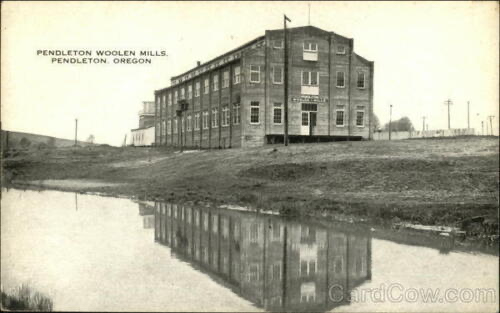
Seeking their own domain, in 1908 the Bishop family began negotiations for the purchase and revitalization of a closed mill originally built in 1893 in Pendleton, Oregon, about 210 miles east of Portland. A major railhead serving the Columbia Plateau, Pendleton was a wool shipping center for the region’s sheep growers.
The mill had started out as a wool scouring plant. Using the clean water of the nearby Umatilla River for washing and dyeing raw wool, the mill operated seasonally from May to November. But increasing freight tariffs on the shipment of scoured wool soon made the mill unprofitable.
In 1895, the owners enlarged the plant and converted it into a woolen mill making blankets and robes for Native Americans. But this venture also failed and the mill went idle.
Using their own resources, along with $30,000 from a 5% 20-year local bond issue, the Bishops closed their deal to acquire the mill in1909 and the real Pendleton Woolen Mills legend began with a reconstructed mill.
Postcard of the Pendleton Woolen Mill
A Pendleton Woolen Mills blog notes that in 1905, Racine Woolen Mills of Racine, Wisconsin had been furiously negotiating to buy the struggling mill in Pendleton, with plans to increase trade blanket production. But the negotiations proved fruitless and the mill went silent in 1908. “If Racine Woolen Mills had purchased the mill, who knows what the Pendleton story would have been?,” the blog says.
In June 1910, Pendleton Woolen Mills expanded into retail, opening its first store in Seaside, Oregon.
1911 Seaside postcard – A hand-tinted version of a black and white photo was transformed into a postcard that helped tourists commemorate their visit to the Seaside Pendleton Store.
At first, Pendleton was an all-American company with deep roots in the Northwest and a commitment to an American style that respected function and form and prized timelessness and longevity.
Its initial primary product was trade blankets with striking Native American patterns. The company’s first consumers were the Native Americans living in the area: the Cayuse, Walla Walla, and Nez Perce tribes.
According to the National Heritage Museum, from the late 1800s to the early 1900s—ending right around the Great Crash of 1929—a vogue for Native American goods held sway in the U.S. for art collectors and fashionable types all the way down to Americans of more modest means.
Trade blankets were among the most popular collectors’ items and Pendleton took the craft to a new level, due in part its employment of loom artisan Joe Rawnsley. Rawnsley toured the West to work with Native populations in creating specific designs and color schemes inspired by different tribes’ traditions. He used the Jacquard processin which punched cards guided automatic looms to produce blankets of much greater variety and detail than previously possible.
Pendleton Woolen Mills’ blankets were such a success the company bought another mill in 1912 in Washougal, Washington at the entry to the scenic Columbia River Gorge and earmarked its wool output to clothing.
It was a heady time for woolen mill owners. At that point, the Pendleton mills in Oregon and Washington were two of more than 1,000 woolen mills operating in America’s 48 states, but they managed to stand out with high quality goods and creative marketing.
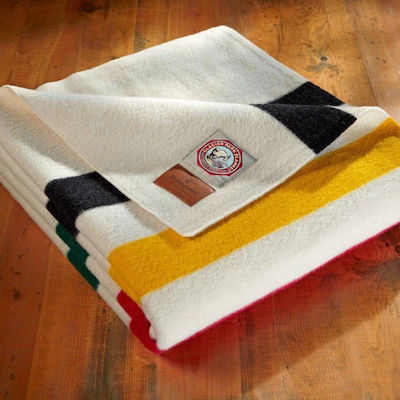
In 1916, Pendleton raised its visibilitywhen the founder of the Great Northern Railroad commissioned the company to create a blanket for the lodges of Glacier National Park. (The company established a National Park Collection of blankets in 2016)
Pendleton Glacier National Park blanket
According to a history of the Mill End Store on SE McLoughlin Blvd. in Portland, during WWI, Royal Thomas Bishop was approached by the Portland Chamber of Commerce to convert the Willis Mohair Mill in the city so it could manufacture uniforms needed for soldiers.
After the site was purchased in 1919 with the assistance of several prominent Portland business leaders, Bishop took out the mohair machinery and built new reinforced concrete structures to connect the good brick building of the early mill. He then installed worsted wool machinery, starting the Oregon Worsted Company. When the spinning and weaving machines were up and running, the company had over 300 people working three shifts around the clock.
That same year (1919), C.P Bishop developed a men’s virgin wool suiting line at Pendleton’s Washougal Mill, naming it the “Washougal” line. The line found a market in the East, particularly New England, leading Bishop to organize the Washougal Clothing Co. in Syracuse, NY with himself as president.
In the early 1920s, the Bishop sons added to their business by acquiring the Eureka Woolen Mills in Eureka, California, 100 milessouth of the Oregon border.
Eureka Woolen Mills, 1923. Founded 1881, closed 1950, demolished 1987.
By 1924, Pendleton was using shirting material woven in Washougal to make the famous Pendleton man’s virgin wool shirt in a variety of bold colors. In 1929, despite the depression, they released an entire line of men’s woolen sportswear Made in the USA.
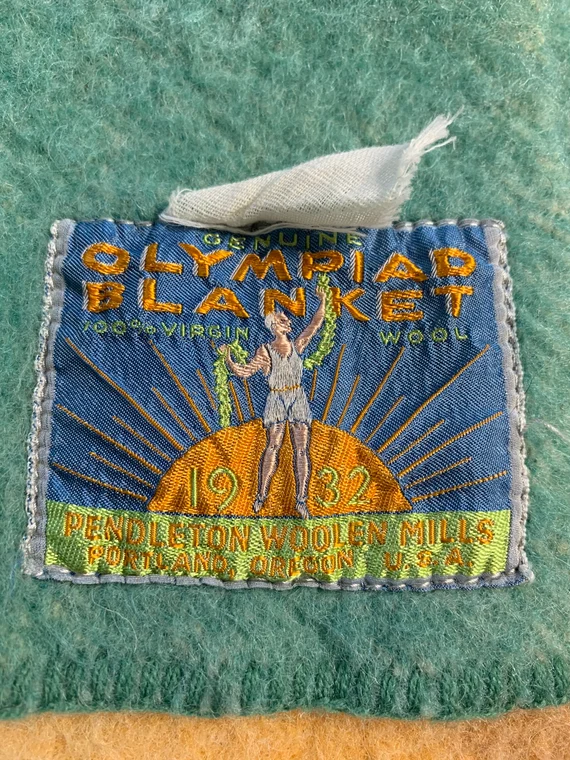
Always looking for promotional opportunities, in 1932 Pendleton provided 4,000 of its distinctive blankets for participants at the Olympic Games held in Los Angeles.
Pendleton blankets leaving on a train for Los Angeles, 1932
In 1935, the company broke into Hollywood when Loretta Young wore a Pendleton coat in a movie with Clark Gable, “The Call of the Wild”, filmed in part on Washington’s Mt. Baker.
Actress Loretta Young with Clark Gable
With its Made in America products, Pendleton was on a roll. By 1936 it employed more than 1500 fulltime workers, processed 3-4 million pounds of wool annually and produced millions of dollars’ worth of woolen yarns and fabrics sold throughout the U.S. and Canada, the Capital Journal newspaper reported.
WWII put a dent in Pendleton’s consumer-facing business, but the company again pivoted to producing uniforms, blankets, and sleeping bags for American soldiers serving in war.
The company also took advantage of opportunities to expand its manufacturing footprint. In 1941, it purchased the Columbia Wool Scouring Mill in Portland, which it had leased since 1923.
Columbia Wool Scouring mill
In 1946, it opened a facility in Omaha, Nebraska. The Omaha World-Herald reported that Pendleton initially sent people to Omaha after WWII looking for hard to find sewing machinery, intending to ship the machinery to Oregon, but Omaha city officials convinced the company to open a plant there. Pendleton moved the plant to Bellevue, NE in 1977. During peak periods in the coming years the Bellevue plant employed almost 500 workers.
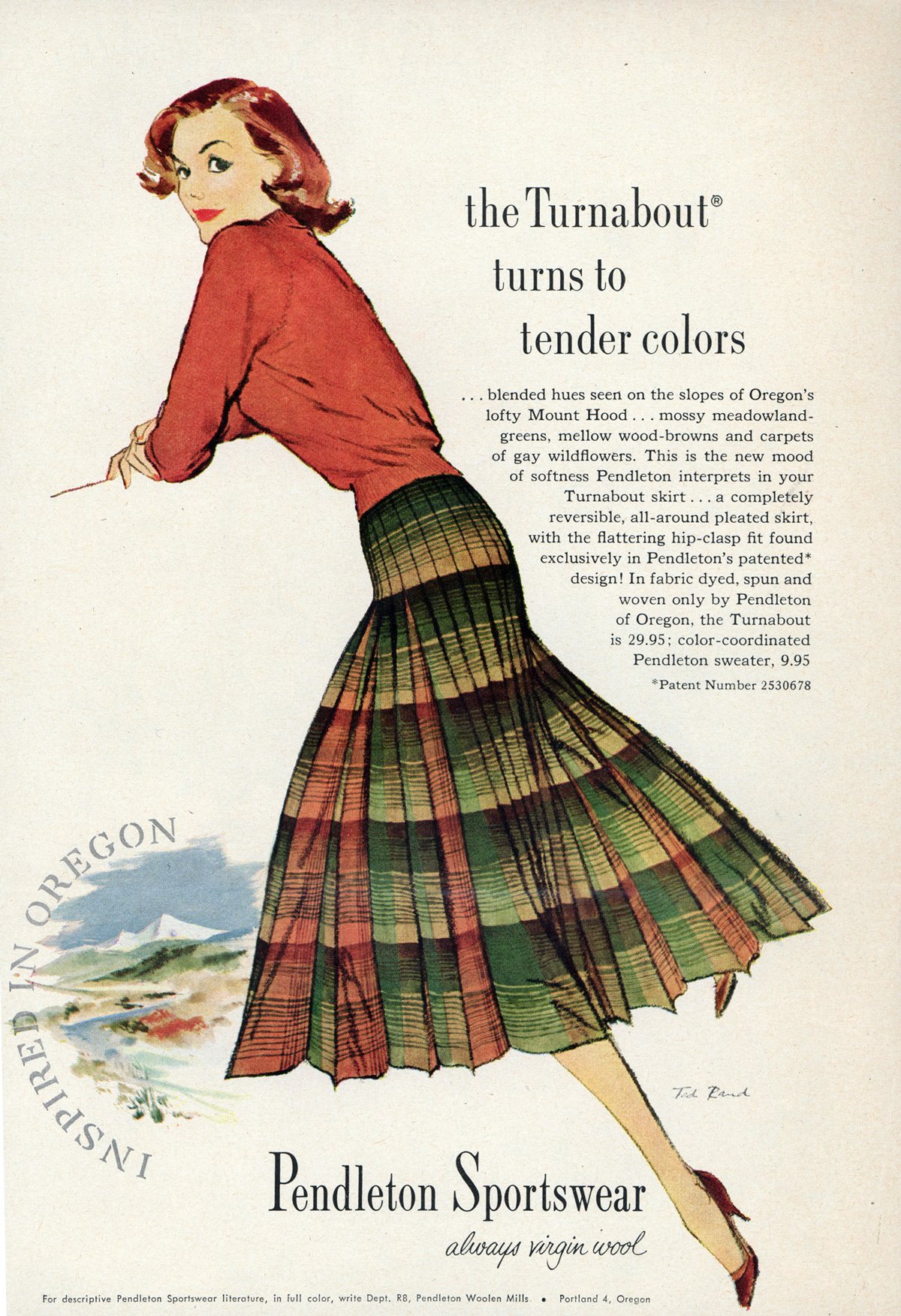
In 1949, Pendleton continued its successful trajectory by developing a line of sportswear separates for women. According to the Vintage Fashion Guild , “…the most notable women’s product was the ’49er jacket – hip length, long-sleeved casual jacket with wide collar, patch pockets, and large shell buttons down the front.”
Vintage ’49er jacket
Also popular was a two-in-one “Turnabout skirt.”
Pendleton pushed into further into the mainstream when the comedy star Lucille Ball wore a Pendleton ‘49er jacket for an ill-fated foray into the wild in a 1953 episode of TV’s “I Love Lucy”.
Lucille Ball in “The Camping Trip”
In 1954, Pendleton celebrated its Eureka, CA mill site by sponsoring top awards of flights to Paris and London on Pan American World Airways in the national “Make It Yourself With Wool” campaign promoted by California Governor Goodwin J. Knight.
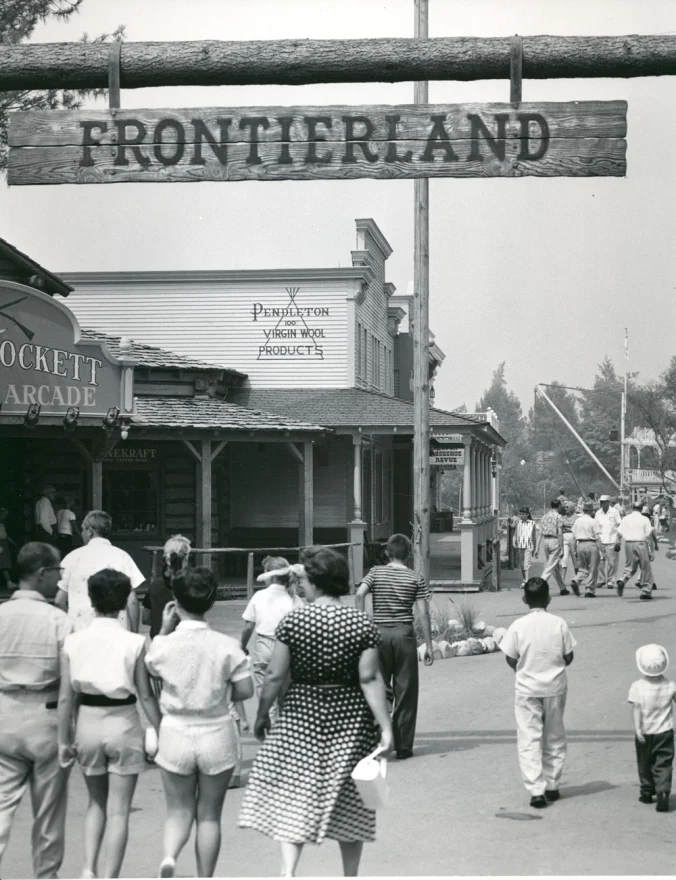
In 1955 Pendleton secured its position as an American icon when it became a founding tenant in Disneyland’s Frontierland with a ‘Dry Goods Emporium’ when the amusement park opened on July 17, 1955. (The Disney partnership dissolved amicably when the Disneyland Resort shifted its merchandising focus to more Disney-oriented goods and the store closed in April 1990)
In 1956 Pendleton acquired Royal Bishop’s Oregon Worsted Company.
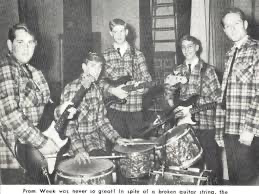
The mid-to-late 1950s also gave the company a boost from, of all places, California’s surfing culture when a musical group called the Pendletones formed in California wore Pendleton wool shirts when performing.
The Pendletones
In 1961, music executive Russ Regan changed their name to “The Beach Boys” and the rest is history. The Beach Boys wore Pendleton’s plaid board shirts on the cover of their album “Surfer Girl”, released on vinyl on September 16, 1963.
Pendleton brought the shirt back in 2022, renaming it the Blue Original Surf Plaid:
2022 version of Blue Original Surf Plaid
In 1963, Pendleton continued its robust expansion when it opened a mill in Nebraska City, Nebraska. That same year, the Pendleton brand hit the radio waves when the Majorettes, singing the song “White Levi’s” became a number one hit. As the lyrics on the 45 record said, “My boyfriend’s always wearin’ white Levi’s…and his tennis shoes and his surfin’ hat and a big plaid Pendleton shirt.”
In 1967, Pendleton opened a 13,500 sq. ft. plant with just three employees in Fremont Nebraska, according to the Fremont Tribune newspaper. (In August 1974, it expanded the plant, which by then employed 159 people, to 19,150 sq. ft.) The plant concentrated on producing ladies slacks and skirts. The garments were pre-cut at Pendleton’s Omaha, NE plant and then shipped to Fremont for assembly.
Meanwhile, in the 1960s-1970s, Royal Thomas Bishop set up a yet another mill in the U.S. Virgin Islands, hoping to save on duties.
A history of the Mill End Store in Portland says the Virgin Islands mill blended yarn from St. Croix, England, and South America to be sent to the states for dyeing. However, because the island did not have fresh water everything was done from a cistern or a well. The water was so brackish that when sent back to the U.S. the yarn would not take the dye evenly. The mill eventually closed and Bishop returned to the states.
In 1976, Pendleton closed the former Oregon Worsted Co’s Portland Mill. In 1982, it purchased Dorr Woolen Co. with about 450 employees in Guild, New Hampshire, then added facilities in Council Bluffs, Iowa in 1985.
In 1978, the New York Times heralded the company’s success in a changing textiles marketplace:
“How to succeed in the woolen business: Doggedly produce 100 percent virgin wool clothes while everyone else is turning to polyester,” the Times said. “Charge a good piece of money for them. Keep the same designs year after year. A formula for disaster? Not for the Pendleton Woolen Mills, which has carved a niche for itself and stayed in it, quietly weaving profits…”
Observing that Pendleton’s sales were approaching $100 million annually, the Times said Pendleton was “…avoiding the ups and downs of the industry.”
Not exactly.
Though the company expanded over the years, the good times didn’t last as Made in America apparel came under increasing pressure. One by one American manufacturers shifted production offshore to take advantage of lower labor costs, material sourcing, country specialties and improving international trade logistics. In New England, 286 woolen mills closed between 1949 and 1983, taking almost 95,000 jobs with them.
“The textile industry is going to be overwhelmed,” Derek Brown, owner of two New Hampshire mills, told the Concord (New Hampshire) Monitor newspaper 1983. He was right.
In 1986, the Omaha World-Herald reported that Pendleton had joined with other manufacturers and labor unions in Nebraska’s textile and apparel industry, which all together employed 1,842 workers, to lobby congress for legislation that would protect them from “unfair” foreign competition. President Reagan had vetoed such legislation the previous year, arguing it would hurt consumers. Les Sutton, general Manager at Pendleton Woolen Mills, told the World-Herald imports hadn’t yet affected Pendleton’s markets because of the strength of the brand, but its position would erode if high import rates continued.
In 1992, Pendleton faced the music and decided to test run producing women’s blouses in Mexico to cut costs. Associated Press reported that union and company officials blamed the North American Free Trade Agreement (NAFTA) and the General Agreement on Tariffs and Trade (GATT), which were welcomed like skunks at a garden party when they opened the door to cheap Mexican labor and reductions in apparel tariffs.
In 1994, the company signed contracts with subcontractors in Hong Kong and announced that to remain competitive it would continue its Mexican production. That same year, it also unveiled new garment tags that no longer bore “Made in U.S.A.” as part of its familiar logo.
In 1996, Pendleton shifted the manufacture of men’s jackets and shirts to Mexico. In August of that same year it began a one month phase out a clothing plant in the Sellwood district of Portland, where it made men’s and womens’ coats, laying off 119 workers. The company said it was taking the action because labor costs were lower in Mexico. “These actions are regrettable, but unfortunately they are necessary in view of economic reality,” Pendleton chairman B.H. (Brot) Bishop told the Associated Press. “This is not a problem unique to Pendleton as our entire nation adjusts to the world economy and global competition.”
Pendleton also closed its Council Bluffs, Mo., plant in 1996, laying off 80 workers, down from 225 in its 1970s heyday. “We didn’t want to do this,” Gary Benson, Pendleton’s human resources manager, told the Portland Business Journal. “It’s an issue of cost. We are one of the last to do some outsourcing offshore.”
By 1997, 40 percent of Pendleton’s clothing was being manufactured in Mexico, up from 5 percent in 1994.
In mid-1997, the company announced it would close its 70-worker shirt manufacturing plant in Milwaukie, OR, phasing out the facility by the end of the year.
Gary Benson, Pendleton’s human resources manager, told the Portland Business Journal the Milwaukie plant had lost money seven of the last 10 years because of the declining interest in wool shirts as more competition from other fabrics had emerged.
In 1998, Pendleton closed another Portland plant and in 1999 a plant in Fremont, NE as well, blaming the closures on international trade agreements and the adverse effect of increased imports.
That same year, the company granted Daiwa Seiko, Inc. the right to manufacture shirts and sweaters and sell them in Japan under the Pendleton name.
In 2003, Pendleton closed its Nebraska City plant, which at the time still employed 64 people, as well as the Dorr Woolen Co. operation in New Hampshire that it had bought 20 years earlier. The closures were consistent with the ongoing decline of America’s textile industry. By 2003, US textile employment had fallen to roughly 900,000 workers, down 62 percent from its peak in 1950.
Two years later, elimination of the last set of quotas of the Agreement on Textiles and Clothing (ATC) on January 1, 2005, ostensibly brought about the end of decades of quantitative restrictions on the international exchange of clothing and textiles.
The Congressional Research Service concluded that the end of the ATC quotas was expected to bring about a sharp increase in U.S. clothing and textile imports, a major shift in sourcing clothing and textile imports to China, and harm to the U.S. clothing and textile industry. U.S. clothing and textile manufacturers such as Pendleton were expected to reduce their operations, shut down factories and lay off workers due to increased competition from China, India and other suppliers; one study estimated up to 630,00 US job losses due to Chinese imports.
Still, as of 2009, Pendleton’s 100th birthday, the company owned and operated seven manufacturing facilities and marketed its products through 70 of its own retail stores, a catalog, online sales and multiple other retailers.
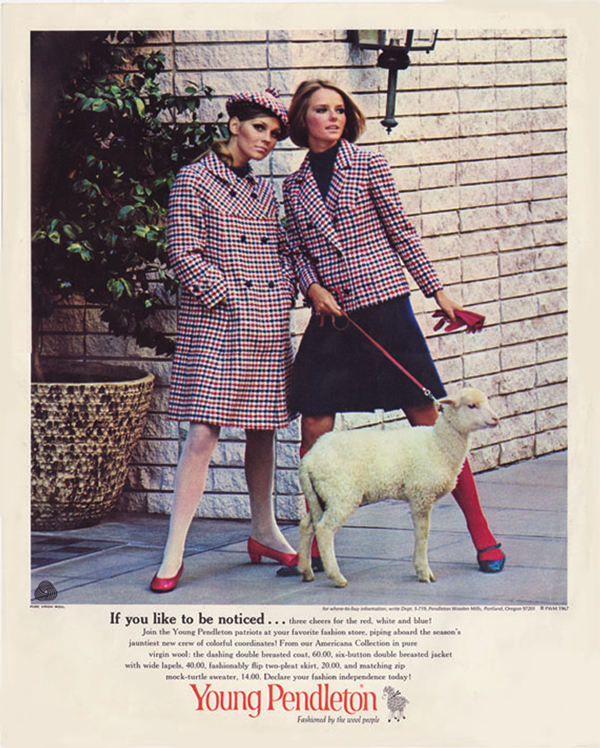
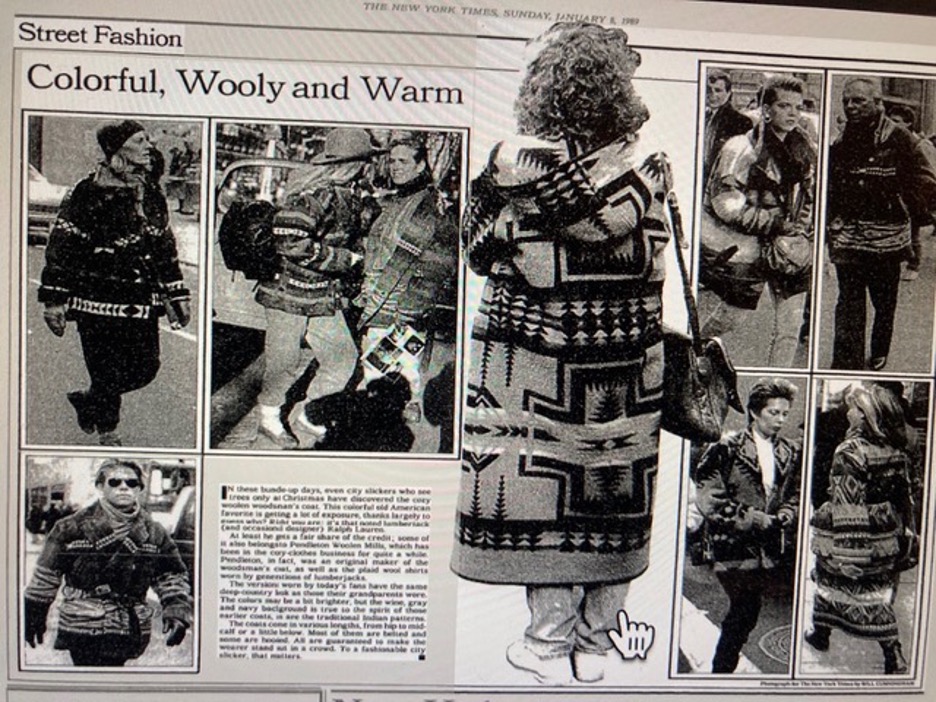
It was also initiating collaborations with other distinctive marketers, following up on some earlier forays into fashion such as its use of supermodel Cheryl Tiegs from the 60s through the 80s and a 1989 collaboration with what the New York Times described as “…that noted lumberjack (and occasional designer) Ralph Lauren” on a woodsman’s coat for city folk.
Cheryl Tiegs (R) in Pendleton Ralph Lauren Pendleton coats, NY Times, Jan. 8, 1989
In 2010, in another effort to connect with trendy fashion lines, Pendleton collaborated with Opening Ceremony on a plaid/check collection of men’s and women’s clothing. “Marking Pendleton’s first collaboration is the small collection that takes Pendleton’s signature patterns and pairs them with Opening Ceremony’s undeniably chic cuts.,” wrote The Fashionisto. “Altogether, the collection is both cozy and vibrant–perfect for this fall.”
The Ceremony x Pendleton Collection
In 2010, Opening Ceremony’s Pendleton line, described by a NY Times fashion writer as “wild-looking garments”, was hyped at an upscale Barneys New York store in Brooklyn “where the well-heeled dress down” to be served by a staff that “tends to look like a skateboard team composed of the cast of “Glee”.
Still, some diehard believers hung on to the prospect of a true renewed Made in America production by Pendleton.
In 2011, the Northwest Labor Press heralded Pendleton’s announcement that it would launch a new made-in-the-USA clothing line by three Portland designers who aimed to bring some of the mill’s more classic patterns to life in sophisticated and modern lines. Some of the clothing would be made of union-made fabric from Pendleton’s Washougal mill. Its “Portland Collection” debuted Sept. 8 at a fashion show in Portland’s downtown Director Park.
“Surfing the recent wave of locally designed and sustainably produced products, and steeped in a rich history, Pendleton had all the makings of a grand slam,“ TravelSquire.com rhapsodized about the collection. “The Squire got the word from Jon at Leo Boutique in trendy, downtown Calgary that the “New Wave of Pendleton” was really on the money.”
Part of The Portland Collection
Optimism surfaced again in 2012 when a crowd gathered to celebrate the 100th anniversary of Pendleton’s Washougal mill. Washougal Mayor Sean Guard decreed Pendleton Woolen Mills Day for its significant contribution to five generations of city residents. Guard also read letters from members of Congress praising the mill’s legacy and ability to keep jobs in America at a time when most of its woolen mill competitors long since outsourced to other countries.
But the Portland Collection didn’t last long, remaining only for the Fall 2011, Fall 2012, Fall 2013 and Spring 2014 seasons. A limited accessory line released for Fall 2014 marked the end of the initiative.
It’s not clear exactly what the overseas shift has meant for Pendleton’s employees. Clearly, the shutdown of so many plants acquired or built when optimism was high has meant job losses across the board, but Pendleton did not respond to inquiries.
Meanwhile, in order to broaden its reach, Pendleton has collaborated with all sorts of people over the years.
One of the odder collaborations was with a New York artist, Chrissy Conant, who was still worried about terrorism three years after the 9/11 World Trade Center disaster.
In 2004, Conant designed a 100% virgin wool “Chrissy Homeland Security Blanket” and arranged for it to be made by Pendleton Woolen Mills. A soft-napped queen-size blanket bearing the legend of the Homeland Security Advisory System, the signed limited edition (100) blankets came in colors that were “a little brighter, a little more pleasant” than those used by the Department of Homeland Security, Conant said. “At least now, I can protect myself. I can duck and cover, in my own bed, and try to dream sweet dreams,” she wrote on her website.
The Chrissy Homeland Security Blanket, Made by Pendleton
The limited edition blanket was even sold in the gift shop of the New York City’s Cooper-Hewitt National Design Museum. One of the blankets is currently listed on eBay for $700.
Pendleton has also collaborated with classic American brands, such as Vans and the Kontoor Brands-owned denim giants Wrangler and Lee, as well as a number of high visibility fashion brands, including Mr. Leight, Sacai, Kith, Hurley and Matches Fashion.
The first of these fashion collaborations was with Vans in the 1970s when Pendleton sold Vans sneakers made with Pendleton plaids at its Disneyland Frontierland store.
In 2012, Pendleton teamed up with Worksman Cycles on a Chief Joseph Men’s Cruiser. “These beauties are sure to become collectors items,” Worksman enthused. “By having these bicycles painted so elegantly in this famous blanket pattern, it almost represents the new urban steed.”
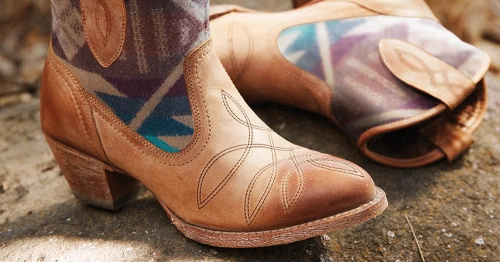
In 2014, Pendleton Woolen Mills and Ariat Boots collaborated on a limited-edition capsule collection of Western and English boots done with Ariat leather and technology,and Pendleton signature wool fabrics.
Pendleton x Ariat collaboration
Other collaborations have included Doc Martens boots made with Pendleton’s Pagosa Springs wool, Pendleton Fitbit heritage-inspired woven Fitbit bands, Wrangler x Pendleton and Junya Watanabe.
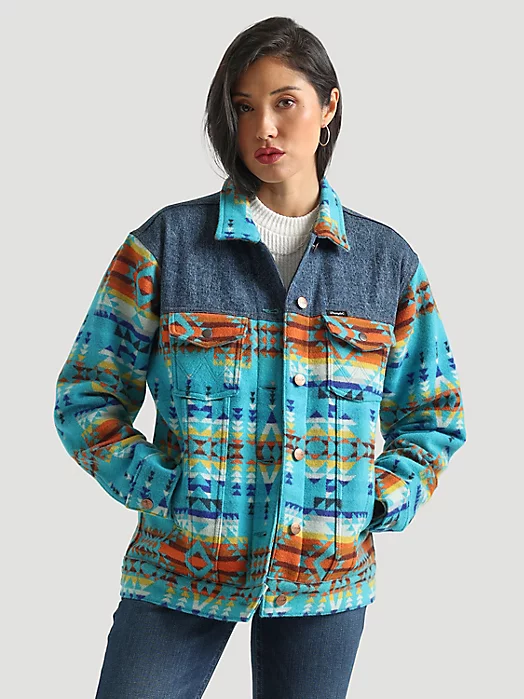
Wrangler Pendleton Womens Mixed Jacket: Medium Wash, $399
Junya Watanabe Man x Pendleton Wool Jacquard Jacket sold by Kith, $2,768.00
Pendleton secured another tie-up in 2014 withluggage company Ricardo Beverly Hills, The Pendleton Luggage Collection featured the company’s exclusive patterns printed on Ricardo’s softside and hardside luggage, incorporating Pendleton fabric in a variety of ways, from exteriors to interior pockets along with luggage tags and other travel accessories.
Ricardo’s Pendleton Luggage Collection, 2015
At the January 2023 ready-to-wear runway show that closed out Paris Fashion Week, Pendleton showed up on designs by John Galliano, who worked with the company to bridge ready-to-wear with Haute Couture, incorporating wool plaid checks in shirts, cardigans, rompers and more.
The reception was not, however, altogether positive. As The New York Times reported, “…the danger in the current game of one-upmanship is that the clothes sometimes tip into the ridiculous” such as “at Maison Margiela, where John Galliano delivered his patented brand of upcycled mayhem by mashing together tulle, tartan, fishnets, Mickey Mouse and Pendleton outerwear…”
In other words, Pendleton is now in the “Look at me” rather than “Wear this” zone of fashion, which can be highly fickle in a culture of narcissism and a relentless search for recognition.
Maison Margiela Paris 2023 Co-ed Collection by John Galliano
Vogue described Galliano’s show as “Distinctly American fabrics and patterns like Pendleton plaid and floral barkcloth interweaved with Wild Western coats and 1950s prom dresses in a youth-tastic fusion invigorated with the spirit of cyberpunk through hacked up constructions, safety pin and soda can embellishments, and bin bag fascinator and cadet hats.” Quite a departure from Pendleton’s old-fashioned basic western roots.
Trying to keep up with and instigate fashion trends, as Pendleton is doing, can be exhausting and fraught with risk. But in today’s constantly shifting landscape, many brands find it an imperative to survive, constantly coming up with new styles to tempt buyers wanting the newest best thing.
The New York Times recently ran a story, for example, on an emerging trend, pickleball outfits.
A floral skirt set from the Alice + Olivia pickleball collection
“As more people pick up the sport, fashion designers and apparel brands are looking to cash in on clothing them,” the story said. “Heritage athletic wear labels including Fila, Nike and K-Swiss have marketed clothes and accessories for pickleball, and newer brands like Recess, Luxe, Tangerine and Joola have largely built their businesses around the sport.” Pendleton may well be next.
In other cases, Pendleton’s collateral products have been made entirely offshore or of fabric made in the U.S. which is then cut and sewed offshore.
Then there are the unexpectedly cheap Pendleton-branded “sherpa fleece” blankets and throws that aren’t even made of wool.
Costco Pendleton blanket
These inexpensive ($29.99 on 02/03/2023) machine washable products, which can be found at Costco stores, are made in China out of polyester, a synthetic petroleum-based fiber.
The Pendleton name is also now ubiquitous in non-blanket products made offshore, such as the:
Pendleton Pet Kuddler Bed “Warrented to Be A Pendleton”, “Inspired by the iconic Pendleton Woolen Mills blankets” and made by the Carolina Pet Company with “water resistant faux linen polyester fabric”
Oversized Sherpa Bolster Pillow by Pendleton, made of polyester in China by Hong Kong-based BHF International LTD
Women’s Wyeth Trail mid boots
Pendleton Stanley Classic Insulated Bottles made in China
Even the men’s Wyatt Snap-Front cotton shirt advertised on Pendleton’s website for $89.50:
“Inspired by our vintage Gambler button-down, this piece of iconic Westernwear features classic snap closures and distinct peaked front and back bias-cut yoke details,” the site says. You have to scroll down further to see it’s imported.
Because Pendleton is a private company it’s not clear how impactful its fashion and other tie-ups have been on the bottom line. But they do illustrate alternative marketing outlets for the company. They also show potential options down the road.
For example, real-estate investor and hotelier Barry Sternlicht, known for his sophisticated W Hotels, is launching a new hotel chain, Field & Stream Lodge Co., intended to appeal to outdoor enthusiasts. According to the Wall St. Journal, “The hotels are expected to feature interiors with patterns and prints that reflect the properties’ outdoor settings,” a natural fit for Made In America Pendleton blankets and other products.
Meanwhile, Pendleton’s long-running shift of production out of America has continued at a robust pace. Although much of Pendleton’s wool still comes from the United States, and its blankets and some of its fabrics are still made in the US, the cutting and sewing of Pendleton’s clothes has shifted to other countries.
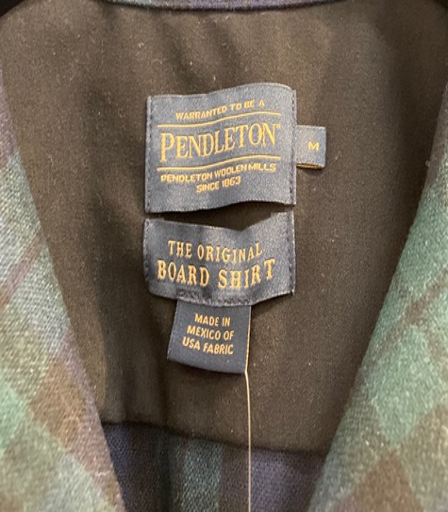
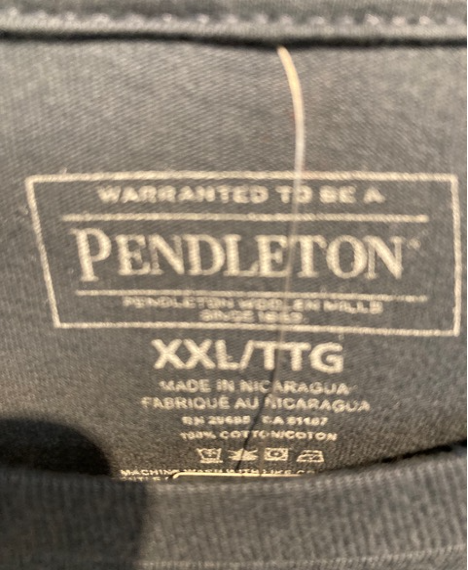
Illustrating the breadth of the company’s current foreign suppliers, not all of which are known for their steadfast commitment to human rights, the labels below are all from clothing at Pendleton’s Bridgeport Village store in Tigard, OR.
Most companies’ offshore production jobs and merchandising have gone to China, Southeast Asia and South Asia. China has captured the largest share of offshore production, but it is beginning to face increased cost competitiveness in countries such as Bangladesh, Sri Lanka, and Vietnam. Growing tension between China and the United States may also divert some business to other countries.
“US and Chinese policymakers certainly seem determined to reduce the two countries’ economic interdependence, built over many decades but now buckling under the weight of their animosities,” Chad P. Brown with the Washington, D.C.-based Peterson Institute for International Economics, wrote in late 2022. “Part of the reason is President Trump’s trade war, continued under President Biden. “A more recent motivating factor that may be spurring decoupling is the desire for increased diversification of imports to make supply chains for certain goods more resilient. Other drivers include human rights, democracy, and geopolitical concerns,” Brown wrote.
Online reviews suggest the discovery that Pendleton’s clothes are not made in the USA still comes as quite a surprise to many customers ordering online and visitors to the company’s retail stores and mills who are anticipating “local” products.
The particular surprise is the prevalence of “Made in China” tags on Pendleton clothing. It shouldn’t come as that much of a surprise since China is the world’s largest apparel exporter.
“Its leadership position has been weakening, but no other country can match its supply base, its range of skills, quality levels, product variety, completeness of its supply chain, or has the capacity to absorb its business.,” says Just Style, an apparel sourcing and textile industry news and analysis site. “In spite of the disruption of supply chains related to the pandemic and trade tensions with the US, the country continues to appeal to apparel buyers as rising wages are offset by efficiency and productivity gains through advanced manufacturing technologies.
“Disgraceful,” wrote one customer in a recent Pendleton review. “First off the sweaters that I ordered had labels saying made in China. Let me get this straight. I’m spending $269 on a sweater that was made in China? Get real. This company is falsely advertising that their wool sweaters are made in the USA with wool from the USA. Not cool at all.”
“This is a nice place to visit,” commented a visitor after a tour of the Pendleton mill. “There were lots of different woven products all over the store. We were surprised at how few items were actually made in the U.S.”
“Shame that most fabrication has moved overseas for cheap labor,” wrote another tourist. “Don’t really see where it has reflected in any lower prices for consumers.”
“It was nice to see that blankets were made in the USA and many were very beautiful, but the clothing for the most part is not,” commented another. “Some had a “Made in China” tag, which we found troubling. I asked about that and was told that the fabric was made there, but shipped out of the country to be assembled. Seriously?”
Meanwhile, some activists worry that Pendleton’s offshore manufacturers may not be committed to responsible management and safe workplaces.
“Certified factories that produce our merchandise are audited on an annual or bi-annual basis (based on certification status).” Pendleton says.
Pendleton Woolen Mills also endorses the Worldwide Responsible Accredited Production (WRAP) principles, which encompass human resources management, health and safety, environmental practices, and legal compliance and requires its suppliers to be fully compliant with these principles.
But the Clean Clothes Campaign, the garment industry’s largest alliance of labor unions and non-governmental organizations focusing on the improvement of working conditions in the garment and sportswear industries, is still concerned about Pendleton’s global operations and intends to examine the company more closely.
“Pendleton unfortunately is very opaque on its supply chain,” Paul Roelan, transparency coordinator with the Campaign, said in an email to me. “…many brands now disclose at least part of their supply chain according to the Transparency Pledge, and more and more are now disclosing that in an efficient way on the Open Supply Hub Unfortunately, Pendleton is not one of those.”
“Their page on supply chain just mentions the “WRAP” principles, which are extremely weak. In our “Fig Leaf for Fashion” report we’ve documented countless serious human rights violations, even resulting in many deaths, in WRAP-certified facilities. Apart from fires, there have been many cases of forced labour, child labour and other rights violations in WRAP-certified facilities. In our opinion, it is not at all a serious form of certification or auditing.”
In 2012, Pendleton vice-president Charlie Bishop presented the mayor of Washougal, WA with a blanket called “Keep My Fires Burning,” symbolizing efforts to keep the mill running and the importance of looking toward the future.
The fact is the future looks bleak for American clothing manufacturers, even with the appeal of “Made In America” tags.
Ten years ago, Consumer Reports said 61% of survey respondents believed American-made clothing was higher quality than foreign-made clothing and 78% would buy an American-made product over an identical one made abroad when given the choice. The publication even highlighted Pendleton Woolen Mills as a Made in America manufacturer.
In 2020, The Reshoring Institute surveyed nearly 500 Americans across the country and asked if they prefer to buy products that are labeled “Made in USA.” Would they be willing to pay more for these items? Nearly 70% of the respondents said they prefer American-made products. Slightly more than 83% said they would pay up to 20% more for products made domestically.
But apparel sales numbers don’t bear out a Made in America preference, except as a small marketing niche.
As Adweek has pointed out, “… expressed support of American brands and consumers’ willingness to buy those brands are two different things… This disconnect has long been known to academics and consultants who study brands.”
Currently, more than 97% of apparel sold in the United States is made in other countries, according to the American Apparel and Footwear Association. Contrast that with the 1960s, when about 95 percent of apparel worn in the U.S. was made in America.
Rather than returning manufacturing to the United States, a more likely scenario for Pendleton and other clothing companies is an increase in nearshoring, shifting more work closer to their customers, particularly to Mexico.
As the Wall Street Journal recently reported, “American and some foreign companies are shifting production and equipment to Mexico in pursuit of a manufacturing hub closer to the U.S. Many are relocating from Asia after a series of disruptions related to China during the pandemic, part of a burgeoning ‘nearshoring ‘trend.”
Pendleton Woolen Mills, an All-American “made-to-last” heritage brand, has been able to keep its fires burning only by becoming increasingly dependent on other countries to manufacture its products. With trade policy and cheap overseas labor continuing to push American apparel companies in that direction, Pendleton is already just a shadow of the Oregon and American brand it used to be. And as its products increasingly bear foreign manufacturing labels, their distinctiveness in the marketplace is diminishing.
Despite the company’s reliance on foreign manufacturing, in a recent Portland Business Journal interview, Jennifer Ingraffea, who became CEO of Pendleton Woolen Mills in June 2025, said she wants as many people as possible to know the stories of the American-made clothes and blankets the family-owned business has been crafting for over 150 years.
“I don’t think I’ve ever worked for a company that’s shy of two centuries of history. And for me, it was something that attracted me to the brand, and having that internal guidance and historical storytelling,” Ingraffea said.. “… at this point in time, Pendleton is at an inflection point, and it’s time to do a little bit of resetting and a little bit of transforming, and I have the history and the capabilities that lends itself to this situation. I think in a company that’s been in the world for as long as Pendleton has been, there’s a product focus that needs to be elevated. Not elevated in price, but it’s a time to really look at what we’re selling, who we’re serving as a consumer, identify how we describe them and then align the product to who those folks are.”
Because Pendleton is a private company, and doesn’t make its financials public, it’s not clear whether its shift to foreign manufacturing for its clothes has hampered sales. The only thing that’s obvious is that after years of growth in American manufacturing, its physical presence has withered back to where it started with just its Pendleton and Washougal mills.
Given the realities of the global marketplace, what would you have done and how should Pendleton move forward?
Maybe there’s a way back for the lyin’, cheatin’ opportunist, George Santos.
The embattled Congressman should look for inspiration to Al Sharpton, who gave the eulogy at the funeral for Tyre Nichols.
Sharpton is the poster child for redemption, at least in liberal Democratic circles. His prominence is illustrated by the NY Times’ decision to have his picture featured with its Wednesday, Feb. 2 “Today’s Headlines” story on the funeral, Memphis Gathers in Grief at Tyre Nichols’s Funeral.
Sharpton’s infamous rise in public notoriety has been well documented. As NPR put it in 2014, “Sharpton built a career as an incendiary racial avenger who for decades was drawn to interracial controversies as if they had some irresistible gravitational force.”
Still, he has recovered as an ally of liberals, even securing a political alliance with former president Barack Obama.
President Obama stood with the Rev. Al Sharpton at Sharpton’s National Action Network conference in April 2014 (Frank Franklin II/AP)
A 1987-1988 case that drew national attention revolved around Sharpton’s involvement with 15-year-old Tawana Brawley. A Black woman from New York, Brawley accused six white men of raping her and leaving her in a garbage bag smeared with and covered with racist words written in charcoal.
Sharpton accused government officials of trying to cover up for the rapists because they were white and led the way in spurring a national uproar over the case.
He was later rebuked and fined after a grand jury concluded that Brawley had not been the victim of a forcible sexual assault and that she may herself have created the appearance of an attack.
In 1991, Sharpton stirred up black fury in the Crown Heights area of Brooklyn, NY when a Jewish driver hit and killed a black boy, Gavin Cato, with his car.
At the boy’s funeral, Sharpton vilified Jewish “diamond merchants” who killed black children in Brooklyn.
Days of anti-Semitic riots culminated in the murder of Yankel Rosenbaum, an Australian Jew who had nothing to do with the incident, being stabbed to death in the midst of a mob of about 30.
The New York Post reported that after the driver of the car was cleared of charges and left for Israel, Sharpton flew to Tel Aviv to slap the driver with a civil suit. When a passer-by at Israel’s Ben Gurion Airport recognized Sharpton, she shouted, “Go to hell!” “I am in hell already,” Sharpton replied. “I am in Israel.”
In December 1995, during a Harlem protest stirred up by Sharpton, a black man entered Freddy’s Fashion Mart, a Jewish-owned clothing store, took out a gun, ordered the black customers to leave and set a fire that killed himself and eight other people.
Sharpton was accused of having spurred the devastation by delivering and facilitating incendiary racist and anti-Semitic comments on black radio stations and at the protest.
In Sept. 2013, the New York Post reported that Robert F. Kennedy Jr. had written in a previously secret diary, “Al Sharpton has done more damage to the black cause than [segregationist Alabama Gov.] George Wallace. He has suffocated the decent black leaders in New York. His transparent venal blackmail and extortion schemes taint all black leadership.”
The Democratic Party, while jumping at every opportunity to lambaste George Santos for his cavalcade of lies, continues to embrace Sharpton. President Joe Biden has even solicited Sharpton’s advice and met with him in the White House.
Like Nadia Vulvokov in the Netflix series Russian Doll, I expect Sharpton will continue to show up repeatedly at Democratic Party venues.
So, hey, in politics anything is possible. If he plays it smart, George Santos may enjoy a similar resurrection with the Republican Party. He could even run for president.
Read almost any story about the fraud perpetrated by a lying George Santos before his election to the House of Representatives from New York’s 3rd congressional district and you will see the blockbuster news attributed to the New York Times (NYT).
Certainly, the NYT made no effort to disabuse readers of that presumption.
In its Dec. 19, 2022 blockbuster story exposing Santos’ lies, “Who Is Rep.-Elect George Santos? His Résumé May Be Largely Fiction”, the paper attributed its discoveries to “…a New York Times review of public documents and court filings from the United States and Brazil, as well as various attempts to verify claims that Mr. Santos, 34, made on the campaign trail,…”
In a print introduction to a Jan. 5, 2023 podcast on the story, the NYT repeated this claim. “George Santos, the Republican representative-elect from New York, ran for office and won his seat in part on an inspiring personal story. But when Times reporters started looking into his background, they made some astonishing revelations: Almost all of Mr. Santos’s story was fake.”
But it wasn’t the NYT that broke the fraudster’s story.
It was the North Shore Leader, a local Long Island weekly newspaper with a circulation of about 20,000. And the North Shore leader exposed Santos well before the November election.
The leader has now raised the issue in a story titled “The Leader Told You So: US Rep-Elect George Santos is a Fraud – and Wanted Criminal”.
“In a story first broken by the North Shore Leader over four months ago, the national media has suddenly discovered that US Congressman-elect George Santos (R-Queens / Nassau) – dubbed “George Scam-tos” by many local political observers – is a deepfake liar who has falsified his background, assets, and contacts,” the story says.
Either the NYT failed to give credit where credit was due or the mighty publication utterly failed to check reporting done by a tiny local paper less than a 1-hour drive from the NYT Building on W. 41st St. in Midtown Manhattan.
By the way:
Neither the North Shore Leader nor the NYT newspapers have reported on another interesting journalistic matter tied to Santos. The NYT did report that Santos once told associates he was (in the NYT’s words) “a journalist at a famous news organization in Brazil,” but didn’t go deeper. According to ta Jan. 10, 2022 report by the Columbia Journalism Review (CJR), Gregory Morey-Parker, who briefly lived with Santos in New York eight or so years ago, told CJR’s Jon Allsop that Santos claimed to have been working at the time for Globo, the Brazilian media behemoth, as a reporter covering human-interest stories out of the US.
According to Morey-Parker, Santos also claimed to be an executive at Globo. When Allsop put this to Ali Kamel, the director-general of journalism at Globo, he described it as “a crazy story” and “a lie, pure and simple.” (Santos’s office did not return a request from Allsop for comment)
The liberal Oregon Center for Public Policy (OCPP), in its never-ending quest to soak the well-off, is advocating a big change in how capital gains are taxed.
The problem is the idea is misguided, unworkable and would hit Oregon’s middle class as well.
And if If you think the federal tax code is complex and labyrinthine now, you ain’t seen nothin yet if mark-to-market is put in place.
In the name of addressing income inequality, OCPP is proposing that capital gains on assets be paid annually rather than when the assets are sold, as under current law. In other words, if the value of your assets such as stocks, bonds, real estate, a business, or even a work of art. goes up, you would owe taxes on the increase, even if you didn’t sell anything. The proposed approach is called “mark-to-market”.
“Oregon currently has several tax breaks favoring capital gains income that collectively cost the state more than $1 billion per budget period,” the OCPP says in a just posted issue brief. “Lawmakers should reject any proposal to further cut taxes on capital gains income and reign in tax breaks that benefit capital gains income.”
The current system “allows the wealthy to amass vast fortunes,” OCPP argues. “Because such assets are highly concentrated in the hands of the rich, the income produced by the sale of those assets flow to the top,” the issue brief says.
One major problem with the mark-to-market proposal is that, despite OCPP’s attempt to position it as a tax-the-rich idea, it would affect all investors.
OCPP’s proposal would also be a nightmare to implement, particularly because it would require taxpayers to value assets annually.
And a share’s price at the end of a year reflects an unrealized gain or loss unless it is sold. As the Wall Street Journal has explained, ” A tax on unrealized capital gains thus amounts to a tax on unrealized future profits that in many cases will never be realized, except at losses—especially if added taxation increases the likelihood of unrealized profits. Remember Kmart, RadioShack and Blockbuster? Their stockholders once had unrealized capital gains.” At the end, they had nothing.
Changes in stock prices of publicly traded companies are usually easy to determine. Figuring the changing value of many other assets can be a lot tougher.
“Ownership of private businesses, artwork…and other luxuries, among other assets, are difficult to appraise,” according to the National Taxpayers Union Foundation. “These assets may have limited markets for them, or no markets at all, making valuation a guessing game. In such a scenario, naturally the incentive for a taxpayer will be to minimize the value of such assets while the incentive for revenue officials will be to maximize the value, setting up a highly-adversarial relationship that could lead to administrative difficulties from lack of independently-verifiable comparisons.”
OCPP’s proposal could also artificially drive down market prices. Savvy stock market investors, knowing their taxes will be impacted by their portfolio’s value at the end of each year, will be inclined to sell assets, driving down stock prices to minimize tax liability.
In an October 28, 2021 paper, the Congressional Research Service said another concern about mark-to-market is liquidity. Some high-income individuals may have no problem coming up with the necessary cash. Others, particularly middle-income taxpayers, might have a hard time doing so.
As S-Corporation Association of America put it, “…unrealized gains are not income. You can’t spend them. If you could, they’d be realized gains. And while the (Washington) Post and other observers are fond of talking up the ability of billionaires to borrow, most S corporation owners don’t have unlimited borrowing capacity. Depending on how leveraged their business is, they might have no capacity at all.”
Or as the National Taxpayers Union Foundation has opined, “Just because an investor’s underlying assets appreciate in a given year does not mean that the investor has sufficient cash to pay any tax liability.”
In short, OCPP’s mark-to-market proposal is a half-baked idea. It deserves a quick demise.
ADDENDUM:
On Jan. 17, 2023, the Washington Post reported that a group of legislators in statehouses across the country has coordinated to introduce bills simultaneously in seven states later this week, with the same goal of raising taxes on the rich.
“The point here is to make sure we do at the state level what is not being done at the federal level,” said Gustavo Rivera (D), a New York state senator who is part of the seven-state group.
The state legislators said they would like to try such ideas as a test case for future national policy while acting collectively to minimize the threat of people moving to a nearby lower-tax state. Sponsors told The Washington Post that they will introduce their bills on Thursday, January 19, in California, Connecticut, Hawaii, Illinois, Maryland, New York and Washington.,
Skeptics of wealth taxes say the idea might be even worse on a state level than a national level, since the rich can easily move to another state, the Post reported.
“High net-worth individuals are fairly mobile, and it is much easier to change residency to another state than it is to leave the country,” said Jared Walczak, who works on state tax policy at the right-leaning Tax Foundation.
In addition, he says, assessing the value of a person’s wealth would be challenging for state bureaucrats and sometimes lead to unfair results, as in the case of Silicon Valley founders, whose companies may have huge valuations on paper that are hard to assess or tax in a straightforward way.
“Just because a company might sell for hundreds of millions of dollars in the future doesn’t mean that its current owners have any significant wealth,” Walczak said. The on-paper net worth of billionaires fluctuates drastically as companies’ stock prices or valuations rise and fall, making it hard to figure out how much they should pay if taxed on that wealth, he added.
In four states, lawmakers say they will float versions of a tax on wealthy people’s holdings, or so-called “mark-to-market” taxes on their unrealized capital gains. But other states will pitch more conventional tax proposals.
The cryptocurrency firm FTX has begun an effort to claw back payments made by its former management to politicians. FTX filed for Chapter 11 bankruptcy protection in the U.S. on Nov. 11, 2022. John J. Ray replaced Sam Bankman-Fried as FTX’s CEO.
The Oregonian has reported that a $500,000 contribution to the Democratic Party of Oregon PAC came from Nishad Singh, director of engineering at FTX.
FTX “intends to commence actions before the bankruptcy court to require the return of such payments, with interest accruing from the date any action is commenced”, the company said on Dec. 19, 2022, sharing an email address – FTXrepay@ftx.us – that recipients could use to voluntarily return money.
“Recipients are cautioned that making a payment or donation to a third party (including a charity) in the amount of any payment received from a FTX contributor does not prevent the FTX debtors from seeking recovery from the recipient or any subsequent transferee,” FTX added in a statement.
FTX.US made contributions totaling $21,882,932 in the 2022 election cycle, with 81.44% of that going to Democrats.
The Oregon Democratic Party hasn’t yet said what but will do so with Singh’s contribution. As of Jan. 5, 2023, the PAC had a cash balance of $333,139, according to the Oregon Secretary of State. That is down substantially from the $691,532 it had on hand as of Nov. 28, 2022, according to OpenSecrets.org.
My advice to the party. Take the high road. Don’t stall in hopes the public and the media will tire of the whole FTX affair. Repay the money. It’s the honorable thing to do.
A review of the campaign finance records of Republican George Anthony Devolder-Santos, the beleaguered winner of New York’s 2022 3rd Congressional District race, reveals that his biggest single contributor was FTX.US, part of FTX CEO Sam Bankman-Fried’s collapsed crypto empire.
According to OpenSecrets.org, a nonprofit that tracks data on campaign finance and lobbying, the employees and owners of FTX.US contributed a total of $29,000 to Santos’ campaign.
FTX halted withdrawals in November and filed for bankruptcy after customers rushed to pull their holdings from the cryptocurrency exchange.
FTX.US made contributions totaling $21,882,932 in the 2022 election cycle, with 81.44% of that going to Democrats.
The Oregonian has reported that a $500,000 contribution to the Democratic Party of Oregon PAC came from Nishad Singh, director of engineering at FTX. Pressure is building for recipients of contributions from FTX-affiliated donors to return the money. The Oregon Democratic Party hasn’t yet said it will do so. The PAC had $691,532 cash on hand as of Nov. 28, 2022, according to OpenSecrets.org.
FTX has started trying to claw back payments made by its former management to politicians, The Guardian reported on Dec. 22, 2022.
FTX “intends to commence actions before the bankruptcy court to require the return of such payments, with interest accruing from the date any action is commenced”, the company said, sharing an email address – FTXrepay@ftx.us – that recipients could use to voluntarily return money.
“Recipients are cautioned that making a payment or donation to a third party (including a charity) in the amount of any payment received from a FTX contributor does not prevent the FTX debtors from seeking recovery from the recipient or any subsequent transferee,” FTX added in a statement.
Given the current scandal over Santos’ lying about his personal, academic and professional background, it’s surprising that another significant contributor to his campaign was PACS and individuals associated with prominent companies that apparently didn’t look into Santos’ background.
This includes Fisher Investments, Forman Capital Investments and Majority Committee PAC, a Leadership PAC associated with Rep. Kevin McCarthy, (R-CA), who now wants Santos’ vote to become Speaker of the House.
Liar-elect Santos also raised a substantial portion of his $2,933,614.16 in contributions reported to the Federal Election Commission (FEC) from out-of-district and out-of-state sources, including Patriots AlwaysTriumph, a Leadership PAC affiliated with Rep. Patrick Fallon (R-Texas).
Fortunately, it looks like most Oregonians showed some good sense. Only three people in Oregon contributed a total of $240 to Santos, according to the FEC.
Love Oregon and want to celebrate it this holiday season with a gift made here? Go to a “Made in Oregon” store, right?
“We are proud to offer the highest quality products made by Oregon vendors since 1975,” the retailer proudly proclaims.
On its website, the company points proudly to how it opened its first store at Portland International Airport in 1975 and has since “…built a reputation as a purveyor of high-quality, local products made, designed, or grown in Oregon.”
But “made, designed, or grown in Oregon” leaves a lot of wiggle room and the company takes advantage, allowing companies with limited Oregon connections to sell their products at the Made in Oregon stores. It’s the word “designed” in Oregon that opens the door wide enough to drive a truck through, enabling “localwashing” to prosper.
Puffin Drinkwear, for example, sells quirky insulated beverage covers in the form of jackets , vests, parkas, sweaters and even mini-sleeping bags designed to keep 12 ounce cans and bottles cold or hot.
The Lumberjack from Puffin Drinkwear
The Bend-based company highlights its Bend, OR roots and has gotten a lot of media attention. The Colorado Sun, a widely read digital news outlet in Colorado, recently highlighted the company’s products because of its Bend ties. Uncommon Goods pitches Puffin products as “CREATED IN OREGON BY Tyrone Haze, born and raised in the Pacific Northwest.”
But claiming they are “Made in Oregon” is a stretch.
The FAQS section of its website says, “We work with a variety of manufacturers across the globe. We’ve thoroughly vetted each one to be ethical and good brand partners.”
I checked out the tags on Puffin Drinkwear products at the Washington Square mall’s Made in Oregon store and found they were “Designed in Bend” but “Made in” lots of other places, including China, Cambodia and Vietnam. None of the products on the shelves said they were “Made in America” or “Made in Oregon”.
A close look at multiple other products in the Made in Oregon store revealed the same deceit.
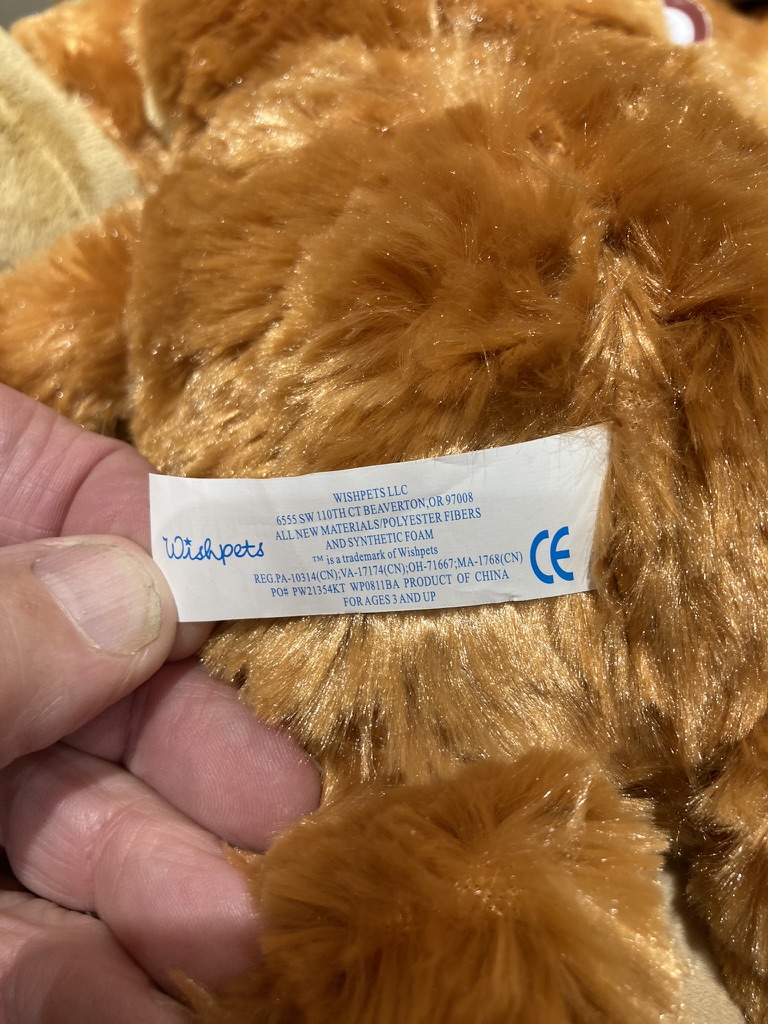
Take the Sasquatch-like plush bigfoot product made by Wishpets LLC of Beaverton, a “Leading designer and manufacturer of plush toys.” The bigfoot tag said “Product of China”. Elisa Martinez, a Marketing & Sales Assistant for Nature Planet | Wishpets®, said all of Wishpets’ products are made in China.
Plush bear from Wishpets
Other products on display that were clearly manufactured in other countries included a “Welcome to Oregon” bear also “Made in China”
and dozens of Hydro Flask bottles which, like Puffin Drinkwear, highlight that they are “Designed in Bend, Oregon”. The company’s website reinforces the message: “Our HQ is literally nestled into a Pacific Northwest wonderland– Bend, Oregon. We’re ridiculously lucky to have always been surrounded by mountains, rivers and lakes. It’s in our DNA.”
The website neglects to mention that Hydro Flask products are manufactured in China.
Then there were the organic cotton socks on display from “Replant Pairs”.
The socks are a product of Tabbisocks, which doesn’t even bother to say the socks are designed in Oregon. “Tabbisocks weaves Japanese craftsmanship from the East with big personality from the West,” it says. “Each sock is made with love in Nara ((Japan), a city steeped in tradition and advanced sock culture.”
Displayed on the apparel racks were Oregon-focused t-shirts by Graphletics. The company’s website says it was founded by Rick Gilbert in his garage in NW Portland in 2013 and has grown into a brand that’s sold across the U.S. and internationally. Its flagship retail location in SE Portland was even recently written up in the New York Times as one of five places to visit as “Sellwood-Moreland has become easier to reach, the working-class enclave has drawn creative entrepreneurs and a young, hip crowd.”
Sure, the store has an Oregon vibe, but its t-shirt at Made in Oregon was “Made in Nicaragua”.






























 ThinkingOregon
