Is It Time To Bring Back “Bum”?

On June 17, Portland’s alternative weekly, Willamette Week, posted a story titled, “Tires Slashed, Mirrors Shattered Along Laurelhurst Street Where Tensions Between Neighbors and Houseless Residents Continue to Escalate.” 

“Houseless residents”? 

How did the media and much of liberal Portland get to the point where people who slash tires, shatter car mirrors, rip out landscape lights, overturn trash and recycling bins, destroy landscaping and damage parking strip trees are simply described as “houseless,” as though that’s their defining characteristic? 

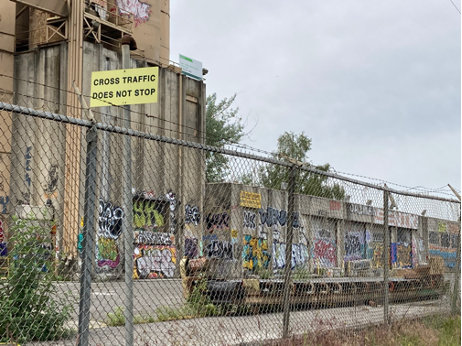
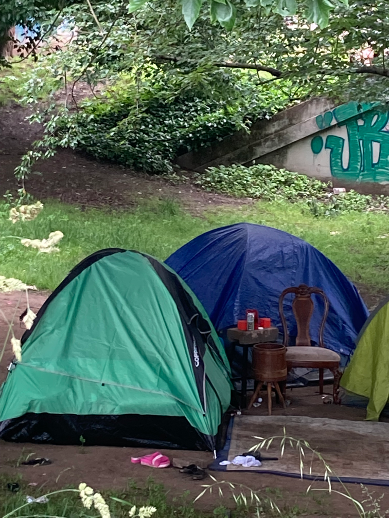
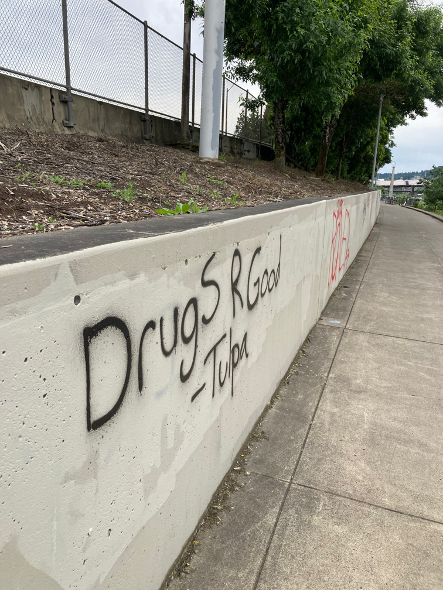
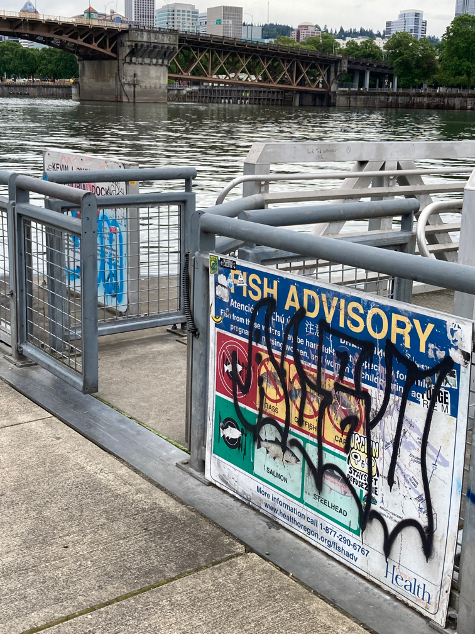
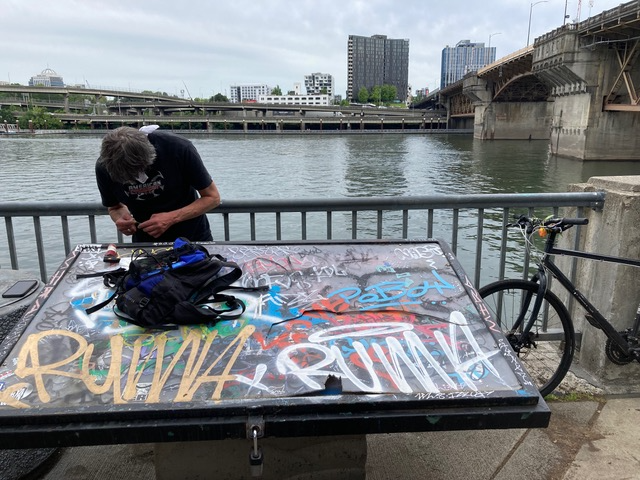
How did we get to the point where people doing this:

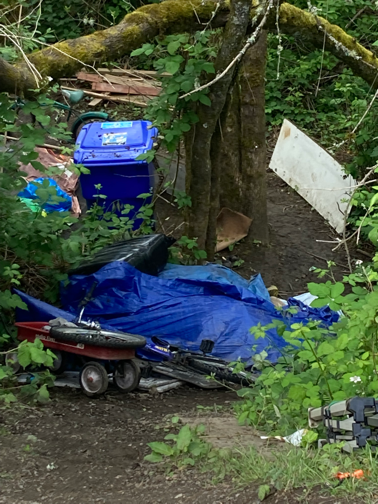
or this:

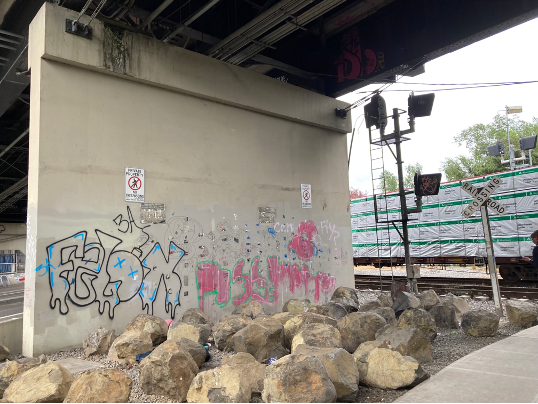
or this:

are excused because they are “homeless” or “houseless” or some other insipid term? That’s just plain criminal.

Some would say calling some people bums is offensive, callous and unfeeling, that it’s not “fair” to lump people together for any reason.

Being homeless or houseless should not be a free pass to a different set of behavioral expectations. Being homeless doesn’t give somebody license to break into a small business, deface property with graffiti, shoot at each other and unsuspecting pedestrians, bury sidewalks and parkland under trash and garbage, pollute waterways , steal and chop up bicycles and cars, openly sell and buy drugs, assault  random passers-by and litter private properties with discarded syringes.

On June 20, KGW8 television reported on incidents at a tent site on the corner of Southeast 33rd Avenue and Powell Blvd. in Portland next to Grover Cleveland High School’s track and sports field. 

“We live in a war zone basically and there’s nothing I can do,” said Elias Giangos, who said he’s lived in the neighborhood for the past seven years. He and his wife plan to move out at the end of the month. Giangos said he was assaulted multiple times by those living at the campsite. Scars from the time he was stabbed by someone living at the campsite disfigure his left arm.

“Even when I was getting assaulted, we called the police, there’s no response,” he said.

Things recently got so bad with the so-called homeless around Multnomah County’s Gladys McCoy Building in Portland across from Union Station that the county hired a firm to assess the risks to county employees and recommend responses. 

According to the Physical Security Vulnerability Assessment of the area in and around Multnomah County’s Gladys McCoy Building prepared by Eric Tonsfeldt / Operations Manager – Foresight Security Consulting, “The density of unsanctioned homeless camping immediately around the McCoy Building represents the most immediate, consistent, and palpable threat to the safety and security of the employees and contractors in the McCoy Building.”

“The building is currently surrounded by ongoing, frequent drug abuse and distribution, violence, and aggression within dense areas of unsanctioned houseless camping.,” the report said. 

The report said the following crime occurred just within the 1/8-mile area centered on the McCoy Building between 7/19/2020 and 7/18/2021: 33 assaults, 79 instances of larceny, 7 instances of vandalism and 35 drug/narcotics offenses.

Those aren’t the to-be-ignored actions of “the homeless.” They’re the actions of vagrants, malcontents, addicts, crooks, criminals….bums.

.

Coming Soon: The Museum of Me

In another bow to ethnic division, on June 13, 2022, President Biden signed into law a bill (H.R.3525) authorizing a commission to build a possible National Asian American and Pacific Islander (AAPI) museum in Washington, D.C.

Introduced by Rep. Grace Meng (D-New York) in May 2021, the bipartisan bill cleared the House on April 26 and the Senate on May 18, both by unanimous consent.

The signing was couched as a way to counter Asian Americans and Pacific Islanders remaining on the margins of American education, with little mention in classes beyond the topics of Pearl Harbor, immigration and the U.S.’s territorial interests in the Pacific. A museum would be key to combating the stereotypes and misconceptions that drive anti-AAPI discrimination, supporters say.

If built, an AAPI Museum would follow on the National Museum of African American History & Culture, which opened on the National Mall in Washington, D.C. in 2016.

It would also supplement the National Museum of the American Latino. Legislation calling for the Smithsonian to establish that $800 million dollar museum passed in Dec. 2020.  “The new museum will be the cornerstone for visitors to learn how Latinos have contributed and continue to contribute to U.S. art, history, culture, and science.,” according to the Smithsonian. “Additionally, it will serve as a gateway to exhibitions, collections, and programming at other Smithsonian museums, research centers, and traveling exhibition services.”

At the rate things are going, today’s pandering politicians, who, as Blake Smith, says, eagerly “offer cultural victories instead of substantive ones,” will eventually advocate the creation of museums for every single ethnic group in America. Where they will be put in an already crowded mall is unknown. 

Some might argue that recognition of America’s diversity through such museums is a good thing. I’d offer a “Yes, but”… There’s no question that education about our multifaceted country can combat stereotypes and misconceptions, but excessive focus on identity is not such a good thing when it exacerbates divisiveness and encourage a splintering of the populace.

Oregon’s new K-12 Ethnic Studies standards, for example, were well-intentioned, but are a prime example of identity politics run amok. 

Kindergarten Standards, for example, include the following: *Describe how individual and group characteristics are used to divide, unite and categorize racial, ethnic, and social groups” and *Develop an understanding of one’s own identity groups including, but not limited to, race, gender, family, ethnicity, culture, religion, and ability.” Good grief!

Colt Gill, the Director of the Oregon Department of Education, clearly sees the K-12 education universe as nothing more than an assemblage of distinct and maligned minorities. This is the kind of identity politics that foments perilous division of our state and our country. Rather than emphasizing common values and interest, Gill’s identity politics stresses differences and creates a feeling of ‘zero-sum’ competition between groups. 

One problem with this kind of identify politics is that it leads to even more minority designations. “Once identity politics gains momentum, it inevitably subdivides, giving rise to ever-proliferating group identities demanding recognition,” says Amy Chua in Political Tribes.

And that leads to an AAPI Museum.

As for highlighting Asian Americans with a new museum, one problem is they are far from a monolith. Instead, they have a complex history and cultures.  Even the term “Asian American” encompasses dozens of ethnic groups of Asian descent. Just Southeast Asians, for example, includes Filipino, Vietnamese, Cambodian, Thai, Hmong, Laotian, Burmese, Indonesian and Malaysian. 

 An analysis from Common App, a nonprofit that allows prospective students to apply to more than 1,000 member colleges using one application, noted that the term Asian American can refer to around 50 ethnic groups. “While Asian American was a term established by activists in the 1960s as a means to build political power, it’s also been criticized for obscuring the immense diversity among those it purports to cover…,” notes a Vox article, part of an Asian American identity series.

The analysis also points out a “prominent shortcoming” of the “Hispanic” category for completely concealing the racial identities of its members. The analysis found that, in 2021, half of the applicants identified as white.

What are craven politicians going to endorse next? A German Museum and an Irish Museum? The high immigration numbers in the 1800s were largely fueled by Irish and German immigrants.  A Hungarian Museum? The Hungarian revolution in 1956 led to a burst of Hungarian refugees coming to the United States, including some families who settled in my hometown in Connecticut. Maybe an Eastern European Museum?

The 1959 Cuban revolution drove hundreds of thousands of Cubans to the United States. Given their concentration in Florida, Gov. Ron DeSantis and other politicians seeking the Cuban vote could probably be counted on to endorse a Cuban Museum on the National Mall.

The way things are going, we’ll end up with a Museum of Me. Or a Museum of You.

Space for Humanity: Behind The Scenes of Space Flight PR

Want to promote your business with tax-deductible dollars? Look to the privately owned space industry for inspiration.

Recent media have been full of stories celebrating Katya Echazarreta traveling into space on Saturday, June 4, soaring up 66.5 miles (107 km) aboard Jeff Bezos’ Blue Origin spaceship, New Shepard.

The San Diego Union-Tribune reported that 26-year-old electrical engineer and five other passengers launched their sub-orbital flight in West Texas at 6:26 a.m. PDT, reached the edge of space about five minutes later, were briefly treated to zero gravity and then softly parachuted to the ground, kicking up a large cloud of orange dust.

What made it so newsworthy?  

NBC News ran an Associated Press story before the flight highlighting that Echazarreta would be the first Mexican-born woman and one of the youngest women to fly to space, Echazarreta was born in Guadalajara, Mexico and later moved to San Diego, CA. After the flight, ABC News Chicago blared, “Blue Origin launches first Mexican born woman into space.”

But the Mexican angle alone probably wasn’t enough. The story also likely gained traction because it was pushed by Space For Humanity, a Denver, CO-based 501(c)(3) non-profit that sponsored Echazarreta’s trip. Not mentioned in the breathless stories about the flight was that Space for Humanity paid Blue Origin to take Echazarreta on the flight.  

And none of the stories noted how much Space for Humanity paid from donations to send Echazarreta on a spaceship owned by the second-wealthiest person in the world. An inquiry to Space For Humanity didn’t generate a response and Blue Origin has not divulged ticket prices.

Space For Humanity presents itself as an organization created to sponsor and send community leaders and change-makers to space. The non-profit anticipates crews will fly with Virgin Galactic, Blue Origin, World View, and Space Perspective. “We train, educate and empower emerging leaders to ensure an inclusive future in space,” the organization says. 

“When I started Space For Humanity, it was under the deep belief that the Overview Effect and giving people the opportunity to experience Space for themselves, would provide a powerful conduit for creating global change,” said the non-profit’founder, Dylan Taylor.

Space For Humanity’s Board of Directors include Ryan Kriser, founder & CEO at Helios Capital, Sarah Cruddas, the host of Contact on Discovery Channel & Science Channel, Sangeet Kaur Sood, a space enthusiast and Andrew Aldrin, Director of the Aldrin Space Institute at Florida Institute of Technology.

The non-profit’s Board of Advisors is a large collection of space-related individuals, including current and former NASA astronauts, professors, entrepreneurs, the founder & Emeritus Chair at the SETI Institute and the Chairman of the Space Advisory Board for Virgin Galactic.

It’s not clear why all these people are overseeing the solicitation of public contributions for flights on the space ships of wealthy companies.  

How much has been donated to Space for Humanity so it can send people up into space?

In its online Annual Report, it says 2021 revenue totaled $3.76 million, including tax deductible contributions of $1 million from Blue Origin, $1.24 million from Virgin Galactic X Omaze and $1.5 million from individuals.

But you’ll have to take Space For Humanity’s word. All non-profits are required by law to submit to the IRS an annual financial report called a Form 990. Space for Humanity doesn’t appear to have submitted one since 2019. 


Crypto Corruption: A Campaign Finance Cover-Up in Oregon

Like the notorious Anna Delvey, who came out of nowhere to seduce gullible New Yorkers, Carrick Flynn emerged from the ether in February 2022 to announce he was running in the Democratic primary for Oregon’s new Congressional District 6 seat. 

In the following months it came out that his biggest financial backer was a political action committee, Protect Our Future PAC, funded largely by a crypto billionaire, Sam Bankman-Fried, a 30-year-old American “Master of the Universe” who lives in the Bahamas. 

Then, late in the race, the Justice Unites Us PAC, which said it was all about mobilizing Asian voters, pumped $846,000 in independent expenditures Flynn’s campaign, a white guy if there ever was one. Justice Unites Us identified itself online as “A project of the Family Friendly Action Fund, a section 50©4) social welfare organization.”

“AAPI people are literally under attack,” says the PAC’s website. “We need to build political power and ensure our voices are heard in the political process.”

Who was behind the Justice Unites Us PAC? Oregon voters didn’t know. 

Like pop-up stores that show up during the Christmas holidays, the PAC only popped up on March 22, 2022 (FEC Committee ID #: C00810606). In its report to the FEC for the first quarter of 2022, the PAC reported raising and spending zero dollars. After the end of the quarter, it disclosed it had disbursed $846,581.14 on April 5, 2022 for “canvassing” in support of Flynn.

On April 15, 2022, the PAC filed paperwork with the Federal Election Commission so it could delay filing its next report and identifying its donors, until after the May 17 primary:

Flynn lost the race, but only now do we learn that every single penny of  the money Justice United donated to Flynn’s campaign came from a donation Sam Bankman-Fried’s Protect Our Future PAC  made to Justice United.

Why Bankman-Fried felt this subterfuge was necessary is unclear, since he was already publicly identified as the man behind Protect Our Future. Whatever his reasons, it allowed his money to hide behind campaign finance reporting rules and prevented Oregonians from full knowledge of Flynn’s backers.

Supposedly, Flynn’s campaign was unaware of the subterfuge, just as supposedly, Protect Our Future didn’t coordinate with Flynn’s campaign in producing a barrage of radio, television and digital ads, lawn signs, direct mail, and get-out-the-vote phone calls.

Voters deserve better. 

Lake Oswego’s Demolition Tax: A Sheep in Wolf’s Clothing

NOTE: I initially titled this “A Wolf in Sheep’s Clothing” to convey the duplicity in Lake Oswego’s demolition tax. I changed it to “A Sheep in Wolf’s Clothing” because I think that better conveys that a demolition policy pitched as an aggressive effort to preserve older homes is, in fact, nothing of the sort as it is unlikely to prevent any demolitions. Instead, it will just raise citizen costs. )

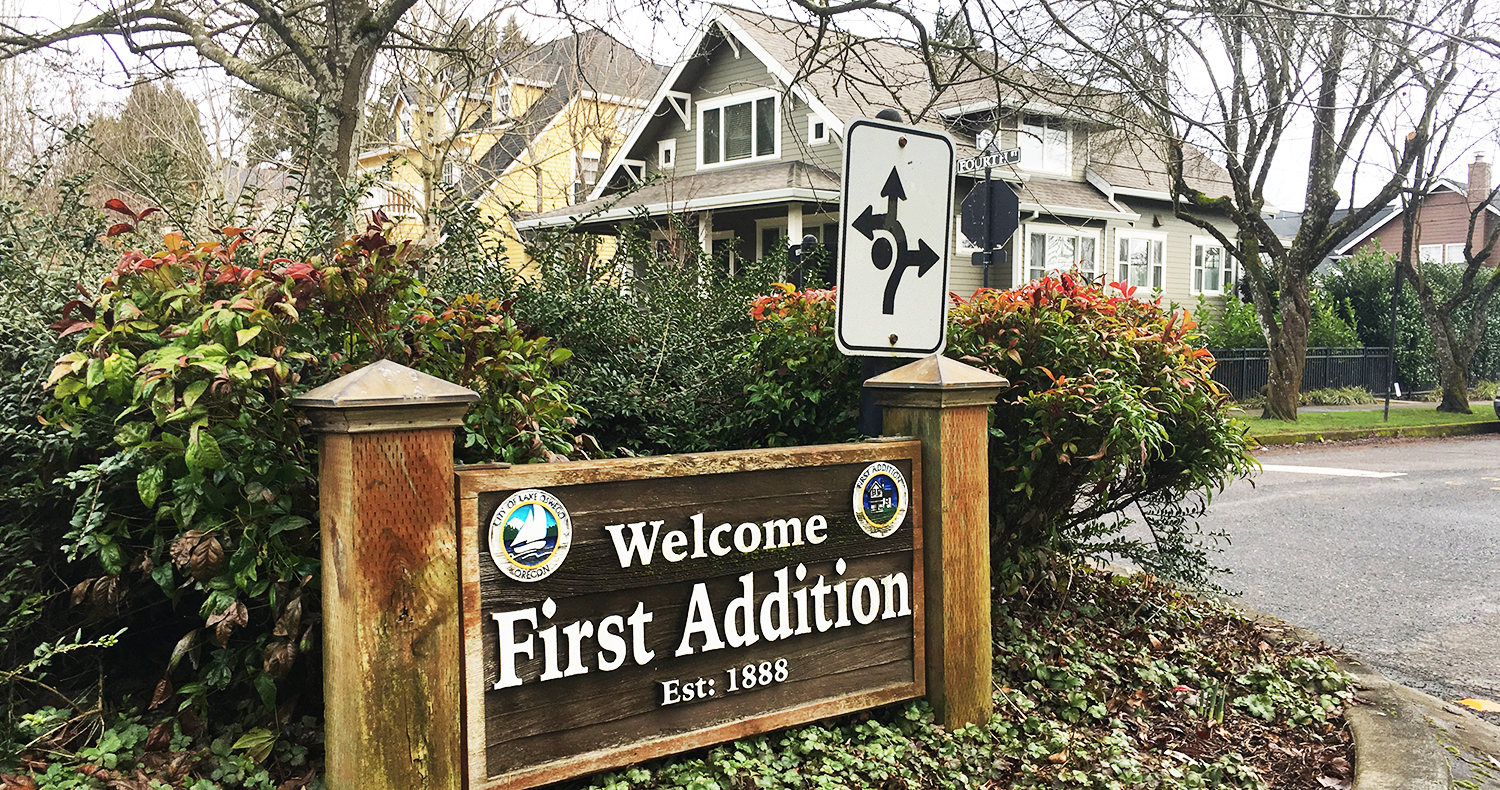
In 2019, sixty-seven home demolition permits were issued in Lake Oswego. Alarmed at the erosion of Lake Oswego’s traditional neighborhoods, particularly First Addition, a hue and cry went up to preserve some of what was still left.

The result, establishment of a $15,000 tax if a single-family dwelling or duplex was going to be demolished, was portrayed by many as an impactful effort to slow demolitions, but it was nothing of the sort. In the end the demolitions have continued and the tax was little more than a pure and simple money grab.

Although Article 24.06 of the city code notes that  “The demolition of residential structures in the City of Lake Oswego has reduced the diversity of housing stock and decreased the availability of affordable housing within the City,”  the article goes on to make it clear that  “The tax is strictly for revenue purposes, to provide funding to maintain City park properties and facilities.” The original goal — raising $400,000 annually for parks maintenance.

The demolition tax is a questionable way to raise money from citizens.

As Judge Glock, the Chief Policy Officer at the Cicero Institute, recently observed in City Journal, “Though largely hidden from the public, fees and charges account for most of the growth in government over the past 70 years and have become the top source of revenue for state and local governments.

Two factors drive this new reliance on special charges. First, governments are expanding the “businesses” they run—hospitals, universities, airports—and forcing users to pay more for them. Second, governments are using charges to avoid voter opposition to, and constitutional restrictions on, raising taxes.”

Earlier this month, the City Council redefined what constitutes a demolition vs. a remodel, but didn’t change the tax. And again the tax was publicly positioned as a preservation move. “The primary idea in my mind is to maintain the existing housing stock that’s there and keep the character of the neighborhood (by disincentivizing demolition),” said City Councilor Daniel Nguyen. 

But all involved have to know that a $15,000 tax will not discourage demolition of a home in Lake Oswego or preserve affordable housing. It will not prevent what theLake Oswego Preservation Society describes as “Charmicide”, people moving to an area to live because of its charm, then demolishing the existing building stock to build something different thus removing the charm that attracted the new residents in the first place. 

In April 2022, Lake Oswego homes sold for a median price of $858K, up from $600,000 in April 2018, according to Redfin.  And many new homes built to replace older demolished properties have sold for considerably more. 

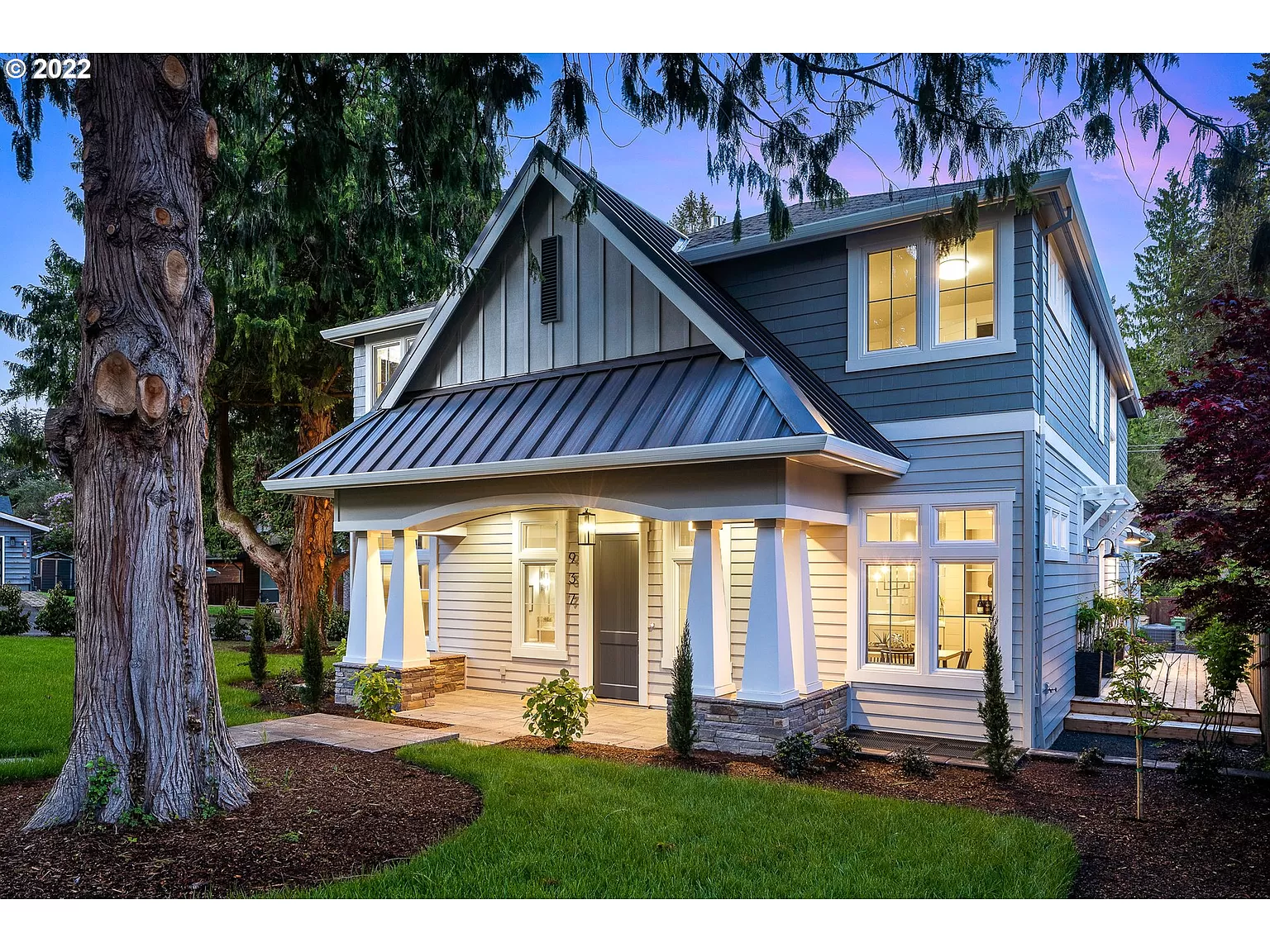
For example, a modest older house in First Addition that sold in 2020 for $586,000 was demolished and replaced with a 3,922 sq ft house (described as “A confluence where good ol’ American farm style meets sophistication.”) that sold for $1,965,000 in February 2021. Zillow puts the current value of the home (below) at $2,111,200.

A $15,000 tax on the demolition of the old house in this case was surely irrelevant. just as it will be for any future demolitions in Lake Oswego. Drive or walk around First Addition and the proliferation of large homes that have replaced smaller ones is evident everywhere. And market forces mean the trend will continue.

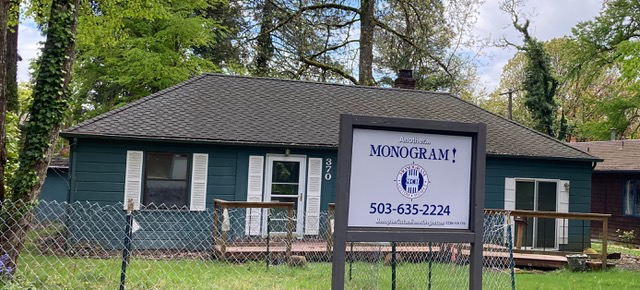
Monogram followed this approach when it bought an old home at 937 9th St. in Lake Oswego  for $600,000 in March 2021.

Former home at 937 9th St., Lake Oswego, OR

Monogram demolished the older home and built in its place a 3-level 5-bedroom 4-bathroom 3,862 sq. ft. home (“Legendary Traditional Monogram Design with spacious modern living spaces”) on the market for $2,250,000 as of May 27, 2022.

937 9th St., Lake Oswego, OR

A 3-bedroom 2-bath 1,008 sq. ft. home on 9th St. in Lake Oswego (below) that was built in 1948 on a 7,500 sq. ft. lot will likely meet the same fate.

The property sold on Oct. 29, 2021 for $775,000. If Monogram follows its practices with similar properties, the house will soon be demolished and replaced with a considerably more extravagant structure.

The fact is, the quaint First Addition of old, platted in 1888 and 1925 and once praised by the American Planning Association for its “housing variety and affordability (and) small-town atmosphere,” will soon be no more. And the demolition of older homes throughout the city is going to continue, with or without the demolition tax.

 To believe otherwise is willful self-delusion.  


Portland Public Schools: Enrollment Down/Spending Up

Public school enrollment is plunging in Oregon and across the country. The New York Times calls it “a ‘Seismic Hit’ to Public Schools, “supercharged” by the Covid-19 pandemic. 

Enrollment at the country’s public schools have declined by at least 1.2 million students since 2020, according to a recently published national survey.

In 2016, PPS said, “Based on demographic studies conducted by Portland State University, it is anticipated that enrollment will level off at about 54,383 students by the 2030/31 school year under the PSU Medium Growth Scenario .”

Oh well.

Overall enrollment in Oregon has declined by almost 30,000 students since 2019-2020, slipping from 582,661 in 2019-2020 to 553,012 in 2021-2022. Oregon’s experience has generally followed national trends which are showing enrollment losses in city districts and growth in rural, suburban and town districts, according to the Burbio school tracking site. 

Some of the enrollment declines are likely due to parents frustrated with remote schooling, some to frustration with curriculum and “woke” instruction. Declines may also be attributed to economic dislocation of families, a decision that home schooling or charter schools were simply preferable or simply demographic changes. 

Portland Public Schools, the state’s largest district, is seeing the largest enrollment declines. Total enrollment in the district has dropped from 48,559 in the 2019-2020 school year to 45,123 in the 2021-2022 school year. District officials are projecting total enrollment of 41,723 in the next school year, a decline of another 3,400 students.

And yet, the Portland Public Schools budget keeps growing.

On May 24 2022, the Portland Public Schools board passed $1.89 billion budget for the 2022-2023 school year, This compares with a $1.5 billion budget for the 2018-2019 school year, when enrollment totaled 48,677 students, 6,954 more than expected enrollment of 41,723 in 2022-2023.\

Portland Public School central staff has risen 67% since 2017.  Elizabeth Thiel, Portland Association of Teachers President said in The Oregonian, “Since 2017, for example, there has been a 67% increase in the number of academic administrators in the central office. Over the same period, the central office budget has grown twice as fast as what PPS spends on frontline educators and support staff who deal directly with students, based on Portland Association of Teachers’ analysis of PPS’ budget documents.”

On May 25, OPB reported that after the school board’s budget vote, Superintendent Guadalupe Guerrero,  board members, teachers, and the few parents remaining at the end of the meeting all agreed on the need to head down to Salem next year to lobby the legislature for more school funding.

More. Ever more.

Warning: GS Labs Covid Testing Is Back

They’re back.

With Covid-19 on the rise in Oregon, GS Labs apparently sees an opportunity to rip people off again. 

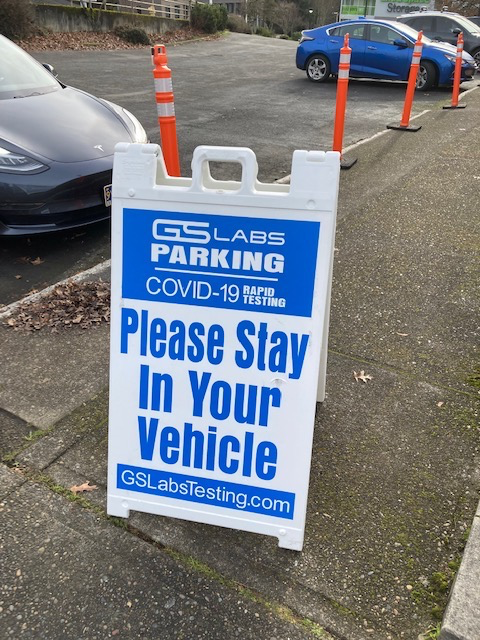
In January, a GS Labs Covid-19 testing site popped up at a former restaurant at 10935 SW 68th Parkway in Portland. Now it’s back. And, as before, it’s charging exorbitant rates.

Its practices are particularly egregious since the federal government will send people Covid tests for free.

The government announced its most recent free test program on May 17, 2022.  U.S. households are now able to order an additional eight free at-home tests at COVIDTests.gov—bringing the total number of free tests available to each household since the start of the program to 16. 

People who have difficulty accessing the internet or need additional support placing an order can call 1-800-232-0233 (TTY 1-888-720-7489) to get help in English, Spanish, and more than 150 other languages—8am to midnight ET, 7 days a week. 

When I stopped by GS Lab’s testing site on Friday, May 20, a worker told me I needed to schedule an appointment online. The basic test cost (“The cheapest option”, he said) would be $179 for a rapid antigen test.  A standard PCR test, which would take a couple days to get results, would be $229; a rapid PCR test would be $299. All would need to be paid for in advance online. GS Labs does not accept Medicare, he said.

The GS Labs website for an appointments at the 68th Parkway location notes,:“Apple Health(WA), Medicare/Medicare Supplement Plans, Medicaid, Tricare, GEHA, VA Plans, Bridge Plans, Oregon Health Plan (OHP) are not accepted. We also do not accept and will not file any claims to an auto, dental, life or vision policy.”

The general GS Labs appointments website allows visitors to pick a location in 10 states across the country (sadly, that’s up from eight in January), view available appointments and select a payment option. Unfortunately, GS Labs has set up five testing sites in Washington, including one in Vancouver.

Formed in January 2020, GS Labs spun out of a clinic, 88 Med, owned by City+Ventures, a privately held Omaha, Nebraska-based investment and development company. 88 Med specialized in cosmetic procedures and hormone treatments. 

City+Ventures was founded in 2012 to pursue strategic business and real estate opportunities both locally and regionally. Two men, Danny White and Chris Erickson, co-founded the company and are now co-owners. White has a B.S. in Business Administration from Skidmore College in New York. Erickson has a B.S. in Civil Engineering from Iowa State University.

The company’s website says, “We are a group of business savvy, community-minded individuals who invest our time and capital into developing, enhancing, and promoting growth in companies and communities.

Based on its covid testing practices, “business savvy” might apply, but clearly not “community minded”.

Some health insurers have refused to pay GS Labs’ fees, contending that the laboratory is price-gouging during a public health crisis, the New York Times reported in Sept. 2021.

A Blue Cross plan in Missouri sued GS Labs over its prices, seeking a ruling that would void $10.9 million in outstanding claims. In August 2021, the insurer claimed that the fees were “disaster profiteering” and in violation of public policy.

Suburban Seattle-based Premera Blue Cross sued GS Labs on Oct. 14, 2021, alleging that the company was exploiting the COVID-19 pandemic by overcharging for COVID-19 testing. Premera alleged that GS charged prices ranging from $380 to $979 per test, which often amounted to 10 times more than what other labs were charging.

Premera further alleges GS Labs “peppers its claims with falsehoods,” including false diagnoses to get higher payments, and it frequently fails to maintain high quality levels in its testing and reporting of results.  

According to Pharmacy Practice News, Premera’s suit alleged that GS Labs has improperly filed claims for more than $26 million worth of COVID-19 tests. Blue Cross and Blue Shield of Kansas City, which filed a lawsuit against GS Labs in July 2021, alleged that the lab provider billed $9.2 million in improper charges for COVID-19 testing.

In an Oct. 2021 interview with the Omaha World-Herald, Chris Erickson said he and his partners are proud of their testing business. He said it helped consumers navigate an unpredictable pandemic at a time of inadequate testing options. Fees billed to insurers reflect a high level of service and the cost of building an infrastructure of equipment and trained personnel in an “insanely short period of time,” Erickson said.

It’s not just insurance companies that are less then enthralled with GS Labs.

Indeed.com reviews of working for GS Labs are largely harsh. Typical are the following:

“Management seems to have their own motives (money)…Management seems disorganized, unfair, and corrupt based on their own agendas.”

“… it is clear, they work with no morals, no ethical treatment of employees and you are just a number…Greedy company,”

“It’s almost like being in middle school. If you are lazy, unmotivated and are just looking for a paycheck, then GSLabs Omaha is the place for you.”

“Patients are being lied to just so this company can make a profit.”

That just about says it all, I think

‘Tis a Puzzlement: Deciphering Carrick Flynn

A political unknown in Oregon not long ago, Carrick Ronan Morgan Flynn burst on the scene when he announced on Feb.1, 2022, he was running in the Democratic primary for Oregon’s new Congressional District 6 seat.

From that point forward his persona has been defined primarily by a barrage of television advertisements paid for largely by a political action committee, Protect Our Future PAC. The PAC is funded largely by a crypto billionaire, Sam Bankman-Fried, a 30-year-old American “Master of the Universe” who lives in the Bahamas. 

The ads, including his first on Feb. 1, are largely slick campaign messages, delivering party and poll-tested messages and portraying his life to date as sort of a Horatio Alger story of hard work and achievement succeeding against challenging odds. 

But with only a few days left until the May 17 primary, and some ballots already cast, who is Flynn?

There’s a well-worn Washington saying, “The most dangerous place in Washington is between New York Senator Chuck Schumer and a TV camera,” portraying him as is a ham, a publicity hound, a quote machine. 

That doesn’t seem to be Flynn’s style.

He also tends to avoid the quick sound bite, seeming to enjoy an intellectual debate, even when it would be more to his advantage to be brief or shift the subject.

Only 35-years old, the baby-faced political neophyte recites his brief pre-packaged campaign messages fluently and in a practiced manner in his television spots. If anything, he comes across a little stiff, like he’s still learning how to appear sincere on camera instead of like a character in Madame Tussauds wax museum. 

Which I better, I guess, than Bo Hines, a Trump-backed 26-year-old former college football recruit often compared to Representative Madison Cawthorn of North Carolina. Hines is running for a U.S. House seat in North Carolina. As with Oregon, the primary vote is on May 17. In 2005, long before he could even vote, when he asked about his goals he responded, “Governor of North Carolina, and the ultimate goal would be president.” No humility there.

It may be too late to really figure out Flynn before the the May 17 primary vote, but I recently listened in full to a 49-minute Oregon Bridge podcast interview he did on April 13, 2022, that sheds more light on his thinking. 

In the podcast he is exposed as sort of an odd duck, more expansive and more real than in his television ads. A fan of the brief anecdote he is not. His rapid-fire delivery would have challenged any note-taking reporter trying to keep up.

He talked freely about re-energizing the economies of small towns, the opportunities presented by more work-at-home jobs, reshoring, the danger of the United States being too dependent on Taiwan for microprocessor production, bringing more small manufacturing work, such as medical manufacturing, back to the US, the benefits of free trade and more. 

Flynn also said he favors drug decriminalization (Putting people in jail and prison for drugs “is a huge waste”), marijuana legalization (“It’s pretty innocuous as a substance.”) and the relaxation of zoning ordinances to spur the construction of more housing stock. (“Some people think you need an enormous amount of money to build more public housing. No, you actually don’t. You really just need to rezone.”)

A lover of the sound bite and the brief anecdote he is not. Instead, he comes across as intensely curious and thoughtful as he ruminates about various topics. But that openness can trip him up, as other politicians who have mistakenly told the truth have discovered to their chagrin.

In the Oregon Bridge podcast, right at the start Flynn professed no initial ambition for elective office.  “It was not my idea,” he said. “I had, I think, five or six friends, independently of one another, tell me I had to run.” There’s some political wisdom in this comment because it serves to downplay any raw ambition on Flynn’s part,

At the same time, it strains credulity a bit to think he jumped into the race with no clear source of financial backing, particularly when the race featured some other much better-known opponents with deep Oregon roots and/or pots of money.

The Protect Our Future PAC came to his rescue with millions in spending on a wide range of activities, including radio, television and digital ad production and time purchases, lawn signs, direct mail, and get-out-the-vote phone calls.

True, the Carrick Flynn for Oregon campaign committee had also raised $910,100.43 as of April 27, 2022, according to the Federal Election Commission (FEC), but I doubt Flynn would have broken through as he has without the jump-start from Protect Our Future.

The Oregon Bridge podcast also revealed another aspect of Flynn, a tendency to say too much.

A review of a book about fashion maven Anna Wintour told of how, when asked by then long-time Vogue editor Grace Mirabella what job she would eventually like to have at the magazine, Winter replied simply, “Yours.”  No such direct, concise answer to a question would likely come from Flynn.  

For example, asked to comment on the complexities of timber politics in Oregon, and the social problems that arose in timber-dependent communities because of spotted owl restrictions, Flynn offered a lengthy response:

“I grew up in the spotted owl days and it was terrible,” he said. “I think there is a part of me that still feels indignant or angry. The notion that you have these people in the city who are ‘Hey look, there’s an owl. Isn’t it cool? We’re going to destroy all of your livelihoods in your community because we like this owl.’ Well, wait, can we talk about it? No.” 

More thought should have been given to how to keep the owls alive and keep logging sustainable, Carrick said.  

Was placement of the spotted owl on the endangered species list a mistake? “I think the process and how it played out was terrible and the dialogue around it was really bad,” Flynn said, even if the spotted owl probably belonged on the list. Moreover, before something is put on the endangered list, the economic repercussions of the action need to be considered and minimized, he said. 

You might think his views on the spotted owl/timber issue are open-minded and balanced, but in the black-and-white world of much of today’s politics, his remarks outraged some environmental groups 

“We are stunned and deeply saddened to hear Carrick Flynn, a Democratic candidate running for Congress, make comments mocking critical environmental protections… and referring to our state’s iconic land use system as ‘insane,’” said a statement signed by the Oregon League of Conservation Voters, Oregon Wild Conservation Leaders Fund, Pineros y Campesinos Unidos del Noroeste, Renew Oregon Action Fund and RiverPAC of Oregon. 

“Flynn’s comments are far out of step from the values of Oregonians, who care deeply about protecting our natural legacy,” they wrote, saying Flynn’s comments were “disturbing.”

Left unsaid was that the Oregon League of Conservation Voters and  Pineros y Campesinos Unidos del Noroeste had previously endorsed one of Flynn’s opponents, state Rep. Andrea Salinas, in the 6th District primary,

In an effort to recover, Flynn ‘s campaign manager Avital Balwit told Willamette Week that Flynn “… simply meant to express empathy with working families whose livelihoods have been disrupted,” but the damage was done. 

The fact is Flynn’s background is more that of a policy wonk/academic vagabond. As a Research Affiliate with the Future of Humanity Institute, he co-wrote “Policy Desiderata in the Development of Machine Superintelligence,” and as a Research Fellow at Georgetown’s Center for Security and Emerging Technology (CSET), he co-wrote “Multilateral Controls on Hardware Chokepoints.” Not exactly political fodder.

In many respects, Flynn seems better suited to a Washington, DC think tank conference room than the cramped office of a freshman congressman on Capitol Hill. We’ll see on May 17 what Democratic voters think.
Pharmaceutical Industry Steps Up for Kurt Schrader As Primary Battle Nears End

A river of money is flowing into the Democratic primary race in Oregon’s Fifth Congressional District. 

Who’s buying Congress this week?”, Primary School, a site that follows the financing of primary races, asked on May 5.

It answered its own question, revealing independent expenditures made by outside groups in congressional races using data from the Federal Election Commission (FEC). 

A standout is the activity of dark-money political action committee (PAC) Center Forward in support of Congressman Kurt Schrader.

“America is neither right nor left. Republican nor Democrat. Red nor blue.,” the PAC says in its Our Mission statement. “The mainstream values and principles that will move us forward come from where they always have – the center. The center is where we leave our political labels and baggage at the door, to find commonsense solutions to America’s great challenges.”

Bull!

Center Forward put $650,000 into television ads attacking Jamie McLeod-Skinner, bringing the PAC’s total spending on pro-Schrader/anti McLeod-Skinner efforts to $1.04M.

Critics says Center Forward is heavily funded by the pharmaceutical industry and concentrates on obstructing efforts to rein in the pharmaceutical industry.

According to The American Prospect, an online and print magazine “dedicated to American liberalism and progressivism,” not long ago the PAC “…kicked off an ad blitz championing six Democratic House members, nearly all of whom went on to lead the charge to undermine Democrats’ flagship drug pricing reform bill,… while also jeopardizing the Biden agenda bill being considered under budget reconciliation.” One of those six House members was Kurt Schrader.

Center Forward, as a 501(c)(4) nonprofit, doesn’t have to publicly disclose its donors. However, a  review by Sludge, which investigates money in politics, concluded that a significant portion of its funding in recent years has come from a drug company lobbying group the Pharmaceutical Research and Manufacturers of America (PhRMA). 

Schrader’s close ties to the industry are a primary attack point for McLeod-Skinner. “Kurt Schrader claims he’s fighting to get big money out of politics. I’m calling on Schrader to stand by his word and tell his Big Pharma donors to take these ads down,” Jamie McLeod-Skinner told Sludge