Carrick Flynn: Oregon’s Crypto Candidate

Top executives at FTX, a major digital currency trading platform, are financing a high-priced communications war on behalf of Carrick Flynn, who hopes to outrun a primary field of Democrats seeking election to Oregon’s new Congressional District 6 seat. The primary will be held on May 17, 2022.

Carrick Flynn
Source: Northwest Observer

If Flynn wins the primary he will owe his win lock, stock, and barrel to wealthy crypto supporters.

Is this how we want our political campaigns to be financed? Do Oregonians really want candidates to be captured by special interests, particularly so early in the political process? And in this case, are we OK with the capturers being major players in the controversial and risky business of cryptocurrencies? 

If you’ve paid attention to the plethora of television campaign ads already running in the Democratic primary race, you’ve noticed that the ones by the other candidates note at the end “paid for by” the candidates campaign committee. In Carrick Flynn’s case, most have said “Paid for by Protect Our Future PAC”.

The major backer of the PAC is FTX founder and CEO Sam Bankman-Fried, a 30-year-old American “Master of the Universe” billionaire who lives in the Bahamas.

FTX is incorporated in Antigua and Barbuda and headquartered in the Bahamas. The company officially opened its doors for trading in May of 2019. It enables trades of a variety of digital assets, such as Bitcoin, Ethereum, Solana and Dogecoin. 

Sam Bankman-Fried
(Source: New York Magazine)

Super PACs cannot legally coordinate with candidates, but many candidates find creative ways to work in concert with them that stretch the legal boundaries.

According to data filed with the Federal Election Commission (FEC), as of April 11, 2022, Protect Our Future had made independent expenditures in support of Flynn totaling $4,932,464.73 in 2022. The expenditures have been devoted to a wide range of activities, including radio, television and digital ad production and time purchases, lawn signs, direct mail, and get-out-the-vote phone calls.

On April 12, 2022, OPB reported that a political action committee affiliated with national Democrats, the House Majority PAC, had also purchased roughly $1 million of ads to help Flynn. The PAC’s television ads are already appearing.

Six of the nine Democrats seeking to win the primary put out a statement denouncing the move. “We strongly condemn House Majority PAC’s unprecedented and inappropriate decision…” the joint statement said. “We call on House Majority PAC to actually stand by our party’s values and let the voters of Oregon decide who their Democratic nominee will be.”

Interestingly, some of the money Flynn received from the House Majority PAC could be considered as a pass-through from Bankman-Fried. According to OpenSecrets,a research and government transparency group tracking money in politics and its effect on elections and policy, Bankman-Fried has also made substantial donations to the House Majority PAC.

It’s not hard to decipher Flynn’s potential appeal. He’s a climber with a hard luck story about his youth and a touch-all-the-bases career of prestige academic success at Yale Law School and international social justice-oriented work.* But to really pop in Oregon’s political world, he needed money, and FTX has given him a jump start.

“…the company’s executives are quietly emerging as crypto kingmakers in the nation’s capital as they spend millions to launch super PACs, bankroll congressional campaigns and recruit former government officials with an inside track on looming crypto regulations,” Politico observed in February. In other words, the “Our” in Protect Our Future most likely means the crypto industry.

Down the road, FTX may also have other interests that could bring into play a need for political support. The Generalist, a tech-focused weekly online publication, has speculated that the company may try to grow its footprint in sports betting, banking and social media.   In this regard, Bankman-Fried has openly talked about his desire to build out a fully-fledged financial giant, a kind of monetary super-app handling payments, custody, and of course, investing across asset classes. 

If Flynn wins the primary** and the election, will he be indebted to FTX’s interests as much as to Oregon’s. It’s damn hard not to think otherwise. 

________________

*Flynn’s efforts to position himself as a true Oregonian resemble Nicholas Kristoff’s efforts to do the same in his failed quest to become Oregon’s governor.  Flynn, 35, was born in Oregon, grew up here and graduated from the University of Oregon in 2008, but he has spent a substantial part of his adult life elsewhere, much of that overseas: 

·      2009: Legal Clerk, The Carter Center, Monrovia, Liberia

·      2010: Legal Consultant, The Asia Foundation, Dili, Timor-Leste

·      2011: Volunteer, Volunteer, Progressio UK, Dili, Timor-Leste

·      2011-2012: Program Associate / Legal Consultant, The Asia Foundation, Dili,    Timor-Leste

·      2013-14: Bernstein Human Rights Fellow, New Delhi Area, India

·      2014: Bernstein Human Rights Fellow, Petaling Jaya, Malaysia

·      2015: Lecturer, Jimma University, Jimma, Ethiopia

·      2015-2018: Assistant Director, Center for the Governance of AI (GovAI), Oxford, England, United Kingdom

·      2018-2022: Research Faculty, Georgetown University, Washington, D.C.

Lake Oswego’s Charming First Addition: Going, Going, Gone.

Looking for a charming modest affordable home in Lake Oswego, Oregon’s First Addition neighborhood?  Fuggetaboutit.

This delightful 1,380 sq ft 1960 bungalow with an adorable backyard playhouse, (described as “The Very Best of First Addition Lake Oswego”) could be an option, but it is probably doomed, even though it is listed at $864,000.

In our disposable culture, it will likely be replaced by a hulking, extravagant bloated McMansion built as close to the lot lines as possible.

After all, the modest house that used to be next door sold in 2020 for $586,000 and it was still torn down. A newly built 3,922 sq ft house on that lot (described as “A confluence where good ol’ American farm style meets sophistication.”) sold for $1,965,000 in February 2021.

Zillow puts this property’s current value at $2,038,000.

The construction of some of these McMansions may be driven by the desire to outdo the less wealthy (or the less indebted), reminding others of the Ozymandias line: “Look upon my works, ye mighty, and despair!” And real estate agents probably love them. The commission on the sale of a $1.5 million McMansion is most certainly much larger than on a $400,000 cottage.

Whatever the motivation, the quaint First Addition of old, platted in 1888 and 1925 and once praised by the American Planning Association for its “housing variety and affordability (and) small-town atmosphere,” will soon be no more.  

 As Washington Monthly recently put it, “The modus operandi is always the same: Take a totally usable older house that is the same style and size as neighboring dwellings, though perhaps needing a rehab, and knock it flat, along with every mature tree on the property—there will be no room for them, owing to the enormous footprint of the planned structure. Then construct a particle-board chateau that has at least 75 percent more square footage than the neighbors, complete with a quarter-acre driveway for the obligatory Range Rover.”

Drive or walk around First addition and the proliferation of large homes that have replaced smaller ones is evident everywhere.

Massive condos are taking root in First Addition, too.

Blazer Homes built six 3,376 sq. ft. townhomes on 4th St. in First Addition in 2018. The most recent sale , on March 3, 2022, was for $1,445,000.

With dreams of another big payoff, the company recently bought an adjacent lot on 4th and plans to build similar condos on the site.

Their expected price? About $2 million each. 

And the beat goes on.

The Oregon Department of Education’s Ever-Expanding List of Maligned Minorities

A just-released Education Update sent out by Colt Gill, the Director of the Oregon Department of Education, notes that his department and the Oregon Health Authority have created a toolkit centering on safety, health and belonging as schools transition to face covering optional policies.

In his determination to cover all his bases, he says the goal of the toolkit is to create safe, supportive, welcoming schools, particularly for “students who experience disability and those who are Black, Indigenous, Latina/o/x/e, People of Color, Tribal members, and/or are members of the LGBTQ2SIA+ community.”

Good grief! 

Gill clearly sees the K-12 education universe as nothing more than an assemblage of distinct and maligned minorities. This is the kind of identity politics that foments perilous division of our state and our country. Rather than emphasizing common values and interest, Gill’s identity politics stresses differences and creates a feeling of ‘zero-sum’ competition between groups. 

In a Medium article, Benjamin Morawek posited that there are two types of identity politics.

“The first kind is what I call inclusive identity politics and it is synonymous with the term “common-humanity identity politics” used by Greg Lukianoff and Jonathan Haidt in their book, The Coddling of the American Mind. This kind of identity politics, they explain, mobilizes identity “in ways that emphasize an overarching common humanity while making the case that some fellow human beings are denied dignity and rights because they belong to a particular group. This is the identity politics of the civil rights movement and a shining example of its use is Rev. Dr. Martin Luther King, Jr.’s “I Have a Dream” speech.”

 “… the second kind of identity politics, exclusive identity politics, calls for the value of marginalized groups based on the very identity that makes them different,” Morawek wrote.  As Oberlin College professor Sonia Kruks said in Retrieving Experience, “The demand is not for inclusion within the fold of ‘universal humankind’ … nor is it for respect ‘in spite of’ one’s differences. Rather, what is demanded is respect for oneself as different.”

One problem with Gill’s identify politics is that it leads to even more minority designations. “Once identity politics gains momentum, it inevitably subdivides, giving rise to ever-proliferating group identities demanding recognition,” says Amy Chua in Political Tribes.

Gill’s reference to “the LGBTQ2SIA+ community” illustrates this point. 

The Oregon Department of Education says this  “…means a term that encompasses multiple gender identities and sexual orientations including Lesbian, Gay, Bisexual, Transgender, Queer, Questioning, Two-Spirit, Intersex, and Asexual. The plus sign (“+”) recognizes that there are myriad ways to describe gender identities and sexual orientations.”

“Originally LGB, variants over the years have ranged from GLBT to LGBTI to LGBTQQIAAP as preferred terminology shifted and identity groups quarreled about who should be included and who come first,” Chua wrote. 

“How can we come together on anything big…when we keep slicing ourselves into smaller factions?”, wrote Carlos Lozada in The Washington Post. “Down this road lies, ultimately, state breakdown and failure,” warns Stanford University political scientist, Francis Fukuyama, in Identity: The Demand for Dignity and the Politics of Resentment.

At some point, the left is going to tie itself up in knots trying to categorize everybody. In the meantime, the country will slowly break down into warring factions and we will all pay the price.

More to read

Teaching Race in Kindergarten: Oregon’s new standards for social science exchange colorblindness for racialism. This is not progress.

Oregon’s New Ethnic Studies Standards: Identity Politics Run Amok

Bringing the War Home: Social Media May Be Putin’s Achille’s Heel in the Ukraine War

Bodies of Russian soldiers lie outside a school destroyed not far from the center of Ukrainian city of Kharkiv.
SERGEY BOBOK/AFP via Getty Images.Source: New York Post, March 2, 2022

Russia’s war in Ukraine is showing that its gotten a lot harder to keep the homefront in the dark.

For a long time after invading Afghanistan in 1979, the Soviet government told its citizens that its soldiers were there fulfilling their duty, building hospitals and schools, planting trees and helping the Afghans build a socialist state. It wasn’t until 1990 that a book written in Russian by Svetlana Alexievich, a Belarusian Journalist, disclosed the full reality of the brutal, horrific war. I read the book a long time ago, but it is still relevant.

“All we know about this war…is what ‘they’ consider it safe for us to know,” Alexievich wrote in Zinky Boys: Soviet Voices from the Afghanistan War. “We have been protected from seeing ourselves as we really are and from the fear that such understanding would bring.”

In an Introduction to a 1992 English translation of Zinky Boys, Larry Heinemann, a college professor and Vietnam vet, wrote of how the book revealed Soviet efforts to keep news of the war and the dead from the people at home:

Letters were heavily censored and photographs were not permitted. So thorough was the censorship that few battlefield photographs by the soldiers survive. Soviet veterans of the war were told bluntly and firmly not to talk about what was going on – a pall of denial by the government not unlike the experience of Vietnam GIs.

The corpses of Soviet soldiers were sent home in sealed zinc coffins, accompanied by military escorts with orders that the coffins not be opened. The families, in their bottomless grief, could never be positively certain that their sons and brothers and husbands were actually dead and their bodies actually present in the coffins.

No explanation for the deaths was given; funerals were conducted at night to keep down the crowds; tombstones were inscribed with the words ‘Died fulfilling his international duty’, which became the euphemism for Killed-in-Action.

Russia also tried to smother information when it seized Crimea and went into eastern Ukraine with unmarked troops in 2014 and 2015.

“Authorities at first denied any involvement, then suggested any Russian soldiers there were on vacation.,” according to The Wall Street Journal. “When Ukraine captured a unit of paratroopers, Russian officials said they had got lost and strayed over the border.”

It’s a lot harder now for Putin and his minions to hide the realities of the Ukraine invasion from the Russian people, including the mothers whose children are dying in the fighting.

Look for Yours, a Ukrainian channel on the Telegram messaging app, is one outlet making sure of that. 

Today’s edition of The Wall Street Journal describes the coverage by the channel and a website, run by officials from Ukraine’s interior ministry, in all its horror.

“In one, the body of a man in camouflage uniform lies rigid in a snowy field, with mangled flesh and blood where his face used to be. “Unidentified,” reads the caption…Some pictures and videos on Look for Yours depict gruesome scenes of charred corpses and twisted bodies amid wrecked vehicles. They also show videos of prisoners and identification documents of the captured and dead.

“Unfortunately, it’s not possible to recognize the person in every photograph,” says Viktor Andrusiv, a Ukrainian interior ministry official, speaking in Russian in a video on Look for Yours. “Those are the horrors of war launched by your president.”

The Ukrainian channel shows videos of Russian prisoners, including several saying that their commanders abandoned them and that they had been sent to Belarus for military exercises last month not knowing that they would be invading Ukraine.

On the Look for Yours website, Andrusiv appealed to relatives of Russian soldiers. “Do everything you can to end this war, and so that your children, husbands and sons don’t die in our country,” he said.

Russia has long tried to obscure the extent of its military operations in Ukraine, which included its seizing of Crimea and direct military interventions in eastern Ukraine with unmarked troops in 2014 and 2015.

Authorities at first denied any involvement, then suggested any Russian soldiers there were on vacation. When Ukraine captured a unit of paratroopers, Russian officials said they had got lost and strayed over the border.

John Mueller, in War, Presidents, and Public Opinion (1973), used data principally from the Vietnam and Korean wars to argue that publics will rally behind presidents who go to war, but that these rallies will eventually fade and support for intervention dissipate as home-country casualties mount over time—something known as the casualty aversion hypothesis. “Some historians have argued that the United States lost the Vietnam War not only because casualties mounted but also because television turned the conflict into a “living room war” that exacerbated the public’s casualty sensitivity by making the war’s human costs more vivid.”

Although some have challenged this proposition, the US government believed there were hazards to exposing the public to the reality of war when images of dead GIs were almost entirely forbidden  in American media during WWI and WWII.

Russia’s invasion of Ukraine could now be the “first social media war,” as individuals on the ground in the besieged nation are able to share real-time reports from the frontlines, Peter Sucui argues in Forbes. “That ability to post updates, share videos could help ensure that the first casualty of this war isn’t the truth.”

Reuters has reported how some of social media’s youngest users have experienced the Ukrainian conflict from the front lines on TikTok. 

“Videos of people huddling and crying in windowless bomb shelters, explosions blasting through urban settings and missiles streaking across Ukrainian cities took over the app from its usual offerings of fashion, fitness and dance videos. Ukrainian social media influencers uploaded bleak scenes of themselves wrapped in blankets in underground bunkers and army tanks rolling down residential streets…”

Reuters noted that TikTok users have also urged Russian users, in particular, to join anti-war efforts.

Pictures of massacred Ukrainian civilians and dead Russian soldiers lying in the snow on social media may prove to be Putin’s Achilles’ heel.

Lawyers of Distinction: the Scam Continues

There it was again – – an advertisement in the Sunday New York Times congratulating “Lawyers of Distinction.” 

UPDATE, 08/14/2023: Lawyers of Distinction: The Fraud That Won’t Die

The Feb. 20, 2022 ad, like others in previous years, welcomed the newest honorees. This time there was one from Oregon,Natalie Hedman Esq., a family and divorce lawyer in Gresham. According to the Lawyers of Distinction’s website, Hedman is one of 25 Oregon member lawyers recognized for excellence in the practice of law.* 

Sounds impressive, until you dig deeper. 

About all that’s required to be named a “Lawyer of Distinction” is to apply yourself or be nominated, fill out some online forms and pay a fee. It’s like diploma mills that claim to be higher education institutions, but only provide illegitimate academic degrees and diplomas for a fee.

“There’s a sucker born every minute,” is a phrase often attributed to P. T. Barnum, an American showman. It’s apparently true with respect to the attorneys who buy “Lawyers of Distinction” memberships as well as members of the public who are misled by them. 

The Lawyers of Distinction website makes the application and review process sound complex. 

According to the website, it includes a review and vetting process by a Selection Committee. That involves an analysis of a candidate’s work, experience and abilities based upon 12 independent criteria using a platform spelled out under U.S. Provisional Patent #62/743,254. Once a final score is generated, an applicant is subjected a final background check and Ethics Review. Applicants who achieve a minimum passing score and have no disqualifying ethical violations within a 10-year period prior to completion of the application are then eligible for acceptance to Lawyers of Distinction.

Sounds tough and thorough.

Don’t believe it.

 Essentially, it’s just pay-for-play. It’s selling badges.  It’s paying for meaningless accolades. Apply, pay the annual membership fee and you’re in.

According to the Florida Division of Corporations, “Lawyers of Distinction Inc.” is a private for-profit company with a principal address of 4700 Millenia Boulevard, Suite 175, Orlando, FL 32839. 

4700 Millenia Blvd., Orlando, FL

Robert (Robbie) Brian Baker at the same address is listed as the President in the company’s 2020 Annual Report. But don’t go there expecting to be ushered into an office with a clean, modern aesthetic that communicates success. The address is identified online as nothing more than an “Orlando Virtual Business Address & Live Receptionist Answering Service.”

Lawyers of Distinction is a sign of the overabundance of lawyers, leading some to try to elevate themselves with impressive, but meaningless, awards. The ads the organization places in multiple publications are fake news at its most blatant and deceptive. 

Some lawyers may want the Lawyers of Distinction plaque on their wall to bolster their self-esteem, even though in their heart they know the plaque is meaningless piece of junk. Maybe they want to add a plaque to their office brag wall. Maybe the “honor” adds glamour to what some lawyers describe as mind-numbing work.

Whatever their reasons for signing up, Hedman and the other 24 Oregon lawyers, including one on the Oregon State Bar Board of Governors, who are lauded as Lawyers of Distinction shouldn’t be proud; they should be embarrassed. 

11/13/2024 UPDATE: Oregon State Bar Refuses To Prohibit Deceit and Misrepresentation By Its Members

_______________________________________

*Lawyers listed as “Top Rated Lawyers in Oregon” and “Charter Members” on Distinquished Lawyers website

GREGORY ABEL, Medford

LYLE BOSKET, Salem

BONNIE CAFFERKY CARTER, Portland

B. NICHOEL CASEY, Tualatin

BRYAN DONAHUE, Bend

KEVIN EIKE, Portland

JULIA FOLLANSBEE, Bend

ANDY GREEN, Portland

EDWIN HARNDEN, Portland

RANDY HARVEY, Sherwood

NATALIE HEDMAN, Gresham

JUSTIN JOHNSON, Hillsboro

MYAH KEHOE, Portland

SUSAN LAIN, Lake Oswego

GEORGE MCCOY, Portland

TARA MILLAN, White City

MARISA MONEYHUN, Portland

USMAN MUGHAL, Lake Oswego

ILENE M. MUNK, Portland

JOHN PARSONS, Portland

RONNIE SAYER, Salem

JASON SHORT, Salem

COREY SMITH, Salem

JASON THOMPSON, Salem

TIM WILLIAMS, Bend

Eileen Gu Wants to Have Her Cake and Eat It, Too

Olympian standout, Eileen Gu, clearly wants it all. The 18-year-old California native wants the Olympic medals, the modeling jobs, the rich sponsorships, and public adulation. But she also wants to be both an American and Chinese hero.

The perky, confident young woman, who goes by the name Eileen Gu in the US and Gu Ailing in China, was born in San Francisco, CA to a Chinese mother who was born in Beijing and emigrated to the United States. 

Neither Gu nor her mother have disclosed any information about her father other than to say he is an American-born graduate of Harvard University.  For some unexplained reason, American media have not verified that information, simply noting that there is no public record of her father. Even The New York Times has apparently accepted Gu declining to comment when asked if she knows anything about her father. It’s not clear why much of American media is treating her with such kid gloves.

In June 2019, when she was a 15-year-old child, Gu announced that she would switch country affiliations and compete for China in the Beijing Games. “This was an incredibly tough decision for me to make,” Gu wrote on Instagram, “The opportunity to help inspire millions of young people where my mom was born, during the 2022 Beijing Olympic Winter Games is a once-in-a-lifetime opportunity to help to promote the sport I love. Through skiing, I hope to unite people, promote common understanding, create communication, and forge friendships between nations.”

But had she given up her American citizenship?

In February 2021, Forbes reported that Gu had announced on Instagram that she had become a naturalized Chinese citizen and planned to compete for China in the 2022 Beijing Games. But that was incorrect. Gu had said only, “I have decided to compete for China in the upcoming 2022 Winter Olympics.”

The International Olympic Committee requires athletes to hold passports for the countries they represent, and China says it does not accept dual citizenship.

” …state media have previously reported that the 18-year-old renounced her U.S. citizenship after she became a Chinese national at the age of 15,” Reuters reported. But Gu herself has repeatedly dodged questions on her citizenship. And so far, she’s gotten away with it. 

“She tends to avoid questions of geopolitics in interviews,” the New York Times reported earlier this month. “When I’m in the U.S., I’m American, but when I’m in China, I’m Chinese,” Gu has said.

“Nobody can deny I’m American, nobody can deny I’m Chinese,” Gu was quoted in the South China Morning Post.

In December 2021, when the media asked Gu about China during a slope-side interview in Colorado, her sports agent, Tom Yaps, tried to end the interview. “I’ll pass,” Gu said. “There’s no need to be divisive.”

ESPN reported  on Feb. 1, 2022 that after The Wall Street Journal inquired about a story on Red Bull’s website that mentioned Gu had indeed given up her U.S. passport, the passage disappeared from the story without explanation.

Conjecture on her citizenship status arose when she registered for the US Presidential Scholars Program in 2021. Applicants are required to be US citizens or legal permanent U.S. residents to be eligible for the program. Gu did not, however, get into the program. 

Gu will also face questions when she registers for Stanford, where she has been admitted. The U.S. Department of Homeland Security requires that international students have F-1 or J-1 visas. 

Wherever the citizenship issue settles, Gu has already felt the sting of some Americans who see her as abandoning the US for personal gain.

And if China continues to treat Gu as one of their own, there may be ramifications if she falters down the road that she likely did not consider at the tender age of 15. (It’s interesting that the media has not paid much attention to the fact that Gu made her decision at such a young age, in contrast to the media attention given to concerns about all the pressure put on Kamila Valieva, the 15-year-old Russian phenom who was allowed to compete even after disclosure that she tested positive in December for trimetazidine, a drug that boosts blood flow to the heart.)

Figure skater Zhu Yi knows how things can turn. A U.S. born athlete with Chinese parents who is competing at the Olympics for China, Zhu Yi came under blistering attack in China when she crashed into a wall during a team event and was blamed for pushing her team into fifth place.

“There’s no next time,” a Weibo user, posted under a video of Zhu crying at the end of her performance. “How shameful.” The comment was liked more than 45,000 times.

“Go back to America,” read another comment accompanied by a US flag emoji.

Gu may also face Chinese criticism if she continues her outspoken support for girls and women in a country where gender roles are much more rigid and feminist activism is discouraged.

She has racked up an impressive number of sponsorships deals with Chinese companies, including Bank of China, China Mobile, Luckin’ Coffee, that are said to be worth millions. She has also become a highly bankable model in China and globally. In China, she’s been on the cover of Chinese editions of GQ and Elle. And as guest editor of Vogue China’s Gen-Z-focused bimonthly issue, Vogue+.

But Chinese sponsors, like American corporations, can be fickle and gun shy in the face of controversy. And controversy can come out of nowhere in Xi Jinping’s China.

Portland Gets an “F ” on Fiscal Honesty

Portland has been trying to pull fast one. 

The city claims it “operates on a tough set of financial controls” to ensure it balances its annual budget. 

It doesn’t.

According to a report recently released by a nonprofit, Truth in Accounting (TIA), in order to “balance the budget” Portland has been failing to include its true costs, pushing costs onto future taxpayers. 

“Despite receiving support from COVID relief grants and other federal programs, Portland remained in dire fiscal shape during the onset of the pandemic ,” the Report said.

TIA examined the nation’s 75 most populous cities. At the end of FY 2020, 61 of them did not have enough money to pay all their bills. 

Grades of A to F were assigned to the 61 cities to give greater context to each city’s Taxpayer Burden or Taxpayer Surplus.  TIA divides the amount of money needed to pay bills by the number of city taxpayers to come up with the Taxpayer Burden. 

The “D” and “F” grades apply to governments that have not balanced their budgets and have significant Taxpayer Burdens. No cities received A’s, 14 received B’s, 26 received C’s, 29 received D’s.

Six cities received Fs for failing grades. One of those was Portland.

“…government officials are responsible for reporting their actions and the results in ways that are truthful and comprehensible to the electorate,” the TIA Report says. “Providing accurate and timely information to citizens and the media is an essential part of government responsibility and accountability.”

One of the ways Portland makes its budgets look balanced is by shortchanging public pension and Other Postemployment Benefits (OPEB) that it provides to retired employees, according to the Report. These benefits principally involve health care benefits, but also may include life insurance, disability, legal and other services.

In other words, Portland has been using some of the money that’s been owed to cover pension and OPEB costs to keep taxes low instead and to pay for politically popular programs without real accountability.

Portland was ranked one of the poorest performing cities at the end of FY20 in terms of its taxpayer burden, the report says.   Because the city didn’t have enough money to pay its bills, it had a $5.6 billion financial hole.  To erase this shortfall, each Portland taxpayer would have had to send $24,900 to the city.  That was up substantially from $18,800 at the end of FY15.

“Portland’s overall financial condition (from FY19) worsened by $1.2 billion mostly because the city’s Fire and Police Disability and Retirement Plan had no assets and it is assumed that the plan will have to borrow money to pay benefits.,” the report says. “Overall, the city had set aside only 36 cents for every dollar of promised pension benefits and eight cents for every dollar of promised retiree health care benefits. 

“Portland has been in poor fiscal shape for years.,” the TIA report said. 

Time to stand up and fix things.

The Spotify Conundrum: Mixing Music and Morality

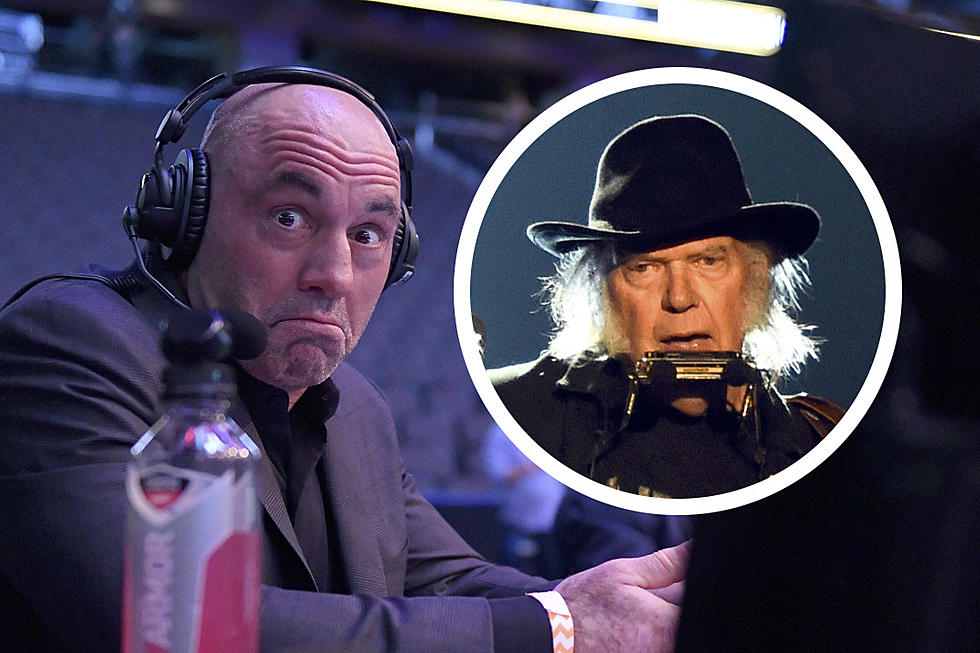
Rogan Responds to Spotify Controversy, Young Defects to Amazon

Mixing music and morality can get tricky.

Last week, musician Neil Young set off fireworks when he demanded that his music be pulled off the audio streaming service Spotify because he objected to its high visibility podcaster, Joe Rogan, spreading alleged Covid misinformation.

Claiming the moral high ground, Young wrote in a letter published on his website on Jan. 24, “I am doing this because Spotify is spreading fake information about vaccines — potentially causing death to those who believe the disinformation being spread by them.”

Others have jumped enthusiastically on Young’s condemnation train, including Joni Mitchell,  Nils Lofgren, India Arie, Dwayne Johnson, Kevin James, Jewel, Jamie Kennedy, Tulsi Gabbard, Troy Aikman, Kat Von D, Domanic Monaghan, Candice Owens, Jillian Michaels, Tomi Lahren and Andrew Dice Clay.

On Feb. 3, Roxane Gay, an author and a contributing Opinion writer for The New York Times decided she needed to join the fray, wrote an opinion column for The New York Times announcing shew was pulling her podcast, “The Roxane Gay Agenda,” from Spotify.

Also signing on to the crusade — David Crosby, Graham Nash and Stephen Stills. “Until real action is taken to show that a concern for humanity must be balanced with commerce, we don’t want our music — or the music we made together — to be on the same platform,” they said in a statement.

Even Tedros Adhanom Ghebreyesus, director-general of the World Health Organization, endorsed Young’s action on Twitter. 

So where did uber-moral Young direct his listeners as one of the acceptable alternative music streaming services?  Amazon. Clearly he did not consider the negative consequences of his well-intentioned actions.

In a Twitter post, Young included a link for new subscribers signing up for Amazon Music and saying they can receive four months free.  “Amazon has been leading the pack in bringing Hi-Res audio to the masses, and it’s a great place to enjoy my entire catalog in the highest quality available,” Young said.

Talk about jumping out of the frying pan and into the fire!

Amazon is hardly a paragon of virtue either.

The company has been accused of:

  • Using data about products offered by independent sellers on the company’s platform to develop competing products.
  • Vigorously opposing trade unions at its massive warehouses.
  • Directly or indirectly benefiting from forced labor of Uyghur peoples in internment camps in Xinjiang, China and at factories in major supply chains.

In other words, Amazon is a poster child for questionable business practices.

Amazon is also already a dominant player, with Amazon Marketplace accounting for about 25% of all online spending in America, meaning a quarter out of every dollar spent online goes to the marketplace. You’d have to combine the next five mass-market retailers (Walmart, eBay, Apple, The Home Depot and Target) to equal its size.

And it keeps spreading out, invading every part of our lives. In 2020, Amazon announced Amazon Pharmacy, a new store on Amazon that allows customers to complete an entire pharmacy transaction on their desktop or mobile device through the Amazon App. In January 2022, Amazon, already  the largest clothing retailer in America since it started selling clothing in 2002, announced it planned to open Amazon Style, its first clothing, shoe and accessories’ store, later this year at a posh shopping complex in Los Angeles. 

Do all these high minded critics of Spotify really think Amazon is a more ethical socially conscious company than Spotify? Is it really wise to direct even more business its way, as Young suggests?

I think not.

Next Up on the Left’s Agenda: Racializing Taxes

Cart Before the Horse. Conner Kisiel // Creative Director | by Nacent  Creative Marketing Strategies | Medium

Talk about putting the cart before the horse.

Late last year, the left-leaning Oregon Center for Public Policy (OCCP) put out a podcast firmly asserting that “…Oregon’s tax system entrenches and even deepens racial inequality.”

The organization then proceeded to undercut its argument by admitting it doesn’t have the data to prove its point. So now it is including in its 2022 Legislative Agenda passage of a bill that would add a race and ethnicity question to Oregon’s income tax forms.

“We must also better understand how the tax code impacts racial equity,” the OCCP now says. “Tax justice is a racial justice issue. We need better data to see which tax loopholes worsen racial inequality, so that together we can craft solutions to fix the problem.”

In other words, OCCP wants the state to collect data that it hopes will prove its point. It’s kind of an Alice in Wonderland “Verdict first, trial later” situation.

But even if the bill, SB 1569*, passes, the data it produces and the “racial impact statements” the bill would require the Department of revenue to produce would be useless. 

That’s because the bill “Directs (the) Department of Revenue to develop schedule allowing personal income taxpayers to voluntarily report taxpayers’ self-identified race and ethnicity identifiers.” That’s right, the submission of the data the OCCP plans to rely on to prove its point would be voluntary. 

That would inevitably result in bias due to unrepresentative samples of taxpayers submitting data, known as selection bias. 

There could be under-coverage, for example, if some taxpayers are inadequately represented in the sample, or nonresponse bias, if respondents differ in meaningful ways from nonrespondents. Respondents might also be principally those who have strong opinions on the issue.  For example, the reliability of surveys on call-in radio shows that solicit audience participation on controversial topics such as abortion, affirmative action, gun control and the legacy of Donald Trump are typically unreliable. 

Unconvinced that this bill’s reliance on voluntary participation and potential sampling errors would undermine its value?

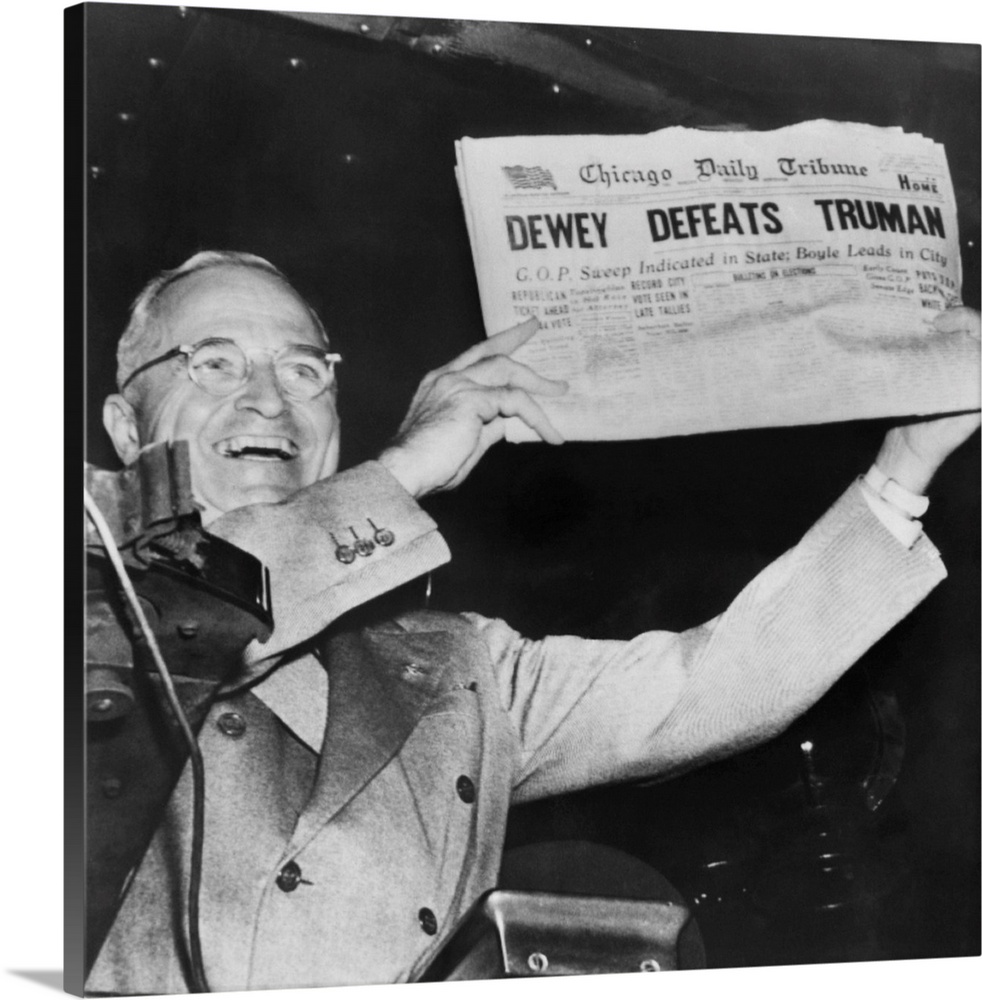
A while ago there was an election when a botched presidential poll conducted over the phone unintentionally oversampled Republicans because the well-off were more likely to have a phone.

Dewey Defeats Truman Newspaper


*The chief sponsors of  SB 1569 are: Senate Majority Leader Rob Wagner (D); Senator Kayse Jama (D); Representative Greg Smith (R); ​Senator James I. Manning Jr. (D);  Representative Courtney Neron (D); Representative Khanh Pham (D); Representative Andrea Valderrama (D).

The 18 regular sponsors, all Democrats, are: Senators DembrowFrederick, Gorsek, Lawrence Spence, Patterson, Representative Alonso Leon, Campos, Dexter, Grayber, Helm, Hudson, Kropf, McLain, Power, Ruiz, Schouten, Prusak, Williams