Oregon Connections Academy/Oregon Charter Academy: still a virtual calamity

connectionsacademy.com-large.1486544046

Real learning? Not so much.

They’re back!

The slick television commercials extolling the virtues of Oregon Connections Academy (ORCA), Oregon’s largest online public charter school, are popping up on local TV again. But don’t be fooled. ORCA, renamed Oregon Charter Academy in the 2020-2021 school  year, which draws in kids from across the state, is still failing its students and undermining Oregon’s commitment to a quality education for every child.

“Parents gave high marks for our academic rigor, program flexibility, the high quality of our teachers, and for delivering high levels of student achievement,” ORCA Principal Allison Galvin said in her most report to students and parents.

I don’t know why the parents are so thrilled. Perhaps intoxicated by ORCA’s technical, non-traditional approach, they overlook ORCA’s academic numbers, which have been getting worse in recent years, not better.

Or itmay be because the debate about online charter schools is more about people’s values than academic performance. To a lot of parents and students, online charters are really about independence, bonding with like-minded parents, having the option of choice, and escaping from what are perceived as stifling, monopolistic government bureaucracies.

Living in a cocoon of misinformation, they’re not interested in contrary data. And as neuroscientist Tali Sharot observed in her book, “The Influential Mind,” it’s hard to convince people with just data. When presented with hard evidence that contradicts their deeply held beliefs, people often work overtime to find reasons to defend those beliefs rather than modify them.

Charter schools in Oregon, including online charters, are publicly funded, so parents don’t pay tuition. Instead, the Oregon Department of Education distributes State School Fund money to each school district that sponsors a charter school.

ORCA’s sponsor is Santiam Canyon School District 129-J, which serves the communities of Mill City, Gates, Detroit and Idanha.

For the past three school years Oregon K-12 schools have assessed their performance in English Language Arts, Mathematics and Science.

ORCA’s numbers tell a dreadful story of failure, and it’s going from bad to worse.gett

The numbers below show the declining percentage of ORCA students meeting the state’s standard for school and district accountability in every category over the past three school years.

English Language Arts

2014-15   61.3 %

2015-16    61.5%

2016-17    54.2%


Math

2014-15     37.6%

2015-16     30.6%

2016-17     27.5%


Science

2014-15    62.7%

2015-16     59.3%

2016-17     56.2%

ORCA officials have blamed the academic problems of their students on the fact that ORCA takes on many students who stumbled at their former traditional brick-and-mortar public schools.

But research reveals that it’s the struggling learners who are least likely to be well served by online coursework. In other words, while struggling students are the ones most in need of traditional in-person courses, they are often shuttled off to online schools, which is exactly what they don’t need.

Because they are public schools, online charters are required to meet the same diploma requirements as Oregon’s traditional brick-and-mortar Oregon public schools.

Graduation rates at all Oregon public schools, including online charters, are calculated the same way by the Oregon Department of Education (ODE) as an “adjusted cohort graduation rate.” That rate is the percentage of all students who graduate from high school with a diploma within a four-year cohort period after they start 9th grade.

The graduation rate of all Oregon public schools in 2017 was 77 percent. ORCA’s graduation rate that year was just 64 percent.

Making things worse, the transfer of many struggling students to ORCA may, in a perverse sort of way, have helped the traditional public schools they came from. That’s because it removed academically challenged students from the rolls, improving graduation rates.

Encouraging struggling students to transfer from their brick-and-mortar school to an online school also can make their former schools appear more successful:

“When low achieving students leave, for instance, average school test scores increase,” concluded a report rom the California Legislative Analysts’ Office raising concerns about alternative schools. “This gives the appearance that the school is improving, and it allows the school to focus on the education needs of the more motivated students that remain. In addition, when students marked as ‘problems’ or ‘trouble makers’ drop out, they relieve educators of administrative headaches. As a result, inattention to the needs of these types of students can actually make schools appear more successful.”

Research suggests this is a national problem.

 “School officials nationwide dodge accountability ratings by steering low achievers to alternative programs,” ProPublica, an independent, nonprofit newsroom, reported in February 2017.

 If education is a public good—one whose results bear powerfully on our prosperity, our safety, our culture, our governance, and our civic life—you have to recognize that voters and taxpayers have a compelling interest in whether kids are learning what they should, at least in schools that call themselves public, Chester Finn Jr., President Emeritus at the Fordham Institute said in June 2017.

Oregon’s governor and legislators should recognize their compelling interest in taking ORCA and other failing online public schools to task.


Earl Blumenauer: from man of the people to multi-millionaire

NOTE: Also published on Oregon Catalyst

It looks like a career in elective office has been very good to Earl Blumenauer.

When Blumenauer went to Congress as a Democrat representing Oregon’s 3rd District in 1996, he was a man of modest means.

Earl_Blumenauer_1997

Rep. Earl Blumenauer (D-OR) in 1997, his first full year in office.

Now the Congressman’s a multi-millionaire.

He’s achieved his wealth while, other than a stint at Portland State University, his work history consists entirely of holding elective office.

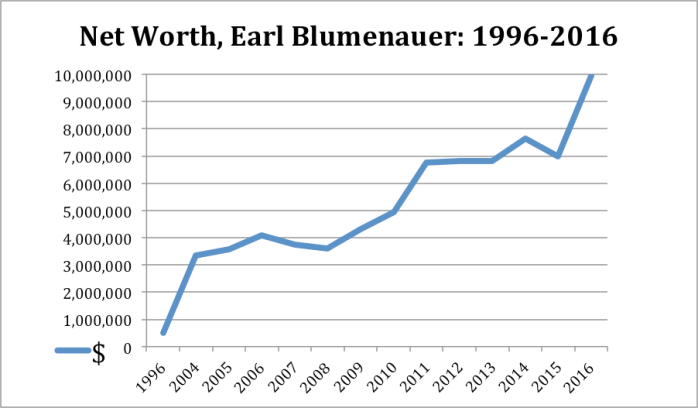
earl_v2

Source: Derived from calculations of estimated net worth* by the Center for Responsive Politics, OpenSecrets.org

Blumenauer was sort of a wunderkind, first elected to office when he was barely out of college.

His first job after graduating from Lewis and Clark College in 1970 was assistant to the president of PSU. During his eight-year tenure there he was elected to the Oregon Legislature in 1972 and earned a law degree from Lewis and Clark in 1976.

He was elected to the Multnomah County Commission in 1978, where he worked until 1985. He was elected to the Portland City Commission in 1986, where he served until 1996. His annual salary as Commissioner in his last year was $70,610.

Blumenauer was elected to the U.S. House of Representatives in May 1996 in a special election to fill the vacancy caused by the election of then-Rep. Ron Wyden to the Senate. He was elected to a full term that November.

Based on the Financial Disclosure Report**  Blumenauer filed with the Clerk of the House for 1996, and using the Center for Responsive Politics’ formula for analyzing lawmakers’ finances, Blumenauer’s estimated net worth in 1996 when he took office in Congress was $504,009.

His assets included investments in a number of mutual funds, Nike stock, deposits in money market funds, Bank of America and Portland Teachers Credit Union, and investments in real estate in Portland, OR and Washington, D.C.

His Washington, D.C. property was a duplex at 510 6th St. SE he purchased on Sept. 6, 1996 for $169,000 to use as his residence. His other real estate investments were principally in Portland apartment buildings, some through Limited Liability Companies (LLCs).

Blumenauer’s potential retirement benefits from his employment in Congress and his potential PERS benefits are not required to be reported in Financial Disclosure Reports. He did, however, list his PERS account among his assets in his filing for 1999, putting its value at $250,001 – $500,000. Most Members of Congress also receive an annual salary, currently $174,000. They are not required to disclose this information either.

The numbers indicate that Blumenauer wasn’t a pauper, but neither was he filthy rich.

To say the least, he’s done quite well for himself since then.

By 2016, the most recent year for which Financial Disclosure Reports have been filed, Blumenauer, who tries to position himself as a bow-tied everyman on a bike, was, by any measure, a very wealthy man. The Center for Responsive Politics estimated his net worth at almost $10 million ($9,950,020).

Some of that increase in wealth may be related to his 2004 marriage to Margaret D. Kirkpatrick, who served as Senior Vice President of Environmental Policy and Affairs at Northwest Natural Gas Company from January 1, 2015 until January 19, 2016. Financial Disclosure Reports do not break out the individual sources of a member’s wealth.

The Center figured that Blumenauer’s net worth in 2016 made him the 20th wealthiest member of the House, up considerably from 81st in 2004, the oldest year for which ranking data has been published.

In comparison, during 2005-2015, the median net worth of all House members went from $629,250 to $888,510.

The Center for Responsive Politics reports that the top industries in which Blumenauer invested in 2016 were oil and gas (estimated investments: $3,175,000) and real estate (estimated investments: $1,475,000).

His 2016 assets included his D.C. residence, with an assessed value of $821,650 (Current estimated market value is $950,690), an investment in the Joinery Holding Co. with a value of at least $250,00 and a vacation house in Deer Isle, ME.

He included the vacation house for the first time in his Financial Disclosure Report for 2004. At that time he said he had a one-half interest in the home valued at $100,001 – $250,000. In the ensuing 14 years, he has continued to report his share of the house’s value in the same range.

Although Congressional rules require that he report all financial transactions, including purchases, sales and exchanges of assets that amount to more than $1,000 in the calendar year, Blumenauer has never reported on the purchase of the house or its address, preventing a search of Deer Isle tax records to determine the property’s current value.

Blumenauer’s 2016 assets also included over $1 million in Northwest Natural Gas stock, investments in a number of mutual funds, deposits in a Schwab Money Market Fund, the Portland Teachers Credit Union and the Congressional Federal Credit Union, and investments in Portland real estate.

In his Financial Disclosure Report for 2016, Blumenauer reported other real estate investments in four properties:

  1. The Pettygrove House, 1400 N.W. 23rd

PettygroveHouse

  1. 1701 N.W. Glisan

GlisanHouse2

  1. 2441 N.E. Weidler St.

weidlerHouse

4. 530 N.W. 23rd, Campbell Apts.

NW23rd


Multnomah County records  and a title report show that Blumenauer and his wife, Margaret D. Kirkpatrick, also jointly own residential property at 2241 N.E 30th Ave. in Portland, but neither the purchase transaction nor the value of the asset have ever been noted in Blumenauer’s Financial Disclosure Reports to Congress.

County records show that Isaak Regenstreif, a Portland consultant who describes himself on his website as “a connector and a problem solver,” purchased the property on May 1, 1989 for $182,500. He then sold it to Margaret Kirkpatrick on March 22, 2002 for $82,627.  The recorded title for the property also shows a $270,000 conventional loan.

If Blumenauer included this property, which has a current market value of $1,262,840, in his list of assets on his Financial Disclosure Report to Congress, that would further increase the estimate of his net worth by the Center for Responsive Politics.


30thHouseblumenauer

2241 N.E 30th Ave., Portland

Blumenauer’s next Financial Disclosure Report, which will cover 2017, is due to be submitted on or before May 15, 2018.

He is next up for re-election in Nov. 2018.

EarlBlumenauerCreditGettyImages

Earl Blumenauer. Credit: Getty Images

Blumenauer’s Financial Disclosure Report for 2010 shows he began investing that year in a mutual fund listed as T Rowe Price Retirement 2020, putting in between $100,001 –  $250,000. In 2012, he made a number of investments in Blackrock 2020 Retirement. Both are target-date funds designed to meet the investment objectives of people planning to retire in 2020.

Perhaps that’s a clue that Blumenauer, 69, expects to make his next term his last. If it is, he’ll likely retire a rich man.

___________________________

*Rep. Blumenauer’s estimated net worth was calculated by the Center for Responsive Politics, a non-partisan, non-profit that tracks money in U.S. politics, on OpenSecrets.org. Net worth was calculated by summing the filer’s assets and then subtracting any listed liabilities. Filers report the amount of each of their assets, transactions and liabilities as falling within one of several ranges. The minimum possible values for each asset were added together as were the maximum possible values. Likewise, minimum and maximum liability amounts were summed. The maximum debt figure was then subtracted from the minimum asset figure and the minimum debt figure was subtracted from the maximum asset figure. The resulting range represents the extremes of how much a filer could be worth, and his or her actual net worth should fall somewhere within that range. The midpoint or average of the two limits was also calculated and used for purposes of ranking the filers by wealth. Retirement accounts from employment with the federal government are not reported in Financial Disclosure Reports. Most Members of Congress also receive an annual salary, currently $174,000. They are not required to disclose this information.

Rep. Earl Blumenauer’s Estimated Net Worth/House Wealth Rank

2016: Net worth: $9,950,020; House rank: 20th

2015: Net worth: $6,997,519; House rank: 59th

 2014: Net worth: $7,632,520; House rank: 46th

2013: Net worth: $6,828,015; House rank: 58th

2012: Net worth: $6,809,015; House rank: 48th

2011: Net worth: $6,057,014; House rank: 47th

2010: Net worth: $4,924,520; House rank: 64th

2009: Net worth: $4,302,516; House rank: 76th

2008: Net worth: $3,615,019; House rank: 75th

2007: Net worth:  $3,739,518; House rank: 81st

2006: Net worth: $4,077,518; House rank: 82nd

2005: Net worth: $3,569,016; House rank: 88th

2004: Net worth: $3,357,511; House rank: 81st

1996: Net worth: $504,009; House rank: NA

**Financial Disclosure Reports include information about the source, type, amount, or value of the incomes of Members, officers, certain employees of the U.S. House of Representatives and related offices, and candidates for the U.S. House of Representatives. The reports are filed with the Clerk of the House as required by Title I of the Ethics in Government Act of 1978, as amended (5 U.S.C. app. § 101 et seq.)


Twin Tragedies: The travails of The Oregonian and the L.A. Times

newssanity

The Oregonian just announced it is laying off 11 more reporters, continuing what seems like a never-ending story.

You may recognize some of the names: Samantha Bakall, Jen Beyrle, Molly Blue, Allan Brettman, Jessica Floum, Susan Green, Anna Marum, Lynne Palombo, Mike Richman, Lynne Terry, Jerry Ulmer.

“Today, the positions of 11 of our colleagues in the newsroom are being eliminated,” the paper’s editor, Mark Katches, wrote in a memo to staff. “You’re probably asking yourself, when will these cuts end?,” the paper’s editor, Mark Katches, wrote in a memo to staff. “I wish I could answer that. Although we have made progress growing our digital audience while also producing award-winning, and important journalism, the revenue picture continues to pose challenges for our company—as is the case across the media landscape.”

Founded in 1850 as a four page weekly, iThe Oregonian’s first issue was printed in a log shack on SW First and Morrison, For many years after, it continued to build on its long and storied history.

But today it’s a mere shadow of its former self, and fading rapidly.

Unfortunately, The Oregonian’s not the only struggling news organization on the West Coast.

The Los Angeles Times is mired in turmoil and the people on its news staff are stunned with their predicament.

When Times workers voted on Jan. 4, 2018 to unionize, they figured it would bring a better deal and a more secure future.

“With a union, we can begin to address stagnant wages, pay disparities and declining benefits,” the union pronounced.

Don’t count on it.

Things struggling old-line newspapers are not doing these days are guaranteeing employment, handing out big annual raises and lowering healthcare premiums.

Union leaders said their goals include keeping the working conditions they like and getting a better deal on things they don’t like.

Demand all you want, folks, but it ain’t gonna happen.

Once massive influencers like the Los Angeles Times are on the decline, not the upswing. How the mighty have fallen.

About 20 years ago, the L.A. Times had an editorial staff of about 1,000 people. It’s now about 400, with more layoffs and buyouts expected.

As Nieman Lab, a website reporting on digital media innovation, put it this past week, ‘It’s a cut-of-the-month club, a gift that just keeps on giving.”

About 20 years ago, the L.A. Times had 22 foreign bureaus and 17 bureaus in the United States. By 2012, it had ten foreign “bureaus,” eight of them consisting of just one person, according to the Columbia Journalism Review. Today, the Times website lists just five staffed foreign bureaus (Beijing; Beirut; Johannesburg; Mexico City; Mumbai), with four of them staffed by just one person, plus a bureau in Sacramento and a bureau in Washington, D.C.

In Jan. 2003, the Times announced it planed to launch later that year its fifth regional edition, which would focus on the Inland Empire’s fast-growing Riverside and San Bernardino counties. “It’s a huge market, and parts of it have very strong affinities to Los Angeles,” John Puerner, then the Times’ CEO, publisher, and president, said in a statement to Editor & Publisher. “I think it could represent an important source of future, consistent, regular circulation growth.”

So much for that.

The regional editions are dead and gone.

About 20 years ago, the paper launched a National Edition. To the dismay of its supporters, it too expired.

So don’t get your hopes up all you folks in the L.A. Times newsroom. The union’s not going to save you.


California Democrats are worried: Counting illegal immigrants

immigrantsWall

California could lose a seat in the House of Representatives and some Congressional districts could lose population if the millions of illegal immigrants living in the state, which has the largest number of illegal immigrants by far, aren’t counted in the 2020 census.

Oddly enough, California could improve its chances of holding onto that seat if more illegal immigrants come to the state and are counted in the census. Maybe that plays a part in California’s decision to be a Sanctuary State.

The U.S. Census Bureau attempts to count all persons in the U.S. living in residential structures, including prisons, dormitories and similar “group quarters” in the official decennial census. People counted must include citizens, legal immigrants, non-citizen long-term visitors and illegal (or undocumented) immigrants.

This approach was endorsed by the U.S. Supreme Court in April 2016 in EVENWEL ET AL. v. ABBOTT, GOVERNOR OF TEXAS, ET AL, where the Court rejected counting just eligible voters in determining legislative districts.

Efforts in Congress to change this approach have failed to date.

Accordingly, a low number of illegal immigrants counted by the Census in one state may result in that state losing some representation in Congress while high illegal immigration into another state that is counted in the Census can enlarge that state’s representation.

A research report by Election Data Services released Dec. 26, 2017, concluded, “…California is very close to actually losing a congressional seat in 2020, the first time that state will have lost a seat in its nearly 160-year history.” It could lose the seat because “for the last several decades California’s population growth has been relatively flat when compared to other states.”

That makes it even more important to Democrats that everybody is counted. Democrats are worried that if foreign immigration into California slows under Trump, and legal and illegal immigrants don’t step up in the 2020 census, that could hold down the state’s total population count and the count in individual Congressional districts.

Oregon could gain a seat

The Election Data Services report also concluded that, based on new Census Bureau population estimates for 2017 released on Dec. 26, 2017, 12 states clearly will be affected by changes in their congressional delegation if the new numbers were used for apportionment today.

New York, West Virginia, Illinois, Michigan, Minnesota and Pennsylvania are projected to lose a seat in Congress using the new data.

On the other hand, Oregon is projected to gain a House seat, as well as Colorado, Florida and North Carolina. Texas will gain two seats based on the new data.

Since 1941, by law the number of seats in the U.S. House of Representatives has been capped at 435, so if a given state gains a House seat then another state must lose one.


NOTE: For more discussion on counting illegal immigrants in the U.S. Census, see Constitutionality of Excluding Aliens from the Census for Apportionment and Redistricting Purposes, Congressional Research Service Report.


Stop the madness: enough with the extravagant presidential centers

Enough with the lavish presidential centers.

Barack Obama revealed the latest iteration of the planned Obama Presidential Center in Chicago on Jan. 9.

ObamaCenterJan2018

Newest design of Obama Presidential Center, Jan. 9, 2018’\\\\[[[”\’

“Michelle and I want this center to be more than just a building,” Obama said in a video statement released on Jan. 9. “We want to create an economic engine for the South Side of Chicago, a cultural attraction that showcases the South Side to the rest of the world.”

Why?

Why can’t it just be a damn presidential library?

As presented on Obama.org, the 225,000 sq. ft. the Obama Presidential Center will consist of: the Forum, a two-story public meeting space; a 235 ft. tall 165,000 sq. ft. museum tower; a library building; a plaza; an athletic center with multi-sport indoor facilities; a new outdoor running track; and a 400-450 space underground parking garage. At an event to unveil the plans, Obama said he’s also like to add a snow sledding hill, as well as play lots and paddle boats for a lagoon in new park space.

Not only will the library be one of the smaller elements of the site, it won’t actually contain any paper records. Instead, all Obama’s unclassified records will be digitized, the Chicago Tribune reported.

Obama’s actual papers will go to separate facilities maintained by the National Archives and Records Administration at locations to be determined, John Valceanu, NARA’s director of communication and marketing in Washington told the Chicago Tribune.

Opposition to the center is already surfacing. Faculty at the University of Chicago, where Obama was a lecturer at the Law School, released a letter on Jan. 8 asserting they had “concerns that the Obama Center as currently planned will not provide the promised development or economic benefits to the neighborhoods” and that the private Center would be taking over a major part of a historic Chicago park.

“Jackson Park, designed by Frederick Law Olmsted, is on the National Register of Historic Places and is one of the most important urban parks in the nation,” the letter said. “Construction of a permanent architectural monument violates Olmsted’s vision of a democratic urban park.”

The letter also bemoaned expected public expenses associated with the Center.
“ It is the taxpayers of Chicago who are going to be forced to pay hundreds of millions of dollars for this project, according to estimates by the Chicago Department of Transportation,” the letter said.

As of Jan. 10, 173 faculty had signed the letter.

Martin Nesbitt, chair of the Obama Foundation, estimated the total cost of the project will be $350 million. Groundbreaking is planned for late 2018 and and the grand opening in 2021.

The Obama Foundation, established in Jan. 2014, has been hard at work trying to raise money from the public to build and help maintain the Center.

During 2015-16, the Foundation raised $14,371,979 and had net assets of $10,888,797 at the end of 2016, according to the standard Form 990 non-profits are required to file annually with the IRS.

The Foundation raised its fundraising game substantially during those two years, spending just $12,000 on professional fundraising fees in 2015 and $578,579 in 2016. The Foundation’s 2017 Form 990 report is not yet available, but if the Foundation’s goal is $350 million [l;it likely has quite a way to go.

“We once held the office of president, as well as its occupant, in high regard,” Anthony Clark wrote in his book, The Last Campaign: How Presidents Rewrite History, Run for Posterity, and Enshrine Their Legacies. “As we have lowered our opinions of both, presidential libraries, consequently, have grown larger and more powerful—and, not incidentally, less truthful.”

Writing in Salon, Clark said presidential centers tend to be “proud, defensive, and a little self-absorbed” and eventually become theme parks with declining numbers of visitors.

With that in mind, it is discouraging to see the number of extravagant presidential centers continue to grow. Do we really need another presidential center funded by influence seekers and built by a /legacy-hungry ex-president?

Unfortunately, each successive administration seems to think its library needs to be more grandiose than its predecessor.

The 135,000 sq. ft. John F. Kennedy Presidential Library and Museum, including endowment of an Institute at Harvard for the study of politics and public affairs, cost $20.8 million in 1979; $99.8 million if you include the $79 million 68,000 sq. ft. Edward M. Kennedy Institute, complete with a full-scale replica of the U.S. Senate Chamber, added in March 2015

The Ronald Reagan Presidential Library and Center for Public Affairs cost $60 million.

The William J. Clinton Presidential Library and Museum in Little Rock, AR cost $165 million.

At the rate things are going, The Donald J. Trump Supercalifragilisticexpialidocious Presidential Library and Emporium will be a billion dollar extravaganza.

Baku_Towers_render-500x398

The Donald J. Trump Center on the Hudson?

Enough of this insanity.

It’s time to stop this arms race of ever-expanding and more lavish presidential centers celebrating former presidents’ egos.

How not to do affordable housing: Denver’s folly


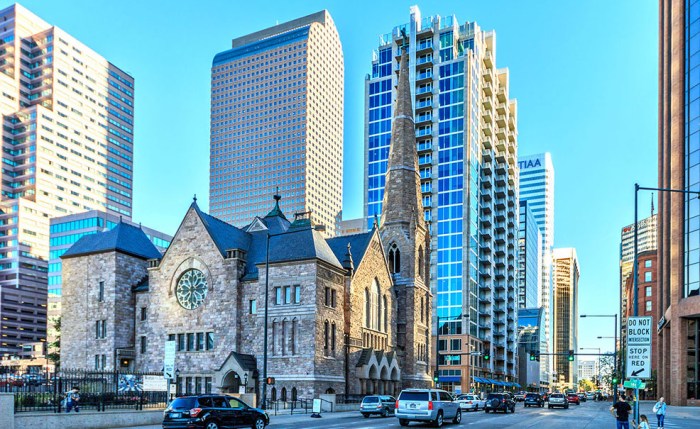
skyhousedenver

The new SkyHouse Denver high rise offers studios, one-, two- and two-bedroom + study luxury apartments. Available studios start at $1,390, one bedrooms at $1,485, two bedrooms at $2,480

Denver’s St. Joseph Hospital in central Denver is thrilled with a city plan that will subsidize the rent of lower-income residents at higher-end apartments. The program will pay the difference between what a lower-income resident can afford and the market rent of an apartment.

Denver Mayor Michael Hancock announced the plan in his July 10, 2017 State of the City address.

“I am excited to announce that we will pilot a new partnership to open 400 existing, vacant apartments to low- and moderate-

income residents struggling to find an affordable place to live,” Hancock said. “We have apartments sitting vacant because there’s a gap between what it costs and what people can afford. Working together with the Denver Housing Authority, employers and apartment building owners, we aim to fill that gap.”

“Denver has some of the highest inventories for apartments for families with the highest incomes and some of the lowest inventories for families with some of the lowest incomes,” Erik Solivan, executive director of the mayor’s Office of Housing and Opportunities for People Everywhere (HOPE), said to Denver station KMGH-TV.

Well, of course St. Joseph is thrilled with the program. What company wouldn’t be happy to see somebody else subsidize their lower-paid employees.

Think about it.

St. Joseph says it will contribute $100,000 to the program. The rest of the money needed will come from Denver, some other employers and some charitable foundations. The city says it expects to spend about $500 a month subsidizing a single person and $900 for a family.

St. Joseph’s president, Jamie Smith, told the Wall Street Journal on Jan. 8 that he hopes the program will help house dozens of employees.

Let’s be conservative and say 26 of those subsidies go to St. Joseph employees, 13 of whom are single and 13 of whom have families. Subsidies to St. Joseph employees alone will total $218,400 the first year. ($6000 per single, $10,800 per family = $78,000 for all the singles and $140,400 for all those with the families = $218,400.)

So St. Joseph invests $100,000 and gets $218,400 back for its employees, with $118,400 of that coming from other companies and charitable organizations.

 “These folks (medical technicians and newly graduated nurses) are in high demand,” Smith told the Wall Street Journal. “They’re driving by four or five other hospitals much closer to their home to get to us, and at some point it becomes a problem from a recruitment and retention standpoint.”

If St. Joseph’s Hospital is having a hard time recruiting and retaining medical technicians and newly graduated nurses, the answer is to pay them more, rather than pleading for public subsidies and contributions from charities.

“This is not a welfare program or anything like that,” said Mike Zoellner, a local developer who helped create the program.

Sure it is, for the hospitals, hotels and food service businesses Zoellner expects the program to help. Meanwhile, it puts St. Joseph’s competitors at a competitive disadvantage.

Whatever happened to the free market and business competition?


Slavery in Connecticut: facing buried truths

  In Connecticut and elsewhere in New England, “All the best families owned ‘captives’.”               – Anne Farrow, “The Logbooks: Connecticut’s Slave Ships and Human Memory” (Wesleyan University Press).

hartfordslavead

A Hartford (CT) Courant notice of 24 May, 1773, concerning the availability for sale of a 28-year old mother and her two sons.


As Oregon, where I now live, has been coming to terms with its racist past*, I’ve found myself wondering whether Connecticut, where I grew up before moving to Oregon in 1984, shared some of that history.

Ahh, colonial Connecticut. Hardy Yankee farmers, white clapboard churches with tall tapering steeples, networks of grey stone walls, one-room schoolhouses….
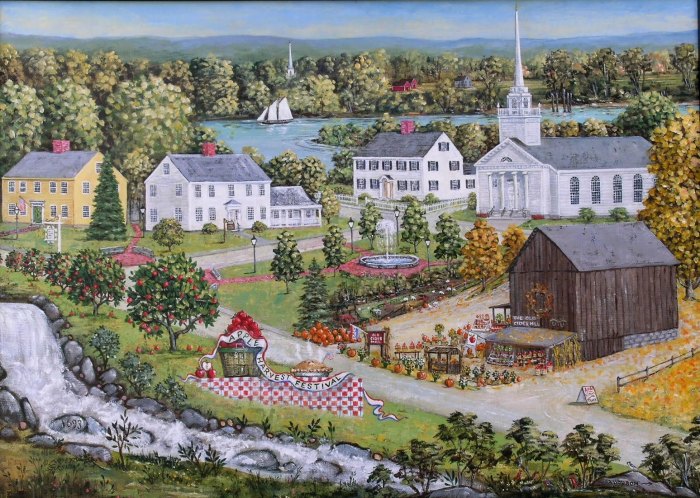
newEnglandTown

Ye olde Connecticut village

…and slaves.

Before the Civil War, nearly 4 million black slaves toiled in the American South. That’s the story we all learned in school, that slavery, with all its brutality, abuse and inhumanity, meant the South, just as many of us were mistakenly told that slavery was a uniquely American institution.

slaveAuctionPost

That’s what I was told when I grew up in the Connecticut town of Wallingford, settled in 1670, 50 years after the Mayflower’s 102 pilgrims landed at Plymouth.

I’m a descendent of one of the town’s original settlers, Samuel Hall, and of one of its most famous residents, Lyman Hall, a signer of the Declaration of Independence who was born and raised in Wallingford. So you’d think I’d be well versed in Connecticut’s history.

But I wasn’t told during my schooling that in the ancient world, slaves were common. Even in 5000 B.C., Uruk, considered the first city (in what is now called Iraq) had slavery. Most of the slaves then were captured in war, convicted criminals, or people heavily in debt.

As Kay Hymowitz, a Fellow at the Manhattan Institute has pointed out, slavery was a mundane reality in most human civilizations, appearing in the earliest settlements of Sumer, Babylonia, China, and Egypt, and it continues in some parts of the world to this day.

In North America, slavery was also endemic among Indian tribes before Europeans arrived. Andrés Reséndez describes in The Other Slavery: The Uncovered Story of Indian Enslavement in America (2016), the economy of the Comanche empire, based in central Texas, was based on human predation and the slave trade; the Comanches sold captured Indians, Mexicans, New Mexicans, and other Americans to any willing buyer.

I also wasn’t taught about all that, although the underground railroad helped escaping southern slaves in Connecticut, slavery flourished there at the same time.

According to the Medford, MA Historical Society,  Connecticut, Massachusetts, and Rhode Island were the three New England states with the largest slave population during the colonial period. Rhode Island had the largest proportion of slaves. It is likely that by the mid 1700’s, there were as many as one African for every four white families in these three states.

Connecticut, Massachusetts, and Rhode Island were the three New England states with the largest slave population. Rhode Island had the largest proportion of slaves. It is likely that by the mid 1700’s, there were as many as one African for every four white families in these three states.

In other words, colonial Connecticut was hardly a citadel of racially progressive thought and practice. For many Africans, it was a citadel of broken dreams.

It was a place of broken dreams for many Native Americans as well.

History of Slavery in Connecticut, published in 1863, pointed out that the earliest slavery in Connecticut wasn’t of blacks from Africa, but Native Americans captured in battle and sold as slaves. I don’t recall that being highlighted in my classes either.

In fact, the Articles of Confederation of the United New England Colonies, signed by representatives of the Plymouth, Massachusetts, Connecticut, and New Haven colonies, even stipulated that the signatories would equally distribute any “ persons,” lands, and goods “ taken as the spoils of war.”

King Philips War, during 1675 to 1676, which pitted Native American leader King Philip, also known as Metacom, and his allies against the English colonial settlers, produced a large number of native slaves.

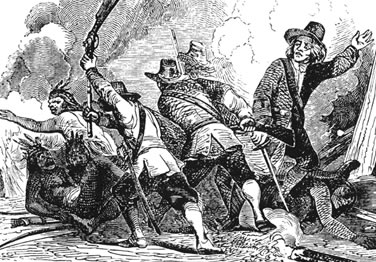
In 1637, Connecticut colonial leaders, together with their Narragansett native allies, massacred the largest Pequot village at Misistuck on the Mystic River in present-day Connecticut, destroying it and killing an estimated 700 Pequots, including many women and children. Another 180 Pequots were killed when they were found hiding in a swamp near today’s Fairfield, CT. Many of the Pequots were captured and sold as slaves, leading to the near annihilation of the tribe.
pequotwar

The Pequot War

A fascinating study by Linford D. Fisher, associate professor of history at Brown University, finds that Native Americans, including noncombatants, who surrendered during King Philip’s War to avoid enslavement were enslaved at nearly the same rate as captured combatants.

Fisher’s study, “‘Why shall wee have peace to bee made slaves’: Indian Surrenderers during and after King Philip’s War,” appears in the journal Ethnohistory, a volume devoted to scholarship on indigenous slavery in the New World.

Native American slavery “is a piece of the history of slavery that has been glossed over,” Fisher said. “Between 1492 and 1880, between 2 and 5.5 million Native Americans were enslaved in the Americas in addition to 12.5 million African slaves.”

While natives had been forced into slavery and servitude as early as 1636, it was not until King Philip’s War that natives were enslaved in large numbers, Fisher wrote in the study. The 1675 to 1676 war pitted Native American leader King Philip, also known as Metacom, and his allies against the English colonial settlers.

During the war, New England colonies not only retained many defeated native Americans as slaves, they  routinely shipped Native Americans as slaves to Barbados, Bermuda, Jamaica, the Azores, Spain and Tangier in North Africa, Fisher said.

“The shadow of native enslavement in New England extends into the 18th century and beyond,” Fisher said. “There are records of people petitioning for freedom in the 1740s who were the descendants of Native Americans first enslaved during King Philip’s War.”

Black slaves were also very much a part of early New England. “Slaves were widely viewed as an economic necessity in colonial New England,” according to the Florence Griswold Museum in Old Lyme Connecticut. The Museum cites a letter to John Winthrop (1588–1649), governor of the Massachusetts Bay Colony, from his brother-in-law Emmanuel Downing (1594–1676) advised in 1645: “I doe not see how wee can thrive untill we get into a stock of slaves suffitient to doe all our buisines.”

“As the town (Old Lyme) grew and prospered, governors, judges, military officers, ministers, deacons, doctors, merchants, mill owners, tavern keepers, and well-to-do farmers all owned slaves,” according to the Museum. ” Sea captains, shipyard owners, ship’s joiners, deckhands, coopers, blacksmiths, carpenters, mill workers, farmhands, shad fishermen, and day laborers benefited, in turn, from Lyme’s coastal trade.”

Rhode Island was one of New England’s states particularly active in slavery.

“Newport (R.I) was the first landing place for most of those people…who set foot on Jamestown (R.I) in bondage,” wrote historian James Fay of the Jamestown Historical Society.  “They arrived here from across the bay in Newport, the center of the American-owned slave trade, the port where 965 Rhode Island ships carried people of Africa to the British West Indies and southern American ports, Barbados, Jamaica, Antigua, the ports of Savanah and Charleston, and occasionally, to Newport. These Rhode Island ships, though only a tiny part of the Atlantic slave trade, carried 106,000 people to the Americas. These people were purchased by Rhode Island captains from African traders who had captured and enslaved them in wars and raids upon each other to enrich themselves at the expense of their enemies, and to feed the insatiable demand by Europeans for slaves.”

Even the Newport Town Council got into the slave business. Fay wrote of how the entire Martin family of Jamestown – the mother Peggy and her five children Newport, Peggy, Jude, Jacob, and Jamestown; the men Mintus and Abraham Martin –were sold to new owners or indentured to free the town of the debts of their owner, Rebecca Carr Martin.

It’s also worth knowing that the slaves who ended up in New England were a very small proportion of Blacks brought across the Atlantic from Africa.

Most of the Blacks taken from Africa were sold to enslavers in South America or the Caribbean. British, Dutch, French, Spanish and Portuguese traders brought their captives to, among other places, modern-day Jamaica, Barbados, Cuba, Puerto Rico, Brazil and Haiti, as well as Argentina, Antigua and the Bahamas, according to an exhaustive SlaveVoyages database considered in depth in a New York Times story, Quantifying the Pain of Slavery.

Only slightly more than 3.5 percent of the total, about 389,000 people, arrived on the shores of British North America and the Gulf Coast during those centuries when slave ships could find port.

Some of those found themselves owned by Theophilus Jones (1690-1781), who came to Wallingford in 1711. He built up his farm property and c. 1740 built a house on Cook Hill in the southwest corner of town, now 40 Jones Rd. His son, Theophilis Jones, Jr. (1723-1815) a documented slave owner, continued to amass land at the site.

The house, which is still standing, is now on the National Register of Historic Places.

OLYMPUS DIGITAL CAMERA

Theophilus Jones house, Wallingford, CT

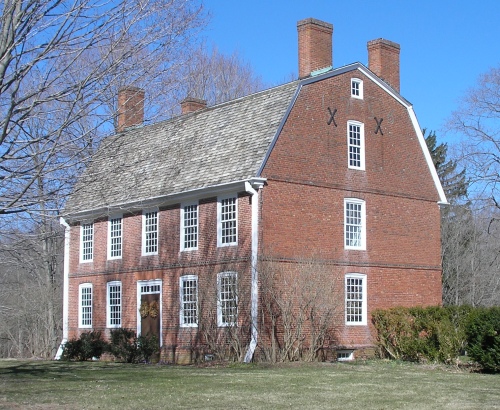
Another slave-owner’s house still standing in Wallingford is the John Barker House, built in 1756.
OLYMPUS DIGITAL CAMERA

John Barker house, Wallingford, CT

Slaves were brought into New England throughout the colonial period through multiple port cities:

  • Portsmouth, NH
  • Salem, MA
  • Boston, MA
  • New Bedford, MA
  • Providence, RI
  • Bristol, RI
  • Newport, RI
  • Middletown, CT
  • New London, CT

Connecticut, Massachusetts, and Rhode Island ended up having the largest slave populations, though they were far from alone among northern states in accepting slavery.

Slavery continued to exist in New York, without any protest against it, until the Quakers took action in the 1760s to free the slaves held by their members, according to a 1925 History of Westchester County,  New York by Alvah P. French.

In 1767, Purchase Quarterly Meeting sent the following minute to the Yearly Meeting, then held at Flushing: ” If it is not consistent with Christianity to buy and sell our fellowmen for slaves, during their lives and their posterity after them, then whether it is consistent with a Christian spirit to keep those in slavery that we have already in our possession by purchase, gift or any other ways.” The subject was continually before their meetings until the last slave held by a Friend was set free, in 1779.

Others followed the example set by the Quakers in freeing their slaves, so that, by the end of the century, but few slaves remained in the county. All slaves in the State of New York were made free by law on 4th of July, 1827.

When the Quakers of Purchase liberated their slaves they settled them on their rough lands in the northwestern portion of the town of Harrison, and thus the negro community, still existing northeast of the village of White Plains, was begun. Some of the slaves liberated in the northern portion of the county collected into a smaller settlement near the village of Bedford. These were the largest colonies of negroes in the county.

If you’ve ever visited the historic Faneuil Hall Marketplace in Boston, MA, you may be surprised to learn that Peter Faneuil, who donated the site to the city, accumulated much of his substantial wealth from the slave trade.

faneuilHall

Faneuil Hall, Boston

Slaves were also in evidence at tobacco farms in the Connecticut River Valley as early as  the seventeenth century.  Tobacco was introduced when seeds were brought from Virginia in 1640.

Tobacco production was significant enough that the Connecticut Town of Windsor  found it necessary to appoint an “Inspector and Presser of Tobacco,” to supervise the grading and packing of tobacco in hogsheads for shipment to the West Indies, South America, and Europe. According to an overview of the Windsor Farms Historic District, Black slaves and semi-indentured Indians provided most of the labor on the larger farms.

Archaeologists from Central Connecticut State University came across what looked like a 13,000-acre plantation, the second largest in southern New England, in Salem, CT. According to the Hartford Courant  newspaper, the owners may have imported 60 slave families to clear the land and relied on slave labor to operate the plantation.

At the start of the Revolutionary War, when the Salem plantation was confiscated because the owner was a Tory, it had just nine slaves (Great Prince, Little Prince, Luke, a woman named Prue and children named Cato, Phillis, Rose, Jimm and Caesar) . The adults were valued at 200-450 pounds each, 6-month-old Jimm and 11-year-old Caesar at 10 pounds.

A smaller plantation  of 3,000 acres with at least two dozen slaves also existed in Pomfret, CT, the Courant reported. When the owner transferred ownership of the estate in 1764, the deed included an inventory that included 27 negroes. The document identified the slaves by the names “Prince, Harry, Pero, Dick, Tom, Adam and Christopher, all Negro men, and Dinah, Venus, Rose, Miriam, Jenny and [a second] Rose, all Negro women… ” along with their children “Primus, Christopher, Sias [sic], Sharper and Little Pero.”

Similarly, John Easton’s family in Middletown, CT were leading slave merchants.

In “The Logbooks: Connecticut’s Slave Ships and Human Memory,” Anne Farrow wrote about the ship Africa, with John Easton as its captain, sailing out of New London, CT in 1757 bound for West Africa. It crossed the Atlantic Ocean, sailed up the Sierra Leone River on the west side of the continent, docked at tiny Bunce Island and loaded a cargo of slaves to be sold principally on England’s colonial islands in the Caribbean. Some of the “human cargo” probably stayed on board to be brought to Connecticut, where they were sold and owned by residents there, Farrow said.

According to the Hartford Courant, when John Easton died in 1774 his will contained 20-page inventory of his property, which included two Negro men, Accrow, valued at 100 pounds, and Gambo, valued at 25 pounds.

That same year, The Connecticut Journal reported that John Ive’s slave, Lemon, was “taken to the Gaol in New Haven for abusing an Indian girl” and was sentenced to “sit on the Gallows with a rope about his neck one hour and then whips 39 stripes at a Cart’s Tail.” There was also an incident in which a man named Phineas Cook brought a Portuguese man to Connecticut and sold him as a slave. The matter went before Connecticut’s General Assembly which fined Cook and ordered him to return the man to the Cape Verde archipelago off the west coast of Africa.

By the way, it was in the following year, 1775, that the Rev. Samuel Andrews, a committed Tory, is reported to have preached the first sermon against slavery in Wallingford’s Episcopal Church.

Slaves were also mentioned in the list of items Dr. William Hart of Wallingford left to his wife upon his death in Oct. 1799. The items included “…an inkstand, three iron pots, one spider, a Negro boy named Titan, and a Negro girl of five years.”

Some Wallingford residents began freeing their slaves, however, after the Declaration of Independence, spurred on by a law enacted by Connecticut’s General Assembly in 1777 stating that if “any slaveholder shall apply  to the selectmen for liberty to emancipate his slaves, it shall be the duty of the selectmen to enquire as to the ability of such slave to support himself, and if found capable, give the slaveholder a certificate of liberty to free the negro.”

According to town records, 17 slaves were given their freedom by residents from 1778 to 1786 by the following local residents: Ruth Merriam; Rachel Johnson; John Hough; Gould; Norton; Martha Doolittle; Miles Johnson; John Barker; Dr. Jared Potter; Samuel Street; Elisha Brockett; Turhand Kirtland; Edward Barker; Abner Rice; and Thomas Hall.

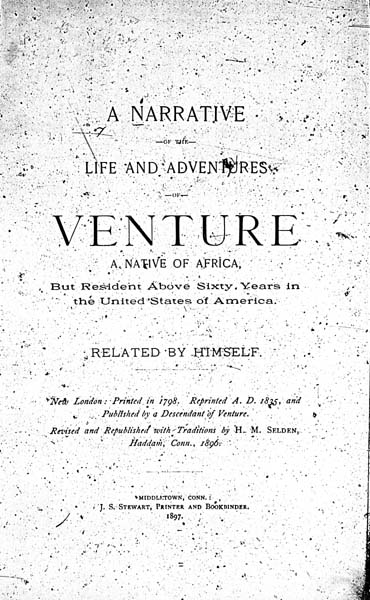
One of the few first-hand written accounts of an African being enslaved and shipped to the New World is Venture Smith’s A Narrative of the Life and Adventures of Venture, a Native of Africa: But Resident above Sixty Years in the United States of America. Related by Himself, published in New London, CT in 1798.
VentureSmithBook.jpg

Smith (His African name had been Broteer, 8-year-old son of Saungm Furro, Prince of the Tribe of Dukandarra in Guinea) was taken captive in West Africa around 1730 and taken to the coastal slave-trading center Anomabo (in present-day Ghana) for sale. Broteer later recalled that an officer on a Rhode Island slave ship purchased him for “four gallons of rum and piece of calico cloth.”  Most of the captives were later sold in Barbados, but Smith went on to Newport, RI and spent the next three decades as a slave in New York and Connecticut.

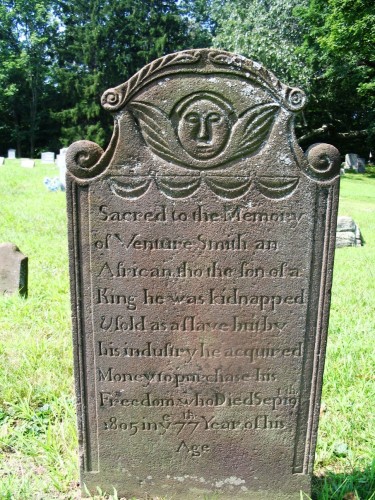
Venture Smith died in 1805. He was buried in the graveyard of the First Congregational Church in East Haddam, CT, along with his wife, Meg, and other members of their family. Smith’s gravestone can be seen there to this day.
VentureSmithHeadstone-e1338404476114

“Sacred to the memory of Venture Smith, an African. Tho the son of a King he was kidnapped and sold as a slave but by his industry he acquired Money to Purchase his Freedom.” Venture Smith gravestone.

William Grimes, who arrived just after 1800, was among the first runaway slaves from the South to reach Connecticut and New Haven. Grimes later published “Life of William Grimes, the Runaway Slave,”an autobiographical account of slavery in the South and the treatment of African Americans in the North during his lifetime.

LifeofWilliamGrimes

In Sept. 2018, he was inducted to the Connecticut Freedom Trail location at New Haven’s Grove Street Cemetery , where he is buried, for his pioneering contribution to U.S. history. Grimes’ great-great-great-granddaughter, Regina Mason, was a speaker at the event.

In 1811, George Washington Stanley Esq. , the son of Wallingford resident Oliver Stanley, wrote a brief manuscript history of Wallingford for the Connecticut Academy of Arts and Sciences  and sent it to Prof. Silliman of Yale. The report noted that of  Wallingford’s 2,325 inhabitants, there were  “1,152 white males,1,147 white females, 22 of color and four slaves, also ten foreigners, natives of England and Ireland.”

For nearly two hundred years New England maintained a slave regime that some historians used to claim was quite different from in the South.

Instead of slaves performing mainly agricultural labor, as in the South, the Medford (MA) Historical Society and Museum says New England’s slaves performed more varied jobs. “Owned mostly by ministers, doctors, and the merchant elite, enslaved men and women in the North often performed household duties in addition to skilled jobs,” the Society says. “They worked as carpenters, shipwrights, sailmakers, printers, tailors, shoemakers, coopers, blacksmiths, bakers, weavers, and goldsmiths. Many became so talented in the crafts that the free white workers lost jobs to them.”

But the idea that New England slaves were not situated on large agricultural properties has been refuted by other historians.

A 1764 inventory of “living creatures” on a 3000 acre plantation in Pomfret, CT listed 80 cows, 45 oxen, 30 steers, 59 young cattle, six horses, 600 sheep, 180 goats, 150 hogs and 27 Negroes, in that order.
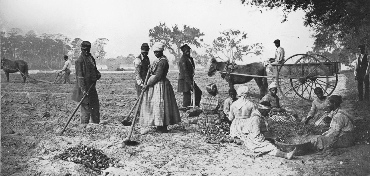
farm_slaves

Slaves working on a New England farm

And in 2015, Central Connecticut State University archeologists uncovered in Salem, CT the remnants of a large plantation that was worked by as many as 60 slave families in the years before the American Revolution.

According to research by the Hartford Courant, the creation of that plantation began in 1718 when Col. Samuel Browne, a wealthy Salem, MA merchant, began amassing land. He rented out some tracts, retaining about 4,000 acres for himself. That passed to his son and then to his grandson.

In 1690 there were only an estimated 200 black slaves in Connecticut; by 1774, that had grown to 5,100.

“The effects of the New England slave trade were momentous,” wrote Lorenzo Johnston Greene in The Negro in Colonial New England, 1620-1776. “It was one of the foundations of New England’s economic structure; it created a wealthy class of slave-trading merchants…”

Harvard Professor Bernard Bailyn, in an essay on how New Englanders had achieved such a high standard of living by the time of the revolution, wrote, “The most important underlying fact in this whole story, the key dynamic force, unlikely as it may seem, was slavery.”

That was only about 3.4 percent of the state’s population, “But it was slavery, nevertheless, that made the commercial economy of 18th-century New England possible and drove it forward,” Bailyn wrote. “The dynamic element in the region’s economy was the profits from the Atlantic trade, and they rested almost entirely, directly or indirectly, on the flow of New England’s products to the slave plantations and the sugar and tobacco industries they serviced.”

As the Black slave population increased, Connecticut’s lawmakers enacted more and more laws to control it, according to David L. Parsons of the Yale-New Haven Teachers Institute.

The so-called Black Code, a series of laws passed between 1690 and 1730, described the rights and responsibilities of slave and master.

The Black Code formalized slavery in Connecticut. There were no laws specifically forbidding slavery, and custom and the laws controlling it combined to give slavery legal standing in Connecticut, according to Parsons. The early Capital Law of 1642, which prohibited stealing “man or mankind” was interpreted to mean only white mankind.

Parsons wrote of how black servants were required to carry passes outside of town or be treated as runaways. Sellers of liquor were not allowed to serve Blacks without permission from their master. It is not clear what was done to Blacks who drank without permission. Blacks were not allowed to sell items without proof of ownership or written permission from the owner. Blacks were liable to whippings for disturbing the peace or “offering to strike a white person.” Blacks found outside after 9:00 p.m. without a pass could be whipped. Whipping was also the punishment for slaves who used unseemly language.

In 1769, a man named Bishop built the Oakdale Tavern in Wallingford to serve travelers between Boston and New York. “On the hillside in the rear of of the tavern were several cabins where slaves employed on the place dwelt,” wrote a local historian, Bill Stevens. (Source: “Bill Stevens Relates,” Meriden Record, April 8, 1954) 

As late as 1774, the Connecticut Journal justified the subordinate status of blacks, stating baldly that “God formed [blacks] … in common with horses, oxygen, dogs etc. for the white people alone, to be used by them either for pleasure or to labor with other beasts.”

That same year the April edition of The Connecticut Journal reported that a slave, Lemon, was “taken to the gaol in New Haven for abusing an Indian girl.” (Source: Clipping, “Tales of Other Days,” by Lavinia, Meriden  Record, undated)

On the eve of the American Revolution, Connecticut had 6,464 slaves, the most of any state in New England, according to one historian. The number of whites in the state that same year was 191,372, the state’s governor reported.

Some of those slaves tried to run away, generating advertisements in local papers seeking their return. Two 1761 ads specifically referred to runaway slaves from Wallingford:

Newspaper  Connecticut Gazette

Date  December 5, 1761

Author(s)  David Cook 

Runaway(s)  Jack 

Location  Wallingford, CT

Language Skills  speaks english well

Reward  5 dollars 

Transcription

RUN away from the subscriber in Wallingford, on the 28th of November. A negro man-servant named Jack at middling stature is marked with the Small-pox, speaks good english, had on when he ran away, a red duffel coat, a blue jacket without sleeves, leather breeches, and an old frock. He has some scars from the whip on his back, whoever should take up said negro, and return him back to his said master or secure him in any of his majesty’s gaols, shall have five dollars reward, and all necessary charges paid by me David Cook jun. Whoever shall apprehend said Runaway, are desired to secure him in Irons.

Newspaper New-London Summary

Date June 26, 1761

Author(s) David CookeCharles Whittlesey

Runaway(s) TonyTully

Location  Wallingford, CT

Language Skills  Both good english

Reward  40 shillings

Transcription

RANAWAY on the 10th of June, (at Night) from David Cooke of Wallingford, a Molatto Man servant, named TONY, about 26 Years old, middling statute, speaks good English, one sore leg, and is bigger than the other. He had on when he went away a light coloured broad cloth coat, light camblet jacket tow shirt and trowsers. Also, RUN-AWAY the same Night from Charles Whittlesey, Eso; of Wallingford aforesaid. A Molatto Man servant, named TULLY, about 28 years old, speaks good English, about 6 feet high, he has long hair. He had on a dark broad cloth coat, tow shirt and trowsers. Whoever shall take one or both of the above servants, are desired to secure them in irons, and give Notice to their said masters, for which they shall have Forty Shillings reward for each and all necessary charges paid by David Cooke, Charles Whittlesey.

During the American Revolution (1765 – 1783), when at least 820 free and enslaved African Americans from Connecticut served on the Patriots side, some Connecticut slaves gained their freedom in exchange for service (The National Mall Liberty Fund  has collected a list of Enslaved and free blacks from Wallingford, CT who served on the patriot side during the Revolutionary War.).
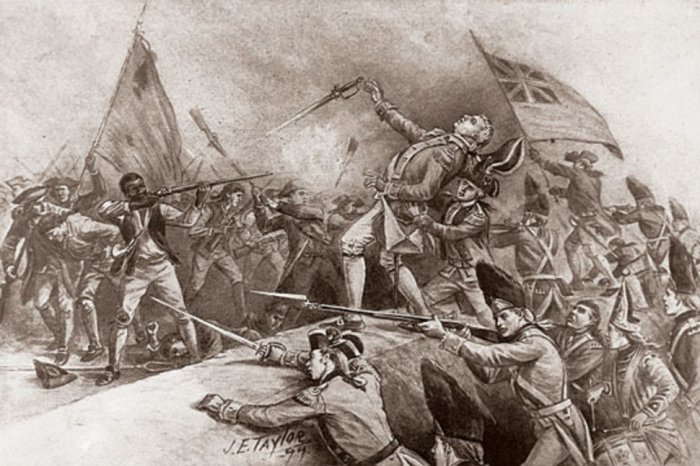
blacksduringrevolution

Other slaves purchased their freedom. Wallingford’s archives include an April 2, 1776 note about a local man, Mr. Elisha Brackett, freeing his “Negro Wench Slave named Nancy” in return for her paying him “32 Pounds Lawful money.”

Connecticut’s Gradual Emancipation Act of 1784 halted the importation of slaves and declared that children of black slaves born after March 1, 1784 were to be freed after turning 25. No current slaves were freed by the Act, however, and slaves born before 1784 remained slaves for life.

Not only that, but the act had a pernicious effect in that it encouraged some slaveholders to sell slaves and their children to residents of other states before the children reached 25, an action not prohibited by the law, where they would again be slaves for life.
JamesMars2-e1338408753130JamesMarsMemoir

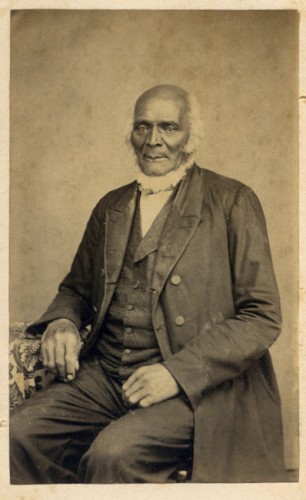
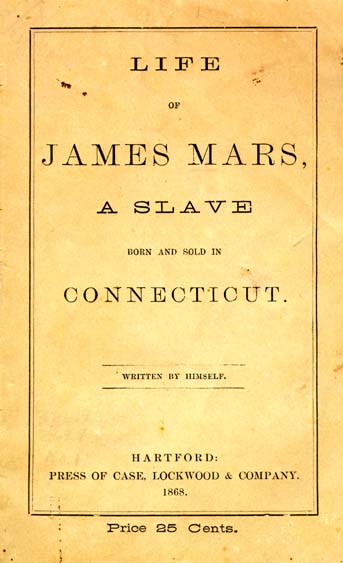
One man affected by the Gradual Emancipation Act was James Mars, a slave in Connecticut until age 25, who wrote a memoir published in several editions between 1864-1876. “When I had got it written, as it made more writing than I was willing to undertake to give each of them one, I thought I would have it printed, and perhaps I might sell enough to pay the expenses, as many of the people now on the stage of life do not know that slavery ever lived in Connecticut,” Mars wrote

Documenting the American South, a collection of American slave narratives, tells of how, with the help of white citizens of Norfolk, CT,  Mars evaded his owner’s attempts to take him to Virginia where he would have been denied the emancipation guaranteed him at age twenty-five under Connecticut law. Born in 1790, Mars lived until 1880.

Some historical writing on American history downplays the maintenance of slavery in Connecticut after the American Revolution and the Gradual Abolition Act.

In Hope of Liberty, James Oliver Horton and Lois E. Horton wrote, “ [m]any slaves were freed by the gradual emancipation laws in the North, and in a relatively short time (relative to the existence of the institution of slavery) slavery was abolished in the free states.”).  Similarly, in Black Odyssey: The African-American Ordeal in Slavery, Nathan Irvin  Huggins wrote, “…after the Revolutionary War] [t]hose states of New England, where there was a slight investment in slave property, were rather quick to disavow the institution.”

But other historians have challenged that view. In a 2001 Yale Law Journal article, Abolition Without Deliverance: The Law of Connecticut Slavery 1784-1848 , David Menschel presented evidence that the Gradual Abolition Act did not remove slavery from the state in a prompt and orderly fashion at all. Instead, he said, slavery’s termination was protracted because, “Legislators feared that uncivilized and uneducated blacks, emerging en masse from bondage into freedom, would endanger the fragile workings of Connecticut’s new republic.”

“In fact, though the number of slaves in the North declined after the Revolutionary War, slavery continued to exist there well into the nineteenth century,” Menschel said.

Even the State of Connecticut itself seemed to endorse continued slavery when, in 1784, it seized the estate of a William Brown, which included a number of slave children. An administrator of the estate petitioned the Legislature to free the children, but it rejected the petition and ordered that the children be bound out for the District of Norwich.

“In addition to protecting the state coffers from the costs of caring for such dependents, the Assembly also seems to have believed that Brown’s former slaves would benefit from bondage, as this would ensure that the slave children would be ‘well governed and educated,’ ” Menschel said.

In 1787, Oliver Ellsworth, a Connecticut delegate at the Constitutional Convention, predicted that “slavery in  time will not be a speck in our country,” but “in time” proved to be long-lived, with slavery not ending across the United States for another 78 years.

It wasn’t until 1788 that legislation outlawed the slave trade in Connecticut, prohibiting the import of Africans and the export of Africans for sale, but in 1794 the state legislature firmly rejected a bill that would have abolished slavery in the state the following year.

In 1790, the first Federal Census showed there were 3,763 people held in bondage throughout New England, including  2,648 in Connecticut. A 1797 act changed the emancipation age under the Gradual Abolition Act age to 21, but still didn’t abolish slavery.

Evidence of continued slavery in Connecticut showed up in Probate Court records of Wallingford, CT following the death of a Dr. William Hart. According to the records, among the items Hart left to his wife, Catherine Vallet Hart, were “a Negro boy named Titan and a Negro girl of five years.”  (Source: Clipping, “Tales of Other Days,” by Lavinia, Meriden  Record, undated)

By 1800, 83 percent of Connecticut’s Blacks were free, leaving 951 enslaved, but these were still being held onto vigorously, as the 1803 runaway slave ad below shows.

SlaveryRunAwayBroadside-e1338480755324

In the early 1800s, George Washington Stanley completed a census of Wallingford, CT at the request of Yale professor Benjamin Silliman. Stanley’s report said the village had 2,325 inhabitants, including “1,152 white males, 1,147 white females , 22 (people) of color and four slaves…” (Source: Clipping, “Tales of Other Days,” by Lavinia, Meriden  Record, Feb. 1953)  

In 1810, the number of slaves in Connecticut had gone down to 310 and by 1820 the census put the number at 97.

The 1840 Census showed 17 African-Americans still enslaved in Connecticut, but anti-slavery attitudes were prominent.

Even free blacks began to speak up. The words of one free black man, Peter Osborne, are preserved in “An oration delivered before the people of color of New Haven, assembled at Wallingford on the eighth of July, to celebrate the fourth.”

In vivid, forceful language, Osborne applauded the displays of patriotism on the 4th of July 1845, but castigated white Americans for not sharing the freedom the American Revolution produced.

“The heroes of the revolution were gallant and terrible to establish and secure a government for the peace and happiness of the descendants of Europe, but they were not the less so to deprive the descendants of Africa of its protection,” Osborne said. He called upon all blacks to “…like a Roman army, invade prejudice, storm the castle of expediency, — to annihilate the inhuman trade of transportation–the deluded scheme of Colonization,  the scourge and curse of slavery.”

Connecticut finally abolished slavery entirely in 1848, when there were just six slaves left in the state, making it the last state in New England to fully abolish slavery. The last slave in Wallingford was owned by J. Parker of Pond Hill, according to A History of Wallingford 1669-1935 and Wallingford 1669-1935, produced for Connecticut’s Tercentenary Celebration.

It’s not generally known that prior to that point, hundreds of slaves had been owned even by members of Congress from Connecticut.

From the founding of the United States until long after the Civil War, hundreds of the elected leaders writing the nation’s laws were current or former slaveowners.

More than 1,700 people who served in the U.S. Congress in the 18th, 19th and even 20th centuries , including 13 from Connecticut, owned human beings at some point in their lives, according to a Washington Post investigation of censuses and other historical records that revealed its findings in January 2022.

People looking today for records of slaves with a connection to Connecticut can turn to Enslaved.org The database, which gathers records about the lives of enslaved Africans and their descendants has been undergoing a crowdsource-powered expansion to unlock Black Americans’ genealogical histories. The general public and outside researchers can submit family histories, runaway slave ads, or documents of purchase to the site and users can search their names and town histories and connect the experiences of enslaved people, from voyages to the changing of names.

Jessica Ann Mitchell Aiwuyor, founder of the National Black Cultural Information Trust, said African Americans have long sought to reclaim their past. “Even after the Civil War, former enslaved people put ads in newspapers looking for lost family members,” she said. “This website is a continuation of that tradition as we look for our past and family but this time in a digital space.”

Even after Connecticut abolished slavery,  the New England states were far from welcoming to Black people. According to the Wall Street Journal, Lincoln’s Emancipation Proclamation of 1863 revived the long-held fears of many white Northerners that “hordes” of newly freed slaves would flood their cities in search of jobs and housing. Sooner or later, warned the New York Daily News, “we shall find negroes among us thicker than blackberries.”

And as late as 1976, slavery in Wallingford was still being depicted as a benevolent practice. From These Roots, A Bicentennial History of a New England Town, published in 1976, said slavery in Wallingford “was a benign form of ownership here mostly confirmed to household service.”  The history went on to say slavery in the town “never attained any importance and the slim records seem indeed often to picture a strong and affectionate relationship.”

We should know these things.

As Holocaust survivor and scholar Dr. Dori Laub has written, we must face our buried truths in order to live our lives.

Addendum – June 19, 2020: With increased interest in Juneteenth, some additional information may be of interest. Juneteenth is a day that commemorates the end of slavery in the United States, but on that day — June 19, 1865 — when Texas slaves were finally notified they were free, thousands of other Black Americans remained in bondage.

According to the Boston Globe, There were four Union border states — Delaware, Kentucky, Maryland, and Missouri — that did not secede. The Emancipation Proclamation freed slaves in Confederate states, but not in those four Union states.

Granted, most whites in those states did not own slaves, and slaves made up relatively small percentages of the population, from 1.6 percent in Delaware to 19.5 percent in Kentucky, according to encyclopedia.com. In contrast, slaves were 29 percent of the total population of the Upper South and 47.5 percent of the Deep South.

But percentages don’t matter: By 1860, there were 225,483 slaves in Kentucky, 114,931 in Missouri, 87,189 in Maryland, and 1,798 in Delaware.

Maryland abolished slavery in 1864, and Missouri followed in 1865. But many Black Americans in Kentucky and Delaware remained enslaved until the 13th Amendment was ratified in December of 1865 — six months after Juneteenth.

______________________________________________________________________________

  1. With so many years gone by since the 13th amendment was ratified in 1865, you might think that it has to  be impossible to hear a former slave talk about the experience.  But amazingly you still can by going to Voices from the Days of Slavery: Former Slaves tell their Stories – a collection on file at the Library of Congress and available online . Here individuals give firsthand accounts of life during slavery. Hearing the voices of those who were enslaved is more powerful than what could ever be captured in a textbook.

2.  Recommended readings about Oregon’s racist past:

Breaking Chains – Slavery on Trial in the Oregon Territory by R. Gregory Nokes

Tells the story of the only slavery case ever adjudicated in Oregon courts—Holmes v. Ford. Drawing on the court record of this landmark case, Nokes offers an intimate account of the relationship between a slave and his master from the slave’s point of view. He also explores the experiences of other slaves in early Oregon, examining attitudes toward race and revealing contradictions in the state’s history.

When Portland banned blacks: Oregon’s shameful history as an ‘all-white’ state, Washington Post, June 7, 2017

Few people are aware of Oregon’s history of blatant racism, including its refusal to ratify the 14th and 15th Amendments of the Constitution.

Oregon Racial Laws and Events, 1844-1959

Oregon’s Provisional Government passed the first Exclusion Law in the Oregon Country in 1848. It made it unlawful for any Negro or Mulatto (of mixed ethnic heritage) to reside in Oregon Territory.

Oregon’s Civil War – The Troubled Legacy of Emancipation in the Pacific Northwest by Stacey L. Smith

The persistent myth that Oregon was a free land where white unity against slavery made free-state status nearly inevitable often obscures the prominence of the slavery question in provisional, territorial, and state politics.


A plea to Oregon’s 2018 Legislature: For the kids’ sake, do something about Oregon’s failing public virtual charter schools

studentstrugglingatcomputer

$60 million. That’s right, Oregon is spending at least $60 million a year on virtual public charter schools, many of which are failing to educate their students.

How appalling does it have to get before failing public virtual charter schools are shut down? How long will it take before other struggling public virtual charter schools are fixed?

When the state is struggling to adequately fund its public schools, diverting scarce resources to virtual public charter schools that don’t work is unforgivable. It’s time to do something beyond studying or ignoring the problem.

The latest to raise the alarm is Oregon Secretary of State Dennis Richardson.

“The Oregon Department of Education (ODE) has not focused on improving education for at-risk students in alternative and online schools and programs, though these programs account for nearly half the state’s high school dropouts,” said an audit released in December 2017 by Richardson’s office.

The audit noted:

  1. ODE should develop a more meaningful accountability system for…online education. More state involvement, along with consistent district oversight, could help online schools improve results with academically at- risk students.
  2. ODE should establish and monitor standards for crucial practices, such as annual district evaluations of these schools and programs.
  3. Oregon doesn’t require state approval for new public online charter schools, regularly evaluate online school performance in depth, increase oversight of poor-performing online schools or require online schools to meet performance standards to grow.
  4. Oregon doesn’t review online curriculum for compliance with state standards.
  5. School Districts differ significantly in the quality of their online school oversight. One district overseeing a for-profit online public online charter school said it is “pretty much hands off” regarding the school.
  6. The lax attendance standard at online schools raises the risk that an online school could receive taxpayer dollars even if students spend little time engaged with the school and make no progress academically.
  7. The level of district monitoring of for-profit public online charter schools varies significantly.

The audit recommended that ODE work with the Legislature to:

  • Require upgrades to accountability and oversight for online education, as some other states have done. Possibilities include
  1. Upgrading public performance reporting for virtual schools and programs.
  2. Requiring publicly available annual improvement plans.
  3. Requiring ODE review of plans for low-performing virtual schools and programs.
  4. Establishing performance requirements that statewide and regional virtual schools must meet before they can grow.
  • Increase standards for sponsors of virtual charter schools. Options that ODE and the Legislature could explore include spelling out individual district responsibilities in detail, increased ODE oversight of districts, and shifting sponsorship of the schools to a central body.

All good ideas.

The time is now to do something.

_______________________

Addendum: I studied Oregon’s public virtual charter schools extensively in 2017. I found millions of taxpayer dollars wasted, appalling test scores, horrific graduation rates and failing schools just shopping around for new school district sponsors. For more, read the following:

OREGON’S VIRTUAL CHARTER SCHOOLS DON’T COMPUTE

DERELICTION OF DUTY: HOW BAD DOES IT HAVE TO GET BEFORE YOU SHUT DOWN A FAILING VIRTUAL CHARTER SCHOOL?

TOO MANY OREGON VIRTUAL CHARTER SCHOOL STUDENTS SKIP STATE TESTST

PERS PROBLEMS? SOME CHARTER SCHOOLS SAY, “FUGETTABOUTIT”

Will the sky fall for charities under the new tax law?

tax-form-gifts-to-charity_573x300

Charities and much of the media are screaming bloody murder about the potential negative impacts of the new 503-page tax reform legislation.

“The tax code is now poised to de-incentivize the heart of civic action in America,” Dan Cardinali, president of Independent Sector, which represents charities, told the Washington Post.

“The GOP tax reform will devastate charitable giving,” shrieked the Los Angeles Times.

Stacy Palmer, Editor of “The Chronicle of Philanthropy,” said on Public Television’s Newshour that as much as $20 billion might not be given in 2018 next year because of the tax law change. An Indiana university study estimated the reduction would be $13 billion.

This apocalyptic vision fits in nicely with the attempt by Democrats to demonize the tax reform law and the Republicans who voted for it in hopes of reaping benefits in the 2018 elections.

But is charitable giving really going to implode? I think not.

The primary concern among the nattering negative cadre appears to be that the number of Americans who qualify for the charitable tax deduction will drop sharply now that the standard deduction has been doubled to $12,000 for an individual, $24,000 for couples. This will result in fewer people itemizing their deductions, and you can only deduct donations if you itemize, a key factor motivating charitable giving, according to the doomsayers.

But this ignores the fact that an awful lot of people already give generously from the heart without claiming a charitable deduction. According to the most recent IRS data, 68.5 percent of households chose to take the standard deduction under the old system, leaving them unable to claim a charitable deduction, but a lot of them made donations anyway. In 2016, the largest source of charitable giving was individuals at $281.86 billion, with two thirds of households giving money to non-profits.

It is estimated that under the new tax law, the share of people itemizing deductions could drop to as few as 5 percent.

It seems highly unlikely that individuals who haven’t been itemizing or those who won’t itemize under the new tax system will decrease their charitable giving when the standard deduction is doubled. In other words, the vast middle class will still probably give, though charities may want to ramp up their appeals.

What looks considerably more threatening for charities is changes in the estate tax under tax reform.

gravedigger_observations2

Before the tax reform law, the estate tax applied only to estates worth at least $5.49 million for individuals and $10.98 million for married couples. The estate tax applied a 40 percent tax rate to estates worth more than those amounts.

In other words, the wealthy have been encouraged to make charitable donations because these donations were not taxed. If their money was left to heirs instead, the estate would pay taxes on amounts greater than about $5.5 million dollars for an individual or $11 million for a couple.

The new tax law tax doubles the annual exclusion amount (the exemption) for estate taxes to $10 million. Couples who do proper planning could double that exemption.

Only 0.2% of all estates ended up being hit with the estate tax under the old formula. The Tax Policy Center estimates that some 11,310 individuals dying in 2017 will leave estates large enough to require filing an estate tax return.

Under the new law, it’s likely that fewer than 1,000 estate tax returns will be filed per year with a tax due. In other words, just 10,000 individuals may be less likely to make charitable donations to avoid estate taxes.

But those individuals control a lot of wealth and many may be people who were previously motivated to give by a desire to avoid estate taxes.

According to the National Committee for Responsive philanthropy (NCRP), study after study shows that tax policy matters in charitable giving and that the estate tax is one of the most important motivators for those at the top of the income distribution. “Rather than see a sizable portion of their estates subject to taxation, wealthy families give while living to reduce the size of their estates; and they also give in the form of bequests upon their death, “ the NCRP says.

The Chronicle of Philanthropy has compiled detailed data on publicly reported charitable gifts of $1 million or more in each state. The largest recipients include private and community foundations, colleges and universities, healthcare programs, the arts, museums and libraries. The Chronicle assumes that a large proportion of those donations is motivated by estate tax planning.

So Oregon charities relying on big gifts may be in for a harder struggle going forward.

The Chronicle data shows the following significant gifts of $1 million or more to Oregon institutions just in 2017 and 2016:

2017

Donor Recipient Gift Value
Anonymous U. of Oregon (Eugene) $50,000,000
Anonymous Oregon State U. at Corvallis $25,000,000
Robert W. Franz Providence Health and Services (Portland, Ore.) $20,000,000
Michael and Arlette Nelson U. of Portland (Ore.) $10,000,000
Anonymous Oregon State U. at Cascades (Bend) $5,000,000
Fariborz Maseeh Portland State U. (Ore.) $5,000,000
Jordan Schnitzer Family Foundation (Jordan Schnitzer) Portland State U. (Ore.) $5,000,000
Anonymous U. of Oregon, Jordan Schnitzer Museum of Art (Eugene) $2,250,000
Keith and Julie Thomson U. of Oregon (Eugene) $2,000,000
Tim and Mary Boyle Providence Foundations of Oregon (Lake Oswego) $2,000,000
Tykeson Family Foundation (Don Tykeson) Oregon State U. at Cascades (Bend) $1,000,000
Robert W. Franz Blanchet House of Hospitality (Portland, Ore.) $1,000,000
Charles McGrath Oregon State U. at Cascades (Bend) $1,000,000

Note: Most of the bequests listed in this database are estimates. In many cases, donors’ bequests are announced long before their wills are settled.


2016


Donor Recipient Gift Value
Philip H. and Penelope Knight U. of Oregon (Eugene) $500,000,000
Gary and Christine Rood Oregon Health & Science U. (Portland) $12,000,000
Charles and Gwendolyn Lillis U. of Oregon (Eugene) $10,000,000
Philip H. and Penelope Knight Fanconi Anemia Research Fund (Eugene, Ore.) $10,000,000
Tim and Mary Boyle U. of Oregon (Eugene) $10,000,000
Allyn C. and Cheryl Ramberg Ford U. of Oregon (Eugene) $7,000,000
Edward and Cynthia Maletis U. of Oregon (Eugene) $5,000,000
Roberta Buffett and David Elliott Oregon Shakespeare Festival (Ashland) $5,000,000
Don and Willie Tykeson John G. Shedd Institute for the Arts (Eugene, Ore.) $2,000,000
Tim and Mary Boyle Reed College (Portland, Ore.) $2,000,000
David and Anne Myers Columbia River Maritime Museum (Astoria, Ore.) $1,000,000


Note: Most of the bequests listed in this database are estimates. In many cases, donors’ bequests are announced long before their wills are settled.

Source: Philanthropy.com; http://bit.ly/2lljb8m


.


Lobbying for foreign interests: where are the patriots?


coins

All for a few coins.

Michael Flynn, President Trump’s former national security advisor, had a lucrative $530,000 lobbying contract with Inovo BV, a Netherlands-based consulting firm owned by a Turkish national.

Trump’s former campaign chairman Paul Manafort and Manafort’s former business partner Rick Gates have pleaded not guilty to federal charges, including failing to register for lobbying they did for Viktor Yanukovych, the thoroughly corrupt former president of Ukraine, and his pro-Russian political party. A popular uprising ousted Yanukovych in 2014.

UkraineKievprotest--621x414

Anti-government protesters clash with the police at the central Kiev square in the Ukraine

Thousands of Syrians were dead and Jordan, Lebanon and Turkey were hosting Syrian refugees as Syria’s president, Bashar al-Assad, pursued a war to new heights of brutality.

syrianrefugees

Syrian refugees.

But the war and refugees weren’t U.S. lobbying firm Brown Lloyd James’ concern. For a fee of $5,000 a month, the firm promoted a positive image for Bashar al-Assad and his wife, Asma. The firm’s efforts paid off when American Vogue magazine published “A Rose in the Desert”, a fawning article about Asma, her British roots, designer fashions and good works.

ASMA

“Asma al-Assad is glamorous, young, and very chic—the freshest and most magnetic of first ladies.” Asma al-Assad: A Rose in the Desert, Vogue.

The Vogue story praised the Assads as a “wildly democratic” family-focused couple who vacationed in Europe, fostered Christianity, were at ease with American celebrities, made theirs the “safest country in the Middle East,” and wanted to give Syria a “brand essence.”

American lobbying firms and so-called think tanks have shown time and time again that they have no compunction about fronting for vile foreign donors or representing foreign countries trying to minimize criticism of their human rights abuses or advance positions potentially inimical to American interests.


At least 77 U.S. firms have represented 170 governmental or pseudo-governmental entities of the Soviet Union/Russia trying to influence U.S. policy since 1950, according to the Center for Responsive Politics.

Early this year, the Egyptian government hired Washington, D.C.-based firm Weber Shandwick and then-subsidiary Cassidy & Associates to enhance public perception of Egypt and its intelligence agency.

EgyptSissi

Egyptian President Abdel-Fattah el-Sissi

Since Abdel-Fattah el-Sissi took office as president, the internal intelligence agency, Amn al-Watany, has lived up to its reputation for harassing veteran activists, worker organizations, professional unions and what remains of the student activist movement, according to World Politics Review, which analyzes critical global trends. Prominent dissidents—including iconic figures from the 2011 uprisings, such as the leaders of the April 6 Youth Movement—continue to be held in prisons or are subject to surveillance and control by the state security forces.

The Foreign Agents Registration Act (FARA) governs registration of agents for foreign interests. In its 2017 FARA filings, BLJ Worldwide said it represents the China-United States Exchange Foundation (CUSEF) a non-profit based in Hong Kong that describes itself as engaging in promoting relations and facilitating exchanges between China and the United States.

According to the filing, BLJ was very busy promoting China’s interests in the first half of 2017. The firm supported trips to China by reporters from all these U.S. media outlets: Slate; Quartz NFR; The Daily Beast; NBC News; Bloomberg; Businessweek; The New Yorker; The Des Moines Register; the Grand Rapids Free Press; the Chicago Tribune; and Independent Journal Review.

BLJ also hosted a dinner for representatives from CNN, Financial Times, the Economist, Associated Press, Bloomberg and CNBC.

AL-Monitor, which analyzes the trends shaping the future of the Middle East, won the 2017 Online Journalism Award for Explanatory Reporting for a series on how the Gulf States have been throwing money left and right in an effort to undercut Qatar in the eyes of President Donald Trump and undo Obama’s fledgling reconciliation with Iran.

According to Maplight, a non-profit which works to reveal the influence of money in politics, lobbyists for foreign interests gave more than $4.5 million to federal lawmakers and candidates during the 2016 election. Foreign lobbyists and their firms’ political action committees were also responsible for packaging a total of $5.9 million in donations for candidates and party committees, through an influence-enhancing tactic known as “bundling.”

Because the donations come from foreign governments’ U.S.-based lobbyists, they effectively circumvent American laws designed to bar direct foreign donations, Maplight reported. Under federal law, foreign nationals are prohibited from donating to any federal, state, or local campaigns, or political parties. But foreign governments frequently hire U.S. citizens to represent their interests, and those people face no such contribution ban.

Sen. Chuck Grassley (R-IA), chairman of the Senate Judiciary Committee, thinks he has a way to address all this. He wants to strengthen FARA. To that end, he has introduced legislation that would substantially increase FARA disclosure requirements.

But in my view the issue isn’t just disclosure. It’s also the willingness of American businesses to put the interests of foreign powers over those of the United States.

As citizens of the United States we should respect others and try to understand different viewpoints, but that doesn’t mean American lobbyists should take foreign money to advance the influence of foreign thugs and undermine U.S. interests.

Have they no shame?