Celebrities and Politics: Why Are Voters Attracted to Shiny Objects?

What is it about celebrities?

Democrat Jon Ossoff wants to win an open primary on April 18 so he can represent Georgia’s 6th Congressional District.

alyssa

Actress Alyssa Milano canvassed Ossoff’s district for him in March and offered voters a ride to an advance polling location.

According to various media, actors Alyssa Milano and Christopher Gorham‏, want Ossoff to win, too. Media tell us lots of other liberal celebrity actors support Ossoff as well, including Chelsea Handler, Kristen Bell, John Leguizamo, Sam Waterston, Connie Britton, Jessica Lange, Lynda Carter, Jon Cryer, Debra Messing, George Takei and Rhea Perlman.

I’m not sure yet where Kim Kardashian, who’s so well known for her political sophistication and deep thinking, stands on Ossoff’s race, but I’m sure the media will tell us if she ever blurts out something.

How did we get to the point where this matters, or at least reporters, reporters, pundits and political consultants think it does?

Did you know Elvis Presley supported Democrat Adlai Stevenson in the 1956 presidential election and John F. Kennedy in 1960, or that he shared his strong opinions on America’s cultural decline with President Nixon?
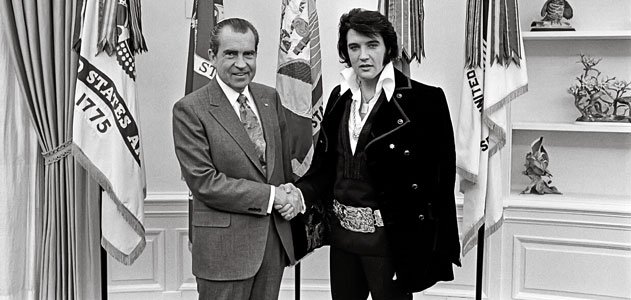
Indelible-Nixon-Elvis-631.jpg__800x600_q85_crop

President Nixon and Elvis Presley at the White House, 1970

Elvis was particularly incensed about the behavior of actress Jane Fonda, who was photographed at an anti-aircraft gun placement in Hanoi during the Vietnam war.

Fonda_Vietnam_3171436b

Actress Jane Fonda at an anti-aircraft position in North Vietnam in July 1972

Like an updated Tokyo Rose, she’d also gone on Hanoi radio and petitioned American fighting men stationed to the south to lay down their arms because they were fighting an unjust war against the peace-loving North Vietnamese.

Did any of us care what Elvis thought about political issues? I don’t think so.

Did anybody vote for Adlai Stevenson because Elvis endorsed him? I doubt it.

How did we reach a point where the political opinions of pampered, self-absorbed, and often empty- headed celebrities influence our voting? It’s a virulent, ugly form of anti-intellectualism.

 Maybe we shouldn’t be surprised.

Americans are woefully uninformed about history and public policy. According to a Pew Research project, about a quarter of American adults (26%) say they haven’t read a book in whole or in part in the past year, whether in print, electronic or audio form.

A recent Fairleigh Dickinson University survey revealed that only 34 percent of registered voters can name the three branches of government, only 69 percent know which party controls the House of Representatives and just 21 percent can name the current Chief Justice of the Supreme Court.

Hard to believe, but according to Newsweek, 70 percent of Americans have no idea what the constitution, the country’s most important historical, political, and legal document even is.

But Americans do know the names, sexual proclivities, marital history, makeup choices, fashion choices and car crash-like personal lives of celebrities and, increasingly, they pay attention to their political opinions. And the media is thrilled to offer celebrities a platform to say what they think about climate change, refugees, the electoral college or whatever, no matter how nonsensical or shallow those views are or how hyping their views is a devaluation of actual expertise.

If there’s any hope it’s helpful to remember that celebrities like Katy Perry came out for Hillary in droves….and we know how that ended.
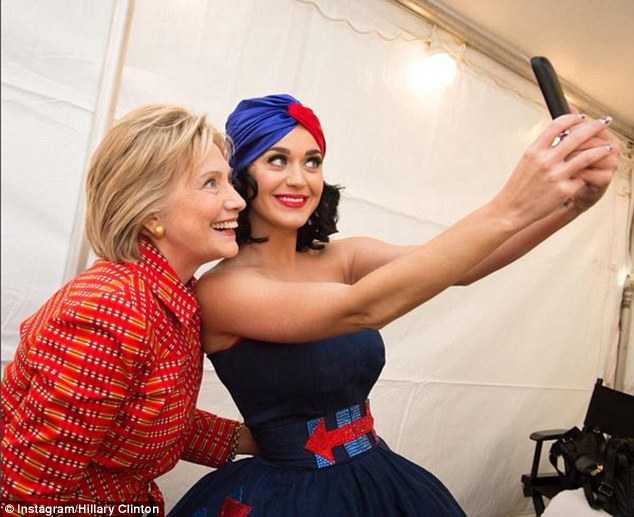
HillaryandKaty

Senator Wyden doesn’t need your donation

wydenmoney

Senator Ron Wyden wants me to know he cares about “real people”. And, by the way, he wants my money, too.

Wyden, who already had $3,398,289 in his campaign account as of the end of 2016, just sent out one more of his voluminous e-mails highlighting how he’s fighting for truth, justice and the American way. He’s also pleading for donors to step up and help him with a $7, $24, $36 or $125 contribution.

This from a Senator who raised $12,628,463 during his previous term, almost all of it from big business and affluent individual contributors and just 5 percent ($664,664) from the little people, according to OpenSecrets.org.

This from a Senator who already has $3,398,289 in cash sitting in his campaign account and may not even run again. After all, Wyden’s already been a member of Congress for 36 years and is going to turn 68 years old on May 3. He’ll be 73 during his next campaign if he runs again. That would make him almost 80 at the end of that term.

Yes, I know, there are 14 senators who are 74 or older, with the oldest, Chuck Grassley (R-IA) and Diane Feinstein (D-CA), both 83. And the Senate is a place where politicians with high self-regard and legions of sycophantic staff can come to love living in a special bubble and can see themselves as irreplaceable.

But, is Wyden, who is wealthy and has three young children with his wife Nancy, whom he married in 2005, going to want to do his 24 X 7 Senate job until he’s almost 80?

My bet is Senator Wyden doesn’t need your minuscule individual contribution. Give your money to a non-profit that’s doing great work, instead. The world will be better for it.


Memo to Oregon’s Congressional Delegation: Pay Your Interns

internscongress

Every summer, it’s a deluge. Thousands of eager students descend on Washington, D.C. to intern in Congress. It’s the perfect opportunity to see first-hand how the legislative process works, a good way to get a foot in the door in politics and often gives ambitious young people a leg up in their careers.

Some of those ambitious young people end up working for members of Oregon’s congressional delegation, all of whom talk incessantly about the need to prepare students for the future, support equality of opportunity and encourage the creation of good jobs.

So what are they paying their interns?

Zero. Zip. Not one thin dime. Not one red cent.

Money Magazine estimates it will cost an intern a minimum of $5300 to spend a summer interning away from home when you factor in air travel, rent, transportation, clothes and food.

This means a good number of young people simply can’t afford to intern in Congress.

One result? Low-income Oregonians having to choose between a career enhancing internship for an Oregon member of Congress and a summer job with a house painting company may have little choice if they need to make money.

That means students from well-off families can afford to take a career-building unpaid internship, but not the kid from an average family struggling to deal with potentially crippling college loan debt. That perpetuates inequality.

The situation has become so acute that some former Congressional interns have even formed an organization, Pay Our Interns, to advocate for paid internships. “A student’s socioeconomic status should not be a barrier to getting real-world work experience,” the group says.

Here’s a chance for Greg Walden, the lone Republican in Oregon’s congressional delegation, to get things rolling and show some leadership by instituting a paid internship program.

So do the right thing, folks. Pay your interns. You’ll all be the better for it.


DeFazio and Schrader: are they vulnerable in 2018?

What are they smoking?

That was my first thought when I learned Republicans think Rep. Peter DeFazio (D-OR) and Rep. Kurt Schrader (D-OR) will be vulnerable in 2018.

The National Republican Congressional Committee’s Chairman Steve Stivers announced on Feb. 8 that DeFazio and Schrader would be among the party’s initial 36 offensive targets in the House of Representatives for the 2018 midterm elections.

defaziovulnerable

Rep. Peter DeFazio

The Committee’s goal is to keep Republicans in control of the House

kurtschrader

Rep. Kurt Schrader

so they can pursue their agenda in areas such as healthcare reform, a stronger national defense, and job growth.

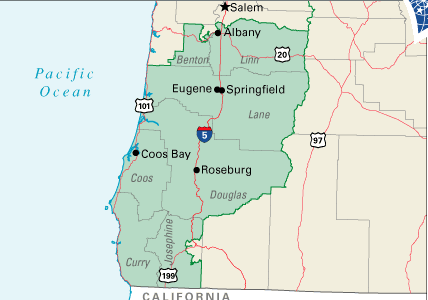
DeFazio has represented Oregon’s 4th Congressional District since 1987. The district, in the southwest portion of Oregon, includes Coos, Curry, Douglas, Lane, and Linn counties and parts of Benton and Josephine counties.

oregon4thdistrict

Oregon’s 4th District

In his first race, DeFazio won with 54.3 percent of the vote. He won his next 16 races with comfortable leads, with a high of 85.8 percent in 1990 and a low of 54.6 percent in 2010. After a 2011 re-districting gave Democrat-heavy Corvallis to the 4th district, DeFazio won 59.1- 39 percent.

Democrats figured the Corvallis shift guaranteed DeFazio a permanent seat and his seat did seem safe when he won in 2014 with 58.6 percent and in 2016 with 55.5 percent.

Further hurting Republicans has been their failure to put up a strong opponent.

With a weak bench, the Republicans have run the same man, Art Robinson, against DeFazio in each of the past four elections. You’d think they would have learned. The first time, 2010, Robinson lost by 10 points, the second time by 20, the third by 21, the fourth by almost 16.

So, is DeFazio really vulnerable as the National Republican Congressional Committee believes? Maybe.

Consider how Donald Trump did in DeFazio’s district.

Trump handily defeated Hillary Clinton in Coos, Curry, Douglas, Linn and Josephine counties. In Douglas county, Trump racked up 64.6 percent of the vote versus Clinton’s 26.3 percent.

Hillary carried only two liberal enclaves, Lane County, home of the University of Oregon, and part of Benton County, home of Oregon State University, but that was enough.

In the end, Hillary barely carried the 4th District with just 46.1 percent of the vote versus Trump’s 46 percent, a margin of just 554 votes.

That suggests the Republican problem is their candidate and his/her messaging, not the dominance of Democrats.

If the Republicans could recruit a strong moderate candidate able to make persuasive arguments, DeFazio could be in trouble.

As for Schrader, he has represented Oregon’s 5th Congressional District since 2008. The district, in the northwestern portion of Oregon, includes Lincoln, Marion, Polk, and Tillamook counties as well as portions of Benton, Clackamas, and Multnomah counties.

5thdistrictschrader

Oregon’s 5th District

In his first race, Schrader won with 54 percent of the vote. He won his subsequent races with 51.3 percent, 54 percent, 53.7 percent, and 53.5 percent. In 2011, the Oregon State Legislature approved a new map of congressional districts based on updated population information from the 2010 census, but it hasn’t had a meaningful impact on Schrader.

In 2016, Trump took Marion, Polk and Tillamook counties. Clinton carried Lincoln, Benton, Clackamas, and Multnomah counties, winning heavily populated Multnomah 73.3 to 17 percent. In the end, Clinton carried the 5th District with 48.3 percent of the vote versus Trump’s 44.1 percent.

Schrader’s winning margins to date have been consistent and comfortable, but not breathtaking. They would likely have been higher without the presence of multiple other party candidates in the general elections, who have been draining principally liberal votes. In 2016, for example, the Pacific Green Party took 3.4 percent of the votes. In 2014, three other parties captured a total of 6.7 percent of the vote.

Although voter registration trends aren’t consistently matching actual election trends, Schrader’s district is becoming increasingly Democratic, though also more non-affiliated.

In Nov. 2012, there were 158,885 registered Democrats, 148,464 Republicans and 89,539 non-affiliated voters in the district. By Nov. 2016, it had shifted to 176,868 registered Democrats, 155,430 registered Republicans and 135,233 non-affiliated voters.

Is Schrader as vulnerable as the National Republican Congressional Committee believes? I don’t think so. Even though he’s been in Congress fewer terms than DeFazio, his district is likely safer for a Democrat, and becoming more so.

How about DeFazio?

I know, he’s been in office for 30 years and just keeps rolling along, seemingly invincible. But I think he’s more vulnerable than he looks. He hasn’t so much been winning as the Republicans have been losing with uninspiring, ideologically rigid candidates.

My advice to the National Republican Congressional Committee. Don’t divide your limited resources in an effort to capture both seats. Instead, focus on finding a strong moderate candidate to run against DeFazio in 2018, building a war chest sufficient for a credible race and running a sophisticated campaign.

Dennis Richardson showed a Republican can win in Oregon. If the right things fall in place, the 4th District could be next.


Standing indivisible against the Trump agenda: The new Tea Party


chavettz

A crowd yells insults at a Feb. 9, 2017 Town Hall held by Rep. Jason Chaffetz, R-Utah


Anti-Trump Democratic activists are out in force around the country stirring up the kind of public turmoil the media love.

Rep. Jason Chaffetz (R-Utah) got the full treatment on Feb. 9 when he showed up to meet with locals at a suburban Salt Lake City high school auditorium. Police estimated that at least 1,000 people jammed into the space and more chanted outside.

Television, newspaper and online channels showed people yelling, “Chaffetz is a coward” and “Do your job.”

Watching from afar, you might think this turmoil is spontaneous and that Chaffetz is in deep political trouble with his constituents. But looks can be deceiving, which is exactly what the protest organizers want.

Chaffetz represents Utah’s 3rd Congressional District. The heavily Republican district is located in the eastern portion of the state and includes Carbon, Emery, Grand, San Juan, and Wasatch counties as well as portions of Salt Lake and Utah counties.

Chaffetz was first elected to the House in 2008 with 65.6% of the vote and has consistently won subsequent races by wide margins. In his 2016 race he won convincingly with 73.5%.

Not only did he win in 2016, but his constituents voted overwhelmingly for Trump in all but two of the counties represented in his district. In Carbon County, Chaffetz took 79.8 percent of the vote. In Utah County, Hillary Clinton took only 14 percent.

In other words, despite the orchestrated chaos in the auditorium, it’s highly unlikely, that the protesters represented the majority opinion in Chaffetz’ district and Chaffetz is pretty damn safe in his seat. But pictures and news stories about the hostile, roaring crowd helped spread the liberal, anti-Trump message.

That’s what Indivisible wants.

Beginning with a conversation between two former congressional staffers for Democrats anguished over Trump’s win, Indivisible is a national movement with a reported 7,000 affiliated groups in every state and almost every congressional district.

Created as a flip side to the Tea Party activists, the group even has an Indivisible Guide, A Practical Guide for Resisting the Trump Agenda.

“Donald Trump is the biggest popular-vote loser in history to ever call himself President-Elect. In spite of the fact that he has no mandate, he will attempt to use his congressional majority to reshape America in his own racist, authoritarian, and corrupt image. If progressives are going to stop this, we must stand indivisibly opposed to Trump and the Members of Congress (MoCs) who would do his bidding,” the guide says.

The Guide encourages anti-Trumpers to go to in-district events held by members of Congress (“Make them listen to you, and report out when they don’t.”), local events members attend (“Don’t let them get photo-ops without questions about racism, authoritarianism, and corruption.”), and to members’ district offices (“Report to the world if they refuse to listen.”).

The overall goal?

Reaffirm the illegitimacy of the Trump agenda,” the Guide says.The hard truth is that Trump, McConnell, and Ryan will have the votes to cause some damage. But by objecting as loudly and powerfully as possible, and by centering the voices of those who are most affected by their agenda, you can ensure that people understand exactly how bad these laws are from the very start—priming the ground for the 2018 midterms and their repeal when Democrats retake power.”

Indivisible is being aided and abetted by Trump opponents within the government’s  vast  bureaucracy. This is illustrated by the highly unusual disclosure to the Washington Post of secret recordings, presumably made by the NSA, of Michael Flynn’s telephone conversations with Sergey Kislyak, the Russian ambassador to the United States. In this case, somebody in the intelligence community was willing to play dirty, even a the risk of being charged with a felony

It’s not clear whether this highly scripted anti-Trump effort will succeed,  but it does signal a new phase in American politics of permanent, organized rebellion against whoever is currently in power. That’s an alarming prospect.

What Trump-Related Business Do I Boycott Now?


boykot_trump_app-_jpg

Decisions. Decisions.

It used to be that if the presidential candidate you favored lost the election you sulked a bit, regretfully tore your candidate’s sticker off your car bumper and moved on.

Now you’re expected to scream in dismay, post diatribes on every possible social media channel and boycott a mind boggling array of businesses that have even the slightest connection with the winner and his or her family.

So here we are, politics intruding in every aspect of our lives. All this foolishness, this symbolic act of frustration, is really getting out of hand.

Shannon Cuoulter, the 45-year-old owner of a small marketing firm in the San Francisco Bay area, is a key instigator in all this. In October 2016, she found herself increasingly upset with Donald Trump’s comments about, and behavior toward, women. Deciding to take action, she first created a #fashionnotfascism hashtag and urged people via Twitter to avoid stores that carried Ivanka Trump’s clothing and accessories.

Later changing her campaign hashtag to #GrabYourWallet, she created a website with a spreadsheet people could use to avoid transgressing businesses. The spreadsheet starts with a short list of the “Top 10 Companies We’re Boycotting.”

The list includes 9 retailers that sell Trump family products (Macy’s, Bloomingdale’s, Dillards, Zappos, Amazon, Hudson Bay, TJ Maxx, Lord & Taylor and Bed, Bath & Beyond) and one retailer where a board member contributed to the Trump campaign (LL Bean). “LL Bean: official winter clothing of the New Reich,” one critic tweeted.

But Cuoulter doesn’t stop there.

The spreadsheet goes on to list 46 more companies to boycott, including:

  • Trump-owned, branded, or operated businesses, including Trump hotels and Trump golf courses
  • More retailers that sell Trump family products, including Overstock.com, Ross, and Walmart
  • Companies that advertise on Celebrity Apprentice (Donald Trump is Executive Producer)
  • Companies with CEOs who raised funds for Trump and or a Trump PAC, including LendingTree and New Balance.
  • And Yuengling Beer. GrabYourWallet says Yuengling should be boycotted because its founder donated to Trump’s campaign. But the founder, David G. Yuengling, died in 1877. Presumably, the donor was the company’s current president, Richard Yuengling.

With such a wide net, GrabYour Wallet goes through some convoluted explanations for why the list isn’t even longer.

The website includes a lengthy explanation, for example, for why Facebook is not included on the boycott list:

“Given its massive international user base and high levels of daily engagement, the ways in which Facebook contributed to the distribution of propaganda / fake news during the election is of serious concern in our democracy and in the world. That Trump surrogate Peter Thiel is on the board of Facebook doesn’t help matters much. After extensive discussions w/ Grab Your Wallet participants, Facebook is NOT being placed on the boycott list at this time for several reasons: (1) it’s a vital tool for self-organizing, particularly Pantsuit Nation & its local chapters (2) Mark Zuckerberg has made formal statements acknowledging the problem of propaganda & fake news on the Facebook platform as well as a committment (sic) to addressing / fixing it, although these statements did not represent as strong a committment (sic) as we would have liked to have seen and (3) the media category (which is what FB is, a media outlet) is the one we are most conservative about adding new companies to the list b/c of the importance of free expression.”

Whew!

Other sites urging shoppers not to buy Trump-related products include Boycott Trump (with little or no explanation of why particular companies are targeted), and the Democratic Coalition Against Trump, which offers an app that allows users to identify over 250 companies and people to boycott because they’re directly connected to Trump. “Make Trump and his allies pay, literally, for their hateful rhetoric and regressive policies,” the app promotion says.

Some companies have encountered boycott threats just for executives making positive statements about Trump. After Under Armour CEO and Chairman Kevin Plank made some favorable comments to CNBC about Trump’s impact on business, boycott threats popped up all over Twitter.   “Businesses who stand up for this madness will be starved out one by one. ,” said one tweet.

Then there are the calls to boycott the United States itself because of Trump’s actions.

The new target of the academic boycott movement is the United States. According to Inside Higher Ed, at least 3,000 academics from around the world have signed on to a call to to boycott international academic conferences held in the United States in solidarity with those affected by Trump’s executive order barring entry by nationals of seven countries.

Frankly, this whole exercise in condemnation is as arbitrary as can be.

The boycott of LL Bean, for example, is justified on the basis that Linda Bean, an heiress to the Bean fortune, a member of LL Bean’s board and one of 50 family members involved in the business, made donations to Trump’s campaign.

If mere donations to Trump’s campaign from some odd associates with a business are to be the justification for corporate boycotts,  potential targets are legion. Just review the Federal Election Commission’s data on campaign contributors and you will likely find that somebody at just about every major company in America contributed to Trump’s campaign or said something complimentary about him.

All this is poisoning and polarizing public debate, exacerbating division, undermining relationships, and inserting politics into daily life to an unsettling degree,

And if you think about it, the way things are going the boycott Trump folks are going to be insisting that you stop buying anything online or in brick-and-mortar stores, and that you make your own beer in the basement.

My thinking? This is all getting out of hand. It’s time to boycott boycotts.


Now more than ever, Oregon needs a hiring freeze

budget1


Senate Republican Leader Ted Ferrioli, of John Day, has called for a hiring freeze in Oregon’s public sector, saying it will ignite economic growth.

“A hiring freeze in the public sector will ignite growth in the private sector that has been suffering under the rapid growth of government,” said Ferrioli. “We should not be artificially growing government at the cost of the Oregon worker and their loved ones. Grandpa always said when you find yourself in a hole, quit digging.”

The State of Oregon Employment Department data shows that government has had an explosive growth in jobs that has not been matched by growth in the private sector, which is the engine of the economy.

Additionally, the Taxpayer Association says that Oregon out-spends 39 other states and that our state budget grows twice as fast as population and inflation rates combined. State employees make almost double what average working Oregonians make, earning on average $89,000 compared to $45,893.

Whats worse, 35 years of double-digit growth has produced big scandals and billions in preventable mistakes.

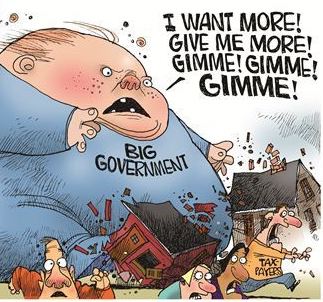
“We must end the era of government gone wild.”

Ferrioli has it right.

Most states, when they confront financial hard times, put a hold on hiring.

Gov. Asa Hutchinson of Arkansas, in an effort to strengthen state finances, imposed a state hiring freeze last year that whittled 1,161 employees from the payroll.

Nebraska Gov. Pete Ricketts, whose state missed revenue forecasts last fiscal year and is forecasting a miss again because of declines in farm income, also put on a hiring freeze for state employees. “As Nebraskans, we don’t spend money we don’t have,” Ricketts said.

 Businessess pull back when they face financial challenges, too.

Macy’s, faced with unfavorable earnings, decided to shut down 68 stores and cut more than 10,000 jobs.

Dow Jones & Co., like many news organizations that have been letting people go in the face of declining revenue, is planning to lay off dozens of reporters and editors at the Wall Street Journal because of persistent drops in print advertising income. The news and information business of News Corp, which publishes the Wall Street Journal and other newspapers, reported a 7% decline in revenue in the 4th quarter of 2016.

In December 2011, then Gov. John Kitzhaber, who was also facing budget troubles, ordered a hiring freeze. But when Gov. Brown released her recommended budget for 2017-19, she chose not to do the same.

In fact, with Oregon facing a $1.7 billion budget shortfall in the 2017-19 biennium, buried in the Governor’s Budget is a proposal to actually increase the state government workforce from 38,737 in 2015-17 to 39,412 in 2017-19. That’s an increase of 675 full-time equivalent employees.

“Using the cost information from the Legislative Fiscal Office, this 1.7 percent increase would cost the state more than $120 million in compensation costs for the 2017-19 biennium,” according to Facing Reality, a Cascade Policy Institute report offering alternative budget proposals. “A prudent step of a hiring freeze would free up resources and ward off some of the pressure to increase taxes, fees, and charges,” the report said.

An ever-expanding state is not sustainable without ever-increasing taxation.   If Oregon is to responsibly manage its finances, an across-the-board rigorously enforced hiring freeze, with stringent requirements for exceptions and restrictions on hiring contractors, should be instituted NOW.

Then the size of the state workforce should be held down by careful pruning of ineffective and bloated programs and the hiring freeze should be continued in the 2017-2019 budget, which would encourage state agencies to optimize the staff they have.

Surely the governor and Legislature, with a state workforce of 38,737, can find ways to meet the state’s needs by adjusting the workload and assignments of that workforce.

In the end, the state and taxpayers will be better off for it.


Free Is (not) A Very Good Price: Oregon Democrats Propose Co-Pay-Free Health Access Bill

freeis

The 79th Oregon Legislature got underway on Wednesday and already Democrats want to give away more free stuff to some Oregonians, even though the state is facing an almost $2 billion deficit.

Jennifer Williamson, D-Portland, Majority Leader in the Oregon House, posted on item on Facebook on Tuesday (Jan. 30) highlighting a bill before the Oregon Legislature. The bill would require coverage of specified health care services, drugs, devices, products and procedures related to reproductive health.

The bill, H.B. 2232, was introduced by Rep. Jeff Barker, D-Aloha, and Sen. Laurie Monnes Anderson, D-Gresham. It now sits in the  House Committee On Health Care. It would require insurers in Oregon to cover contraceptive drugs and devices approved by the Food and Drug Administration with no co-payment, co-insurance or deductible.

The same requirement would apply to a range of reproductive health services, including prenatal care, well-woman visits, screening for sexually transmitted infections, voluntary sterilization and abortion.

A complete list of items and services covered by the bill is provided below.

A story in the New York Times said 30 million women across the country gained co-pay-free access to preventive services like contraception under the Affordable Care Act. “By codifying the protections of the Affordable Care Act, the bill would protect Oregonians’ access to birth control and other preventive health care in the event of a repeal,” the Times reported.

The bill says health care providers will be reimbursed for providing all the required products and services without any deduction for coinsurance, copayments or any other cost-sharing amounts.

Of course, nothing is really free. Mandated free stuff is an illusion foisted on the public by pandering politicians. If the state requires insurance companies to provide products and services for free, and the state promises to reimburse them, the state will have to come up with the money to do that. At this point, nobody knows how much that would be.

But, hey, why worry. H.B. 2232 would give Democrats a chance to cater to a key constituency and the state is only facing a budget deficit of almost $2 billion.


Items and services covered by H.B. 2232

A health benefit plan offered in this state must provide coverage for all of the following services, drugs, devices, products and procedures:
(a) Well-woman care, including screenings, assessments and counseling.
(b) Pregnancy-related services, including pregnancy tests, preconception care, abortion and prenatal care.
(c) Counseling for sexually transmitted infections, including but not limited to human immunodeficiency virus and acquired immune deficiency syndrome. (d) Screening for:
(A) Chlamydia;
(B) Gonorrhea;

(C) Hepatitis B;
(D) Hepatitis C;
(E) Human immunodeficiency virus and acquired immune deficiency syndrome; (F) Human papillomavirus;

(G) Syphilis;

(H) Anemia;
(I) Urinary tract infection;
(J) Rh incompatibility;
(K) Gestational diabetes;
(L) Osteoporosis; and
(M) Cervical cancer.
(e) Screening and appropriate counseling or interventions for:
(A) Tobacco use; and
(B) Domestic and interpersonal violence.
(f) Folic acid supplements.
(g) Breastfeeding comprehensive support, counseling and supplies.
(h)(A) Screening to determine whether genetic counseling related to the BRCA1 or BRCA2 genetic mutations is indicated;
(B) Genetic counseling; and
(C) If indicated, BRCA testing.
(i) Breast cancer mammography.
(j) Breast cancer chemoprevention counseling.
(k) Any contraceptive drug, device or product approved by the United States Food and Drug Administration, subject to all of the following:
(A) If there is a therapeutic equivalent of a contraceptive drug, device or product approved by the United States Food and Drug Administration, a health benefit plan may pro- vide coverage for either the requested contraceptive drug, device or product or for one or more therapeutic equivalents of the requested drug, device or product.

(B) If a contraceptive drug, device or product covered by the health benefit plan is deemed medically inadvisable by the enrollee’s provider, the health benefit plan must cover an alternative contraceptive drug, device or product prescribed by the provider.

(C) A health benefit plan must provide coverage without a prescription for all contraceptive drugs available for over-the-counter sale that are approved by the United States Food and Drug Administration.

(D) A health benefit plan may not infringe upon an enrollee’s choice of contraception and may not require prior authorization, step therapy or other utilization control techniques for covered contraceptive drugs, devices or other products approved by the United States Food and Drug Administration.

(l) Voluntary sterilization.
(m) Patient education and counseling on contraception.
(n) Services related to the administration and monitoring of drugs, devices, products and services required under this section, including but not limited to:

(A) Management of side effects;
(B) Counseling for continued adherence to a prescribed regimen

(C) Device insertion and removal;

(D) Provision of alternative contraceptive drugs, devices or products deemed medically appropriate in the judgment of the enrollee’s provider; and

(E) Diagnosis and treatment services provided pursuant to or as a follow-up to a service required under this section.

(o) Any additional preventive services for women that must be covered without cost sharing under the 42 U.S.C. 300gg-13, as identified after the effective date of this 2017 Act by the United States Preventive Services Task Force or the Health Resources and Services Administration of the United States Department of Health and Human Services.


Trump’s Immigration Order: Fact Checking The Fact Checker

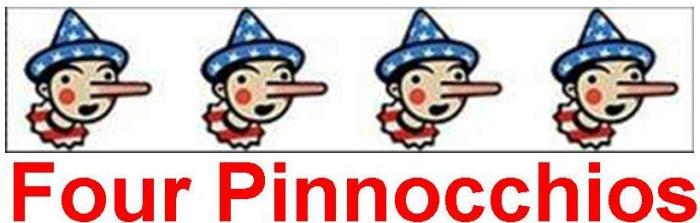
4-pinnochios

There’s little question that President Trump thoroughly botched the rollout of his immigration order on Jan. 27. But so-called fact checkers don’t need to try to tip the scales even further.

“My policy is similar to what President Obama did in 2011 when he banned visas for refugees from Iraq for six months,” Trump said on Jan. 29.

Some background.

Following the arrest of two Iraqis in Kentucky in May 2011 for terrorism, Obama pledged to re-examine the records of 58,000 Iraqis who had been settled in the United States and the administration imposed more extensive background checks on Iraqi refugees.

“As a result of the Kentucky case, the State Department stopped processing Iraq refugees for six months in 2011, federal officials told ABC News — even for many who had heroically helped U.S. forces as interpreters and intelligence assets,” ABC News reported. ABC said that as a result of the visa pause, an “Iraqi who had aided American troops was assassinated before his refugee application could be processed, because of the immigration delays.”

At a congressional hearing, Homeland Security Secretary Janet Napolitano said a hold had been placed on Iraqi visa applications “…until they could be more stringently vetted to ensure that we’re not letting into the U.S. people who would do Americans harm.”

The Economist reported, “Immigration authorities soon began rechecking all Iraqi refugees in America, reportedly comparing fingerprints and other records with military and intelligence documents in dusty archives. About 1,000 soon-to-be immigrants in Iraq were told that they would not be allowed to board flights already booked. Some were removed from planes. Thousands more Iraqi applicants had to restart the immigration process, because their security clearances expired when the programme stalled.”

The result? The pace of visa approvals slowed to a crawl, the Los Angeles Times reported in 2011, telling of an Iraqi who had served as an interpreter for the U.S. military and was unable to secure a visa to the U.S. “…Thousands of former interpreters have been cast adrift, threatened by insurgents as they wait for the federal bureaucracy to act,” The Times reported.

Washington Post fact checker Glenn Kessler initially argued that since Obama didn’t announce an actual ban on Iraqi visa applications, but “danced around” the question, what Obama did bore no resemblance to Trump’s order. Kessler said further that Trump’s policy wasn’t the same because because Obama’s policy didn’t prevent green card holders from traveling to the United States (though the Trump administration has since made it clear that green card holders are not affected by Trump’s Executive Order).

So Kessler said the assertion that Trump’s policy was similar to Obama’s action in 2011 “was worthy of at least Two Pinocchios”. The Washington Post explains what this means as follows:

 Two Pinocchios

Significant omissions and/or exaggerations. Some factual error may be involved but not necessarily. A politician can create a false, misleading impression by playing with words and using legalistic language that means little to ordinary people. (Similar to “half true.”)

More disturbing, Kessler later updated his rating to Three Pinochios” in light of new information”.

The Washington Post explains what this means as follows:

Three Pinocchios

Significant factual error and/or obvious contradictions. This gets into the realm of “mostly false.” But it could include statements which are technically correct (such as based on official government data) but are so taken out of context as to be very misleading.

Kessler said his revised rating was based on statements by two former Obama Administration officials, as though they should be the final word. One of those officials said there was no ban on Iraqi refugee admissions under Obama because although there were processing delays, but here was was no single month during which no Iraqis arrived in the U.S.

Another former Obama Administration official said there may have been “a lower level of Iraqi resettlement” for a period, “there was never a point during that period in which Iraqi resettlement was stopped, or banned.”

Kessler also reiterated that Trump’s order was different because Obama’s policy did not prevent green-card holders from traveling to the United States. (Again, Trump’s order did not do this either)

Fact check? I don’t think so.

It would have made more sense for Kessler to simply say “In my opinion…” rather than try to disguise himself as an unbiased truth-teller.

The fact is that although Obama did not announce a ban on visa applications by Iraqis, the impact was essentially the same. To say otherwise is a dishonest portrayal of reality and as disingenuous as can be.


The Race to Space

cassini2saturn

Come to a presentation by Todd Barber, the senior engineer at the NASA’s Jet Propulsion laboratory and the lead propulsion engineer on the Cassini mission to Saturn.

When: Feb. 17, 2017

Where: Lake Oswego City Hall Council Chambers

380 Avenue

Lake Oswego, OR

Time: 7 PM