The San Bernardino massacre and the failed U.S. visa system

(Addendum: Dec. 10, ABC News, http://abcn.ws/1QfISlG)

Farook and Malik’s marriage isn’t the only one garnering suspicion. In the midst of the investigation into Farook’s family, new details have emerged about the use and possible abuse of the government marriage citizenship program involving Enrique Marquez, the man who officials told ABC News originally bought two of the weapons used in the San Bernardino attack and was married to Mariya Chernykh, who moved from Russia to the United States in 2009.

——

(Addendum: Dec. 9, NY Times ,http://nyti.ms/1NcHEUE)

James+Comey+Jr+Senate

“The F.B.I. director, James B. Comey, said Wednesday that the couple who waged a shooting rampage in San Bernardino, Calif., last week had been talking of an attack as far back as two years ago, before the United States gave the woman approval to enter the country…The disclosure raised the possibility that American immigration and law enforcement authorities missed something in the woman’s background when they granted her the approval.”) I’ll say.

——

Not to worry, says the U.S. government. Immigration law is strictly enforced.

Except that it isn’t.

san-bernardino-shooting-pictures-20151202-thumbnail

Tashfeen Malik, who pledged her fealty to ISIS and joined with her husband to brutally slaughter 14 people in San Bernardino, came to the United States on a “fiancée visa”, otherwise known as a K-1 visa.

Tashfeen Malik

Tashfeen Malik

Under the law, the spouse-to-be from a foreign country is allowed to enter the United States for 90 days so that the marriage ceremony can take place. Once the marriage takes place, the spouse may apply for permanent residence and remain in the United States while U.S. Citizenship and Immigration Services processes the application.

The government says the fiancée visa system is very rigorous and strictly enforced. If the foreigner doesn’t follow the law, they have to go home.

The problem is violations of U.S. visa law are routinely ignored.

The fact is that about 40% of the 11 million undocumented workers in the United States aren’t low-income people from Mexico and Central America. Instead, they are foreigners who arrived legally, often on fiancée, tourist or education visas, and just never left. They became what are simply labeled “overstayers”.

According to a report in the Wall Street Journal, the government doesn’t even compile information on the millions of overstayers, leaving it to others to piece together a snapshot of who they are and where in the U.S. they live.

So much for homeland security.


Benefit corporations: no sure thing

Lots of progressives in Oregon are big on public affirmations of goodness. That’s why they love the idea of benefit corporations, such as Neil Kelly, Rogue Creamery, Metropolitan Group, Medolac and Good Clean Love.

But before Oregonians conclude that benefit corporations are by their nature more socially responsible businesses, think again, and do some rigorous research. The fact is, in some cases the designation is being used as little more than a way to add a patina of respectability to otherwise questionable firms.

For a truly inauthentic attempt at sincerity and goodness, look no further than Laureate Education, Inc. It announced plans earlier this year its plans to do a $1 billion initial public offering (IPO) that would make it the first publicly traded benefit corporation.

If you’ve heard of Laureate, it may be because of its connection to former president Bill Clinton. In 2010, he signed on to become an “Honorary Chancellor”, or paid shill to be more accurate, for Laureate. In return for serving as a front man for the privately held for-profit education company, Clinton collected $16.5 million between 2010 and 2014. Laureate also has donated between $1 million and $5 million to the Clinton Foundation.

In its IPO prospectus, Laureate says, “we may take actions that we believe will benefit our students and the surrounding communities, even if those actions do not maximize our short- or medium-term financial results.” There’s little in its history, however, that suggests such an approach is part of the company’s DNA.

“We recognized the enormous importance that society places on education as a public good,” said Douglas L. Becker, Founder, Chairman and CEO of Laureate. “This inspired us to create a culture that combines the ‘head’ of a business enterprise with the ‘heart’ of a non-profit organization. “

With one million students studying online and on campuses at 88 institutions in 28 countries, Laureate is currently a private company, but it plans to go public. The company grew out of the K-12 tutoring company, Sylvan Learning Systems, in 2004 when Sylvan was spun off.

Laureate was taken private in a $3.8 billion deal in 2007. Investors included KKR & Co., Soros Fund Management, Paul Allen’s Vulcan Capital, Steve Cohen’s SAC Capital Advisors, Citi Private Equity, Sterling Capital and others, all investors whose commitment to corporate citizenship and the public good is unclear.

Registration as a public benefit corporation is also no guarantee that the governance of a company will be friendly to shareholders.

Steven Davidoff Solomon, a professor of law at the University of California, Berkeley, has pointed out that Laureate’s form of governance is especially unfriendly to shareholders. While Laureate is listing its stock as a public benefit corporation, it will also be going public with dual-class stock, which will maintain its current owners’ control over the company. This includes K.K.R. which will indirectly hold a greater than 10 percent interest in the company.

This doesn’t make sense, Solomon argues. K.K.R. is out to sell its stake at the highest price possible, not benefit other causes. So one has to wonder how strongly Laureate will even pay heed to the public benefit standard.

Then there’s the question of whether Laureate’s schools operate in the best interests of their students.

It’s 5 schools in the U.S. include: NewSchool of Architecture & Design, San Diego, CA; Santa Fe University of Art & Design, Santa Fe, NM; Kendall College, Chicago, Il; University of St. Augustine for Health Sciences, St. Augustine, FL; and the online-only Walden University, Minneapolis, MN.

newschool

Consider their records on the U.S. Department of Education’s College Scorecard, an online system designed to help students, parents and advisers make better college choices.

For example, according to the Scorecard:

  • The average annual net cost of attending NewSchool is about twice the national average, only 50 percent of students return after their first year and the graduation rate after six years is only 33 percent.
  • The average annual net cost of attending Kendall College is more than twice the national average, only 57 percent of students return after their first year and the graduation rate after six years is only 45 percent.
  • At the Santa Fe University of Art & Design, only 31 percent of the students graduate within six years and only about half of those graduates subsequently earned, on average, more than those with only a high school diploma.

Laureate also operated The National Hispanic University in East San Jose, CA, but it closed in August 23, 2015. The San Jose Mercury News attributed the closure to the U.S. Department of Education reducing financial aid and online opportunities for students enrolled in programs that did not offer good prospects for employment. Other media reported that the school also failed to meet its goals in enrollment for online coursework.

It will be interesting to see how this company, that has a history of questionable payments to Bill Clinton, is $4.7 billion in debt, is burdened with high interest payments, has lost money every year since 2010 and has a habit of saddling its students with debt and low graduation rates pulls off its public benefit corporation charade.

It may be a hard lesson for a lot of true believers in benefit corporations.

Flip or flop – resistance is futile

They should have known.

Tarek and Christina El Moussa, the hosts of HGTV’s show Flip or Flop, figured Portland would be a natural market for their traveling seminar on how to remodel and flip houses for a profit. So they scheduled four seminars in Portland to teach the tricks.

fliporflop1

And, of course, Portland’s lefties went ballistic.

“Stay out of Portland!!,” said a typical online post. “You’re preying on low income families and marketing to out of state buyers that are pushing locals out. You are not welcome!!”

But wait a minute. If you’ve ever watched Flip or Flop, you’d know that what the Moussas do is buy generally crummy houses, invest in substantial upgrades and sell them (hopefully for a profit), substantially enhancing the neighborhood. What’s wrong with that?

Would Portland’s lefties prefer that rundown houses just sit there as eyesores in nice neighborhoods? Would they prefer that dilapidated houses sit empty, attracting vandals and squatters?

Critics of the Moussa’s visit were likely motivated, in part, by their objection to so-called gentrification, upgrades of neighborhoods driven by economic and demographic changes.

What the objectors fear is a dislodging of the local culture and its replacement by higher income, higher educated, higher status residents of all racial and ethnic populations who patronize a more upscale mix of retailers.

But gentrification, for all its negative connotations to lefties (who, by the way, are often a key part of the gentrifying population) is what turns decaying areas of cities into neighborhoods of residents and businesses who pay taxes that lead to upgrades in infrastructure and government services across the board for everybody.

If you have children who recently graduated from college or are about to, they will likely be part of this process, too, as they look for good jobs and great places to live, push up the population and housing costs in already gentrified areas and put pressure on other not-quite-there-yet neighborhoods.

As they say in Star Trek, resistance is futile.


Segregation today…Segregation tomorrow: it’s back.

Alabama Governor George C. Wallace made his objective clear:

“segregation today…segregation tomorrow…segregation forever.”

Some black students at prestigious U.S. universities now seem to be endorsing that vow themselves, embracing division instead of diversity. In a contradictory effort, they are arguing for inclusion while espousing policies that support separateness.

A protest at Princeton ended Thursday night after the Black Justice League at the school made multiple demands, including that the school provide cultural space for black students on campus.

The school’s president, Christopher Eisgruber, agreed to discuss all the demands, but quickly capitulated to the “cultural space” ultimatum.

Student protests at Yale have had a similar impact.

Yaleprotest

Nicholas Christakis, the master of Silliman College at Yale, was surrounded by angry students after telling them to allow others to exercise free speech. One young woman launched into an expletive-ridden rant and told him to ‘shut the f*** up’.

Ignoring the bad behavior, Yale’s president, Peter Salovey, promised a doubling of budgets for four already established cultural centers, including an Afro-American Cultural Center.

Founded in 1969, the Afro-American Cultural Center provided a model for other more recently established ones.

Yale attempts to justify the cultural centers by saying they “…foster a sense of cultural identity and educate people in the larger community. They also act as optional social centers and community bases for students of a variety of ethnic and cultural backgrounds, supplementing the social environment of the larger, pluralistic Yale College community.”

In other words, after Americans have struggled for decades to bring us all together, week-kneed administrators at universities across the country are acquiescing in, even heartily endorsing, racial separateness.

According to the Los Angeles Times, the Black Student Union at UC Irvine recently demanded and secured an administration commitment to  create and fund a Black Scholars’ Hall and a Marsha P. Johnson Black Student Resource, Outreach, and Retention Center. The Black Student Union also demanded that the Center be  staffed by people picked by student representatives elected by the Black Students on Campus organization and three African-American Studies core faculty members.

“This seems reactionary and poorly thought out,” a reader commented on the Los Angeles Times’ website. “The only way the campus community and the institution benefit from diversity is to better integrate the African American and other underrepresented students on campus. This plan seems to facilitate and support isolating and segregating them.”

MIT has a community within a dorm called Chocolate City, “…a brotherhood of MIT students and alumni who identify with urban culture and share common backgrounds, interests, ethnicities, and/or experiences.”

At Brown University in Rhode Island there’s Harambee House, which is “…focused on perpetuating a sense of community, academic excellence, and leadership for all people of African descent.”

Harambee is Swahili for ” pulling or working together.” But self-segregation isn’t pulling people together; it’s pushing them apart, capitulating to pressure and reinforcing separatism.

After generations of schools denied admittance to blacks and only under pressure eventually opened their dormitories to residents of all colors and cultures, how ironic that many universities have now turned back the clock by allowing, even facilitating, separate housing and activity centers by race.

No matter the justification, they are a contrivance that do damage to all students, their schools and American ideals.

Some academics, overly eager for student approval, argue that faculty support for self-segregation is a good thing because it stimulates bonding. “We teachers have an opportunity to stand in solidarity with our students…on the basis of politicized racial identities,” wrote Amie A. Macdonald, a professor at John Jay College of Criminal Justice/CUNY.

This isn’t the way forward. It’s a way back, way way back.

The fatuous fight for $15

mcdonalds

Hold the burgers, hold the fries! MAKE OUR WAGES SUPER SIZE!!! ‪#fightfor15


New York’s Gov. Andrew Cuomo announced earlier this month that he would set a $15 minimum wage for all state workers on his own and without legislative action.

Cuomo’s move will give raises to about 10,000 state workers, adding $20.3 million annually to state spending by the time the increase is fully phased in.

What the heck. No skin off his nose. The state doesn’t have to make a profit. Take it out of taxpayers’ pockets.

That seems to be the attitude of a lot of folks these days. Wages have been stagnant for years for most people and inequality is the topic de jour. Let’s give a whole bunch of people a raise.

But whatever people say to pollsters about their support for higher minimum wages, that doesn’t necessarily translate into a willingness to pay the higher prices for goods and services that often result.

Furthermore, a sweeping across-the-board $15 an hour mandate that might be bearable for a business in Portland also might be devastating for a small business in Astoria, Echo or Pendleton.

The Economic Policy Institute, a left-leaning policy organization with ties to the organized labor movement, says, “All workers deserve a wage sufficient to support themselves and their family.”

The problem is that the minimum wage was never intended to be enough to support a family and that even a $15 minimum wage would still be a long way from achieving that goal.

In Oregon, for example, a family of four needs to earn about $64,000 for a reasonably comfortable living. A $15 an hour wage in a full-time 40-hr week would translate into an annual income of just $31,200.

It’s not even clear that raising the minimum hourly wage to $15 would be a clear victory for all the poor. It would certainly raise the wages of many workers, but it would also likely lead to the elimination of many jobs traditionally open to unskilled minimum-wage earners. In addition, most of the benefits of an increase to $15 an hour would not go to people actually living in poverty.

In fact, about 50 percent of current minimum-wage workers are under 25, and about 25 percent are teenagers. The unemployment rates of both groups are already higher than the 5 percent national unemployment rate.

People without a job are much more likely to be living in poverty than those who are employed. Furthermore, many of those earning less than $15 an hour today are not the primary breadwinners in families. That being the case, a better way to address poverty would be to work harder to position the unemployed for the workforce and to target income supplements on low-income families through such programs as the Earned Income Tax Credit.

When I see a plaintive story about Suzie, a fast food worker who protests that she’s been working at the counter for 4 years and hasn’t seen any substantial raises, my first thought isn’t, “Well, double Suzie’s pay, youInstead, I think, “How can you justify a big jump in pay to someone who has been performing the same low-skill job for 4 years, with no increase in her expertise and no increase in her productivity that enhances the company’s bottom line?” That may sound brutal, but it’s how things work at every single successful company. It can’t be otherwise.

Supporters of the $15 an hour minimum wage also err when they say it won’t cost much. A $15 an hour minimum wage would not happen in isolation. There would be a cascading effect on other workers, thus a greater cost impact on the employer.

If you raise the hourly pay of the McDonald’s crew from $9.25 to $15 an hour, a 62 percent increase, can you leave the shift manager’s pay at $10.20 an hour, and so on up the ladder?

At some point a franchise owner will say, “enough!” McDonalds has tested automated self-service kiosks that have been shown to reduce customer wait times and generate higher sales than ordering from workers at the counter asking, “Do you want fries with that?” That may be the future if we go down the $15 road?


Pay to Play: the Keystone XL pipeline

Jeff Koterba cartoon for February 5, 2014 "Obama Keystone Pipeline"

President Barack Obama announced today his administration’s denial of TransCanada’s permit to build the Keystone XL pipeline.

“It became a symbol too often used as a campaign cudgel used by both parties rather than a serious policy matter,” Obama said.

He ought to know. It was his administration that turned it into a dollar-driven political football.

TransCanada Corp submitted an initial application to build the project to the U.S. State Department on September 19, 2008, 2605 days ago.

TransCanada knew the review process might take some time, but expected it to be generally non-controversial and to end with approval.

But nothing in ideology-riven Washington, D.C. is fast and simple anymore. Thanks to politics and the shrieking of special interest groups, the project became a pipe dream.

It’s been a hard lesson for TransCanada – and an expensive one that illustrates how lobbying and political contributions have become such a growth industry.

When TransCanada submitted its application it didn’t even have a full-time lobbyist in Washington, D.C. It took the company almost four years to open a Washington office in June 2012.

By that time environmentalist opponents had pounced, raising the issue to political and public prominence. In November 2011, for example, thousands of protestors encircled the White House and demanded that President Obama deny TransCanada’s application.

“…in just a few years, the political debate over Keystone has exploded into an entire sector of the Washington influence economy. Funded by multibillion-dollar oil companies, labor unions and ultrarich environmentalists, the fight has filtered into every crack and crevice of the nation’s capital,” Politico reported.

The Center for Responsive Politics’ Open Secrets, says 163 clients reported lobbying on specific issues related to the Keystone XL pipeline in filings covering 2006 to the present.

Exactly how much was spent by both sides of the acrimonious conflict is unknown, but Politico guessed it was well into the tens of millions of dollars.

In 2008, TransCanada reported spending just $190,000 on lobbying, Open Secrets reported.. Since filing its application, TransCanada has spent a total of $7,160,000 just on lobbying.

That’s on top of all the political contributions to members of Congress by the oil and gas industry, much of which has been tied to the Keystone pipeline in recent years. According to Open Secrets, that totaled $23,891,355 in the 2010 election cycle, $36,756,574 in the 2012 cycle and $31,381,383 in the 2014 cycle, overwhelmingly to Republicans.

Even the Canadian government and the Clinton Foundation have gotten in on the action. In 2014, Canada’s Foreign Affairs, Trade and Development agency, a pipeline advocate, donated $480,000 to the Clinton Foundation in anticipation of Hillary Clinton’s run for the presidency.

What a waste. In the end, Obama did what he planned to do all along.

“Stupid is as stupid does.” – why so many Americans are ignorant about politics

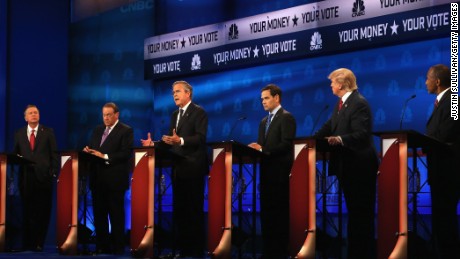
Watch the Republican debate last night? Learn much about economic issues, the supposed focus of the debate? Didn’t think so.

oct28debate

The substance of the debate was equivalent to this Onion news item: “Eerie: These Two Strangers, Thousands Of Miles Apart, Have Almost The Exact Same Initials”

The inanity and vacuousness of so much political news coverage today is frightening and candidates are part of the problem.

Consider these shallow, uninformative stories that ran recently in major media:

“Mike Tyson wants to see Trump in the White House”

“Supergirl” star responds to Jeb Bush calling her hot”

“GOP is like ‘Grumpycat’, Obama says”

Then we have politicians of all stripes all the way up to the president presenting their views on incredibly complex issues with 140 character tweets and Americans making voting decisions based on those misleading, one-sided tidbits.

Add to this noise the editorials and news stories about non-issues or that are so one-sided and without context that they are a waste of time to read.

The South Florida Sun-Sentinel, for example, just ran an editorial calling on Senator Rubio to resign because he has missed a lot of Senate votes during his campaign for the Republican presidential nomination. The Washington Post ran a follow-up article on what it called the “ferocious” editorial. Nightly network news highlighted the issue last night, too, but none of them bothered to provide any context for the reader or noted that voting record accusations are a common campaign tactic of little relevance.

Had any of the media bothered to do any research, they would have found that Senator Barack Obama missed votes TWICE as often during the 2008 campaign’s early going, and Hillary Clinton ended up doing even worse!

In the final quarter of 2007, leading up to the Iowa Caucuses and New Hampshire Primary, Obama missed 89.4 per cent of his opportunities to vote, while Clinton, in hot pursuit for the Democratic presidential nomination, missed 83.5 per cent.

Then there’s the issue of whether anybody really cares about missed Senate votes.

As Politico reported today, “Going after Rubio that way was just a mistake,” said one of Bush’s donors. “No one cares about missed f–king votes in the Senate. Washington cares about that. The media cares about that. And losing candidates care about that. Jeb sounded like he was losing. And Marco made him pay.”

And, of course, there are the endless horse-race stories showing this candidate up or that candidate down in the polls and offering nothing more of substance.

In the early months of the 2008 presidential campaign, for example, a study released by the Pew Research Center found that the media offered Americans relatively little information about the candidates’ records or what they would do if elected, with 63% of the campaign stories focused on political and tactical aspects compared to just 17% that focused on the personal backgrounds of the candidates, 15% that focused on the candidates’ ideas and policy proposals and just 1% of stories that examined the candidates’ records or past public performance. It has likely gotten even worse since then.

And of course there’s a mind-numbing amount of “gaffe” coverage, particularly online. When a candidate says something that could be portrayed as a gaffe, critics of all stripes jump on it, trying to magnify its importance and reach and generate public alarm about it.

And even if you try to take politics seriously, the media and the candidates often treat it all as mere entertainment, more like the contest on The Voice or the Great Race.

For the media, and too many politicians, it’s all theater, all razzle-dazzle, as Billy Flynn, the silver-tongued lawyer in “Chicago”, so aptly put it.

“It’s all a circus, kid,” Flynn said. “A three ring circus…the whole world – all showbusiness.”

ChicagoCircus

With the news diet that’s fed to them, it’s no wonder Americans are so ill-informed about politics. The result? We get the politicians the 1 percent pay for.


Joe Biden’s legacy: hold the applause

Following Joe Biden’s announcement that he would not run for president, public pronouncements and media coverage have been more hagiography than biography.

The praise has been so over the top, you’d think Joe had died and gone to heaven and folks were delivering cloying funeral orations.

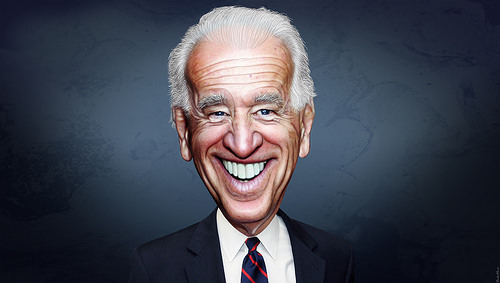
Joe Biden Caricature | by DonkeyHotey

Joe Biden Caricature | by DonkeyHotey

Before the Democrats and the media canonize Joe Biden, let’s step back a bit.

The most consistent element of the comments has been the assertion that Joe is a great and good man because of his unquestioned honesty.

Not so fast.

In his 1988 campaign for the Democratic Party’s presidential nomination, Biden gave a speech that drew the attention of New York Times columnist Maureen Dowd. She accused Biden of outright plagiarizing speeches given by British Labor Party leader, Neil Kinnock.

As it turned out, not only did Biden lift text from Kinnock’s speeches; he even appropriated parts of Kinnock’s life, citing his ancestors’ ability to read and write poetry, his accomplishment of being the first in his family to attend college and, in an apparent effort to show his blue-collar roots, that some of his ancestors were coal miners. That was all true for Kinnock, but most certainly not for Biden.

Biden’s problems escalated when media discovered that he had also exaggerated his college academic record and been accused of plagiarism there. Biden claimed that he’d finished Syracuse Law School in the top half of his class when he’d actually graduated 76th of 85. He’d also and gotten an F in a law school class for plagiarizing a substantial portion of a paper from an article in the Fordham Law Review. Biden dismissed the plagiarism incidents as “much ado about nothing,” but subsequently ended his campaign.

Biden also played a major role in the Robert Bork and the Clarence Thomas hearings in 1987 and 1991 that many observers still describe as defamatory. “Joe Biden has had his finger in every tawdry hearing in the Senate Judiciary Committee in my memory,” said Mark Levin, president of the Landmark Legal Foundation, a conservative legal advocacy group. “He has lowered the standard of debate. He has politicized the confirmation process. He has used his position to defame a number of nominees, including Bob Bork and Clarence Thomas, and there’s no road too low that he won’t travel.”

Like so many politicians, Biden also has not shied away from rewriting history. Remember when Hillary Clinton claimed she was threatened by sniper fire when she visited Bosnia in 1996, an assertion that was later disproved? Biden once claimed that his helicopter was “forced down” on “the superhighway of terror” by Afghan extremists. The facts? He was in a helicopter with two other senators when a snowstorm closed in and the pilot decided to put down, after which a U.S. troop convoy took them to Bagram Airfield in Afghanistan.

Biden’s shifting versions of events continue today. In 2012, Biden said he advised President Obama not to approve the raid on the Abbottabad, Pakistan compound that resulted in the killing of Osama bin Laden. White House spokesman Jay Carney confirmed Biden’s comment. But on Oct. 20, Biden said just the opposite, that he had he privately advised Obama to approve the raid.

And let’s not forget Biden was perfectly willing to embrace and propagate the administration’s lie that the Benghazi terrorist attack that resulted in the death of American ambassador was a spontaneous reaction to an inflammatory anti-Muslim video.

Then, of course, there’s Biden’s seemingly never ending dithering on whether to enter the race for the Democratic Party’s presidential nomination. His hemming and hawing and general indecisiveness on that issue alone should tell you a lot about his suitability for the presidency.

When Biden dropped out of the selection process this time around, Hillary Clinton said she’s confident that “history isn’t finished with Joe Biden.” Let’s hope not, at least insofar as historical truth goes.

Sock it to ’em: the left dreams of more taxes and more government

The left’s collective veneration of the state and readiness to surrender self- reliance to its generosity are becoming ever more evident as the presidential race accelerates.

After exhaustive research, the New York Times has concluded that if the federal government raised taxes on the wealthy it could generate a lot of money. You don’t say.

tax-cartoon

The Times also figured out that the potential amount of revenue the government could raise from the wealthy would depend on how much the government raised their taxes. That’s groundbreaking.

Not only that, The Times said, but the government could raise one hell of a lot of revenue from high earners “…while still allowing them to take home a majority of their income,” How very thoughtful.

The Times effused over the things the government could do with a ton of additional tax revenue, like eliminating undergraduate tuition at all the country’s four-year public colleges and universities, as Senator Bernie Sanders has proposed. The potential next step — student loan forgiveness?

With the base of the Democratic Party moving swiftly to the left, you can expect more of these “we can do it because the wealthy will pay for it” proposals.

In the end, the Times took 2085 words to conclude that the more you tax rich people, the more taxes the government will collect (assuming the well-off don’t figure out how to avoid paying the taxes) and the more the government can spend on all sorts of stuff.

What the Times didn’t do is address the question of whether it would be a good thing for the government to reap enormous revenue increases and vastly expand its penetration into our daily lives.

Do we really want a massive expansion of government that would be a successor to the New Deal and the Great Society?

When you invite the government to pay for more things, the government becomes your partner, or, more likely, your boss. Is that what Americans want?

When government gives you things, they always come with new federal rules and regulations accompanied by known and unknown costs. Is that the American dream?

The Times also didn’t address the growing fiscal problems we are already facing:

  • Federal spending still exceeds revenue by over 400 billion dollars a year
  • deficits are expected to resume growing
  • even with declines in discretionary spending imposed by sequestration, entitlements are expected to grow in the future.

“You wouldn’t know that we have an unsustainable fiscal path from the debate we’re having right now,” Rudy Penner, a former director of the Congressional Budget Office, told the Wall Street Journal.

A message to the left and the NY Times. Be careful what you wish for.


(P.S. – Yes, I know, you also have conservatives proclaiming how they want to cut taxes when we can’t even pay our bills now, but that’s another story)

The Democratic debate: Soak the rich. Yeah! that’s the ticket!

Remember how Jon Lovitz, as Tommy Flanagan, the pathological liar on Saturday Night Live, would build a narrative that was a series of lies and say, “Yeah! That’s the ticket!”?

The Democratic debate was like that.

Want something for nothing? When I’m president, you’ll get it: Tuition-free public colleges and universities; free mandatory parental leave, without burdening small businesses; $15 minimum wage with no increase in productivity; enhanced Social Security benefits; Tax cuts for middle-class families; Refinancing of federal college debt at a low interest rate; Government subsidies of Obamacare for people in the United States illegally; move America to 100% renewable energy with federal subsidies.

The Democrats offered up a grab bag of free stuff. How would they pay for it all? Hillary summed up the Democratic Party’s answer. “ I know we can afford it, because we’re going to make the wealthy pay for it,” she proclaimed.

JonLovitzSNL

Yeah! That’s the ticket!

Reminds me of Margaret Thatcher’s observation, “The problem with socialism is that you eventually run out of other people’s money.”

The national debt stands at $18.2 trillion, up from $10.6 trillion when President Obama took office, and it is continuing to increase an average of
 $1.88 billion a day. The debt goes up when the government doesn’t get enough revenue in a given fiscal year to pay its bills. Annual federal deficits have been shrinking lately, but that pattern isn’t expected to last as the budget takes hits in the coming years.

And then, of course, the country already faces problems with covering the huge costs of entitlements such as Social Security and Medicare.

Unless we want to embrace ever-higher deficits, money would need to be found to pay for the cornucopia of benefits the Democrats promise.

Hillary Clinton said not to worry, we’ll get it from higher taxes on the wealthy. “Right now, the wealthy pay too little and the middle class pays too much,” she said in the debate.

Echoing Clinton, Lincoln Chafee chimed in that the rich are doing fine, “so there’s still a lot more money to be had from this top echelon.”

The problem is that the top-earning 1 percent of Americans (earning about $400,000 +), a pretty fluid club of individuals on a year-to-year basis, already pay almost 50 percent of federal income taxes and the top 25 percent pay about 87 percent, making the United States extraordinarily dependent on small slices of the population.

The Congressional Budget Office has calculated that high-income earners receive only pennies in federal benefits for every dollar they pay in federal taxes. In contrast, those in the middle 20 percent of earners received $2.23 in benefits for each dollar they paid and the lowest 20 percent receive close to $20 in federal benefits for every dollar they pay in federal taxes. In other words, the high-income earners are already subsidizing middle-income and low-income Americans.

“Despite the data, accusations that the rich are not paying their fair share continue,” The Manhattan Institute has reported. “This rhetoric is based more on perception than reality, or on a mistaken belief that the government needs more funds to become further entrenched in Americans’ lives. While this rhetoric may work as a populist rallying cry, the data show that a central tenet of the political left’s platform is simply incorrect.”