Hypocrisy, thy name is Democrats

You can almost smell the Democrat’s hypocrisy.

hypocrisy-meter

On Feb. 20, the Oregon House passed a bill, H.B. 2177, that would automatically register to vote anybody with a driver’s license. Every single one of the 35 yes votes came from Democrats.

On March 5, the Oregon Senate passed the bill. Every single one of the 17 yes votes came from Democrats.

On March 16, an ebullient Gov. Kate Brown, another Democrat, signed the bill with a flourish.

“I am absolutely thrilled to be signing this into law as the new governor,” Gov. Kate Brown said at the signing ceremony. “Virtually every Oregonian will be able to have their voice be heard.”

Senate Majority Leader Diane Rosenbaum, D-Portland, echoed that sentiment. “Today our pioneering spirit brings us to a crucial reform that will empower our citizens,” she said. “While other states take steps to limit voter participation and to disenfranchise voters, the Oregon Legislature is bucking that trend. We are leading the nation.”

Yes, indeed, the Democrats patted themselves on the back for their grand support of voter’s rights.

But I guess they’re support of voting rights has its limits.

On March 25, the Senate voted 20 to 10 to approve S.B. 927, a bill that makes it clear Metro can move ahead with construction of an Oregon Convention Center hotel with $78 million of subsidies without having to be bothered by pesky voters. Every yes vote came from a Democrat. Now it’s up to the House.

How ironic that so many of the very people Oregonians have voted for are so quick to approve legislation that would deny others the right to vote.

Smell the aroma of hypocrisy? It stinks.

A public vote on a convention center hotel: is Metro trying to pull a fast one?

A May 2013 rendering of a proposed Hyatt hotel at the Oregon Convention Center.

A May 2013 rendering of a proposed Hyatt hotel at the Oregon Convention Center.

I wrote recently about the absurdity of building a government-subsidized hotel to support the Oregon Convention Center.

Now it looks like Metro is trying to work an end-run through the Oregon Legislature to prevent voters from having a say on the project.

State law (ORS 268.310 says a district, such as Metro, can’t construct new facilities “unless the electors of the district first approve the financing of the facilities…” Senate Bill 64 would amend the law to allow the construction of new facilities to go forward if ,“The facility is acquired or constructed pursuant to an intergovernmental agreement under ORS 190.003 to 190.130.”

On Feb. 24, 2015, Metro President Tom Hughes told the Senate Committee on Finance and Revenue that the bill is no big deal. It relates “strictly to clarifying existing statutory intent regarding Metro’s authority under its home-rule charter,” he said. The bill “merely cleans up awkward word placement in the current statute that has been the basis for serial lawsuits by opponents of the Oregon Convention Center hotel whose goal is to prevent the project from moving forward,” he added.

But John DiLorenzo , a partner at the Davis Wright Tremaine law firm, took a decidedly different position on the bill. DiLorenzo represents one of a group of hotel owners and managers who have opposed taxpayer subsidies for the proposed Hyatt hotel. He told the committee the bill “is an effort to subvert the judicial process” and “would deprive voters of any opportunity to vote on financing for any new construction projects built by Metro.”

Dilorenzo expressed the view that the courts would ultimately agree that residents had a right to vote on the hotel project . “Please do not deprive the voters of their last chance to avoid what could be another government subsidized albatross,” he said.

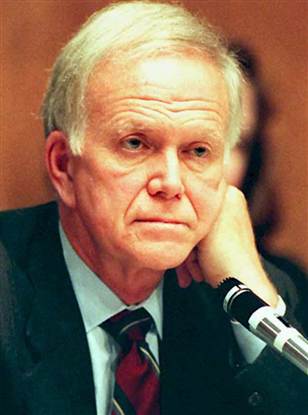
Ignoring DiLorenzo’s concerns, the Senate Committee On Finance and Revenue reported out the bill by a 3-2 vote, with Democrats Mark Hass, Chris Edwards and Chuck Riley voting in favor and Republicans Herman Baertschiger Jr. and Brian Boquist voting against. On March 4, 2015, the Senate passed the bill by a vote of 20-10, with all the no votes coming from Republicans.

Now it’s up to the House.

If the bill is just minor housekeeping, what’s the hurry? Given the controversy over the Convention Center hotel, and the ongoing lawsuits to require a public vote, the House should stay out of the mess. If, as Hughes insists, S.B. 64 doesn’t really change the law, but just clarifies it, killing the bill should make no difference to Metro. If the bill would deprive voters of the chance to vote on the hotel, as DiLorenzo alleges, it’s an insult to the public and undeserving of passage.

We’re waist deep in the Big Muddy: the Oregon Convention Center hotel

The 990,000 sq. ft. Crystal Palace opened at Britain’s Great Exhibition of the Works of Industry of All Nations in London’s Hyde Park in 1851.

The 990,000 sq. ft. Crystal Palace opened at Britain’s Great Exhibition of the Works of Industry of All Nations in London’s Hyde Park in 1851.

For some reason, politicians are infatuated with building stuff. They’re objectophiles, aroused by, even obsessed with, things rather than people

In Portland, politicians have fallen head over heels in love with the idea of building a Convention Center hotel. The object of their desire is a subsidized $212 million 600-room Hyatt Hotel.

But the fact is, it was a bad idea right out of the gate and it’s an even worse idea now.

On the one hand, given Portland’s vigorous emergence from the Great Recession and a skyline brimming with construction cranes, the assumption that government-mandated subsidies are critical to building a convention center hotel is outdated if Metro believes the hotel’s success is a slam dunk. On the other hand, if the growing competition in the convention market will make adding a subsidized hotel a foolish gamble, then why do it at all?

“Faced with convention centers that are routinely failing to deliver on the promises of their proponents and the forecasts of their feasibility study consultants, many cities wind up, as they say, “throwing good money after bad,” said a Brookings report. “Indeed, weak performance—an underutilized center, falling attendance, an absence of promised private investment nearby—is often the justification for further public investment. A new center is thus often followed by a subsidized or fully publicly-owned hotel…”

A May 2013 rendering of a proposed Hyatt hotel at the Oregon Convention Center.

A May 2013 rendering of a proposed Hyatt hotel at the Oregon Convention Center.

So here we are.

The Portland project would be funded with $60 million in Metro-issued revenue bonds, backed by taxes the hotel would generate, plus $18 million in grants and loans from Metro, the Portland Development Commission and the state lottery.

But there are problems with Portland’s hotel proposal, as well as with the arms race of convention center-related construction going on around the country. According to CityLab, there simply aren’t enough big conventions to justify all the convention center expansions. Since 1995, convention space in the United States has increased by 50 percent, but convention growth hasn’t kept pace. “So many were saying, ‘all you have to do is get one percent of the national market and you’ll do just fine,'” he says. “Three hundred cities bought the same logic.”

In fact, the number of conventions in the United States has fallen over the past decade, as has attendance at the largest conventions.

The optimistic predictions for the Oregon Convention Center and an associated hotel neglect to consider that lots of other cities are expanding, too.

Boston is considering a $1 billion expansion of its convention center with a massive 1,200 room $800 million hotel. A Marriott Marquis Hotel is expected to open in 2016 across from the George R. Brown Convention Center in Houston. Hotel operators Omni, Hyatt, Starwood, Peabody and Marcus have shown interest in a request issued by Oklahoma City to develop a 500- to 800-room downtown convention hotel to go with a $287 million convention center scheduled to open in 2019.

Even Des Moines, Iowa is in the game. In Feb. 2015, city and county officials approved a $101 million 10-story 330-room convention hotel project attached to the Iowa Events Center. Officials said they expected the project would draw many more national events to Des Moines and add considerable revenue to the property tax base.

And the list goes on and on.

But not to worry. Portland has advantages because it’s a happening city – food, culture, livability, young professionals – enthused the Oregon Convention Center’s ebullient 2013-2014 Annual Report. That year, the Center hosted 343 events attended by 549,762 people, many of them first time visitors to Portland, the report proclaimed.

But dig deeper into the dry numbers at the end of the report and you’ll find a less glowing story.

The number of events at the Oregon Convention Center actually shrank from 469 in FY2011 to 392 in FY2012, 377 in FY2013 and 343 in FY2014. Meanwhile, net operating results showed losses growing from $10 million in FY2011 to $11.6 million in FY2014.

Despite these numbers, and continuing controversy over the planned subsidized hotel, Metro president Tom Hughes calls critics “short-sighted and selfish” for wanting a public vote on the hotel project.

The hotel plan “promises generous returns for many years to come,” Hughes has said.

So we slog along.

Waist deep! Neck deep! Soon even a

Tall man’ll be over his head, we’re

Waist deep in the Big Muddy!


Watch it!: The pronoun police are on the beat

“Hi, my name is Jason. I’m one of the Orientation advisors and I use he, him, his gender pronouns.”

That’s how Jason Meier, Director of Student Activities, greets new students during orientation at Emerson College in Boston.

Students at an increasing number of colleges are challenging traditional personal pronouns and pushing for new preferred gender pronouns.

A video used as part of student orientation at Emerson suggests that students open up conversations with new people by asking, “Hello. What are your preferred pronouns?”

At the University of Vermont, students can have themselves listed as she, he or ze, on class rosters. The university also offers “neutral” as a gender option for students and lets them use whatever first name they want, even if the one picked hasn’t been legally registered.

Hampshire College in Amherst, Mass permits students to choose their preferred pronoun and advises that the only pronoun that can be used by faculty while writing evaluations is the one displayed in course rosters. The school cautions, however, “Students should give serious consideration to the request to use a preferred name and/or pronoun, as this choice will be permanently reflected in the narrative portions of the academic transcript.”

In February 2015 students at Scripps College in Claremont, CA. were advised that henceforth they could choose which of numerous different pronouns they wanted professors to use in addressing them.

Pronoun choices offered at Scripps

Pronoun choices offered at Scripps

“The pronoun portal feature gives students an opportunity to inform faculty of a pronoun that most closely matches their gendered and lived experiences at Scripps,” an e-mail to all students said. “ It has been made available for students and faculty in an effort to build an inclusive environment.”

Rachel Neuberg, a sophomore at Scripps, told a student publication, The Student Life, she believed the change was a necessary step for the college to make in creating a safer environment for students.

But support for all this is far from universal.

YouTube, for example, has disabled comments on The Emerson College video cited earlier “due to hate speech.”

Some critics argue that colleges, by capitulating to the demands of student pronoun police, are pandering to the perpetually offended. Other say the whole contretemps is just responding to self-obsessed people who think the world revolves around them and a politically correct, Orwellian effort to validate social progressive doctrines.

Critics also charge that academics have failed to do their duty by allowing, and sometimes fomenting, the spread of the pronoun police. . “…the ideology that there is “sexist language” in ordinary words and in the ordinary use of English gender rarely comes under sustained criticism, even in the intellectual arenas where all things are supposed to be open to free inquiry (an ideal asserted with increasingly laughable dishonesty at American universities),” said Diane Ravitch, author of The Language Police.

A commenter on a preferred gender pronouns story in queerty, wrote, “I have a lot of thoughts about gender roles but, frankly, I see this as being almost completely needless…It’s petty and entirely unrelatable to people who aren’t of that overbearingly intellectualized echelon, it’s so self-possessed. Let’s face it, those of us in the LGBTQ are minorities, we don’t need to assimilate everyone else to our sexuality or our gender.”

Another commenter wrote on the website of Allied in Pride, an LGBTQ advocacy organization at George Washington, “People with opinions that differ from your group think have every right to have those opinions. YOU DEMAND TOLERANCE, BUT WANT OBEDIENCE AND DISPLAY THE QUINTESSENTIAL EXAMPLE OF INTOLERANCE (emphasis in original). Pot meet kettle.”

Morton Schapiro, president and professor of economics at Northwestern University, writing about how to deal with free expression controversies on campuses, said, “It might be relevant to remind people that elected student representatives have every right to recommend what they want, just as the administration has every right not to abide by what they suggest…” Perhaps the same principle should apply to the pronouns debate.

What should you do? How do you navigate the rocky shoals of the pronoun wars without being chastised, harassed, berated and charged with insensitivity? ‘Tis a puzzlement.

Self-Segregated college dorms: the wrong step back

After Americans have struggled for decades to bring us all together, universities across the country are acquiescing in, even heartily endorsing, racial and ethnic separateness.

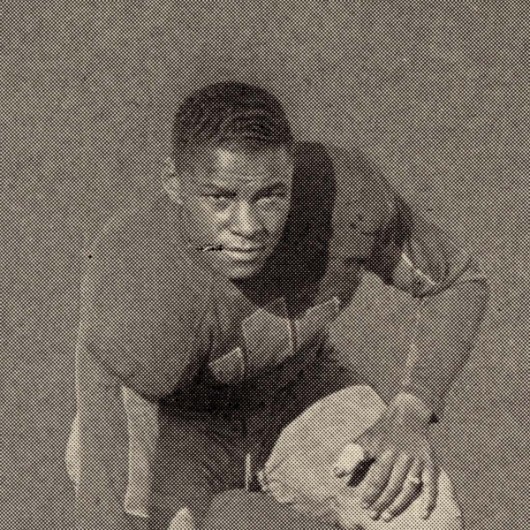
When the University of Oregon recruited Bobbie Robinson and Charles Williams as its first black athletes in 1926, they weren’t allowed to live in university dormitories. All students of color were required to rent housing off campus.
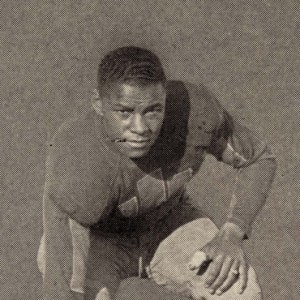
Charles Williams at the  University of Oregon

Charles Williams at the University of Oregon

It was a long struggle, but universities across the country eventually opened their dormitories to residents of all colors and cultures. How ironic that many universities have now turned back the clock by establishing separate housing by race, ethnicity, sexual orientation and more.

It’s all being done under the guise of building cultural bonds, uniting people with shared values and strengthening identities. Separate but equal, say proponents.

Schools call the segregate spaces theme houses, program dorms or some other innocuous sounding name, but what they really are is a contrivance that do damage to all students, their schools and American ideals.

Much of today’s self-segregation had its origins in the turmoil of the 1960s.

In 1969, for example, at a meeting called by the Beloit College Afro-American Union, thirty-five black students presented 12 demands, including that sections of dorms be reserved for black students. Within days, a spineless administration acquiesced.

That same year, armed members of Cornell University’s Afro-American Society (AAS) occupied Willard Straight Hall to protest the school’s perceived racism. Following negotiations with Cornell officials, the AAS students emerged from the building carrying rifles and wearing bandoleers with cartridges. A picture of the armed students leaving the building ran on the cover of Newsweek magazine.

May 5, 1969 Newsweek cover

May 5, 1969 Newsweek cover

That led to the opening of Cornell’s Ujamaa Residential College in 1972, which “…celebrates the rich and diverse heritage of Black people…” Not stopping there, Cornell now has eight Program Houses, or “themed” residence halls, including a Latino Living Center and Akwe:kon, an American Indian house.

The spread of these self-segregated residential housing facilities has been explosive. U.C. Berkeley has self-segregated housing “Theme Programs” available for African-Americans, Asian Pacific Americans, Native Americans and Mexican Americans.

MIT has a community within a dorm called Chocolate City, “…a brotherhood of MIT students and alumni who identify with urban culture and share common backgrounds, interests, ethnicities, and/or experiences.”

At Brown University in Rhode Island there’s Hispanic House and Harambee House, which is “…focused on perpetuating a sense of community, academic excellence, and leadership for all people of African descent.”

Harambee is Swahili for ” pulling or working together.” But self-segregation isn’t pulling people together; it’s pushing them apart, capitulating to pressure and reinforcing separatism.

Some academics, perhaps eager for student approval, argue that faculty support for self-segregation is a good thing because it stimulates bonding. “We teachers have an opportunity to stand in solidarity with our students who call for programmed houses on the basis of politicized racial identities,” wrote Amie A. Macdonald, a professor at John Jay College of Criminal Justice/CUNY.

“…anyone concerned with the long-range goal of securing broad-based freedom and autonomy should be committed to the continued existence of racially defined communities on the grounds that different racial identities provide people with different experiences of the world,” Macdonald said. “The preservation of racially defined communities of meaning secures the continued diversity of interpretations of the social world, thereby providing a richer array of know/edges from which to construct social, political, aesthetic, spiritual, and scientific accounts of our experience.”

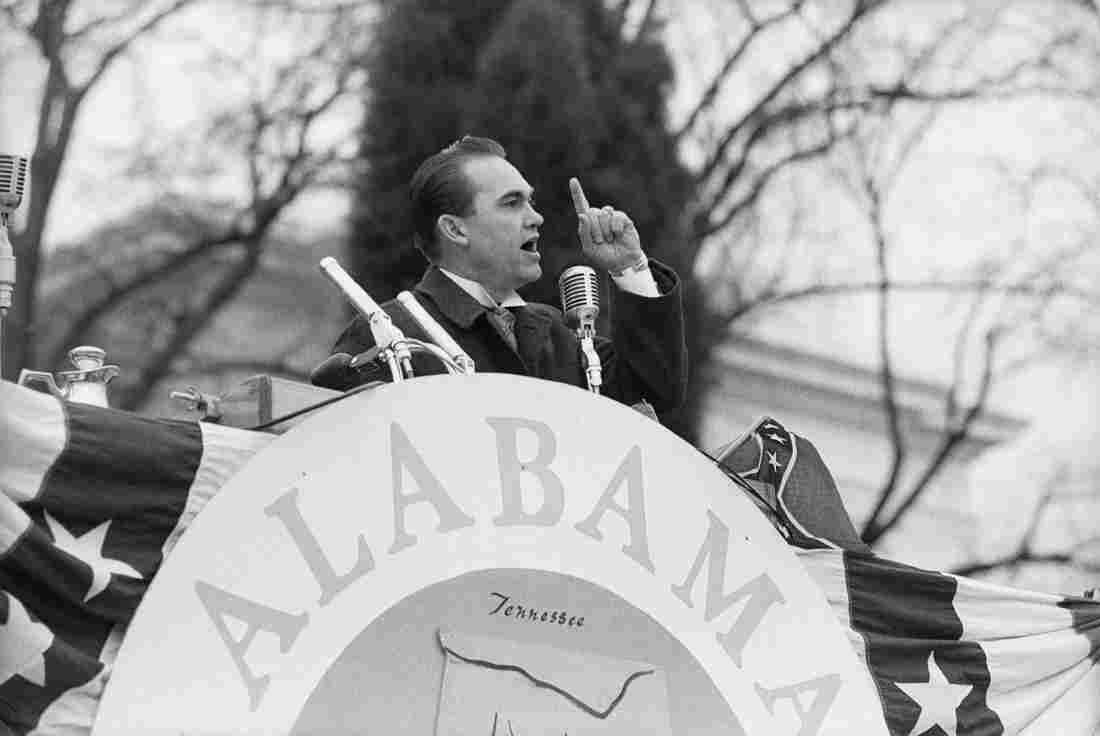
Except for the fact this is very professorial, it sounds suspiciously like something Alabama Governor George C. Wallace would have said in less flowery language to affirm “segregation today . . . segregation tomorrow . . . segregation forever.”

Governor George Wallace giving his defiant inaugural address on Jan. 14, 1963

Governor George Wallace giving his defiant inaugural address on Jan. 14, 1963

That’s why many thoughtful people condemn the spread of self-segregation practices.

Even 20 years ago, Claire Fagin, then President of the University of Pennsylvania, expressed deep concern. “In general, what we are seeing is a much more divided population on our college campuses,” she said. “We are moving into a very, very hyphenated world: It’s Asian-American, African-American . . . it’s so contrary to everything I grew up with . . . when everyone fought to just be American. For many of us who stress pluralism, these are not easy times.”

Tamar Lewin, a New York Times reporter, has written about how a purposeful blending of interracial roommates can reduce prejudice. Studies at Ohio State and elsewhere have found that having a roommate of a different race can reduce prejudice, diversify friendships and even boost black students’ academic performance, he reported.

“Just having diversity in classrooms doesn’t do anything to increase interracial friendships,” said Claudia Buchmann, an associate professor of sociology at Ohio State and an author of a study at Duke University. “But the intimacy of living together in residence halls, with no roommate, or a different-race roommate, does lead to more interracial friendships.”

Lawrence H. Summers when he was President of Harvard University, expressed identical sentiments.

“…the success of our alumni is critically dependent on the environment that we create for them while they are students,” Summers said. “Whether we are inclusive and welcoming – whether we create an environment that encourages students to learn not just from casebooks and in classrooms, but from other students who have had very different experiences than themselves – all of this plays a vital role in determining whether our students will have the skills and experiences needed to be effective leaders.”

Dividing everybody into categories and subcategories is not the way forward.

As John Lewis, a leader of the civil rights movement, said, “Now we have to create a sense that we are one community, one family. Really, we are the American family.”


Guilt tipping: service with a smirk

Remember when we used to tip for good service?

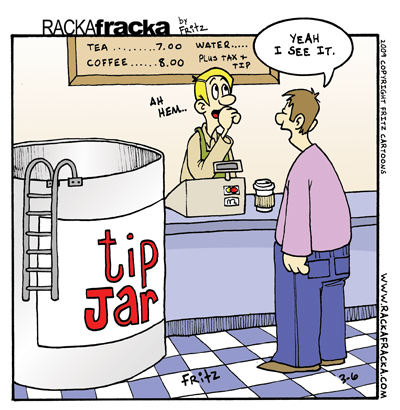
tip-jar-color-web

Gone into a shop lately and found yourself confronting a tablet screen turned toward you with various generous tip options? One option is “No tip”, but that requires a purposeful action the cashier and other customers in line behind you can see. So out of guilt, you hit one of the % options instead.

Point of sale system

Point of sale system

Face it, the merchant and the cashier are pressuring you to add a tip., using technology to taunt you.

At stores where you used to either not leave a tip or just dropped your change into a tip jar, now you’re being manipulated into tipping lavishly with point of sale systems. The practice is getting particularly egregious at businesses where you didn’t used to tip at all, but now feel pressured to do so.

It can get worse because of a business’ ability to customize the tip configuration on the screen. Most people tip between 15-20%. If you buy a $2.85 espresso and the screen offers 15%, 20% and 25% tip options, you are likely to hit 15%, generating a tip of 43 cents. If a business wants to jack that up, it can give you $1, $2, or $3 options on purchases below $10, instead of a percentage. If you pick $1, you have paid a 35% tip. Devious, but effective.

The dynamics also change when a waiter hands you a portable tablet to sign for your credit card purchase at your table. As a point-of-sale system company says on its website;

“Just think about it. If your wait staff hands over a portable device to a patron, that patron is more likely to add a larger tip since the transaction becomes more personal. It’s easy to leave a 10% or smaller tip on a table while you run out of a restaurant. It’s far more difficult for a patron to leave a tiny tip while the waiter is right next to you.”

It might make some sense at businesses like restaurants where the waiters and waitresses are getting state-approved hourly pay less than the minimum wage, with the expectation they will make up the difference in tips. But everywhere?

Give me a break!

Observations on media: Bill O’Reilly’s excellent wartime adventures and gotcha journalism

Bill O’Reilly’s excellent wartime adventures

Oh come on now, Billy.

Bill O'Reilly

Bill O’Reilly

Just admit it. You misspoke, fabricated, misled. Oh hell, you lied. You’ve claimed you reported from the Falkland Islands during the 1982 conflict between Britain and Argentina. Now you’re saying you didn’t.

“I said I covered the Falklands war, which I did,” he says, citing how he covered popular protests in Buenos Aires, about 1,200 miles from the Falklands, as a CBS News reporter.

But the fact is that in 2001 he wrote in his book, “The No Spin Zone: Confrontations With the Powerful and Famous in America”:

“You know that I am not easily shocked. I’ve reported on the ground in active war zones from El Salvador to the Falkland Islands, and in chaotic situations like the collapse of the Berlin Wall and the Rodney King riots in Los Angeles.”

And in 2013, he said in a TV interview that he’d covered a protest “…in a war zone in Argentina, in the Falklands.”

Politico was right on when it noted that O’Reilly would likely attempt to dismiss the reporting on his lies by David Corn and Daniel Schulman of Mother Jones by dismissing them “…as left-wing zealots bent on his destruction.”

Yep.

Gotcha Journalism 

On the other side of the coin, eporters and opinionators are jamming Republican Gov. Scott Walker of Wisconsin with inane questions about things they don’t really care about, but give them a chance to be annoying.

Wisconsin Governor Scott Walker

Wisconsin Governor Scott Walker

It reminds me of when KOIN-TV played a gotcha game with five U.S. Senate candidates from Oregon in 1995, asking each of them seven questions. Congressman Ron Wyden got all seven wrong and suffered some embarrassment as a result. But few people would probably have gotten them right. One Wyden missed, for example, asked, “What is the average cost for a gallon of milk, a loaf of bread, a gallon of gas, and a pair of Levi’s jeans?”

And this was critical to serving effectively as a U.S. Senator?

In Walker’s case, a television reporter in London asked him whether he believes in evolution, the Washington Post asked him whether the president is a Christian, and reporters at a National Governors Association meeting in Washington hounded him on whether he agreed with former New York Mayor Rudy Giuliani who accused President Obama of not loving America.

Walker’s answers, and non-answers, generated media criticism of his qualifications, including an over- the-top opinion column in the Washington Post by Dana Milbank asserting that Walker had “displayed a cowardice unworthy of a man who would be president” and “…ought to disqualify him as a serious presidential contender.”

Let the campaign silly season begin.

Obama insists “I’m OK, you’re OK” in response to global terrorism

President Obama, speaking to an audience that included unrepentant leaders from repressive countries who couldn’t care less and who regularly brutalize their people and deny them basic human rights, argued on Thursday that force of arms was not enough and called on all nations to “put an end to the cycle of hate” by expanding human rights, religious tolerance and peaceful dialogue.

Barack_Obama_in_tank

“Oh sure, the al Qaeda affiliate in Yemen actively plots against us, terrorists have murdered ambassadors, Americans have been killed at Ft. Hood and during the Boston Marathon, in Syria and Iraq the terrorist group we call ISIL has slaughtered innocent civilians and murdered hostages, including Americans, and has spread its barbarism to Libya with the murder of Egyptian Christians, we’ve seen deadly attacks in Ottawa, Sydney, Paris and Copenhagen, the Pakistan Taliban has massacred schoolchildren and their teachers, al-Shabaab has launched attacks from Somalia across East Africa, and in Nigeria and neighboring countries, Boko Haram kills and kidnaps men, women and children,” Obama said. “But hey, shit happens.”

Calling the slaughter of thousands of Ukrainians by Russian-backed rebels supplied with Russian equipment “a hiccup on the pathway to peace”, Obama insisted that the cease-fire that came into effect in eastern Ukraine on Sunday was holding. “The Russians are honorable, peace-loving folks,” he said, “and I’m sure that if Putin and I got together he’d be overwhelmed by the force of my personality and insist that the rebels pull back.”

As the rebels raised their flag over Debaltseve, Ukraine and celebrated their humiliating defeat of the Ukrainian forces, Russian Foreign Minister Sergei Lavrov expressed hope that this wouldn’t scuttle the peace deal.

Promising “swift, meaningful punishment for those who terrorize peaceful nations”, Obama called for another conference to be held at Constitution Hall in Washington, D.C. that would “offer more strong words in response to beheadings , immolations, child-killing, and other barbarities.”

“We’ll take an important step forward as governments, civil society groups and community leaders from more than 60 nations will gather in Washington for a global summit on countering violent extremism,” Obama said. “Our focus will be on community organizing, which I know a heck of a lot about, and empowering local communities.”

Dismissing concerns about his feckless foreign policy, Obama  said, ” Not to worry. I’m OK you’re OK.”


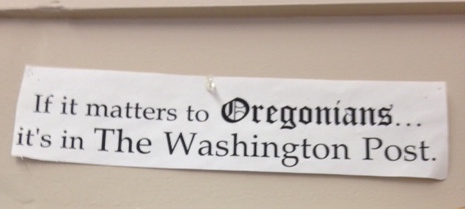
If it matters to Oregonians, it’s in (The Washington Post) Willamette Week

For those of you who don’t remember, Bob Packwood was the first.

Former Senator Bob Packwood (R-Ore)

Former Senator Bob Packwood (R-Ore)

On Nov. 22, 1992, the Washington Post reported that 10 women had accused Sen. Bob Packwood of sexual harassment. Even though one of The Oregonian’s own reporters was among the 10, and the paper had gotten tips about Packwood’s behavior, incredibly it had failed to aggressively pursue the matter. The Oregonian’s failure to break the story was mortifying for the entire paper.

Adding to the shame was a bumper sticker that began appearing around Portland:

washPoststicker

Oregonian editor, Bill Hilliard, later told the Washington Post, in a massive understatement, that his paper “should have been a little more aggressive… We were worried about ruining a man’s career.”

Neil Goldschmidt was second.

Neil Goldschmidt

Neil Goldschmidt

Nigel Jaquiss, a reporter at Willamette Week, was researching the role of former Oregon Governor, and later power player, Neil Goldschmidt, in efforts to take over Portland General Electric. He was making good progress on the story, but got hints there was more.

“It was shaping up to be a pretty good story,” Jaquiss told the American Journalism Review, “but I kept getting pushed by people… ‘There’s more you ought to be looking at… There’s a girl..'”

Jaquiss’ aggressive digging eventually revealed that Goldschmidt, when he was the married Mayor of Portland, had begun raping a neighbor’s 14-year-old daughter on a regular basis over a three-year period. Sources said Goldschmidt often took the girl to her parents’ basement, to hotels and other private spots for sex.

When Willamette week posted a summary of the story on its website, it spread like wildfire. The Oregonian had been beaten again.

Not only had The Oregonian been beaten again, this time by a local alternative weekly, but The Oregonian made things even worse. When it ran the Goldschmidt story it appeared to many readers to soft-pedal Goldschmidt’s actions as “an affair” with “a high school student”. Oregonians went ballistic.

A memo of a staff meeting at the Oregonian revealed that there was a lot of internal angst, too. The memo noted: “Steve Duin felt strongly that our coverage today was too reverential. We are dealing with a child molester. He made a very impassioned plea for doing the who knew what when story — lots of people became rich riding Goldschmidt’s coat tails — and why they kept it secret. He suggested that readers might think we’d learned nothing from Packwood and that we are hands off people in power.”

And now the Kitzhaber-Cylvia Hayes scandal.

John Kitzhaber and Cylvia Hayes

John Kitzhaber and Cylvia Hayes

Again, it was Nigel Jaquiss and Willamette Week that broke the story and followed up with bombshell after bombshell.

The Oregonian followed up with some revelations, but it was late to the party. It’s most significant role in the evolving saga was to run an editorial on Feb. 4, 2015 calling on Kitzhaber to resign, arguing, “…it should be clear by now to Kitzhaber that his credibility has evaporated to such a degree that he can no longer serve effectively as governor.”

What’s happening to The Oregonian, once the state’s dominant paper of record, now a mere shadow of its former self?

It may sound hackneyed, but great newspapers like the Oregonian were once the indispensable guardians of our freedom. Seasoned reporters have served as watchdogs to ensure good government and reinforce good citizenship. The Oregonian has been a key ingredient of  civic dialogue and discourse in the state.

David Simon, a former Baltimore Sun reporter who created the award-winning HBO series The Wire, warned at a U.S. Senate hearing on the “Future of Journalism”, that “high-end journalism is dying in America.”  Oregon can’t afford for The Oregonian to be among those at death’s door.


Disclosure: I worked as a reporter at The Oregonian during the 80s and 90s.

Brian Williams is gone. So what?

For all the sturm and drang about Brian Williams’ banishment from NBC Nightly News, who really cares?

Brian Williams

Brian Williams

When Walter Cronkite anchored the CBS Evening News, about 28 million viewers tuned in on average.

CBS_Evening_News_with_Cronkite,_1968

Today, fewer viewers tune in to CBS, ABC and NBC all together on a typical night.

The most recent State of the News Media study from the Pew Research Center reported that an average of just 22.6 million people watched one of the three commercial broadcast news programs on ABC, CBS or NBC in 2013, only 7 percent of the country’s 316.5 million population. And NBC Nightly News with Brian Williams, the most-watched program, had an average of only 8.5 million viewers.

Even recognition of nightly news anchors has fallen precipitously. Another Pew Research study reported that in 1985, 47 percent of people polled recognized the face of CBS News anchor Dan Rather. In 2013, just 27 percent recognized Brian Williams.

The age of network evening news viewers is slipping, too, according to Pew Research. While a slight majority (56%) of those 65 and older say they watch nightly network news, only 26 percent of those age 30-49 do and just18 percent of Americans under 30.

Morning news is in trouble, too, with average viewership of 13.4 million. Even the leader, ABC’s Good Morning America, averaged only 5.5 million viewers

The networks’ Sunday morning political news shows aren’t exactly barn-burners either. In the last six months of 2012, Face the Nation on CBS averaged just 2.97 million viewers, NBC’s Meet the Press 2.94 million viewers and ABC’s This Week 2.57 million viewers.

So where are Americans going for their news?

Not print newspapers. Their circulation has been dropping like a stone. And even though many of the top online news sites belong to print newspaper companies, online ad revenue is far from replacing lost print ad revenue.

“As the digital revolution continues to erode the print newspaper business, the only ones likely to survive will be those backed by the almost unlimited funds of billionaires…,” observes Accuracy in Media. The only problem is that the number of struggling newspapers far outnumbers the billionaires willing to save them.”

In other words, the present and the future are digital. So much for evening network news anchors. Sorry, Lester.