Donald Trump. Meet Lonesome Rhodes.

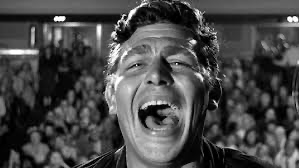
Andy Griffith in “A Face in the Crowd”

The blistering movie A Face in the Crowd deliciously exposes how Americans are seduced by people who swindle us. “This parable about a small-town con man who attains the power to sway the nation to his whims is America: our fanaticism, whimsy, and desire for elusive authenticity at the expense of our souls,” April Wolfe wrote in a spot-on review of the 1957 movie.

Andy Griffith, in his first film role, long before he played Andy Taylor, the low-key widowed sheriff of Mayberry, plays a charismatic hayseed who rises to popularity in a television show and, with an exaggerated sense of his new persuasive power, goes berserk. 

Russ Buettner and Susanne Craig, investigative reporters for The New York Times, recently wrote a lengthy, perceptive and revealing inside story of how the producers of “The Apprentice” crafted a TV version of Donald Trump — measured, thoughtful and endlessly wealthy — that ultimately fueled his path to the White House.

The story meticulously exposed how the producers of The Apprentice turned Trump from a slightly garish, smug New York real estate schmuck with a history of business failures who worked out of a musty, messy office into business royalty, an astute, self-made billionaire.

“The facts never really mattered,” the New York Times story noted. “Drama mattered. Comedy mattered. Entertainment value mattered. Mr. (Mark) Burnett (the show’s executive producer) liked to call it “dramality.” And Mr. Trump was dramatic, occasionally funny, and always entertaining.”

So when he came down the escalator in June 2015, staging the announcement of his candidacy for president, he was a new man, remade by reality television.

Since producing The Apprentice, Burnett has made other successful shows, including “Shark Tank” and “The Voice”, but as Patrick Radden Keefe  wrote in The New Yorker in 2018, “…his chief legacy is to have cast a serially bankrupt carnival barker in the role of a man who might plausibly become the leader of the free world. “I don’t think any of us could have known what this would become,” Katherine Walker, a producer on the first five seasons of “The Apprentice,” told Keefe. “But Donald would not be President had it not been for that show.”

The New York Times story agreed. 

But Burnett and his associates kept their opinion of Trump to themselves, giving him free reign to elevate his prominence based on lies.

Commenters on the Times story savaged Burnett and his associates for foisting Trump on the American public. 

“Mark Burnett created this mess the country is in,” one commenter posted in the paper’s online comments section. “The dumbing-down of America is from all reality TV and especially this egocentric reality “star” turned president. It’s all a complete disgrace that has ruined the fabric of our country.”

“You couldn’t print what I think of these garbage people,” another commented. ”Between Burnett’s greed… and all these enablers, they tipped over the first Domino to end what is left of our Democracy.” 

“He was always a 2-bit husband, father and criminal,” wrote another. “Then, the megalomaniac and pathological narcissist gets a gig on probably one of the most scripted and controlled shows ever produced and becomes a 2-bit actor. Ratings and fakery will take you a long way in TV.” 

“He’s a phony who starred in a show that presented him as a wildly successful businessman while his real business “empire” was failing with numerous bankruptcies despite his $400 million inheritance,” said another. “His political success is also a product of the same fake narrative coupled with a vast army of low information voters who enjoy his racist tinged insult comic act.”

But Burnett and his cronies weren’t the only ones willing to hide the reality of Trump from the public.  Hangers-on who rode Trump’s coattails to the White House and then stayed on in Trump’s administration were guilty, too.

They were perfectly willing to advance an empty vessel of a man created by television, just like the admirers of Chance, a simple gardener whose TV-informed utterances are mistaken for profundity in Peter Sellers’ 1979 movie, Being There.

The essential difference between Chance and Trump is in their relative naïveté.. Chance is a picture of childlike innocence thrown out among vultures. Trump is no innocent. Nor are the hangers-on who have attached themselves to his star like remora, fishes noted for attaching themselves to sharks for food and locomotion.

The remora men (they are mostly men) who have attached themselves to Trump, likely knowing full well of his destructive narcissism, includes key campaign advisors Roger Stone, Corey Lewandowski, Paul Manafort, Steve Bannon, Brad Parscale, and Hope Hicks, his Chiefs of Staff, Reince Priebus, John Kelly and Mark Meadows, as well as cabinet members including Secretary of State Mike Pompeo, Secretary of Defense Jim Mattis, Attorney General Jeff Sessions, Secretary of Transportation Elaine Chao and Ambassador to the United Nations, Nikki Haley.

Then, of course, there were the Republican members of Congress who derided Trump and his incendiary rhetoric in private and gave him rapturous praise in public. I recall reading a story about how, after Trump left a private meeting with key members of Congress when he was president, they could be heard laughing at him.

They have all been in a position to tell the truth to the American people, to the mob Trump has spawned, but they have chosen not to. They are as guilty as Burnett, more-so because they had an obligation to the country.

They all have displayed the same self-serving weakness as the men and women who were well aware of President Biden’s declining mental and physical state, kept it from the public and still backed him in his ego-driven selfish run for another term. “Taken together, this is all a troubling portrait — of unelected staffers trying to shield the public from Biden’s declining mental health so they can preserve their access to power and ability to make policy,” Philip Klein wrote in the National Review.  

We deserve better. 
Outrageous! Our New Political Showboats

A menagerie of malicious and misleading malcontents is undermining our democracy.

Italy’s fashion house, Valentino, has a “Director of Branding and Entertainment”.  Of course it does. 

The company, with its $3750 hunting jacket in waxed cotton, $5200 silk cady jumpsuit and $16,500 leather trench coat, understands that entertaining your current and prospective audience is a critical element in fortifying your brand and maintaining your trendiness.

It’s long been the case that building a brand requires that you entertain people, that your public persona be out there. And entertaining has long meant being outrageous in behavior, dress and comments, particularly in the arts. 

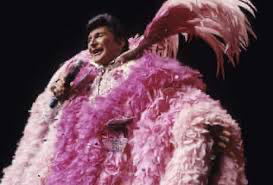
The  flamboyant pianist Liberace knew that.

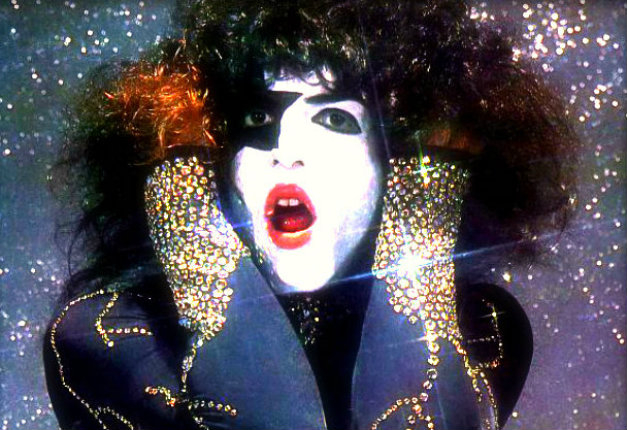
So did Paul Stanley of Kiss:

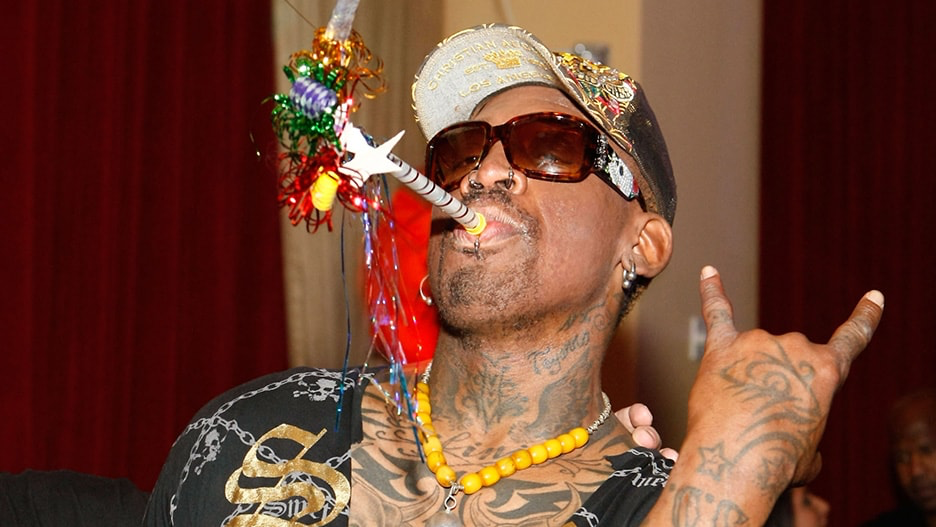
Other entertainers who have traded on their outrageous behavior to bolster their knownness include Kim Kardashian, who thrives on pushing boundaries (Remember, her illustrious “career” began with a sex tape), rapper Lil Kim and Dennis Rodman.

Bad Boy Dennis Rodman

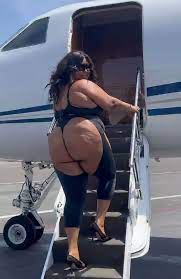
Others try similar tactics to build their brands, such as the grammy-winning singer, Lizzo

Lizzo boarding a private plane

and Miley Cyrus:

OK, I get it.

It’s one thing for celebrities and celebrity wannabes to be outrageous. Now, however, too many of our politicians are mimicking them, playing to the cheap seats and figuring they can translate outrageous behavior into political power by hoovering up media attention. Politicians are, after all, frequently referred to as “political actors” in a vast drama.

And they are getting the attention they want through their outrageous behavior because, as David A. Hopkins, a professor of political science at Boston College, has observed, “American voters generally aren’t attentive; you really do have to grab their attention, which is hard to do.”

Outrageous politicians also tend to get a lot of coverage because, unlike in the print days, there are no space constraints on the Internet and controversy breeds attention.

As a 2013 New York magazine article noted, “Originally, BuzzFeed employed no writers or editors, just an algorithm to cull stories from around the web that were showing stirrings of virality.”  Jonah Peretti, a founder of BuzzFeed, which went public through a merger with a special-purpose acquisition company (SPAC) in Dec. 2021 (NASDAQ: BZFD), didn’t really care whether a post was produced by a journalist or sponsored by a brand, so long as it travelled. “He’s a semiotic Darwinist: He believes in messages that reproduce,” the article noted.

Outrageous politicians also tend to get a lot of coverage because, unlike in the print days, there are no space constraints on the Internet and controversy breeds attention.  As a 2013 New York magazine article noted early on, “Originally, BuzzFeed employed no writers or editors, just an algorithm to cull stories from around the web that were showing stirrings of virality.”

Also, there’s a lot of pressure on opinion writers to churn stuff out and the comments and actions of showboats are fertile territory for comment, which generates even more attention.

The Columbia Journalism Review recently reported on how Merrill Brown, the founder of a business-of-journalism startup called the News Project, described the pressure that opinion purveyors feel: “Everybody wants to get today’s take right,” he said. “But ‘thoughtful commentary’ on the day’s news is almost an oxymoron.” The result, he added, “is more about being clever than necessarily doing your homework.

As Lonesome Rhodes (played so powerfully by Andy Griffith in A Face in the Crowd)  said of himself, before his contemptible behavior led to his downfall, “I’m not just an entertainer. I’m an influence, a wielder of opinion, a force… a force!”

A menagerie of malicious and misleading malcontents is undermining our democracy.

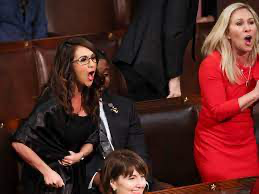
The toxic, hyperventilating blowhards include Rep. Marjorie Taylor Greene (R-GA), Rep. Lauren Boebert (R-CO), Rep. Madison Cawthorne  (R-NC), Rep. Matt Gaetz (R-FL) and Rep. Andy Biggs (R-AZ). 

Reps. Greene and Boebert heckle President Biden during State of the Union address, March 1, 2022

In a recent article about the re-emergence of Sarah Palin, who now wants to represent Alaska in the House, Politico’s Joanna Weiss observed that the script has flipped in terms of the visibility of freshman members of Congress. 

“…there are plenty of politicians who have used Palin’s playbook to build fame out of political office, rather than the other way around.,” Weiss wrote. “Republican House members like Marjorie Taylor Greene, Madison Cawthorn, and Lauren Boebert have learned that freshmen members of Congress can command outsized attention — and that outrageous statements are a ticket, if not to policy success, then at least to the kind of attention and fundraising prowess that keeps a career alive.”

Lest you think all the blowhards committed to grandstanding rather than governing are Republicans, the behavior of Rep. Maxine Waters (D-CA), has led to some outrageous viral moments, too. And as far as I’m concerned,  Rep. Adam Schiff (D-CA) went off the deep end in his allegations regarding the discredited Steele Dossier, which contained allegations of misconduct, conspiracy, and cooperation between Donald Trump’s presidential campaign and the government of Russia prior to and during the 2016 election campaign.

Being “political” today means seeing politics as a mode of self-expression, producing attention-getting images airing one’s views and publicly taking sides, such as Alexandria Ocasio-Cortez in her “Tax the Rich” Met Gala dress, Blake Smith observed in a City Journal article, The Narcissism of Hyper-Politicization. “Achieving real political goals through coordination and cooperation would, in contrast, “require individuals to discipline themselves, to moderate their insistence on their own uniqueness, and to subordinate their own desires to a greater good,” he wrote. 

In the Columbia Journalism Review, Jon Allsop told of  a French student journalist who was thrilled he secured a  30-second interview with Emmanuel Macron ahead of the 2017 presidential election, only to later discover he’d forgotten to turn on his microphone.

Today’s journalists in the United States might want to do the same when they cover the narcissistic politicians who have adopted a “outrageous behavior-is-the ticket” attitude.