Oregon’s K-12 Public Schools Are Failing Their American Indian Students

Shana McConville Radford of the Confederated Tribes of the Umatilla Indian Reservation has joined Gov. Tina Kotek’s administration as Oregon’s first Tribal Affairs Director.

Shana McConville Radford

I have a job for her. 

Tackle the embarrassingly poor academic achievement and embarrassingly high absenteeism rates of K-12 American Indian and Alaska Native students in Oregon.[1]

Some truth-telling is essential here. It is painfully clear that Oregon’s schools are failing these young people and that somebody needs a good kick in the shins to set things right.

We need to give kids, all kids, the tools they need to make their own way. Allowing academic failure is not the way to do that.

The numbers from tests given during the 2022-2023 school year tell the story. A predominant share of the American Indian/Alaska Native students taking the tests were American Indian.

All the academic achievement numbers come from reams of data posted online by the Oregon Department of Education showing downloadable files of state assessment results in English Language Arts (ELA)Mathematics, and Science. Absenteeism figures come from data posted online by the Oregon Department of Education in Annual Performance Progress Reports on Attendance and Absenteeism. 

Some of the more egregious low proficiency scores were at districts that also have chronic student absenteeism, defined by the Oregon Department of Education as absent from school for more than 10% of the academic year.

The Department requires that there be no fewer than 265 consecutive calendar days between the first and last instructional day of each school year at each grade level, so missing 10% of school days would mean missing at least 26 days. 

It’s a lot of numbers, but they are worth examining closely..

SubjectStudent GroupGrade LevelPercent Proficient
English Language ArtsAmerican Indian/Alaskan NativeAll Grades25.6
English Language ArtsAmerican Indian/Alaskan NativeGrade 320.5
English Language ArtsAmerican Indian/Alaskan NativeGrade 424.0
English Language ArtsAmerican Indian/Alaskan NativeGrade 527.2
English Language ArtsAmerican Indian/Alaskan NativeGrade 622.1
English Language ArtsAmerican Indian/Alaskan NativeGrade 728.7
English Language ArtsAmerican Indian/Alaskan NativeGrade 825.6
English Language ArtsAmerican Indian/Alaskan NativeGrade HS (11)31.1

SubjectStudent GroupGrade LevelPercent Proficient
MathematicsAmerican Indian/Alaskan NativeAll Grades13.6
MathematicsAmerican Indian/Alaskan NativeGrade 322.2
MathematicsAmerican Indian/Alaskan NativeGrade 418.2
MathematicsAmerican Indian/Alaskan NativeGrade 514.7
MathematicsAmerican Indian/Alaskan NativeGrade 610.0
MathematicsAmerican Indian/Alaskan NativeGrade 713.7
MathematicsAmerican Indian/Alaskan NativeGrade 810.9
MathematicsAmerican Indian/Alaskan NativeGrade HS (11)5.7
SubjectStudent GroupGrade LevelPercent Proficient
ScienceAmerican Indian/Alaskan NativeAll Grades16.3
ScienceAmerican Indian/Alaskan NativeGrade 514.1
ScienceAmerican Indian/Alaskan NativeGrade 814.7
ScienceAmerican Indian/Alaskan NativeGrade HS (11)20.8

A review of the performance of American Indian/Alaska Native students at individual districts is also revealing.

The details below show all Oregon school districts reporting enrollment of American Indian/Alaska Native students, in all grades, 2022-2023 and the % of students proficient of those tested.

Not all districts administered the Science test. Less than 5% means fewer than 5% of students who took the test achieved Level 3 or 4 / Meets or Exceeds. Absenteeism rates for American Indian/Alaska Native students in selected districts are also noted.

Athena-Weston SD 29RJ       

English language arts.  40%

Mathematics.  Less than 5%

Beaverton SD 48J

English language arts.  43.3%

Mathematics. 31.8%

Science. 21.2%

Bend-LaPine Administrative SD 1

English language arts.  33.3% 

Mathematics. 31.3%

Science. 36.8%

Bethel SD 52

English language arts.  25.9% 

Mathematics. 20.8%

Science. 9.1%

Brookings-Harbor SD 17C

English language arts.  20% 

Mathematics. Less than 5%

Science. 27.3%

Cascade SD 5

English language arts.  42.9% 

Mathematics. 21.4%

Science. 20%

Centennial SD 28J

English language arts.  17.4% 

Mathematics. Less than 5%

Central Point SD 6

English language arts.  32.1% 

Mathematics. 17.9%

Central SD 13J

English language arts.  31.3% 

Mathematics. 5.9%

Coos Bay SD 9

English language arts.  20% 

Mathematics. 8.9%

Science. 25%

Corvallis SD 509J

English language arts.  Less than 5% 

Mathematics. 8.3%

Creswell SD 40

English language arts.  30.8%

Mathematics. 21.4%

Crook County SD

English language arts.  26.3% 

Mathematics. 16.7%

Dallas SD 2

English language arts.  29.5% 

Mathematics. 14.8%

Science. 12.2%

David Douglas SD 40

English language arts. 16.1%

Mathematics. 10.0%

Science. 9.1%

Dufur SD 29

English language arts.  10.5%

Mathematics. Less than 5%

Eagle Point SD 9

English language arts.  47.4% 

Mathematics. 31.6%

Science. 40%

Eugene SD 4J

English language arts.  37.8%

Mathematics. 31.6%

Science. 38.5%

Forest Grove SD 15

English language arts.  25.0%

Mathematics. 16.7%

Grants Pass SD 7

English language arts.  50% 

Mathematics. 7.1%

Greater Albany Public SD 8J

English language arts.  26.7% 

Mathematics. 21.4%

Science. 27.3%

Gresham-Barlow SD 10J

English language arts.  35.5%

Mathematics. 17.2%

Science. 28.6%

Harney County SD 3

English language arts.  13.3%

Mathematics. 6.7%

Hillsboro SD 1J

English language arts.  32.6%

Mathematics. 23.3%

Science. 13.6%

Hood River County SD

English language arts.  29.4% 

Mathematics. 5.9%

Jefferson County SD 509J

English language arts.  17.5%

Mathematics. 6.4%.

Science. 8.4%

NOTE. 49.7% of American Indian/Alaska Native students in Jefferson County SD 509J were chronically absent in the 2022-23 school year.

Junction City SD 69

English language arts.  60%

Mathematics. 30%

Klamath County SD

English language arts.  27.1%

Mathematics. 14.6%

Science. 17%

NOTE: 38.5% of the American Indian/Alaska Native students in the  Klamath County SD were chronically absent in the 2022-23 school year..

Klamath Falls City Schools

English language arts.  20.8% proficient

Mathematics. 11.3%

Science. 9.1%

NOTE: 69.5% of American Indian/Alaska Native students in the Klamath Falls City Schools district were chronically absent in the 2022-23 school year.

Lincoln County SD

English language arts.  16.5%

Mathematics. 5.9%

Science. 9.3%.

NOTE: 57.9% of the American Indian/Alaska Native students in the Lincoln County SD were chronically absent in the 2022-23 school year.

McMinnville SD 40

English language arts.  45.9%

Mathematics. 40%

Science. 47.1%

Medford SD 549C

English language arts.  51.3%

Mathematics. 21.1%

Science. 29.4%

Molalla River SD 35

English language arts.  16.7% 

Mathematics. 15.4%

Myrtle Point SD 41

English language arts.  30%

Mathematics. 10%

Newberg SD 29J

English language arts.  Less than 5%

Mathematics. Less than 5%

North Bend SD 13

English language arts.  32% 

Mathematics. 36%

Science. 33.3%

North Clackamas SD 12

English language arts.  20%

Mathematics. 17.6%

Science. 10%

North Wasco County SD 21

English language arts.  26.1%

Mathematics. 8.7%

Science. 9.1%

Oregon Trail SD 46

English language arts.  42.9%

Mathematics. 28.6%

Pendleton SD 16

English language arts. 27.8% 

Mathematics. 9.1%

Science. 14%

NOTE: 51.3% of the American Indian/Alaska Native students in the Pendleton SD 16 district were chronically absent. in the 2022-23 school year.

Phoenix-Talent SD 4

English language arts.  9.1% 

Mathematics. Less than 5%

Portland SD 1J

English language arts.  17.2% 

Mathematics. 11.6%

Science. 15.2%

NOTE: 66.1% of the American Indian/Alaska Native students in the Portland SD 1J district were chronically absent in the 2022-23 school year. 

Redmond SD 2J

English language arts.  40.0% 

Mathematics. 26.7%

Reynolds SD 7

English language arts.  23.3%

Mathematics. 13.3%

Science. Less than 5%

Salem-Keizer SD 24J

English language arts.  21.8%

Mathematics. 8.5%.

Science. 18.3%

NOTE: 58.2% of the American Indian/Alaska Native students in Salem-Keizer SD 24J district were chronically absent in the 2022-23 school year.

Santiam Canyon SD 129J

English language arts.  20%

Mathematics. 20%

Sheridan SD 48J

English language arts.  12.9%

Mathematics. 6.7%

Science. Less than 5%

South Lane SD 45J3

English language arts.  12.5%

Mathematics. 12.5%

South Umpqua SD 19

English language arts.  20%

Mathematics. 10%

Springfield SD 19

English language arts.  31.4%

Mathematics. 13.9%

Science. 29.4%

St Helens SD 502

English language arts.  18.8%

Mathematics. 6.7%

Sutherlin SD 130

English language arts.  13.3%

Mathematics. 13.3%

Three Rivers/Josephine County SD

English language arts.  27.9%

Mathematics. 11.6%

Science. 5.3%t

Tigard-Tualatin SD 23J

English language arts.  33.3%

Mathematics. 33.3%

Umatilla SD 6R

English language arts.  20%

Mathematics. 10%

Willamina SD 30J

English language arts.  25.4%

Mathematics. 8.7%

Science. Less than 5%

Winston-Dillard SD 116

English language arts.  23.1%

Mathematics. 16.7%


[1] American Indian/Alaskan Native – As defined by the Oregon Department of Education, includes all students identified as having origins in any of the original peoples of North America and not Hispanic.

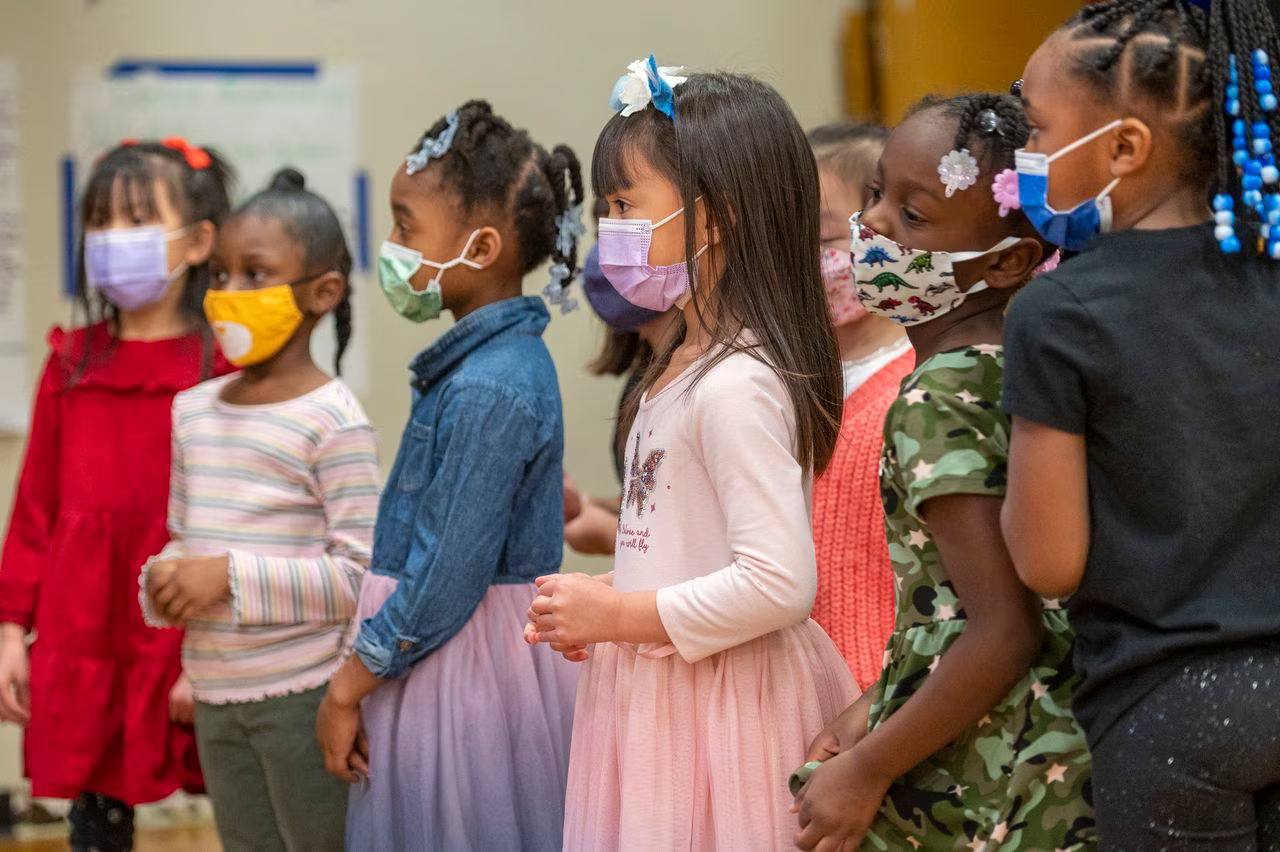
Portland’s Striking Teachers and Their Union Leaders are at Escalating Risk of Losing Public Support.

 Portland, Oregon, long a bastion of anything-goes progressivism, can’t take this strike much longer. 

 Facts are stubborn things. A city still recovering from the pandemic, buffeted by economic uncertainty and battered by homelessness, proliferating graffiti, rampant drug use and crime, simply can’t afford to keep its kids home.

The union says it’s fighting for the children, but they will have missed 14 days of classes by Thanksgiving and may miss more. 

This in a district which is already struggling with high rates of student absenteeism. In the 2022-2023 school year, 36.4% of the district’s students were “chronically absent”, absent for more than 10% of the academic year. Chronic absentee rates were 52.9% for Black/African American students, 48% for Hispanic/Latino students, 66.1% for American Indian/Alaska Native students, 59.9% for Native Hawaiian/Pacific Islander, 31.4% for white students and 22.7% for Asian students.

“The fact that absenteeism has gone up is the biggest issue right now and has been overlooked,” says the Lewis-Sebring Director of the UChicago Consortium on School Research, Elaine Allensworth. “People keep focusing on the test scores, but our research shows over and over again that student attendance is an incredibly strong predictor of pretty much every outcome you care about: High school graduation, college ready, college enrollment, college graduation. It’s vital that students actually come to school every day.”

And then there’s the performance of Portland Public Schools kids on state subject competency tests, likely already exacerbated by high absenteeism. Although mostly better than statewide results, they are still disappointing, often showing declining scores as children move through the system. 

At Portland’s elementary schools, for example, 56% of tested students met or exceeded state standards in math in the 3rd grade in 2023, while just 40% met or exceeded state standards in the 8thth grade, 55% met or exceeded English standards in the 3rd grade compared with 54% in the 8th grade and 44% met the standards in science in the 5th grade versus 38% in the 8th grade. 

At the district’s high schools, just 27of 11th graders met or exceeded state standards in Math, 50% met or exceeded the standards in English and 39% met or exceeded the standards in science.

Of course, all this probably matters less now that the State Board of Education unanimously voted to extend the 2021 law that paused a requirement that Oregon students show proficiency in Essential Learning Skills in order to graduate.

The District’s teachers also need to confront a public perception that a massive amount of money is already being plowed into the troubled system. 

Taxpayers are already spending an astronomical amount to support Portland Public Schools, as I pointed earlier this year in The Cost of Sending Kids to Portland Public Schools is More Than You Think, a Lot More. The commonly used number for spending per student is $15,000, but that’s actually way off. All funds available to the District in the 2022-23 school year totaled $1.9 billion. Divide that by 41,470 students and per student expenditures came out to $45,533.

And that was more than the District spent per student in the 2021-22 school year, even though the number of students served declined. In the fall of 2021, the District enrolled 45,005 students in grades K-12, a decrease of 1,932 students from fall 2020. The net loss was even greater than the previous year’s loss of 1,716 students.

A recent “Portland Public Schools Enrollment Forecast” by Portland State University’s Population Research Center projected that the District’s enrollment will likely continue to fall throughout most of the forecast’s horizon, declining to a low of 39,123 in 2035-36. 

How can the union expect spending to keep increasing in the face of enrollment declines.  

Portland residents also aren’t likely to look more favorably on higher taxes or fees to help the district as the strike continues.  Portland’s income tax rate of 14.7% for earners is already second only to New York City, largely because of resident’s previous misguided willingness to support innumerable feel-good programs. Portland’s rate is even more punitive when you consider that an individual hits that high earner mark in Portland at $125,000, while a New York taxpayer would have to earn $25 million.

The Portland Metro Chamber recently noted that total taxes paid by businesses located in the City of Portland increased by about one-third, or from $781 million to $1.031 billion, just from 2019 to 2021, according to calculations by the global tax consultancy Ernst & Young.

Key changes during that three-year period, included implementation of a gross receipts tax for the Portland Clean Energy Fund, a property tax to fund city parks, a rate increase in the Multnomah County business tax, an income tax to support Preschool for All (paid in part by sole proprietors), property taxes for Multnomah County library renovations, and new business and personal taxes associated with Metro’s Supportive Housing Services measure.

The Preschool for All program, for example, is funded by a personal income tax based on the following thresholds:

  • Single taxpayers. All Oregon taxable income over $125,000 is taxed at 1.5%. All income above $250,000 is taxed at 3%. In 2026, the tax rate increases by 0.8%
  • Joint filers. All Oregon taxable income over $200,000 is taxed at 1.5%. All income above $400,000 is taxed at 3%. In 2026, the tax rate increases by 0.8%.

“Portland’s higher level of business taxation dates to the enactment of corporate income taxes levied by the City of Portland and Multnomah County in 1981,” the Chamber said. “ These local-level business income taxes are not common in other cities across the U.S.”

If the Portland Association of Teachers hopes to come out of this with continuing public support, teachers need to get back too work and kids need to get back in class. Parent and student patience is not inexhaustible. 

The Scourge of Absenteeism: Oregon Kids of Color Are Cutting Too Many Classes

Our children are not alright.

In the 2015-16 school year, alarms went off when one in six K-12 children were chronically absent at Oregon’s public schools.. 

The legislature was so concerned it enacted a bill which directing the Oregon Department of Education and the Chief Education Office to jointly develop a statewide education plan to address the problem. 

So much for that. 

In the 2021-2022 school year, the most recent year for which data is available, 36.1% of Oregon’s K-12 students were chronically absent from school, absent for  more than 10% of the academic year. Only Hawaii at 37%, Michigan at 38.5% and the District of Columbia at 48.1%, had higher rates of chronic absenteeism.

Children who are chronically absent in their early years of schooling are likelier than their peers to struggle to read at grade level by the end of second grade and students still struggling at the end of third grade are four times more likely to drop out of high school, according to research supported by the Annie E. Casey Foundation and the Center for Demographic Analysis, University at Albany, State University of New York.

For the worst readers, those who could not master even the basic skills by third grade, the rate is nearly six times greater. 

By the ninth grade, every week a student misses reduces that student’s chance of graduating by about 20 percentage points.

“The fact that absenteeism has gone up is the biggest issue right now and has been overlooked,” says the Lewis-Sebring Director of the UChicago Consortium on School Research, Elaine Allensworth. “People keep focusing on the test scores, but our research shows over and over again that student attendance is an incredibly strong predictor of pretty much every outcome you care about: High school graduation, college ready, college enrollment, college graduation. It’s vital that students actually come to school every day.”

Oregon media have reported on rising absenteeism, but the general take has been that it is a system-wide problem.  What they’ve mostly missed is the high rates of absenteeism among kids of color.

An exhaustive review of Oregon Department of Education data on absenteeism at Oregon school districts in the 2021-2022 school year reveals substantial differences in rates of absenteeism between white students and students of color.

“The long-term consequences of disengaging from school  are devastating,” says Hedy Chang, executive director of Attendance Works, a nonprofit addressing chronic absenteeism. For children of color, the consequences can be particularly severe.

In other words, for all the money Oregon is pouring into its schools to improve the academic performance of kids of color, it’s not going to make any damn difference if kids of color don’t show up.

School DistrictCategory% Chronically Absent
Corvallis School District 509J         White33.5
Hispanic/Latino43.5
West Linn-Wilsonville SD 3J               White27.9
Black/African American32.9
Hispanic/Latino43.9
American Indian/Alaska Native76.2
Native Hawaiian/Pacific Islander45.2
North Clackamas SD 12                         White28.5
Black/African American33.2
Hispanic/Latino41.1
American Indian/Alaska Native40.5
Native Hawaiian/Pacific Islander50.8
Gladstone SD 115                                        White32
Black/African American 46.7
Hispanic/Latino52.3
Astoria SD1                                                     White35.1
Hispanic/Latino43.1
American Indian/Alaska Native58.3
Bend-LaPine SD1                                               White39.6
Black/African American40
Hispanic/Latino54.5
American Indian/Alaska Native49.3
Redmond SD 2J                                                         White37.8
Hispanic/Latino43.4
Native Hawaiian/Pacific Islander47.8
American Indian/Alaska Native57.4
Douglas County SD4                                                   White44.4
Hispanic/Latino50.4
American Indian/Alaska Native62.9
Native Hawaiian/Pacific Islander54.5
Springfield SD19White41.9
Black/African American52.3
Hispanic/Latino47.9
Native Hawaiian/Pacific Islander72.3
Salem-Keizer SD 24JWhite39.7
Black/African American41.9
Hispanic/Latino53.7
Native Hawaiian/Pacific Islander63.7
Portland SD 1JWhite27.1
Black/African American55
Hispanic/Latino47.1
American Indian/Alaska Native68.8
Native Hawaiian/Pacific Islander63.1