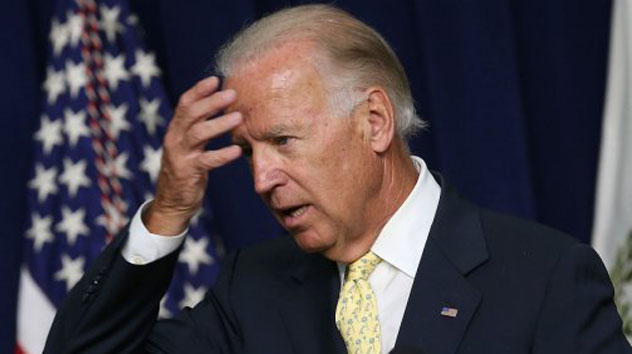
Donald J. Trump’s Dec.16, 2024 Press Conference: Falsehoods, Distortion, Fakery and Deceit

“Nuttiness may be subjective, but truthfulness is not”

Bill Scher, Politics Editor, Washington Monthly

On Dec. 16, Donald J. Trump held his first press conference since his Nov. 5, 2024 election. Wishing to be of service to those of you who were too busy or not inclined to tune in, I reviewed the entire deluge of Trump’s rambling thoughts:

  • We had no wars when I left office and now the whole world is blowing up.

Truth: When Trump left office in early 2021, US troops were still deployed in combat missions in Afghanistan and Iraq. About  200,000  US troops were deployed overseas, including 6,000 – 7,000 American troops spread across Africa, with the largest numbers concentrated in the Sahel and the Horn of Africa,  about 50,000 troops at roughly two dozen bases across Japan and about 2,000 Marines in  northern Australia 

  • “Lot of people don’t realize, but we did 571 miles of wall (on the Mexican border).  I built much more than I said I was going to build.”

Truth: Early in his 2016 election campaign, Trump pledged to build a wall along the entire 2000-mile length of the border with Mexico. He later clarified he’d build a wall covering half of that distance. In his State of the Union address in February 2020, he pledged to build “substantially more than 500 miles” by January 2021.

Various types of fencing totaling 654 miles, running through California, Arizona, New Mexico and Texas, were already in place before Trump became president in 2017.  At the end of Trump’s first term, the Trump administration said it completed more than 400 miles of border wall, but only 80 miles of new wall barriers were actually built where there were none before. The vast majority of the construction replaced existing structures at the border that had been built by previous US administrations.

  • “We’re also going to create clean coal. Clean coal is something that has really taken over. …we’re going to be doing a lot of clean coal for the people of West Virginia and others, Wyoming.”

Truth: The idea of “clean coal” is generally considered not viable, as current technology cannot fully mitigate the environmental impacts of burning coal, making it essentially a marketing term with little practical application; while some technologies can reduce emissions, the process remains too expensive and energy-intensive to be considered truly “clean” on a large scale, with many experts stating that “clean coal” is a myth

  • “So we’re looking to save maybe $2 trillion and it’ll have no impact. Actually. It’ll make life better, but it’ll have no impact on people.  We will never cut social security or things like that. It’s just waste, fraud and abuse.” 

Fact: This would certainly run counter to Trump’s actions in his first term, during which he added $8 trillion to the national debt,  despite having promised to run budget surpluses.  The federal government is now burning through $6.8 trillion annually and the Committee for a Responsible Federal Budget says Trump’s proposed policies would add an estimated $7.7 trillion to debt over the next decade. Cutting $2 trillion in one year would be impossible, as well, given that Trump has already said he’s not going to touch Social Security or Medicare., the two largest government programs, and interest payments, which account for 13% of federal spending, can’t be cut either (Unless the government plans to default on the national debt). Discretionary spending accounts for only about 25% of total expenditures, but that includes defense, which Congress has no inclination to cut.

  • We’ll immediately restore the sovereign borders of the United States and stop illegal immigration.”

Truth: Over the past 30 years, the Border Patrol’s budget has grown more than sevenfold, the number of agents stationed along the southwest border has quadrupled, the border wall has been strengthened and lengthened, and increasing amounts of technology have been used to deter illegal migrants, but they have kept coming, more and more of them from countries other than Mexico. Also complicating the situation, a substantial number of the illegal immigrant population in the United States came legally on work visas and stayed after they expired.  The government has been terrible at finding and deporting these people. 

  • “We had no problems, we had no inflation. We had no inflation. We had at less than 1%. A perfect number.”

Truth: The Consumer Price Index rose 7.8% during Trump’s first term. The CPI rose an average of 1.9% each year of the Trump presidency according to the Bureau of Labor Statistics. That was about the same as the average under Obama (1.8%) and below the average of 2.4% during George W. Bush’s years.

  • Trump responding to a question, “Do you believe there’s a connection between vaccines and autism? Do you believe there’s a link?” Trump: We’re looking to find out. …There’s something wrong. And we’re going to find out about it.”

Truth: Many studies have looked at whether there is a relationship between vaccines and Autism Spectrum Disorder (ASD.), but to date, the studies continue to show that vaccines are not associated with ASD, according to the federal Centers for Disease control and Prevention. 

Two studies, referred to as the Wakefield Studies, have frequently been cited by those claiming that the MMR vaccine causes autism. Both studies are considered critically flawed. In the first study, published in 1998, Wakefield’s hypothesis was that the measles, mumps and rubella (MMR) vaccine  caused a series of events that include the development of autism. The study was subsequently retracted; in scientific terms, this means that the paper is not part of the scientific record because it was found to be based on scientific misconduct. In this case, the studies were deemed fraudulent and data misrepresented. The second study, published in 2002, which examined the relationship between measles virus and autism, was also critically flawed. Meanwhile, several studies have been performed that disprove the notion that MMR causes autism.

  •  Trump responding to a question – “Do you think schools should mandate vaccines?” Trump – “I don’t like mandates. I’m not a big mandate person.”

Truth: Mandating vaccinations of schoolchildren saves lives. Schools and broader communities rely on high immunization rates to keep vaccine-preventable diseases from spreading. When more children are immunized, the risk for everybody declines, particularly for people with weakened immune systems and chronic medical conditions like lung, heart, liver, kidney disease or diabetes. The more parents who decline to vaccinate their children, the greater the risk that infection will spread in the community.

  • “Europe doesn’t use pesticides, and yet they have a better mortality rate than we do.”

Truth: Pesticides are still widely used in Europe, with the agricultural sector relying on significant volumes of chemical pesticides to maintain crop yields, although the EU has regulations in place to limit their use and is actively working to reduce pesticide reliance because widespread pesticide use is major source of pollution, according to the European Environment Agency.

  • ” They’re still counting the vote in California.

Truth: California did take longer to count votes in the recent federal elections than other states, but the California Secretary of State had certified the 2024 election results prior to Trump’s news conference.  

  • “We got the biggest tax cuts in history.”

Truth: Trump’s tax cut s in the Tax Cuts and Jobs Act of 2017 was not the largest in history, either in percentage of gross domestic product or in inflation-adjusted dollars.  When the Congressional Budget Office reviewed tax cuts enacted between 1981 and 2023, it found that two other tax cut bills were bigger – former President Ronald Reagan’s 1981 package and legislation signed by former President Barack Obama that extended earlier tax cuts enacted during former President George W. Bush’s administration. Reagan’s 1981 tax cut was the largest in U.S. history, reducing revenues by $19 trillion over a decade. 

  • The US took in hundreds of billions of dollars in tariffs “from China” during Trump’s first term and “no other president took in 10 cents, not 10 cents.”  before he was president.

Truth: First, according to the Peterson Institute for International Economics the revenue from tariffs on Chinese imports come from the importers, not China. Importing businesses pay the tariffs and then have to decide whether to bear some of the costs or pass any portion of the cost on to consumers through higher prices.

Second, according to the Institute, Americans have been paying tariffs on imports from China for decades., going as far back as the late 19th and early 20th centuries and more recently during the Clinton, Bush, and Obama administrations. 

And we’re going to have four more years of this.

Admoniti estis.
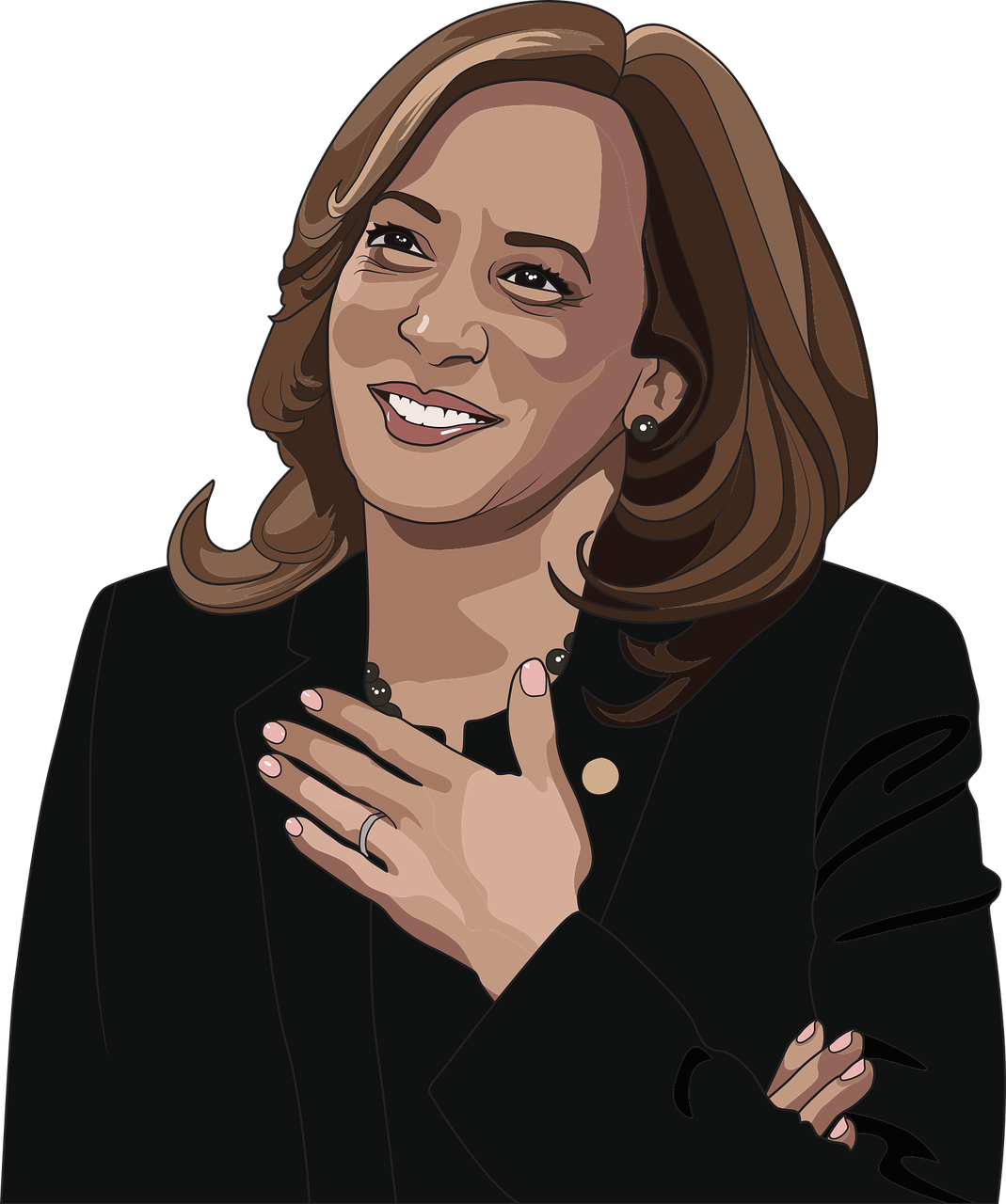
Liberal Media Jump on the Kamala Harris Bandwagon

Gag me with a spoon.

Talk about shifting on a dime.

President Biden withdraws from the 2024 race, Vice President Kamala Harris picks up the mantle and the liberal media jump on board.

Even Biden’s withdrawal statement is being cast mostly as a brave, selfless, patriotic effort, like a “don’t speak ill of the dead” obituary, rather than an admission that the Democratic Party’s leaders and wealthy donors had abandoned him. 

It wasn’t long ago that the press delighted in portraying Harris as a largely ineffectual, slightly dim and somewhat daffy politician with a habit of speaking in a kind of garbled incoherent word salad and a failed policy effort as Biden’s border czar.  

Last week, New York Times columnist David Brooks cautioned that “…as of 18 months ago, she would not have made an effective president or even a good candidate. She ran a disastrous presidential campaign and has been a mediocre vice president, even measured by the low standards of the office. She could always repeat the normal Democratic positions but had no distinctive view for where the country needed to go.”

Now, with Biden out, the media is transforming Harris from a somewhat awkward and cringy figure in the Democratic Party to a “cool” pop culture personality with a sterling reputation in a matter of days, commented CNN commentator Van Jones. 

New York Magazine went over the top in its latest issue with this cover:

The New York Times has even attempted to turn the tide on Harris’ sometimes derided laughter, saying “The Trump campaign sees Harris’s laugh as a vulnerability to exploit. But far from a liability, it is one of her most effective weapons.”

In a flash, Harris has gone from an unaccomplished player in foreign affairs to a widely admired wonderkind. A New York Times story on her foreign policy chops was even headlined, “A Global Reputation For a Steely Resolve And Deft Diplomacy.”

“…the consensus among foreign officials and diplomats is that Ms. Harris has a firm grip on international affairs,” the Times enthused in a July 27 article quoting Chancellor Olaf Scholz of Germany: “She is a competent and experienced politician who knows exactly what she is doing and has a very clear idea of her country’s role, of developments in the world, and of the challenges we face.”

When Biden tweeted his exit, the Democratic Party and its acolytes “…declared a triumph of democracy and the end of popular “disillusionment,” observed author and reporter Matt Taibbi. “Attention shifted to the real candidate, Kamala Harris, who was not only MLK, Gandhi and Captain America, but a woman of color with a Jewish husband…” 

Party stalwarts are jumping on board with superlatives, too. “I’ve known Kamala Harris a long time,” wrote Hillary Clinton. “This brilliant prosecutor will make the case against convicted felon Donald Trump.”

On July 28, Lydia Polgreen, an opinion columnist with the New York Times, wrote that “…Harris had been significantly underrated, that the chatter about her flaws for the past four years maybe didn’t tell her full story and that she had some unique talents and traits that made her a stronger candidate than her record might suggest.”

Rather than hold Harris’ missteps against her, Polgreen turned them into positives. 

“I see a woman who struggled to compete for power against her peers, buried under an array of vague and unstated expectations about whether she gave the right answers, had the right ideas, was smart or specific enough,” Polgreen wrote. “Like any woman of ambition, I deeply relate to these experiences. As strange as it might seem, I have come to think these experiences could make her the ideal candidate in a surreal campaign against a man who is so certain of himself, who admits to no mistakes, who has no humility and who, for many of us, is utterly unrelatable.”

Jenny Holland, who writes “Saving Culture (from itself)” on substack, says “The establishment blob is so desperate to avoid a Trump presidency that they are willing to support a woman who is so flippant and unserious that she would embrace a youth culture trend of “brat”, which means being “just that girl who is a little messy and maybe says dumb things sometimes, who feels herself but then also maybe has a breakdown but parties through it.” 

Still, Harris may want to tread lightly before embracing her newfound adulation as a given. The press can be your friend, but it can also turn on you. 

Rep. Suzanne Bonamici: No Friend of Working Families

U.S. Rep. Suzanne Bonamici, D-OR, is thrilled with President Biden’s actions cancelling student loan debt. She shouldn’t be. 

Even though she has a bachelor’s degree and a law degree from the University of Oregon, it’s clear she’s no economist. And even though she’s a member of the House Progressive Caucus and tries to package herself as an advocate for the common man (and woman), her support for student loan forgiveness suggests she’s no friend of working families either.  

That’s because, for one, the billions in student debt aren’t, in fact, being cancelled. The loans will still be paid off. The issue is by whom?

“The idea that the government is footing the bill for this policy is a bit misleading,” the American Institute for Economic Research points out.   “The cost of the program does not fall on the government. It falls on those who miss out on expenditures that would have otherwise occurred, those who pay higher taxes as a result of the program, those who pay higher interest rates or are crowded out due to additional government borrowing, or those who see the purchasing power of their dollars reduced more than usual.”

Even though the Supreme Court ruled that the Biden administration overstepped its authority in 2022 when it announced that it would cancel up to $400 billion in student loans, Biden has since been rolling out a series of debt forgiveness alternatives using a variety of executive actions.

Biden’s ingenuity in coming up with more loan repayment exceptions seems to have no bounds.  

On April 8, 2024, the White House announced an initiative that would:

  • forgive interest balances built up to date for 25 million borrowers, with 23 million likely to have all of their balance growth forgiven.
  • automatically cancel debt for borrowers eligible for loan forgiveness under several loan programs.
  • cancel student debt for borrowers who entered repayment over 20 years ago.
  • cancel student debt for loans associated with institutions or programs that lost their eligibility to participate in the Federal student aid program or were denied recertification because they cheated or took advantage of students.
  • cancel student debt for borrowers experiencing hardship paying back their loans.

While there’s no question student debt has become a burden for many Americans, Biden’s escalating efforts to relieve borrowers of obligations to repay student loans will add to the government’s annual deficits and the national debt. In other words, current student loan holders may escape repayment, but future taxpayers will have to pay the bill since Biden isn’t proposing any new revenue collections to cover the cost.

On April 11, the University of Pennsylvania’s Penn Wharton Budget Model estimated that Biden’s April 8 plans, if they are implemented, will cost the government $84 billion, in addition to the $475 billion that Penn Wharton previously estimated for Biden’s plans.

Rep. Bonamici must not care about that.  

Biden’s student debt forgiveness policies also raise serious questions about fairness. For example, according to Penn Wharton, eliminating student debt for borrowers in repayment for more than 20 years (or for more than 25 years with graduate debt) will provide debt relief for about 750,000 individuals residing in households that, on average, earn $312,977 in annual household income.

There’s also inequity in Biden’s plan to cancel up to $20,000 in interest for borrowers who have accrued or capitalized interest on their loans since entering repayment.  Low and middle-income borrowers enrolled in the SAVE Plan or other income-driven repayment (IDR) plans would be eligible for their entire interest balance since entering repayment to be cancelled if they make:

  • $120,000 or less per year individually or as married filing separately
  • $180,000 or less per year as a head of household, or 
  • $240,000 or less per year as married borrowers who file joint taxes.

Real median personal income in the United States was only $40,480 and the national median household income was just $74,580 in 2022. In other words, many college educated borrowers in Bonamici’s district who are eligible for relief under Biden’s plan are hardly struggling. And despite her assertion that she’s “standing up for working families,” many of her constituents with much lower incomes will end up covering the bills of their better-off neighbors.

Then, of course, a lot of Bonamici’s responsible working family constituents have probably made sacrifices to pay down their student loans, foregoing vacations, nice cars and restaurant meals. They will get no benefits at all from Bonamici’s generosity. 

Tough beans for them, I guess.

Dear Secretary of the Treasury: OK, I Give Up

Dear Secretary Yellen (and Joe, too),

Invest in Series I Savings Bonds, your Treasury Department says. “Series I savings bonds are a low-risk savings product,” it says. “During their lifetime they earn interest and are protected from inflation.” With an initial interest rate on new Series I savings bonds now at 9.62 percent., they’re a good deal. 

So I tried to buy some.  Fuggedaboutit.

How hard can it be to set up a website to invest in I Bonds that’s consumer friendly and easily navigable? You’d think the Biden administration could at least do this one simple thing right, but no. 

Now bear with me.

Treasury’s website, www.TreasuryDirect.gov, is a jumbled mess, a relic of old timey confusion from when Biden was a senator. When I finally got into the section for creating an investment account, diligently filled everything out and clicked on “submit”, I was advised that there was an error. And my application was on hold.

What was the error? No clue. How could I fix it? By filling out a paper, yes, paper,TreasuryDirect Account Authorization form, getting it certified by my credit union, and snail-mailed , yes, snail-mailed, to Treasury Retail Security Services, Minneapolis, MN.

The length of time Treasury Retail Security Services might take to respond? Up to 13 weeks, I was advised. That’s right, three months.

Several weeks later, not 13 thank God, I got an email saying the hold had been removed from my account and that I could now access it. Now I’m on a roll, I figured. 

But no. When I tried to get into my account to make an investment, I made a spelling mistake in a security question response and I was locked out again.  

“If you encounter any problems during the initial log in process, you may contact us at 844-284-2676, between 8:00 a.m. – 5:00 p.m. Eastern Time, Monday through Friday.,” I was advised. “Follow the menu prompts for Individual and TreasuryDirect. A customer service representative will assist you.”

OK, that sounded simple. It was a nightmare. 

On my first call I was on hold for 3 hours and finally told that there were too many people ahead of me for my call to be answered before the office closed. For my second call, I got up at 5AM and sat on hold for 2.5 hours before connecting with an agent. It took just a couple minutes to clear up the security question issue and I was again cleared for access to my account.

I filled out an online form to make an investment . On June 21, an email came back. “Dear William:
A purchase has been scheduled in your TreasuryDirect account on 6/21/2022. For more details, go to the History tab and click Security History. If you have a question about this activity, please call (844) 284-2676. Thank you for using TreasuryDirect.”

I sat back in celebration.

Too soon.

On June 27, I received an email canceling my investment: “Dear William, We’re sorry, but your purchase request or reinvestment IAAAA was canceled. While trying to collect payment from your bank, they returned our debit. Please check the Investor InBox section of your TreasuryDirect account for more detailed information. Thank you for using TreasuryDirect.”

Now what?  I went to the Investor InBox section of my TreasuryDirect account and discovered that Treasury had sent the debit request to an incorrect bank account, not the one submitted with my purchase request. Of course the debit attempt bounced. Argggh!!!

I went back into the TreasuryDirect website and found that to get Treasury’s mistake corrected I would have to print out another paper form, get it certified at my bank, send it in, by snail mail again, and wait some more. When I tried to access the form by clicking on a link, I got a grey screen. Good grief!

You win, Janet and Joe. I give up. I’m done.

Biden’s Federalization of Child Care Will Be Costly

“You can’t handle the truth!” Colonel Nathan R. Jessup roared in A Few Good Men.

President Biden and the Democrats in Congress apparently think the same way in explaining the costs of their Build Back Better budget proposals. Supposedly, the cost of the House Democrats’ budget reconciliation bill is $1.75 Trillion.

But this is a fiction based on smoke and mirrors.

On Thursday, the Penn Wharton Budget Model reported that if all the provisions of the bill (except green energy tax cuts) are made permanent, new spending would increase by $3.98 trillion, more than double what President Biden’s White House said.

On Friday, Nov. 5, the House passed a $1 Trillion infrastructure bill, but put the social policy bill on hold because a half-dozen Democrats withheld their votes until a nonpartisan analysis by the Congressional Budget Office (CBO) could tally its price tag, which could be delayed until at least mid-November. In other words, even the Democrats don’t know what their social policy bill would cost.social policy

One area that stands out in terms of unknown real costs is projected spending on child care. 

Child Care Services Association — Ensuring affordable, asccessible,  high-quality child care

On Friday, Nov. 5, the House passed a $1 Trillion infrastructure bill, but put the social policy bill on hold because a half-dozen Democrats withheld their votes until a nonpartisan analysis could tally its price tag, which could be delayed until at least mid-November. In other words, even the Democrats don’t know what their social policy bill would cost.

The childcare part of the package attempts to spur more workers to join the childcare workforce and raise providers’ wages by spending around $100 billion over the first three years.

The bill would guarantee that families making up to 250 percent of a state’s median income would not have to pay more than 7 percent of their annual income on child care.

“How can we compete in the world if millions of American parents, especially moms, can’t be part of the workforce because they can’t afford the cost of childcare or eldercare,” Biden said in October. 

All well and good, but what’s going to be the actual cost to the federal government if the Democrats’ bill passes and gets signed by the President? The House will be out on recess next week, returning the week of Nov. 13. If there is a CBO score by then, it’s possible that the House could move immediately to a final vote on the bill.

First of all, the program would supposedly come to an end in six years, but that’s just part of the Democrats’ budget trickery. The assumption that spending on the child care program will cease in six years reduces its overall cost during the 10-year budget window that Congress uses to determine whether a bill will add to the federal deficit. But Democrats are counting on parents becoming so fond of the government largesse that Congress will extend the program.

President Biden has said the child care subsidies would save the average family $14,800 per year on child care expenses. In other words, the federal government would pick up $14,800 in childcare costs now paid by the average American family. 

,Using Oregon as a test case, median family income in 2020 was $76,554. On that basis, no Oregon family making less than $191,385 would pay more than 7% of their income on child care. Families earning more than $191,385 would, however, likely pay more once all the government’s mandates kicked in. Higher wages for childcare workers, for example, would likely be passed on to parents by child care providers.

Under the House bill, all the teachers and staff participating in the child care workforce, would have to be paid at least $15 an hour. Many child care workers are now so low paid that more than 15 percent are below the poverty line in 41 states, according to a Sept. 2021 report from the U.S. Department of the Treasury. Similarly, nearly half of child care workers use public assistance, such as the Children’s Health Insurance Program (CHIP), Supplemental Nutrition Assistance Program (SNAP), and Temporary Assistance for Needy Families (TANF).

According to ZipRecruiter, as of Oct 30, 2021, the average annual pay for a child care worker in Oregon was $18,969 a year or approximately $9.12 an hour. 

Under the Democrats’ bill, child care staff with the qualifications of kindergarten teachers would have to be compensated as such, according to The White House. Kindergarten teachers Oregon must have finished a degree program that includes a teacher education component. Teaching kindergarten also requires passing several exams before earning a license. According to ZipRecruiter, as of Oct 30, 2021, the average annual pay for a kindergarten teacher in Oregon was $33,785 a year or $16.24 an hour.

The U.S. Bureau of Labor Statistics says there are 494,360 child care workers in the United States. Oregon has about 13,000 of those. 

According to the White House, child care providers will also “receive funding to cover the true cost of quality early childhood care and education–including a developmentally appropriate curriculum, small class sizes, and culturally and linguistically responsive environments that are inclusive of children with disabilities.”

Under the House bill, the federal government would also pay for child care workers to receive job-embedded coaching and professional development to help child care workers grow their skills during their careers.

The federal government would have to pony up a lot of new money to pay for all this. Not only that, but the states would have to step up, too. States would not be required to match any funds for the first three years, giving them time to ramp up their programs while funded entirely by the federal government. After three years, states would have to provide a 10% match to the federal funds. Where’s that money going to come from?

In addition, President Biden has said he would “ensure families have access to the quality care their children need by working in partnership with states to ensure providers meet rigorous quality standards. These standards will include a developmentally appropriate curriculum, small class sizes, and support positive interactions between educators and children that promote children’s socio-emotional development.”

To say that the Democrats want to federalize child care would be an understatement.

Although the goal of affordable child care seems worthwhile, I can’t help but think this particular proposal is going to have major unintended consequences if it becomes law.

For example, it is likely the proposal will lead to higher childcare costs overall, particularly for those not under the subsidy umbrella. As the Acton Institute has written, “There is little reason to expect that large increases in government subsidies toward childcare would lead to declining overall costs. All prices are relative prices. Increasing the demand for childcare services through subsidies while directing that demand to more formal, regulated, and already stressed institutions is a recipe for…cost explosions.”

Jonathan Bydlak of the R Street Institute makes the same point. “The idea of using subsidies to essentially engineer some sort of outcome is not exactly a great idea,” he says. “Any time you end up subsidizing something that represents a market manipulation. There’s always a potential, as we’ve seen in areas like education, for example, where… education costs are almost certainly higher as a result of the ways in which we subsidize that system.”

Many have argued that years of government subsidies for college have raised the spending power of the average person for higher education, but not necessarily to their benefit. Colleges and universities, those people say, have taken note of families’ increased spending power and raised their tuitions accordingly, resulting in the sky-high tuition rates that exist today.

At one point recently, President Biden said his Build Back Better plan would cost nothing because rich people and corporations would pay the bill. “The fact of the matter is, my Build Back Better Agenda costs $0,” Biden said.

If you believed that, or if you think the Democrats’ proposed child care program is only going to cost $100 billion over its first three years, you’re smoking some pretty potent weed.

Biden’s Black Hawk Down

A U.S. Chinook helicopter flies near the U.S. Embassy in Kabul.

July 8, 2021, East Room, Remarks by President Biden on the drawdown of U.S. forces in Afghanistan:

Q Is a Taliban takeover of Afghanistan now inevitable?

THE PRESIDENT: No, it is not.

Q Why?

THE PRESIDENT: Because you — the Afghan troops have 300,000 well-equipped — as well-equipped as any army in the world — and an air force against something like 75,000 Taliban. It is not inevitable.

Q Mr. President, some Vietnamese veterans see echoes of their experience in this withdrawal in Afghanistan. Do you see any parallels between this withdrawal and what happened in Vietnam, with some people feeling —

THE PRESIDENT: None whatsoever. Zero. There’s going to be no circumstance where you see people being lifted off the roof of a embassy in the — of the United States from Afghanistan. It is not at all comparable. … the likelihood there’s going to be the Taliban overrunning everything and owning the whole country is highly unlikely.

I live “out in the sticks” as sophisticated power brokers in Washington DC would call my suburb outside Portland, Oregon. I haven’t been to Afghanistan as a citizen, soldier or policy wonk. I haven’t sat in on any high-level foreign policy strategy meetings in the White House or debated military policy in a conference room at a D.C think tank. I haven’t been asked by President Biden or any of his hangers-on what we should do in Afghanistan.

But even I knew the battle-ready 300,000 man Afghan military force was a fiction and that it wouldn’t be long before American helicopters were rescuing desperate people from rooftops in Kabul in a debacle for the ages. Like everything else about the war in Afghanistan, it was all a lie.

Cancelling student debt: Another bad idea from the “free stuff” crowd

“It was the best of times, it was the worst of times, it was the age of wisdom, it was the age of foolishness,” Charles Dickens wrote in A Tale of Two Cities. Thousands of Oregon college graduates in the class of 2019 probably felt the same way.

After years of hard work, they had finally earned their degrees. But 54% graduated with student loan debt. The average debt – $27,542. If it was any consolation, they were not alone. About 45 million Americans (13.7% of the U.S. population) are dealing with federal and/or student loan debt that totals about $1.7 billion.

But fear not, debtors, liberal politicians have been falling all over themselves with plans to help bail you out.

In May 2020, Reps. Peter DeFazio (D-OR) and Earl Blumenauer (D-OR) called upon House Speaker Pelosi and Minority Leader Kevin McCarthy to prioritize long- term relief in any future COVID-19 response in the form of at least $30,000 in one-time student loan debt cancellation for all federal student loan borrowers 

In September 2020, U.S. Senators Ron Wyden (D-OR) and Jeff Merkley (D-OR) introduced a resolution  outlining a plan for the next president to use existing authority under the Higher Education Act to cancel up to $50,000 in individual federal student loan debt for Federal student loan borrowers.

Before the Nov. 3, 2020 election, Joe Biden and Kamala Harris called for student loan forgiveness of up to $10,000, and if a student found a job that paid less than $125,000 after graduation, all their student loan debt would be forgiven.

And then there are all the progressive think tanks, unions and special interest groups lined up behind the debt cancellation idea.

In November, a coalition of 236 mostly progressive groups, including the American Federation of Teachers and the National Education Association, sent a letter to President-elect Biden calling on him to cancel student debt using his executive powers on the first day he takes office. Casting their lobbying as a racial justice issue, the letter said, “The ​disproportionate impact​ of student debt on borrowers of color exacerbates existing systemic inequities and widens the racial wealth gap.” 

The progressive Roosevelt Institute, adopting the “No crisis should go to waste” philosophy,  is calling for the cancellation of student, housing, and medical debt as part of a massive covid-recovery plan. Framing student debt as “a product of and a contributor to our country’s shameful racial wealth gap,” the Institute wants student loan forgiveness to go hand in hand with a commitment to funding tuition-free public colleges and universities.

That’s what the most ardent advocates of student loan cancellation are really pushing for – free college, with somebody else, usually simply called “rich people,” covering the cost.

Sen. Elizabeth Warren (D-MA) argued on Nov. 17, 2020 that forgiving student loans would be the “single biggest stimulus we could add to the economy” in these difficult times. And the New York Times said, “Both sides of the debate acknowledge that tackling the $1.7 trillion in student debt nationwide, which is spread among more than 43 million borrowers, would go far toward jump-starting the economy.” But a lot of economists don’t agree. 

The Committee for a Responsible Federal Budget says the stimulus benefits would be minimal and aimed at those who least need the help. Total student loan debt may be atrociously high, but borrowers often pay back their loans over 10, 15, or even 30 years, so debt cancellation would increase their available cash for injection back into the economy by only a fraction of the total loan forgiveness. “Stimulus dollars that are spent rather than saved provide a stronger boost to near-term economic output,” the Committee has said. 

Continuing current student debt relief policies, including deferring payments and interest, are preferable, as well as income-driven repayment programs under which monthly payments are determined based on a borrower’s income, not the amount of debt. After 20 to 25 years, the remaining debt is forgiven.  

Recently released data from the U.S. Department of Education shows that the national default rate (A federal student loan is considered to be in default if payment is late by 270 days) for FY2017 was 9.70%.  Massachusetts had the lowest loan default rate – 5.83%; Mississippi had the highest –  15.19%.

Oregon had 6,477 borrowers, 10.71% of the total, in default. The Oregon schools with the highest default rate, 7.80%, were Eastern Oregon University and the Pacific Northwest College of Art. The Brookings Institute is predicting a “looming student loan default crisis” that could see 40% of student loan borrowers nationally in default by 2023.

Yes, some of this debt has accrued because of lax government lending standards. As the Wall Street Journal reported on Nov. 23, 2020. “The government lends more than $100 billion each year to students to cover tuition at more than 6,000 colleges and universities. It ignores factors such as credit scores and field of study, and it doesn’t analyze whether students will earn enough after graduating to cover their debt.”

But subsidizing people who run up large college loan debts penalizes those who took their responsibility seriously and acted responsibly, James B. Meigs wrote in City Journal, a publication of the Manhattan Institute for Policy Research, a free-market think tank. That leaves a lot of people feeling like chumps, he says. “…the chumps of modern America feel that the life choices they’re most proud of—working hard, taking care of their families, being good citizens—aren’t just undervalued, but scorned,” Meigs wrote. As Jeff Jacoby, a Boston Globe columnist put it, “…a massive bailout of borrowers would be unfair to countless families that saved and worked to pay for college, to say nothing of those who responsibly repaid their loans.”

Then there’s the “moral hazard” of cancelling student debt. It might encourage students to continue running up risky big loan balances on the assumption that their debts will be forgiven at some point. That would cause a distortion of borrowing decisions, making them insensitive to the ability to repay. 

Of course, what if higher education institutions see that it makes sense to continually raise prices because the government will absorb any losses down the road. But that’s another problem.

And Democrats think Biden is the best they can offer?

Biden confused

In September 2019, at the third Democratic presidential debate, an ABC moderator asked Joe Biden:

“…as you stand here tonight, what responsibility do you think that Americans need to take to repair the legacy of slavery in our country?”

Biden answered:

“Well, they have to deal with the — look, there’s institutional segregation in this country. And from the time I got involved, I started dealing with that. Red-lining banks, making sure that we are in a position where — look, you talk about education…make sure that we bring in to help the teachers deal with the problems that come from home. The problems that come from home, we need — we have one school psychologist for every 1,500 kids in America today. It’s crazy. The teachers are — I’m married to a teacher. My deceased wife is a teacher. They have every problem coming to them. We have — make sure that every single child does, in fact, have 3-, 4-, and 5-year-olds go to school. School. Not daycare. School. We bring social workers into homes and parents to help them deal with how to raise their children. It’s not that they don’t want to help. They don’t — they don’t know quite what to do. Play the radio, make sure the television — excuse me, make sure you have the record player on at night, the — the — make sure that kids hear words. A kid coming from a very poor school — a very poor background will hear 4 million words fewer spoken by the time they get there.”

Good grief!


Bloomberg’s money: now what?

bloombergmoney2

Democrats, eager to position themselves as the good guys in the campaign finance debate, weren’t real happy about all that Bloomberg money flowing into the primary campaign.

Bloomberg spent an estimated $500 million in just 100 days on slick TV ads, mailers, about 2400 staff spread around the country and for political-data and polling. Critics, including his Democratic primary opponents, accused him of trying to buy the nomination.

But now that Bloomberg has abandoned his campaign, will the Democrats become more accepting of his pledge to keep spending millions to help Democrats win the presidency and other races in the general election?

Bernie Sanders has said he wants to win with small dollar individual contributions. He’s also said he wouldn’t welcome Bloomberg’s big money help. Joe Biden, who has a history of decrying the role of wealthy people and special interests in elections, has been considerably more flexible in practice.

According to the Federal Election Commission (FEC) and Open Secrets, a nonpartisan website by the Center for Responsive Politics that tracks the effects of money and lobbying on elections and public policy, Sanders has raised $134,069,993, about one-third of that in large contributions.

In contrast, the Biden for President committee has raised $68,281,49, about two-thirds of that in large contributions:

A pro-Biden SuperPAC, Unite the Country, has raised an additional $7,919,417 from just 163 donors, with employees of the top three donors (Masimo Corp; Blum Capital Partners; Marcus & Millichap) giving $1 million each. A Leadership PAC, American Possibilities, has donated $432,948 more.

If Bloomberg decides to follow through on his pledge to spend millions to defeat Trump, there are no limits on what he can spend. Since he’s worth an estimated $60 billion, he could be a very big player.

He would be prohibited from coordinating his spending decisions with the eventual Democratic nominee, but that is honored more in the breach than the observance. .

Biden says on his presidential campaign website that he will “reduce the corrupting influence of money in politics.”

“Biden strongly believes that we could improve our politics overnight if we flushed big money from the system and had public financing of our elections,” his website says. “Democracy works best when a big bank account or a large donor list are not prerequisites for office, and elected representatives come from all backgrounds, regardless of resources. But for too long, special interests and corporations have skewed the policy process in their favor with political contributions.”

So much for empty rhetoric.

If Biden wins the Democratic nomination, neither he nor the Democratic Party will try to stop Bloomberg from pouring his money into the campaign to defeat Trump. You can bet on it.

And you still think Joe Biden has all his marbles?

Biden confused

Question at the Sept. 12 Democratic debate:

“Mr. Vice President, I want to come to you and talk to you about inequality in schools and race. In a conversation about how to deal with segregation in schools back in 1975, you told a reporter, ‘I don’t feel responsible for the sins of my father and grandfather, I feel responsible for what the situation is today, for the sins of my own generation, and I’ll be damned if I feel responsible to pay for what happened 300 years ago..’ You said that some 40 years ago. But as you stand here tonight, what responsibility do you think that Americans need to take to repair the legacy of slavery in our country?”

Biden’s response:

“Well, they have to deal with the — look, there’s institutional segregation in this country. And from the time I got involved, I started dealing with that. Red-lining banks, making sure that we are in a position where — look, you talk about education. I propose that what we take is those very poor schools, the Title I schools, triple the amount of money we spend from 15 to $45 billion a year. Give every single teacher a raise, the equal raise to getting out — the $60,000 level.

Number two, make sure that we bring in to help the teachers deal with the problems that come from home. The problems that come from home, we need — we have one school psychologist for every 1,500 kids in America today. It’s crazy.

The teachers are — I’m married to a teacher. My deceased wife is a teacher. They have every problem coming to them. We have — make sure that every single child does, in fact, have 3-, 4-, and 5-year-olds go to school. School. Not daycare. School. We bring social workers into homes and parents to help them deal with how to raise their children.

It’s not want they don’t want to help. They don’t — they don’t know quite what to do. Play the radio, make sure the television — excuse me, make sure you have the record player on at night, the — the — make sure that kids hear words. A kid coming from a very poor school — a very poor background will hear 4 million words fewer spoken by the time they get there.”

Moderator

“Thank you, Mr. Vice President.”