It’s 2021, time to stop pandering to “oppressed” college students

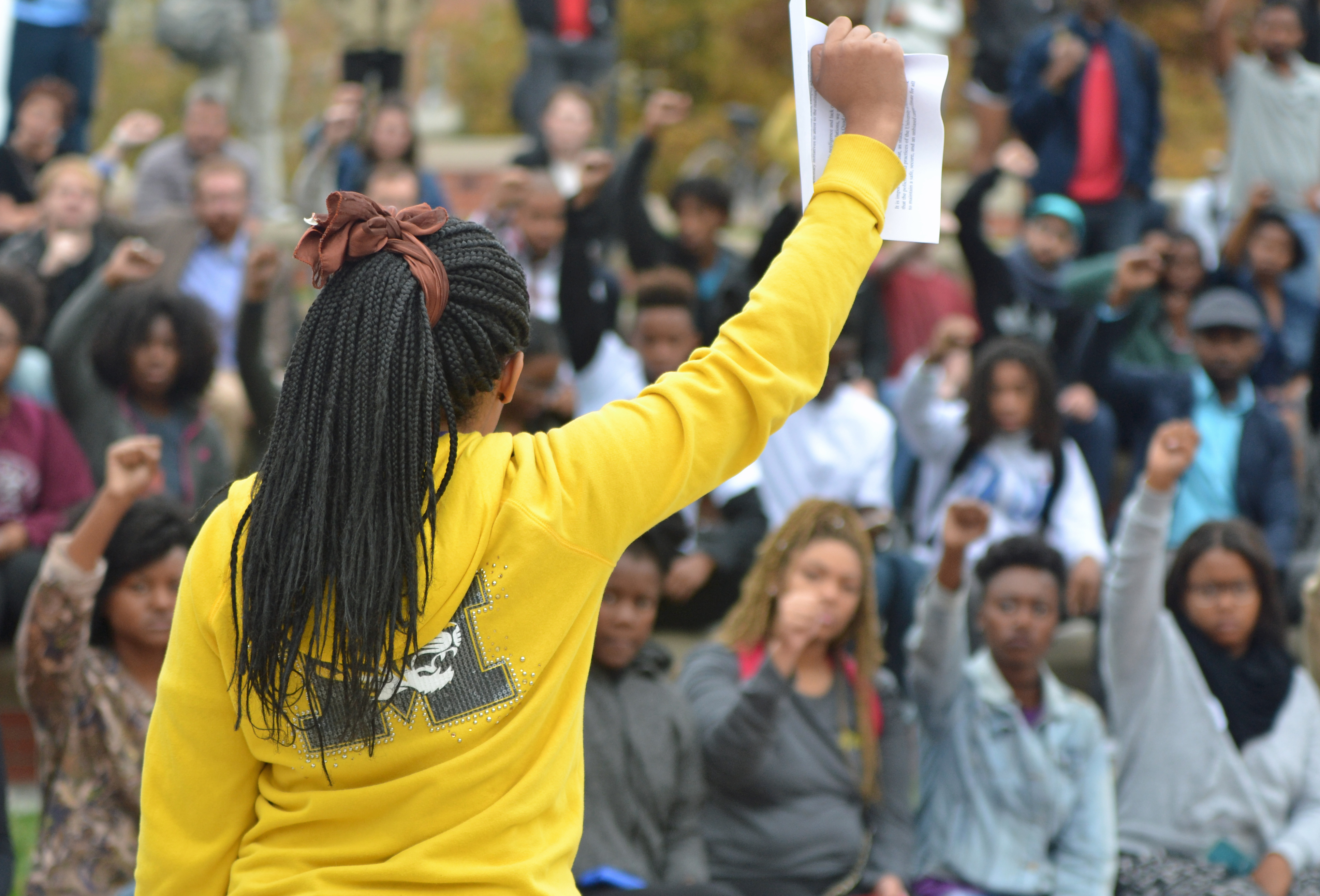
Late last year, the “oppressed” students at $71,550-a-year Bryn Mawr College, a small women’s liberal arts college in Pennsylvania, initiated a strike and demanded that their school “dismantle systemic oppression in the Bryn Mawr community” and end a crippling regime of “institutional racism, silencing, and instances of white supremacy.”

Unfortunately, how Bryn Mawr’s administration handled the strike bore too much resemblance to the behavior of so many other easily bullied schools.

Bryn Mawr President Kim Cassidy initially called for students to return to classes, citing “the significant financial sacrifices that students and families make for this education.”

“Education is our mission and our reason to exist,” Cassidy said. “The College made a legal and moral contract with its students, and their families, to offer classes. We have an obligation to honor this contract.” 

When reports multiplied of abusive behavior targeting students seeking to return to class during the strike, Cassidy spoke again: 

“Whatever the important goals of the strike and the demands, the College cannot countenance shaming, harassment, and intimidation of students or faculty to achieve them. The College cannot and will not tolerate a climate of fear where, amongst other examples, students are afraid to eat in the dining halls for fear of humiliation or for being seen as racist. The acts of intimidation that I am witnessing and that many students and faculty have described violate the [school’s] core principles. Students have a right to their education and should not have to endure shaming to attend class.”

Some emboldened faculty and students also publicly chastised the strike leaders.

A professor wrote on the student newspaper’s site: “The notion that because “You are a Black man, before anything else” and therefore must be in support of the strike or be socially ostracized and bullied by others online is the fundamental problem with the strike.” 

 A student wrote: “One can only hope the administration – which appears to have behaved with unusual grace and provided meaningful support – does not give in to this sad display of self-absorbed and (one is forced to say) childish acting out. Of competitive victimhood. I’m sure the students think they are justified, but with this behavior they have put themselves severely in the wrong. A university education is a privilege that they should get busy and try to deserve. They are lucky to be there and have no right to demand anything.”

The student was quickly slapped down by a classmate: “Racists have used the “lucky to be there” formulation for decades and centuries to suppress the aspirations and demands of people of color.”

The student newspaper tried to inject a little levity into the increasingly tense campus environment with a poll, “Which is your favorite breakfast potato:  Shredded potatoes, Sliced potatoes, Diced potatoes, Hash browns, Tater tots.” But the campus tumult continued.

So President Cassidy surrendered. Not only did she apologize for criticizing the strikers, she said she intended to fulfill a 24-page list of strike demands.

In doing so, Cassidy emulated other weak-kneed college administrators across the country who have caved to absurd demands by children and deserted their responsibilities as adults.

“We’re all gonna be here for only four, maybe five years, so nobody really gives a damn about Bryn Mawr in the long run,” a strike leader at a November 9th sit-in event said, according to a critical post written by the mother of a Bryn Mawr student. 

Of course, that’s the problem. College students are temporary occupants of classrooms and dorms, sort of like rental tenants. They don’t own the college’s past or future, even if they act like they do. 

In that vein, no serious academic committed to higher education, would embrace all the demands spelled out by the strike’s leaders (the group later changed its name to The Black Student Liberatory Coalition (BSLC) and invited students and faculty to “continue to disrupt the fucking order.”).

The Strike Collective’s demands, presumably to be paid for by the students’ already heavily burdened parents, are lengthy. Here are some. Read them and weep:
Trust the Collective, We got each other. 

DEMANDS

  • Search committees for new faculty hiring must include two students with voting power and a diversity representative committed to “executing an anti-racist framework.” (Teenagers voting on new faculty hires; PhDs would love that. Whats next – students voting on tenure?)
  • Diversity, equity, and inclusion training for students, faculty, staff and administration, and the President must be mandatory. (Standard fare on all protest lists now, even there are serious questions about the effectiveness of such costly and time-consuming training)
  • A new position must be created to develop a process to remember protests, controversy, and dissension at Bryn Mawr. (To replace all the old racist statues with statues of today’s heroes who will be condemned 50 years from now?)
  • Bryn Mawr must create a “Reparations Fund” that would make a yearly allocation of funds and resources to Black and Indigenous students in the form of grants for summer programs, affinity groups, multicultural spaces, and individual expenses such as books, online courses, therapy, and any and all financial need beyond the scope of racial justice work. The fund should also be used to support local Black and Indigenous communities. (Ah yes, a call for reparations. A sure winner.)
  • All Open Letter writers to the student newspaper and Core Bryn Mawr Strike Collective organizers must be financially compensated in the form of a Radical Transformation Fellowship stipend at the value of $1000 by the end of Spring semester 2021. The Fellowship must continue to be instituted annually. (Of course, reward strike leaders who disrupted everybody else’s education.)
  • Bryn Mawr must pay all student employees who participated in the strike for all work hours missed during the strike. (God forbid kids who skipped their jobs to protest should lose any pay.)
  • Bryn Mawr must take an ACTIVE (emphasis in original) role in the abolition of Police and Penal institutions at local, regional and global scale and eliminate “investment in building harm reducing institutions.” (No more police, jails or prisons. Let ’em all out. That will make things better.)
  • Increase annual funding for the Black Cultural Center and residence from $10,000 to at least $100,000 to support college wide Center events, the food co-operative, aid request, and endeavours that celebrate the past, present, and future members of the Latin/x and African Diaspora in the Bryn Mawr “Community.” (Go ahead, raise student fees to pay for this. Our parents can afford it.)
  • The Strike Collective must be given immediate access to a comprehensive history (at minimum the past ten years) of Bryn Mawr’s investments with the intention of the Bryn Mawr Strike Collective (BSC) examining investments in all military and militarized institutions, including the U.S. Military, U.S. Immigration and Customs Enforcement (ICE), and  military-contracting entities, including, but not limited to, the top five weapons manufacturers Boeing, Lockheed Martin, Raytheon, Northrop Grumman, and General Dynamics.
  • Bryn Mawr must “divest from corporations wrecking the environment, utilizing sweatshops and/or child labor, perpetuating violent and racist prison industrial complex, acting as operator to imperialism and colonialism through involvement in the military industrial complex, and executing an apartheid systems.” (This is demanding that the managers of Bryn Mawr’s investments  limit their investment options and prioritize political leftism over profit that supports the college.)
  • Bryn Mawr must invest 15% of the interest of its endowment in local Black social justice efforts with special attention to grassroot organizations without any precondition or restriction being applied on the organizations. (Just give them money, no controls, no audits? No thank you.)
  • Bryn Mawr’s Campus Safety team, which deals with security, fire safety, and parking, must be replaced with community organizers and social workers. (The next time there’s a sexual assault, robbery or car theft on campus, call your social worker.)

As a growing list of colleges and universities cede to demands by aggressive student groups, there’s a growing need for adults in the room to stand up and resist actions that are undermining the quality of higher education.

Resistance shouldn’t be the exclusive domain of preening protesters. 

The University of Oregon’s Black Cultural Center: a step back

University of Oregon President, Michael Schill is excited about the $2.5 million Black Cultural Center under construction on campus. He shouldn’t be.

Portrayed by its advocates as a step forward, the Center, a response to demands by some black students after a 2015 demonstration, is actually a step back in encouraging diversity and inclusion.

Kingbrothers

Kevin Fletcher

Golden, Colo.

In an April 22 presentation to the Rotary Club of Lake Oswego, Schill said academic success and diversity go hand in hand, so completion of the new Black Cultural Center is a huge priority.

If diversity is so important to academic success, why is the university facilitating construction of an identity center that will spur division and encourage black students to self-segregate?

It’s a contradictory effort that only hard-left academics could endorse, arguing they’re for inclusion while espousing policies that support separateness.

“Civil rights leaders put their lives on the line working for a color-blind, non-race determined society,’ “ Richard Vedder, Professor of Economics Emeritus at Ohio University, wrote in 2018.  “The bitter struggle to break down racial distinctions in education lasted for decades, yet now universities are reintroducing segregation.”

coloredspaces

 After generations of schools denied admittance to blacks and only under pressure eventually opened their dormitories to residents of all colors and cultures, how ironic that many universities have now turned back the clock by allowing, even facilitating, separation by race.

Gail Heriot and Peter Kirsanow, founders of the New American Civil Rights Project and Congressionally appointed members of the U.S. Commission on Civil Rights, lambasted the reversion to separateness when opposing black housing at the University of Connecticut. Rather than expand the horizons of young black college men, this “safe space” will ghettoize them, they said. The same principle applies to other black identify centers.

Some weak-kneed academics, overly eager for student approval and worried about being labeled racist, argue that faculty support for self-segregation is a good thing because it stimulates bonding. “We teachers have an opportunity to stand in solidarity with our students…on the basis of politicized racial identities,” wrote Amie A. Macdonald, a professor at John Jay College/CUNY.

“The preservation of racially defined communities of meaning secures the continued diversity of interpretations of the social world, thereby providing a richer array of knowledges from which to construct social, political, aesthetic, spiritual, and scientific accounts of our experience,” Macdonald said.

This is very professorial, but it sounds suspiciously like something segregationist Alabama Governor George C. Wallace would have said in less flowery language.

wallaceinauguration

“In the name of the greatest people that have ever trod this earth, I draw a line in the dust and toss the gauntlet before the feet of tyranny, and I say, segregation now, segregation tomorrow and segregation forever.” George C. Wallace at his 1963 inauguration as governor of Alabama.

There are also those who justify racially-based identity centers on the basis of research that affinity groups are a benefit to students who may not identify with the prevalent or dominant culture. The problem is that this is a slippery slope, leaning to justification for splitting  everybody into little niches, rather than reinforcing the common good. Furthermore, it’s one thing to facilitate a coming together of people with common interests; it’s quite another to encourage racial division.

As Kevin Fletcher wrote in the Wall Street Journal, “What is the purpose in the purported effort to achieve ‘diversity’ by colleges in the selection of their entering classes if the result is the segregation of these same students by ethnic group in student orientation programs, residential arrangements and graduation ceremonies?”

If racial divisions end up worsening on the University of Oregon campus because of things like the Black Cultural Center, it will be a self-inflicted wound.

In short, the University of Oregon’s Black Cultural Center isn’t the way forward. It’s a way back, way way back.

__________________

Peter W. Wood, president of the National Association of Scholars,  and Dion J. Pierre

a research associate at the association and primary author of its new report, “Separate But Equal, Again: Neo-Segregation in Higher Education.”, wrote an opinion column on this same topic in the Wall St. Journal on April 30, 2019. Because only WSJ subscribers can easily access their column, it is copied below:

Segregation by Design on Campus

How racial separatism become the norm at elite universities like Yale, Brown and Wesleyan.

In his inaugural address in January 1963, Gov. George Wallace of Alabama thundered: “Segregation now, segregation tomorrow, and segregation forever.” About “tomorrow,” Wallace was right. More than half a century later, racial segregation comes as easy as breathing to many American colleges and universities.

Wallace had in mind the exclusion of blacks from white-only institutions. Today’s racial segregation, by contrast, consists of ethnic groups walling themselves off within institutions. In the past two years the National Association of Scholars surveyed 173 colleges and universities, public and private, in all 50 states. We found 46% of schools segregate student orientation programs, 43% segregate residential arrangements, and 72% segregate graduation ceremonies. Though these arrangements are ostensibly voluntary, students can’t easily opt out. The social pressure to conform is overwhelming.

This kind of racial separatism on campus isn’t new. We pursued case studies of Yale, Wesleyan and Brown universities, where we found that black students began to organize exclusive groups with separatist agendas as early as the 1960s.

Begin with Yale, the subject of a 210-page study released by NAS this week. The Black Students Association at Yale, or BSAY, was founded in 1964 as the Yale Discussion Group. Black students started the organization because they felt Yale recruited them merely for show. The accusation may have been unfair but it touched something real.

In 1964 Yale’s newly appointed president, Kingman Brewster, declared an all-out “effort to cure racial injustice.” This meant discarding Yale’s old policy of admitting only highly qualified black students in favor of aggressive outreach to the inner cities. Brewster’s like-minded admissions dean, R. Inslee “Inky” Clark, openly set forth a plan to enroll black students regardless of their test scores or other evidence of academic achievement. Brewster and Clark believed they could turn anyone into a Yale man. (The university didn’t admit female undergraduates until 1969.)

The new zeal to boost numbers brushed aside hard questions about college readiness and cultural adjustment. The results were catastrophic for the students. More than a third of the 35 black students Yale enrolled in 1966 dropped out during their first year, and many others lagged behind academically and felt unwelcome.

To stem the exodus, Yale set up a summer remediation program for black students. It did little to encourage their academic success, but it unexpectedly reshaped relations between black students and the university. The program isolated the black students as a group and gave them a sense of solidarity and shared grievance.

Out of this seedbed sprang BSAY, which was Yale’s first racial identity group. BSAY found its voice by demanding that Yale provide an ever-greater number of accommodations, including separate advisers, a separate orientation, and a separate center in a separate building. BSAY also became the leading advocate for a separate curriculum—the African-American studies program—that entailed hiring new faculty members with appropriate qualifications. A new world began to open up at Yale bearing a strange resemblance to the “separate but equal” arrangements that the Supreme Court had ruled unconstitutional in 1954 in Brown v. Board of Education.

Though this happened more than 50 years ago, the pattern set down in the turmoil of the late 1960s continues. BSAY’s goal wasn’t a university where racial difference ceased to matter, but a university that aggrandized race and celebrated separation. Brewster agreed to almost anything activists wanted, apparently hoping a golden age of racial integration would follow.

Instead, BSAY grasped that racial intimidation yields rich rewards. The intimidation expanded beyond BSAY itself to a broader coalition of identity groups. Yale now steers its course with a compass of group rights, with each group asserting its own demand to be compensated for past wrongs. The most famous example is the 2015 mobbing of Prof. Nicholas Christakis over Halloween costumes. Yale President Peter Salovey responded by praising the “affirming and effective forms of protest,” and the trustees soon set aside $50 million to meet protesters’ demands.

Yale is a private institution with abundant resources to deploy as it pleases. But Yale is also one of the templates for American higher education as a whole. Its readiness to appease racial separatists who hold the ideal of racial integration in contempt has become the campus norm.

Wesleyan University in Middletown, Conn., became one of the first schools to embrace residential segregation when it created the Afro-American House (now called the Malcolm X House) circa 1968. In 1972 Cornell began accepting black students to its Ujamaa Residential College, a 144-resident building for blacks who have “personal knowledge” of the black experience. Other elite schools, such as Columbia University (Pan African House), Massachusetts Institute of Technology (Chocolate City), the University of California Berkeley (African American Theme Program), Stanford University (Ujamaa), and Amherst College (Charles Drew House), made similar arrangements. In 2016 the University of Connecticut opened the Scholars House for black male students. The crush of protests across academia in fall 2015 was driven by racial organizations composed of students primed to see themselves not as individuals but as members of persecuted racial groups.

Today’s campus segregation puts people in a racial box. And like other forms of segregation, it has been a major source of tumult in higher education across the decades. Institutions of higher education should stop deliberately balkanizing their student bodies, and work instead to unify them around the common purpose of seeking truth and knowledge.