Republican Lobbyist Shows “Scam PACs” are Alive and Well

There’s so much money sloshing around in American politics a lot of questionable activities get overlooked, like the sweet thing Virginia lobbyist Robert J. “Rob” Catron has going on. 
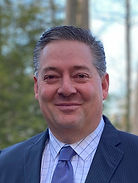
Robert J. “Rob” Catron

A native of South Florida and a graduate of Florida State University, Catron worked as Chief of Staff for Rep. Ed. Schrock, a conservative Virginia Republican, during 2001 – 2003. He later joined the Arlington, VA-based lobbying firm of Alcalde & Fay, where he’s now a Partner. According to the firm, he is “a proud veteran of the United States Army Reserve” and “has successfully managed or consulted on more than 50 winning political campaigns for federal, state and local offices”.

On December 4, 2023, Catron registered Ranger PAC, a political action committee, with the Federal Election Commission (FEC). Based in Athens, Georgia, the PAC says its mission is to support the election of “highly accomplished conservative military veterans to Congress to defend the Constitution and get America squared away”.

The focus on veterans is an exploitation of the fact that although public trust in many institutions is in retreat, the public generally still has high confidence in veterans as effective leaders in civic life. 

Ranger PAC’s treasurer is Paul Kilgore, CEO of Professional Data Services Inc (PDS), a political financial consulting company in Athens he founded in 1999 that is a leading compliance firm in Republican politics. In 2024, Kilgore represented more than 157 Republican candidates.

From January 1, 2025 to November 30, 2025, Catron’s Ranger PAC raised $1,394,894.74, according to its filing with the Federal Election Commission (FEC). In the same period, it spent $1,353,836.73.

The problem is that, in a deliberate assault on trust, Catron’s Ranger PAC spent just $69,500, 5% of its total spending, on aspiring or serving politicians. That’s right, a measly 5%. The rest, 95%, went to fundraising and administrative expenses.

Although there’s no legal minimum percentage of money raised that a PAC must donate to candidates, legitimate PACs generally spend less than a quarter of their donations on fundraising, with many spending considerably less. 

Charity Navigator, an independent non-profit organization that evaluates U.S. charities on their financial health, accountability and transparency, encourages nonprofits to spend no more than 30% combined on administrative and fundraising costs. Organizations earning the highest scores spend less than 10 cents to raise $1 (a 10% ratio).

In Ranger PAC’s case, it added insult to injury: 5 the 19 politicians who received donations from January 1, 2025 to November 30, 2025 weren’t even veterans.[1]

The Center for Public Integrity, a nonprofit newsroom that investigates betrayals of public trust, calls PACs like Ranger PAC “Scam PACS”. They purport to raise money for political and social causes, but spend most of the money they raise from unsuspecting donors on fundraising, salaries and overhead.

In 2015, Politico reported, for example, that a PAC called the Black Republican PAC spent less than 1 percent of the $700,000 it raised on contributions to candidates or ads supporting them, according to government filings. 

The FBI warns: “Scam PACs are fraudulent political action committees designed to reroute political contributions for personal financial gain. This is a federal crime—and can be costly to victims who thought they were making legitimate campaign contributions.”

If most of the money Ranger PAC raised didn’t go to candidates, where did it go?

$19,641.81 went to Paul Kilgore’s Professional Data Services Inc for “PAC Compliance Consulting”. 

Most of the rest went primarily to enriching 10 firms involved in fundraising[2] , some of them with shadowy histories. 

The website for Better Mousetrap Digital, which Ranger PAC paid $25,291.33, says it “is the premier digital fundraising consulting firm for Republicans…with decades of experience spanning from state house campaigns to the White House”. 

Better Mousetrap Digital’s founder is Jack Daly. The company’s website doesn’t note that in December 2023, Daly was sentenced to 4 months’ imprisonment for conspiring to (i) commit mail fraud by defrauding thousands of conservative political donors out of money and (ii) lie to the Federal Election Commission (“FEC”). He was also ordered to pay a $20,000 fine, along with two separate payments of $69,978.37 for restitution and forfeiture.

Daly emerged from federal custody, nevertheless, to re-establish himself as a top Republican Party campaign fundraiser. NOTUS reported in Oct. 2025 that dozens of federal-level Republican political committees — including the Republican National Committee, numerous congressional committees and campaign operations tied to President Donald Trump — had together spent nearly $18 million on digital fundraising, donor lists and other services from Better Mousetrap Digital.

The FBI says it is actively looking for Scam PACs that only spend money on telemarketing and junk mail. It urges Americans targeted by a scam PAC to contact their local FBI office and ask to speak to an election crimes coordinator. 

Unfortunately, scam PACs have been around for a while.

“Since the tea party burst into the political landscape in 2009, the conservative movement has been plagued by an explosion of PACs that critics say exist mostly to pad the pockets of the consultants who run them,” Politico wrote in 2014. “They collect large piles of small checks that, taken together, add up to enough money to potentially sway a Senate race. But the PACs plow most of their cash back into payments to consulting firms for additional fundraising efforts.”

A POLITICO analysis of reports filed with the Federal Election Commission covering the 2014 cycle found 33 PACs that courted small donors with tea party-oriented email and direct-mail appeals raised $43 million, but spent only $3 million on ads and contributions to boost the long-shot candidates often touted in the appeals.

In 2016, two Democratic FEC commissioners, Ellen Weintraub and Ann M. Ravel, urged their colleagues to take action against scam PACs, but there’s been little follow-up. On January 31, 2025, President Trump sent a brief letter to Weintraub firing her “effective immediately” as a FEC Commissioner and Chair. Weintraub challenged her dismissal, but is no longer serving on the commission.  Ravel resigned from the FEC in February 2017. Weintraub has not been replaced, denying the FEC a quorum for votes.

During 2002 – 2018, Virginia political operative Scott B. Mackenzie served as treasurer of 12 PACs that spent 68% of the money they raised on fundraising, wages and administration. But he paid a price. In 2020, a Federal District Judge sentenced him to 12 months and one day in prison for making false statements to the FEC in relation to his association with the PACs. Mackenzie also had to pay $172,200 in restitution.

“If the Justice Department was seeking to send a message to others tempted to get into the ‘scam PAC’ game, that message came through loud and clear,” said Brett Kappel, a campaign finance lawyer at the Akerman law. “These are not victimless crimes and people will go to prison for them.”

It looks like Catron hasn’t gotten that message, even though he’s been in trouble before. 

In June 2021, he was indicted by a Virginia Beach grand jury on 10 counts of making false statements and election fraud. He avoided prison when he pleaded no contest to three election-related charges. The charges stemmed from a petition scandal during a Republican congressman’s ultimately losing 2018 campaign for a second term in Congress representing a coastal Virginia district. Catron was accused of being involved in an effort to get a third-party spoiler candidate on the ballot with petitions using forged signatures.

Catron received a three-year suspended sentence and was ordered to pay court costs and fines after entering the plea to three counts of neglect of election duty. 

With his Ranger PAC antics, maybe it’s time to bring morally hollow Robert J. “Rob” Catron back to court.


[1] Recipients of Ranger PAC donations, January 1, 2025 – November 30, 2025

Donation RecipientDonation ($)Service
Matt Van Epps, Tennessee  10,000Army
Michael Whatley, N. Carolina  5,000Not a veteran
Ronny Jackson, Texas   8,500Navy
Derrick Van Orden, Wisconsin    5,000Navy
Mariannette Miller-Meeks, Iowa   5,000Army
Zach Nunn, Iowa      5,000Air Force
Gabe Evans, Colorado    5,000Army
Tom Barrett, Michigan    5,000Army
Stewart Whitson, Virginia   1,000Army
Dan Butierez, Arizona    1,000Not a veteran
Jen Kiggans, Virginia    5,000Navy
Ryan Zinke, Montana     5,000Navy
Pat Harrigan, N. Carolina   2,000Army
Nick Lalota, New York  1,000Navy
Ken Calvert, California    1,000Not a veteran
Warren Davidson, Ohio    1,000Army
Abraham Hamadeh, Arizona  2,000Army
Randy Fine, Florida    1,000Not a veteran
Jimmy Patronis, Florida   1,000Not a veteran 

[2] Recipient / percent of total disbursements / Total disbursement

DIRECT SUPPORT SERVICES   17.15%

$232,119.45

ONE VOICE SOLUTIONS   14.29%

$193,522.35

CONSOLIDATED MAILING SERVICES.  9.23%

$124,999.46

DRAGONFLY CONSULTING   9.1%

$123,200.00

FORTHRIGHT STRATEGY, INC.   7.78%

$105,323.46

LAUNCHPAD STRATEGIES, LLC.  3.9%

$52,765.05

TAILWINDS POLITICAL   3.89%

$52,686.42

NAMS-NORTH AMERICAN FULFILLMENT.  3.56%

$48,140.77

DIRECT SUPPORT SYSTEMS   3%

$40,677.94

BETTER MOUSETRAP DIGITAL    1.87%

$25,291.33

Measure 110: A flawed ballot measure pushed by outsiders (Soros/Zuckerberg are key players)

The initiative process was put in place in Oregon at the beginning of the 20th century as a way for local citizens to band together to directly initiate amendments to the Oregon state constitution and enact new state statutes.

Measure 110 on the 2020 ballot shows how the “local” element has been corrupted as national advocacy groups and wealthy out-of-staters behind the scenes invade the process. 

“There’s this perception out there that the initiative process is all about the little guy,” Jennie Bowser, a consultant who for many years studied ballot measures for the bipartisan National Conference of State Legislatures, told the Center for Public Integrity. “But the truth of the matter is that it’s a big business. It’s really well organized, and it’s really well funded.  And it is very, very rarely a group of local citizens who get together and try to make a difference.”

Who’s bankrolling the Measure 110 campaign? Not Oregonians.

The key backer is Drug Policy Action, a New York City-based 501(c)(4) nonprofit advocacy group. The organization supports marijuana legalization and more lenient punishments for drug possession, use, and sale. The group is the advocacy and political arm of the Drug Policy Alliance, a 501(c)(3) educational nonprofit that was also behind Oregon’s 2014 measure legalizing recreational cannabis.

The Drug Policy Alliance has received major funding from billionaire investor George Soros, has long been involved in pushing for an end the legal war on drugs.

In FY2018, the most recent year for which its annual Form 990 financial filing with the IRS is available, Drug Policy Action had $953,436 in revenue and $28 million in assets. Individual contributors are not identified. 

Drug Policy Action has contributed $1,574,788.00 to the Measure 110 campaign, making it by far the largest single contributor to the group in Oregon fighting for passage of Measure 110, “More Treatment for a Better Oregon: Yes on 110”. The group operates out of 3321 SE 20th Avenue in Portland. 

The next largest contributor is the Chan Zuckerberg Initiative of Palo Alto, CA, which has donated $500,0000.   The Chan Zuckerberg Initiative is a charity established and owned by Facebook founder Mark Zuckerberg and his wife Priscilla Chan.

Most of the money being spent by More Treatment for a Better Oregon isn’t being spent at Oregon businesses either. Its largest expenditure to date is $1,415,810.00 to Screen Strategies Media, a media strategy, planning and buying agency based in Fairfax, VA that primarily serves Democratic candidates and liberal groups. 

What is this out-of-state crowd proposing in Measure 110?

At first glance, it sounds like a simple addiction treatment measure funded by marijuana taxes. It’s much more. 

Dig down and you find it also would decriminalize the possession of dangerous drugs.

The measure would remove criminal penalties for individuals caught in unauthorized possession of controlled substances in amounts reflecting personal use and instead would impose a maximum fine of $100 or completion of a health assessment. The personal-use limits specified for particular substances are:

  • LSD, methadone, oxycodone: 40 units
  • Psilocybin: 12g
  • Heroin: 1g
  • Cocaine, methamphetamine: 2g

The Sheriffs of Oregon point out in the 2020 Oregon Voters’ Pamphlet that Measure 110 would shift millions of dollars of marijuana tax revenue from schools, mental health and addiction services, state police, cities, counties, and drug prevention programs. Instead, these funds would be redirected into a Measure 110 fund.

“The funding promised by Measure 110 is not ‘free’ money that is unallocated and sitting in state coffers waiting to be spent,” Crook County District Attorney Wade Whiting wrote in the Central Oregonian. “Marijuana tax revenue is currently being used to fund schools, police, mental health programs and existing addiction treatment and prevention programs. Measure 110 will divert dollars from these essential services.”

Measure 110 is a seriously flawed ballot measure written and bankrolled by outsiders. It deserves to be defeated.

The Manafort Indictment: one charge is bogus

foreignagent

The Department of Justice unveiled indictments of former Trump campaign chairman Paul Manafort today (Oct. 30).

The indictment contains 12 counts. conspiracy against the United States, conspiracy to launder money, unregistered agent of a foreign principal, false and misleading FARA statements, false statements, and seven counts of failure to file reports of foreign bank and financial accounts.

One charge in particular intrigued me, that Manafort acted as an unregistered agent of a foreign principal under the the federal Foreign Agents Registration Act (FARA), enacted in 1938 to counter Nazi propagandists and amended in 1966 to regulate political and economic lobbyists.

The fact is FARA is a paper tiger, frequently ignored and rarely enforced.

FARA requires persons acting as agents of foreign principals in a political or quasi-political capacity to make periodic public disclosure of their relationship with the foreign principal, as well as activities, receipts and disbursements in support of those activities. There are about  2,000 foreign agents registered under the Act representing more than 100 countries.

The Center for Public Integrity released a study, “The hired guns who advocate for the world’s worst human rights abusers” – a research report that highlighted the PR firms that make the most money representing clients that violate human rights.

The study said FARA records revealed that “that the 50 countries with the worst human rights violation records have spent $168 million on American lobbyists and public relations specialists since 2010.”

The fact is, Washington, D.C. is packed with public relations professionals and lobbyists who work for foreign governments, many of them with reputations for corruption and human rights abuses.

Another fact is that the registration process under FARA  is often altogether ignored or treated as an afterthought, with many registrants filing retroactive registrations, or only supplying partial submissions.

An internal DoJ audit of the NSD’s enforcement and administration of FARA, conducted in 2016, found that only 23 percent of filings from 2013 to 2015 were filed on time—62 percent were submitted late.[6] Likewise, only 44 percent submitted their supplemental statements in a timely fashion, and 10 percent did not submit any follow-up supplemental materials.

“The Congress didn’t necessarily want to have a strong enforcement mechanism, ” said Kenneth Doyle, the Senior Editor for Bloomberg’s Money & Politics Report. ” There are principal reasons in terms of the First Amendment and not wanting to be too tough on people’s ability to petition the government, and then there are practical reasons of not wanting to be too tough on lobbyists who are important to the way that Washington works. I think they did it deliberately, saying, ‘Well, we’ll have a disclosure system, but it’s not going to have a strong enforcement mechanism and we’ll see what happens.”


Too Bad Sen. Merkley. Ossoff Bungled It.

merkleysmiling

Why is this man smiling?

It was hard not to laugh.

I got an email from Senator Jeff Merkley (D-OR) today breathlessly proclaiming:

“Wow. In Georgia’s 6th District, Jon Ossoff scored a stunning primary election victory last night with 48% of the vote.”

Since Ossoff’s clear objective in yesterday’s special election was to secure at least 50 percent of the vote among 18 candidates so he could win the race outright and not have to face a single Republican in June, I’d hardly say, “Wow, what a victory.”

A much more honest statement from Merkley would have been, “Oh crap! Democrats spent $17.3 million to push this guy Ossoff across the 50 percent line and he blew it.”

Democrats across the country opened their wallets in support of Ossoff. All together Democrats donated $8.3 million to Ossoff’s campaign in the first quarter of 2017. On top of that, Center for Public Integrity’s Rachel Wilson has reported that super PACs, nonprofits and other groups independent of any candidate’s campaign spent $9 million on the Georgia 6th race.

Now Ossoff, a 30-year-old documentary filmmaker and former congressional staffer, will have to run in a 2-way race against just one Republican candidate, Karen Handel, in June, when he’ll lose. As Politico said put it, “The likelihood is if there’s a runoff, Republicans will coalesce around one candidate and take Ossoff down in June.”

But Merkley won’t be crying in his beer, because he hopes to raise some money for himself from this confrontation.

“Chip in right now and let’s show Trump that we’re not buying his spin—we’re in it to win it!,” Merkley blasted out in his email, urging folks to send $500 or more.

But he doesn’t want your money to go to “John Ossof for Congress”. No. That would be wrong. Instead, your contribution will go to “Jeff Merkley for Oregon.”

Yep. That’s the ticket.


Hillary’s money grab (with help from a few Oregonians)

hillarycampaignmoney

Bill Clinton must have thought we all forgot his history when he began his 2016 Democratic Convention speech with the cringeworthy, “In the spring of 1971, I met a girl.” Oh my God, where’s he going, millions of viewers probably wondered.

But Bill didn’t continue about his sexual exploits. Instead, he went on to call his wife, a “change-maker”. Given the amount of money she’s raising for her presidential campaign, she’d be better named a “money-maker”.

This despite her proclamation, “Our democracy should work for everyone, not just the wealthy and well-connected.”

“There’s no question that we need to make Washington work much better than it does today,” Hillary said on June 22, 2016. “And that means, in particular, getting unaccountable money out of our politics. … That’s why I’m so passionate about this issue, and I will fight hard to end the stranglehold that the wealthy and special interests have on so much of our government.”

But Hillary Clinton and her supporters have been dogged in their pursuit of campaign money.

Clinton clearly likes the big givers the most and cultivates them assiduously. At an event at the Sag Harbor, N.Y. estate of hedge fund magnate Adam Sender a family photo with Clinton went for $10,000, according to attendees. For a $2,700 donation donors’ children under 16 could ask Clinton a question.

 More than 1,100 elite moneymen and women, called Hillblazers, have together raised better than $113 million for Clinton, operating as bundlers who collect checks from friends or associates, according to an analysis by the Center for Public Integrity.

Hillblazers are individuals who have contributed and/or raised $100,000 or more for Hillary for America, the Hillary Victory Fund, and/or the Hillary Action Fund since the launch of Clinton’s campaign on April 12, 2015.

Among the list of high-profile Clinton bundlers, which includes actor Ben Affleck, filmmaker George Lucas, Facebook Chief Operating Officer Sheryl Sandberg and fashion designer Vera Wang, are a few (very few) people who list themselves as Oregonians:

  • Timothy Boyle, president and CEO of Columbia Sportswear, and his wife, Mary Boyle.
  • Peter Bragdon, Executive Vice President, Chief Administrative Officer, General Counsel and Secretary, Columbia Sportswear
  • Carol Butler, Principal, Carol Butler and Associates, Democratic campaign consultant
  • Dwight Holton, former U.S. Attorney for Oregon/ defeated by Ellen Rosenblum in 2012 Democratic primary for Oregon Attorney General, and his wife, Mary Ellen Glynn, chief of staff to Anne Holton, wife of Democratic vice-presidential nominee Tim Kaine.
  • Jane Paulson, a Portland personal injury lawyer at the law firm of Paulson Coletti.

The money has flowed into Hillary Clinton’s campaign organization, Democratic Party committees and so-called independent outside groups.

According to OpenSecrets.org, Clinton and her acolytes had raised a total of $698,169,981 as of the end of last month, and pushing for $1 billion.

Presidential fundraising through Aug. 31, 2016

Category Clinton  
Candidate $373,281,866
National Party $181,378,218
Outside Spending $143,509,897
Total $698,169,981

Most of this money has come from large donors.

Clinton’s campaign, for example, has raised nearly $300 million in large contributions, or donations bigger than $200, the threshold for detailed disclosure of donor information, according to OpenSecrets.

Only about 19 percent of her contributions (roughly $70.7 million) have come in smaller amounts. Obama, in contrast, received about 37 percent of his contributions in amounts of $200 or less through August in his 2012 campaign.

So much for ending the stranglehold that the wealthy have on our government.

The Manafort mess: I’m shocked, shocked!

casablanca-17

“I’m shocked, shocked to find that gambling is going on in here!,” said Captain Renault in Casablanca, as a croupier handed him a pile of money.

I feel the same way about comments from political figures in the U.S., including Hillary Clinton, who have expressed astonishment and dismay over allegations that Trump’s campaign chairman, Paul Manafort, provided campaign assistance to Ukraine’s former president, Viktor Yanukovych. Yanukovych was forced to flee from Ukraine to Russia in 2014 after violent several months of political crisis and violent protests.

I’m equally unsurprised by attempts to tar Manafort as a villain because he has lobbied in the U.S. for Mobutu Sese Seko of Zaire and Ferdinand Marcos of the Philippines

Hillary Clinton’s campaign leapt at the chance to draw blood. “Donald Trump has a responsibility to disclose campaign chair Paul Manafort’s and all other campaign employees’ and advisers’ ties to Russian or pro-Kremlin entities, including whether any of Trump’s employees or advisers are currently representing and or being paid by them,” said Clinton’s campaign manager Robby Mook.

Good grief. Everybody’s in such high dudgeon.

But wait a minute.

We’re not all rubes, as so many politicians and media outlets assume. We know that Washington, D.C. is packed with public relations professionals and lobbyists who work for foreign governments and special interests, many of them with reputations for corruption and human rights abuses.

Take John Podesta, the Chairman of Hillary Clinton’s presidential campaign.

In 1988, he and his brother, Tony, founded Podesta Associates, Inc., a Washington, D.C., government relations and public affairs lobbying firm. The firm later changed its name to the Podesta Group, Inc.

According to the Sunlight Foundation, which works to make our government and politics more accountable and transparent, the Podesta Group has been a registered agent, or lobbyist, for a number of foreign governments, including the Government of the Arab Republic of Egypt, the Embassy of the Republic of Azerbaijan, the National Security Council of Georgia, the Republic of Kosova, the Government of Albania and the Kingdom of Thailand.

In 2013, for example, the Podesta Group reported being paid $840,196.21 by the Embassy of the Republic of Azerbaijan.

The previous year, the corruption watchdog Transparency International awarded the crown of “Corrupt Person of the Year” to Azerbaijani President Ilham Aliyev. “Despite its massive oil resources, … Azerbaijan is plagued by endemic corruption that prevents ordinary Azerbaijanis from sharing in their country’s natural wealth and is a significant barrier to Azerbaijan’s development,” the organization said.

That same year, public protests against human rights abuses led to brutal crackdowns, arrests, and undemocratic trials.

2013 was another awkward time for the Government of Azerbaijan when election authorities released vote results re-electing Aliyev – a full day before voting had even started. The announcement followed intimidation of activists and journalists and free speech restrictions.

Freedom House, a promoter of global human rights, lambasted the country’s government. “Azerbaijan is ruled by an authoritarian regime characterized by intolerance for dissent and disregard for civil liberties and political rights,” the organization said in 2013.

The federal  Foreign Agents Registration Act (FARA) requires persons acting as agents of foreign principals in a political or quasi-political capacity to make periodic public disclosure of their relationship with the foreign principal, as well as activities, receipts and disbursements in support of those activities. There are about  2,000 foreign agents registered under the Act representing more than 100 countries.

Late last year, the Center for Public Integrity released a study, “The hired guns who advocate for the world’s worst human rights abusers” – a research report that highlighted the PR firms that make the most money representing clients that violate human rights.

The study said FARA records revealed that “that the 50 countries with the worst human rights violation records have spent $168 million on American lobbyists and public relations specialists since 2010.”

The study said the leader of the pack was Omnicom-owned Ketchum PR, which made $37 million representing human-rights violators, followed by Qorvis Communications/MSL Group at $20.6 Million dollars.

In 2013, Ketchum was behind a Vladimir Putin-led PR push tied to Syria. When the New York Times ran a highly visible op-ed about Syria submitted by Russian President Putin in Sept. 2013, Ketchum arranged it (and likely wrote it).

“From the outset, Russia has advocated peaceful dialogue enabling Syrians to develop a compromise plan for their own future,” Putin said. “We are not protecting the Syrian government, but international law.” The op-ed went on to say, “Millions around the world increasingly see America not as a model of democracy but as relying solely on brute force…”

According to ProPublica and Ketchum reports, Russia paid $1.3 million for Ketchum’s professional services for the period ended in May 2013.

In 2014, the New York Times reported how Angus Roxburgh, a former Ketchum consultant and journalist for the BBC and The Economist, recounted his experiences working with Ketchum. “The Russian officials…were initially convinced they could pay for better coverage, or intimidate journalists into it,” Roxburgh told the Times. “They were eventually persuaded to take reporters to dinner instead.”

According to the Times, Roxburgh told The Daily Beast that Ketchum’s aim “means helping them (Russia) disguise all the issues that make it unattractive: human rights, invasions of neighboring countries, etc.”

Last year, Saudi Arabia, under fire for human rights abuses, hired a cornucopia of U.S. PR/lobbying firms to tell its story in a favorable way and influence legislation.

In March, the Saudi Royal Embassy retained DLA Piper and Pillsbury Winthrop Shaw Pittman. That same month, it also hired Targeted Victory, which uses expansive data to put together digital campaigns for political clients, and Zignal Labs, which uses big data analytics, media monitoring and business intelligence to provide insights that drive public outreach efforts. In September 2015, the Saudi government expanded its efforts further by signing contracts with PR leviathan Edelman and the Podesta Group.

Just a few things to remember when attack dogs and establishment politicians, including Hillary Clinton, feign surprise and horror at amoral U.S. PR and lobbying firms doing business with foreign governments and foreign leaders with bad reputations.

Don’t be shocked.


Addendum

On 8/25/16, PoliticoPlaybook reported that the FBI and DOJ are looking into the Podesta Group’s work in Ukraine:

K STREET WATCH  The FBI and DOJ’s probes into the Podesta Group’s work for a non-profit tied to the former Ukrainian government are sending shockwaves downtown, where the investigation into the firm’s work for the European Centre for a Modern Ukraine has led to widespread nervousness. Reps from multiple firms who lobby for foreign entities think this might be a tipping point, and the feds might take a much broader look at other firms and clients. “It’s right in the purview of the DOJ – they don’t need a referral,” said one lobbyist.


Paralyzed Veterans of America: hold the applause

Who wouldn’t sympathize with, and want to help, paralyzed American veterans?

A glossy, multi-colored letter and pamphlet came in the mail the other day from the Salem-based Oregon Chapter of Paralyzed Veterans of America (PVA). The principal message was a plea for me to be a sponsor or buy tickets to a May 14, 2016 gala and auction in Wilsonville.

paralyzed-veterans-of-america-the-phone-call-feat-ben-affleck-large-9

Like so many other pleas to help our veterans, it sounds good…until you look behind the curtain at the non-profit’s finances.

The national PVA organization is among the top charities that collect the bulk of public contributions to veterans’ causes.

But according to the Center for Public Integrity, The national headquarters of Paralyzed Veterans of America (PVA) has a long history of high fundraising expenses and low program expenses that actually help disabled veterans.

The Better Business Bureau’s (BBB) Giving Alliance says the PVA doesn’t meet its standards, principally because the BBB is unable to verify that the PVA spends at least 65 percent of its total expenses on program activities and no more than 35 percent of related contributions on fund raising. Related contributions include donations, legacies, and other gifts received as a result of fund raising efforts.

The BBB reviewed PVA’s 2014 audit report for fiscal year 2014 and concluded that it didn’t provide an accurate presentation of PVA’s fund raising and program service expenses.

According to the audited financial statement, PVA incurred joint costs of $58,587,922 for informational materials and activities that include fund raising expenses in 2014. Of this, PVA allocated $32,132,043 to program service expenses and $24,945,288 (21%) to fund raising expenses. The BBB disagreed with PVA’s decision to count $32,132,043 of direct mail appeals to the program service category, arguing that most of that expense should be considered fundraising.

If all the proper spending was allocated to fundraising, the PVA actually spent $57,077,331 on fundraising in 2014, or 39 percent of its expenses. Add what it spent on administrative expenses, and 42 percent of its budget went to non-program expenses, a monstrously high level.

The PVA’s financial records also show an dismal performance at the state level in Oregon. According to information the Oregon chapter submitted to the IRS, in its fiscal year ending Sept. 30, 2014, the Oregon Chapter’s expenses totaled $628,567.

The chapter reported spending just $139,868 on professional fundraising services, but it spent another $62,863 on “Public Awareness” and $6550 on “advertising and promotion”. That adds up to $209,281 focused on fundraising, or 33 percent of total spending.

Look even closer and you find that the Oregon Chapter spent just $92,164, 15 percent of its total spending, on grants and other assistance to individuals in the U.S. and on benefits to or for members in 2014. Almost all the rest went to fundraising, salaries, benefits, payroll taxes, legal expenses, accounting, office expenses, travel, insurance, depreciation, and contract services.

“The scoundrels and the thieves and the rip-off artists … that want to make a lot of money know that these are categories of charities where the American public is gravitated, it pulls at the heartstrings and they know that the tendency of Americans is to give impulsively, emotionally with that pull,” Ken Berger, president and chief executive officer of Charity Navigator, an independent charity evaluator, told the Center for Public Integrity. “They exploit that and they use that.”