Misguided Charity: Portland’s Proposed Pearl District Homeless Shelter

There’s a saying of uncertain providence, “Give a Man a Fish, and You Feed Him for a Day. Teach a Man to Fish, and You Feed Him for a Lifetime”. 

Portland Mayor Keith Wilson wants to give the homeless in the Pearl District a fish. 

Wilson wants to turn an industrial building at NW 15th Avenue and NW Northrup Street into a so-called “low-barrier” overnight-only homeless shelter able to accommodate up to 200 people. An all-night warehouse for the homeless. According to the NW Examiner last month, the city and property owner Vanessa Sturgeon of Sturgeon
Development Partners signed a 12-year lease in May that Mayor Keith Wilson has described as a two-or-three-year
deal. The $18,000-a-month lease covers the main floor and part of a basement, a total of 16,000 square feet, to be used only for shelter for unhoused individuals.

Low-barrier means the people who stay there from 8pm to 6am wouldn’t have to show an ID, be sober (there’s be no sobriety checks) or drug-free, although alcohol and drugs would not be allowed. The 200- bed shelter at Northwest 15th will have only two showers and sex offenders will be allowed inside the low- barrier shelter because no one will be checking for IDs.

A critic posted on reddit: “It’s basically a night prison. 200 people, 6 toilets, low barrier, barely a snack, no meals, no counseling, no fresh clothing. And then they are going to “disperse” these people every morning near parks and schools.”

Potential overnighters could access a bed by standing in line before the shelter  opened. At a July 28, 2025, public forum at the Armory, Skyler Brocker-Knapp, who oversees the city’s shelter plan, said people will be handed a card with information about where to receive social services after leaving the shelter.

I still remember going to a free lunch for the homeless program in an underground Portland parking garage a number of years ago. Tables spread out across the center of the garage displayed a bounty of meal options put together by multiple well-meaning social justice volunteers, from sandwiches and lasagna to potato chips and hot ethic dishes. Homeless people streamed in, wearily assembled in slow-moving lines, grabbed hold of what they wanted and found a spot on the concrete floor to sit and eat.

It wasn’t uplifting. It was depressing.

Nobody was there to help the struggling people get their lives back on track, to inquire about the welfare of their children, or to make them aware of accessible pathways towards lasting change. The whole thing was a misguided feel-good effort at charity by naïve good Samaritans. 

More recently, I saw a group of fresh-faced, eager suburban teenage girls handing out sandwiches from the trunk of their car to homeless people at the Tom McCall Waterfront Park. That might have eased their consciences, but how, exactly, did that drive change?

As Kevin Dahlgren has noted in his Substack, @truthonthestreets, “We don’t have a homeless crisis; we have a mental health and addiction crisis. Unfortunately, many still treat the homeless crisis as if it’s a housing crisis and push for more and more shelter beds. The problem is these shelters are far too low a level of care for the majority of our mentally ill.”

“Many advocates for the homeless assume that homelessness is primarily due to the unaffordability of housing, rather than drug use, antisocial behavior, criminal activity or mental illness,” says Devon Kurtz, director of public safety policy at the conservative Cicero Institute. “From this assumption flows misguided confidence that living on the street is an unfortunate but preferable alternative to institutions that curb the civil liberties of individuals who are simply poor.  This assumption is wrong. In the largest survey of homeless Americans ever conducted, only 4% cited high housing costs as the primary reason they were homeless. Significant majorities said they had mental-health issues, had used illegal substances and had been to jail or prison for extended periods.”

A woman who directed a social service agency in the Portland area that served low-income families once told me the whole free food approach was “antiquated”, a long-ago discredited tactic , and that unrestricted aid was counterproductive.

So’s the proposed low-barrier Pearl District homeless shelter. 
Lake Oswego’s Demolition Tax: A Sheep in Wolf’s Clothing

NOTE: I initially titled this “A Wolf in Sheep’s Clothing” to convey the duplicity in Lake Oswego’s demolition tax. I changed it to “A Sheep in Wolf’s Clothing” because I think that better conveys that a demolition policy pitched as an aggressive effort to preserve older homes is, in fact, nothing of the sort as it is unlikely to prevent any demolitions. Instead, it will just raise citizen costs. )

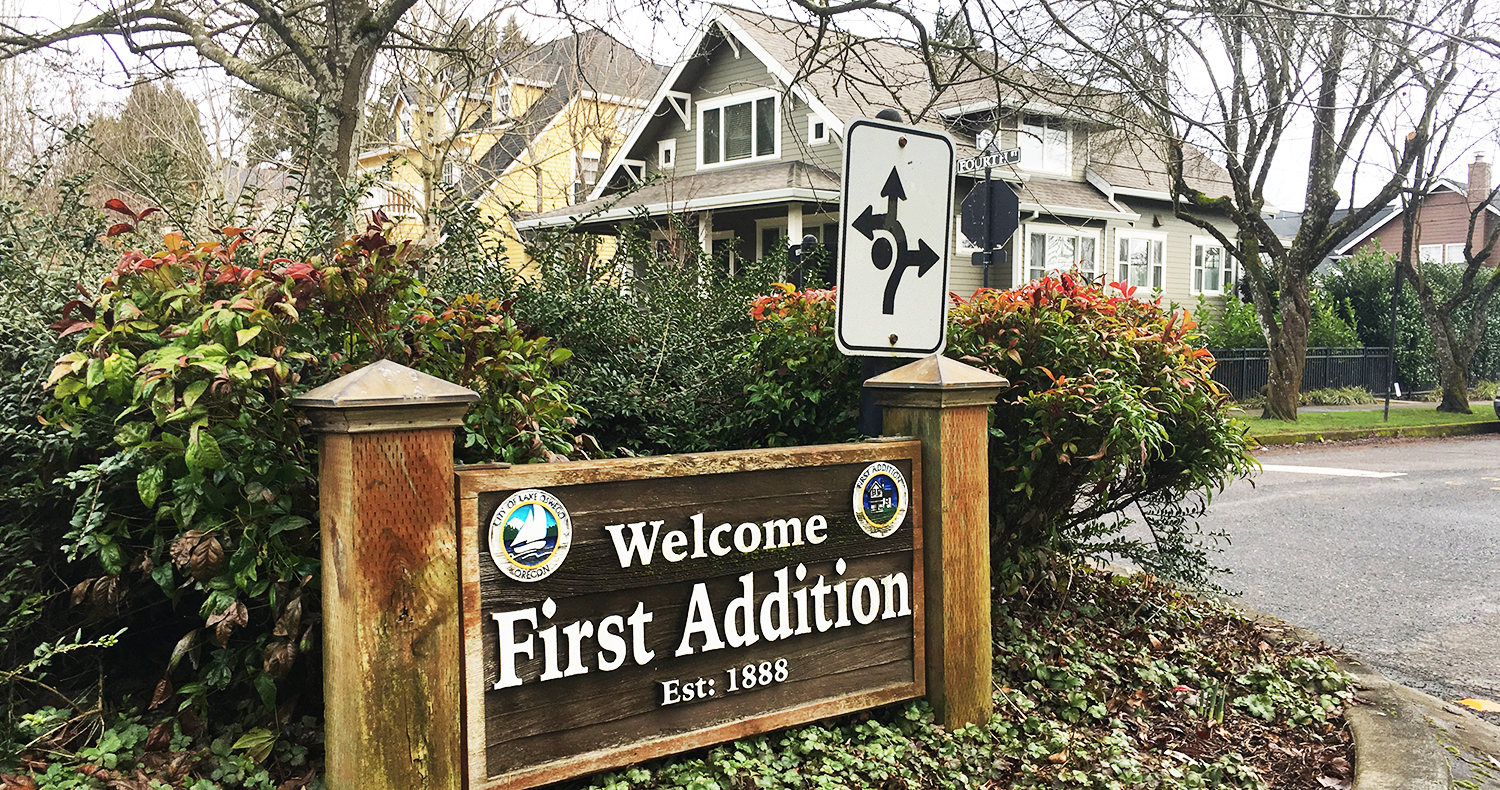
In 2019, sixty-seven home demolition permits were issued in Lake Oswego. Alarmed at the erosion of Lake Oswego’s traditional neighborhoods, particularly First Addition, a hue and cry went up to preserve some of what was still left.

The result, establishment of a $15,000 tax if a single-family dwelling or duplex was going to be demolished, was portrayed by many as an impactful effort to slow demolitions, but it was nothing of the sort. In the end the demolitions have continued and the tax was little more than a pure and simple money grab.

Although Article 24.06 of the city code notes that  “The demolition of residential structures in the City of Lake Oswego has reduced the diversity of housing stock and decreased the availability of affordable housing within the City,”  the article goes on to make it clear that  “The tax is strictly for revenue purposes, to provide funding to maintain City park properties and facilities.” The original goal — raising $400,000 annually for parks maintenance.

The demolition tax is a questionable way to raise money from citizens.

As Judge Glock, the Chief Policy Officer at the Cicero Institute, recently observed in City Journal, “Though largely hidden from the public, fees and charges account for most of the growth in government over the past 70 years and have become the top source of revenue for state and local governments.

Two factors drive this new reliance on special charges. First, governments are expanding the “businesses” they run—hospitals, universities, airports—and forcing users to pay more for them. Second, governments are using charges to avoid voter opposition to, and constitutional restrictions on, raising taxes.”

Earlier this month, the City Council redefined what constitutes a demolition vs. a remodel, but didn’t change the tax. And again the tax was publicly positioned as a preservation move. “The primary idea in my mind is to maintain the existing housing stock that’s there and keep the character of the neighborhood (by disincentivizing demolition),” said City Councilor Daniel Nguyen. 

But all involved have to know that a $15,000 tax will not discourage demolition of a home in Lake Oswego or preserve affordable housing. It will not prevent what theLake Oswego Preservation Society describes as “Charmicide”, people moving to an area to live because of its charm, then demolishing the existing building stock to build something different thus removing the charm that attracted the new residents in the first place. 

In April 2022, Lake Oswego homes sold for a median price of $858K, up from $600,000 in April 2018, according to Redfin.  And many new homes built to replace older demolished properties have sold for considerably more. 

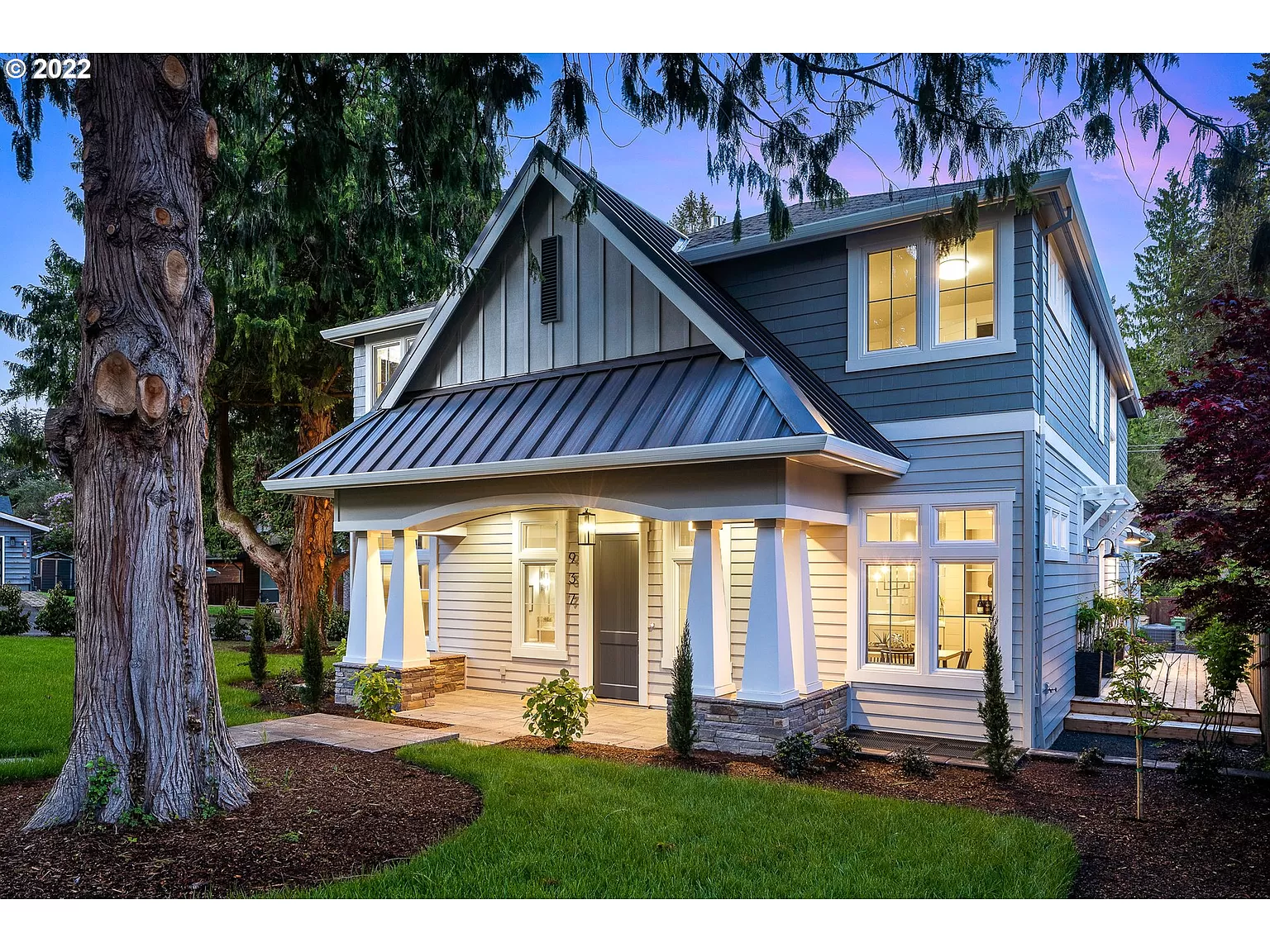
For example, a modest older house in First Addition that sold in 2020 for $586,000 was demolished and replaced with a 3,922 sq ft house (described as “A confluence where good ol’ American farm style meets sophistication.”) that sold for $1,965,000 in February 2021. Zillow puts the current value of the home (below) at $2,111,200.

A $15,000 tax on the demolition of the old house in this case was surely irrelevant. just as it will be for any future demolitions in Lake Oswego. Drive or walk around First Addition and the proliferation of large homes that have replaced smaller ones is evident everywhere. And market forces mean the trend will continue.

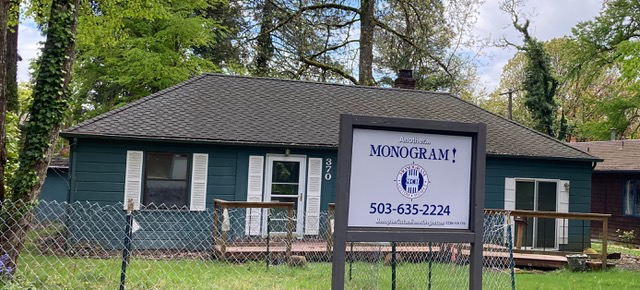
Monogram followed this approach when it bought an old home at 937 9th St. in Lake Oswego  for $600,000 in March 2021.

Former home at 937 9th St., Lake Oswego, OR

Monogram demolished the older home and built in its place a 3-level 5-bedroom 4-bathroom 3,862 sq. ft. home (“Legendary Traditional Monogram Design with spacious modern living spaces”) on the market for $2,250,000 as of May 27, 2022.

937 9th St., Lake Oswego, OR

A 3-bedroom 2-bath 1,008 sq. ft. home on 9th St. in Lake Oswego (below) that was built in 1948 on a 7,500 sq. ft. lot will likely meet the same fate.

The property sold on Oct. 29, 2021 for $775,000. If Monogram follows its practices with similar properties, the house will soon be demolished and replaced with a considerably more extravagant structure.

The fact is, the quaint First Addition of old, platted in 1888 and 1925 and once praised by the American Planning Association for its “housing variety and affordability (and) small-town atmosphere,” will soon be no more. And the demolition of older homes throughout the city is going to continue, with or without the demolition tax.

 To believe otherwise is willful self-delusion.