
Are Socialists Taking Over Colorado And Beyond?

In Colorado’s June 2026 primaries, 29-year-old Democratic Socialist Melat Kiros unseated 15-term incumbent Rep. Diana DeGette in the dark-blue 1st Congressional District, which consists largely of Denver residents. 

As the overwhelming favorite against her Republican opponent in November’s general election, Kiros, 29, is expected to be the first self-identified socialist to be elected to Congress in Colorado history.

“We just proved that if you organize the people, you can beat the organized money,” Kiros told Colorado Newsline after her win. “And we’re going to replicate it in races all across the state.”

Will they?

Before pundits and the public accept this assertion, let’s step back and examine what just happened in Colorado’s 1stCongressional District. 

The numbers suggest that the real victor was voter apathy, as in so many political contests across the country. Non-voters default to being led by the preferences of voters. That, combined with the creation of safe party districts, is increasingly turning primaries into the real elections. 

Bear with me now.

In looking at the 1st Congressional District race, it’s important to recognize that it was limited to registered Democrats and unaffiliated voters. There are 477,098 active registered voters in the district. Of those, 187,317 are registered as Democrats and 236,454 are registered as Unaffiliated voters. So, the number of eligible voters in the Democratic primary totaled 423,771.

But only 157,645 people, or 37.2 % of those eligible, voted in the primary. 

That translated into 83,855 for Kiros, 62,715 for DeGette and 11,075 for the Democratic party candidate, Wanda James.  In other words, the Democratic Socialist Melat Kiros won the primary with just 19.79 % of eligible voters, only a few more than would fit in the Denver Bronco’s stadium.

Overwhelming? A massive sign of a cultural shift? A rejection of a more moderate political climate?  I don’t think so.  

A similar situation in New York City is why caution is warranted in interpreting recent races.  

“Turnout in New York’s closed primary races is typically small—even Mamdani  won last year’s Democratic mayoral primary with less than 7 percent of the city’s overall population backing him,” City Journal reported. “Tuesday’s results do not prove, then, that the majority of residents in New York are hard-left socialists. They instead suggest that, since most potential voters remain politically apathetic, a small but well-organized machine like the DSA’s can deliver big results.”

There’s a parallel here with Democratic Socialist Janeese Lewis George’s victory in Washington, D.C’s mayoral Democratic primary, which has led some to declare her win a mandate. There are approximately 357,000 registered Democrats in Washington, D.C., making up roughly 75% of all registered voters in the District. Only about 38% of registered Democrats voted and George won with just 75,000 votes. A mandate? Hardly. 

So, calm down folks. 

This isn’t to say that the new socialist legislators in the House won’t be able to muck things up. 

As commentator Gerard Baker has observed, “The victory by “democratic socialists” and their allies in New York Democratic  primaries last week is a signal moment in the nation’s descent into political dystopia. Sure, we can overstate its importance. New York isn’t America. What passes for cool radicalism in Brooklyn’s Park Slope would get you a psychiatric evaluation in most of the country.”

In addition, if Democrats retake the House in November, their margin is likely to be slim and an enlarged cadre of disruptors will be able to challenge leadership. Republicans are also likely to try to tar the entire Democratic Party for its association with the Democratic Socialists. President Trump has already called the socialist nominees “godless” communists who are threatening the country. At a Faith and Freedom Coalition gathering, he urged religious conservatives to prevent a “communist” victory in the midterms,saying his pro-Christian policies would be reversed if Democrats returned to power. 

Hang on. 
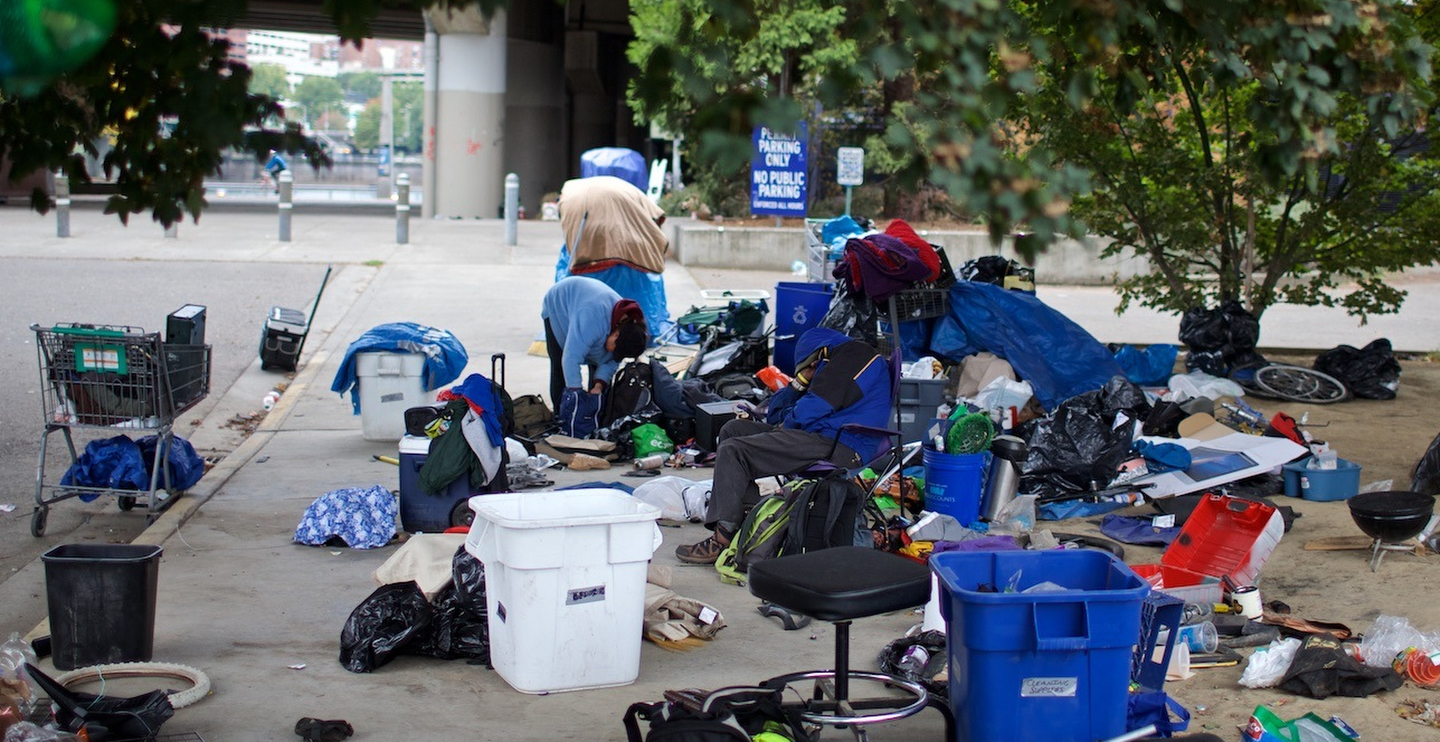
Confronting the homeless: after Denver, whither Portland?

It hasn’t gotten much media coverage in Oregon, but on May 7, 2019, Denver voters defeated a ballot initiative that would have allowed homeless people to camp in outdoor public spaces like parks, sidewalks and vehicles.

Fed up voters didn’t just soundly reject the initiative; they pummeled it 83% to 17%.

Portland Mayor Wheeler says he’s going to run again. If he doesn’t resolve Portland’s homelessness crisis, he’s likely to face the same level of public rancor.

portlandcampers2

Portland, OR campers.

In 2011, only 1% of those surveyed an annual poll of Portland-area voters by DHM Research that was commissioned by the Portland Business Alliance said homelessness was the biggest issue facing Portland. By 2017, the share of those polled identifying homelessness as Portland’s biggest problem had risen to 24%.

In a Jan. 2019 telephone survey of 510 likely voters in the Portland Metro Region, including an oversample of City of Portland voters, homelessness remained the top-of-mind issue, jumping to 33% overall and 47% among voters in the City of Portland alone. Nearly one in three who said the Portland City Council was ineffective pointed directly to its failure to address homelessness as the reason.

At the same time, half the people polled said they felt the Portland area was headed in the wrong direction. A majority of voters said the region’s quality of life was declining— continuing a trend from a December 2017 study. Only 7% said the quality of life in the Portland Metro Region was getting better.

“just last weekend, a homeless couple set up a tent next to my house in broad daylight…, “ wrote a commenter on OregonLive.” I find more and more used condoms and needles by my house (which I have to dispose of), while my neighborhood experiences daily burglaries and car thefts, all of which the city does nothing about. These problems have exploded just in the past few years. I pay thousands of dollars in property and other taxes per year and get nothing in return. When is enough, enough?”

“Wheeler keeps putting more and more money in to coddling them and tells police to not help residents when harassed or attacked by transients,” wrote another commenter. “Transients have more rights in this city than tax paying voting residents and thus more and more keep coming. We need a tough policy and kick them out. Portland is slowly becoming the shelter for America’s homeless by choice, mentally ill and young lazy transients.”

Even though Portland still has a reputation as an ultra-left city, it’s clear Portlanders’ tolerance and patience are slipping.

That’s clearly what happened in Denver. another liberal (some would say more of a live-and-let-live libertarian) city,

Responding to an explosion of complaints by downtown businesses, Denver began enforcing an urban camping ban to keep people from spending the night on city sidewalks, in parks and other public spaces. In 2016, the city began sweeps to enforce the ban, picking up tents, sleeping bags and other detritus.

denverhomelesssweep

Police sweep homeless camps in downtown Denver, CO in 2016

Still, surveys in 2018 showed the homeless population increasing, with more people camping instead of staying in shelters.

“Something needs to happen. It’s gotten to the point where it is hard to live down there,” River North (RiNo) resident Josh Rosenberg, told Denver’s Channel 7 in late 2018. “It’s not just one or two homeless guys sleeping on the street; there’s been times where they will set up camp and have tarps and suitcases and shopping carts and kind of make a little village out of it and they’ll be there until somebody calls the police.”

In late 2017, homeless advocates submitted enough signatures to get Initiative 300, referred to as the “Right to survive initiative, on the ballot. The initiative wouldhave effectively overturned Denver’s urban camping ban.

“Denver faces a choice: to do nothing, and let Denverites experiencing homelessness struggle to survive, to sleep at night, and to make it to their jobs, or to take action, and take the first step toward empathy, dignity and realistic solutions,” the Yes on 300 supporters said.

But opposition quickly became obvious. “The election was a referendum on quality of life,” said one online Denver Post commenter. “If you just moved here you don’t know, but those of us that have lived in Denver for 30 years have drastically seen quality of life decrease…”

An increasing number of Portlanders feel that way as well. If he’s not careful, Ted Wheeler could get pummeled, too.

_____________

You can find more about the survey and results at the Portland Business Alliance:

https://portlandalliance.com/assets/pdfs/2019-PBA-Jobs-Economy-DHMReport-January.pdf

How not to do affordable housing: Denver’s folly


skyhousedenver

The new SkyHouse Denver high rise offers studios, one-, two- and two-bedroom + study luxury apartments. Available studios start at $1,390, one bedrooms at $1,485, two bedrooms at $2,480

Denver’s St. Joseph Hospital in central Denver is thrilled with a city plan that will subsidize the rent of lower-income residents at higher-end apartments. The program will pay the difference between what a lower-income resident can afford and the market rent of an apartment.

Denver Mayor Michael Hancock announced the plan in his July 10, 2017 State of the City address.

“I am excited to announce that we will pilot a new partnership to open 400 existing, vacant apartments to low- and moderate-

income residents struggling to find an affordable place to live,” Hancock said. “We have apartments sitting vacant because there’s a gap between what it costs and what people can afford. Working together with the Denver Housing Authority, employers and apartment building owners, we aim to fill that gap.”

“Denver has some of the highest inventories for apartments for families with the highest incomes and some of the lowest inventories for families with some of the lowest incomes,” Erik Solivan, executive director of the mayor’s Office of Housing and Opportunities for People Everywhere (HOPE), said to Denver station KMGH-TV.

Well, of course St. Joseph is thrilled with the program. What company wouldn’t be happy to see somebody else subsidize their lower-paid employees.

Think about it.

St. Joseph says it will contribute $100,000 to the program. The rest of the money needed will come from Denver, some other employers and some charitable foundations. The city says it expects to spend about $500 a month subsidizing a single person and $900 for a family.

St. Joseph’s president, Jamie Smith, told the Wall Street Journal on Jan. 8 that he hopes the program will help house dozens of employees.

Let’s be conservative and say 26 of those subsidies go to St. Joseph employees, 13 of whom are single and 13 of whom have families. Subsidies to St. Joseph employees alone will total $218,400 the first year. ($6000 per single, $10,800 per family = $78,000 for all the singles and $140,400 for all those with the families = $218,400.)

So St. Joseph invests $100,000 and gets $218,400 back for its employees, with $118,400 of that coming from other companies and charitable organizations.

 “These folks (medical technicians and newly graduated nurses) are in high demand,” Smith told the Wall Street Journal. “They’re driving by four or five other hospitals much closer to their home to get to us, and at some point it becomes a problem from a recruitment and retention standpoint.”

If St. Joseph’s Hospital is having a hard time recruiting and retaining medical technicians and newly graduated nurses, the answer is to pay them more, rather than pleading for public subsidies and contributions from charities.

“This is not a welfare program or anything like that,” said Mike Zoellner, a local developer who helped create the program.

Sure it is, for the hospitals, hotels and food service businesses Zoellner expects the program to help. Meanwhile, it puts St. Joseph’s competitors at a competitive disadvantage.

Whatever happened to the free market and business competition?