The Future of Oregon Public Broadcasting (OPB) Under Trump? Precarious.

Update: May 2, 2025: President Trump signed an Executive Order on May 1, 2025 stating, “I therefore instruct the CPB Board of Directors (CPB Board) and all executive departments and agencies (agencies) to cease Federal funding for NPR and PBS.” It’s not clear how this order can be implemented since the president has also asked Congress to approve a recission package for there Corporation for Public Broadcasting, which has not been acted upon by Congress.

Update: April 14, 2025: The Trump administration said today it would end funding for the Corporation for Public Broadcasting, which funds PBS and NPR. It said it would   ask lawmakers to cut more than $9 billion in funding for the Public Broadcasting Service, National Public Radio and foreign aid in the current fiscal year,. The proposal — known as a rescission package — would codify cuts identified by the Department of Government Efficiency an attempt to employ a little-used legislative tactic for reducing spending already approved by Congress.

The White House plans to send the package to Congress on April 28, starting a 45-day period during which the administration can legally withhold the funding. If Congress votes down the plan or does nothing, the administration must release the money back to the intended recipients. The Congressional Institute has written a detailed explanation of how the rescission process works. 

________________________

The Trump administration has made no secret of its hostility to public broadcasting.

Even before the Nov. 2024 election, Project 2025, the Heritage Foundation’s plan to transform the federal government during the next conservative administration, called for the government to defund the Corporation for Public Broadcasting(CPB). CPB is a private, nonprofit corporation fully funded by the federal government which is the largest single source of funding for public radio and television. CPB was created by President Lyndon Johnson in 1967. (A video on the history of PBS is available at https://shorturl.at/7o1X2.)

CPB funds National Public Radio (NPR), which serves as a national syndicator to a network of more than 1,000 public radio stations in the United States, and Public Broadcasting Service (PBS), the private, non-profit corporation that distributes programming to public television stations in the United States. 

Mike Gonzalez, a Senior Fellow at the Heritage Foundation who authored the section on the CPB in Project 2025’s policy guide, argued that both NPR and PBS have a liberal bias and that the “government should not be compelling the conservative half of the country to pay for the suppression of its own views.” Gonzalez also argued that the federal government cannot afford to spend half a billion dollars “on leftist opinion” each year because it is trillions of dollars in debt.

In an all-caps April 10, 2024 post on Truth Social, his social media platform, candidate Trump wrote: 

Donald J. Trump @realDonald Trump NO MORE FUNDING FOR NPR, A TOTAL SCAM! EDITOR SAID THEY HAVE NO REPUBLICANS, AND IS ONLY USED TO “DAMAGE TRUMP'” THEY ARE A LIBERAL DISINFORMATION MACHINE. NOT ONE DOLLAR!!!

Trump tried to distance himself from Project 2025 as a whole in his 2024 campaign, but he has vigorously pursued many of its proposals since becoming president and has appointed many of its authors to key government posts.  

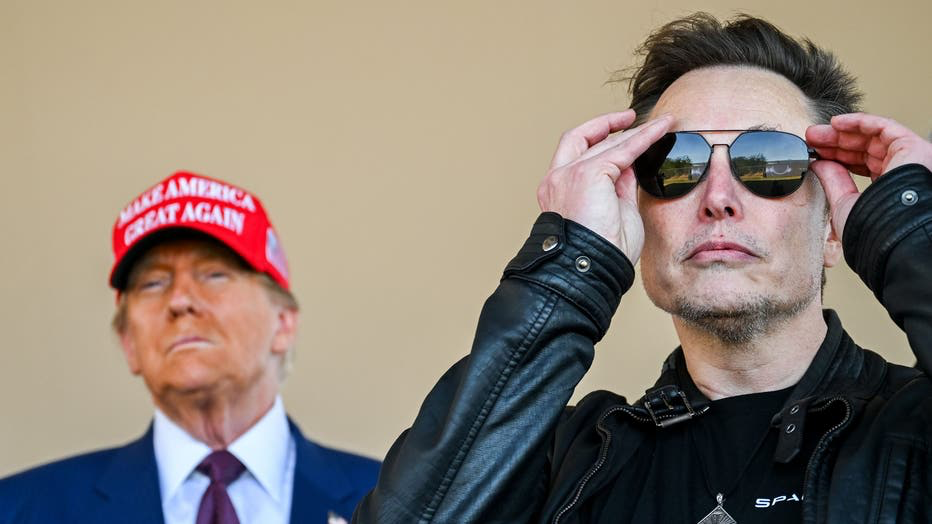
As president, Trump has restated his opposition to funding non-commercial public broadcasting, as has Elon Musk, Trump’s crony.  And because CPB has no ongoing federal funding mechanism, annual Congressional appropriations are required. That opens the door for Trump.

Dick Tofel, the former President of ProPublica, wrote on Substack, “ …they will very likely, sometime this year, have the votes they need to smash the current arrangement. That will occur, I think, in significant part because the current regime does not have the political will to materially cut federal spending and thus feels compelled to cut immaterial spending (federal aid to public broadcasting costs Americans about $1.50 per person) in a performative manner that, they hope, fools their base.”

Tofel’s view is that whether Trump wants to force public stations off the air altogether or just eliminate their national news programming, “the distinction will hardly matter” in communities that can’t afford to mount substantial operations of their own.  Funding cuts at the national level would, he says, most likely mean the loss of shows such as Morning Edition and All Things Considered, the NPR morning and afternoon shows, PBS’ Frontline and PBS News Hour.  In larger, richer (bluer) cities (such as Portland), some parts of local efforts will likely be salvaged, he thinks. 

For fiscal year 2025, Congress appropriated $535 million for CPB. This year, Republicans have introduced multiple bills to defund CPB and on March 25, 2025, a day before the heads of PBS and NPR testified before a House subcommittee, trump said he’d be “honored” to see funding for public broadcasting end.

In a January 16, 2025, message, Rachel Smolkin, OPB ‘s president and CEO, raised the alarm about potential cuts in federal support to her station and others around the country, but took care to note that “Federal support represents a relatively small portion of OPB’s operating budget “. In fiscal year 2023, government grants to OPB totaled $4,679,653 or 9.5% of the station’s $49,370,988 in revenue from contributions.[1]  In most instances, sponsorships are considered charitable contributions by the underwriters.  On OPB’s IRS Form 990, these sponsorships are included in the $49,370,988 reported as contributions and grants. There is also a small amount of sponsorships that meet the definition of advertising, which primarily occur on OPB’s digital platforms.  For FY 23, advertising is included in the program service revenue of $1,381,015 and in unrelated business revenue reported on OPB’s IRS Form 990-T.  

For FY 23, advertising is included in the program service revenue of $1,381,015 and in unrelated business revenue reported on our IRS Form 990-T.  Sponsorships are not otherwise disclosed on the tax filings.  Total revenue was $56,821,607.

Notable Sources of Revenue$Percent of Total Revenue
Contributions$49,370,988            86.9%
Program Services$1,381,015               2.4%
Investment Income$3,446,034               6.1%
Bond Proceeds$0 
Royalties$0 
Rental Property Income$415,851                0.7%
Net Fundraising$0 
Sales of Assets$2,207,719                 3.9%
Net Inventory Sales$0 
                                                                       

Could OPB survive without the federal grants? Probably, but the hit would be hard. 

The impact of any cut in OPB’s programming would be felt particularly by Oregon and Southern Washington’s more educated and higher income populace (71% of OPB’s TV audience, 82% of OPB’s digital audience and 85% of OPB’s radio audience has attended college). The public broadcast audience also typically falls into higher household income categories and have for years, primarily because households that listen to public media tend to have more formal education.

But that is part of the problem. An increasing number of the rest of the population is tuning out.

NPR‘s weekly broadcast audience has been experiencing audience declines, as have NPR’s podcasts, and sponsorship revenue has dipped. And CPB took  a big hit last year when former NPR business editor Uri Berliner posted an essay on the Free Press substack site accusing the organization of adopting a left-wing stance in which “race and identity” were “paramount.”

Earlier this month, the NY Times reported on an NPR document that detailed what would happen if the Treasury stopped cutting checks to CPB. “NPR can weather the funding cut… thanks in part to aggrieved listeners: Executives predict a sudden boom in donations if Congress defunds it, as listeners rush to defend their favorite programs.,” the report said. “But they will likely give more in big-city markets.”

Public television in the United States would likely be in worse shape, the report said, because PBS receives much more of its budget from the federal government.

In a weird sort of way, the collapse of so much of the traditional news media and the rise of one-sided communications might be public broadcasting’s savior. 

Some analysts think things have gotten so bad in a fractured media environment that public broadcasting is more critical. A reason for hope, the Los Angeles Times wrote in March 2025, is that “… the American media landscape is in such poor shape that NPR is more necessary than ever. Across the country, print journalism has imploded. Commercial TV and radio news operations are also in decline. Especially in red states, NPR is sometimes the only source of local news. True, people everywhere now get information from cable channels, random websites or social media, but many still want what NPR offers.” 

With that in mind, the debate over funding for public broadcasting, and OPB’s future, is a reminder that depending on government money for a service can be a trap. That money is always subject to the political winds.  If a free press is dependent on whether a Trump-like personality is in office, more local public support may be vastly preferable.


[1] Figures are from Form 990 which non-profits are required to file annually with the IRS. These CPB grants are included in the Contributions and Grants revenue of $49,370,988 on OPB’s FY 2023 IRS Form 990. CPB grants are not included in government grants on the Form 990 as CPB is a private, nonprofit corporation, not a government agency. 

A Plea to Rescue the Republic

If you have a few minutes, I’d like to begin by telling you about Edwin Bell Forsythe because his service to our country and his dedication to liberty are instructive.

Forsythe was a true public servant. A devoted Quaker from Moorestown, New Jersey, he served honorably in the House of Representatives as a Republican from 1970 until his death in 1984. I worked for Forsythe and remember keenly his decency and dignity.

Rep. Edwin B. Forsythe and his wife, Mary, at the Capitol.

A continuing reminder of Forsythe is the Edwin B. Forsythe National Wildlife Refuge in Oceanville, NJ. The refuge includes over 32,000 acres of coastal salt meadows, uplandbrush and woodlands, and open bays and channels along the New Jersey shore.

At the dedication of that refuge, Ed Welch, Chief Counsel of the House Merchant Marine and Fisheries Committee, praised Forsythe for his effective leadership, the ability to take divisive controversies and hammer out strong bipartisan compromises in an atmosphere of fairness and civility. “The policy differences between Republicans and Democrats were never ignored, but they were not permitted to obstruct the essential workings of the Committee,” Welch said. 

“Ed Forsythe was a man of integrity and principle,” said Rep. William J. Hughes of New Jersey, who served as a Democratic Member of the House of Representatives from 1975 to 1995, “He represented the very best that this nation has to offer, serving quietly but tirelessly and effectively for the people of his district. There was not an ounce of pomposity or pretension in Ed Forsythe. Ed’s unfortunate death has taken from us a great legislator and a fine individual. We have all been enriched by his presence among us.”

”His sensitivity, wisdom and quiet voice of reason will be missed,” added New Jersey Governor Thomas Kean. 

In today’s tumultuous political environment, “sensitivity, “wisdom and (a) quiet voice of reason” are sadly missing. Can you name even a handful of members of Congress who are spoken of with such respect today?

In their place we have rancorous, narcissistic exhibitionists focused more on messaging and publicity than on driving good public policy. 

In 2015, Senator Lindsey Graham of South Carolina, for example, a shape-shifting individual, called Mr. Trump a “race-baiting, xenophobic, religious bigot,”  a “kook,” “crazy” and a man who was “unfit for office.” He’s now one of Trump’s most sycophantic defenders when it suits him.

Then there’s Republican Senator Bill Cassidy of Louisiana. Despite being a doctor, who’s obligation is “First, do no harm”, he voted to confirm Robert F. Kennedy Jr., who has made multiple outrageous medical statements, as Secretary of the Department of Health and Human Services.

Even Republican Senator Susan Collins of Maine, a supposed moderate, has lost her bearings. A member of the Senate Intelligence Committee for 12 years, she voted to confirm Tulsi Gabbard, a politician with a history of troubling statements and actions, to be the Director of National Intelligence, putting American security at risk. 

Republican Senator Sen. Joni Ernst of Iowa, a combat veteran and a member of the Senate Armed Services Committee, in the face of Trump’s threat of supporting a primary competitor, voted to confirm Pete Hegseth as Secretary of Defense. This despite serious allegations of personal misconduct and lack of judgement on his part, as well as minimal executive experience essential to managing a Department of Defense with about 3.4 million civilian and military personnel and an $850 billion annual budget.  

The list of weak-kneed Republican members of Congress could go on as the Republican Party has fallen into the trap of slavishly bowing down to President Trump, less because they agree with his erratic pronouncements than because they fear losing their prestigious positions.

House Republicans are no better. In bowing to Trump’s will, they are consciously compromising their authority. 

In the midst of all this stands Speaker of the House, Mike Johnson, an evangelical Christian who daily declares his fealty not to the constitution, but to an erratic, morally compromised president.  

On August 7, 2015, Johnson wrote on Facebook, “The thing about Donald Trump is that he lacks the character and the moral center we desperately need again in the White House.”

These days, don’t count on Johnson to try to put the brakes on any of Trump’s questionable autocratic moves. As Johnson told reporters in January, “There is a new sheriff in town.” 

And reveling in his position at the top of the Republican hierarchy stands Donald Trump, who sees himself as a wonder of the world, comparable to the Colossus of Rhodes constructed in homage to Helios, the original god of the Sun in ancient Greek mythology.

Wishing to be unburdened by common standards of decency and respect, Trump has even tried to fire an executive branch ethics watchdog who heads the Office of Special Counsel. 

With a brusque two sentence email, the White House Personnel Office leader was dismissed on Feb. 7, 2025, with little more than a “Thank you for your service”. The firing is only on hold because a federal district court issued a temporary order keeping the lawyer in office through a hearing scheduled for Feb. 26, 2025. 

The behavior of senior people serving under Trump is no better. Their abandonment of civility is exemplified by “Border Czar” Tom Homan who callously said of Rep. Alexandria Ocasio-Cortez in a Feb. 17 Newsmax interview, “She’s the dumbest congresswoman ever elected to Congress and she proves that every day.”

White House deputy chief of staff Stephen Miller is no more reticent. A fanatical Trump devotee, he was accused by the chairman of the House committee investigating the Jan. 6 riot at the Capitol of “efforts to spread false information about alleged voter fraud” and encouraging state legislatures to alter the outcome of the 2020 election by appointing alternate electors.

Considered a racist by some of his detractors, Miller was a lead author of the zero tolerance policies that led to immigrant children being separated from their parents during Trump’s first term.

“America is for Americans and Americans only” Miller bellowed at a Madison Square Garden Trump campaign rally on October 27, 2024, “With your vote, you can smash this broken establishment” he concluded.

Trump has also brought into government efforts to indiscriminately hollow out the federal civil service. Trump and Elon Musk’s so-called Department of Government efficiency, or DOGE, is hacking away with abandon at multiple federal departments. Regardless of what Trump and Musk might say, the goal is not so much to diminish the federal workforce as to replace it  with clones of Trump’s most rabid supporters. Meanwhile, Republicans stand idly by. 

Affected agencies include the Department of Veterans Affairs, the Department oi Education, the Department of Housing and Urban Development, and the Federal Aviation Administration. The IRS is also expected to lay off thousands of probationary workers in the middle of tax season.

 A DOGE purge across the Department of Energy that targeted about 2,000 employees led to embarrassment and a recall when it was discovered that many of them worked on the nation’s critical nuclear weapons programs. The Associated Press noted that the firings came as the National Nuclear Security Administration “is in the midst of a major $750 billion nuclear weapons modernization effort, including new land-based intercontinental ballistic missiles, new stealth bombers and new submarine-launched warheads.”

“The goal here is to dismantle the merit system and return the government to the spoils system, awarding the president who gets into office and punish people who worked for the prior administration,” Kevin Owen, a lawyer who represents federal employees in civil service and whistleblower litigation, told the Wall Street Journal.

Meanwhile, issues of privacy and data security are arising. Democrats and tax experts are sounding alarms, for example, about a plan by Elon Musk’s DOGE team to gain access to an IRS system that contains detailed financial information about millions of taxpayers, including their tax returns.

“This is a five-alarm warning,” Rep. Jimmy Gomez (D-Calif.), a member of the House Ways and Means Committee, which oversees the IRS, said in a post on X, calling the move an “illegal and blatant power grab.”

Also raising alarms are DOGE moves at the Social Security Administration, where Elon Musk’s team, alleging unsubstantiated concerns about fraud, is reportedly attempting to access reams of sensitive information. The acting head of the SSA, Michelle King, has already resigned over the intrusion. Yet, again, elected Republicans casually ignore the threat. 

And I haven’t even begun to address the international chaos emerging under Trump and his servile minions. 

Nowhere is this chaos more evident than in Trump’s handing of the Ukraine war. Word of impending negotiations with Russia was, first of all, a shock to Ukraine and America’s European allies. 

Then, when negotiations on the Russian invasion of Ukraine began in Riyadh, Saudi Arabia between the U.S. Delegation, led by Secretary of State Marco Rubio and the Russian Delegation led by Minister of Foreign Affairs Sergey Lavrov, conspicuously absent were any representatives from Ukraine or Europe. The move was perceived by both as a slap in the face.

“Making sense of Trump’s plan – if there is one” read the headline of a Kyiv Independent article on the negotiations.

One thing was clear, though. “Decades of the old relationship between Europe and America are ending,” Ukrainian President Volodymyr Zelenskyy said in address at a Munich Security Conference. “From now on, things will be different…”

On Feb.18, Trump lambasted our European allies and Ukraine for letting the war go on. “Well, you’ve been there for three years. You should’ve ended it in three years,” he said. “You should have never started it. You could have made a deal.” 

On February 17, Trump went so far in a Truth Social post as to directly insult Zenenskyy , calling him “a modestly successful comedian” and ” A Dictator without Elections”.

” Zelenskyy better move fast or he is not going to have a Country left,” Trump wrote. ” In the meantime, we are successfully negotiating an end to the War with Russia, something all admit only “TRUMP,” and the Trump Administration, can do.” 

“Trump sold his soul and our country to Putin,” said one commenter. “Hard to believe we’re defending Russia instead of the Ukrainian freedom fighters.

But Russia is likely thrilled by Trump’s betrayal of Ukraine as well as by Vice President Vance’s remarks critical of Europe and supportive of far-right forces on the continent.

“The Kremlin for years has sought to weaken Europe by boosting parties that Mr. Vance argued must be allowed to flourish,” reporter Paul Sonne wrote in the New York Times on February 16. “The same day as his remarks at the conference, Mr. Vance met with the leader of Germany’s extreme right movement, which is contesting national elections this month, boosting a party Russia has sought to legitimize. Moscow has also sought to drive a wedge between the United States and Europe, realizing that a destruction of the longstanding Euro-Atlantic alliance from within would lead to a world where Moscow can wield far more power.”

Echoing Sonne, Ian Bond, deputy director of the Center for European Reform in London, commented online, “Some of the most shameful comments uttered by a president in my lifetime. Trump is siding with the aggressor, blaming the victim. In the Kremlin they must be jumping for joy.”

If Trump’s usual bull in a china shop approach to foreign affairs,  complemented by his vice president, leads to the abandonment of Ukraine and a reinvigorated Russia, the risk for Europe will be great and another American threat, China, will be emboldened. 

The United States has also inserted itself into a flammable situation with Trump’s proposal that the United States take control of the Gaza Strip and push the Palestinians into other countries, principally Jordan and Egypt. The land by the Mediterranean Sea is a potential French “Riviera,” something that would be worth a “long-term ownership position,” Trump said in early February. Typical of Trump, his vague proposal was an apparent surprise even to his closest advisors and stunned Congressional Republicans.

It was all reminiscent of Trump in his first term trying to convince North Korea’s Supreme Leader Kim Jong Un that his country was ripe for development as a popular destination spotif he gave up his militaristic nuclear weapons program.  If you can believe this, Trump even showed him a slick video the White House National Security Council came up with showing what North Korea could become if it concluded a rapprochement with the United States.  “They have great beaches,” Trump said. 

Where are the members of Congress voicing concerns? Where is today’s Wayne Morse, a vocal critic of the Vietnam war and an outspoken defender of the Constitution’s checks and balances during his 24-year tenure in the U.S. Senate representing Oregon from1945-69?

Fariborz S. Fatemi, who worked on foreign policy issues on the staff of U.S. Sen. Frank Church, told of how Morse frequently went to the floor of the Senate to deliver riveting and informative speeches about the rule of law, separation of powers and how the Senate and the House were slowly giving their powers away to an already powerful executive. 

Way back in 2018, Berry Craig, a state AFL-CIO official, saw the relevance of Doris Kearns Goodwin’s book, Team of Rivals: The Political Genius of Abraham Lincoln, to Trump’s behavior. President Lincoln “wanted men who would tell him what he needed to win the war, save the union and put slavery on the road to extinction – not what they thought he wanted to hear,” Craig said. “It’s the opposite with Trump. He demands obsequiousness.” 

That’s still true. Instead of strong, valiant, principled members standing up to Trump on myriad issues for their institution, we have toadies worried only about their next election.

That must change. 

George Washington, in his 1796 farewell address, cautioned his fellow Americans about the rise of a man like Trump. “The disorders and miseries which result gradually incline the minds of men to seek security and repose in the absolute power of an individual; and sooner or later the chief of some prevailing faction, more able or more fortunate than his competitors, turns this disposition to the purposes of his own elevation, on the ruins of public liberty,” he warned. 

Secretary of State Marco Rubio recently said on Fox TV about Trump’s push to control Greenland, “I met with the Danish Ambassador this past week. They said Greenland is not for sale. I said, ‘Everything is for sale.’” 

We already know Marco Rubio is. He previously portrayed Trump as “a pathological liar”, a “sniveling coward” and “utterly amoral”. Now Trump’s his best buddy.

So far, the Republican Party, Republican members of Congress and obedient Republican staff seem to be for sale, too. They need to act to protect America from Trump’s lunacies.

Challenging Trump won’t be easy. 

In the movie “The Apprentice”, Sebastian Stan portrays a young Donald Trump determined to make his mark in 1970s New York. Reflecting on what he saw in Trump, Stan said in a New York Times story. “What I’ve always seen in his journey, and certainly we were exploring in the film, was the solidifying of a person into stone, the loss of humanity.” 

Despite his public efforts to appear amiable and open, Donald J. Trump is a cold-hearted vindictive man who will fight tooth and nail. 

But let the fight to rescue the republic begin.

Trump’s Message to Millions: So Die, Scum

A president who once referred to Haiti and African nations as “shithole countries” is continuing his cruel attacks on people around the world suffering from disease and starvation. 

The Trump administration has moved to shut down USAID, the federal government’s lead agency for humanitarian aid and development assistance as an independent agency and integrate what remains into the Department of State under Secretary of State Marco Rubio.

 Elon Musk, head of the White House’s Department of Government Efficiency, a billionaire with zero expertise in global development, has said of USAID that it is a “criminal organization. Time for it to die.”

“We’re shutting it down,” Musk said during a live chat on X,  later adding, “We spent the weekend feeding USAID into the wood chipper. Could gone to some great parties. Did that instead.”

The Devious Duo (Photo credit: AP)

Consider:

  • USAID’s partner program PEPFAR, an anti-HIV/AIDS initiative launched by U.S. President George W. Bush in 2003, pays for antiretroviral medicines and leads efforts to halt the spread of the virus. It is estimated to have saved 25 million lives since its inception. USAID’s collapse could serve a death sentence for PEPFAR, Persuasion,  a nonprofit digital magazine, reported. In a survey of 275 H.I.V. treatment organizations in Sub-Saharan Africa, every single one reported needing to shut down programs or turn away patients.
  • The United States contributes approximately $300 million dollars annually to Gavi, the Vaccine Alliance, which targets diseases such as malaria and rabies in low- and middle-income countries Gavi supports the accelerated introduction of new and underutilized vaccines in 73 countries. Across the world, immunization yields up to a 48-fold return on investments, averting an estimated 2-3 million child deaths per year.
  • About 500,000 metric tons of food worth $340 million is in limbo, in transit or storage,Reuters reports, as humanitarian organizations wait for U.S. State Department approval to distribute it.
  • U.S.-provided cash assistance intended to help people buy food and other necessities in Sudan and Gaza has been halted, aid workers told Reuters. So has funding for volunteer-run community kitchens, an American-supported effort in Sudan to help feed people in areas inaccessible to traditional aid.
  • The US system for monitoring famine globally, designed by US government agencies, including USAID and NASA, has been taken offline.
  • The Famine Early Warning System Network (Fewsnet) was established after the 1984 famine in Ethiopia, as part of a worldwide effort to prevent a repeat of its devastating impact. Trump’s action has left  policymakers in the dark about impending hunger crises “It is regarded as a gold standard in combining weather data and political analysis to predict drought and food insecurity globally,” the BBC reported.
  • About 500,000 metric tons of food worth $340 million is in limbo, in transit or storage, as humanitarian organizations wait for U.S. State Department approval to distribute it, according to Reuters. Among the food aid in limbo is almost 30,000 metric tons meant to feed acutely malnourished children and adults in famine-stricken Sudan., The food includes lentils, rice and wheat, one worker said – enough to feed at least 2 million people for a month. 
  • The USAID shutdown stalls progress toward economic prosperity and stability, Brookings reports. It stops support for cash transfers that reach the poorest households, halts financing for women farmers who produce food and other staples, stops lifesaving health services, and disrupts public-private partnerships to help women compete in the digital economy. 
  • Some officials fear that the closure of USAID could slow the response to ongoing outbreaks of Ebola in Uganda and Marburg virus in Tanzania, according to Bulletin of the Atomic Scientists. USAID and the CDC collaborated in 2022 on a successful effort to limit the spread of an Ebola outbreak in Uganda.
  • The President’s Malaria Initiative, a US government program that funds malaria prevention and research, is led by USAID and implemented together with the CDC. (It’s website is currently “undergoing maintenance in order to be consistent with the President’s Executive Orders”)  One company has more than one million insecticide-treated bed nets in a warehouse in Ethiopia that, along with antimalarial drugs and diagnostics, it now can’t deploy, and at time when malaria transmission spikes in many countries. “Without those services — especially now that it’s the rainy season in a lot of the world — people will die,” an employee told the journal Nature. “We’re putting kids’ lives at risk by stopping this.”

Just a bunch of people in shithole countries affected. Who cares?