Subsidizing Progressives: Portland Needs New Blood to Solve Persistent Problems

Portland voters could learn something from feminist writer and civil rights campaigner Rita Mae Brown. She was right on when she wrote, ‘Insanity is doing the same thing over and over again and expecting different results.”

The seven candidates for the restructured City Council who have qualified so far for matching funds from Portland’s Small Donor Elections Program are all self-proclaimed progressives, Willamette Week reports.

Under the Small Donor Elections Program, candidates for office must raise a certain number of contributions to qualify for city matching funds.  Mayoral candidates can earn up to $100,000 in matching funds. City Council candidates can earn up to $120,000 in matching funds.

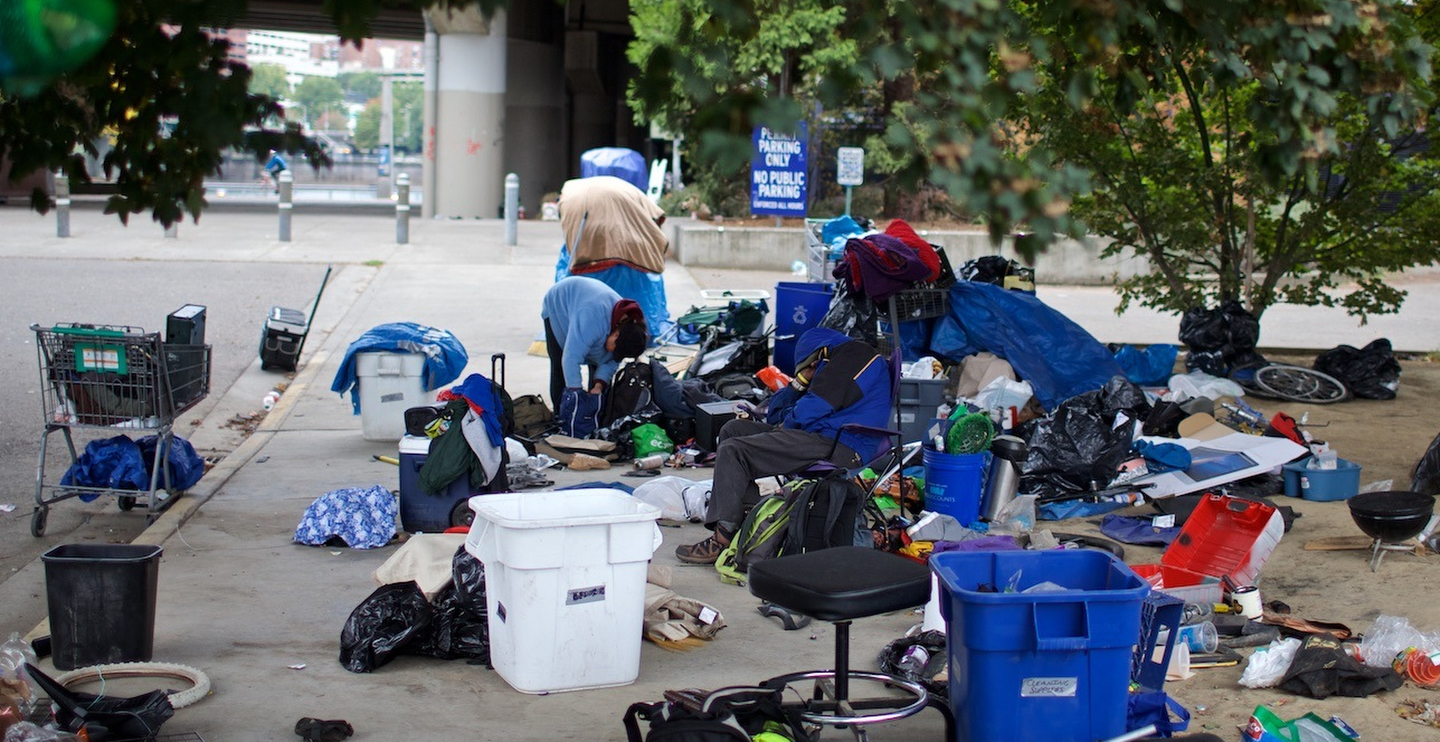
It’s progressives who have been the most ardent advocates of tolerance for raucous, violent and and destructive demonstrations, drug liberalization, sprawling homeless encampments in public spaces, escalating gun violence, limits on criminal penalties, and crude and threatening public behavior. 

So now it looks like Portland taxpayers are going to finance the advocacy of a progressive agenda when it’s progressive foolishness that has driven Portlanders to despair in recent years.

Over half of respondents in a Dec. 2023 survey by DHM Research said Portland is moving in the wrong direction and that they are worse off now than they were two years ago. Eight in 10 said quality of life in Portland is getting worse and more said they had a negative view of future economic opportunities. Even Rep. Earl Blumenauer, a classic progressive, recognizes how bad things are.  “Portland is broken,” he said as far back as February 2022 when he announced his reelection bid. “Collectively it seems like we have challenges unlike any we have ever faced.”

Doesn’t that suggest Portlanders, instead of doubling down on progressive politicians and policies, should turn away from the destructive progressive government leadership practices of the past and embrace new political candidates with more responsible agendas? 

The Oregon Governor Race: Will the Republicans Blow It Again?

First impressions can be deceiving.

Washington, D.C. residents were baffled Wednesday when they saw people appearing to parachute into the city. Alarmed police ordered staff at the U.S. Capitol complex to evacuate due to a “probable threat” from a nearby aircraft. Turns out it was a pregame Army parachute-demonstration team performing for a Washington Nationals baseball game.

Rising public dissatisfaction with Oregon’s direction, delivering the impression that the Oregon governor’s race is going to be a win for Republicans this time around, could be a false alarm for Democrats, too. 

A February 17-23 , 2022 OPB Primary Election Survey by DHM Research asked, “All things considered, do you think that things in Oregon are headed in the right direction, or do you feel that they are off on the wrong track?” An overwhelming 73% of respondents said Oregon is on the wrong track. 

This should bode well for Republicans, out of the governor’s chair since 1987.  But, based on the campaigns currently being waged by candidates in the Republican primary, they could still snatch defeat from the jaws of victory.

An April 13, 2022, poll of likely Republican voters by Nelson Research showed that the leaders were Bud Pierce at 6.5%, Christine Drazan with 6.3%, Stan Pulliam with 4.2% and Bob Tiernan at 3.5%. None of the other Republican contenders garnered even 3%. 

The lack of real Republican enthusiasm for any of the candidates is evident, however, by the fact that with just two weeks from mail ballots going to voters and four weeks until the May 17, 2022 primary, almost 68 percent of respondents were still undecided.

Even counting the undecided who were leaning toward each candidate, Pierce was only at 10.7%, Drazan 8.2% and Pulliam, Tiernan and Bill Sizemore at 5.2% each. 

Pierce, who lost to Democrat Kate Brown in 2016, is pitching himself as “a true outsider” who is “sane, secure, stable”.  But already a one-time loser, Pierce, 65, comes across, to put it mildly, as old hat. He’s the Adlai Stevenson of the 2022 Republican primary.

Christine Drazan, 49, is promising “A new direction. for Oregon,” but she is also embracing some Republican views on abortion that turn off a lot of Oregon voters. “Christine received Oregon Right to Life’s endorsement in her previous two runs for office and is honored to have their support once again in the race for governor,” said Trey Rosser, Drazen’s campaign manager. Most Oregonians, on the other hand, have consistently opposed more restrictions on abortion.

Tiernan, in his current ad, comes across not as a hard-driving man of the people, but as a mean-spirited scold. “I’ve got what it takes,” he says, but his forced smile is insincere and off-putting.

Pulliam isn’t doing himself any favors with his outreach efforts, either.

In one television ad, he complains about critical race theory, a trendy topic that argues racism is racism is systemic in America’s institutions. In another ad, he promises not to “allow transgender athletes to compete in girls sports…Because my girls shouldn’t have to play against boys, and neither should yours.” Despite both of these issues being hot items for the right on the national stage, neither shows up on a list of hot-button issues for Oregon voters and could pigeonhole Pulliam in a general election.

Part of the problem for all the Republican candidates was revealed in a Nov. 2021 poll by  conducted by Republican pollster Fallon Research & Communications.

In the poll of 600 likely Oregon Republican primary voters, 75% viewed Donald Trump favorably, about 58% believed the 2020 election was “stolen” from Trump and about 60% said Republican candidates for statewide office should be “more like Trump.” In 2020, Joe Biden defeated Trump 56.5% – 40.4%. Those Biden voters aren’t likely to vote for a conservative Republican candidate for governor the general election.

Sure, a lot of Oregonians are pissed, but do any of the leading Republicans have an answer? Not so far. And as much as many Oregonians are frustrated with things as they are, that doesn’t make them all Republicans. As a politics junkie recently observed on twitter, “More and more I am convinced that the average voter is driven by repulsion, not attachment. They don’t vote for a party because they like it. They vote for a party because it isn’t the OTHER party, which they really despise.”

This may be a weak year for Democrats generally, but to win the governorship the Oregon Republican candidate will need to present a savvy, appealing, inspiring alternative.

So far, they’re all missing the boat.
Confronting the homeless: after Denver, whither Portland?

It hasn’t gotten much media coverage in Oregon, but on May 7, 2019, Denver voters defeated a ballot initiative that would have allowed homeless people to camp in outdoor public spaces like parks, sidewalks and vehicles.

Fed up voters didn’t just soundly reject the initiative; they pummeled it 83% to 17%.

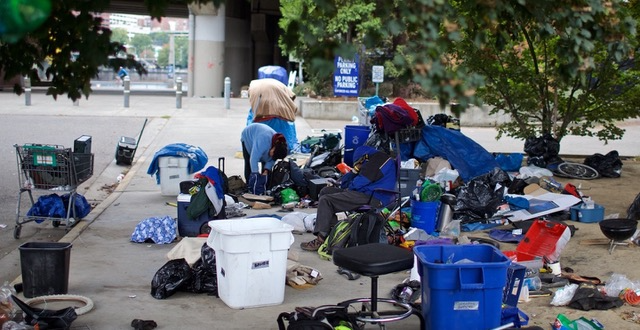
Portland Mayor Wheeler says he’s going to run again. If he doesn’t resolve Portland’s homelessness crisis, he’s likely to face the same level of public rancor.

portlandcampers2

Portland, OR campers.

In 2011, only 1% of those surveyed an annual poll of Portland-area voters by DHM Research that was commissioned by the Portland Business Alliance said homelessness was the biggest issue facing Portland. By 2017, the share of those polled identifying homelessness as Portland’s biggest problem had risen to 24%.

In a Jan. 2019 telephone survey of 510 likely voters in the Portland Metro Region, including an oversample of City of Portland voters, homelessness remained the top-of-mind issue, jumping to 33% overall and 47% among voters in the City of Portland alone. Nearly one in three who said the Portland City Council was ineffective pointed directly to its failure to address homelessness as the reason.

At the same time, half the people polled said they felt the Portland area was headed in the wrong direction. A majority of voters said the region’s quality of life was declining— continuing a trend from a December 2017 study. Only 7% said the quality of life in the Portland Metro Region was getting better.

“just last weekend, a homeless couple set up a tent next to my house in broad daylight…, “ wrote a commenter on OregonLive.” I find more and more used condoms and needles by my house (which I have to dispose of), while my neighborhood experiences daily burglaries and car thefts, all of which the city does nothing about. These problems have exploded just in the past few years. I pay thousands of dollars in property and other taxes per year and get nothing in return. When is enough, enough?”

“Wheeler keeps putting more and more money in to coddling them and tells police to not help residents when harassed or attacked by transients,” wrote another commenter. “Transients have more rights in this city than tax paying voting residents and thus more and more keep coming. We need a tough policy and kick them out. Portland is slowly becoming the shelter for America’s homeless by choice, mentally ill and young lazy transients.”

Even though Portland still has a reputation as an ultra-left city, it’s clear Portlanders’ tolerance and patience are slipping.

That’s clearly what happened in Denver. another liberal (some would say more of a live-and-let-live libertarian) city,

Responding to an explosion of complaints by downtown businesses, Denver began enforcing an urban camping ban to keep people from spending the night on city sidewalks, in parks and other public spaces. In 2016, the city began sweeps to enforce the ban, picking up tents, sleeping bags and other detritus.

denverhomelesssweep

Police sweep homeless camps in downtown Denver, CO in 2016

Still, surveys in 2018 showed the homeless population increasing, with more people camping instead of staying in shelters.

“Something needs to happen. It’s gotten to the point where it is hard to live down there,” River North (RiNo) resident Josh Rosenberg, told Denver’s Channel 7 in late 2018. “It’s not just one or two homeless guys sleeping on the street; there’s been times where they will set up camp and have tarps and suitcases and shopping carts and kind of make a little village out of it and they’ll be there until somebody calls the police.”

In late 2017, homeless advocates submitted enough signatures to get Initiative 300, referred to as the “Right to survive initiative, on the ballot. The initiative wouldhave effectively overturned Denver’s urban camping ban.

“Denver faces a choice: to do nothing, and let Denverites experiencing homelessness struggle to survive, to sleep at night, and to make it to their jobs, or to take action, and take the first step toward empathy, dignity and realistic solutions,” the Yes on 300 supporters said.

But opposition quickly became obvious. “The election was a referendum on quality of life,” said one online Denver Post commenter. “If you just moved here you don’t know, but those of us that have lived in Denver for 30 years have drastically seen quality of life decrease…”

An increasing number of Portlanders feel that way as well. If he’s not careful, Ted Wheeler could get pummeled, too.

_____________

You can find more about the survey and results at the Portland Business Alliance:

https://portlandalliance.com/assets/pdfs/2019-PBA-Jobs-Economy-DHMReport-January.pdf