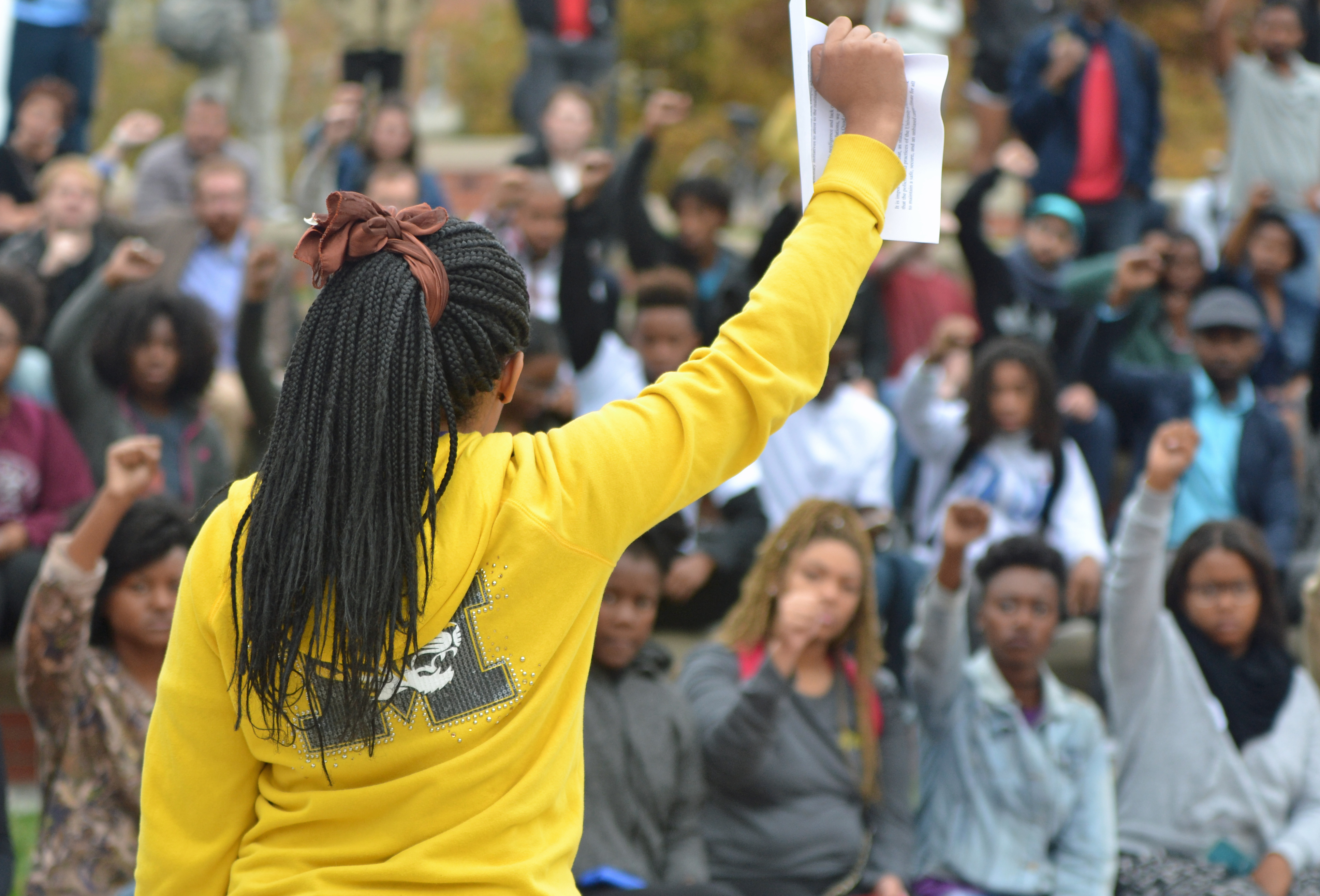
Late last year, the “oppressed” students at $71,550-a-year Bryn Mawr College, a small women’s liberal arts college in Pennsylvania, initiated a strike and demanded that their school “dismantle systemic oppression in the Bryn Mawr community” and end a crippling regime of “institutional racism, silencing, and instances of white supremacy.”
Unfortunately, how Bryn Mawr’s administration handled the strike bore too much resemblance to the behavior of so many other easily bullied schools.
Bryn Mawr President Kim Cassidy initially called for students to return to classes, citing “the significant financial sacrifices that students and families make for this education.”
“Education is our mission and our reason to exist,” Cassidy said. “The College made a legal and moral contract with its students, and their families, to offer classes. We have an obligation to honor this contract.”
When reports multiplied of abusive behavior targeting students seeking to return to class during the strike, Cassidy spoke again:
“Whatever the important goals of the strike and the demands, the College cannot countenance shaming, harassment, and intimidation of students or faculty to achieve them. The College cannot and will not tolerate a climate of fear where, amongst other examples, students are afraid to eat in the dining halls for fear of humiliation or for being seen as racist. The acts of intimidation that I am witnessing and that many students and faculty have described violate the [school’s] core principles. Students have a right to their education and should not have to endure shaming to attend class.”
Some emboldened faculty and students also publicly chastised the strike leaders.
A professor wrote on the student newspaper’s site: “The notion that because “You are a Black man, before anything else” and therefore must be in support of the strike or be socially ostracized and bullied by others online is the fundamental problem with the strike.”
A student wrote: “One can only hope the administration – which appears to have behaved with unusual grace and provided meaningful support – does not give in to this sad display of self-absorbed and (one is forced to say) childish acting out. Of competitive victimhood. I’m sure the students think they are justified, but with this behavior they have put themselves severely in the wrong. A university education is a privilege that they should get busy and try to deserve. They are lucky to be there and have no right to demand anything.”
The student was quickly slapped down by a classmate: “Racists have used the “lucky to be there” formulation for decades and centuries to suppress the aspirations and demands of people of color.”
The student newspaper tried to inject a little levity into the increasingly tense campus environment with a poll, “Which is your favorite breakfast potato: Shredded potatoes, Sliced potatoes, Diced potatoes, Hash browns, Tater tots.” But the campus tumult continued.
So President Cassidy surrendered. Not only did she apologize for criticizing the strikers, she said she intended to fulfill a 24-page list of strike demands.
In doing so, Cassidy emulated other weak-kneed college administrators across the country who have caved to absurd demands by children and deserted their responsibilities as adults.
“We’re all gonna be here for only four, maybe five years, so nobody really gives a damn about Bryn Mawr in the long run,” a strike leader at a November 9th sit-in event said, according to a critical post written by the mother of a Bryn Mawr student.
Of course, that’s the problem. College students are temporary occupants of classrooms and dorms, sort of like rental tenants. They don’t own the college’s past or future, even if they act like they do.
In that vein, no serious academic committed to higher education, would embrace all the demands spelled out by the strike’s leaders (the group later changed its name to The Black Student Liberatory Coalition (BSLC) and invited students and faculty to “continue to disrupt the fucking order.”).
The Strike Collective’s demands, presumably to be paid for by the students’ already heavily burdened parents, are lengthy. Here are some. Read them and weep:
Trust the Collective, We got each other.
DEMANDS
- Search committees for new faculty hiring must include two students with voting power and a diversity representative committed to “executing an anti-racist framework.” (Teenagers voting on new faculty hires; PhDs would love that. Whats next – students voting on tenure?)
- Diversity, equity, and inclusion training for students, faculty, staff and administration, and the President must be mandatory. (Standard fare on all protest lists now, even there are serious questions about the effectiveness of such costly and time-consuming training)
- A new position must be created to develop a process to remember protests, controversy, and dissension at Bryn Mawr. (To replace all the old racist statues with statues of today’s heroes who will be condemned 50 years from now?)
- Bryn Mawr must create a “Reparations Fund” that would make a yearly allocation of funds and resources to Black and Indigenous students in the form of grants for summer programs, affinity groups, multicultural spaces, and individual expenses such as books, online courses, therapy, and any and all financial need beyond the scope of racial justice work. The fund should also be used to support local Black and Indigenous communities. (Ah yes, a call for reparations. A sure winner.)
- All Open Letter writers to the student newspaper and Core Bryn Mawr Strike Collective organizers must be financially compensated in the form of a Radical Transformation Fellowship stipend at the value of $1000 by the end of Spring semester 2021. The Fellowship must continue to be instituted annually. (Of course, reward strike leaders who disrupted everybody else’s education.)
- Bryn Mawr must pay all student employees who participated in the strike for all work hours missed during the strike. (God forbid kids who skipped their jobs to protest should lose any pay.)
- Bryn Mawr must take an ACTIVE (emphasis in original) role in the abolition of Police and Penal institutions at local, regional and global scale and eliminate “investment in building harm reducing institutions.” (No more police, jails or prisons. Let ’em all out. That will make things better.)
- Increase annual funding for the Black Cultural Center and residence from $10,000 to at least $100,000 to support college wide Center events, the food co-operative, aid request, and endeavours that celebrate the past, present, and future members of the Latin/x and African Diaspora in the Bryn Mawr “Community.” (Go ahead, raise student fees to pay for this. Our parents can afford it.)
- The Strike Collective must be given immediate access to a comprehensive history (at minimum the past ten years) of Bryn Mawr’s investments with the intention of the Bryn Mawr Strike Collective (BSC) examining investments in all military and militarized institutions, including the U.S. Military, U.S. Immigration and Customs Enforcement (ICE), and military-contracting entities, including, but not limited to, the top five weapons manufacturers Boeing, Lockheed Martin, Raytheon, Northrop Grumman, and General Dynamics.
- Bryn Mawr must “divest from corporations wrecking the environment, utilizing sweatshops and/or child labor, perpetuating violent and racist prison industrial complex, acting as operator to imperialism and colonialism through involvement in the military industrial complex, and executing an apartheid systems.” (This is demanding that the managers of Bryn Mawr’s investments limit their investment options and prioritize political leftism over profit that supports the college.)
- Bryn Mawr must invest 15% of the interest of its endowment in local Black social justice efforts with special attention to grassroot organizations without any precondition or restriction being applied on the organizations. (Just give them money, no controls, no audits? No thank you.)
- Bryn Mawr’s Campus Safety team, which deals with security, fire safety, and parking, must be replaced with community organizers and social workers. (The next time there’s a sexual assault, robbery or car theft on campus, call your social worker.)
As a growing list of colleges and universities cede to demands by aggressive student groups, there’s a growing need for adults in the room to stand up and resist actions that are undermining the quality of higher education.
Resistance shouldn’t be the exclusive domain of preening protesters.

 ThinkingOregon