Are Oregon Teachers Underpaid ?

When educators from across the Portland Public Schools (PPS) district’s 81 schools began their strike on Nov. 1, they had a lengthy list of demands, with a focus on teacher salaries.

“As costs have risen here, teachers’ salaries haven’t kept up,” the National Education Association asserted in a news release supporting the PPS strike.

Data suggests, however, that Portland’s teachers were actually doing fairly well in comparison with other teachers across the country, though there is no question inflation has eroded their financial position. The same is true of Oregon teachers in general.

During the strike, PPS said the average salary for a Portland teacher was $87,000; the Portland Association of Teachers (PAT) union said it was about $83,000.  Pay can vary widely depending on multiple factors, including amount of education, certifications, additional skills, and the number of years spent in the profession.

PAT also raised concerns about pay for new teachers, with the lowest annual base salary in the district for a teacher with a BA starting at $50,020.

When the strike began, PAT wanted a 23% cost-of-living adjustment over three years; PPS offered about 11%. In the new contract, educators will receive a 14.4% compounded increase over the next three years (6.25% the first year, 4.5% the second and 3% the third) and about half of all educators will also earn a 10.6% bump from yearly step increases.

To get a handle on how all this translates into actual dollars, I asked PPS and PAT for their numbers on the current average and median salaries of educators in the district and what they expect the average and median salaries of teachers will be in the first year of the new contract?

PAT never responded. PPS responded to an initial request with a commitment to provide the data. Repeated follow-ups, however, brought nothing but excuses for the delay. Eventually my entreaties just went into a black hole. So much for public accountability.

In 2018, The Oregonian reported that in 2016-17, the average Oregon teacher made nearly $61,900 a year, higher than the national average of $59,700. Oregon ranked 13th highest for average teacher pay among the 50 states. “Oregon teachers have long been better compensated than most of their peers around the country,” the paper reported. 

In 2023, according to the National Education Association (NEA), the average Oregon teacher made $70,402 a year, higher than the national average of $66,745, and again Oregon ranked 13th highest for average teacher pay among the 50 states.

In other words, Oregon has actually been holding its own in average salaries, although the numbers for starting teacher pay are not as favorable for Oregon.

In 2023, the average salary for a starting teacher in Oregon with a bachelor’s degree and no experience was $40,374 (31st in the USwhere the average was $42,844). Under the PPS contract with PAT, the salary for a starting teacher with a bachelor’s degree and no experience in 2023 was $50,020.

Averages, however, can be deceiving. Very high or very low salaries can skew the numbers. Median compensation represents a more accurate picture of how much Portland’s teachers are being paid, but neither PPS nor PAT agreed to provide median salary numbers.

The Oregon Center for Public Policy, a progressive economic research organization, argues that Oregon public school teachers are underpaid by about 22%. Even after accounting for the more generous benefits earned by public school teachers, the Center claims Oregon public school teachers are underpaid by about 9%. 

But the analysis is not based on compensation for other teachers. Rather, the Center claims Oregon teachers are underpaid “relative to comparable private-sector workers (in Oregon)…with similar levels of education and experience”.  The claim that public-school teachers endure a salary penalty with this comparison is dubious.

Less dubious was PAT’s assertion before the strike that recent inflation has eroded teachers’ wage gains over time. 

In an annual report that ranked and analyzed teacher salaries by state, the NEA estimated that the national average teacher salary for the 2021-22 school year was $66,397 — a 1.7 percent increase from the previous year. But when adjusted for inflation, the average teacher salary actually decreased by an estimated 3.9 percent over the last decade. 

In other words, teachers were making $2,179 less, on average, than they did 10 years earlier when the salaries are adjusted for inflation. A similar NEA report issued in 2023 concluded that teachers made on average $3,644 less than they did 10 years ago, adjusted for inflation.

However, comparing over a longer period, the average Oregon teacher’s salary in 1970 was $8,818. Inflation adjusted, that figure would have been $66,509.99 in 2022. In other words, although there has been a decrease in inflation-adjusted pay in recent years, average teacher salaries in Oregon have kept up with inflation over the long term. 


Oregon’s K-12 Public Schools Are Failing Their American Indian Students

Shana McConville Radford of the Confederated Tribes of the Umatilla Indian Reservation has joined Gov. Tina Kotek’s administration as Oregon’s first Tribal Affairs Director.

Shana McConville Radford

I have a job for her. 

Tackle the embarrassingly poor academic achievement and embarrassingly high absenteeism rates of K-12 American Indian and Alaska Native students in Oregon.[1]

Some truth-telling is essential here. It is painfully clear that Oregon’s schools are failing these young people and that somebody needs a good kick in the shins to set things right.

We need to give kids, all kids, the tools they need to make their own way. Allowing academic failure is not the way to do that.

The numbers from tests given during the 2022-2023 school year tell the story. A predominant share of the American Indian/Alaska Native students taking the tests were American Indian.

All the academic achievement numbers come from reams of data posted online by the Oregon Department of Education showing downloadable files of state assessment results in English Language Arts (ELA)Mathematics, and Science. Absenteeism figures come from data posted online by the Oregon Department of Education in Annual Performance Progress Reports on Attendance and Absenteeism. 

Some of the more egregious low proficiency scores were at districts that also have chronic student absenteeism, defined by the Oregon Department of Education as absent from school for more than 10% of the academic year.

The Department requires that there be no fewer than 265 consecutive calendar days between the first and last instructional day of each school year at each grade level, so missing 10% of school days would mean missing at least 26 days. 

It’s a lot of numbers, but they are worth examining closely..

SubjectStudent GroupGrade LevelPercent Proficient
English Language ArtsAmerican Indian/Alaskan NativeAll Grades25.6
English Language ArtsAmerican Indian/Alaskan NativeGrade 320.5
English Language ArtsAmerican Indian/Alaskan NativeGrade 424.0
English Language ArtsAmerican Indian/Alaskan NativeGrade 527.2
English Language ArtsAmerican Indian/Alaskan NativeGrade 622.1
English Language ArtsAmerican Indian/Alaskan NativeGrade 728.7
English Language ArtsAmerican Indian/Alaskan NativeGrade 825.6
English Language ArtsAmerican Indian/Alaskan NativeGrade HS (11)31.1

SubjectStudent GroupGrade LevelPercent Proficient
MathematicsAmerican Indian/Alaskan NativeAll Grades13.6
MathematicsAmerican Indian/Alaskan NativeGrade 322.2
MathematicsAmerican Indian/Alaskan NativeGrade 418.2
MathematicsAmerican Indian/Alaskan NativeGrade 514.7
MathematicsAmerican Indian/Alaskan NativeGrade 610.0
MathematicsAmerican Indian/Alaskan NativeGrade 713.7
MathematicsAmerican Indian/Alaskan NativeGrade 810.9
MathematicsAmerican Indian/Alaskan NativeGrade HS (11)5.7
SubjectStudent GroupGrade LevelPercent Proficient
ScienceAmerican Indian/Alaskan NativeAll Grades16.3
ScienceAmerican Indian/Alaskan NativeGrade 514.1
ScienceAmerican Indian/Alaskan NativeGrade 814.7
ScienceAmerican Indian/Alaskan NativeGrade HS (11)20.8

A review of the performance of American Indian/Alaska Native students at individual districts is also revealing.

The details below show all Oregon school districts reporting enrollment of American Indian/Alaska Native students, in all grades, 2022-2023 and the % of students proficient of those tested.

Not all districts administered the Science test. Less than 5% means fewer than 5% of students who took the test achieved Level 3 or 4 / Meets or Exceeds. Absenteeism rates for American Indian/Alaska Native students in selected districts are also noted.

Athena-Weston SD 29RJ       

English language arts.  40%

Mathematics.  Less than 5%

Beaverton SD 48J

English language arts.  43.3%

Mathematics. 31.8%

Science. 21.2%

Bend-LaPine Administrative SD 1

English language arts.  33.3% 

Mathematics. 31.3%

Science. 36.8%

Bethel SD 52

English language arts.  25.9% 

Mathematics. 20.8%

Science. 9.1%

Brookings-Harbor SD 17C

English language arts.  20% 

Mathematics. Less than 5%

Science. 27.3%

Cascade SD 5

English language arts.  42.9% 

Mathematics. 21.4%

Science. 20%

Centennial SD 28J

English language arts.  17.4% 

Mathematics. Less than 5%

Central Point SD 6

English language arts.  32.1% 

Mathematics. 17.9%

Central SD 13J

English language arts.  31.3% 

Mathematics. 5.9%

Coos Bay SD 9

English language arts.  20% 

Mathematics. 8.9%

Science. 25%

Corvallis SD 509J

English language arts.  Less than 5% 

Mathematics. 8.3%

Creswell SD 40

English language arts.  30.8%

Mathematics. 21.4%

Crook County SD

English language arts.  26.3% 

Mathematics. 16.7%

Dallas SD 2

English language arts.  29.5% 

Mathematics. 14.8%

Science. 12.2%

David Douglas SD 40

English language arts. 16.1%

Mathematics. 10.0%

Science. 9.1%

Dufur SD 29

English language arts.  10.5%

Mathematics. Less than 5%

Eagle Point SD 9

English language arts.  47.4% 

Mathematics. 31.6%

Science. 40%

Eugene SD 4J

English language arts.  37.8%

Mathematics. 31.6%

Science. 38.5%

Forest Grove SD 15

English language arts.  25.0%

Mathematics. 16.7%

Grants Pass SD 7

English language arts.  50% 

Mathematics. 7.1%

Greater Albany Public SD 8J

English language arts.  26.7% 

Mathematics. 21.4%

Science. 27.3%

Gresham-Barlow SD 10J

English language arts.  35.5%

Mathematics. 17.2%

Science. 28.6%

Harney County SD 3

English language arts.  13.3%

Mathematics. 6.7%

Hillsboro SD 1J

English language arts.  32.6%

Mathematics. 23.3%

Science. 13.6%

Hood River County SD

English language arts.  29.4% 

Mathematics. 5.9%

Jefferson County SD 509J

English language arts.  17.5%

Mathematics. 6.4%.

Science. 8.4%

NOTE. 49.7% of American Indian/Alaska Native students in Jefferson County SD 509J were chronically absent in the 2022-23 school year.

Junction City SD 69

English language arts.  60%

Mathematics. 30%

Klamath County SD

English language arts.  27.1%

Mathematics. 14.6%

Science. 17%

NOTE: 38.5% of the American Indian/Alaska Native students in the  Klamath County SD were chronically absent in the 2022-23 school year..

Klamath Falls City Schools

English language arts.  20.8% proficient

Mathematics. 11.3%

Science. 9.1%

NOTE: 69.5% of American Indian/Alaska Native students in the Klamath Falls City Schools district were chronically absent in the 2022-23 school year.

Lincoln County SD

English language arts.  16.5%

Mathematics. 5.9%

Science. 9.3%.

NOTE: 57.9% of the American Indian/Alaska Native students in the Lincoln County SD were chronically absent in the 2022-23 school year.

McMinnville SD 40

English language arts.  45.9%

Mathematics. 40%

Science. 47.1%

Medford SD 549C

English language arts.  51.3%

Mathematics. 21.1%

Science. 29.4%

Molalla River SD 35

English language arts.  16.7% 

Mathematics. 15.4%

Myrtle Point SD 41

English language arts.  30%

Mathematics. 10%

Newberg SD 29J

English language arts.  Less than 5%

Mathematics. Less than 5%

North Bend SD 13

English language arts.  32% 

Mathematics. 36%

Science. 33.3%

North Clackamas SD 12

English language arts.  20%

Mathematics. 17.6%

Science. 10%

North Wasco County SD 21

English language arts.  26.1%

Mathematics. 8.7%

Science. 9.1%

Oregon Trail SD 46

English language arts.  42.9%

Mathematics. 28.6%

Pendleton SD 16

English language arts. 27.8% 

Mathematics. 9.1%

Science. 14%

NOTE: 51.3% of the American Indian/Alaska Native students in the Pendleton SD 16 district were chronically absent. in the 2022-23 school year.

Phoenix-Talent SD 4

English language arts.  9.1% 

Mathematics. Less than 5%

Portland SD 1J

English language arts.  17.2% 

Mathematics. 11.6%

Science. 15.2%

NOTE: 66.1% of the American Indian/Alaska Native students in the Portland SD 1J district were chronically absent in the 2022-23 school year. 

Redmond SD 2J

English language arts.  40.0% 

Mathematics. 26.7%

Reynolds SD 7

English language arts.  23.3%

Mathematics. 13.3%

Science. Less than 5%

Salem-Keizer SD 24J

English language arts.  21.8%

Mathematics. 8.5%.

Science. 18.3%

NOTE: 58.2% of the American Indian/Alaska Native students in Salem-Keizer SD 24J district were chronically absent in the 2022-23 school year.

Santiam Canyon SD 129J

English language arts.  20%

Mathematics. 20%

Sheridan SD 48J

English language arts.  12.9%

Mathematics. 6.7%

Science. Less than 5%

South Lane SD 45J3

English language arts.  12.5%

Mathematics. 12.5%

South Umpqua SD 19

English language arts.  20%

Mathematics. 10%

Springfield SD 19

English language arts.  31.4%

Mathematics. 13.9%

Science. 29.4%

St Helens SD 502

English language arts.  18.8%

Mathematics. 6.7%

Sutherlin SD 130

English language arts.  13.3%

Mathematics. 13.3%

Three Rivers/Josephine County SD

English language arts.  27.9%

Mathematics. 11.6%

Science. 5.3%t

Tigard-Tualatin SD 23J

English language arts.  33.3%

Mathematics. 33.3%

Umatilla SD 6R

English language arts.  20%

Mathematics. 10%

Willamina SD 30J

English language arts.  25.4%

Mathematics. 8.7%

Science. Less than 5%

Winston-Dillard SD 116

English language arts.  23.1%

Mathematics. 16.7%


[1] American Indian/Alaskan Native – As defined by the Oregon Department of Education, includes all students identified as having origins in any of the original peoples of North America and not Hispanic.

Oregon’s Failing Public Schools: Where’s The Outrage?

Pander to the pronoun police? Check.

Enforce diversity, equity and inclusion justice? You betcha.

Suspend a requirement for an essential skills test in math, reading and writing to graduate from high school through the 2022-2023 school year? You got it.

Accept that nearly one of every five Oregon high school students don’t graduate in four years? Uh huh.

Increase the number of teachers employed in Oregon’s public schools to an all-time high even as the number of enrolled students drops precipitously to its lowest level in nearly two decades? Yup.

Ensure math and reading proficiency? Not so much.

Oregon’s public schools are turning too many students into functional illiterates and math morons.

Results from the recently administered National Assessment of Educational Progress (NAEP) reveal that a depressingly small percentage of Oregon students in grades 4 and 8 tested at a proficient level or higher in mathematics and reading in 2022. 

The mathematics and reading comprehension assessments are given every two years to students at grades 4 and 8. The tests break results into four categories: below basic, basic, proficient, and advanced. Students performing at or above the NAEP Proficient level on NAEP assessments demonstrate solid academic performance and competency over challenging subject matter.

  Mathematics

Grade 4

The percentage of students in Oregon who performed at or above the NAEP Proficient level: 29%

The percentage of students in Oregon who performed below the NAEP Basic level: 34%

Grade 8 

The percentage of students in Oregon who performed at or above the NAEP Proficient level: 22%

The percentage of students in Oregon who performed below the NAEP Basic level: 43%

 Reading

Grade 4

The percentage of students in Oregon who performed at or above the NAEP Proficient level: 28%

The percentage of students in Oregon who performed below the NAEP Basic level: 44% 

Grade 8

The percentage of students in Oregon who performed at or above the NAEP Proficient level: 28%

The percentage of students in Oregon who performed below the NAEP Basic level: 33% 

Where is the shock and anger?

Renaming Portland’s Lynch Schools: the abandonment of reason

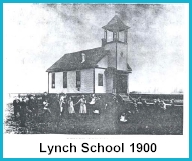
lynch_school_1900

It’s not right. It’s not wise.

It’s just not fair to the students at Lynch Meadows, Lynch Wood and Lynch View elementary schools in Portland’s Centennial District.

The three schools are set to lose the “Lynch” in their names before the next school year because the District decided the name “Lynch” is an epithet.  Many newer families coming into the district associate the name with America’s violent racial history, Centennial Superintendent Paul Coakley told The Oregonian.

This is (supposedly) adult educators gone mad.

What’s next? Renaming public buildings with names such as White ( lacks tolerance of diversity), Young (implies ageism), Jackson (he owned slaves,, you know), Wilson (a president who re-segregated the federal civil service) or Johnson (President Andrew Johnson obstructed political and civil rights for blacks after the Civil War, contributing to failure of Reconstruction.)

The overly censorious policing of language in order to spare sensitive young minds does the children no good. Instead of protecting the delicate young souls, it lays the foundation for later insistence on trigger warnings, objections to micro-aggressions, the shouting down of controversial speakers, and the unfortunate spread of presentism, the tendency to interpret past events in terms of modern values and concepts.

The correct response by the Centennial School District was not to cater to misconceptions about the word by abolishing its use, but to educate the schoolchildren about the historical roots of the use of the Lynch name at the schools and the philanthropic spirit of the Lynch family, and, yes, that the word “lynch” in America is also associated with the killing of black people, often by racist organizations such as the Ku Klux Klan.

As Jeremy Montgomery, whose son attends Lynch View Elementary School, told KATU, education would be a better solution. “See, I didn’t even know that (the schools were named after a charitable family). If people were more open to that and knew that, I couldn’t see it being a problem at all,” he said.

Tom Singerhouse, who went to Lynch View more than 50 years ago, expressed a similar view to KATU, saying teachers should be teaching their students about the significance of the Lynch family.

Lynch Wood Elementary’s website already provides a history lesson about the school’s name. Take a look (below). It’s fascinating reading and would be a good basis for a valuable history lesson with the schools’ students. They’d certainly learn a lot more than they would from deleting “Lynch” from their school’s name.

____________________________________________________________________________________________

                        A History of Lynch Schools

A booklet produced by the Civic Leadership Class of 1964

The name “Lynch School” dates back to 1900 when a one room school was built on the present site of the Lynch School at S.E. 162nd Avenue and Division Street, says a website a reprint of a booklet produced by the Civic Leadership Class of 1964.

According to the booklet, on March 13, 1900, Patrick and Catherine Lynch donated one acre of ground located at Section Line Road (Division) and Barker Road (162nd Ave.) on which was built a new one room school pictured on the front of this booklet.

This is the origin of the name “Lynch.” The Lynch farm originally consisted of 160.3 acres granted to Patrick and Catherine Lynch on August 1, 1874, under the Homestead Act passed by Congress in 1862. The original deed granted the land to the Lynch family and was signed by Ulysses S. Grant, President of the United States. Although the property included land on both sides of Section Line Road, the farm home was located across Division Street in the vicinity of The Hut, a restaurant now situated at 167th and Division.

The deed to the property donated to the Lynch School District in 1900 describes the location of the survey markers marking the boundary of the property as being located three inches below the wheel ruts in the adjoining roads. The stone markers had chiseled grooves on the top side for identification purposes. The stone marking the corner of the property at S.E. Division 10″ x 15″ x 22″ set flat side down 3″ below surface of gravel in the north wheel rut of graveled Section Line Road and tamped firmly in place”.

The area around the Lynch School was entirely devoted to agriculture in the late 1800s and early 1900s. Threshing was a community undertaking and many boys missed school because they were needed at harvest time.

The original one room Lynch School which started with fifteen to twenty students increased in number until in 1914 there were about fifty students in the one room school. Some say there were as many as sixty for the one and only teacher. Some of the former students of those “good old days” say that the only way the teacher could handle all eight grades was to divide up her time so each class had a recitation period. She would start in the morning with the first grade, and would by afternoon, finally get around to the eighth grade.

Meanwhile, the rest of the classes were working on assigned work. Of course, some activities and classes were jointly carried on together, such as music, writing practice, and practicing for school plays. In 1915 a large multiple purpose room, which served as an auditorium and meeting place for community functions was built onto the existing one room school. Folding doors were extended during the day making it into two classrooms giving the school a grand total of three rooms.

The Lynch P.T.A. was first organized in 1917 and undertook as its main project, the serving of hot soup and chocolate at lunch time. Residents who remember those days, say it was prepared at the W.B. Steel home where the Big Dollar Shopping Center is now located. Several of the boys would be asked to go over and carry back the kettles of soup and cocoa along with a pail or two of water before lunch.


Oregon’s abandonment of higher education: it’s criminal

The Oregon Legislature should be declared a crime scene.

Oregon’s state universities are increasingly that in name only. Because of the Legislature’s calculated callousness or pure indifference in funding Oregon universities, young people across the state are facing soaring college loan debts and diminished opportunities for higher education.

The state is also sabotaging its goal of ensuring that 40 percent of all adult Oregonians have a bachelor’s degree or higher by 2025 and undermining the rationale for the state having a say in the operations of what are still called public universities.

SONY DSC

Governor John Kitzhaber says he deserves to be re-elected because he froze tuition at Oregon colleges.

Sure, for one year.

In June, the state Board of Higher Education approved a tuition freeze for in-state undergraduates for the 2014-2015 academic year.

But that was after steadily escalating tuition rates for in-state undergraduates, particularly after voters approved Measure 5 in 1990 and K-12 school funding shifted to the state, with a devastating impact on state support for higher education that has continued to today.

Over the past 15 years, tuition and fees at the University of Oregon, for example, leaped from $3810 for the 1999-2000 academic year to $9918 for the 2014-2015 academic year.

In other words, since the 1999-2000 academic year, tuition and fees for in-state undergraduates have increased 160 percent. You can’t duck the fact that this
substantially outpaced the 42.8 percent rate of inflation.

During that same period, the state’s share of the University of Oregon’s annual operating budget has been in steady retreat from 17.1 percent in 1999-2000 to 5.5 percent in 2013-2014. Extrapolating this trend, state investment will reach zero by 2022.

Coincident with the loss of state support has been an increase in out-of-state students. In the 2013-2014 academic year, non-residents, undergraduate and graduate, reached 46.5 percent of total enrollment.

The University cloaks the leap in out-of-state students as a well-intentioned effort to ensure diversity, but it’s really all about money. In 2014-2015, for example, while in-state students are paying $9918 in tuition and fees, out-of-state students are paying $30,888.

It could be argued that out-of-state students aren’t displacing in-state students, given that the number of undergraduate in-state students has increased about 20 percent since 1999-2000. The number of out-of-state students, however, mushroomed by 250 percent during the same period.

What that means is that the university is likely drawing fewer students from low-income Oregon families and competing more aggressively for students who can afford a more expensive education. In addition, as the state’s population has increased, it’s getting tougher for in-state students to get in.

Had the state not cut university funding so severely, it could have or kept tuition and fees down or accommodated more in-state students.

The pullback in state funding raises the question of why the state continues to impose its will on the universities in so many ways. “The defunding of public higher education by the states inevitably inaugurates a new conversation about who controls them and whose interests are to be served,” says Thomas Mortenson, senior scholar at The Pell Institute for the Study of Opportunity in Higher Education.

Indeed.


Originally published in the Hillsboro Argus, Oct. 28, 2013