PGE and Why the EV Revolution is Stalling

Update 9/24/2025: I see a lot of electric vehicles (EVs) around town, but apparently looks are deceiving. As of May 2025, 119,850 “zero emissions vehicles” (ZEV) were registered in Oregon, equaling 3.2 percent of the total vehicle fleet, according to the Cascade Policy Institute. Of those, only 84,636 were true zero-emission vehicles powered entirely by a battery. The remaining 35,214 vehicles were plug-in hybrids, which still rely on gasoline. The numbers show Oregon has reached just 34 percent of former Governor Kate Brown’s EV Adoption Targets established during her era.

The hoopla was energizing.

On Oct. 26, 2019, PGE celebrated the grand opening of its Eastport Plaza Electric Avenue EV charging station at 4000 SE 82nd Avenue in Portland.

“These charging stations are important to the mission of PGE, because we are committed to doing our part in solving global warming and Climate Change,” said PGE’s President & CEO, Maria Pope.

The Eastport Plaza location joined already operating Electric Avenue operations in Milwaukie, Hillsboro, Wilsonville, and downtown Portland.

Smiling PGE officials, representatives from TriMet, the City of Portland, and Multnomah County enthusiastically cut a ribbon to officially open the new 82nd Ave. charging station.

The national mood on EV’s was optimistic, too.

Global plug-in vehicles come in two basic varieties—all-electric (BEV) and plug-in hybrids (PHEV). Ddeliveries reached 2.1 million units for 2018, 64% higher than for 2017.  About 69% of sales were BEV and 31% were PHEV. Global BEV sales in 2019 were increasing at a slower pace than previously, but global plug-in vehicle deliveries still were headed toward 2.3 million units in 2019. Electrification was clearly on the minds of most forward-looking utilities. 

More than four years later the mood is considerably less upbeat.

The pace of adoption has markedly slowed, and analysts have suggested the country is no longer likely to hit the federal government’s sales targets. Government targets for EV sales in 2024 call for each car manufacturer to hit 22% electric vehicle sales or face hefty fines. EV experts are warning the growth rate in electric vehicle uptake simply isn’t strong enough to make that target. 

Earlier this week, dealers representing about 5,000 stores wrote to President Biden saying the charging infrastructure remains scattershot and unsold EVs are piling up on their lots. The letter urged Biden to “hit the brakes” on an EPA proposal that could codify the agency’s strictest-ever tailpipe emissions limitsproposed last April

“Mr. President, we share your belief in an electric vehicle future,” the latest letter says. “We only ask that you not accelerate into that future before the road is ready.”

This followed an earlier November letter from about 4,000 dealerships calling on Biden to reconsider the proposed regulations, which they argued would mandate an unrealistic shift to battery-electric vehicles in the U.S.

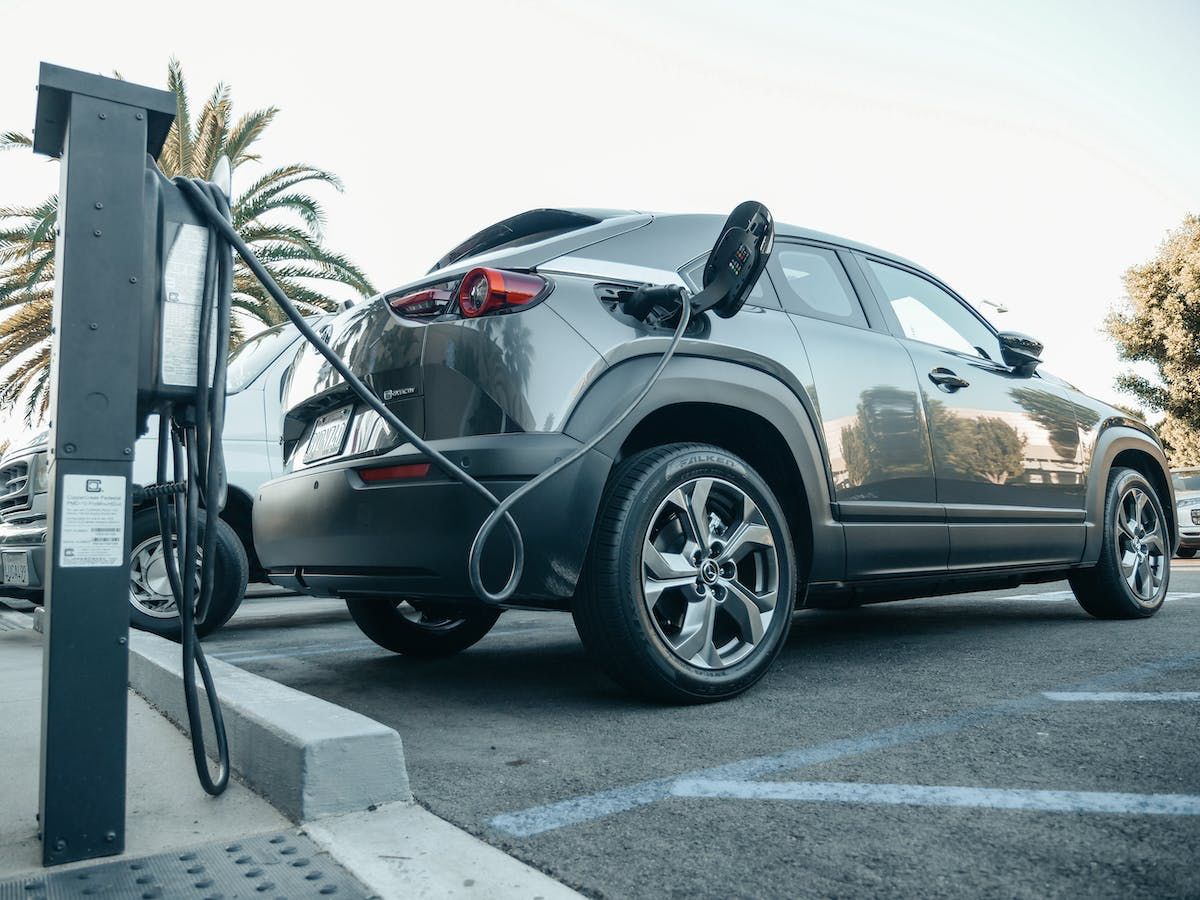
A recent visit to the Eastport Plaza Electric Avenue charging site offers some reasons why manufacturers and dealers are getting antsy about EVs. And potential buyers, too.

The site has four DC fast chargers and two Level 2 chargers.[1] When I pulled in riding in a Nissan Leaf, one of the charging ports was broken. I was later told it had been broken for months. The three other fast chargers were in use. One vehicle was at 86% charged, one at 39% and the third at 22%. Only the 86% vehicle was occupied.

Broken charger at Eastport Electric Avenue

 Choices open to us were to use a slow Level 2 charger or sit and wait for one of the fast charger slots to open up. Unlike at a gas station, there’s no assurance the vehicles ahead of you will move on in a timely manner.

We encountered similar issues at PGE’s Electric Avenue site in the heart of downtown Milwaukie at the corner of SE McLoughlin Blvd. and Jackson St. 

As at Eastport, the Milwaukie site has six charging ports, four DC fast chargers and two Level 2 chargers. All four fast charging stations were occupied with no drivers in the vehicles. One vehicle was at 59%, one at 74%, one at 59% and one at 89%. One of the slow Level 2 chargers was being used, with the driver in the vehicle. 

It is considered acceptable to leave your vehicle unoccupied while it’s charging, It used to be common EV etiquette, however, that when your vehicle was at 80% you would make way for another vehicle if others were waiting.

The U.S. Department of Energy still says, “Unless you truly need every ounce of driving range available in your vehicle, consider unplugging your electric vehicle when it has reached 80 percent charge or an acceptable charge level for your immediate driving needs.” 

EV owners tell me the 80% rule is, however, now commonly abused. Another common abuse is leaving a fully charged vehicle unoccupied for an extended period, with no way for a waiting driver to know how long the wait will be. One EV driver can tell how much longer another EV needs to charge by reading the digital readout on the charger stating the EV’s current degree of charge and the length of time for its charging, but that doesn’t guarantee the vehicle owner will unplug in a timely manner. 

The Department of Energy also urges EV owners not to consider charging sites as resting places. An EV owner will often use a charge point as an hours-long parking spot versus a place to recharge and go,” the Department says.  Doing so, of course, adds an extra problem in that extra-long periods of charging time tops off the battery, which is not optimal for EV performance.

Then, of course, there are gas and diesel vehicle owners who see open charging spaces as prime parking spots. “In a crowded parking lot, the sight of any open electric car charging spot can be too tempting for some to resist,” the Department of Energy warns.

PGE’s charging stations accept all major credit cards, but if you want to sign up for pre-paid or monthly subscription pricing for Electric Avenue chargers, things get a little more complicated because PGE has partnered with Shell Recharge to accomplish that.[2]

First, you have to download the Shell Recharge app to your phone in the Apple App store Google Play store or order a Shell Recharge RFID card.

When you’re ready to charge your vehicle, you have to activate a charging session through the Shell Recharge app or scan your Shell Recharge charging card. If you are at an Electric Avenue charger, you can select “subscription” in the app if you’d like to pay just $25 per month for unlimited charging at Electric Avenue chargers or choose another preferred payment option. When you’re done, your card will automatically be charged for the session.

Charging prices at PGE’s sites are:
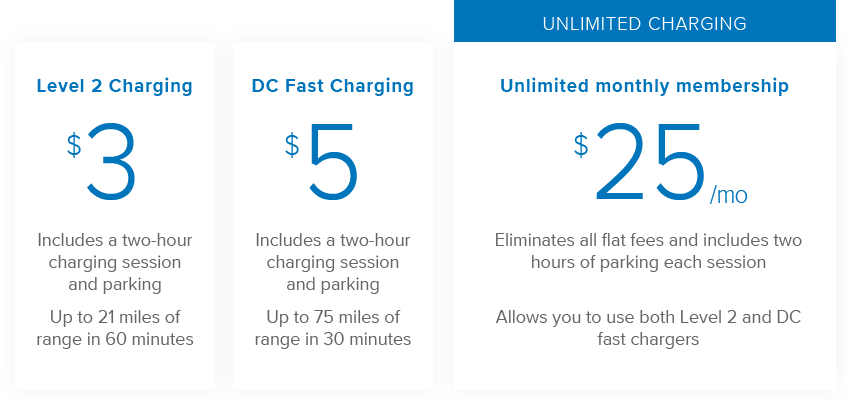
                                                                             Source: PGE

Unlike at a gas station where the price per gallon generally stays the same 24/7, prices may vary during peak times (weekdays from 3 to 8 p.m.) During this period, PGE says $0.19/kWh will be charged to your credit card or Shell Recharge account in addition to your $3, $5 or $25 unlimited pricing structure.

Whatever the price, Oregon’s hyper-projections for electric vehicle adoption are proving to be wishful thinking. And it’s probably not just about EV prices, battery life and range. Unless you have a charging station at home, you are forced to rely on public chargers, and that, as we discovered, can be a frustrating challenge. 

On Nov. 6, 2017, Gov. Kate Brown signed Executive Order 17-21 stating “It is the policy of the State of Oregon to establish an aggressive timeline to achieve a statewide goal of 50,000 or more registered and operating electric vehicles by 2020.” (emphasis in original). 

In 2019, Senate Bill 1044  set a target of 250,000 registered Zero Emission Vehicles on Oregon roads by 2025. In December 2022, Gov. Brown, in a burst of environmental overreach that slavishly followed California’s lead, announced that all new cars sold in Oregon would have to be emissions-free starting in 2035.

The number of Oregon-registered zero emission vehicles on Oregon roads as of September 2023 was just 70,000.  

The likelihood that this number will grow to 250,000 over the next 12 months is nil.


[1] There are three power levels at EV charging stations. Level 1 is the standard wall plug found in homes that delivers 120V. You will generally get only 2-5 miles worth of charging power every hour. Level 2 delivers twice the amount of power with 240V, offering 40-65 miles of charging power every hour. DC Fast Charge is the delivers 480V, which can fill 80% of most car batteries in 30 to 40 minutes.
Oregon’s EV Predictions Are A Pipe Dream

Oregon’s hyper-projections for electric vehicle adoption are proving to be wishful thinking.

On Nov. 6, 2017, Gov. Kate Brown signed Executive Order 17-21 stating “It is the policy of the State of Oregon to establish an aggressive timeline to achieve a statewide goal of 50,000 or more registered and operating electric vehicles by 2020.” (emphasis in original). 

In 2019, Senate Bill 1044 restated the Zero Emission Vehicle (ZEV) adoption target as 50,000 registered on Oregon roads by 2020.

It didn’t happen.

According to information provided by the Oregon Department of Transportation on Dec. 25, 2023, there were just 5,537 registered and operating electric vehicles in Oregon in 2020, 13,572 in 2021 and 23,163 in 2022.

Senate Bill 1044 also set a target of 250,000 registered Zero Emission Vehicles on Oregon roads by 2025.

That ain’t gonna happen either.

As of July 2023, there were 51,355 Battery Electric Vehicles (BEVs), vehicles powered solely by an electric battery, with no gas engine parts, registered and operating in Oregon, according to the Oregon Department of Energy.[1] The number of Oregon-registered zero emission vehicles on Oregon roads as of September 2023 was just 70,000.  The likelihood that this number will grow to 250,000 over the next 12 months is nil.

In December 2022, Gov. Brown, in a burst of environmental overreach that slavishly followed California’s lead, announced that all new cars sold in Oregon would have to be emissions-free starting in 2035.

The way things are going, that’s a pipe dream.

The fact is adoption of zero emission EVs is falling far behind earlier exuberant expectations. Sales are growing, but the rate of growth is slowing and unsold inventory is piling up for multiple brands., despite car companies offering discounts and low-interest rates in an attempt to propel demand. The only segment seeing significant growth in demand is hybrids, which are not zero emission vehicles.

“The first wave of buyers willing to pay a premium for a battery-powered car has already made the purchase, dealers and executives say, and automakers are now dealing with a more hesitant group, just as a barrage of new EV models are expected to hit dealerships in the coming years,” according to the Wall Street Journal.  

Some resistance to EVs may also be emerging because of their environmental costs, particularly the need for minerals for the batteries. And as The Washington Post has pointed out, mining the minerals is only the first step. 

“The ore is almost never pure and needs to be refined, or processed, to become the minerals that go into batteries, the Post reported. ” When it comes to processing, there is one major player: China, which handles more than half of the minerals critical to EV batteries. These elements aren’t used only to power EVs; they also appear in everything from building materials to toys. But as the demand for EV components soars, so could dependency on China’s refining infrastructure.”

Resistance to EVs in Oregon may also be related to the insufficiency of charging ports. Oregon is hoping to install about 370 new electric vehicle charging ports across the state in 2024 as part of an Oregon Department of Transportation rebate program.

In the meantime, car companies are cutting back on plans for battery plants and EV production. 

In mid-December, for example, Ford announced it was cutting its 2024 F-150 Lightning products by half. Ford has delayed about $12 billion in new EV investments, reducing some Mustang Mach-E production and postponing opening one of two planned Kentucky planned battery plants. 

The high cost of EVs is one major factor that will likely continue to hold back their widespread adoption in Oregon. EVs remain much more expensive than internal combustion engine vehicles, especially in North America. High interest rates will also restrain purchases. Consumer frustrations with the availability of EV chargers, excessive charging times, questions about reliability and high repair costs are also undermining early robust sales predictions. 

While maintenance costs for EVs are proving to be lower than for internal combustion vehicles (EV-owners spend half as much maintaining their vehicles as their gasoline-owning counterparts, according to Consumer Reports), repairs after collisions can cost thousands of dollars because the fixes tend to require more replacement parts, the vehicles are more complicated and fewer people do such repairs.

The market is reflecting the concerns about EVs as investors have responded to the changed outlook for them. The iShares Self-Driving EV and Tech ETF | IDRV, set up in July 2019, seeks to track the investment results of an index composed of developed and emerging market companies that may benefit from growth and innovation in and around electric vehicles, battery technologies and autonomous driving technologies. A $10,000 investment at the fun’s inception would have more than doubled in value to $22,815 as of Nov. 2, 2021, but had declined to $14,432.58 as of Dec. 13, 2023.

So don’t bet the farm on EV predictions by politicians and bureaucrats. Their track record so far isn’t great.


[1] There were also 23,328 Plug-in Hybrid Electric Vehicles (PHEVs) similar to a Hybrid, but with a larger battery and electric motor, plus a charging port and a gas tank, which cannot truly be considered Zero Emission Vehicles. 


Sure it’s ugly, but at least it’s expensive.

I passed an all-electric BMW i3 today and it’s the ugliest thing ever. It reminded me of the ungainly 2001-2005 Pontiac Aztec, one of the ugliest vehicles ever made, according to consumer polls. Even legendary GM executive, Bob Lutz, said it and other GM products looked like “angry kitchen appliances.”

BMW i3

BMW i3

What is it that drives people to buy the i3, with a MSRP up to $46,250, and other horrendously pricey, but ugly, products?

It’s the weirdness itself.

It’s not that people want an ugly car. What they want is to stand out, to express their identity.to have their friends, neighbors and even strangers see them in their distinct, peculiar, expensive car. If it’s an electric or hybrid car, so much the better because it crows, “I can afford this. Admire me and my environmental credentials.”

Same thing with a host of other products.

Want an expensive watch? You could spend tons on an exhorbitantly priced, but bland-looking one. But who will notice? Instead, try the Roger Dubuis Excalibur Quatuor, priced at 1 million Swiss francs (about US $1,125,000).

Roger Dubuis Excalibur Quatuor watch

Roger Dubuis Excalibur Quatuor watch

The maker says it’s worth it because its case is made entirely of silicon (according to the brand, the first such watch of its kind), a material with half the weight of titanium and four times the hardness. It’s big advantage? It’s really ugly, so people will notice.

How about shoes? Some women are apparently willing to spend $2495 on Giuseppe Zanotti white crystal-embellished peep-toe leather mid-calf booties. It can’t be because they are so elegant, but they certainly will be noticed.

Giuseppe Zanotti booties

Giuseppe Zanotti booties

Of course, some people will buy expensive things even if they aren’t ugly, so long as they carry status. Aspirational Americans keep buying Land Rovers, for example, even though they consistently get terrible reliability ratings.

Range Rover Evoque

Range Rover Evoque

When JD Power recently released the results of its newest Customer Service Index study, Land Rover finished right at the bottom, in the basement, dead last.

Typical of owner complaints is this from the owner of a Land Rover with 28,000 miles on it: “…after a year of owning it – the electronic park brake got stuck and was a huge expense to fix. Shortly after that the rear anti roll bar was leaking – another huge expense…After 50K miles front suspension arms have gone wheel bearings have gone and front anti roll bar has gone, another 4.5K to fix all. Just got the car back – and now the right side turbo has gone. Another 5K fix… Range rovers are nice to look at – but are built so poorly – its not worth owning this car.”

Oh well, at least people blowing all their money on overpriced things are keeping the people who make them employed. And that’s good for the economy, right?

Subsidizing electric cars in Oregon: a shockingly bad idea

Batteries don’t charge up electric cars; government subsidies do. At least that’s what supporters of a bill now before the Oregon House seem to believe.

The bill, H.B. 2092, would establish an Incentive Fund to make rebates of up to $3000 to purchasers of alternative fuel vehicles, including those that are powered by batteries or hydrogen fuel and gasoline-electric vehicles. Rebates from the fund could total as much as $30 million per biennium and would be on top of the already absurd federal subsidy of up to $7500.

Just what we need, a $30 million government subsidy to purchasers of pricey cars, when Oregon is already one of the top states for EV market share and the state has many other more pressing concerns to address.

The House Energy and Environment Committee held a public heating on the bill on April 2 and has a work session on the bill scheduled for today, April 16.

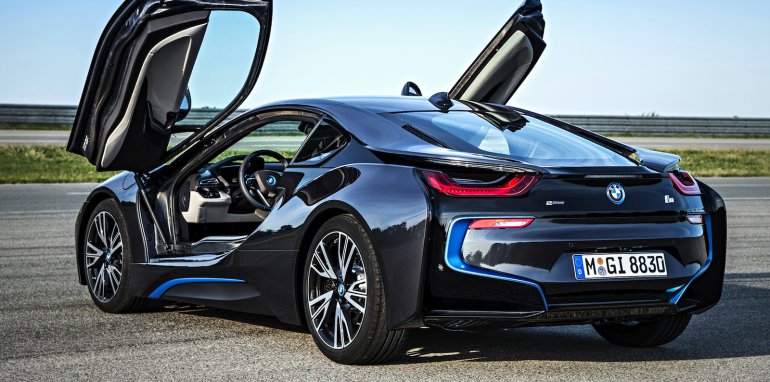
Under the bill, state rebates would help affluent Oregonians buy vehicles such as the $43,000 BMW i3 and $135,000 i8, the $42,000 Mercedes B-Class, the $106,000 Tesla Model S P85D, and the $35,000 Chevy Volt.

The purchaser of a $135,000 BMW i8 would be eligible for a $3,000 rebate from the state under H.R. 2092

The purchaser of a $135,000 BMW i8 would be eligible for a $3,000 rebate from the state under H.R. 2092

To put things in perspective, $30 million is more than the TOTAL state income tax liability of all personal filers in 16 Oregon counties in 2013: Baker County ($13.1 million), Crook ($18.2 million), Curry ($19.6 million), Gilliam ($12.1 million), Grant ($5.9 million), Harney ($5.1 million), Jefferson ($15.5 million), Lake ($6.2 million), Malheur ($17.6 million), Morrow ($11.1 million), Sherman ($2.6 million), Tillamook ($23.6 million), Union ($24.7 million), Wallowa ($6.1 million), Wasco ($23.6 million) and Wheeler ($1.3 million).

If I lived in one of those counties I wouldn’t look kindly on all my personal state income tax payments going to this alternative fuel vehicle boondoggle.

Let’s be honest here, folks. There are a lot of other places $30 million could be invested more wisely in Oregon.

Seven Oregon counties have been losing population, Coos, Baker, Wallowa, Malheur, Grant, Wheeler, and Sherman.

If the Legislature can find another $30 million to spend, why not use the $30 million to help these struggling counties attract businesses?

Deserving young people around the state are dealing with the stresses and strains of trying to find the money to pay for post-secondary education.

Why not put the $30 million in Oregon Opportunity Grants, the state’s need based financial aid program.

The state invests in Employment Related Day Care in support of the Early Learning initiative, providing greater access to quality childcare for Oregon’s working families.

How about adding $30 million to the budget for that?

A potential decline in lottery revenues during the 2015-17 biennium is likely to present budget issues for the Oregon Parks and Recreation Department, Oregon Watershed Enhancement Board, Department of Agriculture, Department of Environmental Quality, Oregon Department of Fish and Wildlife, and the Oregon State Police Division of Fish and Wildlife. In addition, the Oregon Department of Fish and Wildlife is facing a significant budget shortfall.

The legislature could help out the Natural Resource Program area by adding $30 million to its budget.

The logical decision? Short-circuit this bill.