Republican Lobbyist Shows “Scam PACs” are Alive and Well

There’s so much money sloshing around in American politics a lot of questionable activities get overlooked, like the sweet thing Virginia lobbyist Robert J. “Rob” Catron has going on. 
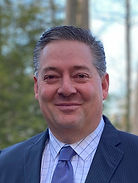
Robert J. “Rob” Catron

A native of South Florida and a graduate of Florida State University, Catron worked as Chief of Staff for Rep. Ed. Schrock, a conservative Virginia Republican, during 2001 – 2003. He later joined the Arlington, VA-based lobbying firm of Alcalde & Fay, where he’s now a Partner. According to the firm, he is “a proud veteran of the United States Army Reserve” and “has successfully managed or consulted on more than 50 winning political campaigns for federal, state and local offices”.

On December 4, 2023, Catron registered Ranger PAC, a political action committee, with the Federal Election Commission (FEC). Based in Athens, Georgia, the PAC says its mission is to support the election of “highly accomplished conservative military veterans to Congress to defend the Constitution and get America squared away”.

The focus on veterans is an exploitation of the fact that although public trust in many institutions is in retreat, the public generally still has high confidence in veterans as effective leaders in civic life. 

Ranger PAC’s treasurer is Paul Kilgore, CEO of Professional Data Services Inc (PDS), a political financial consulting company in Athens he founded in 1999 that is a leading compliance firm in Republican politics. In 2024, Kilgore represented more than 157 Republican candidates.

From January 1, 2025 to November 30, 2025, Catron’s Ranger PAC raised $1,394,894.74, according to its filing with the Federal Election Commission (FEC). In the same period, it spent $1,353,836.73.

The problem is that, in a deliberate assault on trust, Catron’s Ranger PAC spent just $69,500, 5% of its total spending, on aspiring or serving politicians. That’s right, a measly 5%. The rest, 95%, went to fundraising and administrative expenses.

Although there’s no legal minimum percentage of money raised that a PAC must donate to candidates, legitimate PACs generally spend less than a quarter of their donations on fundraising, with many spending considerably less. 

Charity Navigator, an independent non-profit organization that evaluates U.S. charities on their financial health, accountability and transparency, encourages nonprofits to spend no more than 30% combined on administrative and fundraising costs. Organizations earning the highest scores spend less than 10 cents to raise $1 (a 10% ratio).

In Ranger PAC’s case, it added insult to injury: 5 the 19 politicians who received donations from January 1, 2025 to November 30, 2025 weren’t even veterans.[1]

The Center for Public Integrity, a nonprofit newsroom that investigates betrayals of public trust, calls PACs like Ranger PAC “Scam PACS”. They purport to raise money for political and social causes, but spend most of the money they raise from unsuspecting donors on fundraising, salaries and overhead.

In 2015, Politico reported, for example, that a PAC called the Black Republican PAC spent less than 1 percent of the $700,000 it raised on contributions to candidates or ads supporting them, according to government filings. 

The FBI warns: “Scam PACs are fraudulent political action committees designed to reroute political contributions for personal financial gain. This is a federal crime—and can be costly to victims who thought they were making legitimate campaign contributions.”

If most of the money Ranger PAC raised didn’t go to candidates, where did it go?

$19,641.81 went to Paul Kilgore’s Professional Data Services Inc for “PAC Compliance Consulting”. 

Most of the rest went primarily to enriching 10 firms involved in fundraising[2] , some of them with shadowy histories. 

The website for Better Mousetrap Digital, which Ranger PAC paid $25,291.33, says it “is the premier digital fundraising consulting firm for Republicans…with decades of experience spanning from state house campaigns to the White House”. 

Better Mousetrap Digital’s founder is Jack Daly. The company’s website doesn’t note that in December 2023, Daly was sentenced to 4 months’ imprisonment for conspiring to (i) commit mail fraud by defrauding thousands of conservative political donors out of money and (ii) lie to the Federal Election Commission (“FEC”). He was also ordered to pay a $20,000 fine, along with two separate payments of $69,978.37 for restitution and forfeiture.

Daly emerged from federal custody, nevertheless, to re-establish himself as a top Republican Party campaign fundraiser. NOTUS reported in Oct. 2025 that dozens of federal-level Republican political committees — including the Republican National Committee, numerous congressional committees and campaign operations tied to President Donald Trump — had together spent nearly $18 million on digital fundraising, donor lists and other services from Better Mousetrap Digital.

The FBI says it is actively looking for Scam PACs that only spend money on telemarketing and junk mail. It urges Americans targeted by a scam PAC to contact their local FBI office and ask to speak to an election crimes coordinator. 

Unfortunately, scam PACs have been around for a while.

“Since the tea party burst into the political landscape in 2009, the conservative movement has been plagued by an explosion of PACs that critics say exist mostly to pad the pockets of the consultants who run them,” Politico wrote in 2014. “They collect large piles of small checks that, taken together, add up to enough money to potentially sway a Senate race. But the PACs plow most of their cash back into payments to consulting firms for additional fundraising efforts.”

A POLITICO analysis of reports filed with the Federal Election Commission covering the 2014 cycle found 33 PACs that courted small donors with tea party-oriented email and direct-mail appeals raised $43 million, but spent only $3 million on ads and contributions to boost the long-shot candidates often touted in the appeals.

In 2016, two Democratic FEC commissioners, Ellen Weintraub and Ann M. Ravel, urged their colleagues to take action against scam PACs, but there’s been little follow-up. On January 31, 2025, President Trump sent a brief letter to Weintraub firing her “effective immediately” as a FEC Commissioner and Chair. Weintraub challenged her dismissal, but is no longer serving on the commission.  Ravel resigned from the FEC in February 2017. Weintraub has not been replaced, denying the FEC a quorum for votes.

During 2002 – 2018, Virginia political operative Scott B. Mackenzie served as treasurer of 12 PACs that spent 68% of the money they raised on fundraising, wages and administration. But he paid a price. In 2020, a Federal District Judge sentenced him to 12 months and one day in prison for making false statements to the FEC in relation to his association with the PACs. Mackenzie also had to pay $172,200 in restitution.

“If the Justice Department was seeking to send a message to others tempted to get into the ‘scam PAC’ game, that message came through loud and clear,” said Brett Kappel, a campaign finance lawyer at the Akerman law. “These are not victimless crimes and people will go to prison for them.”

It looks like Catron hasn’t gotten that message, even though he’s been in trouble before. 

In June 2021, he was indicted by a Virginia Beach grand jury on 10 counts of making false statements and election fraud. He avoided prison when he pleaded no contest to three election-related charges. The charges stemmed from a petition scandal during a Republican congressman’s ultimately losing 2018 campaign for a second term in Congress representing a coastal Virginia district. Catron was accused of being involved in an effort to get a third-party spoiler candidate on the ballot with petitions using forged signatures.

Catron received a three-year suspended sentence and was ordered to pay court costs and fines after entering the plea to three counts of neglect of election duty. 

With his Ranger PAC antics, maybe it’s time to bring morally hollow Robert J. “Rob” Catron back to court.


[1] Recipients of Ranger PAC donations, January 1, 2025 – November 30, 2025

Donation RecipientDonation ($)Service
Matt Van Epps, Tennessee  10,000Army
Michael Whatley, N. Carolina  5,000Not a veteran
Ronny Jackson, Texas   8,500Navy
Derrick Van Orden, Wisconsin    5,000Navy
Mariannette Miller-Meeks, Iowa   5,000Army
Zach Nunn, Iowa      5,000Air Force
Gabe Evans, Colorado    5,000Army
Tom Barrett, Michigan    5,000Army
Stewart Whitson, Virginia   1,000Army
Dan Butierez, Arizona    1,000Not a veteran
Jen Kiggans, Virginia    5,000Navy
Ryan Zinke, Montana     5,000Navy
Pat Harrigan, N. Carolina   2,000Army
Nick Lalota, New York  1,000Navy
Ken Calvert, California    1,000Not a veteran
Warren Davidson, Ohio    1,000Army
Abraham Hamadeh, Arizona  2,000Army
Randy Fine, Florida    1,000Not a veteran
Jimmy Patronis, Florida   1,000Not a veteran 

[2] Recipient / percent of total disbursements / Total disbursement

DIRECT SUPPORT SERVICES   17.15%

$232,119.45

ONE VOICE SOLUTIONS   14.29%

$193,522.35

CONSOLIDATED MAILING SERVICES.  9.23%

$124,999.46

DRAGONFLY CONSULTING   9.1%

$123,200.00

FORTHRIGHT STRATEGY, INC.   7.78%

$105,323.46

LAUNCHPAD STRATEGIES, LLC.  3.9%

$52,765.05

TAILWINDS POLITICAL   3.89%

$52,686.42

NAMS-NORTH AMERICAN FULFILLMENT.  3.56%

$48,140.77

DIRECT SUPPORT SYSTEMS   3%

$40,677.94

BETTER MOUSETRAP DIGITAL    1.87%

$25,291.33

Republican “Liberty Cross” Medal Mimics Nazi Award

Nazi’s and Liberty. An odd pair. 

The American Political Action Committee (AmeriPAC), a Bellevue, Washington-based organization that says it is focused on electing “conservative, freedom-oriented candidates to public office”, is offering  supporters a Liberty Cross Award Medal.[1] The medal , which features a bust of President Trump, bears an uncanny resemblance to a bronze Nazi War Merit Cross featuring a swastika.

Liberty Cross Award Medal Nazi War Merit Cross

  AmeriPAC emails tell recipients that those who have earned the Liberty Cross Award Medal have demonstrated: 

🔷 VALOR in the defense of truth
🔷 LOYALTY to the America-First mission
🔷 STRENGTH in standing with President Trump against the Radical Left

To receive their medal, all awardees have to do is fill out a short survey and make a donation of $10 or more. The message to me included a pre-checked box to make my contribution a monthly recurring donation.

The survey questions, reminiscent of the “loyalty questionnaire” administered by the US Government to Japanese Nikkei citizens and immigrants being held in WWII concentration camps, include:

  1. Are you a steadfast patriot, who shows VALOR in the defense of truth?
  2. Do you pledge LOYALTY to the America-First mission?
  3. Do you STAND with President Trump against the Radical Left and all their plots and schemes?
  4. Do you LOVE President Trump and all that he is doing to MAKE AMERICA GREAT AGAIN?  

“At AmeriPAC, we want to personally restore our country for freedom-loving patriots like you,” the medal appeal says. 

The Federal Election Commission (FEC) lists two similarly named fundraising committees: (1) AMERIPAC: THE FUND FOR A GREATER AMERICA, formed in 1992 to help elect Democratic leaders to the United States Congress.  ID: C00271338; (2) The American Political Action Committee (AmeriPAC) Registered with the Federal Election Commission on August 24, 1980. ID: C99002396. 

The second PAC is the one awarding the Liberty Cross Award Medal. According to the FEC, this PAC has raised $2,399,916.53 and spent $1,446,308.76 in the first three-quarters of 2025. Almost all of its spending has gone towards fundraising. 

About 41% of the money spent on fundraising, $595,618.82, went to Red Spark Strategy, a Republican-leaning Arlington, VA.-based digital consulting and marketing agency. Another 11.05%, $159,876.80 , went to Frontline Strategies LLC and 10.63%, $153,726.29, went to Better Mousterap Digital LLC. 


[1] A War Merit Cross Second Class without Swords. (Kriegsverdienstkreuz II. Klasse ohne Schwertern). Instituted October 18th, 1939 (1939-1945 issue). Constructed of bronze, with a fixed loop and ring for suspension, consisting of a Maltese Cross with pebbled arms, the obverse with a central wreathed mobile swastika. 

Carrick Flynn: Oregon’s Crypto Candidate

Top executives at FTX, a major digital currency trading platform, are financing a high-priced communications war on behalf of Carrick Flynn, who hopes to outrun a primary field of Democrats seeking election to Oregon’s new Congressional District 6 seat. The primary will be held on May 17, 2022.

Carrick Flynn
Source: Northwest Observer

If Flynn wins the primary he will owe his win lock, stock, and barrel to wealthy crypto supporters.

Is this how we want our political campaigns to be financed? Do Oregonians really want candidates to be captured by special interests, particularly so early in the political process? And in this case, are we OK with the capturers being major players in the controversial and risky business of cryptocurrencies? 

If you’ve paid attention to the plethora of television campaign ads already running in the Democratic primary race, you’ve noticed that the ones by the other candidates note at the end “paid for by” the candidates campaign committee. In Carrick Flynn’s case, most have said “Paid for by Protect Our Future PAC”.

The major backer of the PAC is FTX founder and CEO Sam Bankman-Fried, a 30-year-old American “Master of the Universe” billionaire who lives in the Bahamas.

FTX is incorporated in Antigua and Barbuda and headquartered in the Bahamas. The company officially opened its doors for trading in May of 2019. It enables trades of a variety of digital assets, such as Bitcoin, Ethereum, Solana and Dogecoin. 

Sam Bankman-Fried
(Source: New York Magazine)

Super PACs cannot legally coordinate with candidates, but many candidates find creative ways to work in concert with them that stretch the legal boundaries.

According to data filed with the Federal Election Commission (FEC), as of April 11, 2022, Protect Our Future had made independent expenditures in support of Flynn totaling $4,932,464.73 in 2022. The expenditures have been devoted to a wide range of activities, including radio, television and digital ad production and time purchases, lawn signs, direct mail, and get-out-the-vote phone calls.

On April 12, 2022, OPB reported that a political action committee affiliated with national Democrats, the House Majority PAC, had also purchased roughly $1 million of ads to help Flynn. The PAC’s television ads are already appearing.

Six of the nine Democrats seeking to win the primary put out a statement denouncing the move. “We strongly condemn House Majority PAC’s unprecedented and inappropriate decision…” the joint statement said. “We call on House Majority PAC to actually stand by our party’s values and let the voters of Oregon decide who their Democratic nominee will be.”

Interestingly, some of the money Flynn received from the House Majority PAC could be considered as a pass-through from Bankman-Fried. According to OpenSecrets,a research and government transparency group tracking money in politics and its effect on elections and policy, Bankman-Fried has also made substantial donations to the House Majority PAC.

It’s not hard to decipher Flynn’s potential appeal. He’s a climber with a hard luck story about his youth and a touch-all-the-bases career of prestige academic success at Yale Law School and international social justice-oriented work.* But to really pop in Oregon’s political world, he needed money, and FTX has given him a jump start.

“…the company’s executives are quietly emerging as crypto kingmakers in the nation’s capital as they spend millions to launch super PACs, bankroll congressional campaigns and recruit former government officials with an inside track on looming crypto regulations,” Politico observed in February. In other words, the “Our” in Protect Our Future most likely means the crypto industry.

Down the road, FTX may also have other interests that could bring into play a need for political support. The Generalist, a tech-focused weekly online publication, has speculated that the company may try to grow its footprint in sports betting, banking and social media.   In this regard, Bankman-Fried has openly talked about his desire to build out a fully-fledged financial giant, a kind of monetary super-app handling payments, custody, and of course, investing across asset classes. 

If Flynn wins the primary** and the election, will he be indebted to FTX’s interests as much as to Oregon’s. It’s damn hard not to think otherwise. 

________________

*Flynn’s efforts to position himself as a true Oregonian resemble Nicholas Kristoff’s efforts to do the same in his failed quest to become Oregon’s governor.  Flynn, 35, was born in Oregon, grew up here and graduated from the University of Oregon in 2008, but he has spent a substantial part of his adult life elsewhere, much of that overseas: 

·      2009: Legal Clerk, The Carter Center, Monrovia, Liberia

·      2010: Legal Consultant, The Asia Foundation, Dili, Timor-Leste

·      2011: Volunteer, Volunteer, Progressio UK, Dili, Timor-Leste

·      2011-2012: Program Associate / Legal Consultant, The Asia Foundation, Dili,    Timor-Leste

·      2013-14: Bernstein Human Rights Fellow, New Delhi Area, India

·      2014: Bernstein Human Rights Fellow, Petaling Jaya, Malaysia

·      2015: Lecturer, Jimma University, Jimma, Ethiopia

·      2015-2018: Assistant Director, Center for the Governance of AI (GovAI), Oxford, England, United Kingdom

·      2018-2022: Research Faculty, Georgetown University, Washington, D.C.

Much ado about nothing: Joaquin Castro and Trump campaign contributors

Well, cry me a river.

crymeariver

This past Tuesday, Rep. Joaquin Castro (D – TX), brother of Democratic presidential hopeful Julián Castro, posted on Twitter the names of 44 San Antonio, TX residents who have contributed the maximum allowed under federal law to President Trump’s reelection campaign.

“Their contributions are fueling a campaign of hate that labels Hispanic immigrants as ‘invaders,’ “ the tweet said.

From the firestorm of criticism that erupted, you’d think Castro paid a group of Antifa thugs to attack conservative journalist Andy Ngo.

“Democrats want to talk about inciting violence? This naming of private citizens and their employers is reckless and irresponsible,” Trump campaign communications director Tim Murtaugh said in a statement. “He is endangering the safety of people he is supposed to be representing.”

“People should not be personally targeted for their political views, period,” House Minority Whip Steve Scalise (R-La.), who was shot and during a Congressional baseball game two years ago, posted on Twitter.  “This isn’t a game. It’s dangerous, and lives are at stake. I know this firsthand.”

Seven Republican members of the House Freedom Caucus, which includes many of the more conservative House Republicans, have even called on the House Ethics Committee to investigate Castro for his Twitter post.

“Posting a target list of private citizens simply for supporting his political opponent is antithetical to our principles and serves to suppress the free speech and free association rights of Americans,” the lawmakers wrote in a letter sent to the Ethics panel Friday.

“Joaquin Castro shared personal info on Trump donors. Despicable!,” Donald Trump Jr. said in a text message to the president’s supporters.

Cry me a river!

The fact is all the information Castro tweeted is readily available to the public.

Federal Election Commission (FEC) guidelines provide that individuals can contribute up to $2,800 to federal candidates per election, with a primary and general election counting as separate elections. That means a donor can give $5,600 combined. Cash contributions of $50 or less can be anonymous.

Once contributions add up to more than $200 during a two-year cycle to a particular candidate, campaigns are required to report the donations to the FEC. Reports must include the amount donated, the date of receipt, and the contributor’s name, address, occupation, and employer.

All that data is then posted on the FEC’s website, which can be easily accessed by me, you, Tim Murtaugh, Steve Scalise, the House Freedom Caucus,  Donald Trump Jr. and anybody else, even the Russians.

The non-partisan non-profit Center for Responsive Politics also aggregates the FEC data in multiple formats on the website Open Secrets.

So, if you want fake political news, here it is.

Despite pledges, politicians fail to shed tainted donations. Surprise!

Senate Minority Leader Chuck Schumer (D-NY) says he’ll offset $7,000 in campaign contributions he’s received from accused sex trafficker Jeffrey Epstein by donating an equivalent amount to anti-sex trafficking and anti-violence against women groups.

Don’t count on it.

In 2017, when multiple women went public with accusations that Harvey Weinstein had sexually harassed them, Democratic politicians, including Schumer, leaped to disassociate themselves from him. In particular, they promised to donate Weinstein’s now-tainted campaign contributions to charity.

schumer_corporate_taxes_0

Sen. Chuck Schumer (D-NY)

Schumer was prominent among numerous politicians scurrying to say they would make amends. Federal Election Commission (FEC) records show that Weinstein donated $20,700 to the Friends of Schumer campaign finance committee during 2013-2017.

“Sen. Schumer is donating all of the (Weinstein) contributions to several charities supporting women,” Matt House, a spokesman for Sen. Schumer, told the Washington Post in October 2017.

weinstein 4

Harvey Weinstein

Republican National Committee chairwoman Ronna Romney McDaniel praised Schumer  for doing the right thing.

She was too quick in her praise.

FEC records reveal that Schumer’s campaign committee didn’t donate one thin dime to charities supporting women in 2017 or 2018.

During that same period, Schumer’s committee also received contributions from the DNC Services Corp (Democratic National Committee), to which Weinstein had donated $203,458.

There’s no evidence that Schumer’s committee re-distributed any of that money to women’s groups either.

To its apparent credit, the Democratic National Committee (DNC) said it would donate $30,000 of the funds it had received from Weinstein to three non-profits:

  • Emily’s List, a political action committee that aims to help elect pro-choice Democratic female candidates to office.
  • Emerge America, an organization that recruits, trains and provides a network to Democratic women who want to run for office, and
  • Higher Heights, a national organization working to elect Black women, influence elections and advance progressive policies.

FEC records of the DNC’s expenditures in 2017-2018 reveal that it lived up to its promise.

On Oct. 30, 2017, the DNC sent Emily’s List $10,290.15.  (The DNC also sent $5,000 to Emily’s List on May 25, 2017, but that was before the Weinstein scandal erupted.)

The DNC also sent $10,290.15 to both Emerge America and Higher Heights on Oct. 30, 2017. It sent $1250 to Higher Heights on Sept. 29.

But there was a hitch. The DNC collected $300,000 in donations from Weinstein, not $30,000. It kept the other $270,000.

Other Democratic politicians, including some who are now running for the Democratic Party’s presidential nomination, also had received funds from Weinstein and also made a lot of promises to send the money to deserving non-profits. The announced recipients, however, were largely organizations that would launder the money right back to Democrats and their causes.

Even then, not all the politicians followed through on their commitments.

  • Sen. Elizabeth Warren (D- MA) said she’d donate $5,000 she received from Weinstein to Casa Myrna, a nonprofit group in Massachusetts. The FEC’s records on expenditures of the Elizabeth Warren Action Fund during 2017-2018 don’t show any payments to Casa Myrna.
  • Sen. Kirsten Gillibrand (D-NY) said she would donate $10,000 received from Weinstein to RAAIN, (Rape, Abuse & Incest National Network), an anti-sexual violence organization. No such donation is reported in FEC records of expenditures by Gillibrand’s 2017-2018 campaign finance committees.
  • Sen. Al Franken (D-MN) said he’d send Weinstein’s donations to the Minnesota Indian Women’s Resource Center. According to OpenSecrets.org, Weinstein donated a total of $17,300 to Franken and his Midwest Values PAC. None of Franken’s campaign finance committees recorded on FEC.org show a donation to the Minnesota Indian Women’s Resource Center during 2017-2018.
  • Sen. Kamala Harris (D-CA) said she would give $5,000 she received from Weinstein to a women’s rights nonprofit, Equal Rights Advocates. FEC records on Harris’ campaign finance committees do not show such a donation during 2017-2018.
  • Bob Casey (D-PA) said he’d give $2,190 he received from Weinstein to the Women’s Center and Shelter of Greater Pittsburgh. FEC records on Casey’s campaign finance committees do not show such a donation.
  • The Clinton Foundation’s website says Weinstein has donated between $100,001 – $250,000 to the Foundation. In Oct. 2017, the Foundation announced it had no plans to return Weinstein’s contributions, saying they had already been spent on charitable programs. According to the Foundation’s Form 990 report to the IRS, it had net assets of $323,470,879 at the end of 2017.

Looks like a lot of politicians’ promises are no more than empty public relations gestures.  Surprise!


What Trump-Related Business Do I Boycott Now?


boykot_trump_app-_jpg

Decisions. Decisions.

It used to be that if the presidential candidate you favored lost the election you sulked a bit, regretfully tore your candidate’s sticker off your car bumper and moved on.

Now you’re expected to scream in dismay, post diatribes on every possible social media channel and boycott a mind boggling array of businesses that have even the slightest connection with the winner and his or her family.

So here we are, politics intruding in every aspect of our lives. All this foolishness, this symbolic act of frustration, is really getting out of hand.

Shannon Cuoulter, the 45-year-old owner of a small marketing firm in the San Francisco Bay area, is a key instigator in all this. In October 2016, she found herself increasingly upset with Donald Trump’s comments about, and behavior toward, women. Deciding to take action, she first created a #fashionnotfascism hashtag and urged people via Twitter to avoid stores that carried Ivanka Trump’s clothing and accessories.

Later changing her campaign hashtag to #GrabYourWallet, she created a website with a spreadsheet people could use to avoid transgressing businesses. The spreadsheet starts with a short list of the “Top 10 Companies We’re Boycotting.”

The list includes 9 retailers that sell Trump family products (Macy’s, Bloomingdale’s, Dillards, Zappos, Amazon, Hudson Bay, TJ Maxx, Lord & Taylor and Bed, Bath & Beyond) and one retailer where a board member contributed to the Trump campaign (LL Bean). “LL Bean: official winter clothing of the New Reich,” one critic tweeted.

But Cuoulter doesn’t stop there.

The spreadsheet goes on to list 46 more companies to boycott, including:

  • Trump-owned, branded, or operated businesses, including Trump hotels and Trump golf courses
  • More retailers that sell Trump family products, including Overstock.com, Ross, and Walmart
  • Companies that advertise on Celebrity Apprentice (Donald Trump is Executive Producer)
  • Companies with CEOs who raised funds for Trump and or a Trump PAC, including LendingTree and New Balance.
  • And Yuengling Beer. GrabYourWallet says Yuengling should be boycotted because its founder donated to Trump’s campaign. But the founder, David G. Yuengling, died in 1877. Presumably, the donor was the company’s current president, Richard Yuengling.

With such a wide net, GrabYour Wallet goes through some convoluted explanations for why the list isn’t even longer.

The website includes a lengthy explanation, for example, for why Facebook is not included on the boycott list:

“Given its massive international user base and high levels of daily engagement, the ways in which Facebook contributed to the distribution of propaganda / fake news during the election is of serious concern in our democracy and in the world. That Trump surrogate Peter Thiel is on the board of Facebook doesn’t help matters much. After extensive discussions w/ Grab Your Wallet participants, Facebook is NOT being placed on the boycott list at this time for several reasons: (1) it’s a vital tool for self-organizing, particularly Pantsuit Nation & its local chapters (2) Mark Zuckerberg has made formal statements acknowledging the problem of propaganda & fake news on the Facebook platform as well as a committment (sic) to addressing / fixing it, although these statements did not represent as strong a committment (sic) as we would have liked to have seen and (3) the media category (which is what FB is, a media outlet) is the one we are most conservative about adding new companies to the list b/c of the importance of free expression.”

Whew!

Other sites urging shoppers not to buy Trump-related products include Boycott Trump (with little or no explanation of why particular companies are targeted), and the Democratic Coalition Against Trump, which offers an app that allows users to identify over 250 companies and people to boycott because they’re directly connected to Trump. “Make Trump and his allies pay, literally, for their hateful rhetoric and regressive policies,” the app promotion says.

Some companies have encountered boycott threats just for executives making positive statements about Trump. After Under Armour CEO and Chairman Kevin Plank made some favorable comments to CNBC about Trump’s impact on business, boycott threats popped up all over Twitter.   “Businesses who stand up for this madness will be starved out one by one. ,” said one tweet.

Then there are the calls to boycott the United States itself because of Trump’s actions.

The new target of the academic boycott movement is the United States. According to Inside Higher Ed, at least 3,000 academics from around the world have signed on to a call to to boycott international academic conferences held in the United States in solidarity with those affected by Trump’s executive order barring entry by nationals of seven countries.

Frankly, this whole exercise in condemnation is as arbitrary as can be.

The boycott of LL Bean, for example, is justified on the basis that Linda Bean, an heiress to the Bean fortune, a member of LL Bean’s board and one of 50 family members involved in the business, made donations to Trump’s campaign.

If mere donations to Trump’s campaign from some odd associates with a business are to be the justification for corporate boycotts,  potential targets are legion. Just review the Federal Election Commission’s data on campaign contributors and you will likely find that somebody at just about every major company in America contributed to Trump’s campaign or said something complimentary about him.

All this is poisoning and polarizing public debate, exacerbating division, undermining relationships, and inserting politics into daily life to an unsettling degree,

And if you think about it, the way things are going the boycott Trump folks are going to be insisting that you stop buying anything online or in brick-and-mortar stores, and that you make your own beer in the basement.

My thinking? This is all getting out of hand. It’s time to boycott boycotts.