“Last year’s One Big Beautiful Bill Act helped roughly triple the ICE budget, allocating $45 billion for building new immigration centers and hiring 10,000 new ICE agents. One dispiriting lesson of the imperial boomerang is that, once. bought and paid for, structures of intimidation and oppression tend to endure.” David Wallace-Wells, 1/25/2026

Update, 1/30/2026 – The Washington Post reported that local officials are raising logistical and humanitarian concerns in 23 towns where U.S. Immigration and Customs Enforcement plans to convert industrial buildings into detention centers that combined would hold up to 80,000 people. ICE has offered few details about its plan since The Washington Post first reported on it in December 2025. One detention center the Department of Homeland Security wants to open would be a more than 1 million sq. ft. industrial warehouse in Social Circle, Georgia that would be retrofitted to hold 8,500 detainees and hundreds of staff, more than the city’s total population. The City Manager, Eric Taylor, has said the city does not have the water or sewer infrastructure to support the facility. Unaddressed is the question of why the government needs such huge detention facilities when it says it’s objective is to deport people.
Update, 2/12/2026 – It’s not just more detention centers coming down the pike. Wired reported that ICE and DHS have quietly carried out a months-long expansion, securing more than 150 new leases and office expansions across nearly every state, often in or near major metro areas. Many new facilities sit near schools, medical offices, and places of worship, with DHS pressing the GSA to bypass standard procurement rules and hide lease details under claims of “national security.”
Update, 2/21/2026 – Funding for the Department of Homeland Security expired has expired and Democrats have made 10 demands to rein in Trump’s surge of deportation forces into U.S. cities. One of those demands is “Compliance with Basic Detention Standards and Oversight of Facilities.” Think about it. Incarceration facilities are already legally required to be humane and hygienic., but as Radley Balko has reported on SubStack in The Unpopulist, there is a growing pile of reports from attorneys, journalists, human rights groups, judges, and others about shocking, inhumane conditions at facilities around the country.
Update, 3/7/2026 – So far, DHS has completed the purchase of 10 of the 23 detention center properties it initially pursued, spending more than $890 million, according to deed records or statements by local officials. Efforts to acquire 10 other properties — in Indiana, Minnesota, Mississippi, Missouri, New Hampshire, New York, Oklahoma, Tennessee, Texas and Virginia — have failed, according to statements by local officials or building owners.
In the years preceding his death in 1875, George Templeton Strong, a prominent Wall Street attorney, kept a voluminous journal of his life and times. In April 1865, near the end of the American civil war, he wrote, “These four years have reduced me to something like pauperism, But I am profoundly grateful for them nevertheless. They have given me — & my wife & my boys, — a country worth living in & living for, & to be proud of.”
I can’t say President Trump’s inhumane crackdown on immigrants and harassment and murder of American citizens in the past year have given me a country worth living in, living for and to be proud of.
I doubt 7-year-old Diana Crespo, a second grader at Gresham’s Alder Elementary School, and 5-year-old Liam Ramos, the bunny-hatted child detained by immigration agents in Minneapolis, see America as a country worth living in and living for and to be proud of either. They are both being held at the U.S. Immigration and Customs Enforcement’s South Texas Family Residential Center in Texas.
U.S. Immigration and Customs Enforcement has spread its detention center tentacles across the United States:
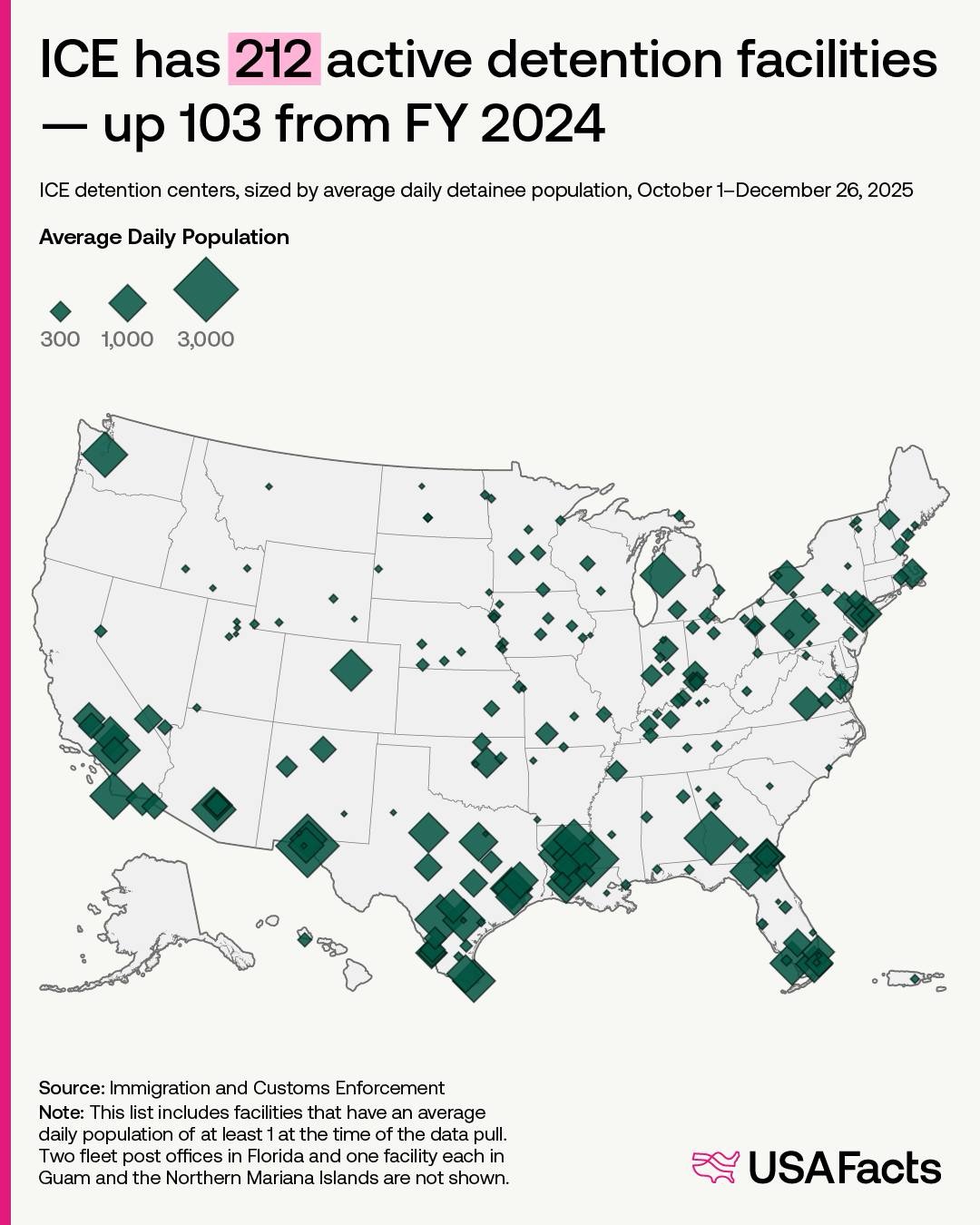
Oregon Public Broadcasting (OPB) reported on January 29, 2026 that ICE is planning another detention center in Newport, Oregon as soon as May.
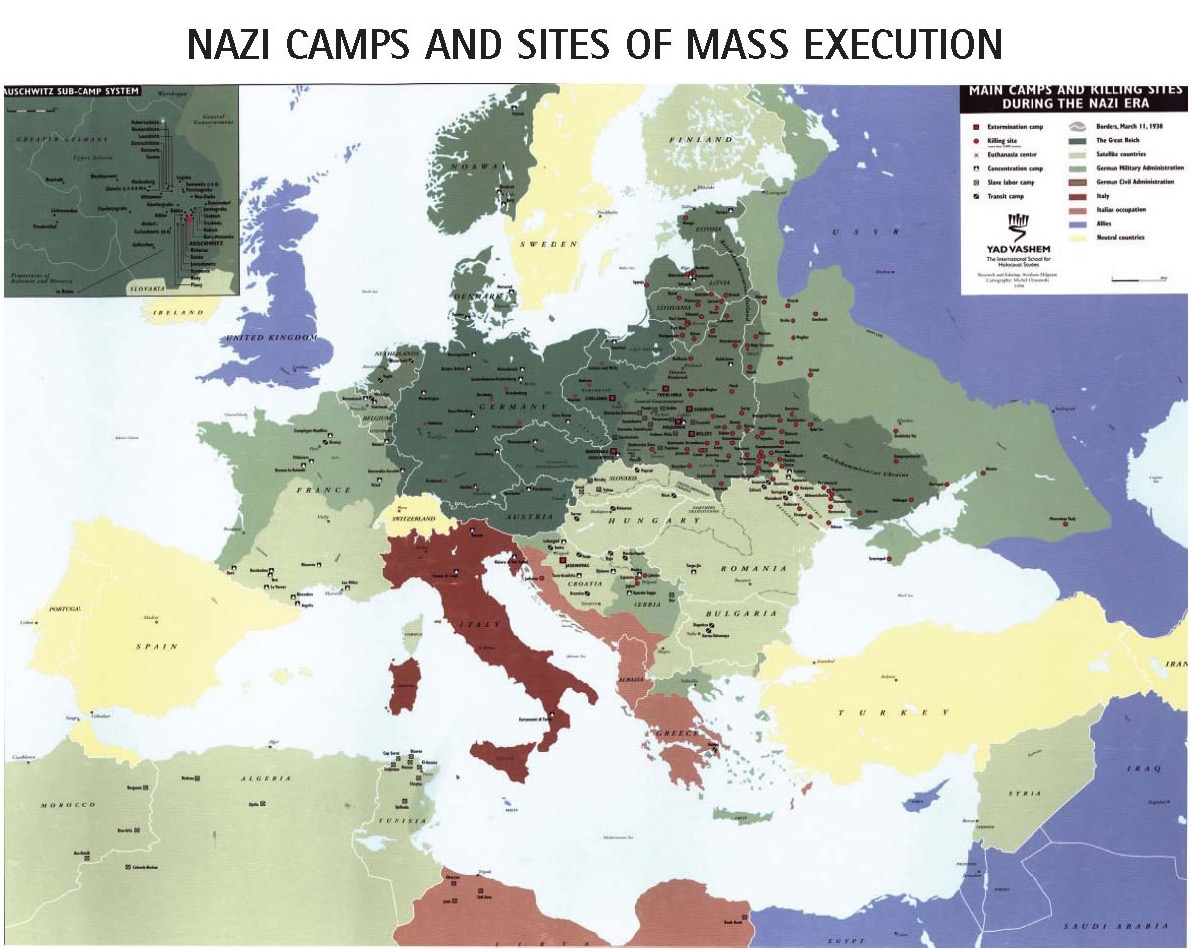
The spread of these. detention centers reminds me of another brutal time.
Most of us know the names of a few Nazi concentration camps, like Dachau, Auschwitz and Bergen-Belsen, where Anne Frank died. But they were part of a massive complex of more than 850 ghettos, concentration camps, forced-labor camps and extermination camps CNN has identified. They stretched from France and the Netherlands in the west to Estonia, Lithuania and Poland in the east that the Nazis established during the 12 years Adolf Hitler was in power. Their purpose — to segregate , oppress and persecute their opponents.
Like the ICE detention centers, the Nazi system started small and then metastasized like a cancer, according to the Wiener Holocaust Library.
Initially there were so-called SA camps. (Sturmabteilung (SA), or “Brownshirts,” was the Nazi Party’s original paramilitary wing). After the Night of Long Knives in 1934, the SS and Heinrich Himmler shut down the SA camps and consolidated control of all camps in Germany. Himmler and the SS used Dachau, an original SS camp, as a blueprint for all camps. From 1934 onwards, the SS developed and then operated the camp system, which lasted until Germany’s defeat in 1945.
The SS started building major camps, beginning with Sachsenhausen in 1936, then Buchenwald in 1937, Flossenbürg and Mauthausen in 1938 and Ravensbrück for women in 1939. Political prisoners were the first inmates. Then people with previous criminal convictions. Next were the so-called “asocials”, such as Roma, homosexuals, prostitutes, the homeless and the “work-shy”. The mass imprisonment of Jews began in 1938 after the Anschluss and Kristallnacht.
As the Second World War began in earnest, foreign citizens from newly occupied countries such as Czechoslovakia and the Netherlands began to be imprisoned , followed by Soviet prisoners of war (POW’s) after the invasion of the Soviet Union in June 1941.
Those who believe U.S. Immigration and Customs Enforcement can and will be restrained under the Trump administration might want to stop and reconsider.
With an administration where cruelty is the point, it can happen here.

 ThinkingOregon