Oregon Higher Education Endowments Under Threat

For Donald Trump, it’s always about the filthy lucre. 

Rewarding allies and punishing perceived adversaries financially has long been Trump’s raison d’être in business and politics. His life is a story of questionable real estate and tax payment shenanigans, a sham Trump University, hush money payments to porn star Stormy Daniels and misuse of charitable funds at the Trump Foundation. His greed and shameless behavior seem to have no limits. Nor does his assault on higher education.

Now he and his party are after higher education endowments and Oregon’s private institutions, including those with large and small endowments, should be worried.
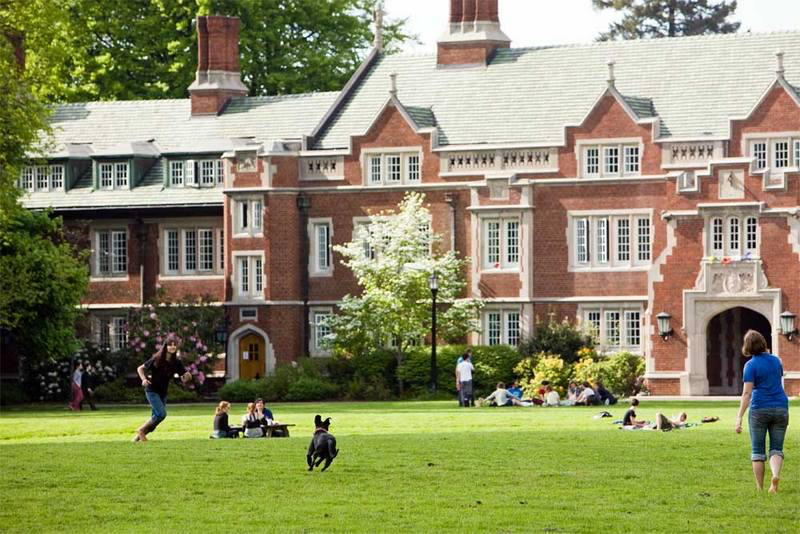
Reed College has the largest endowment among Oregon’s private higher education institutions.

In 2017, during Trump’s first term, a Republican Congress passed the first excise tax on college endowments. Private colleges and universities now pay an annual 1.4% excise tax on endowment net investment income. The excise tax is levied on schools that have at least 500 tuition-paying students and net assets of at least $500,000 per student. 

Because the $500,000 is not adjusted for inflation, the threshold is being effectively lowered over time. The tax has affected about 50-55 institutions to date. 

In 2023, 56 universities paid about $380 million under the endowment tax, up from about $68 million in 2021 and slightly more than the $200 million annual forecast made by the Joint Committee on Taxation in 2017.

In 2023, when he was still a U.S. Senator, J. D. Vance introduced the College Endowment Accountability Act which proposed increasing the excise tax from 1.4% to 35% for secular, private, nonprofit colleges and universities with at least $10 billion in assets under management.

“University endowments…have grown incredibly large on the backs of subsidies from the taxpayers, and they have made these universities completely independent of any political, financial, or other pressure, and that is why the university system in this country has gone so insane,” Vance asserted. 

Vance’s bill went nowhere, but the issue resurfaced in January 2025 when Rep. Troy E. Nehls (R-TX) introduced the Endowment Tax Fairness Act, a bill that would raise the excise tax levied on certain private university endowment profits from 1.4% to 21%. 

The tax would apply to private colleges and universities with 500 or more students with an aggregate fair market value of assets of at least $500,000 per student of the institution, and more than 50% of the student body is located within the United States. 

The Tax Foundation, assuming a 7.5 percent average annual return, estimates Nehis’ bill would raise about $69.8 billion in additional revenue over 10 years.

The House Ways & Means Committee also appears interested in raising the endowment tax rate. Committee Chair Jason Smith (R-MO) pitched the idea during an all-member meeting among House Republicans in January as well. 

In February, Rep. Mike Lawler (R-NY) introduced the Endowment Accountability Act, proposing raising the excise tax rate from 1.4% to 10% of endowment income and lowering the per-student endowment threshold from $500,000 to $200,000, likely pulling in many more colleges.  

“If passed, such a tax would fundamentally alter the relationship between the government and many nonprofit colleges, as well as between those institutions and their donors,” reported Higher Ed Dive. “Moreover — and perhaps more importantly as a practical reality — such a tax could land hard on students, research programs and college operations.

Many institutions with much lower profiles than the Harvards of the world could get taxed if lawmakers broadened the threshold for paying, Jason Delisle, with the Urban Institute, said at an American Council on Education panel. And that’s exactly what higher ed institutions are preparing for. 

“University leaders and endowment chiefs also expect Congress to consider raising the tax on the richest endowments and expanding the number of schools affected,” the Wall Street Journal reported. And there’s talk of spreading the pain around more, hitting up smaller schools with smaller endowments, too. 

Although it may not be maintained in a final bill, under a tax plan unveiled by House Republicans on May 12, 2025, some universities would pay an annual tax of up to 21%. on their annual net investment income in endowments.

According to data from the National Association of College and University Business Officers and the asset management firm Commonfund, colleges spend the largest share of endowment funds on student financial aid (48.1% in FY2024), followed by academic programs and research (17.7% in FY2024).

Mauling endowments with egregious excise taxes would seriously threaten the ability of many schools to maintain these efforts, though that may not be of much concern to Trump and his allies, who have so far displayed little more than contempt for higher education.  

FY2024 endowments at selected private higher education institutions in Oregon[1]

InstitutionEndowment ($ millions)
Reed College814
Lewis and Clark College322
University of Portland315
Willamette University312
Linfield University118
Pacific University57
George Fox University34
Warner Pacific University18

[1]

 Source: 2024 NACUBO-Commonfund Study of Endowments (NCSE)

In responsione: OSU and state support for higher education

After I wrote about Oregon’s abandonment of higher education, focusing on the situation at the University of Oregon, Steve Clark, Vice President for University Relations at OSU, responded to me with some informative comments.

Steve Clark, Oregon State University

Steve Clark, Oregon State University

Mr. Clark agreed to let me share them:

Like you, at Oregon State, we worry about the cost of higher education for Oregonians. I would like to share with you a number of steps we have taken to minimize the impacts of this change in state funding, but we do realize that there is more work to do in this regard. And while our efforts are many and have had a positive impact, we continue to urge Oregon legislators to restore higher education funding at least to levels provided in 2007.

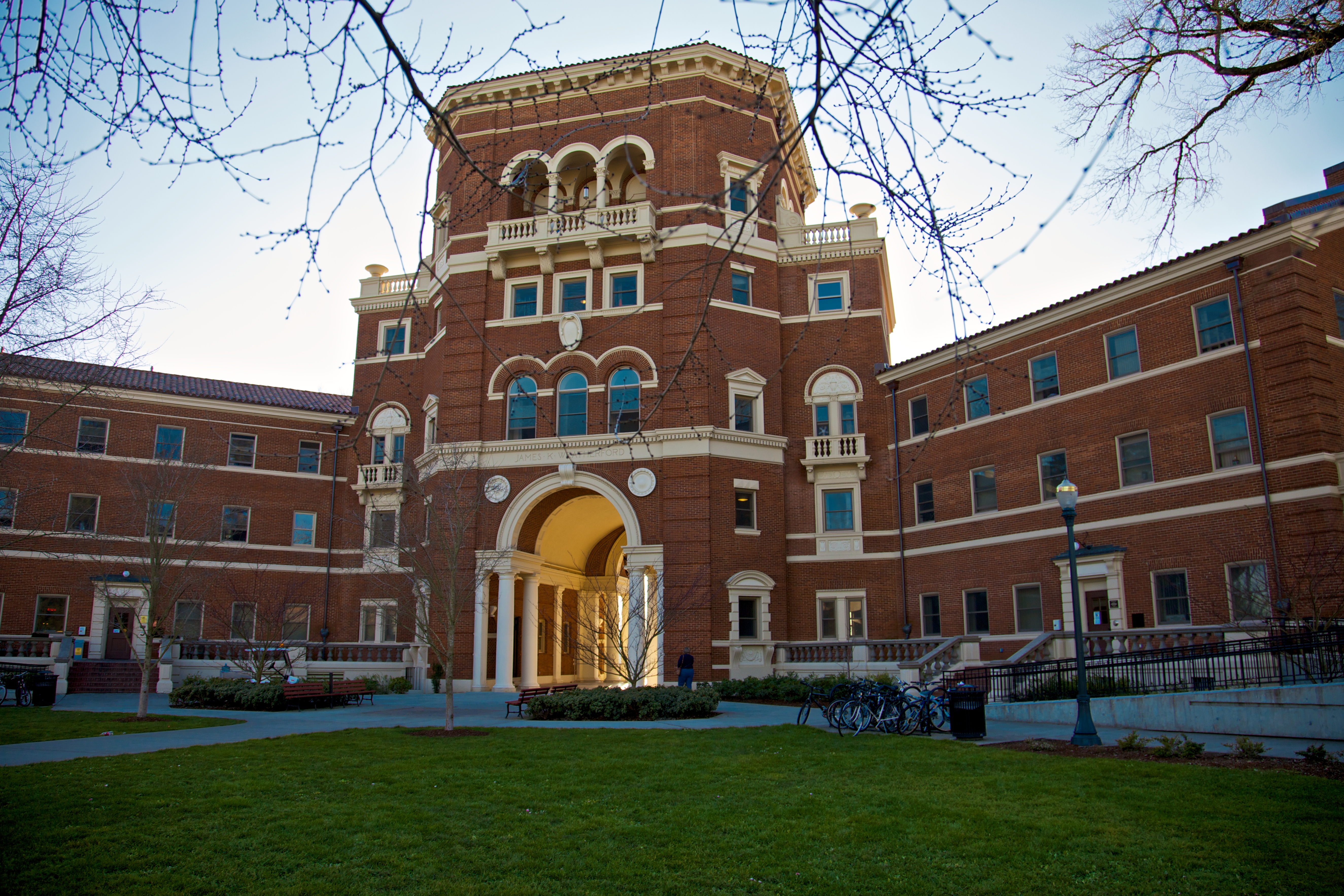
Weatherford Hall at Oregon State University

Here is some information that I hope aids you and shows how Oregon State remains a public university for Oregonians.

I realize that while your column largely shared statistics about the University of Oregon, your point was that all of Oregon’s public universities are public in name only.

While OSU’s out-of-state and international enrollment has grown over the past decade, OSU’s undergraduate enrollment is still 74% made up of Oregonians. That percentage has declined over the past decade, but we have pledged to not let it fall below 66%. That’s our land grant mission.

Meanwhile, we have launched OSU Open Campus to bring educational programs directly to Oregon communities in partnership with local school districts, ESDs and community colleges. And we have dual degree partnerships with all of our Oregon’s 17 community colleges … so students can simultaneously enroll at OSU and the community college near their home and then transfer after a year or two of community college to attend Oregon State without losing credits. In some cases – such as in an agricultural sciences program with Klamath Community College – a student can graduate in four years without ever having to come to Corvallis, but instead take community college courses for two years or so and then complete their degree taking OSU on-line distance learning classes.

We do recognize tuition and fees are expensive. OSU’s in-state tuition and fees are $9,123 per year compared to the $9,918 you pointed out about UO. Still that is a lot more than students paid 7 to 10 years ago. Out-of-state tuition at OSU is $26,295 per year compared with $30,888 at UO.

With such a heavy tuition load in mind, we launched many years ago our Bridge to Success program. It enables 2,600 to 3,000 Oregonians per year to attend OSU without paying any tuition and fees. The program combines Oregon Opportunity Grants, federal Pell funds and university funds. And then there is our OSU Foundation philanthropy – The Campaign for OSU has raised more than $183 million for student scholarships.

Yes, there is a significant issue with how the state funds higher education in Oregon and we are working with the legislature to change that. Time will tell about such efforts. Meanwhile, as Oregon’s statewide university, we will not abandon Oregonians. And we will work hard to moderate costs, bring higher education to many Oregon communities, and grow funding for financial aid for students.

Steve Clark

Oregon’s abandonment of higher education: it’s criminal

The Oregon Legislature should be declared a crime scene.

Oregon’s state universities are increasingly that in name only. Because of the Legislature’s calculated callousness or pure indifference in funding Oregon universities, young people across the state are facing soaring college loan debts and diminished opportunities for higher education.

The state is also sabotaging its goal of ensuring that 40 percent of all adult Oregonians have a bachelor’s degree or higher by 2025 and undermining the rationale for the state having a say in the operations of what are still called public universities.

SONY DSC

Governor John Kitzhaber says he deserves to be re-elected because he froze tuition at Oregon colleges.

Sure, for one year.

In June, the state Board of Higher Education approved a tuition freeze for in-state undergraduates for the 2014-2015 academic year.

But that was after steadily escalating tuition rates for in-state undergraduates, particularly after voters approved Measure 5 in 1990 and K-12 school funding shifted to the state, with a devastating impact on state support for higher education that has continued to today.

Over the past 15 years, tuition and fees at the University of Oregon, for example, leaped from $3810 for the 1999-2000 academic year to $9918 for the 2014-2015 academic year.

In other words, since the 1999-2000 academic year, tuition and fees for in-state undergraduates have increased 160 percent. You can’t duck the fact that this
substantially outpaced the 42.8 percent rate of inflation.

During that same period, the state’s share of the University of Oregon’s annual operating budget has been in steady retreat from 17.1 percent in 1999-2000 to 5.5 percent in 2013-2014. Extrapolating this trend, state investment will reach zero by 2022.

Coincident with the loss of state support has been an increase in out-of-state students. In the 2013-2014 academic year, non-residents, undergraduate and graduate, reached 46.5 percent of total enrollment.

The University cloaks the leap in out-of-state students as a well-intentioned effort to ensure diversity, but it’s really all about money. In 2014-2015, for example, while in-state students are paying $9918 in tuition and fees, out-of-state students are paying $30,888.

It could be argued that out-of-state students aren’t displacing in-state students, given that the number of undergraduate in-state students has increased about 20 percent since 1999-2000. The number of out-of-state students, however, mushroomed by 250 percent during the same period.

What that means is that the university is likely drawing fewer students from low-income Oregon families and competing more aggressively for students who can afford a more expensive education. In addition, as the state’s population has increased, it’s getting tougher for in-state students to get in.

Had the state not cut university funding so severely, it could have or kept tuition and fees down or accommodated more in-state students.

The pullback in state funding raises the question of why the state continues to impose its will on the universities in so many ways. “The defunding of public higher education by the states inevitably inaugurates a new conversation about who controls them and whose interests are to be served,” says Thomas Mortenson, senior scholar at The Pell Institute for the Study of Opportunity in Higher Education.

Indeed.


Originally published in the Hillsboro Argus, Oct. 28, 2013