The fact is U.S. citizens do not have to carry proof of citizenship and you have the right to refuse to show documents. In my opinion, if Americans start wearing their passports to ward off seizure by ICE agents, they are ceding to ICE unprecedented and unjustified authority.
South Africa remembers that lesson.
Pass laws in South Africa were the cornerstone of apartheid, laws restricting the movement, employment, and residence of Black people. The laws created, in effect, an internal domestic passport system aimed at restricting movement. Black people over 16 were required to carry a passbook at all times, with non-compliance leading to arrest, fines, or imprisonment. Blacks were routinely humiliated by police who treated them as second-class citizens who did not belong.
A Black South African with a pass
A pocket-sized document known as a reference book, or pass., was an everyday threat for Blacks. The book contained a condensed history of the carrier’s life‐including birthplace, legal places of residence and employment, tax payments and marital status. The details, along with the fingerprints of every adult Black, were recorded and saved by the government.
“Now, many people here are asking a question that is a novel one in America: Is it safe to leave home without proof of citizenship,” the New York Times story said.“Has the United States turned into a show-me-your-papers nation? For many Minnesotans, the answer has been an unequivocal yes.”
The defiant answer should be an unequivocal NO!
The catch-22, of course, is if you refuse to provide proof of citizenship or are suspected of being undocumented, the result may be your detention by ICE until your status is verified. Joseph Heller’s book may be an absurdist comedy, but you may find yourself in a cold, filthy ICE detention center,
But, as happened in the 1950s and 60s, when civil rights activists were arrested for sit-ins, marches, and demonstrations, victory will eventually be yours.
“Last year’s One Big Beautiful Bill Act helped roughly triple the ICE budget, allocating $45 billion for building new immigration centers and hiring 10,000 new ICE agents. One dispiriting lesson of the imperial boomerang is that, once. bought and paid for, structures of intimidation and oppression tend to endure.” David Wallace-Wells, 1/25/2026
Update, 1/30/2026 – The Washington Post reported that local officials are raising logistical and humanitarian concerns in 23 towns where U.S. Immigration and Customs Enforcement plans to convert industrial buildings into detention centers that combined would hold up to 80,000 people. ICE has offered few details about its plan since The Washington Post first reported on it in December 2025. One detention center the Department of Homeland Security wants to open would be a more than 1 million sq. ft. industrial warehouse in Social Circle, Georgia that would be retrofitted to hold 8,500 detainees and hundreds of staff, more than the city’s total population. The City Manager, Eric Taylor, has said the city does not have the water or sewer infrastructure to support the facility. Unaddressed is the question of why the government needs such huge detention facilities when it says it’s objective is to deport people.
Update, 2/12/2026 – It’s not just more detention centers coming down the pike. Wired reported that ICE and DHS have quietly carried out a months-long expansion, securing more than 150 new leases and office expansions across nearly every state, often in or near major metro areas. Many new facilities sit near schools, medical offices, and places of worship, with DHS pressing the GSA to bypass standard procurement rules and hide lease details under claims of “national security.”
Update, 2/21/2026 – Funding for the Department of Homeland Security expired has expired and Democrats have made 10 demands to rein in Trump’s surge of deportation forces into U.S. cities. One of those demands is “Compliance with Basic Detention Standards and Oversight of Facilities.” Think about it. Incarceration facilities are already legally required to be humane and hygienic., but as Radley Balko has reported on SubStack in The Unpopulist, there is a growing pile of reports from attorneys, journalists, human rights groups, judges, and others about shocking, inhumane conditions at facilities around the country.
Update, 3/7/2026 – So far, DHS has completed the purchase of 10 of the 23 detention center properties it initially pursued, spending more than $890 million, according to deed records or statements by local officials. Efforts to acquire 10 other properties — in Indiana, Minnesota, Mississippi, Missouri, New Hampshire, New York, Oklahoma, Tennessee, Texas and Virginia — have failed, according to statements by local officials or building owners.
In the years preceding his death in 1875, George Templeton Strong, a prominent Wall Street attorney, kept a voluminous journal of his life and times. In April 1865, near the end of the American civil war, he wrote, “These four years have reduced me to something like pauperism, But I am profoundly grateful for them nevertheless. They have given me — & my wife & my boys, — a country worth living in & living for, & to be proud of.”
I can’t say President Trump’s inhumane crackdown on immigrants and harassment and murder of American citizens in the past year have given me a country worth living in, living for and to be proud of.
Not while the Trump administration promotes hatred of “the other”. David Masciotra. David Masciotrar ecently wrote in the Washington Monthly, “Through (Elie) Wiesel’s story and the stories he told and created, two truths become inescapable. The first is that it is naïve, if not catastrophic, to underestimate the power of hatred. “
I doubt 7-year-old Diana Crespo, a second grader at Gresham’s Alder Elementary School, and 5-year-old Liam Ramos, the bunny-hatted child detained by immigration agents in Minneapolis, see America as a country worth living in and living for and to be proud of either. They are both being held at the U.S. Immigration and Customs Enforcement’s South Texas Family Residential Center in Texas.
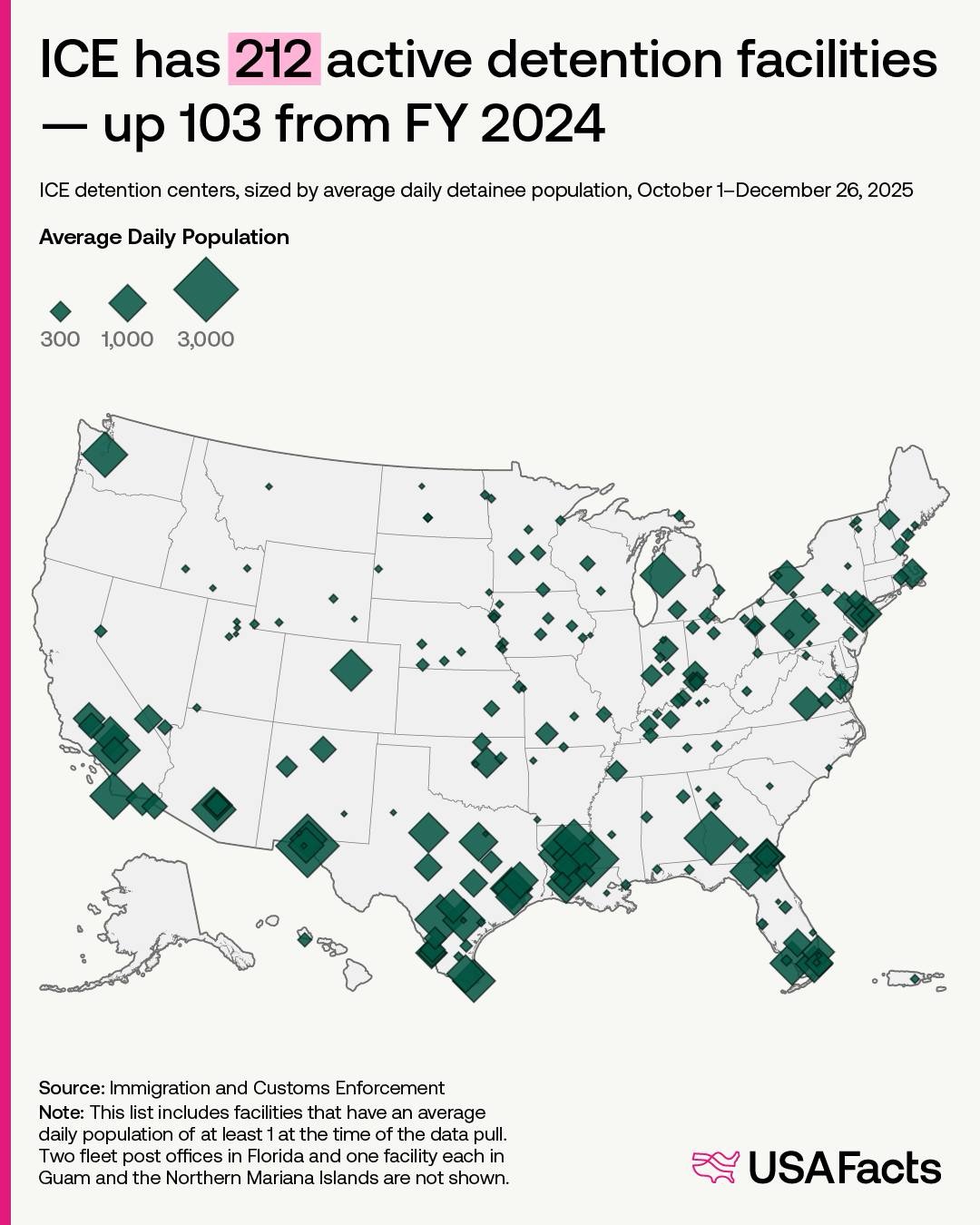
U.S. Immigration and Customs Enforcement has spread its detention center tentacles across the United States:
Oregon Public Broadcasting (OPB) reported on January 29, 2026 that ICE is planning another detention center in Newport, Oregon as soon as May.
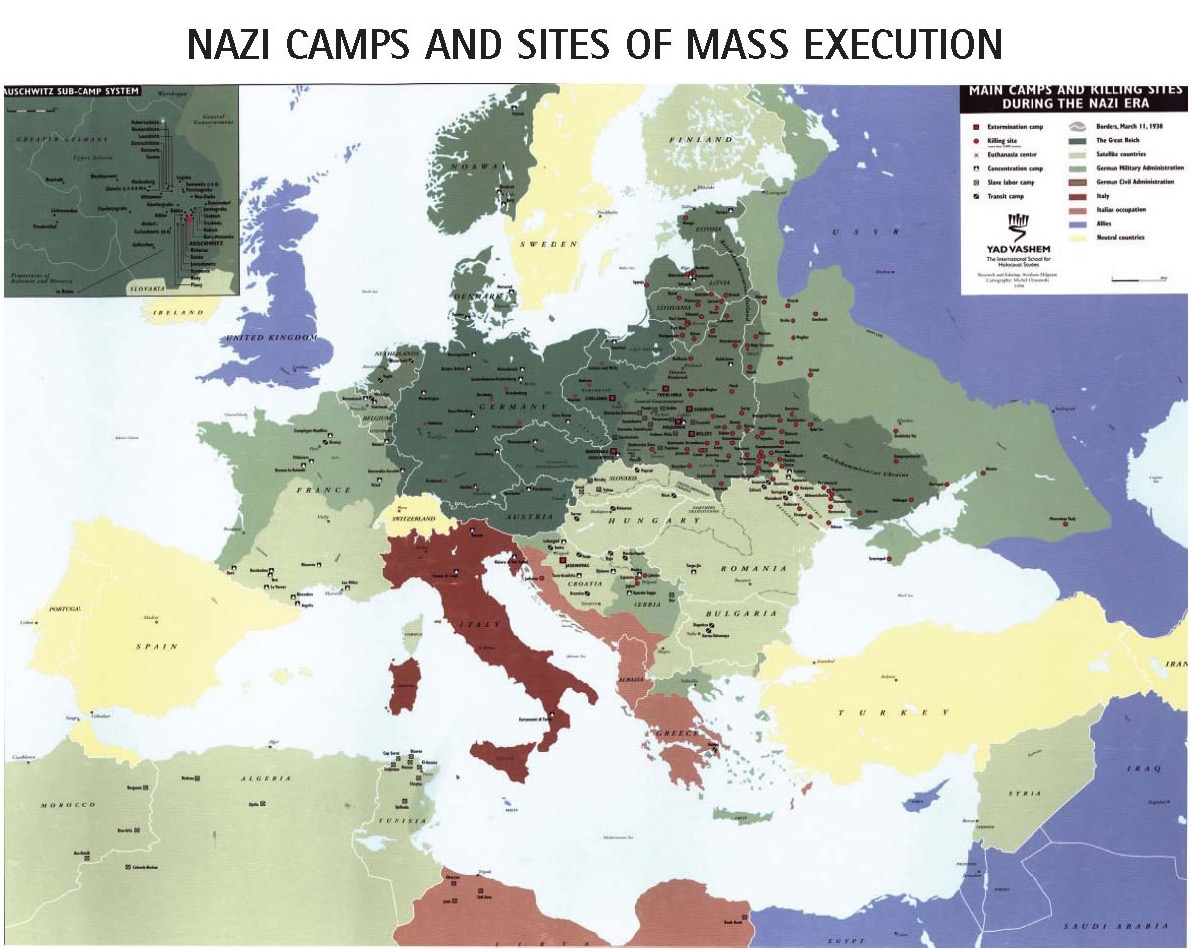
The spread of these. detention centers reminds me of another brutal time.
Most of us know the names of a few Nazi concentration camps, like Dachau, Auschwitz and Bergen-Belsen, where Anne Frank died. But they were part of a massive complex of more than 850 ghettos, concentration camps, forced-labor camps and extermination camps CNN has identified. They stretched from France and the Netherlands in the west to Estonia, Lithuania and Poland in the east that the Nazis established during the 12 years Adolf Hitler was in power. Their purpose — to segregate , oppress and persecute their opponents.
Like the ICE detention centers, the Nazi system started small and then metastasized like a cancer, according to the Wiener Holocaust Library.
Initially there were so-called SA camps. (Sturmabteilung (SA), or “Brownshirts,” was the Nazi Party’s original paramilitary wing). After the Night of Long Knives in 1934, the SS and Heinrich Himmler shut down the SA camps and consolidated control of all camps in Germany. Himmler and the SS used Dachau, an original SS camp, as a blueprint for all camps. From 1934 onwards, the SS developed and then operated the camp system, which lasted until Germany’s defeat in 1945.
The SS started building major camps, beginning with Sachsenhausen in 1936, then Buchenwald in 1937, Flossenbürg and Mauthausen in 1938 and Ravensbrück for women in 1939. Political prisoners were the first inmates. Then people with previous criminal convictions. Next were the so-called “asocials”, such as Roma, homosexuals, prostitutes, the homeless and the “work-shy”. The mass imprisonment of Jews began in 1938 after the Anschluss and Kristallnacht.
As the Second World War began in earnest, foreign citizens from newly occupied countries such as Czechoslovakia and the Netherlands began to be imprisoned , followed by Soviet prisoners of war (POW’s) after the invasion of the Soviet Union in June 1941.
Those who believe U.S. Immigration and Customs Enforcement can and will be restrained under the Trump administration might want to stop and reconsider.
With an administration where cruelty is the point, it can happen here.
“Go back to where you came from”, he said to the Somali immigrants in Minnesota, employing an insulting slur unacceptable in polite society.
Last week Trump said on his social media channel, Truth Social, he’d send Somalis “back to where they came from.” Yesterday he said Somalis in the U.S. should “go back to where they came from and fix it.”
A person familiar with Trump’s plans told the Associated Press federal authorities are preparing a targeted immigration enforcement operation in Minnesota that would primarily focus on Somali immigrants living unlawfully in the U.S.
At a cabinet meeting yesterday, Trump said Somalis “contribute nothing.”
“I don’t want them in our country,” a snarling Trump told reporters. “Their country is no good for a reason. Your country stinks and we don’t want them in our country.”
I remember hearing that taunt directed at minorities by racist know-nothings in my youth in the 1950s, but I thought people had long ago been shamed from uttering it.
Trump, however, seems to enjoy denigrating “the other”.
Trump’s own Equal Employment Opportunity Commission cites “Go back to where you came from,” as an example of unlawful workplace conduct, along with the use of “insults, taunting, or ethnic epithets”.
I suppose in some respects nobody should really be surprised by Trump’s insults. That’s his modus operandi. Demean and slander his opponents, particularly those he deems not “real” Americans. And his supporters often embrace his scurrilous attacks.
He even goes after members of Congress with abandon. He has described Democratic Rep. Ilhan Omar, (D-Minn), who came to the United States from Somalia as a refugee and became a citizen 25 years ago, as “garbage.”
“We could go one way or the other, and we’re going to go the wrong way if we keep taking in garbage into our country,” Trump said. “She’s garbage. Her friends are garbage.”
And Trump’s recent explicit use of hateful speech is not original or unprecedented. It was a feature, not a bug, of his campaigns for office.
An analysis published by Presidential Studies Quarterly[1] , cited by the National Library of Medicine, concluded that “no other comparable candidate of either major US party has ever approached the level of negativity and vitriol toward racial/ethnic minorities that Trump did.”
A Washington Post column today by George Will is headlined “A sickening moral slum of an administration”.
Indeed.
[1] Çinar I, Stokes S, Uribe A. Presidential rhetoric and populism. Presidential Studies Quarterly. 2020;50(2):240–263. doi: 10.1111/psq.12656. [DOI] [Google Scholar]
It was 1943. By all appearances, Rudolph Höss, his wife, Hedwig, and their five children – Klaus, Heidetraud, Brigitte, Hans-Jürgen and Annegret – had an idyllic life in the Polish countryside. They lived in an exquisite villa with a tranquil garden, a greenhouse and a small swimming pool.
The children played in the yard, Rudolph and Hedwig went about their daily lives and Hedwig adorned herself with lipstick and jewelry.
The Höss family’s backyard (Scene from The Zone of Interest)
But something was amiss.
Hedwig’s clothing and jewels were taken from a Jewish woman on her way to the gas chambers. Beyond the concrete wall at the property’s edge, topped with barbed wire, was a sprawling complex of gas chambers and crematoria known as the Auschwitz-Birkenau concentration camp, the largest extermination camp run by the Nazis in Poland during WWII. Rudolph Höss, a German SS officer, was the camp commandant. An estimated 960,000 Jews were killed there.
Women and children deemed “unfit for work” being unknowingly led to gas chamber #3 at Auschwitz, where two thousand people at a time could be murdered. Source: The World Holocaust Remembrance Center
“Human beings did this to other human beings and it’s very convenient for us to try and distance ourselves from them because we think we can never behave this way, but I think we should be less certain than that,” said Jonathan Glazer, the director of a 2024 movie, “The Zone of Interest” that depicted the mundane daily activities of the family at their home during the war.
In the movie, when her husband is transferred to a new post in Germany, Hedwig is enraged. She demands that the family stay at Auschwitz, claiming, “This is the life we’ve always dreamed of.”
It all brings to mind Hannah Arendt’s talk about “the banality of evil”, which she cited when writing about one of Höss’ compatriots, Adolf Eichmann, in her 1963 book Eichmann in Jerusalem: A Report on the Banality of Evil.
“Never again,” proclaimed the weary idealists, the peace-seekers, the hopeful.
So much for that.
Moises Sotelo, 54, of Newberg, OR was on his way to work at about 5:30 a.m. on June 12 when U.S. Immigration and Customs Enforcement (ICE) officers swooped in and took him into custody. According to an ICE detention database, Sotelo was transferred to ICE’s Northwest Detention Center in Tacoma, Washington.
Moises Sotelo
“ICE Seattle arrested Moises Sotelo-Casas, 54, who is a citizen of Mexico, as a part of routine federal law enforcement activity that identifies, detains and removes criminal aliens to their country of origin,” ICE Public Affairs Officer David Yost said in a statement. “Sotelo has a criminal conviction for DUI in Newberg, OR, and he will remain in custody pending removal.”
Sotelo’s family sought community support through a GoFundMe account with a $175,000 goal to “Help the Sotelo Family with Expenses After ICE Detainment”. The account had raised $142,751 from 2,100 donations as of June 30.
There was a time when Moises Sotel0’s plight would have generated little public concern and certainly fewer helping hands. .
In 2022, the public perception of an invasion of migrants across the southern border of the United States bore some relation to reality.
U.S. immigration authorities carried out 2.38 million migrant encounters (a term encompassing apprehensions and expulsions) at the southwest border during Joseph Biden’s presidency in FY 2022, according to the Migration Policy Institute. For the first time, not only were there more Venezuelans, Cubans, and Nicaraguans encountered than migrants from El Salvador, Guatemala, and Honduras, but there were significant attempted crossings by Brazilians, Ecuadorians, Haitians, Ukrainians, Indians and Turks. Monthly encounters peaked at over 370,000 people in December 2023, nearly 12,000 a day. This isn’t count migrants who crossed the border and escaped detection. (For a better understanding of the brutal migration process, see Footnote 2)
The crescendo of arrivals overwhelmed processing capacities, federal infrastructure, and border communities. As the chaos at the border increased, the public became more hostile to the migrants. Donald Trump exploited that hostility in winning re-election to the presidency in November 2024.
His administration has since initiated vigorous, combative mass deportation efforts that resemble military-style attacks at homes, businesses and public spaces. Masked and heavily armed ICE agents wearing tactical gear and carrying high-powered rifles have been descending on areas in unmarked black SUVs and armored vehicles. Immigrants showing up at U.S. Immigration and Customs Enforcement offices for routine check-ins are being arrested. “What should be routine appointments are becoming detention traps,” Katrina Kilgren, an immigration attorney and pro tem instructor at the Knight Law Center in Eugene, OR told the Register-Guard newspaper.
Increasingly, ICE has been targeting work sites, such as farms, meat production plants and restaurants, and migrant worker gathering places, such as Home Depot, in immigration sweeps.
In April, Acting ICE Director Todd Lyons told attendees of the 2025 Border Security Expo in Arizona he wanted the agency to become as efficient at deporting immigrants as e-commerce giant Amazon is at delivering packages. “We need to get better at treating this like a business,” Lyons said, describing his ideal deportation process as “like [Amazon] Prime, but with human beings.”
In one deportation case reported by the Portland Mercury, Jorge (a pseudonym being used to protect his identity) received a text message on his cell phone in Spanish from ICE in early June.Jorge had immigrated to the US from Nicaragua in late 2021 as an asylum seeker. He has an active asylum case, a work permit, a job, and a young family. The message told him to report to the nearest ICE facility within 12 hours to check in and sign paperwork, or face deportation. After consulting a lawyer, he followed the instructions, only to be detained by ICE agents and sent to a federal detention center in Tacoma, Washington.
ICE was holding about 56,397 people in detention facilities across the country as of June 15, 2025 likely setting a record high, according to TRAC Immigration. Despite the government’s stated goal of pursuing criminals, 40,433 out of 56,397—or 71.7%—held in ICE detention had no criminal record, TRAC Immigration claims. Adams County Detention Center in Natchez, Mississippi held the largest number of ICE detainees so far in FY 2025, averaging 2,166 per day as of June 2025.
The vast majority of ICE detention centers are privately operated and for profit, with companies such as GEO Group and CoreCivic dominant in the space. Tom Homan, Trump’s border adviser, has called for boosting ICE’s detention capacity to at least 100,000 people. In furtherance of that goal, the U.S. Department of Homeland Security posted a request in April asking contractors to submit bids for new detention facilities, transportation, security personnel, medical services and administrative support.
Florida is now turning a remote abandoned mosquito-infested 39-square-mile airport next to Everglades National Park in Florida into the newest migrant prison featuring mostly tents and trailers in sweltering heat and nicknamed “Alligator Alcatraz”. Florida Governor Ron DeSantis has said the facility will be temporary and have “zero environmental impacts.”
“It’s like a theatricalization of cruelty,” Maria Asuncion Bilbao, Florida campaign coordinator at the immigration advocacy group American Friends Service Committee, told The Associated Press.
President Trump visited the Everglades detention center on July 1, 2025.
The Trump administration has also sent immigrants to detention facilities outside the United States, including to Cuba’s Guantánamo Bay in Cuba and Centro de Confinamiento del Terrorismo ( CECOT) in El Salvador, where brutal conditions predominate.
The Trump administration is also trying to deport a group of migrants convicted of violent crimes from countries including Cuba, Mexico and Vietnam to South Sudan, a country embroiled in fighting between various political and ethnic groups. In a Travel Advisory, the U.S. Department of State advises: “Violent crime, such as carjackings, shootings, ambushes, assaults, robberies, and kidnappings are common throughout South Sudan, including Juba. Foreign nationals have been the victims of rape, sexual assault, armed robberies, and other violent crimes.”
In June, the U.S. Supreme Court granted the Trump administration’s request to allow it to deport migrants to places other than their country of origin, often to countries plagued by violence. The Trump administration wanted the power to do so as part of its effort to discourage illegal migration by threatening to deport migrants a third country with no recourse.
Legal analyst Steve Vladeck told CNN, “…today’s ruling allows the government to remove those individuals and others to any country that will take them—without providing any additional process beyond an initial removal hearing, and without regard to the treatment they may face in those countries.”
To add insult to injury, Semafor reported on July 1 that the Trump administration is thinking about trying to void naturalized immigrants citizenship— potentially starting with New York City mayoral primary winner Zohran Mamdani. Asked about Tennessee Rep. Andy Ogles’ proposal to strip Mamdani, who was born in Uganda but became a citizen in 2018, of his legal status, White House press secretary Karoline Leavitt said it’s “something to be investigated.” Semafor reported that GOP leaders are increasingly comfortable with revoking foreign nationals’ visas over their political beliefs or actions, and that may soon extend to citizens.
An American naturalization ceremony
NPR reported on June 30 that the Justice Department is aggressively prioritizing efforts to strip some Americans of their U.S. citizenship, a practice heavily used during there McCarthy era of the late 1940s and early 1950s. “Department leadership is directing its attorneys to prioritize denaturalization in cases involving naturalized citizens who commit certain crimes — and giving U.S. attorneys wider discretion on when to pursue this tactic, according to a June 11 memo published online,” NPR said. Approximately 25 million immigrants are naturalized citizens.
Hans von Spakovsky, with the conservative Heritage Foundation, told NPR he supports the DOJ’s denaturalization efforts. “I do not understand how anyone could possibly be opposed to the Justice Department taking such action to protect the nation from obvious predators, criminals, and terrorists,” he said.
But Trump’s draconian efforts to halt border crossings and deport already settled migrants are now driving a new sympathy for migrants and resistance to ICE’s aggressive deportation efforts.
Even popular podcaster Joe Rogan is raising doubts about Trump’s deportation chaos. “Bro, these ICE raids are fucking nuts, man,” Rogan said in June. ” I don’t think if they, the Trump administration, if they’re running and they said, we’re gonna go to Home Depot and we’re gonna arrest all the people at Home Depot, we’re gonna go to construction sites, and we’re gonna just, like, tackle people at construction sites. I don’t think anybody would have signed up for that. They said, we’re gonna get rid of the criminals and the gang members first, right? And now we’re, we’re seeing, like, Home Depots get raided. Like, that’s crazy.”
Local government officials are raising concerns, too. A group of elected officials in one of Oregon’s most racially diverse counties pushed back Monday against the Trump administration’s immigration crackdown. (See footnote 3)
“ICE has no place in our neighborhoods,” Cornelius City Councilor Angeles Godinez told OPB in June. “When fear enters our community, trust leaves,” she said. “Without trust, our schools, our cities and even our local economies suffer.”
“To the immigrant community across Oregon, I am one of you, I see you. I know what you’re going through and I stand with you in unwavering solidarity,” said Tigard City Councilor Yi-Kang Hu.
And then there’s the massive cost of Trump’s immigration program, a veritable cornucopia of cash.[1] “If the bill passes, it could make ICE the nation’s largest jailer, Wirth more funding for detention than the entire federal Bureau of Prisons,” according to immigration expert Aaron Reichlin-Melnick.
With the federal deficit already high, and projected to increase to destructive levels under the Republicans’ “big, beautiful bill”, America is going to pay a heavy price for Trump’s deportation fiasco. With the immigration blowout, the Senate-passed a reconciliation bill that would add over $4 trillion to the national debt through Fiscal Year (FY) 2034, $1 trillion more than the House-passed One Big Beautiful Bill Act (OBBBA).
Protests against immigration arrests are multiplying as people rail against government overreach and a majority of Americans now say actions by the U.S. Immigration and Customs Enforcement have “gone too far,” according to a new PBS News/NPR/Marist poll..
But it’s not enough.
As The Leadership Conference on Civil and Human Rights said earlier this year, the Trump administration’s widespread and persistent cruelty, indiscriminate immigration enforcement tactics, wrongful questioning and detention of American citizens, unjust profiling, and abuse of common decency “signals a troubling shift toward a more punitive and dehumanizing approach to immigration enforcement.”
” History has shown us time and time again,” the Leadership Conference said, ” that when communities come together, our collective resistance has the power to rewrite the narrative and create change. While it may feel like we are in the midst of a dark chapter, together, we can write the next one — a chapter where compassion and justice prevail over cruelty and inhumanity. In the end, that’s what defines us — not just as a nation, but as human beings.”
We cannot be the Höss family. We cannot be innocent bystanders. Evil must not triumph. We must resist.
Immigration detention capacity: Expand capacity to detain immigrants taken into custody
$45 bil.
Border wall: Fund border barrier system construction and related activities
$45 bil.
U.S. Immigration and Customs Enforcement: Funding for hiring, training, transportation, facilities and legal resources to carry out immigration enforcement and removals
$31 bil.
State and local grants: Funding for border security, immigration enforcement and major event security. The Senate parliamentarian determined that this provision does not comply with the chamber’s rules, and it may be removed or modified.
$13 bil.
Homeland Security Department funding: For border security and immigration enforcement
$12 bil.
U.S. Customs and Border Protection: Funding to expand workforce and purchase new vehicles and technology
$12 bil.
Border surveillance technology
$6.2 bil.
Department of Justice grants: For state and local immigration and law enforcement
$3.5 bil.
Department of Justice funding: For immigration and other law enforcement
$3.3 bil.
Fund vetting for sponsors of unaccompanied alien children: Through the Office of Refugee Resettlement
$0.3 bil.
2. For a better understanding of what is driving migrants to the United States and who is guiding them through Mexico to the US border, read Soldiers and Kings: Survival and Hope in the World of Human Smuggling by Jason De León. In 2015, he began a long-term ethnographic project focused on understanding the daily lives of Honduran smugglers who profit from transporting migrants across the length of Mexico. This 2024 National Book Award-winning story examines the complicated relationship among transnational gangs, the human smuggling industry, and migrant desires for safety and well-being.
3 .An immigration scholar, Austin Kocher, has written a Journalist Resource guide analyzing U.S. Immigration and Customs Enforcement arrest data, based on datasets published by the Data Deportation Project. His observations are revealing as to the Trump administration’s motives:
“The Trump administration is now demanding that ICE make 3,000 arrests per day. That is to say, ICE did not come close to meeting the quota set in January until June—and even then; only for a few days at a time. To be clear: this is a lot of arrests. I’m not downplaying that. But it’s also clear that the Trump administration’s daily arrest quotas are detached from the reality of what ICE can do—and even more so now that the new quota is 3,000 per day.
This prompts a further question: if these quotas are demonstrably unattainable, why have them? In my view, the answer is simple: the unattainability of the quotas is the point.
An essential component of Donald Trump’s longstanding approach to politics is to invent crises, or exploit existing crises, in ways that ensure they are unsolvable. No amount of funding for immigration enforcement will ever be enough to achieve his mass deportation goals. No amount of power concentrated in the office of the President will ever be sufficient to exercise totalizing control over immigration. The goal is not to solve a real problem, but to manufacture an ever-expanding crisis that justifies ever-expanding unregulated power.”
Oregon’s Democratic lawmakers just can’t seem to stop finding new ways to spend money.
Oregon is facing a slew budget troubles. Congressional Republicans want to require an increase in state support for some federal programs. A budget reconciliation bill under consideration by Congress would put Oregon at risk of losing more than $1 billion in the 2027-29 biennium because of a provision that penalizes states that provide health insurance to undocumented immigrants. But Oregon Democrats keep coming up with proposals to spend money on dubious programs.
“Right now, some Oregonians face hunger on a daily basis (OCPP) simply because of where they were born,” the Oregon Center for Public Policy says, pleading for residents to “Tell the Oregon Legislature to pass Food for All Oregonians, SB 611“.
As originally introduced, the bill would have provided nutrition assistance to residents of Oregon who are under 26 years of age or 55 years of age or older and who would qualify for federal Supplemental Nutrition Assistance Program benefits but for their immigration status. Rather than just killing the bill, it was subsequently amended to specify that it would apply only to children six and younger. But it’s still a bad bill.
OCCP, which claims to have a “vision of an equitable Oregon”, doesn’t seem to have a vision of an Oregon that lives within its means. Nor, apparently, do a lot of other liberal groups across the state.
Undocumented immigrants in the United States are generally ineligible for federal Supplemental Nutrition Assistance Program (SNAP) benefits, formerly known as the Food Stamp Program. Only U.S. citizens and certain lawfully present non-citizens may receive SNAP benefits, which currently consume $122.1 billion annually, or 53%, of the Department of Agriculture’s budget.
The Food for All Oregonians Program bill initially proposed providing nutrition assistance to residents of Oregon who are under 26 years of age or 55 years of age or older and who would qualify for federal Supplemental Nutrition Assistance Program benefits but for their immigration status.
SB 611’s sponsors were, of course, almost all Democrats. Its chief sponsors were Sen. Wlnsvey Campos and Rep. Ricki Ruiz. Regular Sponsors were 18 more Democrats and one Republican, Rep. Mark Owens.
The bill proposed creating the Food for All Oregonians Program in the Department of Human Services, require the department to implement the program by January 1, 2027, and mandate that the department conduct statewide outreach, education and engagement to maximize enrollment. The amount of benefits provided to a household participating in the program would be in the same amount provided to a household of equal size that is eligible for SNAP.
As expected, the Oregon Food Bank, a hunger relief organization serving Oregon and S.W. Washington, supports the bill. In written testimony submitted to the Senate Committee on Human Services, which noted the bill is supported by a coalition of more than 165 organizations, Oregon Food Bank argued that many people in the state who work in food production, childcare, healthcare institutions, education, transportation and other critical services throughout the state don’t now get feed benefits and that “Immigration status shouldn’t exclude anyone from being able to feed themselves or their family.”
The committee has also received a deluge of supportive testimony from other individuals and organizations.
Some commenters justify their support for the bill by asserting that Washington and California already provide SNAP-equivalent benefits to non-citizens. That is not exactly so.
Washington has a state-funded Food Assistance Program, called FAP, is a state-funded program that provides food assistance to legal immigrants who aren’t eligible for federal Basic Food benefits solely because of their immigration status., but undocumented immigrants are not eligible. [1]
In California, the California Food Assistance Program (CFAP), a state funded program, provides benefits equivalent to SNAP (called CalFresh in CA) to qualified immigrants who are not eligible for CalFresh, but with limitations. Effective October 1, 2025, CFAP will expand to cover persons age 55 or older regardless of their immigration status.
As for Oregon, SB 611 is being put forward as the state is confronting potential federal funding cuts, everybody and their brother seems to want higher spending on schools, affordable housing, transportation and healthcare, Trump tariffs are also threatening Oregon’s export-heavy economy and fears of a national recession are growing.
The Legislative Fiscal Office projects the cost of providing benefits for the estimated 3,200 children eligible for Food for All Oregonians under the amended bill over the next four years would total $16 million from the general fund.
Remember when the eight-time WNBA All-Star, Britney Griner, was arrested in 2022 at a Moscow airport on drug-related charges? She was detained for nearly 10 months, spending much of that time in prison. American public and political outrage was severe and her supporters pressed the White House hard to bring her home.
“I’m terrified I might be here forever,” Griner said in a handwritten letter to President Biden appealing for her freedom.
Apparently, America learned a lesson from Griner’s imprisonment. But it was the wrong one.
Kseniia Petrova, a 30-year-old Russian-born scientist at Harvard Medical School, has been detained by Immigration and Customs Enforcement (ICE) since February. Her detention occurred when she was returning to Boston from a trip to France. Her story was reported by Geoff Bennett, who serves as co-anchor and co-managing editor of PBS News Hour.
Returning to Boston’s Logan International Airport from a trip to France, she brought back frog embryo samples for her lab. The PBS News Hour reported on April 24 that ICE said she knowingly broke the law in failing to properly declare the embryos. According to the News Hour, A typical customs violation results in a fine, but Petrova had her visa revoked, was detained and flagged for deportation.
In moves more common in a police state, where people are swiftly moved from place to place to avoid detection, ICE first sent Petrova to a cell at the airport. The next day they transferred her to a jail in Vermont. She spent the next week there. Then ICE flew Petrova to detention in Louisiana. She has now been imprisoned at the Richwood Detention Facility in Louisiana for two months in a one-room facility with 89 other women, wall-to-wall beds and almost no personal privacy. Yes, for two months now.
She has an immigration court hearing scheduled for May 7 in Jena, Louisiana, related to her asylum case.
The News Hour reported that Petrova has been a vocal critic of the Russian government and its actions in Ukraine and fears persecution if deported there. “I am afraid that, if I come to Russia, I will be arrested, because we have in Russia special law,” she said. “If you say something against current war, you will be imprisoned, and you can be imprisoned for 15 years.”
“ICE is required to detain individuals … only if they are a flight risk or a danger to the community. Ms. Petrova is neither,” said her attorney, Gregory Romanovsky. “Her continued detention serves no purpose and wastes limited government resources.”
He has filed a lawsuit in U.S. District Court in Vermont, arguing that a declaration issue doesn’t justify detention and the government failed to follow standard protocol.
NPR reported that earlier this week, during a preliminary hearing, a Louisiana immigration judge found the government’s case to be legally insufficient and ruled that the Notice to Appear, the document that initiates deportation proceedings, did not meet legal standards. The judge gave Immigration and Customs Enforcement one week to submit stronger evidence.
The Trump administration, banking on the support of its most dedicated backers, is running roughshod over human rights right here in America.
During World War II, President Roosevelt authorized the military to forcibly relocate people of Japanese ancestry from the West Coast to inland camps.
Manzanar War Relocation Center near Lone Pine, Calif.; it operated from March 1942 to Nov. 1945. Some 10,000 people were confined there during this time.Resistance to the incarceration at Manzanar soon led to a prison uprising that the Army put down by shooting 11 prisoners, killing two.
In April 1942, officials posted Civil Exclusion Orders No. 25 and No. 26 on telephone poles and store windows throughout Multnomah County. A few weeks later, Civilian Exclusion Order No. 49 was posted in Hood River. The orders gave Japanese-Americans only a few days to put their affairs in order before they had to report for evacuation.
On May 5, 1942, Japanese-Americans in Military Area No. 1 reported to the Portland Assembly Center, leaving their pets, possessions, and lives behind. The center—built on the site of the Pacific International Livestock Exposition—was surrounded by barbed wire, watchtowers, and military guards armed with machine guns. The center had a peak population of 3,676.
Those living in Military Area No 2, including the Japanese Americans in Hood River, were sent by train to the Pinedale Assembly Center in California’s San Joaquin Valley, a temporary location until later transfer to permanent internment camps.
Now President-elect Trump and his coterie of illegal immigration hardliners want to use the military again and put arrested immigrants in the country illegally in camps run by the Homeland Security Department.
Will he follow through with his threats? Count on it.
“Trump 1.0 was a test for the system, but it was also a trial for an inexperienced leader who had the inclination of a wrecking ball but often lacked the capacity or the cadres to follow through,” Susan B. Glasser wrote in the Nov. 21 New Yorker. “Trump 2.0 is about an all-out attack on that system by a leader who fears neither Congress nor the courts nor the voters whom he will never have to face again.”
During the Republican primary campaign, The New York Times reported that Trump’s top immigration policy adviser, Stephen Miller, said military funds would be used to build “vast holding facilities that would function as staging )enters” for immigrants as their cases progressed and they waited to be flown to other countries.
Earlier this month, Tom Fitton, who runs a conservative group, Judicial Watch, wrote that Trump’s administration would “declare a national emergency and will use military assets” to address illegal immigration “through a mass deportation program.” Trump responded on his social media platform, Truth Social, reposting Mr. Fitton’s post with the comment, “TRUE!!!”
On Monday, Trump confirmed that he planned to declare a national emergency to carry out his promise to use the military in his mass deportations.
Trump has also threatened to use the Alien Enemies Act of 1798 – which allows presidents to deport citizens of an “enemy nation” without the typical proceedings – as part of his mass deportation plans.
Thomas Homan, a contributor to the Heritage Foundation’s controversial Project 25 and Trump’s proposed Border Czar, told Fox Business Network, “They’ll be used to do non-enforcement duties such as transportation, whether it’s on ground or air, infrastructure, building, intelligence.” Horman has also said transportation and supply assets from the Department of Defense, including military planes, could be used.
Stephen Miller, Trump’s incoming deputy chief of staff for policy, has also floated the idea of “deputising” the National Guard to carry out large-scale raids and detentions. The military could also be dispatched to the southern border with “an impedance and denial mission,” Miller has said.
“You reassert the fundamental constitutional principle that you don’t have the right to enter into our sovereign territory, to even request an asylum claim,” Miller said at the Conservative Political Action Conference (CPAC) earlier this year. “The military has the right to establish a fortress position on the border to say no one can cross here at all.”
No matter how Trump plans to use the military, the move is likely to bring an avalanche of legal challenges.
Aaron Reichlin-Melnick, a senior fellow at the American Immigration Council, said on Monday that under US law, presidents may declare a national emergency and exert emergency powers only in specific situations. “And ‘use the military for deportations’ isn’t one of those specific things,” Reichlin-Melnick wrote on social media.
Anthony D. Romero, executive director of the American Civil Liberties Union, issued the following statement: on Nov. 18:
“We are crystal clear that the next Trump administration will do everything in its power to make mass deportation raids a reality. As we ready litigation and create firewalls for freedom across blue states, we must also sound the alarm that what’s on the horizon will change the very nature of American life for tens of millions of Americans.”
In 1983, the bipartisan Commission on Wartime Relocation and Internment of Civilians reported that the internment program was a “grave injustice” driven by “race prejudice, war hysteria and a failure of political leadership.” In 1988, President Ronald Reagan signed the Civil Liberties Act, which offered a formal apology to surviving victims.
It’s hard to believe all this current Trump-inspired turmoil is what the 76,744,608 people who voted for Trump this time around wanted.
UPDATE 02/02/2025: The New York Times reported today that the Trump administration has ended Temporary Protected Status, or T.P.S., for more than 300,000 Venezuelans in the United States, leaving the population vulnerable to potential deportation in the coming months, according to government documents obtained by The New York Times. “The Trump administration’s attempt to undo the Biden administration’s T.P.S. extension is plainly illegal,” said Ahilan Arulanantham, who helps lead the Center for Immigration Law and Policy at the U.C.L.A. School of Law. “The T.P.S. statute makes clear that terminations can only occur at the end of an extension; it does not permit do-overs.”
——————————————————-
President-elect Donald Trump has made it crystal clear.
America’s “immigration crisis” is a “massive invasion” spreading “misery, crime, poverty, disease and destruction to communities all across our land” and the nation’s cities are being “flooded” by the “greatest invasion in history” of undesirables from “every corner of the earth, not just from South America, but from Africa, Asia, Middle East,” Trump bellowed at the Republican National Convention in July 2024.
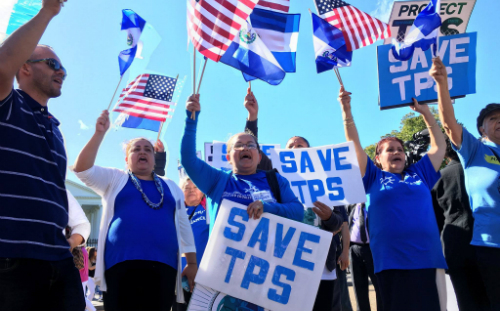
One action Trump plans to take in response to the “invasion” is to cut back on the Temporary Protected Status (TPS) program. Set up in 1990, the program gave the federal government the ability to grant work permits and deferrals from deportation to nationals of any designated nation going through or recovering from natural or man-made disasters.
If you recall the uproar over unfounded claims that Haitians who live and work legally in Springfield, Ohio, were eating their neighbor’s cats and dogs, those Haitians are TPS holders. In an interview with NewsNation, Trump said the influx of migrants in Springfield “just doesn’t work” and “you have to remove the people; we cannot destroy our country.”
To say the least, the fate of those in Oregon with TPS will be precarious, too, under the upcoming Trump administration.
I asked Oregon’s Office of Immigrant and Refugee Advancement how many people in Oregon are here under the Temporary Protected Status program, but they never responded. But I located a report by the Congressional Research Service (CRS) on the TPS topic. According to the CRS, as of March 31, 2024, there were an estimated 2,705 individuals with TPS in Oregon, fewer than the 9,500 in Washington, but more than the 510 in New Mexico. The current number in many states is likely higher now because the number of TPS individuals in the United States has increased by about 150,000 since March.
TPS offers qualifying individuals already in the U.S. work authorization and a temporary legal status to remain in the country if their home country is determined unsafe. TPS offers up to 18 months of relief to qualifying individuals based on the status of that country. For example, the TPS program is scheduled to end in March 2025 for El Salvador and in April 2025 for Sudan, Ukraine, and Venezuela.
TPS designations can be terminated prior to expiration with 60 days notice. TPS status can also be extended by the Department of Homeland Security. For example, on Oct. 17, 2024, the department extended through Aug. 3, 2025, the validity of certain Employment Authorization Documents (EADs) issued to Temporary Protected Status (TPS) beneficiaries under the designation of Haiti.
Since 1990, successive Republican and Democratic administrations have largely automatically renewed certain key TPS designations
The impact of Trump’s plans on current TPS holders could be calamitous. That’s partly because the number of people in the United States under TPS exploded under President Biden.
In 2020, TPS protected about 330,000 people from 10 countries who would otherwise be subjected to disease, violence, starvation, the aftermath of natural disasters, and other life-threatening conditions. The largest group of TPS recipients was from El Salvador (195,000 people) followed by Honduras (57,000 people) and Haiti (50,000 people).
Other countries with TPS holders included Nepal (8,950 people), Syria (7,000 people), Nicaragua (2,550 people), Yemen (1,250 people), Sudan (1,040 people), Somalia (500 people), South Sudan (84 people), Guinea (930 people), and Sierra Leone (1,180 people).
With President Biden’s term winding down, there are now over 1 million immigrants in the United States under TPS status. Qualifying individuals include people from 16 countries, with Venezuelans, Haitians and Salvadoreans the largest groups of TPS beneficiaries.[1]
Under the Biden administration, new TPS designations have been issued for six countries (Afghanistan, Cameroon, Ethiopia, Myanmar [also known as Burma], Ukraine, and Venezuela), and extended for ten others (El Salvador, Haiti, Honduras, Nepal, Nicaragua, Somalia, South Sudan, Sudan, Syria, and Yemen). The government has also granted or extended a similar protection, deferred enforced departure (DED), for people from Hong Kong and Liberia, with an estimated 3,900 and 2,800 covered respectively.
If a TPS designation ends, beneficiaries return to the immigration status that the person held prior to receiving TPS, unless that status has expired or the person has successfully acquired a new immigration status.
If the Trump administration is aggressive in ending the TPS program, its beneficiaries in Oregon and elsewhere would return to being undocumented at the end of a TPS designation and become subject to removal.
“It’s possible that some people in his administration will recognize that stripping employment authorization for more than a million people, many of whom have lived in this country for decades, is not good policy” and economically disastrous, Attorney Ahilan T. Arulanantham, a teacher at the University of California, Los Angeles School of Law, recently told PBS News. “But nothing in Trump’s history suggests that they would care about such considerations.”
[1] Countries Currently Designated for TPS. Select the country link for additional specific country information.
“The American people have given Donald Trump ultimate power,” says Paul Glastris, editor in chief of the Washington Monthly, “They’re going to get the Trump agenda, good and hard.”
America’s “immigration crisis” is a “massive invasion” spreading “misery, crime, poverty, disease and destruction to communities all across our land” and the nation’s cities are being “flooded” by the “greatest invasion in history” of undesirables from “every corner of the earth, not just from South America, but from Africa, Asia, Middle East,” Donald Trump bellowed at the Republican National Convention in July 2024. “They’re coming from prisons. They’re coming from jails. They’re coming from mental institutions and insane asylums. We have to stop the invasion into our country that’s killing hundreds of thousands of people a year.”
Did you miss Trump describing migrants as “vermin” who would “poison the blood of the country”? How about when he said in 2023 that some South American countries were deliberately emptying their “insane asylums” and “mental institutions” to send the patients to the United States as migrants.
You likely didn’t miss Trump’s solution? “Carry out the largest deportation operation in American history” the Republican platform said in “one of a series of bold promises that we will swiftly implement” Trump promised. Huddled masses, yearning to breathe free? Not in Trump country. Deport ’em all.
Easier said than done.
First, let’s talk about numbers.
In 2021, when Joe Biden took office, the figures thrown around for the number of undocumented/illegal/unauthorized/ (whatever word you choose) immigrants in the United States varied by a million or so. The Migration Policy Institute (MPI) put the number at 11.2 million. The Center for Migration Studies said there were approximately 10.3 million.
Curiously, much of the media coverage of the immigration situation today continues to use the 11 million figure, despite the upsurge in border crossings. That may be a sign of lazy reporting, purposefully misleading numbers for ideological reasons, different collections methods or confusion over how to count migrants.
Trump’s numbers have been all over the map. In March 2024, he said 15 million migrants had crossed into the United States border over just the past two years. In August, he said 10 million had come across the border since Biden took office. In later election rallies, he cited a 20 million crossings figure during Biden’s tenure as president. .And in his one televised debate with Kamala Harris he claimed 21 million migrants were crossing the border every single month.
One number often used to track migrants is “encounters” with migrants, including people who tried to cross into the US illegally and people who tried to enter legally but were deemed inadmissible. According to the Border Patrol, since Biden became president in January 2021, there have been more than 10 million encounters, about 8 million of those at the southwest land border with Mexico, up from 2.4 million encounters during the Trump administration. The number is not, however, a reliable count of people who stay in the US. Some are sent back and some are counted multiple times from multiple attempts to cross the border. The encounters number also, obviously, do not count those who manage to slip across the border and escape undetected.
Compounding the numbers problem, the Wall Street Journal reports that Trump wants to “revoke deportation protections from millions of immigrants, including tens of thousands of Afghans evacuated after the fall of Kabul and hundreds of thousands of Ukrainians allowed in after the Russian invasion.”
Whatever the accurate number, it’s one hell of a lot of people, about equal to the entire population of Georgia.
How exactly does Trump plan to deport them all?
Is he going to demand that the military, the FBI, the Border Patrol, local police, the whole shebang of law enforcement, round them up and put them in detention centers?
On Nov. 18, The New York Times reported Trump had confirmed that he intended to declare a national emergency and use the U.S. military in some form to assist in his plans for mass deportations of undocumented immigrants.
The Times said Trump used his social media platform, Truth Social, to respond to a post made earlier in November by Tom Fitton, who runs the conservative group Judicial Watch, and who wrote that Mr. Trump’s administration would “declare a national emergency and will use military assets” to address illegal immigration “through a mass deportation program.” At around 4 a.m. on the 18th, Mr. Trump reposted Mr. Fitton’s post with the comment, “TRUE!!!”
Trump’s top immigration policy adviser, Stephen Miller, told the Times earlier in 2024 said that military funds would be used to build “vast holding facilities that would function as staging centers” for immigrants as their cases progressed and they waited to be flown to other countries. The Homeland Security Department would run the facilities, Miller said.
Is he going to commandeer railroad lines, planes and riverboats to ferry them to the Mexican border?
How’s Trump going to pay for this massive deportation program? The American Immigration Council, an admittedly pro- immigrant group, says the cost of deporting 13 million immigrants in the U.S. illegally could cost $968 billion over a little more than a decade.
Then there are the courts. Do Trump’ and his henchmen expect the American Civil Liberties Union and immigrant advocacy groups to forego court battles if Trump again tests the bounds of his legal authority. The ACLU’s website already promises, “Starting on day one, we’re ready to fight for our civil liberties and civil rights in the courts, in Congress, and in our communities. We did it during his first term – filing 434 legal actions against Trump while he was in office – and we’ll do it again.”
Of course, no matter what Trump wants to do, not all countries will be willing to accept the return of their citizens. Trump faced that problem in his first term.
In a 2016 speech in Phoenix, Trump said, “There are at least 23 countries that refuse to take their people back after they’ve been ordered to leave the United States, including large numbers of violent criminals. They won’t take them back. So we say, ‘Okay, we’ll keep them.’ “Not going to happen with me, not going to happen with me.”
Not so fast, Mr. Trump. U.S. Immigration and Customs Enforcement (ICE) defines any country that fails to cooperate with the U.S. immigration removal process as “recalcitrant”. According to ICE, “Uncooperative countries significantly exacerbate the challenges presented to ICE by the U.S. Supreme Court’s decision in Zadvydas v. Davis, 533 U.S. 678 (2001). In this case, the Supreme Court ruled that: With narrow exceptions, noncitizens with final orders of removal — including noncitizens determined to pose threats to the community or considered flight risks — may not be detained by ICE beyond a presumptively reasonable period of six months if there is no “significant likelihood of removal in the reasonably foreseeable future”.
The Trump administration may also encounter enforcement resistance from so-called “sanctuary” jurisdictions across the country, which include: Alameda, Berkeley, Fremont, Los Angeles, Oakland, San Francisco (county and city), San Mateo County, Santa Ana, Santa Clara County, and Watsonville in California; Boulder and Denver in Colorado; King County, Seattle, and Walla Walla County in Washington; Portland in Oregon; and even Washington, D.C. The Los Angeles City Council has already voted to prohibit city resources from being used for federal immigration enforcement.
“Americans are being squeezed out of the labor force and their jobs are taken,” Trump said at the Republican Convention. “By the way, you know who’s taking the jobs, the jobs that are created? One hundred and seven percent of those jobs are taken by illegal aliens.” But not all employers will likely be cooperative in immigrant sweeps. The Pew Research Center estimated that unauthorized immigrants represented about 4.8% of the U.S. workforce in 2022. About two-thirds of U.S. crop-farm workers are foreign-born, for example, and 42% aren’t legally authorized to work in the country, About two-thirds of U.S. crop-farm workers are foreign-born, and 42% aren’t legally authorized to work in the country, according to a Labor Department report.
“Implementing Trump’s (deportation) plan would be a logistical nightmare and social tragedy, with consequences reverberating beyond the deportees and into the lives of over 20 million people living in mixed-status households, including 5.5 million U.S.-born children suddenly missing one or both parents,” the Center asserts.
Then, no matter how individuals voted, there’s the question of how Americans across the board are going to respond to Trump’s draconian deportation program once it hits their neighborhood. I expect there will be a backlash. I couldn’t put it better than Yascha Benjamin Mounk, Associate Professor of the Practice of International Affairs at Johns Hopkins University’s School of Advanced International Studies. In a post-election podcast conversation with American political scientist Francis Fukuyama, Mounk said:
“When you have very lax policies and high levels of illegal immigration, people say, “clamp down, we want to close the border,” and the moment you start doing the things you actually need to do to clamp down, they start to say, “well, hang on a second, I didn’t want this kid to die. I didn’t want those kids to be separated from their parents. I didn’t want this particular member of the community, who’s been here for 25 years and who seems like a very good and reasonable person, to suddenly be taken and sent back to where they came from.” And so I think even on that issue, which was a winning issue of Trump’s and which he clearly has a popular mandate…he may quite quickly lose public support, nevertheless.”
The ride-hailing company Lyft, apparently deciding that it needs to reinforce its progressive bona fides, is out with slick copy announcing that it plans to provide $150,000 in ride credits to 50 immigration/refugee groups around the country. Portland-based Unite Oregon will be the Lyft credit recipient in Oregon.
“As part of our Lyft Relief Rides program, we have provided each organization with Lyft credit to help with their transportation needs, including but not limited to, getting immigrants and refugees to legal/court appointments,” Lyft announced on July 10, 2019.
The company claims it is “Taking a stand for immigrant rights,” but the tagline for the campaign, “America is an idea, not a geography”, is sophistry that undermines the country’s legitimate efforts to enforce immigration law.
The Democratic candidates for their party’s presidential nomination may be advocating policies that are almost the equivalent of open borders, but the fact is, America is both an idea AND a geography, and Americans want that geography protected and immigration laws enforced.
Businesses have been trying to position themselves as good corporate citizens for years in order to bring about a more favorable operating environment, but earlier efforts focused on neutral moves like raising public awareness of such things as charitable contributions, employee volunteerism and hiring veterans.
Lyft’s move is just the latest example of companies more willing to take public stands on truly controversial issues in order to raise their public profile… and sell more products.
In this case, though, it is naïve in the extreme for an American corporation to proselytize in a kind of hippy-dippy, enlightened way that borders have no place in international relations in the modern world in order to position itself as “woke.”.
All recent presidents have taken the position that protection of U.S. borders is essential.
“All Americans, not only in the states most heavily affected but in every place in this country, are rightly disturbed by the large numbers of illegal aliens entering our country,” which is why “our administration has moved aggressively to secure our borders,” President Bill Clinton said in his 1995 State of the Union address.
“That is our direct message to the families in Central America: Do not send your children to the borders,” President Obama said in a 2014 interview with ABC News. The U.S. Border Patrol, he said, should be able to “stem the flow of illegal crossings and speed the return of those who do cross over … Undocumented workers broke our immigration laws, and I believe that they must be held accountable.”
It’s true that most Americans oppose deporting all the immigrants in the U.S. illegally, but, according to Gallup, about 75 percent want an increase in border patrols to stop the flow of more undocumented immigrants.
They do NOT want an immigration free-for-all based on the concept that “America is an idea, not a geography.”














 ThinkingOregon