Oregon’s 2024 Pensions Bill Shows Need for New Conflict of Interest Rules

It looks like Oregon’s firefighters got what they paid for in the Oregon Legislature’s 2024 session.

In the last week of the session, the Legislature passed HB 4045, the Public Safety Workforce Stabilization Act, by a vote of 55-2 in the House and  25-5 in the Senate.

The bill, which Governor Kotek has not yet signed, would lower the retirement age with full benefits for firefighters with five years on the job from 60 years to 55, substantially increasing the deficit of the Public Employees Retirement System (PERS) and increasing employer costs. 

“…we believe that public servants deserve robust pay and benefits, excellent health care, and solid retirement. However, we are concerned that HB 4045 risks making the entire system insolvent through the unanticipated consequences via well intentioned policy,” commented Hasina Wittenberg, speaking for the Special Districts Association of Oregon & Oregon Fire District Director’s Association.

Left unmentioned in most media coverage of the bill is the name of the legislator behind it, Rep. Dacia Grayber, a Democrat who represents House District 28.

Rep. Dacia Grayber

Grayber’s role is relevant when you consider her occupation and examine contributions to her 2022 election campaign.

First, Grayber is a firefighter herself, a member of  Tualatin Valley Firefighters Union – IAFF Local 1660. That means she will benefit from her bill.

Dacia Grayber, firefighter (Source: IAFF.org)  

Second, at least $45,000, a hefty chunk of contributions to her 2022 campaign, came from firefighter-affiliated labor unions: 

Contributor Amount

Oregon State Fire Fighters Council $ 10,000

International Association of Fire Fighters FIREPAC. $ 10,000

Portland Metro Fire Fighters PAC (223) $ 10,000

Professional Firefighters PAC (3219) $ 10,000

Salem Fire PAC (245) $ 5,000

In a March 4, 2024, letter to the Chief Clerk of the House, Grayber declared a potential conflict of interest because she could be impacted by the retirement age change. That’s not enough.

A May 2021 report from the Secretary of State’s Audits Division noted Oregon is one of only two states that require legislators to vote on matters on which they have an actual conflict of interest.

“The vast majority of states…either require or allow legislators to recuse themselves from voting on such matters,” the report said. “Some states go further, barring lawmakers from taking part in any discussion or action on bills in which they have a personal interest.”

The audit declared that such declarations are “a legislative loophole…(that) undermines the idea that public officials should not be involved in decisions that would benefit them, their family, or close associates.” 

The report also cited a recommendation by Santa Clara University’s Markkula Center for Applied Ethics “…that a conflict of interest is not resolved by being transparent about it…”

The audit report called for the Oregon Legislature to “…consider changing statutes and chamber rules to require lawmakers to recuse themselves from any discussions, debates, or votes on such measures.”

It’s way past time for the Legislature to do so. 
Merkley’s money: pick your poison

I got a friendly personal note from Senator Jeff Merkley the other day. Well, it was addressed to me and had his signature, so I think it was personal.

Anyway, he told me that if I’m “fed up with special interests always getting their way in Washington” he needs my help because “the special interests that are used to calling the shots are hell-bent on defeating me in 2014.” And in a kind of ironic twist, he said he needs lots of money because every supporter he adds today will be “a rejection of the big money politics that’s created a government by and for the powerful.”

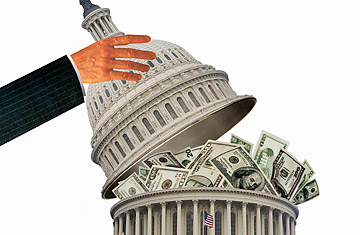
This is the same man who has raised nearly $8 million from the special interests that he embraces, particularly unions, lawyers and law firms, and real estate interests. In the DC game, it’s more a matter of picking your poison than staying pure.

specialinterests

During 2009 -2014, principal contributors to Merkley’s campaign have been:


Industry    Total raised       From Individuals From PACS
lawyers/law firms $337,313 $259,615 $77,698
Leadership PACs $166,500 0 $166,500
Real estate interests $146,868 $74,358 $72,510
Building trade unions $117,000 0 $117,000


The lawyer/law firm contributors include the American Association for Justice, also known as the Association of Trial Lawyers of America ($26,000) and the Boston-based law firm, Thornton & Naumes ($25,000). Thornton & Naumes is a heavy hitter in the contributions game, having contributed $326,250 so far during the 2014 election cycle. That made it the top contributor to 23 members of Congress, all but one a Democrat.

The trial lawyers have been long-time big-time money machine for the Democratic Party. Already losing tort-reform battles in states run by Republican governors and legislatures, and threatened by the GOP-led House, the trial lawyers are deathly afraid of having to deal with a GOP-led Senate, too, so they’re manning the barricades and handing out cash..

Another special interest heavily invested in Merkley is the real estate industry, blamed by some for exacerbating the housing collapse by promoting easy-credit policies.

Then there are the unions. Now there’s a special interest.   Unions making big contributions to Merkley in the 2014 election cycle include:

  • International Brotherhood of Electrical Workers, $30,000
  • Communications Workers of America, $25,000
  • National Electrical Contractors Assn., $25,000
  • International Association of Fire Fighters, $23,500
  • Operating Engineers Union, $20,000
  • Teamsters Union, $20,000
  • Painters & Allied Trades Union, $18,000
  • International Longshoremen’s Association, $18,000
  • International Association of State/County/Municipal Employees, $16,500.

In 2013, the union membership rate–the percent of wage and salary workers who were members of unions–was 11.3 percent, according to the federal Bureau of Labor Statistics. The number of wage and salary workers belonging to unions, was 14.5 million.

The strongest union representation in 2013 was with public-sector workers, which had a union membership rate (35.3 percent) more than five times higher than that of private-sector workers (6.7 percent). This reflects a fairly steady decline in union membership over the years. Thirty years ago, for example, the union membership rate was 20.1 percent, and there were 17.7 million union workers.

Unions in the United States are waging an aggressive effort to maintain their membership and to support union-friendly government policies. And Merkley’s on board.