Narcissism Run Amok: Jaiden’s Journey

We’re creating monsters.

Jaiden Rodriguez

Jaiden Rodriguez, a 12-year-old student at The Vanguard School, a K-12 charter school in Colorado Springs, CO, is enjoying a moment of media fame as he works to make a spectacle of himself .  He was recently reportedly removed from school because an administrator considered a Gadsten flag on his backpack to be associated with slavery and slave trade.
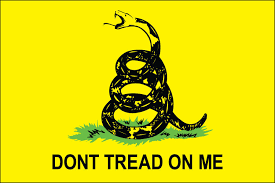
The Gadsden Flag

 The Gadsden flag was designed by independence-minded colonists in the run-up to the Revolutionary War. In the 1970’s, it was seen by some Tea Party adherents and Libertarians as a symbol of ideological enthusiasm for minimal government and the rights of individuals. Some have since associated it with the Confederate battle flag and the Ku Klux Klan. Suffice it to say, it has had multiple divergent personalities.

What has happened next in Jaiden’s case is a sign of the times. 

First, video of Jaiden being removed from class for displaying the flag went viral, thanks to Connor Boyack, president of Libertas Institute, a Utah-based libertarian think tank.

Then the usual public outrage erupted, stirred by impassioned claims Jaiden’s First Amendment rights were violated. 

And, of course, attention-seeking politicians then chimed in.

“This is a direct attack on his freedom of speech,” said Rep. Lauren Boebert, (R-CO),  a conservative firebrand .”Our education system has a deep-rooted problem with liberal bias.”

The Vanguard School’s Board of Directors subsequently allowed Jaiden to return to school with the Gadsden flag still visible on his backpack, calling the incident “an occasion for us to reaffirm our deep commitment to a classical education.”

That should have been the end of it, but Jaiden, spurred on by his attention-seeking mother, is apparently determined to maximize his moment of fame.

With the support of Libertas Institute, Jaiden has begun an online fundraising campaign to buy and ship books produced by Libertas Institute to schools across the country. The tax-deductible contributions will go to the Institute. 

“Connor and his team have some new American history books that teach the ideas of freedom and the founding fathers.,” Jaiden says in his appeal. “They’re so much better than the textbooks we have to use in school that don’t really teach history with any kind of depth.” 

The books, with titles such as “Should the collective control us?” and “Why are free markets important?”, “… empower parents like you to make sure your children have a foundation of freedom—to understand the ideas of a free society that socialists are trying too hard to undermine,” the Institute says. 

Noting that he’s grown more popular at school because of the controversy, Jaiden even has taken to some name-dropping, saying he’s talked with Ben Shapiro, a controversial conservative political pundit. 

In a podcast interview with Shapiro, Jaiden said the Gadsden flag “…was meant as a warning sign not to tread on our rights in the revolution. Which is funny because they tried to tread on my rights and then they found out they [could] not.”

Jaiden went on to tell Shapiro he expected to win a race for student council in a “landslide” due to the controversy and that he was now “Mr. Popular” at his school.

And to top it all off, now this 12-year-old 7th grader says his experience has made him want to be governor of Colorado in 18 years when he’s 30, the state’s minimum age to serve as governor.

We’re creating monsters. 
Outrageous! Our New Political Showboats

A menagerie of malicious and misleading malcontents is undermining our democracy.

Italy’s fashion house, Valentino, has a “Director of Branding and Entertainment”.  Of course it does. 

The company, with its $3750 hunting jacket in waxed cotton, $5200 silk cady jumpsuit and $16,500 leather trench coat, understands that entertaining your current and prospective audience is a critical element in fortifying your brand and maintaining your trendiness.

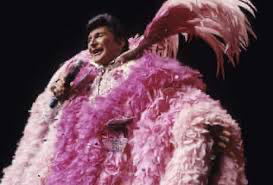
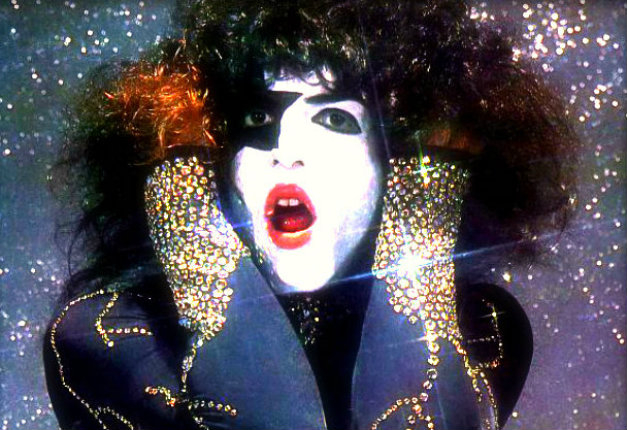
It’s long been the case that building a brand requires that you entertain people, that your public persona be out there. And entertaining has long meant being outrageous in behavior, dress and comments, particularly in the arts. 

The  flamboyant pianist Liberace knew that.

So did Paul Stanley of Kiss:

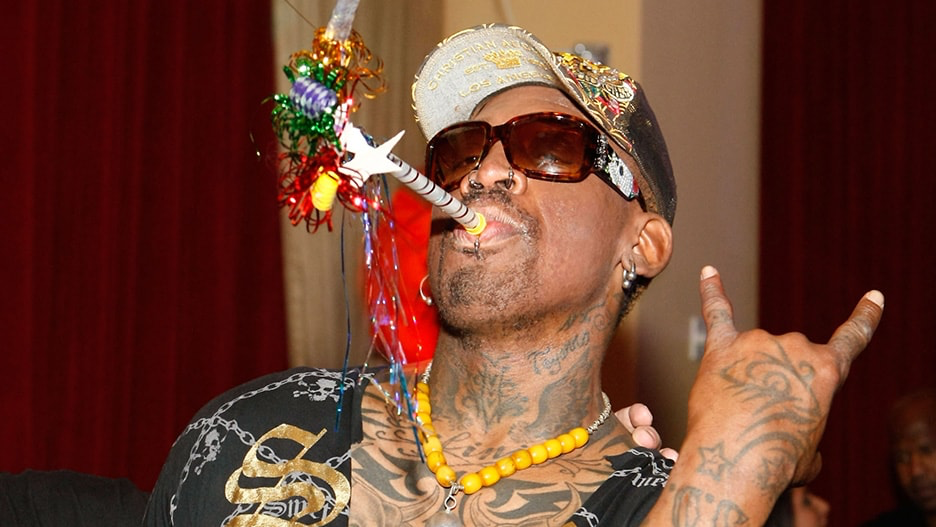
Other entertainers who have traded on their outrageous behavior to bolster their knownness include Kim Kardashian, who thrives on pushing boundaries (Remember, her illustrious “career” began with a sex tape), rapper Lil Kim and Dennis Rodman.

Bad Boy Dennis Rodman

Others try similar tactics to build their brands, such as the grammy-winning singer, Lizzo

Lizzo boarding a private plane

and Miley Cyrus:

OK, I get it.

It’s one thing for celebrities and celebrity wannabes to be outrageous. Now, however, too many of our politicians are mimicking them, playing to the cheap seats and figuring they can translate outrageous behavior into political power by hoovering up media attention. Politicians are, after all, frequently referred to as “political actors” in a vast drama.

And they are getting the attention they want through their outrageous behavior because, as David A. Hopkins, a professor of political science at Boston College, has observed, “American voters generally aren’t attentive; you really do have to grab their attention, which is hard to do.”

Outrageous politicians also tend to get a lot of coverage because, unlike in the print days, there are no space constraints on the Internet and controversy breeds attention.

As a 2013 New York magazine article noted, “Originally, BuzzFeed employed no writers or editors, just an algorithm to cull stories from around the web that were showing stirrings of virality.”  Jonah Peretti, a founder of BuzzFeed, which went public through a merger with a special-purpose acquisition company (SPAC) in Dec. 2021 (NASDAQ: BZFD), didn’t really care whether a post was produced by a journalist or sponsored by a brand, so long as it travelled. “He’s a semiotic Darwinist: He believes in messages that reproduce,” the article noted.

Outrageous politicians also tend to get a lot of coverage because, unlike in the print days, there are no space constraints on the Internet and controversy breeds attention.  As a 2013 New York magazine article noted early on, “Originally, BuzzFeed employed no writers or editors, just an algorithm to cull stories from around the web that were showing stirrings of virality.”

Also, there’s a lot of pressure on opinion writers to churn stuff out and the comments and actions of showboats are fertile territory for comment, which generates even more attention.

The Columbia Journalism Review recently reported on how Merrill Brown, the founder of a business-of-journalism startup called the News Project, described the pressure that opinion purveyors feel: “Everybody wants to get today’s take right,” he said. “But ‘thoughtful commentary’ on the day’s news is almost an oxymoron.” The result, he added, “is more about being clever than necessarily doing your homework.

As Lonesome Rhodes (played so powerfully by Andy Griffith in A Face in the Crowd)  said of himself, before his contemptible behavior led to his downfall, “I’m not just an entertainer. I’m an influence, a wielder of opinion, a force… a force!”

A menagerie of malicious and misleading malcontents is undermining our democracy.

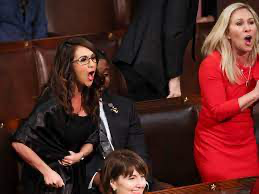
The toxic, hyperventilating blowhards include Rep. Marjorie Taylor Greene (R-GA), Rep. Lauren Boebert (R-CO), Rep. Madison Cawthorne  (R-NC), Rep. Matt Gaetz (R-FL) and Rep. Andy Biggs (R-AZ). 

Reps. Greene and Boebert heckle President Biden during State of the Union address, March 1, 2022

In a recent article about the re-emergence of Sarah Palin, who now wants to represent Alaska in the House, Politico’s Joanna Weiss observed that the script has flipped in terms of the visibility of freshman members of Congress. 

“…there are plenty of politicians who have used Palin’s playbook to build fame out of political office, rather than the other way around.,” Weiss wrote. “Republican House members like Marjorie Taylor Greene, Madison Cawthorn, and Lauren Boebert have learned that freshmen members of Congress can command outsized attention — and that outrageous statements are a ticket, if not to policy success, then at least to the kind of attention and fundraising prowess that keeps a career alive.”

Lest you think all the blowhards committed to grandstanding rather than governing are Republicans, the behavior of Rep. Maxine Waters (D-CA), has led to some outrageous viral moments, too. And as far as I’m concerned,  Rep. Adam Schiff (D-CA) went off the deep end in his allegations regarding the discredited Steele Dossier, which contained allegations of misconduct, conspiracy, and cooperation between Donald Trump’s presidential campaign and the government of Russia prior to and during the 2016 election campaign.

Being “political” today means seeing politics as a mode of self-expression, producing attention-getting images airing one’s views and publicly taking sides, such as Alexandria Ocasio-Cortez in her “Tax the Rich” Met Gala dress, Blake Smith observed in a City Journal article, The Narcissism of Hyper-Politicization. “Achieving real political goals through coordination and cooperation would, in contrast, “require individuals to discipline themselves, to moderate their insistence on their own uniqueness, and to subordinate their own desires to a greater good,” he wrote. 

In the Columbia Journalism Review, Jon Allsop told of  a French student journalist who was thrilled he secured a  30-second interview with Emmanuel Macron ahead of the 2017 presidential election, only to later discover he’d forgotten to turn on his microphone.

Today’s journalists in the United States might want to do the same when they cover the narcissistic politicians who have adopted a “outrageous behavior-is-the ticket” attitude.