OPB is facing a Big Hole. Will Donors step Up?

Oregon Public Broadcasting (OPB) is in trouble.

A bill clawing back $1.1 billion from the Corporation for Public Broadcasting (CPB), which provides funding for NPR and PBS, including OPB, has passed the Senate. It is expected to pass the House next and then to be sent to President Trump for his signature. 

Are you and thousands of other Oregonians prepared to start or increase donations to OPB to replace the federal money it now relies on?

Public radio across the country is already begging for money. On July 18, Alyson Brokenshire, Senior Director, Principal and Major Gifts at PBS News Hour sent out a message: “For the first time in history, Congress voted to zero out funding for public media, including PBS News HourThis decision creates a critical funding challenge for us, but one we can meet with your sustaining support.”  WBUR in Boston also sent out a plea on July 18: “Give. Longtime listener or reader? Become a first-time donor at this pivotal moment. Give again. Thank you, a million times over, for being in our corner. Give more. Help us close this $1.6-million funding gap, right now. Give every month. When you become a Sustainer, we know we can rely on you. Month after month. Year after year.”

In fiscal year 2023, government grants to OPB totaled $4,679,653 or 9.5% of the station’s $49,370,988 in revenue from contributions, including sponsorships.[1]

I’m already a sustaining contributor to OPB. I provide ongoing, monthly financial support through automatic deductions from a credit card. I recently increased my monthly donations because of the threats of funding cuts by the Trump administration. Am I prepared to donate even more when those cuts are real?

My sense is that OPB has a tough road ahead if it tries to replace all of the $4,679,653 in annual federal support it now receives. 

Current economic uncertainty is one thing likely to impact fundraising. There is already evidence that such uncertainty is leading people to scale back on discretionary spending, including charitable donations.Nonprofit giving in the US has taken a $65 billion hit since 2021, according to Philanthropy.org. 

Another reality is that a substantial percentage of America’s private wealth is held by conservative and center-right donors, many of whom are wary of institutions they perceive as liberal, and many of whom see public media as liberal. That perception was recently reinforced by Uri Berliner, a former senior business editor at NPR. In 2024, he wrote a blistering critique of NPR in The Free Press, accusing it of lacking viewpoint diversity and of a drift towards a progressive ideology

Trump administration officials and members of Congress have piled on, claiming that NPR and PBS push “left-wing propaganda” and accusing them of violating the CPB’s nonpartisan mandate.

Never one to be subtle, Trump has mercilessly blasted public radio and television. “NPR and PBS, two horrible and completely biased platforms (Networks!), should be DEFUNDED by Congress, IMMEDIATELY,” Trump wrote late Wednesday on Truth Social. “Republicans, don’t miss this opportunity to rid our Country of this giant SCAM, both being arms of the Radical Left Democrat Party. JUST SAY NO AND, MAKE AMERICA GREAT AGAIN!!!”

“NPR and PBS have increasingly become radical, left-wing echo chambers for a narrow audience of mostly wealthy, white, urban liberals and progressives,” Rep. Marjorie Taylor Greene (R-Georgia) said at a subcommittee hearing earlier this spring, 

Could OPB survive without the federal grants or any increase in donations? Probably, but the hit would be hard, though not as hard as the likely hit on KCUW in Pendleton, OR, which relied on federal money for 98% of its revenue in 2023. KCUW is is managed by members of the Confederated Tribes of the Umatilla Indian Reservation. Sen. Mike Rounds, R-S.D., said he secured a deal from the White House that some funding administered by the Interior Department would be repurposed to subsidize Native American public radio stations in about a dozen states, but there’s no firm provision in the bill for that.

The impact of any cut in OPB’s programming would be felt particularly by Oregon and Southern Washington’s more educated and higher income populace (71% of OPB’s TV audience, 82% of OPB’s digital audience and 85% of OPB’s radio audience has attended college). The public broadcast audience also typically falls into higher household income categories and have for years, primarily because households that listen to public media tend to have more formal education.

One potential threat to any OPB fundraising outreach is the changing media landscape and its burgeoning cost. 

Not only are media outlets multiplying, but alternative media are increasingly soliciting subscriptions. I have long subscribed to the Wall Street Journal (that subscription alone costs me $779.88 a year) and the New York Times, but added a subscription to Bari Weiss’ Common Sense newsletter, later renamed The Free Press, in 2021. I have since added subscriptions to a raft of other Substack publications with various points of view.  

I also make contributions to a number of Oregon and national non-profits, the Ukrainian Freedom Fund, and a Ukrainian news site, The Kyiv Independent.  And once in a while I’m a sucker for a GoFundMe plea. 

My point is, like many Oregonians, I’m already heavily invested in trying to do good. But there’s a limit. Periodically, I have to cull my subscriptions and donations because the cost gets out of hand. This means reprioritizing. And in the case of public broadcasting, fundraising pleas are going to come from various entities competing against each other for support, including individual programs, such as PBS News Hour, and individual stations, such as OPB and KCUW.

If OPB wants to replace the $4,679,653 in government financing it is set to lose, it is going to have to convince a lot of people to up their giving or chip in for the first time. 

This at a time when Oregon’s economy is facing a period of sluggish growth and some signs of weakness, with potential big givers from companies like Intel and Nike under stress and smaller givers uncertain about their economic prospects. President Trump’s One Big Beautiful Bill Act is also likely to put pressure on many Oregonians and the state budget and there’s potential harm from Trump’s aggressive tariffs.

All food for thought.


[1] In most instances, sponsorships are considered charitable contributions by the underwriters.  On OPB’s IRS Form 990, these sponsorships are included in the $49,370,988 reported as contributions and grants. There is also a small amount of sponsorships that meet the definition of advertising, which primarily occur on OPB’s digital platforms.  For FY 23, advertising is included in the program service revenue of $1,381,015 and in unrelated business revenue reported on OPB’s IRS Form 990-T.  

For FY 23, advertising is included in the program service revenue of $1,381,015 and in unrelated business revenue reported on our IRS Form 990-T.  Sponsorships are not otherwise disclosed on the tax filings.  Total revenue was $56,821,607.

Notable Sources of Revenue$Percent of Total Revenue
Contributions$49,370,988             86.9%
Program Services$1,381,015               2.4%
Investment Income$3,446,034               6.1%
Bond Proceeds$0 
Royalties$0 
Rental Property Income$415,851                0.7%
Net Fundraising$0 
Sales of Assets$2,207,719                 3.9%
Net Inventory Sales$0 
                                                                       

Figures are from Form 990 which non-profits are required to file annually with the IRS. These CPB grants are included in the Contributions and Grants revenue of $49,370,988 on OPB’s FY 2023 IRS Form 990. CPB grants are not included in government grants on the Form 990 as CPB is a private, nonprofit corporation, not a government agency. 

Florida Travel Warnings by Activists Are Ill-Advised

Activist groups are on the warpath against Florida.

The League of United Latin American Citizens (LULAC), a Latino civil rights organization; Equality Florida, a gay rights advocacy group; and the National Association for the Advancement of Colored People (NAACP) have all issued advisories warning against travel to Florida.

“Florida is openly hostile toward African Americans, people of color and LGBTQ+ individuals,” the NAACP said. “Before traveling to Florida, please understand that the state of Florida devalues and marginalizes the contributions of, and the challenges faced by African Americans and other communities of color.”

The wisdom of their censure?  Nil. It’s likely impact?  Minimal. 

The experiences of San Francisco and California with ill-considered travel bans are instructive.

San Francisco has already repealed its ban on city business with conservative states. The state may soon rescind its travel ban as well.

In 2016, California decided to restrict state employees from traveling to any state that has enacted a law that discriminates on the basis of sexual orientation, gender identify, or gender expression. It also prohibited state-funded and state-sponsored travel to states on a list.

In the beginning, four states (Kansas, Mississippi, N. Carolina, Tennessee) were on the list of states affected by the travel ban. Eventually the list swelled to almost half the states in the union.

California’s misguided feel-good effort at virtue signaling was stimulated by North Carolina acting to ban transgender people from using the bathroom of their gender identity in public buildings. California retaliated by banning state-funded travel to that state and any other state with laws it deemed discriminatory against LGBTQ people.

The travel ban played well with California’s leftists, but as the list of penalized states expanded, the ban grew unwieldy.  

The prohibition meant sports teams at public colleges and universities had to find other ways to pay for road games in some states, university researchers found it difficult to pursue projects that required trips to states on the banned list and  it complicated some of the state’s other policy goals, such as the use of money to pay for people in other states to travel to California for abortions.

In March 2023, state Senate leader Toni Atkins announced legislation that would end the ban and create in its place a program to create inclusive messaging, discourage discrimination, and help members of the LGBTQ+ community feel less isolated.

“While we recognize what the travel ban accomplished when it was passed, we also must address the unintended consequences and diminished utility that has become its legacy,” said John A. Pérez, UC Regent and Speaker Emeritus of the Assembly.

“But while the arguments for repeal are all legitimate, they miss what to me is the single biggest problem with the ban: Imposing a boycott on nearly half the states in the union further divides us as a country. It exacerbates political polarization and creates obstacles to communication with the very people we need to be persuading,” wrote Los Angeles Times columnist, Nicholas Goldberg.

The activist groups issuing advisories warning against travel to Florida are equally misguided.  While there are clearly divided views on some bills passed by the Florida Legislature and signed by Gov. DeSantis, accusing the state as a whole of racism and discouraging travel there is divisive, overreaching and undercuts minority-owned businesses in the state.

In a country with 50 states and more than 332 million people, there are bound to be multiple areas of disagreement. Many might say the diversity of opinions, and the willingness to hear and debate them, is one of our country’s strengths. Different viewpoints, after all, serve as a gateway for discovery.

Activists trying to carve up the country into segments with which they agree or disagree are headed down the wrong path.That kind of thinking just encourages people like the unhinged far-right U.S. Representative, Marjorie Taylor Greene, R-GA.

On Feb. 20, Presidents’ Day, Greene tweeted: “We need a national divorce. We need to separate by red states and blue states and shrink the federal government. Everyone I talk to says this. From the sick and disgusting woke culture issues shoved down our throats to the Democrat’s traitorous America Last policies, we are done.”

Thankfully, there is little evidence that travel advisories by activist groups of any stripe have chilled interest in travel to chastised states in the past. Florida reported a record tourism year, with an estimated 137.6 million visitors in 2022 — up nearly 13% from 2021. That trend is likely to continue, despite the activist travel warnings.

As Stacy Ritter, CEO and president of Visit Lauderdale, has said, “…we welcome everyone under the sun.”

Outrageous! Our New Political Showboats

A menagerie of malicious and misleading malcontents is undermining our democracy.

Italy’s fashion house, Valentino, has a “Director of Branding and Entertainment”.  Of course it does. 

The company, with its $3750 hunting jacket in waxed cotton, $5200 silk cady jumpsuit and $16,500 leather trench coat, understands that entertaining your current and prospective audience is a critical element in fortifying your brand and maintaining your trendiness.

It’s long been the case that building a brand requires that you entertain people, that your public persona be out there. And entertaining has long meant being outrageous in behavior, dress and comments, particularly in the arts. 

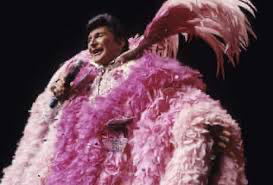
The  flamboyant pianist Liberace knew that.

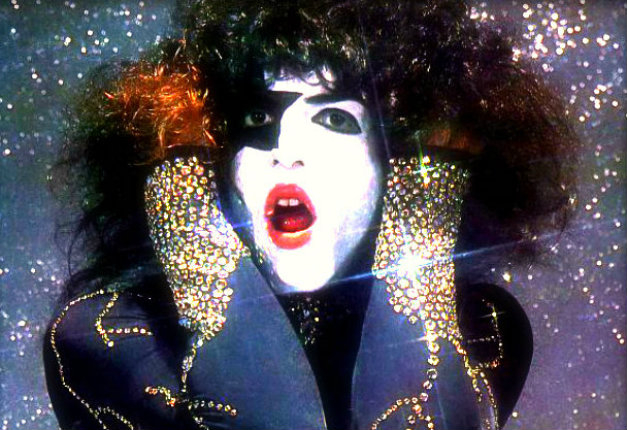
So did Paul Stanley of Kiss:

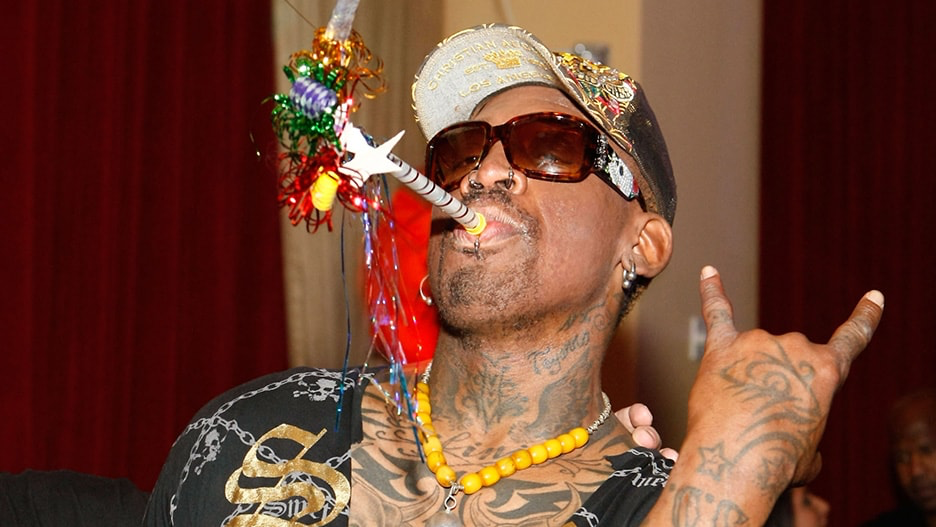
Other entertainers who have traded on their outrageous behavior to bolster their knownness include Kim Kardashian, who thrives on pushing boundaries (Remember, her illustrious “career” began with a sex tape), rapper Lil Kim and Dennis Rodman.

Bad Boy Dennis Rodman

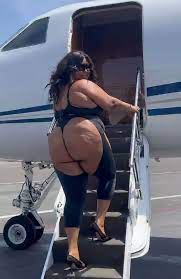
Others try similar tactics to build their brands, such as the grammy-winning singer, Lizzo

Lizzo boarding a private plane

and Miley Cyrus:

OK, I get it.

It’s one thing for celebrities and celebrity wannabes to be outrageous. Now, however, too many of our politicians are mimicking them, playing to the cheap seats and figuring they can translate outrageous behavior into political power by hoovering up media attention. Politicians are, after all, frequently referred to as “political actors” in a vast drama.

And they are getting the attention they want through their outrageous behavior because, as David A. Hopkins, a professor of political science at Boston College, has observed, “American voters generally aren’t attentive; you really do have to grab their attention, which is hard to do.”

Outrageous politicians also tend to get a lot of coverage because, unlike in the print days, there are no space constraints on the Internet and controversy breeds attention.

As a 2013 New York magazine article noted, “Originally, BuzzFeed employed no writers or editors, just an algorithm to cull stories from around the web that were showing stirrings of virality.”  Jonah Peretti, a founder of BuzzFeed, which went public through a merger with a special-purpose acquisition company (SPAC) in Dec. 2021 (NASDAQ: BZFD), didn’t really care whether a post was produced by a journalist or sponsored by a brand, so long as it travelled. “He’s a semiotic Darwinist: He believes in messages that reproduce,” the article noted.

Outrageous politicians also tend to get a lot of coverage because, unlike in the print days, there are no space constraints on the Internet and controversy breeds attention.  As a 2013 New York magazine article noted early on, “Originally, BuzzFeed employed no writers or editors, just an algorithm to cull stories from around the web that were showing stirrings of virality.”

Also, there’s a lot of pressure on opinion writers to churn stuff out and the comments and actions of showboats are fertile territory for comment, which generates even more attention.

The Columbia Journalism Review recently reported on how Merrill Brown, the founder of a business-of-journalism startup called the News Project, described the pressure that opinion purveyors feel: “Everybody wants to get today’s take right,” he said. “But ‘thoughtful commentary’ on the day’s news is almost an oxymoron.” The result, he added, “is more about being clever than necessarily doing your homework.

As Lonesome Rhodes (played so powerfully by Andy Griffith in A Face in the Crowd)  said of himself, before his contemptible behavior led to his downfall, “I’m not just an entertainer. I’m an influence, a wielder of opinion, a force… a force!”

A menagerie of malicious and misleading malcontents is undermining our democracy.

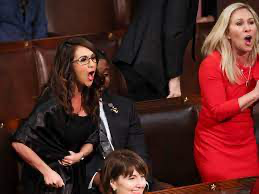
The toxic, hyperventilating blowhards include Rep. Marjorie Taylor Greene (R-GA), Rep. Lauren Boebert (R-CO), Rep. Madison Cawthorne  (R-NC), Rep. Matt Gaetz (R-FL) and Rep. Andy Biggs (R-AZ). 

Reps. Greene and Boebert heckle President Biden during State of the Union address, March 1, 2022

In a recent article about the re-emergence of Sarah Palin, who now wants to represent Alaska in the House, Politico’s Joanna Weiss observed that the script has flipped in terms of the visibility of freshman members of Congress. 

“…there are plenty of politicians who have used Palin’s playbook to build fame out of political office, rather than the other way around.,” Weiss wrote. “Republican House members like Marjorie Taylor Greene, Madison Cawthorn, and Lauren Boebert have learned that freshmen members of Congress can command outsized attention — and that outrageous statements are a ticket, if not to policy success, then at least to the kind of attention and fundraising prowess that keeps a career alive.”

Lest you think all the blowhards committed to grandstanding rather than governing are Republicans, the behavior of Rep. Maxine Waters (D-CA), has led to some outrageous viral moments, too. And as far as I’m concerned,  Rep. Adam Schiff (D-CA) went off the deep end in his allegations regarding the discredited Steele Dossier, which contained allegations of misconduct, conspiracy, and cooperation between Donald Trump’s presidential campaign and the government of Russia prior to and during the 2016 election campaign.

Being “political” today means seeing politics as a mode of self-expression, producing attention-getting images airing one’s views and publicly taking sides, such as Alexandria Ocasio-Cortez in her “Tax the Rich” Met Gala dress, Blake Smith observed in a City Journal article, The Narcissism of Hyper-Politicization. “Achieving real political goals through coordination and cooperation would, in contrast, “require individuals to discipline themselves, to moderate their insistence on their own uniqueness, and to subordinate their own desires to a greater good,” he wrote. 

In the Columbia Journalism Review, Jon Allsop told of  a French student journalist who was thrilled he secured a  30-second interview with Emmanuel Macron ahead of the 2017 presidential election, only to later discover he’d forgotten to turn on his microphone.

Today’s journalists in the United States might want to do the same when they cover the narcissistic politicians who have adopted a “outrageous behavior-is-the ticket” attitude.