Trump Pursuing a New Tactic to Build His Presidential Library: Lawsuits.

Meta Platforms has agreed to pay about $25 million to settle a lawsuit Trump brought against the company after the social-media platform suspended his accounts following the attacks on the U.S. Capitol that year.

$22 million of the payment will go toward a fund for Trump’s presidential library,. Meta won’t admit wrongdoing under an agreement Trump signed in the Oval Office on Jan. 29.

This follows a Dec. 14 announcement that ABC News would pay $15 million to settle a defamation lawsuit brought by Trump is discouraging. Even more discouraging, however, is word that under the terms of the settlement ABC News will donate the $15 million to Trump’s future presidential foundation and museum.

And now The New York Times reports many executives at CBS’s parent company, Paramount, believe that settling an absurd $10 billion lawsuit against CBS filed before the Nov. 2024 election would increase the odds that the Trump administration does not block or delay their planned multibillion-dollar merger with Skydance. Trump accused CBS of deceptively editing a “60 Minutes” interview with Vice President Kamala Harris. 

“A settlement would be an extraordinary concession by a major U.S. media company to a sitting president, especially in a case in which there is no evidence that the network got facts wrong or damaged the plaintiff’s reputation,” the Times reported on Jan. 30. 

“We once held the office of president, as well as its occupant, in high regard,” Anthony Clark wrote in The Last Campaign: How Presidents Rewrite History, Run for Posterity, and Enshrine Their Legacies. “As we have lowered our opinions of both, presidential libraries, consequently, have grown larger and more powerful—and, not incidentally, less truthful.” As Clark wrote in Salon, presidential centers tend to be “proud, defensive, and a little self-absorbed” and eventually become theme parks with declining numbers of visitors.

The Donald J. Trump Presidential Library Fund Inc. was incorporated in Florida on Dec. 20, six days after it was revealed that ABC News had agreed to donate the $15 million to Trump’s future presidential foundation and museum.

The Wall Street Journal’s Annie Linskey and Rebecca Ballhaus reported “Serious talks about the suit, which had seen little activity since the fall of 2023, began after Meta Chief Executive Mark Zuckerberg flew to Trump’s Mar-a-Lago club in Florida to dine with him in November, according to the people familiar with the discussions. The dinner was one of several efforts by Zuckerberg and Meta to soften the relationship with Trump and the incoming administration. Meta also donated $1 million to Trump’s inaugural fund. Last year, Trump warned that Zuckerberg could go to prison if he tried to rig the election against him. Toward the end of the November dinner, Trump raised the matter of the lawsuit, the people said. The president signaled that the litigation had to be resolved before Zuckerberg could be ‘brought into the tent,’ one of the people said.”

Knowing Donald Trump’s tendency toward grandiosity, he will likely want a supercalifragilisticexpialidocious billion dollar Presidential Monument. The Washington Post reported back in January 2021 that a top Trump fundraiser said the president had told supporters he wanted to raise $2 billion for his presidential library and museum and thought he could collect it in small-dollar donations from his grass-roots supporters. A satirical website was subsequently created showing the contents of a potential Donald J. Trump Presidential Library, with images of “The Wall of Criminality” and the “Alt Right Auditorium”. 

The way we’re headed, presidential centers will surpass Egypt’s pyramids as monuments to the egos of leaders. But as I’ve observed in previous posts, if Donald Trump goes forward with his museum plans, his  former, current and future advisors may have reason to be concerned. Many of the Egyptian pyramids entombed not only the deceased, but also the deceased’s servants.

Source: Putnam Museum

Measure 110 was misguided liberal activism posing as philanthropy

Measure 110 was a seriously flawed ballot measure written and bankrolled by outsiders that deserved to be defeated. Instead, Oregon voters approved the measure 58.5% – 41.5%. 

Now come the problems.

The measure, which will go into effect on Feb. 1, 2021, removes criminal penalties for individuals caught in unauthorized possession of controlled substances in amounts reflecting personal use and instead will impose a maximum fine of $100 or completion of a health assessment. That alone raises a lot of red flags. 

One likelihood is that the implementation of Measure 110 will eliminate a major deterrent to trying and using drugs, likely fueling more, not less, drug use and addiction.

“If you don’t pay the hundred-dollar fine, what are the consequences for that?” David Sanders, a Portland Police Bureau officer, told the Journal. “There are no consequences. That will not act as a deterrent and is essentially worthless. Every cop will tell you that.”

Of equal concern is the measure’s requirement that the state establish new addiction recovery centers. 

Easier said than done.

“Oregon, like so many states, has suffered from high numbers of drug overdoses, and people who want to get treatment but can’t find it or can’t afford it,” said one Measure 10 supporter during the campaign. “This measure would start to address treatment and interventions in a sustainable and systematic way in order to get people the help they need and deserve.”

A laudable thought, but treatment won’t happen if it’s not available.

 “…people experienced in dealing with drug addiction say Oregon isn’t prepared to offer treatment to anyone caught in possession of an illegal drug, especially in the midst of a pandemic that makes in-person treatment harder at the same time that overdoses are rising,” the Wall Street Journal reported today.

Rebeka Gipson-King, a spokeswoman for the Oregon Health Authority, told the Journal the process of starting a new treatment center would usually take at least 12 to 15 months, more time than the state has to create a network of treatment centers. “There’s a dearth of qualified service providers in Oregon,” she said.

Oregon is going to have to deal with these problems, not the national advocacy groups and wealthy out-of-staters who picked up much of the tab for the Measure 110 campaign on the 2020 ballot. 

In a classic case of misguided liberal activism posing as philanthropy,  the key backer of Measure 110 was  Drug Policy Action, a New York City-based 501(c)(4) nonprofit advocacy group. The organization supports marijuana legalization and more lenient punishments for drug possession, use, and sale. 

The group is the advocacy and political arm of the Drug Policy Alliance, a 501(c)(3) educational nonprofit that was also behind Oregon’s 2014 measure legalizing recreational cannabis.

The Drug Policy Alliance has received major funding from billionaire investor George Soros, who has long been involved in pushing for an end the legal war on drugs. 

Drug Policy Action contributed $1,574,788.00 to the Measure 110 campaign, making it by far the largest single contributor to the group in Oregon fighting for the measure’s passage, “More Treatment for a Better Oregon: Yes on 110”. 

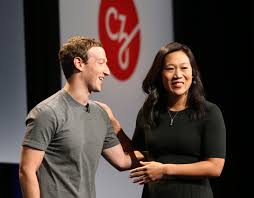
The next largest contributor was the Chan Zuckerberg Initiative (CZI) of Palo Alto, CA, which donated $500,0000.   The Chan Zuckerberg Initiative is a charity established and owned by Facebook founder Mark Zuckerberg and his wife Priscilla Chan.

This image has an empty alt attribute; its file name is chanzuckerberg.jpg
Mark Zuckerberg (L) with Priscilla Chan.

“This issue-based advocacy work is led by teams on CZI’s Justice and Opportunity Initiative , which tackles systemic barriers in society that hold people back from reaching their full potential,” the initiative explains on its website.

The website had no suggestions on how Oregon should deal with the budget issues raised by Measure 110.

The Sheriffs of Oregon pointed out in the 2020 Oregon Voters’ Pamphlet that Measure 110 would shift millions of dollars of marijuana tax revenue from schools, mental health and addiction services, state police, cities, counties, and drug prevention programs. Instead, these funds would be redirected into a Measure 110 fund.

“The funding promised by Measure 110 is not ‘free’ money that is unallocated and sitting in state coffers waiting to be spent,” Crook County District Attorney Wade Whiting wrote in the Central Oregonian. “Marijuana tax revenue is currently being used to fund schools, police, mental health programs and existing addiction treatment and prevention programs. Measure 110 will divert dollars from these essential services.”

Media Transparency: Who said that?

mediatransparency

Untrustworthy information isn’t just about fake news, the media’s topic du jour. There’s another equally insidious trend in today’s media.

It was highlighted in a recent New York Times  opinion piece contending that Facebook shouldn’t be expected to fact-check news posts.

“What those demanding that Facebook accept “responsibility” for becoming the dominant news aggregator of our time seem to be overlooking is that there’s a big difference between the editorial power that individual news organizations wield and that which Facebook could,” wrote a woman named Jessica Lessin, identified as the founder and chief executive of The Information, a technology news site. “Such editorial power in Facebook’s hands would be unprecedented and dangerous.”

Lessin noted in her piece that her husband worked at Facebook “for a brief period.” That’s it.

But the New York Times’ Public Editor, Liz Spayd, disclosed on Nov. 30 that, in fact, Lessin and her husband, Sam, have pretty damn close ties to Facebook and Mark Zuckerberg, the company’s chief executive officer.

Not only have Sam Lessin and Zuckerberg been friends since they both attended Harvard, Spayd reported, but Sam introduced Zuckerberg to investors when he was starting Facebook. In addition, in 2010, Facebook acquired a file-sharing site, Drop.io, that Sam had founded and made Sam a Facebook vice president overseeing product. Zuckerberg was even a guest at the Lessing’s wedding.

Spayd ripped the Times for not disclosing to readers the Lessins’ ties to Facebook, particularly because Jessica Lessin had vigorously defended the company.

The problem is this is not the only case of the media’s failure to disclose relevant information on somebody expressing an opinion.

On Oct. 28, 2016, CBS News Tonight featured a comment by a Matthew Miller condemning FBI Director James Comey for reopening the Clinton email investigation. CBS noted only that Miller had been a spokesman for the Department of Justice.

That same day, Politico reported that Miller had gone on a 14-post spree on Twitter blasting Comey and said Comey’s letter to Congress announcing the review of more evidence in the investigation of Hillary Clinton’s private email server constituted “…an inappropriate disclosure.”

Politico also identified Miller only as “a former director of the Justice Department’s office of public affairs.”

Salon jumped on the bandwagon, too, citing a Miller tweet, “FBI is undoubtedly investigating links between the Russian hack, Manafort, & the Trump campaign”. Salon also identified Miller as “Former Department of Justice spokesman…”.

The next day, the Washington Post ran a lengthy opinion piece by Miller titled “James Comey fails to follow Justice Department rules yet again.” Miller blasted Comey, saying his action “…was yet another troubling violation of long-standing Justice Department rules or precedent, conduct that raises serious questions about his judgment and ability to serve as the nation’s chief investigative official.”

In this case, the opinion piece identified Miller only as director of the Justice Department’s public affairs office from 2009 to 2011.

In both cases, there was a glaring omission. For full transparency, CBS and the Washington Post should have pointed out that Miller was hardly an unbiased observer.

Not only has Miller served as communications director for the House Democratic Caucus, but he held the same position at the Democratic Senatorial Campaign Committee under Sen. Charles E. Schumer (D-N.Y.), who was elected Senate minority leader on Nov. 16, 2016, making him the highest ranking Democrat in the U.S.

Before working for Schumer, Miller was communications director for the successful 2006 Senate campaign of Robert Menendez (D-N.J.).

Don’t you think it would be instructive to know all this before reading Matthew Miller’s opinions?

In other words, untrustworthy news isn’t just about fake news, the media’s topic du jour.

Readers shouldn’t have to research a writer’s background on their own, as I had to do to evaluate Matthew’s credibility, because of the media’s lack of candor. But too often, media cast aside their responsibility to be forthcoming, sometimes I think deliberately, to obscure their biases.

In the end, this is all about the critical importance of the media telling what radio broadcaster Paul Harvey called ‘the rest of the story’ ”.