Don’t Let Janelle Bynum Recast Herself as a Law-and-Order Candidate

Democrat Janelle Bynum, who is running against Rep. Lori Chavez-Deremer (R-OR) in the 5th Congressional District, knows the tide has turned so she’s trying to reposition herself as a law-and-order conservative. Don’t let her do it.

In a previous post, I wrote of how Bynum has the gall to say in her latest TV ad , “In Salem, I brought Republicans and Democrats together to re-criminalize fentanyl and other hard drugs. In Congress I’ll work with local law enforcement to get the officers and resources Oregon needs.”

She neglects to mention she supported decriminalization in Measure 110 before she opposed it. 

Specifically, she supported Measure 110, the 2020 ballot measure that decriminalized drugs.

That’s not all.

She says in her ad, “I won’t rest until our communities are safe”.  She undermined that pledge in 2017 when she voted to reduce voter-approved sentencings for ID Theft and Property Crimes in (HB 3078).  On the same day, she allowed car thieves to have short sentences and supported reduced sentencing for drug possession, cutting off court-ordered drug treatment for 2,500 addicts a year (HB 2355). 

As a Feb. 2024 report by the Oregon Criminal Justice System said, HB 3078 was enacted, primarily to reduce the number of persons incarcerated in Oregon’s prison system due to property offenses and identity theft. 

Section 5 of the bill changed sentences for Identity Theft and Theft in the First Degree for sentences imposed on or after January 1, 2018. These offenses were essentially removed from the sentencing structure created through the adoption of Measure 57 by Oregon voters in 2008 (creating statutory minimum sentences for certain property crimes). 

It worked.” “…prison usage remains at a lower trajectory than before, thanks in part to HB 3078,” the report said. 

 The Oregonian reported in 2018 the Dept. of Corrections was patting itself on the back for having 2500 less people in the system because of HB 3078. But some critics contended that meant cutting 2500 people a year on average from state sponsored treatment, and that spurred more homelessness and crime. 

Moreover, when crimes went from a felony to a misdemeanor and then in Measure 110 to a class E violation, all those with addictions were no longer precluded from gun ownership.

 On June 29, 2017, Steve Doell with Crime Victims United wrote in a guest column in The Oregonian that the bill “exemplifies the willingness of the legislature to sacrifice safety for savings.” 

In 2019, Bynum further muddied the waters when she voted to pass SB 1008, overturning much of voter-approved Measure 11, that required minimum-mandatory sentences for certain violent crimes and mandated that cases involving juveniles 15 years and older, accused of specific violent crimes, were to be to be handled in public in adult court. SB 1008 allowed a judge to see them in juvenile court in a non-public setting.

“Enough extremism” says one of Bynum’s ads. She should have thought that before she jumped on the social justice bandwagon.


Talk About a Flip-Flop: Janelle Bynum and Measure 110

Janelle Bynum, meet John Kerry.

Back in 2004, Sen.  John Kerry was the subject of a lot of ribbing when he said, in response to a question about his vote against an $87 billion supplemental appropriation for military operations in Iraq and Afghanistan, “I actually did vote for the $87 billion before I voted against it.” The George W. Bush campaign seized on the comment, using the footage in television ads to illustrate its charge that Kerry flip-flopped on issues, particularly the war in Iraq

Democrat Janelle Bynum, who is running against Rep. Lori Chavez-Deremer (R-OR) in the 5th Congressional District, has a lot in common with Kerry.

Sounding like a law-and order Republican, Bynum has the gall to say in her latest TV ad , “In Salem, I brought Republicans and Democrats together to re-criminalize fentanyl and other hard drugs. In Congress I’ll work with local law enforcement to get the officers and resources Oregon needs.”

She neglects to mention she voted for decriminalization before she voted against it.

Specifically, she supported Measure 110, the 2020 ballot measure that decriminalized drugs.

“It tells us a couple of things. No. 1, Oregonians are compassionate people,” Bynum said in response to a question about Measure 110 in a November 2023 interview. “Number two, it also tells the legislature that the people were hungry for a certain approach. And it’s not the legislature’s job to question the people; it’s the legislature’s job to implement the will of the people.”

On April 1, in response to a public outcry, Governor Tina Kotek signed HB 4002, recriminalizing hard drugs and rolling back some parts of measure 110. It was all so predictable.

Take responsibility, Janelle. You were one of the people who made that necessary.

The Oregon People’s Rebate: Another Misguided Idea from Wealthy California Progressives

It wasn’t Oregonians who financed the campaign for the ill-advised Measure 110. 

Out-of-state money financed the 2020 campaign for the measure that rashly decriminalized drug possession in the state. Of the nearly $6 million in cash and in-kind contributions received by the ballot measure committees, the New York City-based Drug Policy Alliance contributed over $5 million, one-third of its total revenue in 2020 according to its filing with the IRS.

Out-of-state money is also behind Initiative Petition 17, a 2024 ballot measure in support of a universal basic income (UBI) that would feature a $750 payment to every Oregonian, regardless of their income, every year, paid for by an increase in the minimum tax rate for high earning Oregon businesses.

The measure, called the Oregon People’s Rebate, would increase the tax on corporations making more than $25 million a year in revenue (not profit) in Oregon, increasing their minimum tax rate from less than 1% to 3%. According to the measure’s backers, the increase would generate about $3 billion a year. Oregon’s current population is 4,237,256. A $750 payment to each resident would total $3,177,942,000

“So your favorite local business won’t feel a thing,…other than every single one of their local customers, and employees, having an extra $750,” the backers say. “It’s that simple”.

‘Fact: The largest corporations pay less than 1% in Oregon tax,” the Oregon People’s website asserts. “We all pay between 5-10% in Oregon tax. Is that right? No! So we start to fix that.”

Oregon People’s Rebate was formed in Sept. 2022. It has received $425,696.50 in contributions to date in 2024, according to the Oregon Secretary of State. 

Following a long tradition Hollywood and Silicon Valley political activism, the biggest 2024 contributors are affiliated with investor and universal basic income proselytizer, Josh Jones of Los Angeles, CA. An early adopter of cryptocurrency, Jones says on his LinkedIn site, “I’m a programmer/entrepreneur/investor/retiree who likes Universal Basic Income, National Popular Vote, Groo the Wanderer, (aerial) Gondolas, basketball, lunch, programming, the internet, robots, space, movies, and starting up stuff!”

Jones Holding LLC, a corporation based in Los Angeles, has donated $425,000 in 2024 and Jones Parking Inc. has contributed nearly $95,000. The next largest 2024 contributors are the foundation (Gerald Huff Fund for Humanity) and the mother of Gerald Huff, a former software engineer from California who was an ardent proponent of Universal Basic Income before  he died in 2018. They have contributed a total of $90,000.

Calling the initiative a rebate is, of course, the first deception. Corporate taxes would cover the cost and the recipients of the largesse would be everyday Oregonians.

The assertion that Oregon corporations pay less than 1% in Oregon tax is dubious as well. According to the Tax Foundation,  Oregon C corporations face a 7.6 percent corporate income tax and a 0.57 percent gross receipts tax, and if they’re in the Portland area, they are subject to a 2.6 percent business license tax, a 2 percent business income tax, a 1 percent Supportive Housing Services Tax, and a 1 percent Clean Energy Surcharge, all of which are additional taxes on net income. 

The $750 payment might sound good,” the Tax Foundation says, “but if it raises the cost of goods, drives jobs and economic activity out of state, and puts Oregon-based businesses at a massive disadvantage with their out-of-state competitors, it’s likely to be an awful deal for Oregonians.”

Universal Basic Income is also far from a proven concept in addressing society’s ills.

“A UBI looks alluringly simple on the surface, since it provides cash unconditionally and with no targeting involved,” says a recent study by the staff of The World Bank.” But its implications are complex and largely unknown…It may affect, for instance, several labor market issues such as unemployment insurance, severance pay, unionization, contributory pensions, and minimum wages.”

“…hopes around a UBI as a societal revolution may be tempered by prosaic forces. After all, the ultimate generators of inequities may lie elsewhere, for example, in uneven access to education and health systems, low-paying and low-productivity jobs, poorly functioning markets, corruption, regressive tax codes, unequal pay, and social discrimination, among others.”

New York Times columnist Nicholas Kristof recently wrote a scathing critique of West Coast ideologues driving social policy. “…my take is that the West Coast’s central problem is not so much that it’s unserious as that it’s infected with an ideological purity that is focused more on intentions than on oversight and outcomes,” he wrote. It shows “indifference to the laws of economics.”

Oregonians would be wise to firmly reject the ham-fisted efforts of wealthy Californians to mess with our economy.  

Measure 110 was misguided liberal activism posing as philanthropy

Measure 110 was a seriously flawed ballot measure written and bankrolled by outsiders that deserved to be defeated. Instead, Oregon voters approved the measure 58.5% – 41.5%. 

Now come the problems.

The measure, which will go into effect on Feb. 1, 2021, removes criminal penalties for individuals caught in unauthorized possession of controlled substances in amounts reflecting personal use and instead will impose a maximum fine of $100 or completion of a health assessment. That alone raises a lot of red flags. 

One likelihood is that the implementation of Measure 110 will eliminate a major deterrent to trying and using drugs, likely fueling more, not less, drug use and addiction.

“If you don’t pay the hundred-dollar fine, what are the consequences for that?” David Sanders, a Portland Police Bureau officer, told the Journal. “There are no consequences. That will not act as a deterrent and is essentially worthless. Every cop will tell you that.”

Of equal concern is the measure’s requirement that the state establish new addiction recovery centers. 

Easier said than done.

“Oregon, like so many states, has suffered from high numbers of drug overdoses, and people who want to get treatment but can’t find it or can’t afford it,” said one Measure 10 supporter during the campaign. “This measure would start to address treatment and interventions in a sustainable and systematic way in order to get people the help they need and deserve.”

A laudable thought, but treatment won’t happen if it’s not available.

 “…people experienced in dealing with drug addiction say Oregon isn’t prepared to offer treatment to anyone caught in possession of an illegal drug, especially in the midst of a pandemic that makes in-person treatment harder at the same time that overdoses are rising,” the Wall Street Journal reported today.

Rebeka Gipson-King, a spokeswoman for the Oregon Health Authority, told the Journal the process of starting a new treatment center would usually take at least 12 to 15 months, more time than the state has to create a network of treatment centers. “There’s a dearth of qualified service providers in Oregon,” she said.

Oregon is going to have to deal with these problems, not the national advocacy groups and wealthy out-of-staters who picked up much of the tab for the Measure 110 campaign on the 2020 ballot. 

In a classic case of misguided liberal activism posing as philanthropy,  the key backer of Measure 110 was  Drug Policy Action, a New York City-based 501(c)(4) nonprofit advocacy group. The organization supports marijuana legalization and more lenient punishments for drug possession, use, and sale. 

The group is the advocacy and political arm of the Drug Policy Alliance, a 501(c)(3) educational nonprofit that was also behind Oregon’s 2014 measure legalizing recreational cannabis.

The Drug Policy Alliance has received major funding from billionaire investor George Soros, who has long been involved in pushing for an end the legal war on drugs. 

Drug Policy Action contributed $1,574,788.00 to the Measure 110 campaign, making it by far the largest single contributor to the group in Oregon fighting for the measure’s passage, “More Treatment for a Better Oregon: Yes on 110”. 

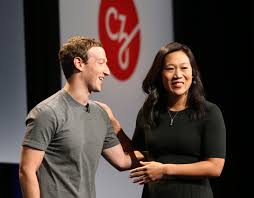
The next largest contributor was the Chan Zuckerberg Initiative (CZI) of Palo Alto, CA, which donated $500,0000.   The Chan Zuckerberg Initiative is a charity established and owned by Facebook founder Mark Zuckerberg and his wife Priscilla Chan.

This image has an empty alt attribute; its file name is chanzuckerberg.jpg
Mark Zuckerberg (L) with Priscilla Chan.

“This issue-based advocacy work is led by teams on CZI’s Justice and Opportunity Initiative , which tackles systemic barriers in society that hold people back from reaching their full potential,” the initiative explains on its website.

The website had no suggestions on how Oregon should deal with the budget issues raised by Measure 110.

The Sheriffs of Oregon pointed out in the 2020 Oregon Voters’ Pamphlet that Measure 110 would shift millions of dollars of marijuana tax revenue from schools, mental health and addiction services, state police, cities, counties, and drug prevention programs. Instead, these funds would be redirected into a Measure 110 fund.

“The funding promised by Measure 110 is not ‘free’ money that is unallocated and sitting in state coffers waiting to be spent,” Crook County District Attorney Wade Whiting wrote in the Central Oregonian. “Marijuana tax revenue is currently being used to fund schools, police, mental health programs and existing addiction treatment and prevention programs. Measure 110 will divert dollars from these essential services.”

Outside money is undermining local political control

In an effort to portray herself as the down-home candidate in her contest against Democrat Sarah Gideon, Republican Senator Susan Collins sent out a text message on Oct. 21 saying Gideon has more donors from Portland, OR than Portland, ME. As of mid-October 2020, Gideon’s out-of-state contributions, $41.8 million, represented 92.3% of her total contributions.

Collins neglected to mention that 91.80 % ($11.9 million) of the donations she’s received during 2019-20 have come from outside Maine, according to OpenSecrets.org, the website of the Center for Responsive Politics. That made her one of the top 10 senate recipients of contributions outside of their state during that period.

Think about that. The winner of a critical Maine Senate race that could determine which party controls the Senate may well be determined by people who don’t even live in Maine.

Political races across the country are increasingly being funded by people from other places.

In today’s contentious political campaigns, out-of-state contributions overwhelmingly dominate the higher end of fundraising for Democrats and Republicans. It’s part of the nationalization of all politics in the United States.

In Oregon, the strongest evidence of out-of-state influence on a campaign is in the race between incumbent Democrat Congressman Peter DeFazio and Republican Alek Skarlatos. Out-of-state residents have contributed 41.9% of the money raised by DeFazio; for Skarlatos, the out-of-state share is 68.6%, according to OpenSecrets.org.

DeFazio (L) vs. Skarlatos

Out-of-state money is also playing an increasingly important role in ballot measure battles.

In Oregon, the key backer of Measure 110 on the 2020 ballot is Drug Policy Action, a New York City-based 501(c)(4) nonprofit advocacy group that supports marijuana legalization and more lenient punishments for drug possession, use, and sale.

The group is the advocacy and political arm of the Drug Policy Alliance, a 501(c)(3) educational nonprofit that was also behind Oregon’s 2014 measure legalizing recreational cannabis.

The Drug Policy Alliance has received major funding from billionaire investor George Soros, has long been involved in pushing for an end the legal war on drugs.

The next largest contributor is the Chan Zuckerberg Initiative of Palo Alto, CA, which has contributed $500,000. The Initiative is a charity established by Facebook founder Mark Zuckerberg and his wife Priscilla Chan.

Out-of-state political contributions come from companies with local interests, networks of politically aligned people scattered across the country, and liberal and conservative national groups mobilizing to influence state-level elections.

Oregon tried to limit out-of-district political contributions in 1994 through Ballot Measure 6, which amended the state constitution to allow candidates to ”use or direct only contributions which originate from individuals who at the time of their donation were residents of the electoral district of the public office sought by the candidate.” (Oregon Constitution Art. II, § 22). The measure imposed a 10 percent cap on the total amount of money a candidate could accept from contributors residing outside the district.

When the measure went to the Ninth Circuit Court of Appeals, the state  asserted two interests, preventing the appearance of corruption and ensuring a republican form of government, as justifications for the out-of-district ban. The state could restrict out-of-district residents’ right to vote in the district, the court held, but could not restrict such residents’ right to express themselves about the election, including by contributing money.

In August 1998, the court struck down the Oregon ballot initiative in a 2-1 decision (VanNatta v. Keisling, 151 F.3d 1215 9th Cir.1998).

“Who should really have a say in how each state is run?”, asks Dan Weiner, senior counsel at New York University’s Brennan Center for Justice.  “It used to be that, at least at the state level, the interests of constituents vastly outweighed any interests coming from elsewhere around the country. But that’s no longer true to some extent because of the proliferation of the campaign finance free-for-all.”

Measure 110: A flawed ballot measure pushed by outsiders (Soros/Zuckerberg are key players)

The initiative process was put in place in Oregon at the beginning of the 20th century as a way for local citizens to band together to directly initiate amendments to the Oregon state constitution and enact new state statutes.

Measure 110 on the 2020 ballot shows how the “local” element has been corrupted as national advocacy groups and wealthy out-of-staters behind the scenes invade the process. 

“There’s this perception out there that the initiative process is all about the little guy,” Jennie Bowser, a consultant who for many years studied ballot measures for the bipartisan National Conference of State Legislatures, told the Center for Public Integrity. “But the truth of the matter is that it’s a big business. It’s really well organized, and it’s really well funded.  And it is very, very rarely a group of local citizens who get together and try to make a difference.”

Who’s bankrolling the Measure 110 campaign? Not Oregonians.

The key backer is Drug Policy Action, a New York City-based 501(c)(4) nonprofit advocacy group. The organization supports marijuana legalization and more lenient punishments for drug possession, use, and sale. The group is the advocacy and political arm of the Drug Policy Alliance, a 501(c)(3) educational nonprofit that was also behind Oregon’s 2014 measure legalizing recreational cannabis.

The Drug Policy Alliance has received major funding from billionaire investor George Soros, has long been involved in pushing for an end the legal war on drugs.

In FY2018, the most recent year for which its annual Form 990 financial filing with the IRS is available, Drug Policy Action had $953,436 in revenue and $28 million in assets. Individual contributors are not identified. 

Drug Policy Action has contributed $1,574,788.00 to the Measure 110 campaign, making it by far the largest single contributor to the group in Oregon fighting for passage of Measure 110, “More Treatment for a Better Oregon: Yes on 110”. The group operates out of 3321 SE 20th Avenue in Portland. 

The next largest contributor is the Chan Zuckerberg Initiative of Palo Alto, CA, which has donated $500,0000.   The Chan Zuckerberg Initiative is a charity established and owned by Facebook founder Mark Zuckerberg and his wife Priscilla Chan.

Most of the money being spent by More Treatment for a Better Oregon isn’t being spent at Oregon businesses either. Its largest expenditure to date is $1,415,810.00 to Screen Strategies Media, a media strategy, planning and buying agency based in Fairfax, VA that primarily serves Democratic candidates and liberal groups. 

What is this out-of-state crowd proposing in Measure 110?

At first glance, it sounds like a simple addiction treatment measure funded by marijuana taxes. It’s much more. 

Dig down and you find it also would decriminalize the possession of dangerous drugs.

The measure would remove criminal penalties for individuals caught in unauthorized possession of controlled substances in amounts reflecting personal use and instead would impose a maximum fine of $100 or completion of a health assessment. The personal-use limits specified for particular substances are:

  • LSD, methadone, oxycodone: 40 units
  • Psilocybin: 12g
  • Heroin: 1g
  • Cocaine, methamphetamine: 2g

The Sheriffs of Oregon point out in the 2020 Oregon Voters’ Pamphlet that Measure 110 would shift millions of dollars of marijuana tax revenue from schools, mental health and addiction services, state police, cities, counties, and drug prevention programs. Instead, these funds would be redirected into a Measure 110 fund.

“The funding promised by Measure 110 is not ‘free’ money that is unallocated and sitting in state coffers waiting to be spent,” Crook County District Attorney Wade Whiting wrote in the Central Oregonian. “Marijuana tax revenue is currently being used to fund schools, police, mental health programs and existing addiction treatment and prevention programs. Measure 110 will divert dollars from these essential services.”

Measure 110 is a seriously flawed ballot measure written and bankrolled by outsiders. It deserves to be defeated.