A swarm of trade liberalization polices in the 1990s, including the North American Free Trade Agreement (NAFTA) in 1994, effectively wiped out most import restrictions and duties on foreign-made clothing, all in the name of global prosperity.
It was supposed to be a good thing, but it is also a validation of the statement that you can’t have it all. The embrace of free trade has meant trade-offs.
Most significantly, it has almost demolished the U.S. apparel manufacturing industry, driving garment production to Asia and Latin America. Then it stimulated an explosion of environmentally destructive fast fashion. And behind most pieces of fast fashion is a story — too often a grim story about low pay, long hours and exploitation.
In the early 1800s, most garments worn by Americans were homemade. After the Civil War, U.S. factories that had produced uniforms transitioned to producing men’s suits, then to making cloaks and jackets for women. By the end of the 1860s, Americans bought most of their clothing rather than making it themselves.
Department stores rose up in the 1880s. By 1915, ready-to-wear departments had become regular features, supplemented by the arrival of mail-order catalogs from companies such as Montgomery Ward and Sears, Roebuck & Company.
Still, even by 1960, about 95% of clothes sold in the United States were made domestically. By 1980 it was about 70%. But by 2000, the amount of clothing sold in the United States that was made domestically had plummeted to 29%. And in 2022, only about 2% percent of the apparel sold in the United States was made domestically.
Even companies that proudly proclaim their American heritage have largely abandoned their roots.
“For more than 150 years, Pendleton has set the standard for American style,” Pendleton Woolen Mills proudly proclaims. But is the iconic family-owned and operated Portland, OR-based company, rooted in late 19th century Salem, OR, still an American institution?
The honest answer – Barely. Pendleton has shifted its production, without much fanfare, almost entirely out of America.
Similarly, Made in Oregon points proudly to how has built a reputation as a purveyor of high-quality, local products. But, in fact, its ubiquitous stores have opened their shelves to products , including clothing, that are manufactured offshore if they are “designed” in Oregon, an exception you can drive a truck through.
Not only is most American clothing now imported, but we have vastly increased the amount of clothing we buy.
In 1960, the average American bought fewer than 25 garments each year. Now Americans buy an average of 68 items of clothing a year. Some of that is because of our culture of consumerism, driven by pervasive advertising and the availability of easy credit and the availability of a wide range of clothing products. But it’s also driven by the emergence of fast fashion, where fast-changing trends have replaced the previous focus on quality and durability.
And that has meant an estimated 11.3 million tons of textile waste in the United States end up in landfills on a yearly basis. That’s equivalent to approximately 81.5 pounds per person per year, according to Earth.org, an environmental news site.
Good On You, an organization that rates clothing and accessory brands, defines fast fashion as “…cheap, trendy clothing that samples ideas from the catwalk or celebrity culture and turns them into garments at breakneck speed to meet consumer demand…so shoppers can snap them up while they are still at the height of their popularity and then, sadly, discard them after a few wears.” In essence, fast fashion plays into the idea that outfit repeating is a fashion faux pas.
And this is a message fashion writers perpetuate. A Feb. 19, 2024 New York Times article, for example, tried to advise on what’s in and out:
“For women, it’s time to retire the ankle boots known as mojo booties,” the article advised. “People really wear them to anything — jail, a funeral,..Just no, girl. This is not an all-weather moment. No-show or ankle socks were once ubiquitous. Now, showing ankles is “pretty polarizing. Try layering socks over leggings, or a crew sock or quarter-length sock that shows a little bit over flats or sneakers…Infinity scarves are out, but blanket scarves, skinny scarves and mid-width waffle-knit or cashmere scarves in neutral colors are good options…”
It’s all reminiscent of Joan Didion’s trenchant observation years ago, in a 1979 New York Review of Books essay on Woody Allen, to be exact, about “…a new class in America, a subworld of people rigid with apprehension that they will die wearing the wrong sneaker, naming the wrong symphony, preferring ‘Madame Bovary.’ ”
This is at the heart of the rapidly expanding offshore clothing companies that free trade has enabled. It has allowed offshore employment to expand, improving living standards in many other countries, but not without cost.
In order to mass produce millions of inexpensive garments in a hurry, factories are often sweatshops where laborers, too frequently children, work for low wages and long hours in dangerous conditions.
The shift in garment production offshore has also cost American jobs and raised sustainability concerns.
Americans employed in manufacturing apparel – 1960: 1,233,000
Americans employed in manufacturing apparel – 2022: 93,000
In 1960, 1,233,000 Americans were employed in the manufacturing of apparel, 5.5% of the total manufacturing workforce, according to the U.S. Department of Labor. By 2022, only about 93,000 employees were part of the apparel manufacturing industry in the United States.
Meanwhile, apparel from stores such as Forever 21, Zara, and H&M are mass-produced by legions of workers laboring for long hours in third world countries in sweatshop-like conditions.
Then there’s Temu, an online marketplace operated by the Chinese e-commerce company PDD Holdings. Temu, which racked up roughly $9 billion in U.S. gross merchandise value and spent $1.7 billion on marketing in 2023, has emerged as a major player in the fast fashion universe in the United States. “Temu is disrupting U.S. e-commerce with tried- and-true tactics used by Chinese companies: earning razor-thin profits or losing money in exchange for market share and gradually squeezing out competitors,” says the Wall Street Journal.
Another fast-fashion behemoth is Shein, founded in Nanjing, China in 2008 as ZZKKO. Now headquartered in Singapore, while keeping its supply chains and warehouses in China, it has become the world’s largest fashion retailer.
Shein plans to go public in 2024 (It confidentially filed for an initial public offering in Nov. 2023), though there is continuing controversy over allegations of Shein’s (and Temu’s) use of forced labor from the autonomous region of Xinjiang in China. In late 2023, Rep. Jennifer Wexton (D- VA) led a bipartisan call for the SEC to halt Shein’s IPO until it verifies that the company does not use forced labor within its supply chain.
Meanwhile, Shein and Temu “are accelerating the fashion cycle to unimaginable speeds,” Quartz, a website focused on international business news, reported in January 2024. The speed is being accelerated by Tik Tok, which is addictive by design. “The rise of TikTok has led to trends changing so quickly that brands and consumers cannot keep up,” Stacey Widlitz, a retail analyst, recently told the New York Times. “Everything Gen Z consumes is driven by influencers,” she said. “As fast as something comes in is as fast as something can go out.”
“The downside to all that cheap speed is, of course, the exploitation of everyone involved in its production and consumption,” said Quartz.
The State of Fashion report, an annual publication from the industry outlet Business of Fashion and the management consultancy McKinsey and Company, notes that Shein is now producing an astonishing number of new items—2,000 to 10,000—every day, and they are each shipping out more than a million packages to the United States daily, The Wall Street Journal reported in December.
Shein and Temu keep the costs of their fast fashion clothing down by taking advantage of a U.S. shipping provision called the “de minimis exception,” which waives duty fees for any packages with a retail value of less than $800. Since the typical order from Shein and Temu is much smaller than that, Shein and Temu paid no duty fees on imports to the U.S. in 2022, according to a congressional report. Sneaky, but legal.
In the face of all this, there are still some America-based apparel manufacturers. Their growth and the emergence of more companies is possible with technological advancements in manufacturing and the increase in environmental and social consciousness. Reshoring apparel production is likely to be constrained, however, by supply chain issues as well as high labor costs and overhead expenses that will make it difficult for U.S. producers to price their goods competitively and maintain profitability.
So, what to do if you care about all this?
You are not helpless. You can learn to ignore Tik Tok influencers who must not be aware of Freya India’s admonition that “these people “… who do post everything are not people to aspire to. If they influence you of anything it should be to not copy their deranged behaviour and document your entire life online.”
As somebody commented on a recent New York Times story about Gen Z fashion, “Tik Tok ‘influencers’ aren’t style icons, they’re the new mall rats with a megaphone.”
There are apps out there that give you the power to help create an ethical and sustainable fashion industry.
GoodOnYou, for example, rates more than 3,000 clothing and accessory brands on whether they are doing the right thing for people, the environment and animals in producing ethical and sustainable clothing. Download the Good On You App
Then you can change your habits:
Stop buying so damn much fast fashion.
Be mindful of your consumption habits.
Remember that the most sustainable clothing is already in your wardrobe. Love the things you own.
Repair, rather than replace, damaged clothing.
Look for clothing that:
– is manufactured in an environmentally conscious way.
– is designed and manufactured with human rights in mind.
– can be rented, loaned or swapped
– has been repaired, redesigned or upcycled
– is of high quality & timeless design
– is “Fair Trade Certified”
– is versatile and will see you through more than one season.
Thanks to RedressRaleigh.org for some of these suggestions.
“For more than 150 years, Pendleton has set the standard for American style,” Pendleton Woolen Mills proudly proclaims.
But is the iconic family-owned and operated Portland, OR-based company, rooted in late 19th century Salem, OR, still an American institution?
The honest answer, “Yes, but barely.”
Just as Made in Oregon’s ubiquitous stores have opened their shelves to products manufactured offshore if they are “designed” in Oregon, an exception you can drive a truck through, Pendleton has shifted its production, without much fanfare, almost entirely out of America.
Merchandizing is all about branding, after all, and not much is what is seems to be anymore. Pendleton Whiskey, which proudly proclaims it was “…born in the Great Northwest”, for example, isn’t even made in Pendleton, but in Hood River, OR.
“The history of Pendleton Woolen Mills is one of opportunity, exploration and innovation.,” the company’s website declares. It is also a history of succumbing to market pressures and accepting the steady and troubling erosion of its American foundation.
It’s a story of survival, but also, to be honest, a sad story. A quintessential American company with big dreams, it grew to as many as 18 manufacturing sites spread across the country, only to be whittled down in the face of global competition.
In writing the following, I pored through countless online and printed documents, company blogs and websites, magazine articles and newspaper stories, many in old and dusty archives, a truly daunting task. In an effort to verify information, I also reached out to Pendleton Woolen Mills by email and phone, but to my disappointment the company did not respond. If this led to some errors, I apologize.
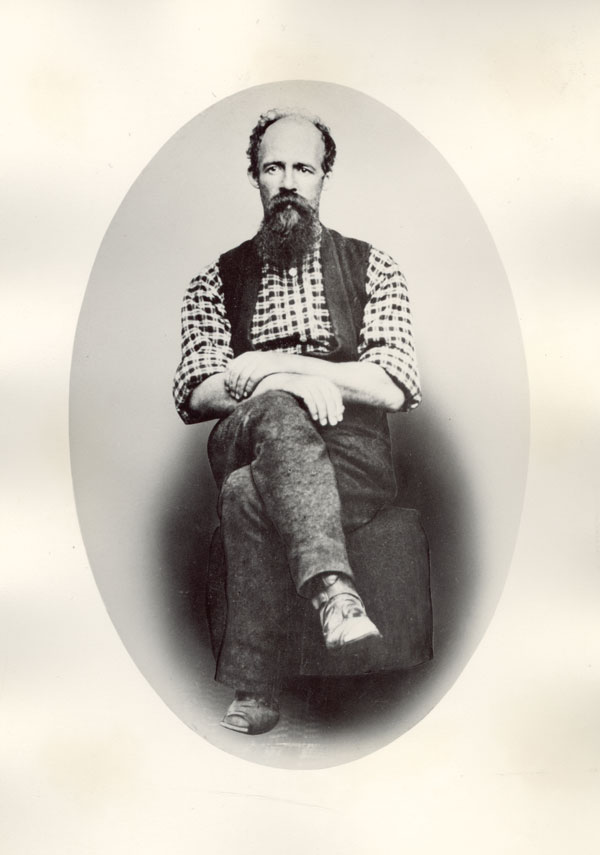
The Pendleton saga started with Thomas Kay, born in 1838 in the heart of England’s textile weaving center near Bradford and Leeds.
Thomas Kay
After working in woolen mills as a youth, starting as a bobbin boy replacing the spindles of thread on the looms, Kay immigrated to the United States in 1857. For the next six years he worked in two New Jersey woolen mills until heading west with his family in 1863 to be a loom boss at new mill in Brownsville, Oregon.
While in Brownsville, his oldest daughter, Martha Ann “Fannie” Kay, learned weaving and mill management at his side. She also began “keeping company” with Charles P. (C.P.) Bishop, a clerk and salesman at the Brownsville Woolen Mills store. They married on Oct. 8, 1876 and had three sons: Clarence Morton, Royal “Roy” Thomas, and Robert Chauncey.
Fannie and Charles Bishop (front) with their sons, Clarence, (L), Roy, and Robert
In 1889 an opportunity arose for C.P. Bishop to partner with his father-in-law to build a woolen mill in Salem, Oregon.
The Thomas Kay Woolen Mill (TKWM) began full operation in March 1890. (The mill is now a museum—the Willamette Heritage Center—open to the public)
Thomas Kay Woolen Mill
The Mill produced woolen blankets and fabric for more than seventy years and was managed by four generations of the Kay family until it closed in 1962.
As the Bishop boys grew, their parents prepared them for the wool business. “They learned the rudiments or beginning of the business under their grandfather, and they were then sent to Philadelphia, where they took a course in scientific woolen manufacturing, they having a large vision of the building up of the woolen manufacturing industry in the northwest,” a History of the Columbia River Valley noted.
In 1900, Fannie’s father died. Even though Fannie had run the mill at his side, the misogyny of the time drove the selection of her brother Thomas B. Kay to be the mill’s president and general manager. “This was a hard blow for Fannie and her sons, who had been trained by their Grandfather Kay for future management of the TKWM,” according to the Willamette Heritage Center.
Seeking their own domain, in 1908 the Bishop family began negotiations for the purchase and revitalization of a closed mill originally built in 1893 in Pendleton, Oregon, about 210 miles east of Portland. A major railhead serving the Columbia Plateau, Pendleton was a wool shipping center for the region’s sheep growers.
The mill had started out as a wool scouring plant. Using the clean water of the nearby Umatilla River for washing and dyeing raw wool, the mill operated seasonally from May to November. But increasing freight tariffs on the shipment of scoured wool soon made the mill unprofitable.
In 1895, the owners enlarged the plant and converted it into a woolen mill making blankets and robes for Native Americans. But this venture also failed and the mill went idle.
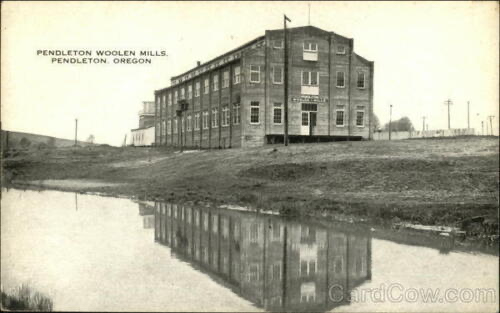
Using their own resources, along with $30,000 from a 5% 20-year local bond issue, the Bishops closed their deal to acquire the mill in1909 and the real Pendleton Woolen Mills legend began with a reconstructed mill.
Postcard of the Pendleton Woolen Mill
A Pendleton Woolen Mills blog notes that in 1905, Racine Woolen Mills of Racine, Wisconsin had been furiously negotiating to buy the struggling mill in Pendleton, with plans to increase trade blanket production. But the negotiations proved fruitless and the mill went silent in 1908. “If Racine Woolen Mills had purchased the mill, who knows what the Pendleton story would have been?,” the blog says.
In June 1910, Pendleton Woolen Mills expanded into retail, opening its first store in Seaside, Oregon.
1911 Seaside postcard – A hand-tinted version of a black and white photo was transformed into a postcard that helped tourists commemorate their visit to the Seaside Pendleton Store.
At first, Pendleton was an all-American company with deep roots in the Northwest and a commitment to an American style that respected function and form and prized timelessness and longevity.
Its initial primary product was trade blankets with striking Native American patterns. The company’s first consumers were the Native Americans living in the area: the Cayuse, Walla Walla, and Nez Perce tribes.
According to the National Heritage Museum, from the late 1800s to the early 1900s—ending right around the Great Crash of 1929—a vogue for Native American goods held sway in the U.S. for art collectors and fashionable types all the way down to Americans of more modest means.
Trade blankets were among the most popular collectors’ items and Pendleton took the craft to a new level, due in part its employment of loom artisan Joe Rawnsley. Rawnsley toured the West to work with Native populations in creating specific designs and color schemes inspired by different tribes’ traditions. He used the Jacquard processin which punched cards guided automatic looms to produce blankets of much greater variety and detail than previously possible.
Pendleton Woolen Mills’ blankets were such a success the company bought another mill in 1912 in Washougal, Washington at the entry to the scenic Columbia River Gorge and earmarked its wool output to clothing.
It was a heady time for woolen mill owners. At that point, the Pendleton mills in Oregon and Washington were two of more than 1,000 woolen mills operating in America’s 48 states, but they managed to stand out with high quality goods and creative marketing.
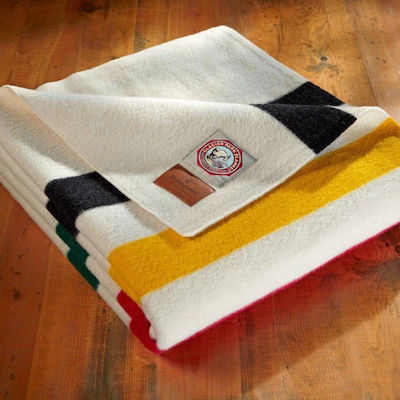
In 1916, Pendleton raised its visibilitywhen the founder of the Great Northern Railroad commissioned the company to create a blanket for the lodges of Glacier National Park. (The company established a National Park Collection of blankets in 2016)
Pendleton Glacier National Park blanket
According to a history of the Mill End Store on SE McLoughlin Blvd. in Portland, during WWI, Royal Thomas Bishop was approached by the Portland Chamber of Commerce to convert the Willis Mohair Mill in the city so it could manufacture uniforms needed for soldiers.
After the site was purchased in 1919 with the assistance of several prominent Portland business leaders, Bishop took out the mohair machinery and built new reinforced concrete structures to connect the good brick building of the early mill. He then installed worsted wool machinery, starting the Oregon Worsted Company. When the spinning and weaving machines were up and running, the company had over 300 people working three shifts around the clock.
That same year (1919), C.P Bishop developed a men’s virgin wool suiting line at Pendleton’s Washougal Mill, naming it the “Washougal” line. The line found a market in the East, particularly New England, leading Bishop to organize the Washougal Clothing Co. in Syracuse, NY with himself as president.
In the early 1920s, the Bishop sons added to their business by acquiring the Eureka Woolen Mills in Eureka, California, 100 milessouth of the Oregon border.
Eureka Woolen Mills, 1923. Founded 1881, closed 1950, demolished 1987.
By 1924, Pendleton was using shirting material woven in Washougal to make the famous Pendleton man’s virgin wool shirt in a variety of bold colors. In 1929, despite the depression, they released an entire line of men’s woolen sportswear Made in the USA.
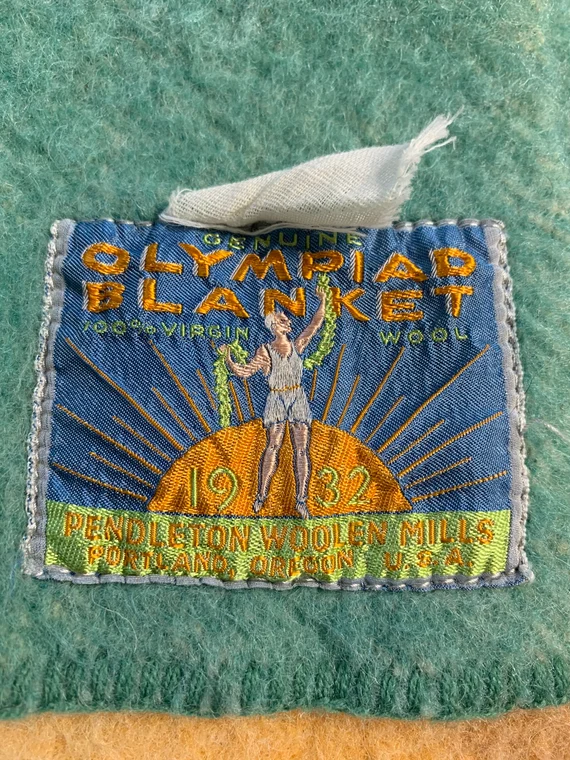
Always looking for promotional opportunities, in 1932 Pendleton provided 4,000 of its distinctive blankets for participants at the Olympic Games held in Los Angeles.
Pendleton blankets leaving on a train for Los Angeles, 1932
In 1935, the company broke into Hollywood when Loretta Young wore a Pendleton coat in a movie with Clark Gable, “The Call of the Wild”, filmed in part on Washington’s Mt. Baker.
Actress Loretta Young with Clark Gable
With its Made in America products, Pendleton was on a roll. By 1936 it employed more than 1500 fulltime workers, processed 3-4 million pounds of wool annually and produced millions of dollars’ worth of woolen yarns and fabrics sold throughout the U.S. and Canada, the Capital Journal newspaper reported.
WWII put a dent in Pendleton’s consumer-facing business, but the company again pivoted to producing uniforms, blankets, and sleeping bags for American soldiers serving in war.
The company also took advantage of opportunities to expand its manufacturing footprint. In 1941, it purchased the Columbia Wool Scouring Mill in Portland, which it had leased since 1923.
Columbia Wool Scouring mill
In 1946, it opened a facility in Omaha, Nebraska. The Omaha World-Herald reported that Pendleton initially sent people to Omaha after WWII looking for hard to find sewing machinery, intending to ship the machinery to Oregon, but Omaha city officials convinced the company to open a plant there. Pendleton moved the plant to Bellevue, NE in 1977. During peak periods in the coming years the Bellevue plant employed almost 500 workers.
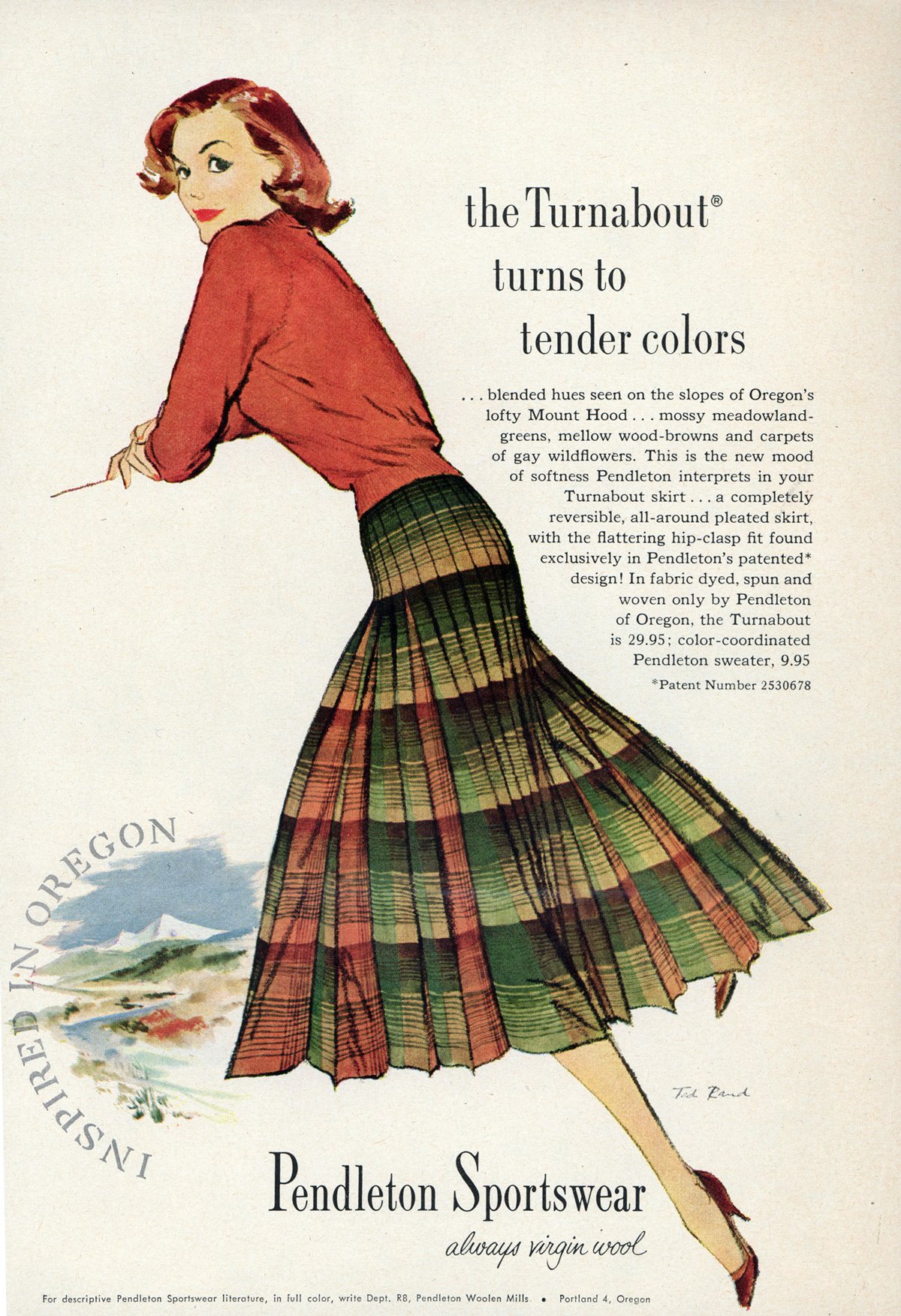
In 1949, Pendleton continued its successful trajectory by developing a line of sportswear separates for women. According to the Vintage Fashion Guild , “…the most notable women’s product was the ’49er jacket – hip length, long-sleeved casual jacket with wide collar, patch pockets, and large shell buttons down the front.”
Vintage ’49er jacket
Also popular was a two-in-one “Turnabout skirt.”
Pendleton pushed into further into the mainstream when the comedy star Lucille Ball wore a Pendleton ‘49er jacket for an ill-fated foray into the wild in a 1953 episode of TV’s “I Love Lucy”.
Lucille Ball in “The Camping Trip”
In 1954, Pendleton celebrated its Eureka, CA mill site by sponsoring top awards of flights to Paris and London on Pan American World Airways in the national “Make It Yourself With Wool” campaign promoted by California Governor Goodwin J. Knight.
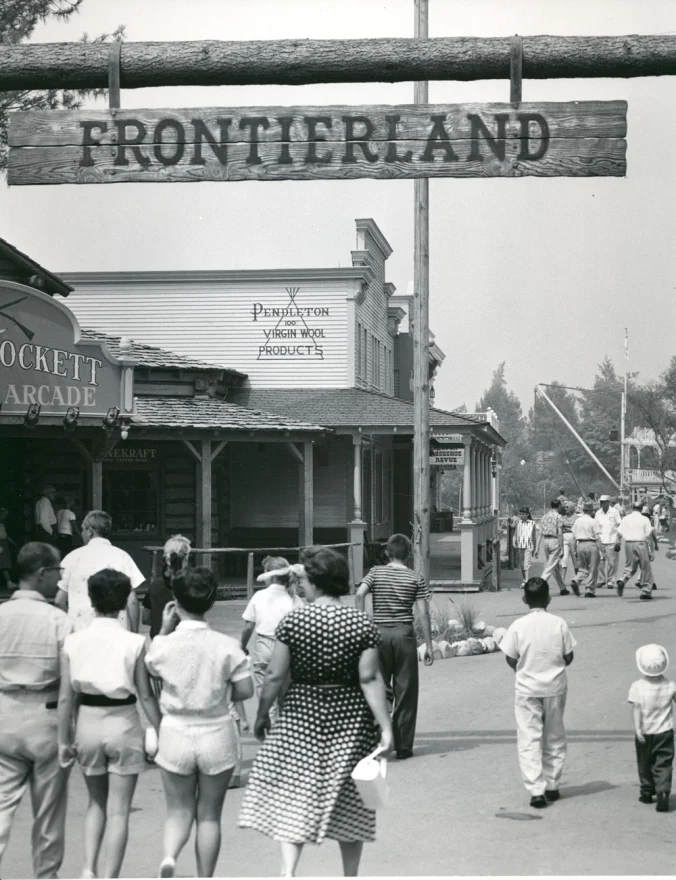
In 1955 Pendleton secured its position as an American icon when it became a founding tenant in Disneyland’s Frontierland with a ‘Dry Goods Emporium’ when the amusement park opened on July 17, 1955. (The Disney partnership dissolved amicably when the Disneyland Resort shifted its merchandising focus to more Disney-oriented goods and the store closed in April 1990)
In 1956 Pendleton acquired Royal Bishop’s Oregon Worsted Company.
The mid-to-late 1950s also gave the company a boost from, of all places, California’s surfing culture when a musical group called the Pendletones formed in California wore Pendleton wool shirts when performing.
The Pendletones
In 1961, music executive Russ Regan changed their name to “The Beach Boys” and the rest is history. The Beach Boys wore Pendleton’s plaid board shirts on the cover of their album “Surfer Girl”, released on vinyl on September 16, 1963.
Pendleton brought the shirt back in 2022, renaming it the Blue Original Surf Plaid:
2022 version of Blue Original Surf Plaid
In 1963, Pendleton continued its robust expansion when it opened a mill in Nebraska City, Nebraska. That same year, the Pendleton brand hit the radio waves when the Majorettes, singing the song “White Levi’s” became a number one hit. As the lyrics on the 45 record said, “My boyfriend’s always wearin’ white Levi’s…and his tennis shoes and his surfin’ hat and a big plaid Pendleton shirt.”
In 1967, Pendleton opened a 13,500 sq. ft. plant with just three employees in Fremont Nebraska, according to the Fremont Tribune newspaper. (In August 1974, it expanded the plant, which by then employed 159 people, to 19,150 sq. ft.) The plant concentrated on producing ladies slacks and skirts. The garments were pre-cut at Pendleton’s Omaha, NE plant and then shipped to Fremont for assembly.
Meanwhile, in the 1960s-1970s, Royal Thomas Bishop set up a yet another mill in the U.S. Virgin Islands, hoping to save on duties.
A history of the Mill End Store in Portland says the Virgin Islands mill blended yarn from St. Croix, England, and South America to be sent to the states for dyeing. However, because the island did not have fresh water everything was done from a cistern or a well. The water was so brackish that when sent back to the U.S. the yarn would not take the dye evenly. The mill eventually closed and Bishop returned to the states.
In 1976, Pendleton closed the former Oregon Worsted Co’s Portland Mill. In 1982, it purchased Dorr Woolen Co. with about 450 employees in Guild, New Hampshire, then added facilities in Council Bluffs, Iowa in 1985.
In 1978, the New York Times heralded the company’s success in a changing textiles marketplace:
“How to succeed in the woolen business: Doggedly produce 100 percent virgin wool clothes while everyone else is turning to polyester,” the Times said. “Charge a good piece of money for them. Keep the same designs year after year. A formula for disaster? Not for the Pendleton Woolen Mills, which has carved a niche for itself and stayed in it, quietly weaving profits…”
Observing that Pendleton’s sales were approaching $100 million annually, the Times said Pendleton was “…avoiding the ups and downs of the industry.”
Not exactly.
Though the company expanded over the years, the good times didn’t last as Made in America apparel came under increasing pressure. One by one American manufacturers shifted production offshore to take advantage of lower labor costs, material sourcing, country specialties and improving international trade logistics. In New England, 286 woolen mills closed between 1949 and 1983, taking almost 95,000 jobs with them.
“The textile industry is going to be overwhelmed,” Derek Brown, owner of two New Hampshire mills, told the Concord (New Hampshire) Monitor newspaper 1983. He was right.
In 1986, the Omaha World-Herald reported that Pendleton had joined with other manufacturers and labor unions in Nebraska’s textile and apparel industry, which all together employed 1,842 workers, to lobby congress for legislation that would protect them from “unfair” foreign competition. President Reagan had vetoed such legislation the previous year, arguing it would hurt consumers. Les Sutton, general Manager at Pendleton Woolen Mills, told the World-Herald imports hadn’t yet affected Pendleton’s markets because of the strength of the brand, but its position would erode if high import rates continued.
In 1992, Pendleton faced the music and decided to test run producing women’s blouses in Mexico to cut costs. Associated Press reported that union and company officials blamed the North American Free Trade Agreement (NAFTA) and the General Agreement on Tariffs and Trade (GATT), which were welcomed like skunks at a garden party when they opened the door to cheap Mexican labor and reductions in apparel tariffs.
In 1994, the company signed contracts with subcontractors in Hong Kong and announced that to remain competitive it would continue its Mexican production. That same year, it also unveiled new garment tags that no longer bore “Made in U.S.A.” as part of its familiar logo.
In 1996, Pendleton shifted the manufacture of men’s jackets and shirts to Mexico. In August of that same year it began a one month phase out a clothing plant in the Sellwood district of Portland, where it made men’s and womens’ coats, laying off 119 workers. The company said it was taking the action because labor costs were lower in Mexico. “These actions are regrettable, but unfortunately they are necessary in view of economic reality,” Pendleton chairman B.H. (Brot) Bishop told the Associated Press. “This is not a problem unique to Pendleton as our entire nation adjusts to the world economy and global competition.”
Pendleton also closed its Council Bluffs, Mo., plant in 1996, laying off 80 workers, down from 225 in its 1970s heyday. “We didn’t want to do this,” Gary Benson, Pendleton’s human resources manager, told the Portland Business Journal. “It’s an issue of cost. We are one of the last to do some outsourcing offshore.”
By 1997, 40 percent of Pendleton’s clothing was being manufactured in Mexico, up from 5 percent in 1994.
In mid-1997, the company announced it would close its 70-worker shirt manufacturing plant in Milwaukie, OR, phasing out the facility by the end of the year.
Gary Benson, Pendleton’s human resources manager, told the Portland Business Journal the Milwaukie plant had lost money seven of the last 10 years because of the declining interest in wool shirts as more competition from other fabrics had emerged.
In 1998, Pendleton closed another Portland plant and in 1999 a plant in Fremont, NE as well, blaming the closures on international trade agreements and the adverse effect of increased imports.
That same year, the company granted Daiwa Seiko, Inc. the right to manufacture shirts and sweaters and sell them in Japan under the Pendleton name.
In 2003, Pendleton closed its Nebraska City plant, which at the time still employed 64 people, as well as the Dorr Woolen Co. operation in New Hampshire that it had bought 20 years earlier. The closures were consistent with the ongoing decline of America’s textile industry. By 2003, US textile employment had fallen to roughly 900,000 workers, down 62 percent from its peak in 1950.
Two years later, elimination of the last set of quotas of the Agreement on Textiles and Clothing (ATC) on January 1, 2005, ostensibly brought about the end of decades of quantitative restrictions on the international exchange of clothing and textiles.
The Congressional Research Service concluded that the end of the ATC quotas was expected to bring about a sharp increase in U.S. clothing and textile imports, a major shift in sourcing clothing and textile imports to China, and harm to the U.S. clothing and textile industry. U.S. clothing and textile manufacturers such as Pendleton were expected to reduce their operations, shut down factories and lay off workers due to increased competition from China, India and other suppliers; one study estimated up to 630,00 US job losses due to Chinese imports.
Still, as of 2009, Pendleton’s 100th birthday, the company owned and operated seven manufacturing facilities and marketed its products through 70 of its own retail stores, a catalog, online sales and multiple other retailers.
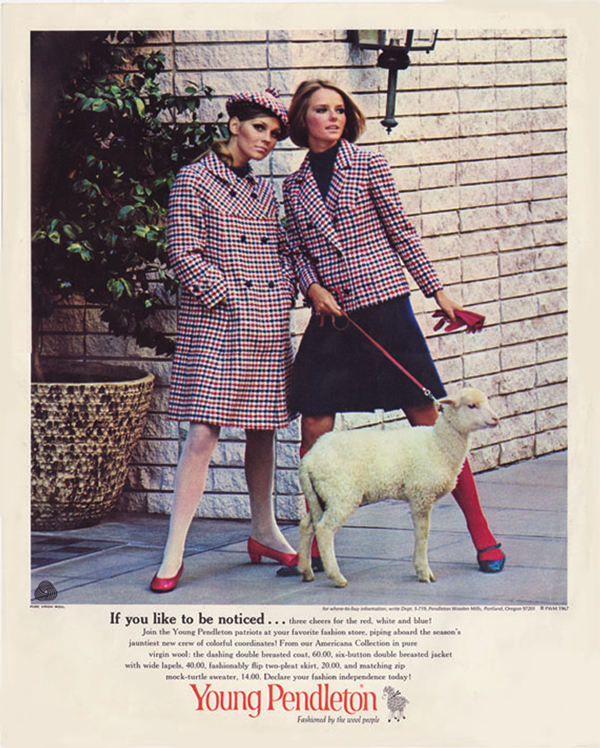
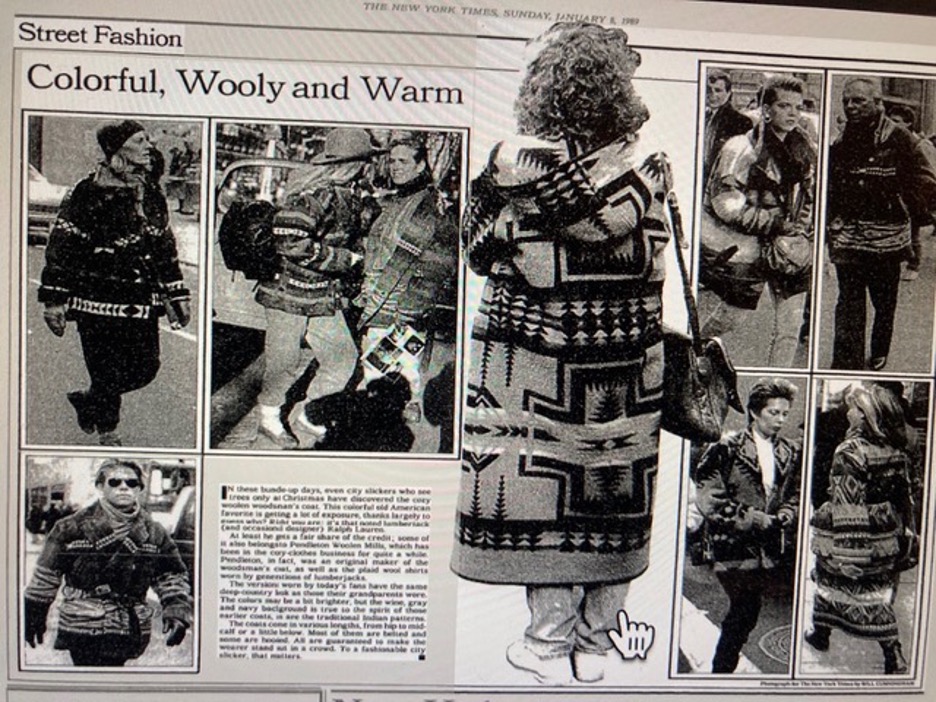
It was also initiating collaborations with other distinctive marketers, following up on some earlier forays into fashion such as its use of supermodel Cheryl Tiegs from the 60s through the 80s and a 1989 collaboration with what the New York Times described as “…that noted lumberjack (and occasional designer) Ralph Lauren” on a woodsman’s coat for city folk.
Cheryl Tiegs (R) in Pendleton Ralph Lauren Pendleton coats, NY Times, Jan. 8, 1989
In 2010, in another effort to connect with trendy fashion lines, Pendleton collaborated with Opening Ceremony on a plaid/check collection of men’s and women’s clothing. “Marking Pendleton’s first collaboration is the small collection that takes Pendleton’s signature patterns and pairs them with Opening Ceremony’s undeniably chic cuts.,” wrote The Fashionisto. “Altogether, the collection is both cozy and vibrant–perfect for this fall.”
The Ceremony x Pendleton Collection
In 2010, Opening Ceremony’s Pendleton line, described by a NY Times fashion writer as “wild-looking garments”, was hyped at an upscale Barneys New York store in Brooklyn “where the well-heeled dress down” to be served by a staff that “tends to look like a skateboard team composed of the cast of “Glee”.
Still, some diehard believers hung on to the prospect of a true renewed Made in America production by Pendleton.
In 2011, the Northwest Labor Press heralded Pendleton’s announcement that it would launch a new made-in-the-USA clothing line by three Portland designers who aimed to bring some of the mill’s more classic patterns to life in sophisticated and modern lines. Some of the clothing would be made of union-made fabric from Pendleton’s Washougal mill. Its “Portland Collection” debuted Sept. 8 at a fashion show in Portland’s downtown Director Park.
“Surfing the recent wave of locally designed and sustainably produced products, and steeped in a rich history, Pendleton had all the makings of a grand slam,“ TravelSquire.com rhapsodized about the collection. “The Squire got the word from Jon at Leo Boutique in trendy, downtown Calgary that the “New Wave of Pendleton” was really on the money.”
Part of The Portland Collection
Optimism surfaced again in 2012 when a crowd gathered to celebrate the 100th anniversary of Pendleton’s Washougal mill. Washougal Mayor Sean Guard decreed Pendleton Woolen Mills Day for its significant contribution to five generations of city residents. Guard also read letters from members of Congress praising the mill’s legacy and ability to keep jobs in America at a time when most of its woolen mill competitors long since outsourced to other countries.
But the Portland Collection didn’t last long, remaining only for the Fall 2011, Fall 2012, Fall 2013 and Spring 2014 seasons. A limited accessory line released for Fall 2014 marked the end of the initiative.
It’s not clear exactly what the overseas shift has meant for Pendleton’s employees. Clearly, the shutdown of so many plants acquired or built when optimism was high has meant job losses across the board, but Pendleton did not respond to inquiries.
Meanwhile, in order to broaden its reach, Pendleton has collaborated with all sorts of people over the years.
One of the odder collaborations was with a New York artist, Chrissy Conant, who was still worried about terrorism three years after the 9/11 World Trade Center disaster.
In 2004, Conant designed a 100% virgin wool “Chrissy Homeland Security Blanket” and arranged for it to be made by Pendleton Woolen Mills. A soft-napped queen-size blanket bearing the legend of the Homeland Security Advisory System, the signed limited edition (100) blankets came in colors that were “a little brighter, a little more pleasant” than those used by the Department of Homeland Security, Conant said. “At least now, I can protect myself. I can duck and cover, in my own bed, and try to dream sweet dreams,” she wrote on her website.
The Chrissy Homeland Security Blanket, Made by Pendleton
The limited edition blanket was even sold in the gift shop of the New York City’s Cooper-Hewitt National Design Museum. One of the blankets is currently listed on eBay for $700.
Pendleton has also collaborated with classic American brands, such as Vans and the Kontoor Brands-owned denim giants Wrangler and Lee, as well as a number of high visibility fashion brands, including Mr. Leight, Sacai, Kith, Hurley and Matches Fashion.
The first of these fashion collaborations was with Vans in the 1970s when Pendleton sold Vans sneakers made with Pendleton plaids at its Disneyland Frontierland store.
In 2012, Pendleton teamed up with Worksman Cycles on a Chief Joseph Men’s Cruiser. “These beauties are sure to become collectors items,” Worksman enthused. “By having these bicycles painted so elegantly in this famous blanket pattern, it almost represents the new urban steed.”
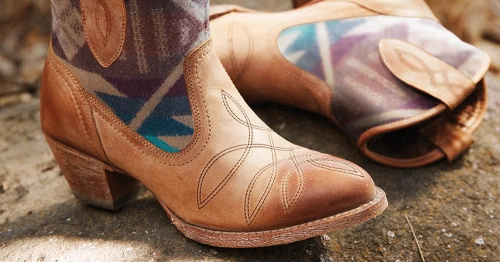
In 2014, Pendleton Woolen Mills and Ariat Boots collaborated on a limited-edition capsule collection of Western and English boots done with Ariat leather and technology,and Pendleton signature wool fabrics.
Pendleton x Ariat collaboration
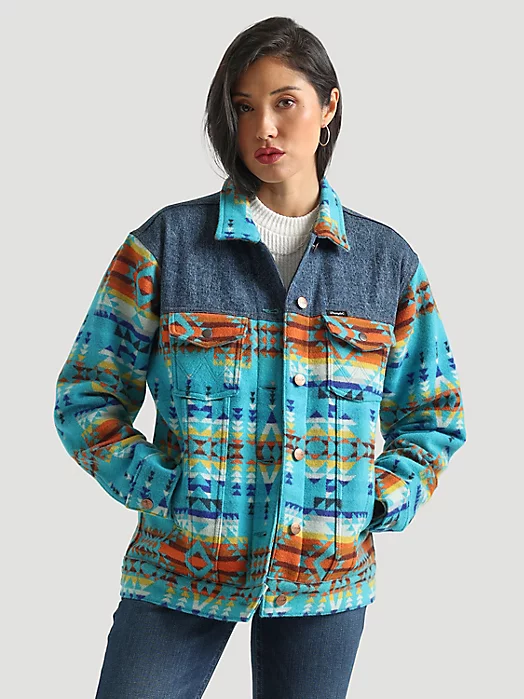
Other collaborations have included Doc Martens boots made with Pendleton’s Pagosa Springs wool, Pendleton Fitbit heritage-inspired woven Fitbit bands, Wrangler x Pendleton and Junya Watanabe.
Wrangler Pendleton Womens Mixed Jacket: Medium Wash, $399
Junya Watanabe Man x Pendleton Wool Jacquard Jacket sold by Kith, $2,768.00
Pendleton secured another tie-up in 2014 withluggage company Ricardo Beverly Hills, The Pendleton Luggage Collection featured the company’s exclusive patterns printed on Ricardo’s softside and hardside luggage, incorporating Pendleton fabric in a variety of ways, from exteriors to interior pockets along with luggage tags and other travel accessories.
Ricardo’s Pendleton Luggage Collection, 2015
At the January 2023 ready-to-wear runway show that closed out Paris Fashion Week, Pendleton showed up on designs by John Galliano, who worked with the company to bridge ready-to-wear with Haute Couture, incorporating wool plaid checks in shirts, cardigans, rompers and more.
The reception was not, however, altogether positive. As The New York Times reported, “…the danger in the current game of one-upmanship is that the clothes sometimes tip into the ridiculous” such as “at Maison Margiela, where John Galliano delivered his patented brand of upcycled mayhem by mashing together tulle, tartan, fishnets, Mickey Mouse and Pendleton outerwear…”
In other words, Pendleton is now in the “Look at me” rather than “Wear this” zone of fashion, which can be highly fickle in a culture of narcissism and a relentless search for recognition.
Maison Margiela Paris 2023 Co-ed Collection by John Galliano
Vogue described Galliano’s show as “Distinctly American fabrics and patterns like Pendleton plaid and floral barkcloth interweaved with Wild Western coats and 1950s prom dresses in a youth-tastic fusion invigorated with the spirit of cyberpunk through hacked up constructions, safety pin and soda can embellishments, and bin bag fascinator and cadet hats.” Quite a departure from Pendleton’s old-fashioned basic western roots.
Trying to keep up with and instigate fashion trends, as Pendleton is doing, can be exhausting and fraught with risk. But in today’s constantly shifting landscape, many brands find it an imperative to survive, constantly coming up with new styles to tempt buyers wanting the newest best thing.
The New York Times recently ran a story, for example, on an emerging trend, pickleball outfits.
A floral skirt set from the Alice + Olivia pickleball collection
“As more people pick up the sport, fashion designers and apparel brands are looking to cash in on clothing them,” the story said. “Heritage athletic wear labels including Fila, Nike and K-Swiss have marketed clothes and accessories for pickleball, and newer brands like Recess, Luxe, Tangerine and Joola have largely built their businesses around the sport.” Pendleton may well be next.
In other cases, Pendleton’s collateral products have been made entirely offshore or of fabric made in the U.S. which is then cut and sewed offshore.
Then there are the unexpectedly cheap Pendleton-branded “sherpa fleece” blankets and throws that aren’t even made of wool.
Costco Pendleton blanket
These inexpensive ($29.99 on 02/03/2023) machine washable products, which can be found at Costco stores, are made in China out of polyester, a synthetic petroleum-based fiber.
The Pendleton name is also now ubiquitous in non-blanket products made offshore, such as the:
Pendleton Pet Kuddler Bed “Warrented to Be A Pendleton”, “Inspired by the iconic Pendleton Woolen Mills blankets” and made by the Carolina Pet Company with “water resistant faux linen polyester fabric”
Oversized Sherpa Bolster Pillow by Pendleton, made of polyester in China by Hong Kong-based BHF International LTD
Women’s Wyeth Trail mid boots
Pendleton Stanley Classic Insulated Bottles made in China
Even the men’s Wyatt Snap-Front cotton shirt advertised on Pendleton’s website for $89.50:
“Inspired by our vintage Gambler button-down, this piece of iconic Westernwear features classic snap closures and distinct peaked front and back bias-cut yoke details,” the site says. You have to scroll down further to see it’s imported.
Because Pendleton is a private company it’s not clear how impactful its fashion and other tie-ups have been on the bottom line. But they do illustrate alternative marketing outlets for the company. They also show potential options down the road.
For example, real-estate investor and hotelier Barry Sternlicht, known for his sophisticated W Hotels, is launching a new hotel chain, Field & Stream Lodge Co., intended to appeal to outdoor enthusiasts. According to the Wall St. Journal, “The hotels are expected to feature interiors with patterns and prints that reflect the properties’ outdoor settings,” a natural fit for Made In America Pendleton blankets and other products.
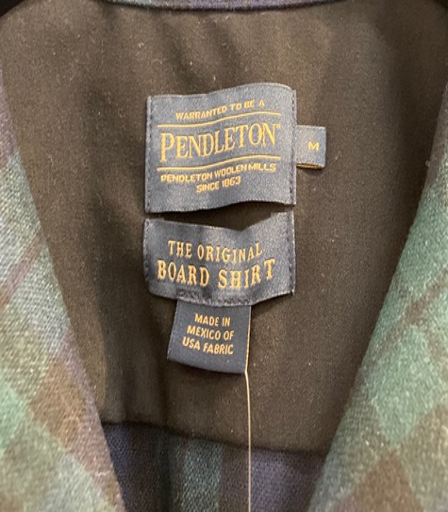
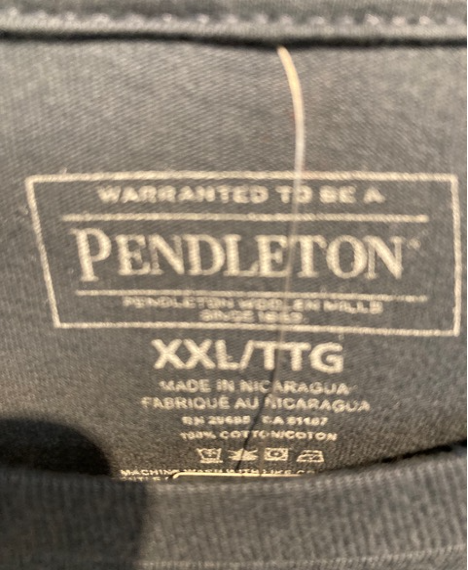
Meanwhile, Pendleton’s long-running shift of production out of America has continued at a robust pace. Although much of Pendleton’s wool still comes from the United States, and its blankets and some of its fabrics are still made in the US, the cutting and sewing of Pendleton’s clothes has shifted to other countries.
Illustrating the breadth of the company’s current foreign suppliers, not all of which are known for their steadfast commitment to human rights, the labels below are all from clothing at Pendleton’s Bridgeport Village store in Tigard, OR.
Most companies’ offshore production jobs and merchandising have gone to China, Southeast Asia and South Asia. China has captured the largest share of offshore production, but it is beginning to face increased cost competitiveness in countries such as Bangladesh, Sri Lanka, and Vietnam. Growing tension between China and the United States may also divert some business to other countries.
“US and Chinese policymakers certainly seem determined to reduce the two countries’ economic interdependence, built over many decades but now buckling under the weight of their animosities,” Chad P. Brown with the Washington, D.C.-based Peterson Institute for International Economics, wrote in late 2022. “Part of the reason is President Trump’s trade war, continued under President Biden. “A more recent motivating factor that may be spurring decoupling is the desire for increased diversification of imports to make supply chains for certain goods more resilient. Other drivers include human rights, democracy, and geopolitical concerns,” Brown wrote.
Online reviews suggest the discovery that Pendleton’s clothes are not made in the USA still comes as quite a surprise to many customers ordering online and visitors to the company’s retail stores and mills who are anticipating “local” products.
The particular surprise is the prevalence of “Made in China” tags on Pendleton clothing. It shouldn’t come as that much of a surprise since China is the world’s largest apparel exporter.
“Its leadership position has been weakening, but no other country can match its supply base, its range of skills, quality levels, product variety, completeness of its supply chain, or has the capacity to absorb its business.,” says Just Style, an apparel sourcing and textile industry news and analysis site. “In spite of the disruption of supply chains related to the pandemic and trade tensions with the US, the country continues to appeal to apparel buyers as rising wages are offset by efficiency and productivity gains through advanced manufacturing technologies.
“Disgraceful,” wrote one customer in a recent Pendleton review. “First off the sweaters that I ordered had labels saying made in China. Let me get this straight. I’m spending $269 on a sweater that was made in China? Get real. This company is falsely advertising that their wool sweaters are made in the USA with wool from the USA. Not cool at all.”
“This is a nice place to visit,” commented a visitor after a tour of the Pendleton mill. “There were lots of different woven products all over the store. We were surprised at how few items were actually made in the U.S.”
“Shame that most fabrication has moved overseas for cheap labor,” wrote another tourist. “Don’t really see where it has reflected in any lower prices for consumers.”
“It was nice to see that blankets were made in the USA and many were very beautiful, but the clothing for the most part is not,” commented another. “Some had a “Made in China” tag, which we found troubling. I asked about that and was told that the fabric was made there, but shipped out of the country to be assembled. Seriously?”
Meanwhile, some activists worry that Pendleton’s offshore manufacturers may not be committed to responsible management and safe workplaces.
“Certified factories that produce our merchandise are audited on an annual or bi-annual basis (based on certification status).” Pendleton says.
Pendleton Woolen Mills also endorses the Worldwide Responsible Accredited Production (WRAP) principles, which encompass human resources management, health and safety, environmental practices, and legal compliance and requires its suppliers to be fully compliant with these principles.
But the Clean Clothes Campaign, the garment industry’s largest alliance of labor unions and non-governmental organizations focusing on the improvement of working conditions in the garment and sportswear industries, is still concerned about Pendleton’s global operations and intends to examine the company more closely.
“Pendleton unfortunately is very opaque on its supply chain,” Paul Roelan, transparency coordinator with the Campaign, said in an email to me. “…many brands now disclose at least part of their supply chain according to the Transparency Pledge, and more and more are now disclosing that in an efficient way on the Open Supply Hub Unfortunately, Pendleton is not one of those.”
“Their page on supply chain just mentions the “WRAP” principles, which are extremely weak. In our “Fig Leaf for Fashion” report we’ve documented countless serious human rights violations, even resulting in many deaths, in WRAP-certified facilities. Apart from fires, there have been many cases of forced labour, child labour and other rights violations in WRAP-certified facilities. In our opinion, it is not at all a serious form of certification or auditing.”
In 2012, Pendleton vice-president Charlie Bishop presented the mayor of Washougal, WA with a blanket called “Keep My Fires Burning,” symbolizing efforts to keep the mill running and the importance of looking toward the future.
The fact is the future looks bleak for American clothing manufacturers, even with the appeal of “Made In America” tags.
Ten years ago, Consumer Reports said 61% of survey respondents believed American-made clothing was higher quality than foreign-made clothing and 78% would buy an American-made product over an identical one made abroad when given the choice. The publication even highlighted Pendleton Woolen Mills as a Made in America manufacturer.
In 2020, The Reshoring Institute surveyed nearly 500 Americans across the country and asked if they prefer to buy products that are labeled “Made in USA.” Would they be willing to pay more for these items? Nearly 70% of the respondents said they prefer American-made products. Slightly more than 83% said they would pay up to 20% more for products made domestically.
But apparel sales numbers don’t bear out a Made in America preference, except as a small marketing niche.
As Adweek has pointed out, “… expressed support of American brands and consumers’ willingness to buy those brands are two different things… This disconnect has long been known to academics and consultants who study brands.”
Currently, more than 97% of apparel sold in the United States is made in other countries, according to the American Apparel and Footwear Association. Contrast that with the 1960s, when about 95 percent of apparel worn in the U.S. was made in America.
Rather than returning manufacturing to the United States, a more likely scenario for Pendleton and other clothing companies is an increase in nearshoring, shifting more work closer to their customers, particularly to Mexico.
As the Wall Street Journal recently reported, “American and some foreign companies are shifting production and equipment to Mexico in pursuit of a manufacturing hub closer to the U.S. Many are relocating from Asia after a series of disruptions related to China during the pandemic, part of a burgeoning ‘nearshoring ‘trend.”
Pendleton Woolen Mills, an All-American “made-to-last” heritage brand, has been able to keep its fires burning only by becoming increasingly dependent on other countries to manufacture its products. With trade policy and cheap overseas labor continuing to push American apparel companies in that direction, Pendleton is already just a shadow of the Oregon and American brand it used to be. And as its products increasingly bear foreign manufacturing labels, their distinctiveness in the marketplace is diminishing.
Despite the company’s reliance on foreign manufacturing, in a recent Portland Business Journal interview, Jennifer Ingraffea, who became CEO of Pendleton Woolen Mills in June 2025, said she wants as many people as possible to know the stories of the American-made clothes and blankets the family-owned business has been crafting for over 150 years.
“I don’t think I’ve ever worked for a company that’s shy of two centuries of history. And for me, it was something that attracted me to the brand, and having that internal guidance and historical storytelling,” Ingraffea said.. “… at this point in time, Pendleton is at an inflection point, and it’s time to do a little bit of resetting and a little bit of transforming, and I have the history and the capabilities that lends itself to this situation. I think in a company that’s been in the world for as long as Pendleton has been, there’s a product focus that needs to be elevated. Not elevated in price, but it’s a time to really look at what we’re selling, who we’re serving as a consumer, identify how we describe them and then align the product to who those folks are.”
Because Pendleton is a private company, and doesn’t make its financials public, it’s not clear whether its shift to foreign manufacturing for its clothes has hampered sales. The only thing that’s obvious is that after years of growth in American manufacturing, its physical presence has withered back to where it started with just its Pendleton and Washougal mills.
Given the realities of the global marketplace, what would you have done and how should Pendleton move forward?






















 ThinkingOregon