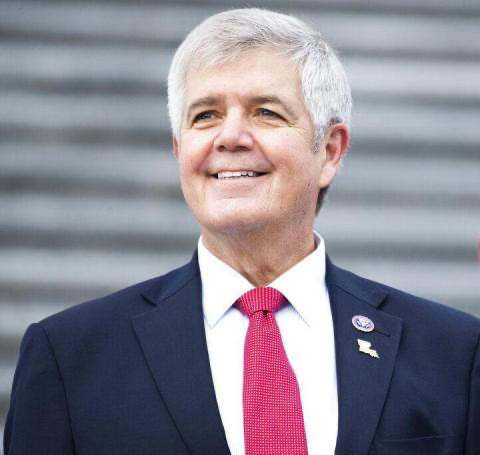
The Chickens are Coming Home to Roost for Oregon Republican Rep. Cliff Bentz

republican

Rep. Cliff Bentz (R-OR)

Conservative Republican Congressman Cliff Bentz won his 2024 race in Oregon’s 2nd Congressional District by a comfortable margin. Now there’s a feeling of betrayal in the air. A good number of his constituents in all or part of 20 counties across northern, eastern, central, and southern Oregon aren’t happy with Bentz, as President Trump  runs roughshod over government programs and people.

Bentz, who sided with Trump’s efforts to overturn the 2020 presidential election, won his 2024 congressional race with 63.9% of the vote, a solid victory, but down from 67.5% in his 2022 race. Recent town hall meetings he held in his district show that his support is on shaky ground.

A raucous crowd of about 300 people showed up at a town hall in Pendleton on Feb. 20 where “attendees continued to interrupt Bentz during presentation [sic], muttering throughout his talk, as well as directly calling out what Bentz was saying,” the East Oregonian reported. 

Republican Rep. Cliff Bentz holds a fractious town hall in Pendleton, OR on Feb. 20, 2025. (Credit: The East Oregonian)

Commenting on the firing of thousands of federal employees, Bailey Langley, a former Umatilla National Forest employee, lambasted the White House for being laid off 52 days before the end of her probationary period as a public affairs officer.

“This was a blanket butchering of employees who will one day carry on and sustain the agencies.,” Langley said. “Instead of contributing to our communities in a productive manner, I am now being forced to file for unemployment and other government services. Especially in our rural communities, this is your opportunity as a public servant to stand up for American values, to not follow a king, but serve the people.”

Much of the crowd stood, clapping, whistling and cheering, for more than 20 seconds once she finished, the East Oregonian reported. 

“I am not a federal worker, but I, too, am both concerned for my neighbors (that’s everyone in the country), who are going to suffer because of the arbitrary, wholesale firing of those tasked with carrying out the work of government on behalf of all citizens,” a commenter on the East Oregonian story posted later. “We all deserve better. And those who represent us, but refuse to protect us, deserve our anger.”

The La Grande Observer titled its story on Bentz’s town hall there, “Another Town Hall(s) Goes Off the Rails”.

Residents filled nearly all 435 seats at Eastern Oregon University’s McKenzie Theater La Grande and more people packed themselves into the side aisles and stood right outside the theater doors to listen in.

An irritated Bentz chided the La Grande audience, saying a lot of representatives had refused to even hold town halls, so they should be grateful he decided to show up. To say the least, that condescending attitude also was not well received. 

“A vocal majority of the audience expressed frustration and anger with President Donald Trump’s executive orders, the firing of thousands of federal workers and the actions of the Elon Musk-led Department of Government Efficiency,” the Observer reported. “[M]embers of the crowd started booing and jeering the congressman. People shouted “Move on,” “We can read” in reference to the slides projected with the information, and told the congressman to get to the Q&A section.”

The lambasting of Bentz at his Oregon town halls reflects growing public concern about the failure of Congressional Republicans to stand up for the constitutional separation of powers in the United States and for the willingness of Congress as a whole to fail to check presidential abuses of power.

“So now, when an autocratic president sends up patently unqualified nominees to be confirmed, asserts the power to ignore laws and appropriations passed by Congress, shuts down agencies created by Congress and fires officials confirmed by Congress, members of the president’s party are so unaccustomed to making independent decisions or taking responsibility for governing and so convinced that they must maintain party unity to win the next election that they go along,” Steven Pearlstein, Director of the Fixing Congress Initiative at the University of Pennsylvania, has written on Roll Call. “For the majority of members of Congress who know better, their lack of seriousness of purpose and self-respect is appalling. Their ability to rationalize the irrational, to themselves as well as the public, is stunning.”

Equally worrying are statements made by Trump and Vice President Vance suggesting that they don’t intend to honor court rulings against Trump’s voluminous executive orders. 

Somehow Trump has managed in a little over one month in office to stir up a hornet’s nest of worry among even his presumed supporters. Bentz and other members of Congress also facing contentious meetings with constituents would be well to show some independence if they want to protect their seats.

In the meantime, some Republican leaders are saying the answer to obstreperous constituents is to simply stop holding town halls. As SNL comedian Jonathan Lovitz used to say, “Yeah, that’s the ticket”.

On March 4, Representative Richard Hudson of North Carolina, the chairman of National Republican Congressional Committee (NRCC), advised members to stop having in-person town halls. Without evidence, Hudson said there town halls were being dominated by hostile Democratic activists and drowning out actual constituent voices. As a less threatening option, he encouraged House Republicans to hold tele-town halls or Facebook Live events that would allow more control and allow moderators to filter questions and comments.


DeFazio and Schrader: are they vulnerable in 2018?

What are they smoking?

That was my first thought when I learned Republicans think Rep. Peter DeFazio (D-OR) and Rep. Kurt Schrader (D-OR) will be vulnerable in 2018.

The National Republican Congressional Committee’s Chairman Steve Stivers announced on Feb. 8 that DeFazio and Schrader would be among the party’s initial 36 offensive targets in the House of Representatives for the 2018 midterm elections.

defaziovulnerable

Rep. Peter DeFazio

The Committee’s goal is to keep Republicans in control of the House

kurtschrader

Rep. Kurt Schrader

so they can pursue their agenda in areas such as healthcare reform, a stronger national defense, and job growth.

DeFazio has represented Oregon’s 4th Congressional District since 1987. The district, in the southwest portion of Oregon, includes Coos, Curry, Douglas, Lane, and Linn counties and parts of Benton and Josephine counties.

oregon4thdistrict

Oregon’s 4th District

In his first race, DeFazio won with 54.3 percent of the vote. He won his next 16 races with comfortable leads, with a high of 85.8 percent in 1990 and a low of 54.6 percent in 2010. After a 2011 re-districting gave Democrat-heavy Corvallis to the 4th district, DeFazio won 59.1- 39 percent.

Democrats figured the Corvallis shift guaranteed DeFazio a permanent seat and his seat did seem safe when he won in 2014 with 58.6 percent and in 2016 with 55.5 percent.

Further hurting Republicans has been their failure to put up a strong opponent.

With a weak bench, the Republicans have run the same man, Art Robinson, against DeFazio in each of the past four elections. You’d think they would have learned. The first time, 2010, Robinson lost by 10 points, the second time by 20, the third by 21, the fourth by almost 16.

So, is DeFazio really vulnerable as the National Republican Congressional Committee believes? Maybe.

Consider how Donald Trump did in DeFazio’s district.

Trump handily defeated Hillary Clinton in Coos, Curry, Douglas, Linn and Josephine counties. In Douglas county, Trump racked up 64.6 percent of the vote versus Clinton’s 26.3 percent.

Hillary carried only two liberal enclaves, Lane County, home of the University of Oregon, and part of Benton County, home of Oregon State University, but that was enough.

In the end, Hillary barely carried the 4th District with just 46.1 percent of the vote versus Trump’s 46 percent, a margin of just 554 votes.

That suggests the Republican problem is their candidate and his/her messaging, not the dominance of Democrats.

If the Republicans could recruit a strong moderate candidate able to make persuasive arguments, DeFazio could be in trouble.

As for Schrader, he has represented Oregon’s 5th Congressional District since 2008. The district, in the northwestern portion of Oregon, includes Lincoln, Marion, Polk, and Tillamook counties as well as portions of Benton, Clackamas, and Multnomah counties.

5thdistrictschrader

Oregon’s 5th District

In his first race, Schrader won with 54 percent of the vote. He won his subsequent races with 51.3 percent, 54 percent, 53.7 percent, and 53.5 percent. In 2011, the Oregon State Legislature approved a new map of congressional districts based on updated population information from the 2010 census, but it hasn’t had a meaningful impact on Schrader.

In 2016, Trump took Marion, Polk and Tillamook counties. Clinton carried Lincoln, Benton, Clackamas, and Multnomah counties, winning heavily populated Multnomah 73.3 to 17 percent. In the end, Clinton carried the 5th District with 48.3 percent of the vote versus Trump’s 44.1 percent.

Schrader’s winning margins to date have been consistent and comfortable, but not breathtaking. They would likely have been higher without the presence of multiple other party candidates in the general elections, who have been draining principally liberal votes. In 2016, for example, the Pacific Green Party took 3.4 percent of the votes. In 2014, three other parties captured a total of 6.7 percent of the vote.

Although voter registration trends aren’t consistently matching actual election trends, Schrader’s district is becoming increasingly Democratic, though also more non-affiliated.

In Nov. 2012, there were 158,885 registered Democrats, 148,464 Republicans and 89,539 non-affiliated voters in the district. By Nov. 2016, it had shifted to 176,868 registered Democrats, 155,430 registered Republicans and 135,233 non-affiliated voters.

Is Schrader as vulnerable as the National Republican Congressional Committee believes? I don’t think so. Even though he’s been in Congress fewer terms than DeFazio, his district is likely safer for a Democrat, and becoming more so.

How about DeFazio?

I know, he’s been in office for 30 years and just keeps rolling along, seemingly invincible. But I think he’s more vulnerable than he looks. He hasn’t so much been winning as the Republicans have been losing with uninspiring, ideologically rigid candidates.

My advice to the National Republican Congressional Committee. Don’t divide your limited resources in an effort to capture both seats. Instead, focus on finding a strong moderate candidate to run against DeFazio in 2018, building a war chest sufficient for a credible race and running a sophisticated campaign.

Dennis Richardson showed a Republican can win in Oregon. If the right things fall in place, the 4th District could be next.