Will The Oregonian survive?

Local news coverage is dying.
dyingnewspapers

The latest casualty — the entire staff of the New Orleans Times-Picayune. All 161 of them, , including reporters and editors, are losing their jobs.

On May 2, the Times-Picayune’s rival, the New Orleans Advocate, bought the Times-Picayune and plans to merge the papers under a single masthead and website. The seller — Advance Local Media LLC, the parent of Oregonian Media Group.  Even winning  two Pulitzers for its coverage of Hurricane Katrina didn’t serve the Times-Picayune.

Randy Siegel, CEO of Advance Local, assured the New York Post’s Keith J. Kelly that the sale of the Times-Picayune was a one-time thing. But what if it’s not? Is The Oregonian/OregonLive at risk, too?

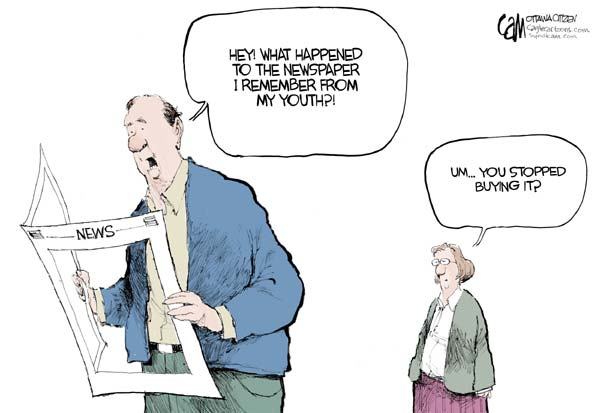
Daily newspapers like the Times-Picayune and The Oregonian were once pervasive throughout the United States, with many communities having both a morning and evening paper, and sometimes a weekly local paper as well. But daily local newspapers are now in decline, dealing with cratering circulation, a reduction in print editions and drastic staff cuts.

According to the Wall St. Journal, nearly 1,800 US newspapers shut down between 2004 and 2018, including more than 60 dailies and 1,700 weeklies. Hundreds of communities have lost their local newspapers. Between 1,300 and 1,400 communities that had newspapers of their own in 2004 now have no news coverage at all, according to the UNC Center for Innovation and Sustainability in Local Media.

It was once unthinkable that papers such as the Cincinnati Post, the Albuquerque Tribune, the New York Sun, the Rocky Mountain News, and the Tampa Tribune would close, but they are all gone now. Nicco Mele, former director of Harvard’s Shorenstein Center, predicts that half of remaining titles will disappear within the next two years.

Newspaper consumption in Oregon is already dropping precipitously, with daily and weekly circulation combined falling from 1.4 million in 2004 to 796,000 in 2019, the UNC Center says.

Some of the remaining Oregon papers are what the UNC Center calls “ghosts”  because their newsroom staffing has been so dramatically pared back, often by more than half,  that the remaining journalists cannot adequately cover their communities.

In January 2018, when Willamette Week broke that The Oregonian was laying off another 11 newsroom staffers, the Portland Mercury observed, “After repeated rounds of layoffs, it’s hard to imagine The Oregonian having anywhere else to cut. But the news business’s grim prognosis marches on, so the cuts continue.”

“For those inclined to point fingers at The Oregonian or our parent company Advanced Publications: Ad revenue across our industry continues to plummet precipitously. Layoffs in local newsrooms are happening everywhere. And it fucking sucks,” Oregonian reporter Shane D. Kavanaugh tweeted.

Compared with its breadth and depth in the 1990s, The Oregonian/OregonLive has become a ghost. When I was a business reporter at The Oregonian in the 1980s and 1990s, the business team of reporters and editors was a robust 8-10 individuals covering a panoply of topics from energy and healthcare to labor and retail. OregonLive’s list of staff today includes just one reporter, Mike Rogoway, specifically devoted to business coverage , unless you also count Jeff Manning, who is listed as a reporter covering Health Care Business, OHSU.

Sports coverage is still robust, with 12 reporters and editors, but just one reporter, Gordon Friedman, is specifically assigned to covering everything going on at Portland City Hall.

When the Jan. 2018 layoffs were announced, The Oregonian/OregonLive’s editor and vice president of content, Mark Katches, said to the paper’s staff, “You’re probably asking yourself, when will these cuts end? I wish I could answer that. Although we have made progress growing our digital audience while also producing award-winning, and important journalism, the revenue picture continues to pose challenges for our company – as is the case across the media landscape.”

In August 2018, Katches abandoned ship himself to take a new job as executive editor of the Tampa Bay Times, another paper that has had its own struggles both before and since it acquired its competitor,  the Tampa Tribune, in 2016 .

With all the strife in the newspaper business, is The Oregonian/OregonLive ripe for the same fate as the Times-Picayune.

Don’t think it can’t happen.


Harvey Weinstein’s not the only one spying on reporters

Whoever would overthrow the liberty of a nation must begin by subduing the freeness of speech. – Benjamin Franklin


spy

Harvey Weinstein had no qualms about spying on journalists to protect himself, or even using journalists to acquire information he could use against his accusers.

He used Dylan Howard, the chief content officer of American Media Inc., publisher of the National Enquirer, who passed on information about Weinstein’s accusers gleaned by his reporters.

Then there was the freelance writer hired by Black Cube, a private intelligence agency, who passed on information about women with allegations against Weinstein.

Sounds creepy. But Weinstein’s not the only one spying on reporters and he’s not the only one trying to undermine and disparage journalists.

ropetreejournalist

Walmart just removed a t-shirt like the one above from its website, following a complaint from a journalist advocacy group.
The shirt was listed on Walmart’s website through a third-party seller, Teespring, which allows people to post their own designs for sale.

The Columbia Journalism Review just reported that Attorney General Jeff Sessions has said criminal investigations into the sources of journalists are up 800 percent and he’s vowed to “revisit” the Justice Department’s media guidelines that restrict how the US government can conduct surveillance on reporters.

Then there’s Breitbart chairman Steve Bannon who sent two reporters to Alabama to dig up dirt on reporting done by the Washington Post about Alabama Republican Roy Moore. Breitbart’s goa, according to Axios, is to undermine the work of Post reporters Stephanie McCrummen, Beth Reinhard, and Alice Crites.

How about when the Koch brothers allegedly hired private investigators to dig into Jane Mayer’s past while she was working on her book, “Dark Money,” which accuses the Kochs and other wealthy plutocrats of hijacking American democracy.

At one point, Mayer heard that she was going to be accused of plagiarizing other writers. According to the New York Times, a dossier of her supposed plagiarism had been provided to The New York Post and The Daily Caller. The writers insisted there had been no plagiarism, causing the smear to collapse.

Three years later Mayer said she traced the plagiarism accusation to a firm involving several people who have worked closely with Koch business concerns. The firm was Vigilant Resources International, whose founder and chairman, Howard Safir, had been New York City’s police commissioner under former New York City Mayor Rudolph Giuliani.

“Smearing Mayer is reflective of Safir’s contempt for reporters and the media in general when he was police commissioner,” said a Newsday reporter.

In June of this year the New York Post reported that the Trump administration was spying on journalists who have been handed leaked information.

The Post said the Justice Department has obtained a legal warrant from the US Foreign Intelligence Surveillance Court to conduct electronic surveillance on reporters who were known to have published articles based on leaked information.

The surveillance was reported to be part of the Trump administration’s attempts to clamp down on leaks from within the White House and government departments.

In some respects, there’s nothing new about all this.

In 2013, the Justice Department advised the Associated Press (AP) that Federal investigators had secretly seized two months of phone records for reporters and editors of the AP. The government had obtained the records for more than 20 telephone lines of its offices and journalists, including their home phones and cellphones.

Gary Pruitt, the president and chief executive of AP, sent a letter to Attorney General Eric H. Holder Jr. calling the seizure, a “massive and unprecedented intrusion” into its news gathering activities.

There’s so much concern within the journalism community about government spying that the Knight First Amendment Institute at Columbia University and Freedom of the Press Foundation are teaming up to find out what’s going on.

On Nov. 29, they filed a Freedom of Information Act lawsuit against the Justice Department and several intelligence agencies, demanding records revealing how the government collects information on journalists and targets them with surveillance.

What Does the Resistance Want?

trump-protest.w710.h473

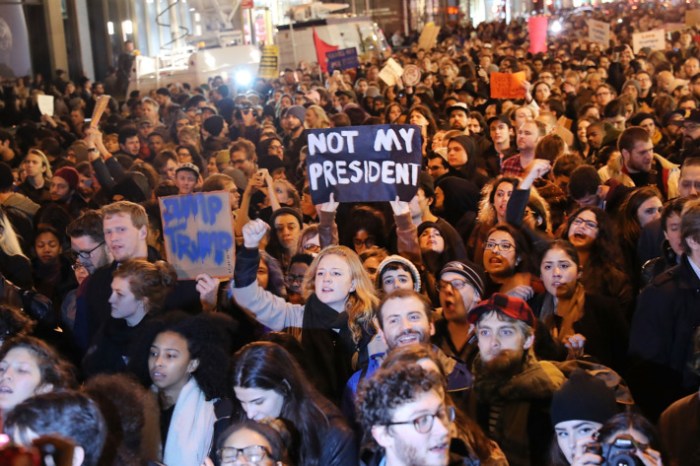
 Good grief. Another nationwide anti-Trump march is in the works.

 Indivisible, a national anti-Trump movement advocating a permanent, organized rebellion, is calling for a March For Truth on Saturday, June 3.

“Let’s rise together to call for a fair and impartial investigation into the Trump administration’s ties to Russia and demand the pursuit of truth.” Indivisible says.

Indivisible says marches are already planned for at least 50 cities across the country. Portland’s is set to take place at Terry Schrunk Plaza in Portland.

The March for Truth will follow the March for Science, the Tax March, the People’s Climate March and the Women’s March.

We’re starting to look like France, with its perpetual violent protests over such things as police brutality, politicians, labor laws, pay policies, pension reform, education reform, nurse suicides, the ruling elite and just about everything else.

But as the US progressive-led protests multiply, what exactly is the point?

“Resist!” the protesters exclaim. Resist what? That they lost an election? That the winner is not advocating the policies and programs the loser and her backers favored?

The protests may be an emotionally rewarding bonding exercise, but as a New York Post column noted, “In a self-governing republic with established democratic processes, there is no honorable role for “resistance.”

This resistance suggests progressives only support free elections if they win.

“Those who lose elections in free countries are the opposition, and can fix that by winning their next election,” the Post column said. “Instead of asking why they lost, the ‘resistance’ decided to pretend the loss of any election amounts to oppression and have adopted the language of revolution to rally themselves.”

Making things more deplorable, the principal organization behind the protests doesn’t disclose who is funding them. That organization, The Indivisible Project, is a registered 501c(4) nonprofit that says its mission “… is to fuel a progressive grassroots network to defeat the Trump agenda. “

Indivisible’s most recent Facebook post features a plea for donations and includes a lengthy explanation of its fundraising philosophy, but leaves out any mention of transparency. It highlights that a major donor has agreed to match all donations dollar-for-dollar until the beginning of Memorial Day recess, May 26th.

But at a time when progressives complain about dark money in politics, the major donor is not named.