Black Friday: Beware of Credit With a Catch

Black Friday is probably going to turn into Bleak Friday for some credit users at Oregon retailers. 

“When it Comes to West Coast Furniture Stores, We Have the Best Prices in Home Furniture,” Mor Furniture says on its website. On Nov. 26, the site is highlighting: “IN-STORE ONLY. No interest with equal monthly payments for 61 months on purchases of $6000 or more made with your Mor Furniture credit card. Equal monthly payments required for 61 months. Learn more.”

If you’re not careful, it could be a costly trap

Let’s say you buy furniture that costs $6,800. The monthly payment due for 61 months, Mor told me, would be $112.00.  BUT, if you still owe any of the $6800 at the end of the 61 months, even $1, Mor Furniture will charge you interest on the full $6800 at a 35.99% rate starting from the purchase date. 

Do the math. The total interest on an amortized $6800 loan paid off in 61 months at an annual interest rate of 35.99% would be approximately $7,422.39, more than the cost of the furniture itself.  In other words, that furniture will cost you $6,800 + $7,422.39, a total of $14,222.

Shop at Key Home Furnishings and you will encounter the same problem if you don’t pay off your entire purchase price in the time required. “No interest will be charged on the promo balance if you pay it off, in full, within the promo period.,” Key says. “If you do not, interest will be charged on the promo balance from the purchase date. The promo balance is equal to the promo purchase amount and any related optional debt cancellation fees. “

Wayfair credit card financing also offers 0% interest options for a set period (e.g., 6, 12, or 24 months) on qualifying purchases, but if you don’t pay the balance in full before the promotional period ends, you will be charged retroactive interest on the entire original purchase amount at a high APR. 

A perceptive consumer observed on Reddit, “One really has to study a business structure. They aren’t furniture dealers first, they are credit companies first, predatory lenders that have attached a tangible item or service to their scheme.”

It’s worth noting that deferred financial schemes are not restricted to furniture stores. Numerous other retailers offer it, too. 

For example, Car Toys, a specialty car audio and mobile electronics retailer, promotes “No interest if paid in full within promotional period” but “Interest will be charged to your account from the purchase date if their purchase balance is not paid in full within the promotional period.”

Window company Renewal by Andersen can trap consumers, too. NO MONEY DOWN, NO MONTHLY PAYMENTS, NO INTEREST FOR 12 MONTHS* its website says. Then it adds, “*Interest is billed during promo period but will be waived if the amount financed is paid in full before promo period expires.’

Anybody can be caught in these credit schemes, but the people most likely to be vulnerable are consumers with lower credit scores who suffer a job loss or medical emergency that makes it hard to pay off the balance, triggering the retroactive interest charge. 

The now beleaguered federal Consumer Finance Protection Bureau cautions all consumers to know the difference between zero interest and deferred interest, because the differences can have big effects on your wallet.

A zero percent interest promotion will not add interest based on the balance of your purchase during the promotional period. If you still have an unpaid balance when the promotional period is over, you will start to pay interest on the remaining balance only from the date the promotional period ends. 

In contrast, some retailers offer financing such as “No interest if paid in full in 12 months.” That’s when you need to be wary because it usually means the promotion is a deferred interest offer. 

Caveat emptor.

Speed Cameras Are Funneling Overtime Money to Portland Cops

Portland may be “The City That Works”, but the city’s speed camera program doesn’t. And that’s costing a bundle. 

Portland started using fixed speed cameras to identify and fine drivers in 2016. It began by issuing warnings starting on Aug. 25 of that year for violations occurring on the SW Beaverton-Hillsdale Highway corridor. The program started issuing formal speeding tickets at the end of a 30-day trial period on Sept. 24, 2016.

 But a persistent problem quickly emerged. Every photograph had to reviewed and every citation had to be issued by a sworn police officer. That was creating a backlog in processing citations and hindering the city’s ability to expand its automated enforcement program. 

In 2020, Portland’s fixed speed cameras issued 38,502 tickets. Each one had to be reviewed by a sworn police officer, a massive time sink to say the least. 

Finally, in 2022 a solution was found when the Legislature took up HB4105, which allowed the City of Portland to utilize non-police staff (specifically, “duly authorized traffic enforcement agents”) to review and issue citations based on photographs from fixed speed cameras, thereby freeing up police officers to focus on other duties.  

Support for the bill was widespread. 

“Allowing duly authorized enforcement agents to review citations will create more review capacity – while at the same time ensuring that appropriate training and certification for reviewing personnel are in place,” the City of Portland testified before the House Committee on Rules. “This will address police capacity as well as traffic safety needs.”

Multnomah County testified that requiring police officers to review and issue citations “reduces the capacity (of sworn police officers) for other police priorities and also creates a costly barrier to use of automated enforcement.”

Dana Dickman, at the Portland Bureau of Transportation (PBOT), testified that not only was each traffic safety camera violation being reviewed by a sworn police officer, but “100% of traffic safety camera violation review occurs on police overtime. Expanding the pool of qualified reviewers would lower the cost of this function.”

Reporting on HB 4105, Willamette Week noted that Portland was then advertising a starting salary for officers of $66,934. “In a 2,000-hour year, that’s $33.47 an hour. At time-and-a-half, an officer would be paid $50 an hour to review photo radar tickets.” Willamette Week said those payments explained why the Portland police union opposed changing the law.

Maybe that’s why once the bill passed in 2022, any sense of urgency in implementing it seemed to evaporate.

In December 2024, Jonathan Maus, publisher/editor of BikePortland’s news site, reported that he had asked the Portland Bureau of Transportation’s (PBOT) Communications Director, Hannah Schafer, about the status of implementing the new authority given to them in HB 4105. “PBOT is currently developing the program that will result in PBOT staff reviewing and issuing citations for moving violations from the automated enforcement cameras,” Schafer replied.

Well, here we are in October 2025, 34 months after the effective date of the law, and sworn police officers are still reviewing each and every moving violation recorded by one of the city’s cameras. 

Earlier this year, Willamette Week reported that even though speed cameras have been effective, more have not been installed because, as PBOT spokesman Dylan Rivera put it, police officers are currently the ones to review all citations, mostly on overtime shifts, and the bureau is limited by police availability. They’re also hamstrung by capacity at the Multnomah County Circuit Court, which adjudicates the citations.

Meanwhile, the cost of all that overtime? I filed a public records request to find out and it took repeated requests to get the precise numbers I asked for:

   
           Year     Overtime Hrs.                                     Cost ($)
2022501.8341,964.57
2023411.5936,963.07
2024 423.0040,991.56
2025628.2160,423.17
   
          Total       1,964.63$180,342.37
   

It comes out of the fines paid by speed scofflaws, not the city budget, but still, that’s $180,342.37 down the drain and into police officers’ pockets. 

The overtime rule has obviously been quite lucrative for some Portland Police officers. A complete annual breakdown in overtime payments each year is provided in the footnote.[1]

In July 2025, PBOT’s Speed Safety Camera Program Manager, Steve Hoyt-McBeth, told me he’s “very eager to get the ( duly authorized enforcement agents ) program up and running” but the current holdup is funding”.

Hiring the positions had been held for approximately six months because of PBOT’s budget challenges, he said. “I was hopeful that I’d be able to begin the recruitment this summer, but the lack of a funded state transportation package, which puts an approximately $11 million hole in PBOT’s FY25-26 has kept the pause button pressed.”

Hoyt-McBeth said part of the holdup is also tied to staff capacity to develop the program. “No municipality in Oregon currently utilizes the statutory authority to have Agents issue citations, so we have to develop the training and program ourselves without a template from another jurisdiction,” he said.

So, when are the Portland Police going to relinquish their lucrative overtime work on speed camera violations and pass it on to non-police staff? 

Don’t hold your breath.


[1]

Year2022
Officer Overtime HoursOvertime Compensation ($)
115913802.83
21289818.92
398.338621.66
4605177.85
5191580.44
6121150.1
79.5425.7
84366.71
94359.28
104331.44
114329.64
Grand Total501.8341964.57
Year2023
Row LabelsOvertime HoursOvertime Compensation
117315559.57
214512756.66
377.57334.17
47.84642.96
54346.76
64298.32
70.2524.63
Grand Total411.5936963.07
Year2024
OfficerOvertime HoursOvertime Compensation ($)
119619167.56
212012019.85
3605132.4
425.52659.74
5141377.88
94406.2
63.5220.61
707.32
Grand Total42340991.56
Year2025
OfficerOvertime HoursOvertime Compensation ($)
1192.1319916.23
219819700.98
311011201.88
474.754862.33
545.333936.23
64417.84
74387.68
Grand Total628.2160423.17

Misguided Charity: Portland’s Proposed Pearl District Homeless Shelter

There’s a saying of uncertain providence, “Give a Man a Fish, and You Feed Him for a Day. Teach a Man to Fish, and You Feed Him for a Lifetime”. 

Portland Mayor Keith Wilson wants to give the homeless in the Pearl District a fish. 

Wilson wants to turn an industrial building at NW 15th Avenue and NW Northrup Street into a so-called “low-barrier” overnight-only homeless shelter able to accommodate up to 200 people. An all-night warehouse for the homeless. According to the NW Examiner last month, the city and property owner Vanessa Sturgeon of Sturgeon
Development Partners signed a 12-year lease in May that Mayor Keith Wilson has described as a two-or-three-year
deal. The $18,000-a-month lease covers the main floor and part of a basement, a total of 16,000 square feet, to be used only for shelter for unhoused individuals.

Low-barrier means the people who stay there from 8pm to 6am wouldn’t have to show an ID, be sober (there’s be no sobriety checks) or drug-free, although alcohol and drugs would not be allowed. The 200- bed shelter at Northwest 15th will have only two showers and sex offenders will be allowed inside the low- barrier shelter because no one will be checking for IDs.

A critic posted on reddit: “It’s basically a night prison. 200 people, 6 toilets, low barrier, barely a snack, no meals, no counseling, no fresh clothing. And then they are going to “disperse” these people every morning near parks and schools.”

Potential overnighters could access a bed by standing in line before the shelter  opened. At a July 28, 2025, public forum at the Armory, Skyler Brocker-Knapp, who oversees the city’s shelter plan, said people will be handed a card with information about where to receive social services after leaving the shelter.

I still remember going to a free lunch for the homeless program in an underground Portland parking garage a number of years ago. Tables spread out across the center of the garage displayed a bounty of meal options put together by multiple well-meaning social justice volunteers, from sandwiches and lasagna to potato chips and hot ethic dishes. Homeless people streamed in, wearily assembled in slow-moving lines, grabbed hold of what they wanted and found a spot on the concrete floor to sit and eat.

It wasn’t uplifting. It was depressing.

Nobody was there to help the struggling people get their lives back on track, to inquire about the welfare of their children, or to make them aware of accessible pathways towards lasting change. The whole thing was a misguided feel-good effort at charity by naïve good Samaritans. 

More recently, I saw a group of fresh-faced, eager suburban teenage girls handing out sandwiches from the trunk of their car to homeless people at the Tom McCall Waterfront Park. That might have eased their consciences, but how, exactly, did that drive change?

As Kevin Dahlgren has noted in his Substack, @truthonthestreets, “We don’t have a homeless crisis; we have a mental health and addiction crisis. Unfortunately, many still treat the homeless crisis as if it’s a housing crisis and push for more and more shelter beds. The problem is these shelters are far too low a level of care for the majority of our mentally ill.”

“Many advocates for the homeless assume that homelessness is primarily due to the unaffordability of housing, rather than drug use, antisocial behavior, criminal activity or mental illness,” says Devon Kurtz, director of public safety policy at the conservative Cicero Institute. “From this assumption flows misguided confidence that living on the street is an unfortunate but preferable alternative to institutions that curb the civil liberties of individuals who are simply poor.  This assumption is wrong. In the largest survey of homeless Americans ever conducted, only 4% cited high housing costs as the primary reason they were homeless. Significant majorities said they had mental-health issues, had used illegal substances and had been to jail or prison for extended periods.”

A woman who directed a social service agency in the Portland area that served low-income families once told me the whole free food approach was “antiquated”, a long-ago discredited tactic , and that unrestricted aid was counterproductive.

So’s the proposed low-barrier Pearl District homeless shelter. 

“Portland, The City That Works” Ha!

If Portland works, it’s not very speedy. 

Portland started using fixed speed cameras to identify and fine drivers in 2016. It began by issuing warnings starting on Aug. 25 of that year for violations occurring on the SW Beaverton-Hillsdale Highway corridor. The program started issuing formal speeding tickets at the end of a 30-day trial period on Sept. 24, 2016.

 But a persistent problem quickly emerged. Every photograph had to reviewed and every citation had to be issued by a sworn police officer. That was creating a backlog in processing citations and hindering the city’s ability to expand its automated enforcement program. 

In 2020, Portland’s fixed speed cameras issued 38,502 tickets. Each one had to be reviewed by a sworn police officer, a massive time sink to say the least. 

It took until 2022 for a solution to be found, a notable victory for Portland. That was when the Legislature considered HB4105, which allowed the City of Portland to utilize non-police staff (specifically, “duly authorized traffic enforcement agents”) to review and issue citations based on photographs from fixed speed cameras, thereby freeing up police officers to focus on other duties.  

Support for the bill was widespread. 

“Allowing duly authorized enforcement agents to review citations will create more review capacity – while at the same time ensuring that appropriate training and certification for reviewing personnel are in place,” the City of Portland testified before the House Committee on Rules. “This will address police capacity as well as traffic safety needs.”

Multnomah County testified that requiring police officers to review and issue citations “reduces the capacity (of sworn police officers) for other police priorities and also creates a costly barrier to use of automated enforcement.”

“We are very concerned about the epidemic of traffic fatalities trending upward across Oregon,” said The Street Trust. “We would like you to rethink trac enforcement as an administrative function in order to increase municipal capacity to enforce traffic laws and to reduce costs to expand their automated traffic enforcement (ATE) programming in ways that meet local community’s needs.”

Dana Dickman, at the Portland Bureau of Transportation (PBOT), testified that not only was each traffic safety camera violation being reviewed by a sworn police officer, but “100% of traffic safety camera violation review occurs on police overtime. Expanding the pool of qualified reviewers would lower the cost of this function.”

Reporting on HB 4105, Willamette Week noted that Portland was then advertising a starting salary for officers of $66,934. “In a 2,000-hour year, that’s $33.47 an hour. At time-and-a-half, an officer would be paid $50 an hour to review photo radar tickets.”

Willamette Week said those payments explained why the Portland police union opposed changing the law.

Once the bill passed, any sense of urgency in implementing the new law seemed to evaporate.

In December 2024, BikePortland noted that the change still wasn’t in place, even though the bill had been on the books for nearly two years. Jonathan Maus, publisher/editor of BikePortland’s news site, reported that he had asked the Portland Bureau of Transportation’s (PBOT) Communications Director, Hannah Schafer, about the status of implementing the new authority given to them in HB 4105. “PBOT is currently developing the program that will result in PBOT staff reviewing and issuing citations for moving violations from the automated enforcement cameras,” Schafer replied.

Bike Portland said PBOT expected to have about 40 cameras in operation and to be issuing 100,000 citations by 2025.

So here we are in July 2025 and sworn police officers are still reviewing each and every moving violation recorded by one of the city’s cameras. 

Earlier this month, Willamette Week reported that even though speed cameras have been effective, more have not been installed because, as PBOT spokesman Dylan Rivera put it, police officers are currently the ones to review all citations, mostly on overtime shifts, and the bureau is limited by police availability. They’re also hamstrung by capacity at the Multnomah County Circuit Court, which adjudicates the citations.

According to Willamette Week, PBOT says “it’s looking to hire three people who can review citations to alleviate the burden on police staffing and increase the number of tickets the city can process.”

PBOT’s Speed Safety Camera Program Manager, Steve Hoyt-McBeth, tells me he’s “very eager to get the program up and running” but the current holdup is funding”.

Hiring the positions has been held for approximately six months because of PBOT’s budget challenges, he said in an email. “I was hopeful that I’d be able to begin the recruitment this summer, but the lack of a funded state transportation package, which puts an approximately $11 million hole in PBOT’s FY25-26 has kept the pause button pressed.”

Hoyt-McBeth said part of the holdup is also tied to staff capacity to develop the program. “No municipality in Oregon currently utilizes the statutory authority to have Agents issue citations, so we have to develop the training and program ourselves without a template from another jurisdiction,” he said.

Clearly, this entire situation with the speed cameras has been mishandled by Portland, which continues to shell out overtime money to cops . But it seems the City Council is clueless. Meredith Washington, Community Liaison for Councilor Angelita Morillo, read this post and responded to me, “I’m unsure what your message is here.”

So, when are the Portland Police going to relinquish their lucrative overtime work on speed camera violations and pass it on to non-police staff?

Don’t hold your breath.

OPB is facing a Big Hole. Will Donors step Up?

Oregon Public Broadcasting (OPB) is in trouble.

A bill clawing back $1.1 billion from the Corporation for Public Broadcasting (CPB), which provides funding for NPR and PBS, including OPB, has passed the Senate. It is expected to pass the House next and then to be sent to President Trump for his signature. 

Are you and thousands of other Oregonians prepared to start or increase donations to OPB to replace the federal money it now relies on?

Public radio across the country is already begging for money. On July 18, Alyson Brokenshire, Senior Director, Principal and Major Gifts at PBS News Hour sent out a message: “For the first time in history, Congress voted to zero out funding for public media, including PBS News HourThis decision creates a critical funding challenge for us, but one we can meet with your sustaining support.”  WBUR in Boston also sent out a plea on July 18: “Give. Longtime listener or reader? Become a first-time donor at this pivotal moment. Give again. Thank you, a million times over, for being in our corner. Give more. Help us close this $1.6-million funding gap, right now. Give every month. When you become a Sustainer, we know we can rely on you. Month after month. Year after year.”

In fiscal year 2023, government grants to OPB totaled $4,679,653 or 9.5% of the station’s $49,370,988 in revenue from contributions, including sponsorships.[1]

I’m already a sustaining contributor to OPB. I provide ongoing, monthly financial support through automatic deductions from a credit card. I recently increased my monthly donations because of the threats of funding cuts by the Trump administration. Am I prepared to donate even more when those cuts are real?

My sense is that OPB has a tough road ahead if it tries to replace all of the $4,679,653 in annual federal support it now receives. 

Current economic uncertainty is one thing likely to impact fundraising. There is already evidence that such uncertainty is leading people to scale back on discretionary spending, including charitable donations.Nonprofit giving in the US has taken a $65 billion hit since 2021, according to Philanthropy.org. 

Another reality is that a substantial percentage of America’s private wealth is held by conservative and center-right donors, many of whom are wary of institutions they perceive as liberal, and many of whom see public media as liberal. That perception was recently reinforced by Uri Berliner, a former senior business editor at NPR. In 2024, he wrote a blistering critique of NPR in The Free Press, accusing it of lacking viewpoint diversity and of a drift towards a progressive ideology

Trump administration officials and members of Congress have piled on, claiming that NPR and PBS push “left-wing propaganda” and accusing them of violating the CPB’s nonpartisan mandate.

Never one to be subtle, Trump has mercilessly blasted public radio and television. “NPR and PBS, two horrible and completely biased platforms (Networks!), should be DEFUNDED by Congress, IMMEDIATELY,” Trump wrote late Wednesday on Truth Social. “Republicans, don’t miss this opportunity to rid our Country of this giant SCAM, both being arms of the Radical Left Democrat Party. JUST SAY NO AND, MAKE AMERICA GREAT AGAIN!!!”

“NPR and PBS have increasingly become radical, left-wing echo chambers for a narrow audience of mostly wealthy, white, urban liberals and progressives,” Rep. Marjorie Taylor Greene (R-Georgia) said at a subcommittee hearing earlier this spring, 

Could OPB survive without the federal grants or any increase in donations? Probably, but the hit would be hard, though not as hard as the likely hit on KCUW in Pendleton, OR, which relied on federal money for 98% of its revenue in 2023. KCUW is is managed by members of the Confederated Tribes of the Umatilla Indian Reservation. Sen. Mike Rounds, R-S.D., said he secured a deal from the White House that some funding administered by the Interior Department would be repurposed to subsidize Native American public radio stations in about a dozen states, but there’s no firm provision in the bill for that.

The impact of any cut in OPB’s programming would be felt particularly by Oregon and Southern Washington’s more educated and higher income populace (71% of OPB’s TV audience, 82% of OPB’s digital audience and 85% of OPB’s radio audience has attended college). The public broadcast audience also typically falls into higher household income categories and have for years, primarily because households that listen to public media tend to have more formal education.

One potential threat to any OPB fundraising outreach is the changing media landscape and its burgeoning cost. 

Not only are media outlets multiplying, but alternative media are increasingly soliciting subscriptions. I have long subscribed to the Wall Street Journal (that subscription alone costs me $779.88 a year) and the New York Times, but added a subscription to Bari Weiss’ Common Sense newsletter, later renamed The Free Press, in 2021. I have since added subscriptions to a raft of other Substack publications with various points of view.  

I also make contributions to a number of Oregon and national non-profits, the Ukrainian Freedom Fund, and a Ukrainian news site, The Kyiv Independent.  And once in a while I’m a sucker for a GoFundMe plea. 

My point is, like many Oregonians, I’m already heavily invested in trying to do good. But there’s a limit. Periodically, I have to cull my subscriptions and donations because the cost gets out of hand. This means reprioritizing. And in the case of public broadcasting, fundraising pleas are going to come from various entities competing against each other for support, including individual programs, such as PBS News Hour, and individual stations, such as OPB and KCUW.

If OPB wants to replace the $4,679,653 in government financing it is set to lose, it is going to have to convince a lot of people to up their giving or chip in for the first time. 

This at a time when Oregon’s economy is facing a period of sluggish growth and some signs of weakness, with potential big givers from companies like Intel and Nike under stress and smaller givers uncertain about their economic prospects. President Trump’s One Big Beautiful Bill Act is also likely to put pressure on many Oregonians and the state budget and there’s potential harm from Trump’s aggressive tariffs.

All food for thought.


[1] In most instances, sponsorships are considered charitable contributions by the underwriters.  On OPB’s IRS Form 990, these sponsorships are included in the $49,370,988 reported as contributions and grants. There is also a small amount of sponsorships that meet the definition of advertising, which primarily occur on OPB’s digital platforms.  For FY 23, advertising is included in the program service revenue of $1,381,015 and in unrelated business revenue reported on OPB’s IRS Form 990-T.  

For FY 23, advertising is included in the program service revenue of $1,381,015 and in unrelated business revenue reported on our IRS Form 990-T.  Sponsorships are not otherwise disclosed on the tax filings.  Total revenue was $56,821,607.

Notable Sources of Revenue$Percent of Total Revenue
Contributions$49,370,988             86.9%
Program Services$1,381,015               2.4%
Investment Income$3,446,034               6.1%
Bond Proceeds$0 
Royalties$0 
Rental Property Income$415,851                0.7%
Net Fundraising$0 
Sales of Assets$2,207,719                 3.9%
Net Inventory Sales$0 
                                                                       

Figures are from Form 990 which non-profits are required to file annually with the IRS. These CPB grants are included in the Contributions and Grants revenue of $49,370,988 on OPB’s FY 2023 IRS Form 990. CPB grants are not included in government grants on the Form 990 as CPB is a private, nonprofit corporation, not a government agency. 

Oregon Transportation Bill Would Pummel Vehicle Owners

Democrats in Salem are preparing to dig much deeper into your pocket with a massive transportation revenue bill, HB 2025. Because its multiple parts obscure its impact on individuals, let’s look at what it would mean for car owners, which is about 92% of households in Oregon. There are over two dozen increases to vehicle-related fees in the bill.

  • Planning on buying a new car?  Oregon’s zero percent vehicle sales tax has made it a great state in which to purchase a car. HB 2025 proposes a new Vehicle Sales Tax in the form of a 2% “transfer tax” on the sale price of new cars and a 1% tax on used cars valued at over $10,000. The average price paid for a new car in the U.S. in May 2025 was $48,799, according to Kelley Blue Book (Up from$21,041 in 2020).[1]That would mean a sales tax of $975.98 on your new car. The average price paid for a used car in Oregon is $35,556. That would mean a $335.56 sales tax. 
  • Fees for vehicle registration would go up, too. Registration of a new car would increase from $43 to $113.
  •  Oregon’s current vehicle registration fees for gas-powered passenger vehicles range from $126 to $156. The bill proposes a $66 increase to the existing vehicle registration fees. If you currently pay $126 to re-register your car, the cost could increase to $192 ($126 + $66) under HB 2025.
  • The cost of new license plates would rise from $12 to $33.
  • The cost to take a driver’s skill test at the DMV would increase from $45 to $111.
  • Buying or owning a gas-powered vehicle? Oregon’s current 40 cent per-gallon gas tax would increase to 50 cents per gallon in 2026 and 55 cents per gallon in 2027. The gas tax would be indexed to inflation beginning in 2029. The average vehicle in Oregon uses approximately 489 gallons of gas per year. That would mean a $48.90 increase in gas costs in 2026 and a $73.35 increase in gas costs in 2027.
  • Buying or own an electric or plug-in hybrid vehicle? A Road Usage Charge (RUC), a mandatory per-mile fee, would be imposed on electric and plug-in hybrid vehicle owners starting July 1, 2026 or these drivers could opt for a flat annual fee, initially set at $340. The proposed $340 annual tax is based on driving 18,000 miles a year at 20 mpg at the new gas tax rate
  • A payroll tax that funds public transit via the Statewide Transportation Fund would increase from 0.1% currently to 0.3% by 2030. The tax would increase to 0.18% in 2026 and then to 0.25% in 2028 and 0.3% in 2030.

In a time of growing economic stress for Oregonians, it’s going to be enough to drive you to the poor house.


[1] That was up from the average price of $21,041 for a new car in 2000. In other words, not only will multiple costs associated with a car go up under HB 2025, but you will likely be making increasingly higher monthly payments on your new car because you’ll take longer to pay it off. While 3-year car loans were once common, they are less typical now. Today, the most common car loan terms are 60 months (five years) and 72 months (six years), and increasingly car buyers are agreeing to go with seven and eight year car loans, leading to higher total financing costs. Then there’s the growing cost of repairs. Garage repair costs are up are up over 43% in there past six years and the cost of fixing damaged cars has gone up 28% since just 2021, according to the U.S. Bureau of Labor Statistics.

Gov. Kotek: Don’t Sign The Bill Paying Strikers

Bill to grant striking workers unemployment pay fails final vote in Oregon  Senate - OPB

Sometimes it’s nice to be first.

Oregon is justly proud, for example, that in 1971 it was the first state to pass a bottle bill to address the growing problem of litter from beverage containers and to encourage recycling.  

Other times being first is an abomination. 

That will be the case if Oregon Gov. Kotek signs SB 916, which would award up to ten weeks of unemployment insurance benefits to workers who go on strike.

The Oregon Employment Department (OED) anticipates that the bill would result in an additional $2.1 million of benefit payments in the 2025-27 biennium. Critics of the bill say this doesn’t take into account the likelihood of longer and more frequent strikes if workers can count on some income while striking.

The whole concept of strikes is an assumption that the loss of income for workers and the loss of production by employers will motivate an eventual settlement. SB 916 would change that whole dynamic, putting employers at a disadvantage. Equally egregious, because the Unemployment Insurance Trust Fund is funded through a payroll tax that is paid by employers, Oregon employers would be paying workers not to work.

What makes their strong support for this bill particularly egregious is that it is aimed at benefiting an extremely small portion of the labor force, but a sector that overwhelmingly favors the Democrats in campaign contributions. 

In 2024, just 15.9% of wage and salary workers in Oregon were union members, according to the Bureau of Labor Statistics. Dig deeper and you find that the union membership rate for public sector workers in Oregon, about 51%, is considerably higher. That is consistent across the country, where unionization is about five times higher nationwide in the public sector compared with the private sector.

Supporters of SB 916 often try to bolster their cause by alluding to the fact that New York and New Jersey already allow unemployment benefits to be paid to strikers, but they neglect to mention that both states bar public employees, such as teachers, from striking.

No wonder the bill has drawn across-the-board opposition from businesses and public entities, including already stretched local governments and school districts.

Earlier in the process, two Senate Democrats, Jeff Golden, D-Ashland and Janeen Sollman, D-Hillsboro, showed praiseworthy wisdom in voting against the bill. “Counties, cities and schools are scrambling to just maintain current services,” Sollman said. “Now is not the time to be adding more uncertainty and more expenses.”

Both senators subsequently changed their minds and voted for a scaled back bill, but Sollman’s statement is still valid.  As Senate Minority Leader Daniel Bonham, R-The Dalles, said, “This is bad policy. It’s going to be harmful to our students. It’s going to be harmful to the state.”

Despite the financial strains facing Oregon, and even the likely diversion of kicker money to address forest fires, Gov. Tina Kotek, a Democrat with strong ties to labor, has said she plans to sign the bill.

“I know the argument has been that this will be highly detrimental to our school districts,” Kotek said in a June 9 media availability. “I don’t particularly believe that is an accurate assessment of that bill and at the end of the day I support the right of folks to strike and I believe the way the bill is drafted we will actually see shorter strikes.”

Don’t count on it. 

Companies With Oregon Operations Eyeing Payoff From Trump’s Immigrant Deportations

Back in January, Portland’s new mayor, Keith Wilson, highlighted Portland’s commitment to its sanctuary city status, supported by Oregon’s sanctuary state laws and the Sanctuary Promise Act of 2021 that limit law enforcement’s cooperation with federal immigration authorities.

“We stand together in solidarity with our immigrant families,” he wrote. “Their lives, families, and businesses are part of the fabric of our community and we must support them during these challenging times,” Wilson wrote in a letter to the City Council. “We must come together to live our city’s shared values of freedom from fear and sanctuary from federal overreach in the days ahead, no matter what our city may face.”

Governor Tina Kotek has also publicly and consistently affirmed her commitment to upholding Oregon’s sanctuary state laws. The governor “will not back down from a fight and believes these threats undermine our values and our right to govern ourselves,” a spokesperson for Kotek said, adding that the state “will not be bullied to deport people or perform immigration enforcement.”

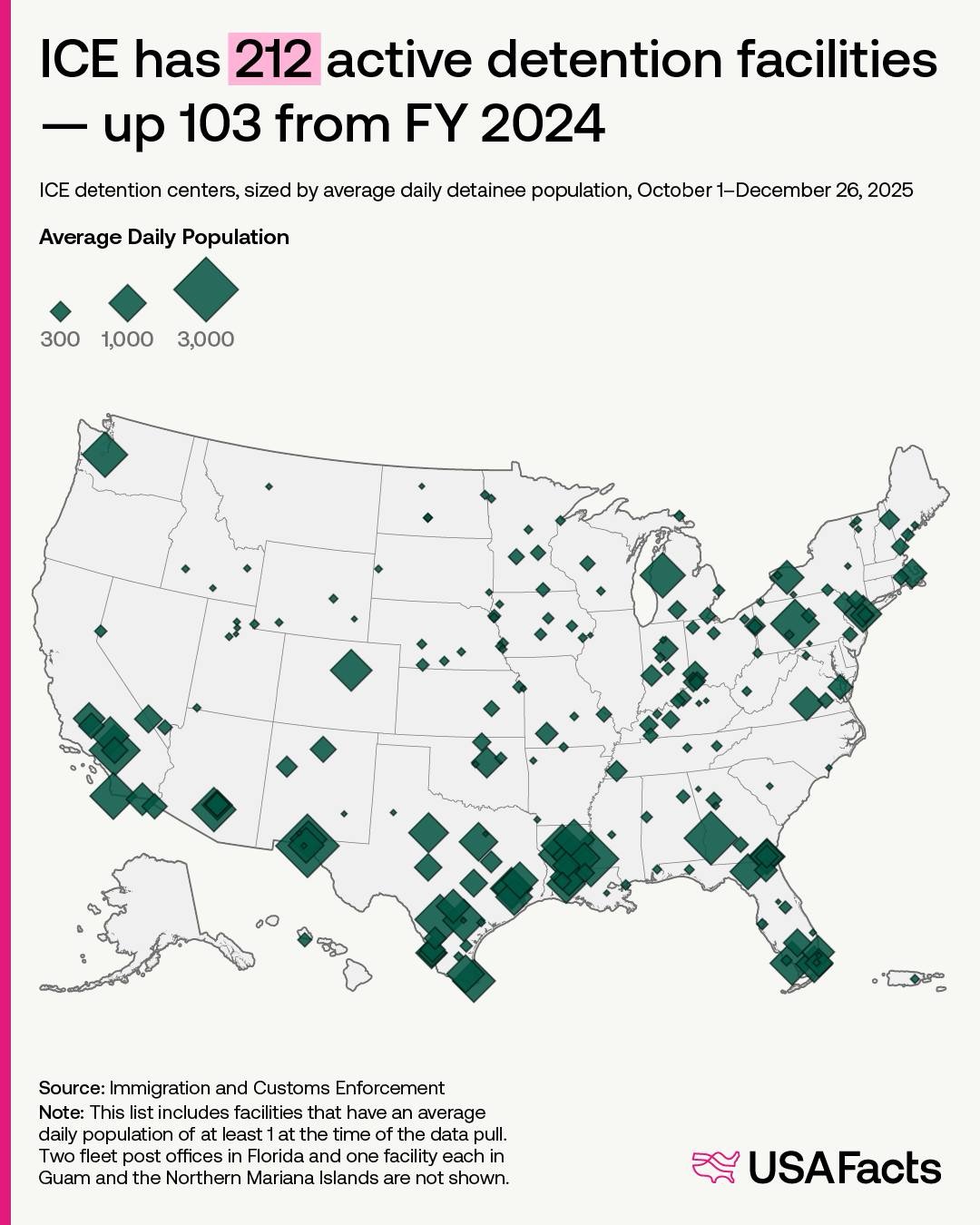
A lot of Oregon’s politicians, particularly Democrats, may be on board with this pro-illegal-immigrant stance. But it looks like commerce trumps morality for much of the state’s business community. A long list of companies with operations in Oregon are perfectly happy to go after government contracts aimed at helping Immigration and Customs Enforcement (ICE) with immigrant deportations.

Open Secrets, a Washington, D.C.-based nonprofit that tracks and publishes data on campaign finance and lobbying, has recently reported on for-profit companies in the United States benefiting from President Donald Trump’s plans to increase ICE deportations.

The coming windfall in deportation dollars could be immense. The House of Representatives approved a spending bill in early May that sets aside $175 billion for immigration enforcement – about 22 times ICE’s annual budget.

The bill includes the following provisions:

  • $46.5 billion for border barriers, including 701 miles of border wall, 900 miles of river barriers, 629 miles of secondary barriers, and 141 miles of vehicle and pedestrian barriers
  • $5 billion for Customs and Border Protection (CBP) facilities
  • $4.1 billion for hiring additional CBP personnel, including 3,000 new Border Patrol agents and 5,000 new Office of Field Operations (OFO) officers at ports of entry
  • $2 billion for retention bonuses and signing incentives for CBP personnel
  • $2.7 billion for border surveillance technology, including surveillance towers and tunnel detection capabilities
  • $500 million for grants to state and local law enforcement to track and monitor threats from unmanned aircraft systems
  • $450 million for Operation Stonegarden to support cooperation between CBP and state and local law enforcement

Open Secrets identified a slew of companies that are poised to benefit from President Trump’s plans to increase deportations. Every single one of them has operations in Oregon. According to Open Secrets, the companies and their contracted work are:

  • Palantir Technologies: In April 2024, ICE awarded software company Palantir Technologies a $29.8 million contract for developing ImmigrationOS, a tool to help ICE with identifying and prioritizing the deportations of individuals who are considered a risk, such as violent criminals; tracking who is self-deporting; and managing cases from the individual’s entry through detention, hearing and deportation. The tool is an extension of systems that Palantir has already delivered as part of its almost $128 million contract signed in 2022.
  • Deployed Resources: This emergency management company has been awarded over $4 billion in government contracts to build and operate border tents since 2016. On April 12,  2024, ProPublica reported that ICE awarded a new contract worth up to $3.8 billion to Deployed Resources to operate a migrant detention camp at Fort Bliss, a United States Army post in New Mexico and Texas. On April 17, ICE submitted a $5 million proposal for Deployed Resources to deliver unarmed guard services for 30 days at an ICE facility in El Paso, Texas. ICE has housed detainees at a tent facility in El Paso operated by Deployed Resources since March. The Trump administration used the Department of Defense to award Deployed Resources an unannounced $140 million contract to run the site for ICE, The facility can house up to 1,000 detainees, and ICE started transferring detainees on March 10.
  • Axon Enterprise: The company (formerly TASER International), which develops technology and weapons for public safety, law enforcement and the military,  was awarded a year-long $5.1 million contract in March to deliver body cams and equipment and a $22,376 contract to deliver tasers that have been used specifically in deportations. Several law enforcement agencies in Oregon use Axon tasers. Rick Smith, the CEO of Axon Enterprise, had a special distinction in 2024. His annual compensation, $165 million, topped CEO compensation charts in 2024 That propelled him past Apple’s Tim Cook, whose 2024 compensation totaled $74.61 million.
  • Parsons Government Services: The company is wrapping up a one-year $4.2 million contract for the transportation and guard services of ICE detainees in Newark, NJ.  It was awarded a contract worth up to $8.9 million for COVID-19 testing supplies in February, as well as an $87,467 contract in March and a $118,758 contract in April with ICE, both to provide “mobile biometric collection devices in support of the biometric identification transnational migration alert program.” 
  • General Dynamics: This weapons company was awarded new $101,034 and $80,050 contracts in March to purchase non-lethal ammunition for training purposes for ICE’s Office of Firearms and Tactical Programs.
  • Sig Sauer Inc.: A firearms company, Sig Sauer was awarded more than $200,000 worth of contracts with ICE for firearms and firearm accessories in the first months of 2025: $57,163 in February, and $19,824, $35,106 and $90,854 contracts in April. 
  • Paragon Professional Services: Awarded a $1.1 million contract on April 1 for transporting people who are detained by ICE in the New York City area and a $458,400 month-long contract to provide transportation of ICE detainees in Baltimore on April 17. ICE has also signed a five-year, $395,534 firm-fixed-price delivery order to Paragon Professional Services LLC, an Alaskan Native Corporation-owned small disadvantaged business. The contract provides transportation and guard services to support ICE’s Enforcement and Removal Operations in the Newark, New Jersey area. This award is part of a larger Indefinite Delivery Contract valued at $315.1 million that Paragon holds with ICE for security and detention services.
  • GlobalX Air is a US 121 domestic flag and supplemental airline flying the Airbus A320 family of aircraft. Our services include domestic and international ACMI and charter flights for passengers and cargo throughout the US, Caribbean, Europe, and Latin America. GlobalX is IOSA certified by IATA and holds TCO’s for Europe and the UK.
  • GEO Group: A private prison company, GEO Group announced in February a 15-year contract with ICE for 1,000 beds at its Delaney Hall Facility in Newark, New Jersey. The company said the contract is expected to add $60 million to its annual revenue in the first year. In March, GEO announced a contract with ICE for a 1,800 bed facility in Baldwin, Michigan. The contract is expected to generate $70 million in annual revenue. The company also announced in March that it altered its contract agreement for the 1,328-bed Karnes ICE Processing Center in Karnes City, Texas, to host “mixed populations” instead of solely single males. That contract is expected to generate $79 million in the first year, including $23 million in incremental revenue. Accusations of abuse and neglect of immigrants waiting for detention hearings have surfaced at Moshannon Valley Processing Center in Philipsburg, Pennsylvania, one of GEO’s facilities and one of the largest facilities of its kind in the nation, according to the Pittsburgh Post-Gazette. The paper reported that a special office of the U.S. Department of Homeland Security launched a sweeping investigation in 2024 into a litany of allegations at the center, but while the probe was still underway, the federal government gutted the special office in March 2025, raising questions about whether the investigation is still active as well as other inquiries into complaints of dangerous conditions and abuse against immigrants at centers across the country. 
  • CoreCivic: In March, CoreCivic, a private prison company, signed a five-year contract to reopen a 2,400-bed family detention center in Dilley, Texas. Annual revenue once fully operational is expected to be $180 million. In February, the company announced it would increase capacity for up to 784 ICE detainees at its 2,016-bed Northeast Ohio Correctional Center, its 1,072-bed Nevada Southern Detention Center and its 1,600-bed Cimarron Correctional Facility in Oklahoma. In addition, CoreCivic has modified a contract so that ICE may use up to 252 beds at its 2,672-bed Tallahatchie County Correctional Facility in Mississippi.

  • CSI Aviation: This New Mexico-based company is ICE’s current prime air charter contractor.  CSI has signed contracts worth more than $650 million with ICE in the past three years. Included in that total is a no-bid contract awarded to CSI for deportation flights, worth up to $219 million. The contract began on March 1, runs until August and has the possibility to be extended until February 2026.
  • Air Carrier Subcontractors: CSI Aviation subcontracts deportation flights to several companies. Historically the vast majority of the flights were operated by World Atlantic and iAero, but now by Miami-based GlobalX, part of Global Crossing Airlines Group. Tom Cartwright, an immigration activist and watchdog, has noted that “Eastern Air, OMNI, and Kaiser operate flights rarely and Gryphon small jets are only used for long distance flights occasionally to Africa, the Pacific and Europe.” Budget carrier Avelo Airlines, which operates from the Salem-Willamette Valley Airport (SLE)Redmond Municipal Airport (RDM) and the Eugene Airport, recently signed a contract with ICE to fly three planes for deportations from Mesa, Arizona. 

To date, activists and others in Oregon concerned about  President Trump’s immigration policies have generally been silent about the actions of companies with Oregon operations that are facilitating those policies. Some activists around the country, including in Eugene, Oregon, have protested against Avelo Airlines, accusing it of profiting from deportation-related flights.

Demonstrators at Tweed New Haven, CT Airport on May 12, 2025 protesting Avelo Airlines’ decision to operate deportation flights for U.S. Immigration and Customs Enforcement.

Generally, however, opposition to companies assisting ICE has been mild and barely noticed, unlike the raucus protests against American companies supplying U.S. armed forces in Vietnam, such as Dow Chemical, the primary manufacturer of napalm. 

But that relative calm may not last. The Trump administration has dramatically stepped up its pace of deportations, according to Immigration and Customs Enforcement data. In April, the latest month for which the data is available, ICE deported about 17,200 people and deportation numbers are expected to rise as more detention space is set up, deportation flights increase, and enforcement intensifies.  

Meanwhile, anti-Trump administration protests around the country are ramping up. On the horizon is the so-called “No Kings Day” protest on June 14, the same day as a massive Trump-initiated military parade in Washington, D.C. and  Trump’s 79th birthday.

The more such protests spread and grow, the more likely protest targets will expand as well.  Count on it.

The “Lawyers of Distinction” Scam: Still Alive and Well

And the beat goes on. 

An outfit deceptively called Lawyers of Distinction ran another ad in The New York Times on Sunday, May 18, congratulating its “newest esteemed members for 2025”, including a lawyer from Oregon.

How the organization continues to recruit members is beyond me since the whole thing is a fraud. It’s obviously hard to crush a cockroach.

Even the Oregon State Bar has refused to chastise Oregon lawyers who have signed up for the outfit. The state Bar says its member lawyers are not engaged in unethical conduct when they assert to clients that their selection as “Lawyers of Distinction” is reliable evidence of their legal skills and achievements.[1] This despite the fact “Lawyers of Distinction” is nothing more than a pay-for-play outfit with only a virtual office. (It’s useful to remember here that this is the same Oregon State Bar that reinstated former Oregon Secretary of State Shemia Fagan’s license to practice law, which requires honesty and moral fitness, after her scandalous behavior as Oregon Secretary of State)

It’s a scam.

Want evidence?

Some lawyers at the Davis Law Group in Seattle nominated Lucy, the office’s 5-pound teacup poodle, and paid the membership fee. Lucy didn’t go to law school, but she passed her state ‘bark exam” the law firm said, had been recognized by the legal community as a ‘top dog’ and was a member of the King County Bark Association.

Lucy, a Lawyer of Distinction

Lucy, recipient of a “Juris Dogtor”, was accepted. Lawyers of Distinction even sent Lucy a plaque naming her one of the top 10 percent of attorneys in the country and congratulated her on Twitter. Suffice it to say, Lucy was thrilled. 

Lawyers of Distinction claims to have a 26 members from Oregon, including its newest, Raun Atkinson, a criminal defense lawyer and  owner of the Atlas Law Group in Bend

Impressed? Don’t be. 

About all that’s required to be named a “Lawyer of Distinction” is to apply yourself or be nominated, fill out some online forms and pay a fee. 

According to the Orlando, FL-based organization’s website, a Charter Membership, for $475 a year, comes with a “Customized 14″ x 11″ genuine rosewood plaque”. A Featured Membership, for $575 a year, brings the plaque and inclusion in a membership roster published in USA Today, The New York Times, The American Lawyer and the National Law Journal.

Then there’sthe Distinguished Membership, for $775 per year (described on the organization’s website as “Most Popular”), which brings the rosewood plaque, the membership roster ads and an 11″tall translucent personalized crystal statue.

Lawyers of Distinction, incorporated in 2014, is like diploma mills, outfits that claim to be higher education institutions, but only provide illegitimate academic degrees and diplomas for a fee.

The Lawyers of Distinction website describes the application review process in a lengthy, complex statement that suggests a rigorous review.[2]

Don’t believe it.

 It’s selling plaques and badges.  It’s paying for meaningless accolades.

According to the Florida Division of Corporations, “Lawyers of Distinction Inc.” is a private for-profit company with a principal address of 4700 Millenia Boulevard, Suite 175, Orlando, FL 32839. 

Robert B. Baker, at the same address, is listed as the President in the company’s 2023 Annual Report. But don’t go to the office address expecting to be ushered into a space with a clean, modern aesthetic that communicates success. The address is only a virtual office. The site offers a “Platinum Plan” for $69 a month and a “Platinum Plan with live receptionist” for $194 a month. 

Robert “Robbie” Brian Baker, a member of the Florida Bar (Bar #992460), is also the founder and owner of Baker Legal Team at 2255 Glades Rd., Ste 330-W, Boca Raton, FL 33431. According to the Baker Legal Team website, he has a degree from Boston University School of Law in 1989 and a B.A. from Ithaca College.  He began his career, the website says, as a prosecutor working as an Assistant District Attorney in Kings County, New York. 

As an aside, the firm’s website has the chutzpah to highlight that it’s a member of Lawyers of Distinction. 

Lawyers of Distinction claims to have over 5000 members. If 5000 lawyers have signed up for the Distinguished category at $775 this year, the organization will rake in $3.9 million. Quite a haul.

Lawyers of Distinction used to try to quell doubts about its legitimacy by including on its website a  section headed, “Is Lawyers of Distinction A Scam? With Over 5000 Members, See What Lawyers Have To Say.” All the section contained was a few member comments and ratings, such as, “Andre L. Pennington – June 20, 2022, I love the opportunities that this honor provides. I highly recommend!” Now the link just takes you to a page that says, “Lawyers of Distinction currently has over 5000 members in the United States. The best way to hear about someone’s actual experience with a company is to receive information from an actual user, not a 3rd party.” 

It’s likely that few attorneys have been duped by Lawyers of Distinction, lured into believing they’ve been selected for a rare honor based on their legal work. They must figure that impressing potential clients is worth the mendacity and deception.

But the widespread use of Lawyers of Distinction by attorneys really just represents the decay of honest professional representation. If the American Bar Association and state bar associations really cared about lawyers’ clients they would be cracking down on such misleading marketing ploys. If the publications that run the outfit’s ads, such as The New York Times, gave a whit about truth in advertising, they’d decline to run its ads, too.

And if an attorney ballyhoos their selection as a Lawyer of Distinction to you, beware. They are living in a world of unearned praise.


[1] On Oct. 9, 2023, I filed a complaint with the OSB asserting that a number of Oregon lawyers are misrepresenting their credentials by asserting that their selection as “Lawyers of Distinction” is evidence of their legal skills and achievements. On Feb. 17, 2024, I filed a second, more detailed complaint and followed up with an email requesting a response.

On May 20, 2024, Linn Davis, Assistant General Counsel and CAO Attorney, sent a response saying he found no reason to pursue any charges of professional misconduct by Oregon lawyers.

“You expressed concerns that Oregon lawyers are improperly using membership in “Lawyers of Distinction” to advertise their services,” he wrote in an email. “Lawyers of Distinction” appears to be a marketing firm that uses some criteria to determine what lawyers are eligible for promotion. Listings on the “Lawyers of Distinction” site include a statement regarding the criteria for promotion and a link to apply for consideration. I lack any sufficient basis for believing the statements there to be false regarding the organization or the significance of membership. I also lack evidence that any particular lawyer in Oregon has utilized this marketing tool in a misleading manner. I conclude that there is no sufficient basis to warrant a referral of your concerns to Disciplinary Counsel. Because I find no sufficient evidence of professional misconduct, I will take no further action on this matter.”

This despite the fact the Oregon Rules of Professional Conduct (as amended effective January 1, 2024) for Oregon attorneys is explicit about how attorneys must communicate about themselves:

Rule 7.1 A lawyer shall not make a false or misleading communication about the lawyer or the lawyer’s services. A communication is false or misleading if it contains a material representation of fact or law, or omits a fact necessary to make a statement considered as a whole not materially misleading. 

Rule 8.4 It is professional misconduct for a lawyer to…engage in conduct involving dishonesty, fraud, deceit or misrepresentation that reflects adversely on the lawyer’s fitness to practice law. 

In my view, an Oregon attorney claiming he or she is a exceptional because of membership in “Lawyers of Distinction” is clearly making “a false or misleading communication” and engaging in “professional misconduct” involving “dishonesty” “deceit” and “misrepresentation”.

[2]Lawyers of Distinction Members have been selected based upon a review and vetting process by our Selection Committee utilizing U.S. Provisional Patent # 62/743,254. The platform generates a numerical score of 1 to 5 for each of the 12 enumerated factors which are meant to recognize the applicant’s achievements and peer recognition. All applicants must be licensed to practice law. Members are then subject to a final review for ethical violations within the past ten years before confirmation of Membership. A Lawyers of Distinction Nomination does not guarantee membership and attorneys may not pay a fee to be nominated. Attorneys may nominate to Lawyers of Distinction their peers whom they feel warrant consideration. The determination of whether an attorney qualifies for Membership is based upon the aforementioned proprietary analysis discussed above. Membership is not meant to infer any endorsement of Lawyers of Distinction by any of the 50 United States Bar Associations or The District of Columbia Bar Association. Any references to “excellent,” “excellence,” or “distinguished” are meant to refer to the Lawyers of Distinction organization only and not to any named member individually.

Oregon Bill to Give Free Food to Children in the Country Illegally Is a Mistake

Oregon’s Democratic lawmakers just can’t seem to stop finding new ways to spend money.

Oregon is facing a slew budget troubles. Congressional Republicans want to require an increase in state support for some federal programs. A budget reconciliation bill under consideration by Congress would put Oregon at risk of losing more than $1 billion in the 2027-29 biennium because of a provision that penalizes states that provide health insurance to undocumented immigrants. But Oregon Democrats keep coming up with proposals to spend money on dubious programs.

“Right now, some Oregonians face hunger on a daily basis (OCPP) simply because of where they were born,” the Oregon Center for Public Policy says, pleading for residents to “Tell the Oregon Legislature to pass Food for All Oregonians, SB 611“.

As originally introduced, the bill would have provided nutrition assistance to residents of Oregon who are under 26 years of age or 55 years of age or older and who would qualify for federal Supplemental Nutrition Assistance Program benefits but for their immigration status. Rather than just killing the bill, it was subsequently amended to specify that it would apply only to children six and younger. But it’s still a bad bill.

OCCP, which claims to have a “vision of an equitable Oregon”, doesn’t seem to have a vision of an Oregon that lives within its means. Nor, apparently, do a lot of other liberal groups across the state. 

Undocumented immigrants in the United States are generally ineligible for federal Supplemental Nutrition Assistance Program (SNAP) benefits, formerly known as the Food Stamp Program. Only U.S. citizens and certain lawfully present non-citizens may receive SNAP benefits, which currently consume $122.1 billion annually, or 53%, of the Department of Agriculture’s budget.

The Food for All Oregonians Program bill initially proposed providing nutrition assistance to residents of Oregon who are under 26 years of age or 55 years of age or older and who would qualify for federal Supplemental Nutrition Assistance Program benefits but for their immigration status.

SB 611’s sponsors were, of course, almost all Democrats. Its chief sponsors were Sen. Wlnsvey Campos and Rep. Ricki Ruiz. Regular Sponsors were 18 more Democrats and one Republican, Rep. Mark Owens. 

The bill proposed creating the Food for All Oregonians Program in the Department of Human Services, require the department to implement the program by January 1, 2027, and mandate that the department conduct statewide outreach, education and engagement to maximize enrollment.  The amount of benefits provided to a household participating in the program would be in the same amount provided to a household of equal size that is eligible for SNAP. 

As expected, the Oregon Food Bank, a hunger relief organization serving Oregon and S.W. Washington, supports the bill. In written testimony submitted to the Senate Committee on Human Services, which noted the bill is supported by a coalition of more than 165 organizations, Oregon Food Bank argued that many people in the state who work in food production, childcare, healthcare institutions, education, transportation and other critical services throughout the state don’t now get feed benefits and that “Immigration status shouldn’t exclude anyone from being able to feed themselves or their family.”

The committee has also received a deluge of supportive testimony from other individuals and organizations.

Some commenters justify their support for the bill by asserting that Washington and California already provide SNAP-equivalent benefits to non-citizens. That is not exactly so.

Washington has a state-funded Food Assistance Program, called FAP, is a state-funded program that provides food assistance to legal immigrants who aren’t eligible for federal Basic Food benefits solely because of their immigration status., but undocumented immigrants are not eligible. [1]

In California, the California Food Assistance Program (CFAP), a state funded program, provides benefits equivalent to SNAP (called CalFresh in CA) to qualified immigrants who are not eligible for CalFresh, but with limitations. Effective October 1, 2025, CFAP will expand to cover persons age 55 or older regardless of their immigration status. 

As for Oregon, SB 611 is being put forward as the state is confronting potential federal funding cuts, everybody and their brother seems to want higher spending on schools, affordable housing, transportation and healthcare, Trump tariffs are also threatening Oregon’s export-heavy  economy and fears of a national recession are growing.

The Legislative Fiscal Office projects the cost of providing benefits for the estimated 3,200 children eligible for Food for All Oregonians under the amended bill over the next four years would total $16 million from the general fund. 

But, what the heck. It’s only money, right?.