Is Home Selling Greed Hitting A Wall? Lake Oswego May Offer a Hint.

Is the frenzied home selling market slowing down?

I just did a sample of home pricing in Lake Oswego, OR, a high-income, largely white-collar town. It may have been small, but I wonder if it’s telling us something.

People are listing their homes at high prices and, with no offers, lowering their asking price, and still waiting for a sale. Instead of greeting lines of eager prospective buyers the day after listing, many homeowners appear to be anxiously awaiting offers.

  • A 4-bedroom 5-bathroom 4,050 house on Westlake Drive was listed on June 29, 2022, at $1,790,000. On July 11, the asking price was lowered to $1,599,000, a $191,000 cut.
  • A home on Dogwood Drive was listed on July 16 at $1,200,000 and then promptly lowered to $995,000, a $205,000 cut. 
  • A home on Nansen Summit was listed for sale on May 26 at $1,495,000, increased to $1,595,000 on July 8 and then dropped again to $1,495,000 on July 12.
  • A home on Koderra Ave listed for $1,370,000 on June 20 dropped its price to $1,275,000 on July 7, a $95,000 cut.
  • A house on Streamside Dr. listed for $1,369,000 on June 13 and dropped its asking price to $1,299,000 on July 7.
  • A house on Upper Dr. listed at $2,300,000 on June 2 dropped its asking price to $2,250,000 on July 13.
  • Even a smaller home on Aquinas St. that was listed on June 23 at $899,900 dropped its price to $875,000 on July 13 and a house on Oriole Lane listed at $625,000 on May 7 dropped its asking price to $585,000 on June 19, a $40,000 cut.

In June, Lake Oswego home prices were up 6.3% compared to last year, selling for a median price of $985K. On average, homes in Lake Oswego sold after 7 days on the market compared to 5 days last year. But there were just 70 homes sold in June, down from 132 last year.

The Wall Street Journal reported today that the U.S. housing market overall is rapidly cooling as record prices and high mortgage rates weigh on home sales, locking out potential buyers. Across the country, sales of previously owned homes fell for a fifth straight month, dropping 5.4% in June to an annualized rate of 5.12 million. That was lower than the number of sales recorded in all of 2019, before the Covid-19 pandemic became widespread in the U.S.

The average rate on a 30-year fixed-rate mortgage rose to 5.51%, mortgage-finance giant Freddie Mac said on July 14. That was lower than the 13-year high of 5.81% set in June, but still a big jump from the 2.88% rate a year ago and high enough to dissuade many potential homebuyers.

Maybe all this is a sign the overheated housing market, including in Lake Oswego, is slowing down.


Taking to the TAC: Cycling Across the U.S.A. to Port Orford, Oregon

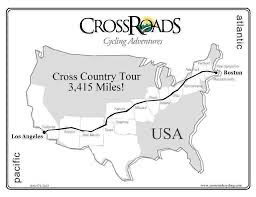
Riding x-country is a dream for many cyclists. A few years ago I realized that dream when I rode my bicycle with Crossroads Cycling Adventures 3,415 miles across the US on a paved route from Manhattan Beach in Los Angeles County, CA to Boston, MA.

Let me tell you, you haven’t lived till you’ve cycled in the 118 degree heat of the Mojave Desert:

Pedalled on the fabled Route 66:

Taken a break to do a little Standin’ on the Corner in Winslow, Arizona to commemorate the Eagles’ song:

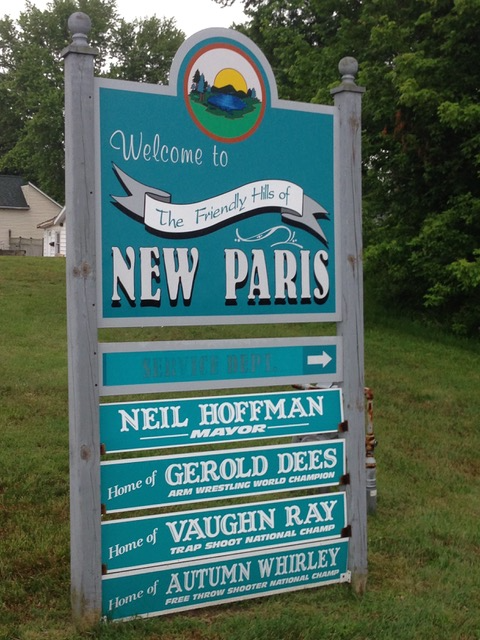
Rolled through New Paris, IN, home of a world champion arm wrestler:

and cruised along the historic Erie Canal:


A stop in Lock Springs, Missouri on my x-country ride

A lot of cyclists also know about a different route, the 4215.5 – mile TransAmerica Bicycle Trail, a classic paved route from Yorktown, Virginia to Astoria, Oregon.

TransAmerica Bicycle Trail

But I recently learned Oregon is also the terminus of another x-country cycling route, this one the much more challenging, mostly unpaved  5,273 – mile TAT (also the Trans-America Trail) . The TAT starts in the Outer Banks of North Carolina and ends at Port Orford, OR.

The TAT route across the United States

Sam Correro, a motorcyclist, originated and mapped out the TAT and most of its users are still motorcyclists, but bicyclists are increasingly making their way across America on the route as well.

Instead of sticking to paved roads, the TAT follows mostly dirt, gravel and forest roads, jeep trails, and sort-of-paved backroads. 

The Adventure Cycling Association, a non-profit member organization I’m a member of that is focused on travel by bicycle, recommends riding the TAT east to west. Either way, the route is more challenging and remote in the West, with fewer towns, some as far as 160 miles apart.

When cyclists on an east-west trip hit Port Orford, they usually head first to Battle Rock Beach, a bit south of downtown.

Most exuberant riders celebrate their accomplishment there by dipping their front wheels into the Pacific Ocean, a long-established tradition of x-country cyclists.

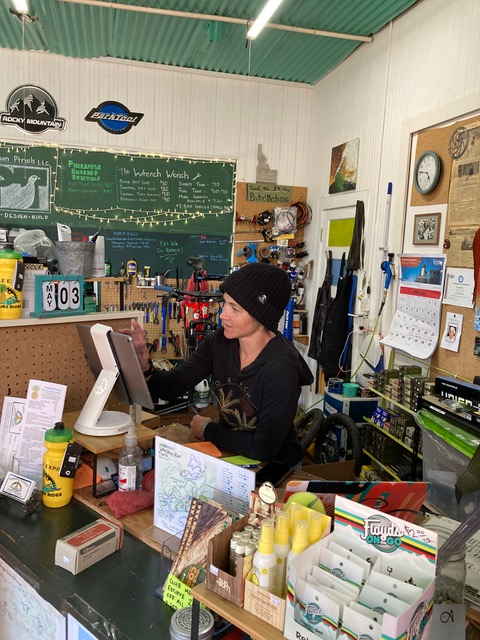
The Pineapple Express cycling shop in Port Orford is often the next stop for finishers. “We do see cyclists, but the TAT can be such a tough trail we probably see more motorcylists,” said Erin Kessler, the shop’s owner and mechanic.

Erin Kessler, owner, at her Pineapple Express cycling shop in Port Orford

Kessler moved to Port Orford from Palmer, Alaska in 2017. She initially established Pineapple Express as a fat bike rental and tour company. Then, seeing the need for a brick-and-mortar bicycle sales and repair business, she opened the current shop on Oregon St. (Hwy 101).

Sarah Swallow, of Durango, CO, who has ridden the TAT on her bicycle with her husband, Tom, described the route for Adventure Cycling.

The TAT begins in the Outer Banks of North Carolina, she said, and travels west across coastal Carolina and over the Great Smoky Mountains. From the Smoky Mountains, the route follows the backroads of the lush, humid river valleys and forests of southern Tennessee and northern Mississippi. 

The route travels over the Mississippi River and into the rugged Ozark Mountains of Arkansas before it begins an ascent through the prairie grasslands of northern Oklahoma and the No Man’s Land of the state’s remote panhandle. 

The route then travels through northeast New Mexico before navigating northwest into the Rocky Mountains and over the high alpine passes of the San Juans. The red rocks of Moab lead to a long stretch across the high desert of Utah, the Great Basin of Nevada, and eastern Oregon.

The route finally leaves the desert and drops into the greener land of Surprise Valley, California, over Oregon’s Cascades and to Battle Rock Beach.

Sarah and Tom Swallow reviewed their trip in a video on PathLessPedaled.com

If you’re looking for an exciting x-country bicycle trip, try the TAT. It’s a long, challenging ride, but as Tom Swallow said, “If it’s fun, it’s easy.”

Not ready for a x-country ride yet? Stick to Oregon.

Oregon was the first state to develop a statewide Scenic Bikeway Program in 2009. According to Travel Oregon, the program now consists of 17 designated bicycle routes that showcase Oregon’s breathtaking landscapes, cultural treasures and western hospitality.

One of these routes is the 61 mile Wild Rivers Coast Scenic Bikeway which starts and ends at Battle Rock City Park in Port Orford.

“Scenic Bikeways are Oregon’s best-of-the-best bicycle rides for exploring this beautiful state,” says Travel Oregon.

By the way – I just learned about another challenging long-distance cycling route, the Eastern Divide bikepacking route that stretches 5,900 miles from Cape Spear, Newfoundland to Key West, Florida. a meandering chain of dirt roads, pavement, and singletrack first imagined back around 2014 or 2015. Check out this story by a fellow named Eddie O’Dea who in September 2022 was attempting to Become the first to bikepack the entire route.

In Oregon, Being on Time is Now Racist

I don’t know whether to laugh or cry.

On July 1, 2022, Danielle Droppers, MSW, (she/her), Regional Health Equity Coalition Program Manager with the Oregon Health Authority, emailed that a scheduled conversation between OHA officials and members of the public wouldn’t take place as planned.  No special news there. 

But read her tone-deaf reason:

“Thank you for your interest in attending the community conversation between Regional Health Equity Coalitions (RHECs) and Community Advisory Councils (CACs) to discuss the Community Investment Collaboratives (CICs). In being responsive to partners from across the state, we’re hearing the liming of this meeting is not ideal and that people would like more time to prepare for this important conversation.
We recognize that urgency is a white supremacy value (emphasis added) that can get in the way of more intentional and thoughtful work, and we want to attend to this dynamic. Therefore, we will reach out at a later date to reschedule. Thank you so much for your patience, care and understanding.”

“…urgency is a white supremacy value…”?

“The KKK would unironically love this explanation,”  commented a July 8 post from Common Sense with Bari Weiss.

I guess even Alice’s White Rabbit, “I’m late, I’m late! For a very important date! No time to say ‘hello, goodbye,’ I’m late, I’m late, I’m late!,” was a racist.

By the way, Droppers is the same woman who resigned from the Portland Police Bureau’s Training Advisory Council because, she said, it had not responded promptly to a council proposal. “We’re getting untimely responses to our recommendations,” she told The Oregonian newspaper. “There’s a level of frustration.”

Droppers’ LinkedIn account says she has a Bachelor of Arts (BA) in Sociology from California State University Bakersfield and a  Masters degree in Social Work (MSW) from Portland State University. Where do educated people like her get this stuff?

Adding insult to injury, Reason magazine,  an monthly American libertarian publication, disclosed that a county health official responded to an inquiry about the email by citing a link that redirects to a website that purportedly identifies aspects of white supremacy culture.

The website, Reason noted, was “conceived and designed” by Tema Okun, a white antiracist educator who has popularized the idea that several benign and widespread traits are actually characteristic of white supremacy. Among these are preferring quantity over quality, wanting things to be written down, perfectionism, becoming defensive, and yes, possessing a sense of urgency.

“The characteristics…are damaging because they are used as norms and standards without being pro- actively named or chosen by the group.,” Okun has written. “They are damaging because they promote white supremacy thinking. 

So now, in Oregon at least, being on time is racist. 

Is It Time To Bring Back “Bum”?

On June 17, Portland’s alternative weekly, Willamette Week, posted a story titled, “Tires Slashed, Mirrors Shattered Along Laurelhurst Street Where Tensions Between Neighbors and Houseless Residents Continue to Escalate.” 

“Houseless residents”? 

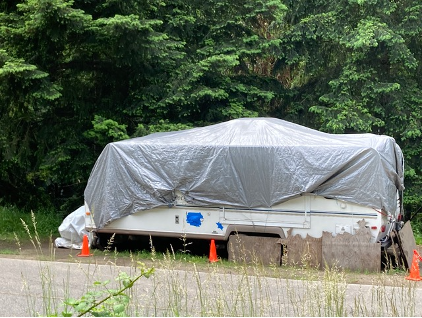
How did the media and much of liberal Portland get to the point where people who slash tires, shatter car mirrors, rip out landscape lights, overturn trash and recycling bins, destroy landscaping and damage parking strip trees are simply described as “houseless,” as though that’s their defining characteristic? 

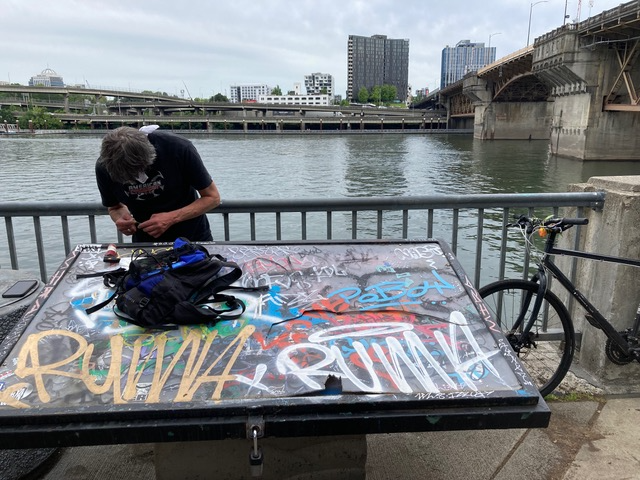
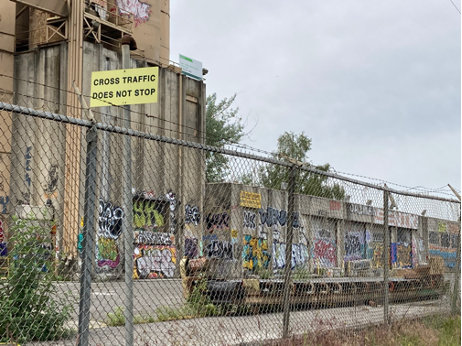
How did we get to the point where people doing this:

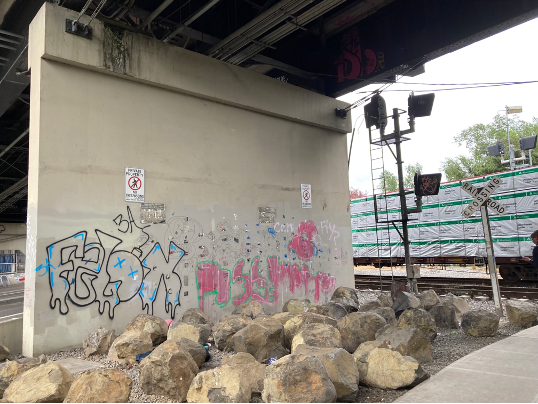
or this:

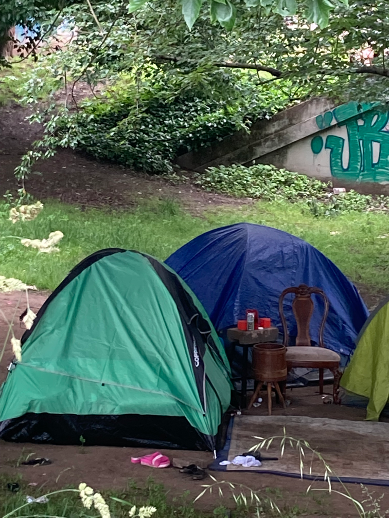
or this:

are excused because they are “homeless” or “houseless” or some other insipid term? That’s just plain criminal.

Some would say calling some people bums is offensive, callous and unfeeling, that it’s not “fair” to lump people together for any reason.

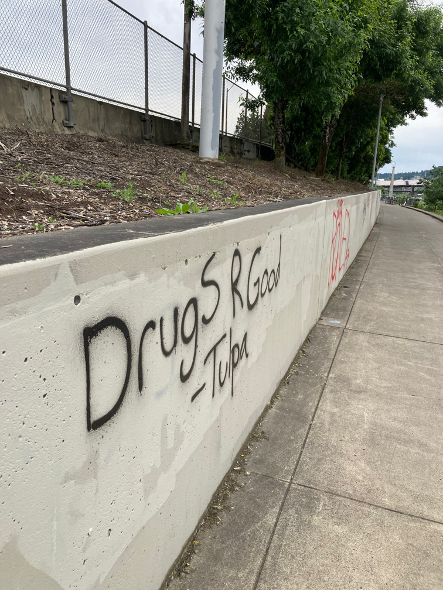
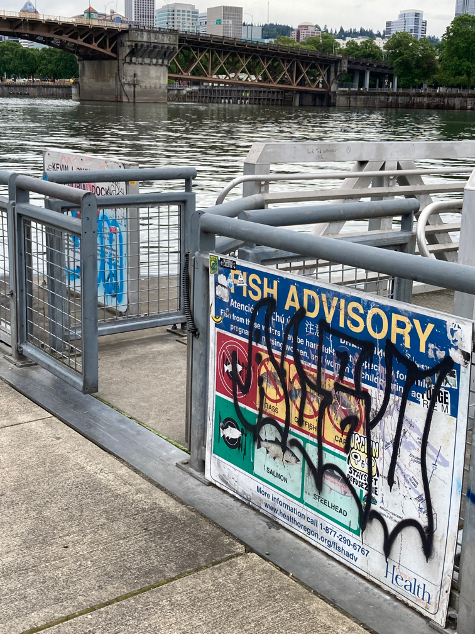
Being homeless or houseless should not be a free pass to a different set of behavioral expectations. Being homeless doesn’t give somebody license to break into a small business, deface property with graffiti, shoot at each other and unsuspecting pedestrians, bury sidewalks and parkland under trash and garbage, pollute waterways , steal and chop up bicycles and cars, openly sell and buy drugs, assault  random passers-by and litter private properties with discarded syringes.

On June 20, KGW8 television reported on incidents at a tent site on the corner of Southeast 33rd Avenue and Powell Blvd. in Portland next to Grover Cleveland High School’s track and sports field. 

“We live in a war zone basically and there’s nothing I can do,” said Elias Giangos, who said he’s lived in the neighborhood for the past seven years. He and his wife plan to move out at the end of the month. Giangos said he was assaulted multiple times by those living at the campsite. Scars from the time he was stabbed by someone living at the campsite disfigure his left arm.

“Even when I was getting assaulted, we called the police, there’s no response,” he said.

Things recently got so bad with the so-called homeless around Multnomah County’s Gladys McCoy Building in Portland across from Union Station that the county hired a firm to assess the risks to county employees and recommend responses. 

According to the Physical Security Vulnerability Assessment of the area in and around Multnomah County’s Gladys McCoy Building prepared by Eric Tonsfeldt / Operations Manager – Foresight Security Consulting, “The density of unsanctioned homeless camping immediately around the McCoy Building represents the most immediate, consistent, and palpable threat to the safety and security of the employees and contractors in the McCoy Building.”

“The building is currently surrounded by ongoing, frequent drug abuse and distribution, violence, and aggression within dense areas of unsanctioned houseless camping.,” the report said. 

The report said the following crime occurred just within the 1/8-mile area centered on the McCoy Building between 7/19/2020 and 7/18/2021: 33 assaults, 79 instances of larceny, 7 instances of vandalism and 35 drug/narcotics offenses.

Those aren’t the to-be-ignored actions of “the homeless.” They’re the actions of vagrants, malcontents, addicts, crooks, criminals….bums.

.

Coming Soon: The Museum of Me

In another bow to ethnic division, on June 13, 2022, President Biden signed into law a bill (H.R.3525) authorizing a commission to build a possible National Asian American and Pacific Islander (AAPI) museum in Washington, D.C.

Introduced by Rep. Grace Meng (D-New York) in May 2021, the bipartisan bill cleared the House on April 26 and the Senate on May 18, both by unanimous consent.

The signing was couched as a way to counter Asian Americans and Pacific Islanders remaining on the margins of American education, with little mention in classes beyond the topics of Pearl Harbor, immigration and the U.S.’s territorial interests in the Pacific. A museum would be key to combating the stereotypes and misconceptions that drive anti-AAPI discrimination, supporters say.

If built, an AAPI Museum would follow on the National Museum of African American History & Culture, which opened on the National Mall in Washington, D.C. in 2016.

It would also supplement the National Museum of the American Latino. Legislation calling for the Smithsonian to establish that $800 million dollar museum passed in Dec. 2020.  “The new museum will be the cornerstone for visitors to learn how Latinos have contributed and continue to contribute to U.S. art, history, culture, and science.,” according to the Smithsonian. “Additionally, it will serve as a gateway to exhibitions, collections, and programming at other Smithsonian museums, research centers, and traveling exhibition services.”

At the rate things are going, today’s pandering politicians, who, as Blake Smith, says, eagerly “offer cultural victories instead of substantive ones,” will eventually advocate the creation of museums for every single ethnic group in America. Where they will be put in an already crowded mall is unknown. 

Some might argue that recognition of America’s diversity through such museums is a good thing. I’d offer a “Yes, but”… There’s no question that education about our multifaceted country can combat stereotypes and misconceptions, but excessive focus on identity is not such a good thing when it exacerbates divisiveness and encourage a splintering of the populace.

Oregon’s new K-12 Ethnic Studies standards, for example, were well-intentioned, but are a prime example of identity politics run amok. 

Kindergarten Standards, for example, include the following: *Describe how individual and group characteristics are used to divide, unite and categorize racial, ethnic, and social groups” and *Develop an understanding of one’s own identity groups including, but not limited to, race, gender, family, ethnicity, culture, religion, and ability.” Good grief!

Colt Gill, the Director of the Oregon Department of Education, clearly sees the K-12 education universe as nothing more than an assemblage of distinct and maligned minorities. This is the kind of identity politics that foments perilous division of our state and our country. Rather than emphasizing common values and interest, Gill’s identity politics stresses differences and creates a feeling of ‘zero-sum’ competition between groups. 

One problem with this kind of identify politics is that it leads to even more minority designations. “Once identity politics gains momentum, it inevitably subdivides, giving rise to ever-proliferating group identities demanding recognition,” says Amy Chua in Political Tribes.

And that leads to an AAPI Museum.

As for highlighting Asian Americans with a new museum, one problem is they are far from a monolith. Instead, they have a complex history and cultures.  Even the term “Asian American” encompasses dozens of ethnic groups of Asian descent. Just Southeast Asians, for example, includes Filipino, Vietnamese, Cambodian, Thai, Hmong, Laotian, Burmese, Indonesian and Malaysian. 

 An analysis from Common App, a nonprofit that allows prospective students to apply to more than 1,000 member colleges using one application, noted that the term Asian American can refer to around 50 ethnic groups. “While Asian American was a term established by activists in the 1960s as a means to build political power, it’s also been criticized for obscuring the immense diversity among those it purports to cover…,” notes a Vox article, part of an Asian American identity series.

The analysis also points out a “prominent shortcoming” of the “Hispanic” category for completely concealing the racial identities of its members. The analysis found that, in 2021, half of the applicants identified as white.

What are craven politicians going to endorse next? A German Museum and an Irish Museum? The high immigration numbers in the 1800s were largely fueled by Irish and German immigrants.  A Hungarian Museum? The Hungarian revolution in 1956 led to a burst of Hungarian refugees coming to the United States, including some families who settled in my hometown in Connecticut. Maybe an Eastern European Museum?

The 1959 Cuban revolution drove hundreds of thousands of Cubans to the United States. Given their concentration in Florida, Gov. Ron DeSantis and other politicians seeking the Cuban vote could probably be counted on to endorse a Cuban Museum on the National Mall.

The way things are going, we’ll end up with a Museum of Me. Or a Museum of You.

Crypto Corruption: A Campaign Finance Cover-Up in Oregon

Like the notorious Anna Delvey, who came out of nowhere to seduce gullible New Yorkers, Carrick Flynn emerged from the ether in February 2022 to announce he was running in the Democratic primary for Oregon’s new Congressional District 6 seat. 

In the following months it came out that his biggest financial backer was a political action committee, Protect Our Future PAC, funded largely by a crypto billionaire, Sam Bankman-Fried, a 30-year-old American “Master of the Universe” who lives in the Bahamas. 

Then, late in the race, the Justice Unites Us PAC, which said it was all about mobilizing Asian voters, pumped $846,000 in independent expenditures Flynn’s campaign, a white guy if there ever was one. Justice Unites Us identified itself online as “A project of the Family Friendly Action Fund, a section 50©4) social welfare organization.”

“AAPI people are literally under attack,” says the PAC’s website. “We need to build political power and ensure our voices are heard in the political process.”

Who was behind the Justice Unites Us PAC? Oregon voters didn’t know. 

Like pop-up stores that show up during the Christmas holidays, the PAC only popped up on March 22, 2022 (FEC Committee ID #: C00810606). In its report to the FEC for the first quarter of 2022, the PAC reported raising and spending zero dollars. After the end of the quarter, it disclosed it had disbursed $846,581.14 on April 5, 2022 for “canvassing” in support of Flynn.

On April 15, 2022, the PAC filed paperwork with the Federal Election Commission so it could delay filing its next report and identifying its donors, until after the May 17 primary:

Flynn lost the race, but only now do we learn that every single penny of  the money Justice United donated to Flynn’s campaign came from a donation Sam Bankman-Fried’s Protect Our Future PAC  made to Justice United.

Why Bankman-Fried felt this subterfuge was necessary is unclear, since he was already publicly identified as the man behind Protect Our Future. Whatever his reasons, it allowed his money to hide behind campaign finance reporting rules and prevented Oregonians from full knowledge of Flynn’s backers.

Supposedly, Flynn’s campaign was unaware of the subterfuge, just as supposedly, Protect Our Future didn’t coordinate with Flynn’s campaign in producing a barrage of radio, television and digital ads, lawn signs, direct mail, and get-out-the-vote phone calls.

Voters deserve better. 

Portland Public Schools: Enrollment Down/Spending Up

Public school enrollment is plunging in Oregon and across the country. The New York Times calls it “a ‘Seismic Hit’ to Public Schools, “supercharged” by the Covid-19 pandemic. 

Enrollment at the country’s public schools have declined by at least 1.2 million students since 2020, according to a recently published national survey.

In 2016, PPS said, “Based on demographic studies conducted by Portland State University, it is anticipated that enrollment will level off at about 54,383 students by the 2030/31 school year under the PSU Medium Growth Scenario .”

Oh well.

Overall enrollment in Oregon has declined by almost 30,000 students since 2019-2020, slipping from 582,661 in 2019-2020 to 553,012 in 2021-2022. Oregon’s experience has generally followed national trends which are showing enrollment losses in city districts and growth in rural, suburban and town districts, according to the Burbio school tracking site. 

Some of the enrollment declines are likely due to parents frustrated with remote schooling, some to frustration with curriculum and “woke” instruction. Declines may also be attributed to economic dislocation of families, a decision that home schooling or charter schools were simply preferable or simply demographic changes. 

Portland Public Schools, the state’s largest district, is seeing the largest enrollment declines. Total enrollment in the district has dropped from 48,559 in the 2019-2020 school year to 45,123 in the 2021-2022 school year. District officials are projecting total enrollment of 41,723 in the next school year, a decline of another 3,400 students.

And yet, the Portland Public Schools budget keeps growing.

On May 24 2022, the Portland Public Schools board passed $1.89 billion budget for the 2022-2023 school year, This compares with a $1.5 billion budget for the 2018-2019 school year, when enrollment totaled 48,677 students, 6,954 more than expected enrollment of 41,723 in 2022-2023.\

Portland Public School central staff has risen 67% since 2017.  Elizabeth Thiel, Portland Association of Teachers President said in The Oregonian, “Since 2017, for example, there has been a 67% increase in the number of academic administrators in the central office. Over the same period, the central office budget has grown twice as fast as what PPS spends on frontline educators and support staff who deal directly with students, based on Portland Association of Teachers’ analysis of PPS’ budget documents.”

On May 25, OPB reported that after the school board’s budget vote, Superintendent Guadalupe Guerrero,  board members, teachers, and the few parents remaining at the end of the meeting all agreed on the need to head down to Salem next year to lobby the legislature for more school funding.

More. Ever more.

High Interest Rent-A-Banks Are Abusing Oregon Borrowers

I still remember a conversation I had a number of years ago with a Starbucks barista in Hillsboro who told me she was paying 28% interest on a loan for a car she’d just bought from a local dealer. I was appalled.

Some Oregonians are being victimized much worse than that today.

Oregon is one of eight states that allow payday loans and have banks that charge as much as or more than state-licensed payday lenders, according to an analysis just-released by The Pew Charitable Trusts, an independent non-profit that aims to serve the public interest by improving public policy, informing the public, and invigorating civic life.

Oregon laws limit payday loan charges, but PEW reports that some payday lenders are partnering with several state-chartered banks supervised by the Federal Deposit Insurance Corp. (FDIC) under so-called “rent-a-bank” arrangements to issue loans with prices that exceed these limits. The banks originate the loans on the lenders’ behalf.

The Federal Deposit Insurance Corp. supervises the six banks known to  be having these arrangements, some of which have annual percentage rates that typically range from the 90%s to the low 200%s. —rates that are much higher than what banks usually charge or that the laws of many borrowers’ states permit. 

The PEW analysis cited a situation in Virginia where a car title lender makes loans that it contends do not have to comply with Virginia law because they are originated by a Utah-based bank. This lender issued a three-year, $2,272 loan with an annual percentage rate (APR) of 98.7%, and $4,867 in finance charges. That meant the borrower repaid $7,139 on a $2,272 loan.

According to the National Consumer Law Center, cited by PEW, a business called OppLoans  (aka OppFi) uses FDIC-supervised FinWise Bank (Utah), Capital Community Bank (CC Bank) (Utah), and First Electronic Bank, a Utah industrial bank, to make installment loans in Oregon of $500 to $4,000 at 160% APR.  

Here’s what an Oregonian taking out a $4000 five-year car loan from OppLoans with an annual APR) of 160% would pay back:

Monthly Payment: $533.63

Total Paid: $32,017.80

Total Interest: $28,017.80

Figuring out what a loan will cost each payment period and over time can be complicated.

NetCredit (“We’re committed to helping our customers find success in their financial journeys.”), a subsidiary of Chicago-based Enova International, Inc. (NYSE: ENVA), offers a maximum loan of $5000.

Its website says 10% of each Cash Advance is deducted from the amount requested before the advance proceeds are delivered to the borrower.

Each billing cycle, the borrower’s minimum payment includes 5% (if payments are made monthly) or 2.5% (if payments are made bi-weekly or semi-monthly) of the cash balance, plus a Statement Balance Fee based on the cash advance balance. A fee table spells out how the Statement Balance Fee is assessed and the corresponding amounts.

If a statement shows a Cash Advance Balance of $1,000.01 – $1,100.00, the fee is $55.00 if the borrower pays bi-weekly or semi monthly and $110 if the borrower pays monthly. If the statement shows a Cash Advance Balance of $4,800.01 – $4,900.00, the fee is $245 if the borrower pays bi-weekly or semi monthly and $490 if the borrower pays monthly.

Each Billing Cycle, the minimum payment will include a portion of the Cash Advance Balance plus a Statement Balance Fee based on the Cash Advance Balance.

You try to figure it all out.

“Competition in markets, including credit markets, typically drives down costs,” the Pew analysis says. “However, Pew’s prior research has found that people seeking payday loans focus on how quickly they can borrow, how likely they are to be approved, and the ease of borrowing. Payday lenders therefore tend to compete on these factors rather than price because their customers are in dire financial straits. Borrowers’ low sensitivity to cost when they are in distress explains the lack of price competition in payday lending.”

The aggressive loan practices of rent-a-banks has, logically, led to high default rates.In June 2022, The Pew Charitable Trusts analyzed the public filings of three large, publicly traded payday lenders that issue a high share of rent-a-bank loans and found that they had annual loss rates in 2019 averaging 50%. That is not unusual for a payday lender, but it is a startling figure for a bank. The same three lenders’ filings released in the fall of 2022 show that their  annual loss rates are now averaging 55%, despite other bank-issued loans averaging 2% or lower over the same time.

PEW is adamant that action is needed to shut down these abusive loans.

“As the Office of the Comptroller of the Currency (OCC), FDIC, and other federal banking regulators consider new guidance for how banks can better manage third-party risk, they should take this opportunity to scrutinize the high-cost lending partnerships among a few of the banks regulated by the FDIC,” Alex Horowitz and Gabe Kravitz with The Pew Charitable Trusts’ consumer finance project said in a Feb. 2022 Opinion piece in the Hill.

They’re right on the money. These exploitative high-cost rent-a-bank loans need to end.


Here’s a Tip For Oregon Businesses: Stop Demanding Tips

The consumer-price index rose 8.5% in March from a year earlier, the fastest annual pace since December 1981, the Wall Street Journal reported on April 20. That’s the figure most consumers think of when they worry about rising prices.  But there’s another number too often ignored – the cost of tips and the insidious spread of tip expectations.

In a recent stop at a local Burgerville, I encountered a Uniden digital payment device with tip options: 15%, 18% 20%, custom and no tip.

The evil digital tip trap

At another burger place, their digital payment device presented me with tip options of 15%, 20% and 25%.

A 20% or 25% tip, where there used to be no tip expectation at all, is equivalent to a 20-25% price increase on top of any inflationary increase in the price of the food itself. 

Tip requests on electronic devices are becoming so pervasive that they are starting to feel like demands, particularly when the transactions are occurring under the watchful eyes of employees. 

As consumers are becoming more price sensitive over a host of goods and services, the reality that tips are increasingly becoming part of the price is raising concerns.

“Seems like anyone doing anything for you these days, even if it is in the scope of their responsibilities/expectations, has their hand out,” a recent commenter on a Tripadvisor Forum complained. “You don’t tip at a fast food restaurant,” another commenter said emphatically.

Consumer concerns are growing, particularly in states like Oregon where workers, such as servers, must be paid the state’s minimum wage ($14 in the Portland Metro Area, one of the highest in the United States according to the National Conference of State Legislatures) even if the worker also receives tips.

Regular minimum wage laws often don’t apply to restaurant workers, such as servers, who earn a lot of their income from tips. Federal law stipulates that employers can pay tipped workers as little as $2.13 an hour (an amount unchanged since 1991), so long as their tips bring them up to at least the federal minimum wage of $7.25. 

Shoppers are generally sympathetic to the plight of low-wage workers, but public resentment seems to be growing when tips are expected in food service and other situations where a worker is also guaranteed earning an elevated minimum wage or in situations where tip expectations are new. We don’t generally tip retail workers in a mall who are also guaranteed a respectable minimum wage in Oregon, for example.

A recent New York Times article about tipping generated a lot of comments, many of which lamented the seeming spread of tipping expectations to multiple businesses and regardless of the amount of actual service by an employee:

“Travelling to the USA each year from Europe I notice this just getting more extreme and expensive with zero additional benefits to the consumer. The next screen flip I get, I would like to flip my own card with discount options for the proprietor that is forcing us to shoulder his staffing costs.”

“I hate the companies that use payment systems like Square, and I particularly hate the companies, like Square, that have brought this new dystopian world upon us. Down with tipping!”

“Collectively, we cringe when the iPad is swiveled into our face at the coffee counter or deli; we know it is extortion rather than appreciation for services rendered.” 

Enough!