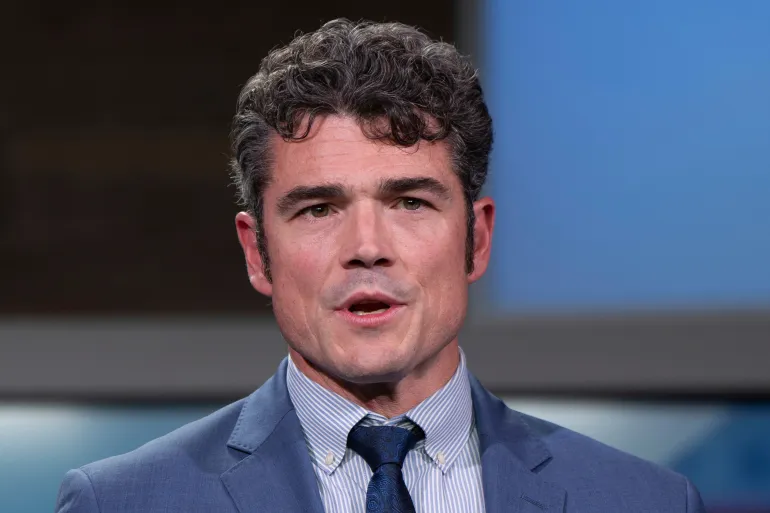
Today’s resignation of National Counterterrorism Center Director Joe Kent, a two-time failure as a Republican primary candidate for Congress in Washington State, is perplexing.
Kent said he couldn’t back Trump’s Iran war “in good conscience” because the country “posed no imminent threat” to the United States. and accused Trump of starting the war because of “pressure from Israel.”
Some people who observed Kent during his political campaigns must be confused.
In September 2022, he blasted out a statement in strong support of Israel.
“Joe Kent Statement onSupport for Israel and Opposition to Antisemitism DATE: September 16, 2022
Israel: A Mutually Beneficial Ally and Close Friend
The United States and Israel share common enemies in the Middle East, from terrorist groups like Hamas and Hezbollah to the totalitarian government of Iran,” Kent said in a position paper. “Building close economic, diplomatic, and military relations is in the United States’ best interests and something I will advocate for as a member of Congress. One of the best things that President Trump did for the security of the United States and of Israel was terminating President Obama’s Iran Deal. I support working with Israel to apply maximum pressure against Iran’s government and its proxies, Hamas and Hezbollah, and to prevent Iran from ever acquiring a nuclear weapon.”
Kent even went so far as to say that if elected he would “introduce legislation to strip the most vile antisemites in Congress from their committee assignments.
Even back then, however, some were wary. Jewish Insider, a Washington, D.C.–based digital news outlet and newsletter covering U.S. politics, foreign policy, and Jewish affairs, warned that Kent “has pushed an isolationist foreign policy vision, has otherwise argued in favor of scaling back U.S. involvement in the Middle East” and “has been critical of the pro-Israel lobbying group AIPAC and said that candidates who accept its support cannot serve the needs of constituents.”
The fact is U.S. citizens do not have to carry proof of citizenship and you have the right to refuse to show documents. In my opinion, if Americans start wearing their passports to ward off seizure by ICE agents, they are ceding to ICE unprecedented and unjustified authority.
South Africa remembers that lesson.
Pass laws in South Africa were the cornerstone of apartheid, laws restricting the movement, employment, and residence of Black people. The laws created, in effect, an internal domestic passport system aimed at restricting movement. Black people over 16 were required to carry a passbook at all times, with non-compliance leading to arrest, fines, or imprisonment. Blacks were routinely humiliated by police who treated them as second-class citizens who did not belong.
A Black South African with a pass
A pocket-sized document known as a reference book, or pass., was an everyday threat for Blacks. The book contained a condensed history of the carrier’s life‐including birthplace, legal places of residence and employment, tax payments and marital status. The details, along with the fingerprints of every adult Black, were recorded and saved by the government.
“Now, many people here are asking a question that is a novel one in America: Is it safe to leave home without proof of citizenship,” the New York Times story said.“Has the United States turned into a show-me-your-papers nation? For many Minnesotans, the answer has been an unequivocal yes.”
The defiant answer should be an unequivocal NO!
The catch-22, of course, is if you refuse to provide proof of citizenship or are suspected of being undocumented, the result may be your detention by ICE until your status is verified. Joseph Heller’s book may be an absurdist comedy, but you may find yourself in a cold, filthy ICE detention center,
But, as happened in the 1950s and 60s, when civil rights activists were arrested for sit-ins, marches, and demonstrations, victory will eventually be yours.
“Last year’s One Big Beautiful Bill Act helped roughly triple the ICE budget, allocating $45 billion for building new immigration centers and hiring 10,000 new ICE agents. One dispiriting lesson of the imperial boomerang is that, once. bought and paid for, structures of intimidation and oppression tend to endure.” David Wallace-Wells, 1/25/2026
Update, 1/30/2026 – The Washington Post reported that local officials are raising logistical and humanitarian concerns in 23 towns where U.S. Immigration and Customs Enforcement plans to convert industrial buildings into detention centers that combined would hold up to 80,000 people. ICE has offered few details about its plan since The Washington Post first reported on it in December 2025. One detention center the Department of Homeland Security wants to open would be a more than 1 million sq. ft. industrial warehouse in Social Circle, Georgia that would be retrofitted to hold 8,500 detainees and hundreds of staff, more than the city’s total population. The City Manager, Eric Taylor, has said the city does not have the water or sewer infrastructure to support the facility. Unaddressed is the question of why the government needs such huge detention facilities when it says it’s objective is to deport people.
Update, 2/12/2026 – It’s not just more detention centers coming down the pike. Wired reported that ICE and DHS have quietly carried out a months-long expansion, securing more than 150 new leases and office expansions across nearly every state, often in or near major metro areas. Many new facilities sit near schools, medical offices, and places of worship, with DHS pressing the GSA to bypass standard procurement rules and hide lease details under claims of “national security.”
Update, 2/21/2026 – Funding for the Department of Homeland Security expired has expired and Democrats have made 10 demands to rein in Trump’s surge of deportation forces into U.S. cities. One of those demands is “Compliance with Basic Detention Standards and Oversight of Facilities.” Think about it. Incarceration facilities are already legally required to be humane and hygienic., but as Radley Balko has reported on SubStack in The Unpopulist, there is a growing pile of reports from attorneys, journalists, human rights groups, judges, and others about shocking, inhumane conditions at facilities around the country.
Update, 3/7/2026 – So far, DHS has completed the purchase of 10 of the 23 detention center properties it initially pursued, spending more than $890 million, according to deed records or statements by local officials. Efforts to acquire 10 other properties — in Indiana, Minnesota, Mississippi, Missouri, New Hampshire, New York, Oklahoma, Tennessee, Texas and Virginia — have failed, according to statements by local officials or building owners.
In the years preceding his death in 1875, George Templeton Strong, a prominent Wall Street attorney, kept a voluminous journal of his life and times. In April 1865, near the end of the American civil war, he wrote, “These four years have reduced me to something like pauperism, But I am profoundly grateful for them nevertheless. They have given me — & my wife & my boys, — a country worth living in & living for, & to be proud of.”
I can’t say President Trump’s inhumane crackdown on immigrants and harassment and murder of American citizens in the past year have given me a country worth living in, living for and to be proud of.
Not while the Trump administration promotes hatred of “the other”. David Masciotra. David Masciotrar ecently wrote in the Washington Monthly, “Through (Elie) Wiesel’s story and the stories he told and created, two truths become inescapable. The first is that it is naïve, if not catastrophic, to underestimate the power of hatred. “
I doubt 7-year-old Diana Crespo, a second grader at Gresham’s Alder Elementary School, and 5-year-old Liam Ramos, the bunny-hatted child detained by immigration agents in Minneapolis, see America as a country worth living in and living for and to be proud of either. They are both being held at the U.S. Immigration and Customs Enforcement’s South Texas Family Residential Center in Texas.
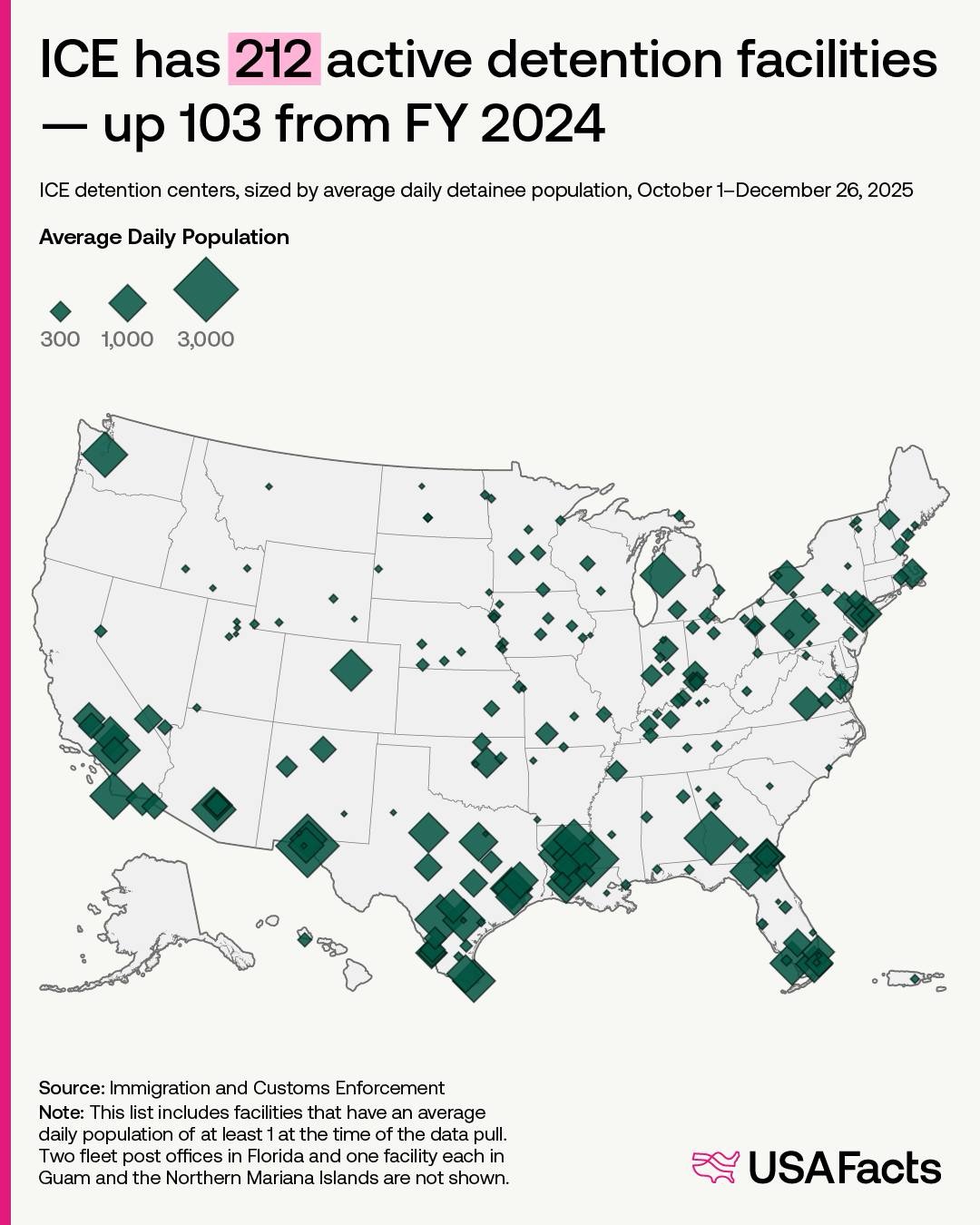
U.S. Immigration and Customs Enforcement has spread its detention center tentacles across the United States:
Oregon Public Broadcasting (OPB) reported on January 29, 2026 that ICE is planning another detention center in Newport, Oregon as soon as May.
The Atlantic reported that the warehouses expected to be detention centers could become white elephants if there’s a change in ICE policies and the detainee population decreases. “If the goal is to not have endless illegal immigration, those centers will be obsolete in three to five years,” a longtime ICE official told me. “The amount of money going into them is abhorrent.”
The spread of these. detention centers reminds me of another brutal time.
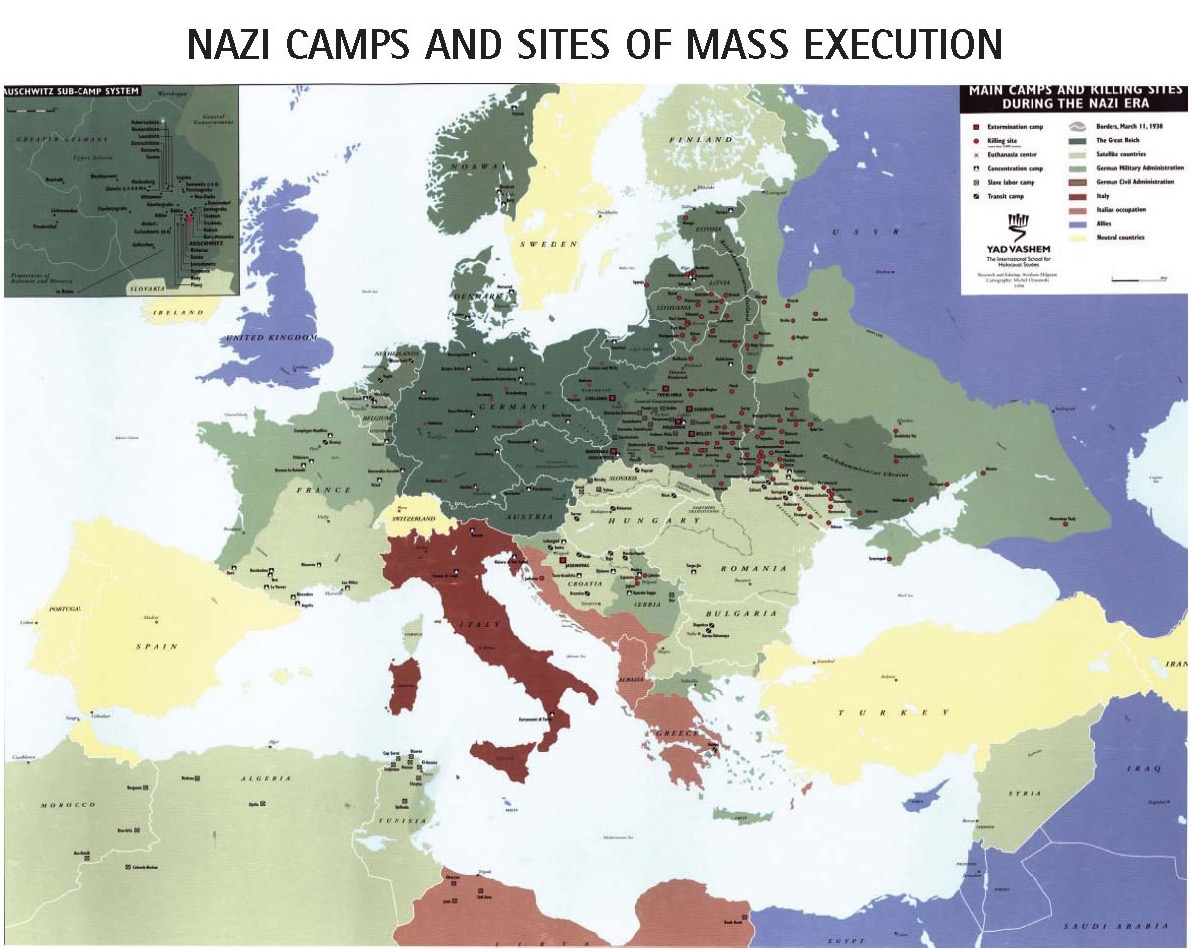
Most of us know the names of a few Nazi concentration camps, like Dachau, Auschwitz and Bergen-Belsen, where Anne Frank died. But they were part of a massive complex of more than 850 ghettos, concentration camps, forced-labor camps and extermination camps CNN has identified. They stretched from France and the Netherlands in the west to Estonia, Lithuania and Poland in the east that the Nazis established during the 12 years Adolf Hitler was in power. Their purpose — to segregate , oppress and persecute their opponents.
Like the ICE detention centers, the Nazi system started small and then metastasized like a cancer, according to the Wiener Holocaust Library.
Initially there were so-called SA camps. (Sturmabteilung (SA), or “Brownshirts,” was the Nazi Party’s original paramilitary wing). After the Night of Long Knives in 1934, the SS and Heinrich Himmler shut down the SA camps and consolidated control of all camps in Germany. Himmler and the SS used Dachau, an original SS camp, as a blueprint for all camps. From 1934 onwards, the SS developed and then operated the camp system, which lasted until Germany’s defeat in 1945.
The SS started building major camps, beginning with Sachsenhausen in 1936, then Buchenwald in 1937, Flossenbürg and Mauthausen in 1938 and Ravensbrück for women in 1939. Political prisoners were the first inmates. Then people with previous criminal convictions. Next were the so-called “asocials”, such as Roma, homosexuals, prostitutes, the homeless and the “work-shy”. The mass imprisonment of Jews began in 1938 after the Anschluss and Kristallnacht.
As the Second World War began in earnest, foreign citizens from newly occupied countries such as Czechoslovakia and the Netherlands began to be imprisoned , followed by Soviet prisoners of war (POW’s) after the invasion of the Soviet Union in June 1941.
Those who believe U.S. Immigration and Customs Enforcement can and will be restrained under the Trump administration might want to stop and reconsider.
With an administration where cruelty is the point, it can happen here.
There’s so much money sloshing around in American politics a lot of questionable activities get overlooked, like the sweet thing Virginia lobbyist Robert J. “Rob” Catron has going on.
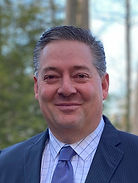
Robert J. “Rob” Catron
A native of South Florida and a graduate of Florida State University, Catron worked as Chief of Staff for Rep. Ed. Schrock, a conservative Virginia Republican, during 2001 – 2003. He later joined the Arlington, VA-based lobbying firm of Alcalde & Fay, where he’s now a Partner. According to the firm, he is “a proud veteran of the United States Army Reserve” and “has successfully managed or consulted on more than 50 winning political campaigns for federal, state and local offices”.
On December 4, 2023, Catron registered Ranger PAC, a political action committee, with the Federal Election Commission (FEC). Based in Athens, Georgia, the PAC says its mission is to support the election of “highly accomplished conservative military veterans to Congress to defend the Constitution and get America squared away”.
The focus on veterans is an exploitation of the fact that although public trust in many institutions is in retreat, the public generally still has high confidence in veterans as effective leaders in civic life.
Ranger PAC’s treasurer is Paul Kilgore, CEO of Professional Data Services Inc (PDS), a political financial consulting company in Athens he founded in 1999 that is a leading compliance firm in Republican politics. In 2024, Kilgore represented more than 157 Republican candidates.
From January 1, 2025 to November 30, 2025, Catron’s Ranger PAC raised $1,394,894.74, according to its filing with the Federal Election Commission (FEC). In the same period, it spent $1,353,836.73.
The problem is that, in a deliberate assault on trust, Catron’s Ranger PAC spent just $69,500, 5% of its total spending, on aspiring or serving politicians. That’s right, a measly 5%. The rest, 95%, went to fundraising and administrative expenses.
Although there’s no legal minimum percentage of money raised that a PAC must donate to candidates, legitimate PACs generally spend less than a quarter of their donations on fundraising, with many spending considerably less.
Charity Navigator, an independent non-profit organization that evaluates U.S. charities on their financial health, accountability and transparency, encourages nonprofits to spend no more than 30% combined on administrative and fundraising costs. Organizations earning the highest scores spend less than 10 cents to raise $1 (a 10% ratio).
In Ranger PAC’s case, it added insult to injury: 5 the 19 politicians who received donations from January 1, 2025 to November 30, 2025 weren’t even veterans.[1]
The Center for Public Integrity, a nonprofit newsroom that investigates betrayals of public trust, calls PACs like Ranger PAC “Scam PACS”. They purport to raise money for political and social causes, but spend most of the money they raise from unsuspecting donors on fundraising, salaries and overhead.
In 2015, Politico reported, for example, that a PAC called the Black Republican PAC spent less than 1 percent of the $700,000 it raised on contributions to candidates or ads supporting them, according to government filings.
The FBI warns: “Scam PACs are fraudulent political action committees designed to reroute political contributions for personal financial gain. This is a federal crime—and can be costly to victims who thought they were making legitimate campaign contributions.”
If most of the money Ranger PAC raised didn’t go to candidates, where did it go?
$19,641.81 went to Paul Kilgore’s Professional Data Services Inc for “PAC Compliance Consulting”.
Most of the rest went primarily to enriching 10 firms involved in fundraising[2] , some of them with shadowy histories.
The website for Better Mousetrap Digital, which Ranger PAC paid $25,291.33, says it “is the premier digital fundraising consulting firm for Republicans…with decades of experience spanning from state house campaigns to the White House”.
Better Mousetrap Digital’s founder is Jack Daly. The company’s website doesn’t note that in December 2023, Daly was sentenced to 4 months’ imprisonment for conspiring to (i) commit mail fraud by defrauding thousands of conservative political donors out of money and (ii) lie to the Federal Election Commission (“FEC”). He was also ordered to pay a $20,000 fine, along with two separate payments of $69,978.37 for restitution and forfeiture.
Daly emerged from federal custody, nevertheless, to re-establish himself as a top Republican Party campaign fundraiser. NOTUS reported in Oct. 2025 that dozens of federal-level Republican political committees — including the Republican National Committee, numerous congressional committees and campaign operations tied to President Donald Trump — had together spent nearly $18 million on digital fundraising, donor lists and other services from Better Mousetrap Digital.
The FBI says it is actively looking for Scam PACs that only spend money on telemarketing and junk mail. It urges Americans targeted by a scam PAC to contact their local FBI office and ask to speak to an election crimes coordinator.
Unfortunately, scam PACs have been around for a while.
“Since the tea party burst into the political landscape in 2009, the conservative movement has been plagued by an explosion of PACs that critics say exist mostly to pad the pockets of the consultants who run them,” Politico wrote in 2014. “They collect large piles of small checks that, taken together, add up to enough money to potentially sway a Senate race. But the PACs plow most of their cash back into payments to consulting firms for additional fundraising efforts.”
A POLITICO analysis of reports filed with the Federal Election Commission covering the 2014 cycle found 33 PACs that courted small donors with tea party-oriented email and direct-mail appeals raised $43 million, but spent only $3 million on ads and contributions to boost the long-shot candidates often touted in the appeals.
In 2016, two Democratic FEC commissioners, Ellen Weintraub and Ann M. Ravel, urged their colleagues to take action against scam PACs, but there’s been little follow-up. On January 31, 2025, President Trump sent a brief letter to Weintraub firing her “effective immediately” as a FEC Commissioner and Chair. Weintraub challenged her dismissal, but is no longer serving on the commission. Ravel resigned from the FEC in February 2017. Weintraub has not been replaced, denying the FEC a quorum for votes.
During 2002 – 2018, Virginia political operative Scott B. Mackenzie served as treasurer of 12 PACs that spent 68% of the money they raised on fundraising, wages and administration. But he paid a price. In 2020, a Federal District Judge sentenced him to 12 months and one day in prison for making false statements to the FEC in relation to his association with the PACs. Mackenzie also had to pay $172,200 in restitution.
“If the Justice Department was seeking to send a message to others tempted to get into the ‘scam PAC’ game, that message came through loud and clear,” said Brett Kappel, a campaign finance lawyer at the Akerman law. “These are not victimless crimes and people will go to prison for them.”
It looks like Catron hasn’t gotten that message, even though he’s been in trouble before.
In June 2021, he was indicted by a Virginia Beach grand jury on 10 counts of making false statements and election fraud. He avoided prison when he pleaded no contest to three election-related charges. The charges stemmed from a petition scandal during a Republican congressman’s ultimately losing 2018 campaign for a second term in Congress representing a coastal Virginia district. Catron was accused of being involved in an effort to get a third-party spoiler candidate on the ballot with petitions using forged signatures.
Catron received a three-year suspended sentence and was ordered to pay court costs and fines after entering the plea to three counts of neglect of election duty.
With his Ranger PAC antics, maybe it’s time to bring morally hollow Robert J. “Rob” Catron back to court.
[1] Recipients of Ranger PAC donations, January 1, 2025 – November 30, 2025
Donation Recipient
Donation ($)
Service
Matt Van Epps, Tennessee
10,000
Army
Michael Whatley, N. Carolina
5,000
Not a veteran
Ronny Jackson, Texas
8,500
Navy
Derrick Van Orden, Wisconsin
5,000
Navy
Mariannette Miller-Meeks, Iowa
5,000
Army
Zach Nunn, Iowa
5,000
Air Force
Gabe Evans, Colorado
5,000
Army
Tom Barrett, Michigan
5,000
Army
Stewart Whitson, Virginia
1,000
Army
Dan Butierez, Arizona
1,000
Not a veteran
Jen Kiggans, Virginia
5,000
Navy
Ryan Zinke, Montana
5,000
Navy
Pat Harrigan, N. Carolina
2,000
Army
Nick Lalota, New York
1,000
Navy
Ken Calvert, California
1,000
Not a veteran
Warren Davidson, Ohio
1,000
Army
Abraham Hamadeh, Arizona
2,000
Army
Randy Fine, Florida
1,000
Not a veteran
Jimmy Patronis, Florida
1,000
Not a veteran
[2] Recipient / percent of total disbursements / Total disbursement
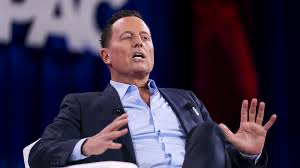
A January 2, 2026 PBS NewsHour interview with Richard Grenell, President Trump’s choice to lead the now renamed Trump-Kennedy Center was a classic lesson in evasiveness.
According to The New Yorker, Kennedy Center staff and others often liken Grenell to Grendel, the “powerful demon, a prowler through the dark” in Beowulf. In his PBS interview, he showed he has another talent.
Richard Grenell
Co-Anchor Amna Nawaz led off with a direct question, asking him to respond to a report that a number of artists had chosen to cancel or pull out of performances at the Center because of the president’s takeover of the Center’s board and the renaming of the Kennedy Center.
“Chocolate milk,” Grenell replied.
Well, not exactly.
That’s how I characterize non-answers.
Grenell might as well have said “chocolate milk” because his response completely ignored the question and immediately veered off into an allegation that NewsHour had consistently failed to cover the Center’s finances.
“At the Trump-Kennedy Center, we have 19 unions. It’s incredibly expensive to go and put on performances,” he whined. “We cannot have unpopular programming that doesn’t pay the bills.”
“How about ticket sales at the Center.,” Nawas asked. ‘Are ticket sales down? Is that confirmed or not?”
Grenell’s response. “I find it to be outrageous that PBS is not reporting on the phenomenon that arts institutions have been having for decades. Since President Trump has arrived at the now Trump-Kennedy Center, we have raised more than $130 million, blowing away all other fund-raising, and that’s corporate donors who are coming back because they trust the programming.”
In other words, “Chocolate milk”.
And so it went, on and on.
Nawas said, “Viewership for the Kennedy Center Honors were down dramatically. Does that — as a steward of this institution, does all of this, the backlash, the headlines about artists pulling out, the fact that so few people paid attention to the Honors, does that worry you?”
Grenell: “If you go to CBS, they will tell you that the CBS Trump-Kennedy Center Honors this year tied for number one in its demographic.” In other words, it did well with a specific segment of the tv audience in that time period, not total viewers.
In other words, “Chocolate milk”.
Politicians have long evaded media questions, but Trump and his minions have raised it to an art form, figuring there’s little or no downside these days to giving a word salad answer or sequeing to a completely unrelated topic.
Donald Trump himself is the role model for his administration in this behavior.
His stream-of-consciousness speaking style, involving long seemingly unscripted statements that veer from topic to topic, is a practiced deceit allowing him to avoid directly answering questions. He has referred to his meandering speaking style as the purposeful “weave”. In his case, however, it could just as well be a rambling sign of muddled thinking and cognitive decline.
Piece by piece, President Donald Trump is dismantling America’s representation and reputation around the world.
With about 80 U.S. ambassador posts worldwide already vacant, the Trump administration has abruptly recalled nearly 30 career ambassadors at U.S. embassies around the world. They’ve been directed to vacate their posts by Jan. 15 or 16, 2026. Most of the affected ambassadors are at diplomatic posts in Africa, but the removals are also impacting posts in Europe,
Africa was hit the hardest, with about a dozen ambassadors or chiefs of mission recalled from Niger, Uganda, Senegal, Somalia, Côte d’Ivoire, Mauritius, Nigeria, Gabon, Congo, Burundi, Cameroon, and Rwanda. In the Middle East, heads of mission were recalled from Egypt and Algeria. European chiefs of mission were also recalled from Slovakia, Montenegro, Armenia and North Macedonia.
A senior department official told the Journal the recall was part of a standard process to reassess ambassadors in any administration and that it’s the president’s right to ensure he has envoys in place who advance his foreign-policy agenda.
The damage done by the vacancies is compounded by the questionable quality of some of Trump’s ambassadors who are already confirmed .
For example, Herschel Walker, a former professional football player who ran unsuccessfully as the Republican party’s nominee in the 2022 U.S. Senate election in Georgia, is Trump’s s ambassador to the Bahamas. Then there’s Charles Kushner, a disbarred attorney who in 2005 was convicted of illegal campaign contributions, tax evasion and witness tampering, and who happens to be the father of Trump’s son-in-law, Jared Kushner. Charles Kushner is Trump’s Ambassador to France and Monaco. And there’s Kimberly Guilfoyle, Trump’s Ambassador to Greece. She’s a former Fox News personality and Donald Trump Jr.s ex- fiancée.
The American Foreign Service Association (AFSA) , which represents the U.S. foreign service and career diplomats, said the recall represents “a steady erosion of norms, transparency, and professional independence in the Foreign Service.”
“Abrupt, unexplained recalls reflect the same pattern of institutional sabotage and politicization our survey data shows is already harming morale, effectiveness, and U.S. credibility abroad,” AFSA said.
The United States is going to pay a steep price for President Trump’s reckless moves undermining our country’s diplomatic authority.
“Go back to where you came from”, he said to the Somali immigrants in Minnesota, employing an insulting slur unacceptable in polite society.
Last week Trump said on his social media channel, Truth Social, he’d send Somalis “back to where they came from.” Yesterday he said Somalis in the U.S. should “go back to where they came from and fix it.”
A person familiar with Trump’s plans told the Associated Press federal authorities are preparing a targeted immigration enforcement operation in Minnesota that would primarily focus on Somali immigrants living unlawfully in the U.S.
At a cabinet meeting yesterday, Trump said Somalis “contribute nothing.”
“I don’t want them in our country,” a snarling Trump told reporters. “Their country is no good for a reason. Your country stinks and we don’t want them in our country.”
I remember hearing that taunt directed at minorities by racist know-nothings in my youth in the 1950s, but I thought people had long ago been shamed from uttering it.
Trump, however, seems to enjoy denigrating “the other”.
Trump’s own Equal Employment Opportunity Commission cites “Go back to where you came from,” as an example of unlawful workplace conduct, along with the use of “insults, taunting, or ethnic epithets”.
I suppose in some respects nobody should really be surprised by Trump’s insults. That’s his modus operandi. Demean and slander his opponents, particularly those he deems not “real” Americans. And his supporters often embrace his scurrilous attacks.
He even goes after members of Congress with abandon. He has described Democratic Rep. Ilhan Omar, (D-Minn), who came to the United States from Somalia as a refugee and became a citizen 25 years ago, as “garbage.”
“We could go one way or the other, and we’re going to go the wrong way if we keep taking in garbage into our country,” Trump said. “She’s garbage. Her friends are garbage.”
And Trump’s recent explicit use of hateful speech is not original or unprecedented. It was a feature, not a bug, of his campaigns for office.
An analysis published by Presidential Studies Quarterly[1] , cited by the National Library of Medicine, concluded that “no other comparable candidate of either major US party has ever approached the level of negativity and vitriol toward racial/ethnic minorities that Trump did.”
A Washington Post column today by George Will is headlined “A sickening moral slum of an administration”.
Indeed.
[1] Çinar I, Stokes S, Uribe A. Presidential rhetoric and populism. Presidential Studies Quarterly. 2020;50(2):240–263. doi: 10.1111/psq.12656. [DOI] [Google Scholar]
State Rep. Jim Murphy says the bill was prompted by The Independent’s story about a Nebraska veteran who gave 35 times this year to Eigel’s campaign for St. Charles County executive.
_________________________
Politicians running deceptive political fundraising campaigns can’t count on hiding in the dark.
A case in point.
Earlier this year I started getting bombarded with high-intensity inflammatory emails, such as one urging me to support President Trump’s use of the Insurrection Act and another telling me, “Without mandatory voter ID in ALL 50 states, your vote will be replaced by an illegal alien”. And, of course, every email asked for a contribution.
I noticed none of the emails actually listed a political candidate associated with it, just something called Bill PAC. It turned out BILL PAC is a political action committee associated with William C. (Bill) Eigel, a conservative former state senator from the 23rd District in Missouri’s St. Charles County who’s now seeking the post of St. Charles County Executive. Some more digging revealed he’s running a deceptive national fundraising campaign targeting vulnerable seniors.
Those stories came to the attention of Rudi Keller, Deputy Editor of The Missouri Independent, a nonpartisan, nonprofit news organization covering state government, politics and policy. It’s an affiliate of States Newsroom, the nation’s largest state-focused nonprofit news organization. The Capitol Chronicle in Oregon is part of the network.
Keller took a more exhaustive look at Eigel’s BILL PAC and wrote a story that ran today in the Missouri Independent and The States Newsroom. His in-depth story further exposed the deceptive tactics of Eigel’s BILL PAC:
Former State Sen. Bill Eigel of Weldon Spring, shown in a 2024 photo, is using recurring donations from across the country to finance his bid for St. Charles County executive (Rudi Keller/Missouri Independent).
Keller exposed how people across the country, overwhelmingly seniors, are being lured into contributing to BILL PAC, unaware that it is supporting a local Missouri Republican, not a national conservative campaign.
A retired man from Reston, VA, a consistent donor to Republican state and federal candidates and committees, made an astonishing 65 separate online donations to BILL PAC, according to reports submitted to the Missouri Ethics Commission in 2025.
Keller tracked down some donors who had unwittingly committed to monthly recurring donations.
A retired woman in Texas has contributed $1,205 in 74 separate donations since December. All are about the same dates each month.
A 92-year-old Korean War veteran from Nebraska named Russell Wood, made 35 donations totaling $1,050 over the last year to Bill Eigel’s campaign for St. Charles County executive. But Wood told Keller he has never heard of Eigel or set foot in St. Charles County and had no idea he had made so many donations to Eigel’s campaign.
People running for public office at the federal, state and local level always run the risk of taking an “ends justifies the means” approach to campaigning, observes Judy Nadler at the Markkula Center for Applied Ethics at Santa Clara University.
“The conduct of the campaign itself can say a lot about the ethical principles a candidate brings to public life,” she says. That’s something Eigel, Missourians and all voters should ponder.
“We have the best economy maybe in the history of the world,”President Trump insisted during his 60 Minutes interview on Nov. 2. Oregonians and other Americans who depend on food stamp benefits under SNAP, the Supplemental Nutrition Assistance Program, likely beg to differ.
While President Trump and his entourage were enjoying an over-the-top “Great Gatsby”-themed Halloween party at Mar-a-Lago last week, millions of Americans were worrying about the loss of their SNAP food benefits. The timing could not have been more unseemly.
On. display at Mar-a-Lago. “‘She’s got an indiscreet voice,’ I remarked. ‘It’s full of—’ I hesitated. ‘Her voice is full of money,’ [Gatsby] said suddenly.” – F. Scott Fitzgerald, The Great Gatsby
President Trump’s Great Gatsby-Themed Halloween Party at Mar-a-Lago, 2025
One-sixth of Oregon’s population. 0.16, 16%. No matter how you put it, a lot of Oregonians depend on SNAP benefits.
Currently, benefits average just over $6 per person per day. In fiscal year 2024, that translated into about 757,000 of our neighbors, including about 210,000 children and 130,000 adults aged 65 and older.
With the federal government shutdown, Oregon and other states have run out of money to distribute to the more than 42 million Americans who rely on SNAP. The Department of Agriculture has claimed it can’t spend $6 billion sitting in reserves, but two federal judges have ordered the Trump administration to use contingency funds to fund SNAP during the shutdown. The Trump administration responded in court filings that it would use contingency funds to provide partial SNAP benefits in November.
The administration said it would send partial payments this month, but eligible households may receive just half of their usual amounts and the partial payments could take weeks to arrive. (As of mid-day on Nov. 4, however, Trump muddied the waters by posting on Truth Social, “SNAP BENEFITS…will be given only when the Radical Left Democrats open up government, which they can easily do.”)
Further complicating matters, on Nov. 5 The New York Times reported that some normal food stamp recipients may receive nothing at all in November because of the way that the White House has chosen to pay partial benefits during the government shutdown.
“The problem stems from the way in which the administration has opted to fund benefits, and the intricate rules it has foisted on states this week to calculate aid amounts for the 42 million people enrolled in SNAP,” the New York Times said. “For nearly 1.2 million households, or almost five million people, the changes may result in benefits of $0 in November, according to the Center on Budget and Policy Priorities, a left-leaning group, which analyzed the government’s public filings and shared its findings early with The New York Times.”
On November 6, the situation changed again when a federal judge, John McConnell, ordered the Trump administration to fully fund November’s food-assistance benefits by November 6. Of course, the administration’s lawyers told the court it was appealing the order.
While the legal wrangling persists, it’s appalling that so many Oregonians, the majority children, disabled or seniors, are in such dire straits that the federal government has to step in to help them get enough to eat.
According to an analysis of USDA data by the Center on Budget and Policy Priorities (CBPP), Oregon ranks third in the percentage of the state’s population that relies on SNAP. Only New Mexico and Louisiana are in front of Oregon.
Meanwhile, in a reflection of the number of Oregonians living on the edge, Oregon food banks report they are being hit with a deluge of SNAP participants desperate for food, even though they got their last benefits as recently as last month. At the same time, food banks are seeing some of the thousands of federal employees who are going without pay during the government shutdown. That’s all consistent with the Federal Reserve’s report on America’s economic well-being in 2024 that found 37% of Americans couldn’t pay for an unexpected $400 expense without turning to a credit card and 60% of adults said that changes in the prices they paid compared with the prior year had made their financial situation worse.
In Oregon, high unemployment is partly to blame.
According to the most recent data from the Bureau of Labor Statistics, Oregon’s unemployment rate was 5.0% in August 2025, higher than the national rate of 4.3%, and has been climbing steadily for more than two years. The rate has been influenced by increasing layoffs and an overall cooling off of the state’s labor market. Oregon unemployment rate is higher than every state in the Pacific Northwest., including Alaska, Idaho, Montana, and Washington. .Too many Oregonians are also working less than they’d prefer, leading to a rising so-called “underemployment rate”.
Oregon’s economy also relies heavily on service, retail, and tourism jobs , many of which are seasonal, that pay lower wages, even with Oregon’s mandated hourly wage levels, resulting in many hard working families falling below the income threshold for SNAP eligibility.
And Oregon’s economy is retreating, diminished from job losses at Intel, PacificSource, Wells Fargo, Nike, OHSU and even Powell’s Books, which has had four rounds of layoffs this year. Despite President Trump’s claim he is leading a resurgence of manufacturing in the US, U.S. manufacturing has contracted for seven straight months—the exact opposite of what Trump and other tariff proponents predicted.
Overall, the number of jobs U.S. employers have announced they would cut in 2025 has reached 1,099,500, up 65% from the first 10 months of 2024, according to Challenger, Gray and Christmas, a Chicago-based outplacement firm.
Aggressive outreach is another reason for high SNAP usage. Some see getting more people on SNAP as a good thing, but that’s questionable when food stamp enrollment has surged from 17.3 million individuals in 2001 to 41.7 million in 2024, and that in the same period enrollment as a percentage of the population has doubled from 6.1 % in 2001 to 12.3 % in 2024.
Oregon’s SNAP error rate in fiscal year 2024 was 14.06%, eighth-highest in the nation. That was down from error rates of 16.7$ in fiscal year 2023 and 22.9% for fiscal year 2022, but there’s still really no excuse for such high error rates.
If anything, then, increasing dependence on food stamps by Oregon’s population reflects a failure of the state’s economy in providing opportunities for its people and holding down taxes. That’s not a good thing.
Five years ago, Reed Hastings, the co-founder and CEO of Netflix, and his wife, Patty Quillin, donated $120 million to two historically Black colleges, Spelman College and Morehouse College, and the United Negro College Fund. “HBCUs have a tremendous record,” Hastings and Quillin said in a news release announcing their gifts.
I wrote about the optimism at Historically Black Colleges and Universities (HBCU’s) at that time, when they seemed to be on a roll with large grants from philanthropists and a commitment to improvement.
Five years later, however, graduation rates remain dreadful, leaving many Black students, particularly Black men, with abandoned dreams, college debt and no degree. And without that degree, the default rate of borrowers is three times as high as it is among those who graduated.
There are 104 HBCUs in the United States, of which 78 are “ranked”, been placed on a specific list by a third-party organization, such as U.S. News & World Report. The average four-year graduation rate for first-time, first-year students at the ranked HBCUs in 2025 was an abysmal 23.2%. The average six-year graduation rate for students at ranked HBCUs in 2025, 32%, was better, but still dreadful.
In contrast, the average four-year graduation rate for US colleges in 2025 was 50.8% and the average six-year rate was 60.1%, almost double the rate at ranked HBCUs.
It should be noted, however, the graduation rate at HBCUs varies widely. According to U.S. News & World Report, the top five HBCUs for graduation rates, based on 2025 data, were:
Rank
Institution Name
State
Four-Year Graduation Rate
1
Spelman College
GA
68%
2
Howard University
DC
60%
3
Xavier University of Louisiana
LA
48%
4
Fort Valley State University
GA
44%
5
Virginia Union University
VA
41%
In contrast, the 4-year graduation rate at LeMoyne-Owen College, a private, historically black Christian college in Memphis, Tennessee is 7% and the 6-year graduation rate is 18%, while the 4-year graduation rate at Alabama State University in Montgomery, Alabama is 14% and the 6-year rate is 28%. Additionally, the retention rate stands at 60%, which is also below average, ranking in the bottom 15%.
And consider Martin University, the only predominantly-Black institution of higher education in the state of Indiana, which has announced its permanent closure. The four-year graduation rate is 27%. Six years after graduation, the median salary for graduates is just $25,539. Its graduates would have been better off just going from high school to clerking at a 7-11.
That raises questions about why philanthropist MacKenzie Scott recently pledged $38 million to Alabama State and made pledges to some other HBCUs with abysmal graduation rates, such as the University of Maryland Eastern Shore (4-year graduation rate – 19%; 6-year rate – 37%) and Morgan State University ( 4-year graduation rate – 13%; 6-year rate – 37%).
A report from the Center for Minority Serving Institutions at Rutgers University included the observation that “philanthropists should consult data to make better informed decisions around giving, considering the donations to both high performing institutions to reward growth and lower performing institutions to stimulate growth.” The problem with that approach, however, is it can endorse propping up failing institutions that are failing their students.
They are not doing their students any favors if they end up leaving so many with debt and no degree.
One issue for Black HBCU’s is that some have an almost blanket acceptance rate. That leads to unready students, which inevitably leads to the low graduation rates. For example, LeMoyne-Owen College has a 97% acceptance rate and Alabama State University has a 98% acceptance rate.
Too often, high acceptance rates are accompanied by low scores in college readiness tests.
A key standardized college admissions test that assesses high school students’ academic readiness for college is the ACT test. A student’s Composite score, ranging from 1-36, is the average of a student’s English, math, and reading test scores.
Some American universities look for students with scores in the 30s, others may consider scores in the mid-20s as competitive. According to ACT, the average score is 34 for admitted students at Harvard University and 23 for admitted students at University of Massachusetts Boston.
The average ACT composite score of students admitted to Spelman College is 26; for Howard University, 24. In contrast, the average ACT composite score of students admitted to LeMoyne-Owen College is 16, to Alabama State University, 18. The ACT college readiness benchmarks range from 18 for English to 23 for Science.
Johnny C. Taylor Jr., former president and CEO of the Thurgood Marshall College Fund, a Washington D.C.-based, nonprofit organization that represents 47 public HBCUs, has attributed much of the high non-completion rate to the HBCUs accepting a lot of students with low standardized test scores and GPAs, students encountering time-management and behavioral issues, and a lack of financial literacy.
Many Black HBCU students also have to deal with being first generation college attendees, who tend to graduate at much lower rates across the board than continuing-generation students.
The United Negro College Fund (UNCF) has also found that students at HBCUs borrow more than students from non-HBCUs because African American families generally have lower assets and incomes that limit their ability to contribute toward college expenses.
According to the U.S. Census Bureau, the median income of Black households in the United States in 2024 was $56,020, significantly lower than the $92,530 median income figure for non-Hispanic White households. ”With only minor fluctuations, the racial gap in median income has remained virtually unchanged for more than a half-century,” the Bureau noted.
High HBCU drop-out rates compound the problem of paying off college debt as drop-outs earn less.
Too many Black students at HBCUs also come from failing high schools with a below-average teaching environment involving inexperienced and less qualified educators and benefit from easy college admission standards at some of the less-competitive HBCUs.
A recent UNCF report pointed out that poor high school preparation often means Black students are more likely to need remedial college courses than other student groups, and the lack of preparedness hampers their success. “Increasing the number of African Americans receiving college degrees depends in large measure on whether students receive a quality K-12 education that prepares them for college coursework and college success,” the report said.
In the midst of all this, there are some hopeful positives. Some HBCUs have been seeing record enrollment growth and overall HBCU enrollment for the 2024-2025 school year rose by 5.9% compared to Fall 2023, the third year of increases. It’s worth noting, however, that enrollment growth at some HBCUs is occurring as the Associated Press has just reported that new enrollment figures from 20 selective colleges provide mounting evidence of a backslide in Black enrollment. On almost all of the campuses, Black students account for a smaller share of new students this fall than in 2023. At Princeton and some others, the number of new Black students has fallen by nearly half in that span.
In the fall of 2025, North Carolina A&T State University held down the #1 spot as the largest HBCU for the twelfth straight year with 15,275 students, up 6.7% from the previous school year. In the same vein, Spelman College increased its 2024 enrollment by 24% in 2025, Winston-Salem State University had a 4.7% enrollment increase and Shaw University in Raleigh, North Carolina, founded in 1865, saw a 45% increase in new students in the fall of 2025,
The Chronicle of Higher Education reports, however, that HBCU enrollment growth is not shared equally across all the nation’s HBCUs. For example, enrollment fell at eight of the 10 HBCUs in North Carolina over the last decade, according to the National Center for Education Statistics, and overall enrollment at HBCUs has yet to rebound to its 2010 peak of 327,000. In addition, enrollment growth will need to be accompanied by increases in graduation rates in some cases. For example, the 4-year graduation rate at Shaw University is only 9% and the 6-year graduation rate is just 16%.
As was the case five years ago, if philanthropists and HBCUs really want to help Black college students, they will put money and effort into ensuring they get a K-12 education that prepares them for college and that HBCU students graduate with a good education. HBCUs that fail this test are still doing their students no favors, undercutting the very people they claim to champion.








 ThinkingOregon