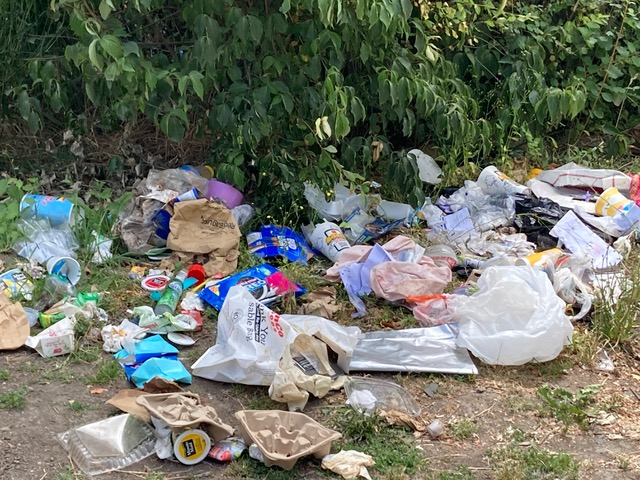
Hiring Ex-Cons to Patrol the Streets. Is That Really The Answer for Portland’s Troubles?

Portland’s flailing Mayor, Ted Wheeler, has a new idea, bring in ex-cons who have served decades in prison after being convicted of serious crimes, which can include murder, to patrol the city’s troubled streets.,

He wants to contract with a San Francisco-based nonprofit, Urban Alchemy (UA) that hires formerly incarcerated convicts to patrol troubled areas to address street-level issues rooted in addiction, mental illness and homelessness. The plan is for Urban Alchemy to deploy outreach patrols in the city center where Portland police have struggled to maintain patrols.

“We want to make sure that that presence, the things we need in place to keep downtown Portland on the path to recovery, is there 24/7,” said Jon Isaacs, the Portland Metro Chamber’s assistant director for public affairs.

In April, UA was awarded a five-year contract for up to $50 million to operate temporary, congregate shelter sites in Portland.

The new patrol idea is reminiscent of Curtis Sliwa’s Guardian Angles, formed in the 1970s to patrol New York’s subways and streets combat crime and violence in the city. The group, unarmed, but trained in karate and prepared to make citizens’ arrests , drew strong public reactions, positive and negative. 

The New Yorker described the group as “… a civilian crime-watch group whose recruits became street icons for patrolling scuzzy subway cars, intimidating chain snatchers, making the occasional citizen’s arrest, and irritating the police.”

What are the chances Urban Alchemy will be another ill-advised fiasco for Portland? 

According to a story in The Nation, UA “practitioners” or “ambassadors” guard corners and patrol Market Street, in San Francisco respond to emergency calls relating to homelessness, and monitor tent encampments and shelters. Some wear sunglasses and balaclavas with their uniform: a camouflage jacket emblazoned on the back with the group’s all-seeing-eye logo.

In February,  San Francisco selected Urban Alchemy to operate a Community Response Team, a one-year, $2.75 million police alternative that would handle low-level calls about homelessness that come in via 911.

“We should be excited,” Lena Miller, who has a PhD in psychology and co-founded UA in 2018, told The Nation. “You got long-term offenders who’ve done 30, 40 years in prison. They’re the alternatives to the police. And furthermore, the police and the police unions are with it.”

But not everybody is on board.

As Mara Math of San Francisco puts it,  “Urban Alchemy is not beloved here in San Francisco.”

Some criticize UA for policing public space, providing not compassionate care, but alternative policing. “It sounds good on paper,” Couper Orona, a street medic, told The Nation. “It’s a security force that can bully people into doing what they want—but it’s OK because it’s not the police.” Or as Street Sheet, a San Francisco street newspaper, put it, Urban Alchemy “…is structured to manage public space, not to address homelessness.”

Earlier this year the San Francisco Chronicle reported that Urban Alchemy faced multiple lawsuits over sexual harassment, unpaid overtime and forcing people to move without cause. Two employees were  shot in 2022l in the city’s Tenderloin district, raising concerns about placing them in dangerous scenarios without adequate training. 

Street Roots, a weekly alternative newspaper that covers homeless issues, has reported on a lawsuit which alleges UA “has deployed hundreds of inadequately-trained, reformed long-term felons in public spaces to assume certain government functions traditionally performed by professionally-trained law enforcement personnel.”

CityWatch, a news and information website and newsletter, has described UA as “…an agency with questionable claims to success and an unproven business strategy. The reasons for hiring such a controversial organization run the gamut of possibilities, from being too lazy to check prior performance, to desperation to hire anyone as a sign of taking bold action…”

Based on past experience, that’s Portland’s credo. Do something, anything, to make it appear like the city is taking bold action.

Is Portland Allergic to Common sense?

Sometimes it seems like we’ve taken leave of our senses.

Narcan, the Opioid overdose-reversal drug, arrived at many Portland area stores this week, no prescription necessary.

One thing that caught my attention in media coverage of Narcan’s expanded availability was the observation that there are concerns about Narcan’s affordability for addicts.  It would seem to me that if an addict can afford Opioids, surely he can afford Narcan. But that, of course, leads to another question. If an addict buys Narcan, would he administer it to himself in case of an overdose?  Not likely, I’d think.
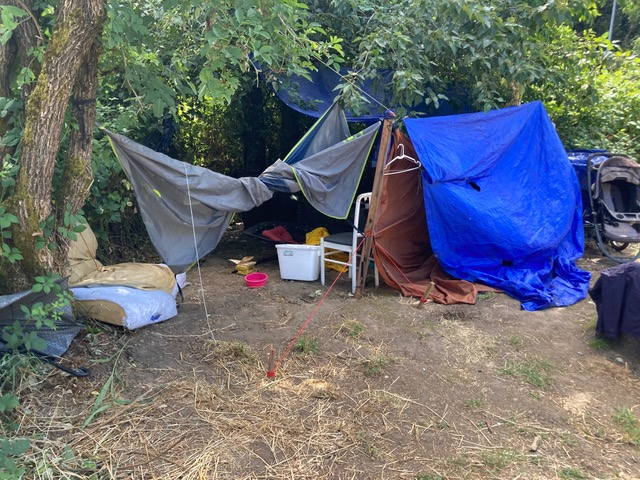
All this makes about as much sense as Multnomah County’s decision in July to distribute tinfoil, straws, glass pipes and “snorting kits” to addicts around Portland.

Fortunately, the county backtracked and suspended the initiative three days after Willamette Week disclosed the poorly thought-out plan. 

“Our health department went forward with this proposal without proper implementation protocols,” said County Chair Jessica Vega Pederson. “And in that light, I am suspending the program pending further analysis.”

Meanwhile, the City of Portland has left in place, and is expanding, its “safe rest villages”.

The seven Safe Rest Villages scattered around the city offer a host of services, including laundry, showers, flush toilets garbage recycling, first aid and medical care. 

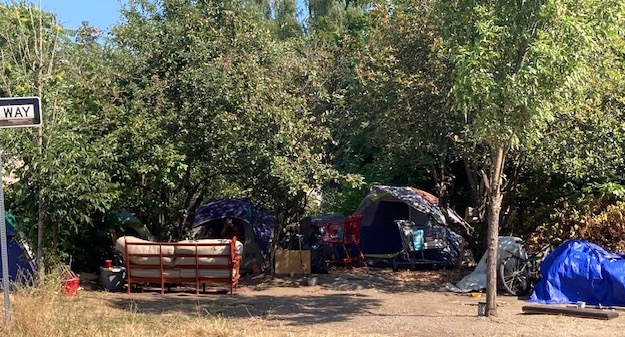
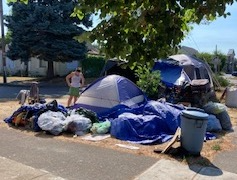
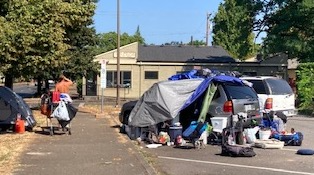
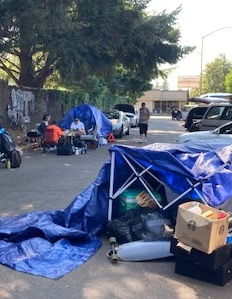
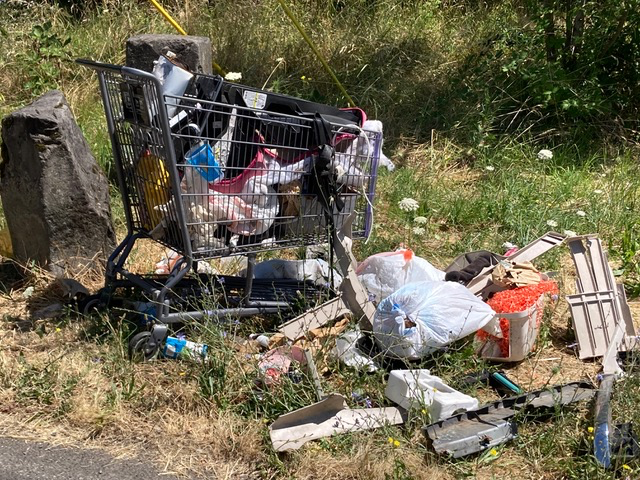
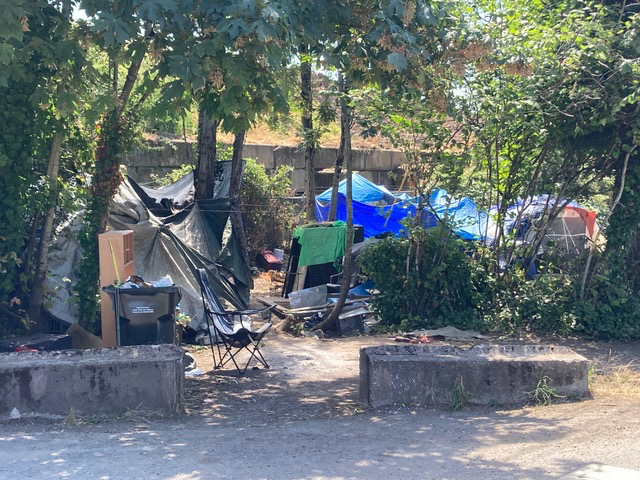
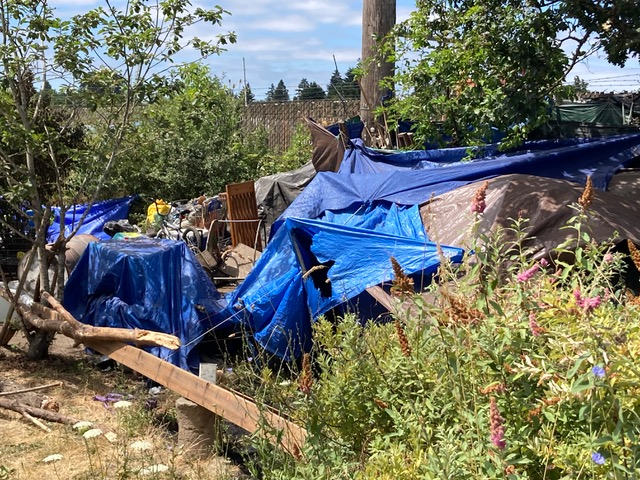
But is ”rest” really what all the homeless moving into these villages need? Drive, walk or cycle around Portland day or night and you’ll encounter camps filled with people who are “resting” and when they aren’t resting too many are looking for or using drugs, breaking into cars, and stealing stuff, all sorts of stuff. 

Portland Police recently recovered a steel drum, a saxophone, tattoo equipment, more than $10,000 worth of LED lighting and even a stolen litter of 3-week-old puppies from a homeless camp. In another police action in the Big Four Corners Natural Area, cleanup crews pulled out more than 150 stolen cars, tons of trash, and even some live pigs.

The problem is that while millions of dollars are being spent on these villages, residents can access all their services with no quid pro quo, in other words, without doing anything in return.  A resident can literally do nothing all day and night but stew in his or her despair. What the villages don’t offer or require is meaningful work. 

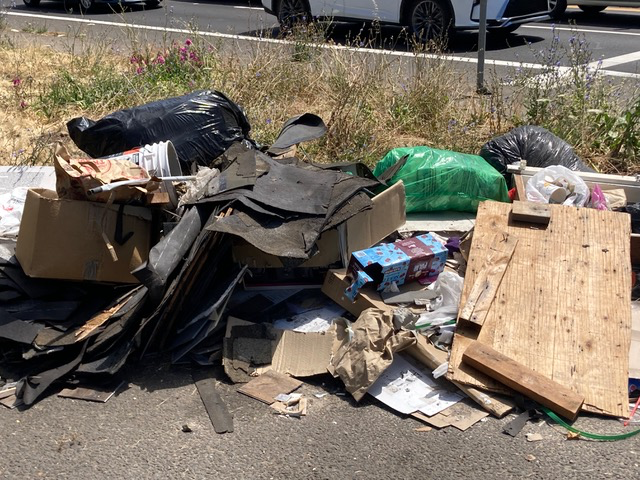
Wouldn’t it make more sense to organize teams of Village Rest residents to get out and paint over the graffiti that’s defacing surfaces all over the city.? Or pick up the proliferating trash and needles?  Or clean up abandoned waterside campsites? 

Then there’s the suggestion that adults in Oregon request a prescription for Narcan on their next visit to a pharmacy or primary care doctor, so they can rescue people who have overdosed.

The Oregonian recently ran a story about an addiction medicine nurse and a mother of two young adults who keeps a dose of Narcan in the glove compartment of her car, another in her backpack and a third dose on top of her dresser at home.

“My kids know how to use it and they know where it is,” she said. “Honestly, if you live in Portland, Oregon, you don’t know when you might be someone who comes across someone who is overdosing.”

I can see wanting to protect your children or friends, but, honestly, how realistic is it to expect an army of do-gooders carrying Narcan in their pockets and purses to intervene when they encounter a random person splayed out on a Portland sidewalk or in a tarp-covered tent? Is this really  the answer to the plague of Opioids? Frankly, I even hesitate to tell somebody their smoking is bothering me.

And are well-meaning Oregonians prepared for the reactions of those administered Naloxone? Emergency workers say the reactions of overdose victims are frequently hostile.

A manuscript published by the National Library of Medicine reviewing research on Opioid overdose reversals using naloxone in New York City noted that the most reported reversal outcome included a wide range of angry, hostile and/or aggressive outbursts by the overdosed person following their return to consciousness.

One study presented sociological work that focused on violence arising from naloxone administration. The authors remarked that such aggression ‘”…tends to receive a passing mention rather than close attention by social scientists.”

And now comes word that Portland’s flailing Mayor, Ted Wheeler, wants to bring in a San Francisco-based nonprofit, Urban Alchemy, that hires formerly incarcerated convicts to patrol troubled areas to address street-level issues rooted in addiction, mental illness and homelessness. The plan is for Urban Alchemy to deploy outreach patrols in the city center where Portland police has struggled to maintain patrols.

“We want to make sure that that presence, the things we need in place to keep downtown Portland on the path to recovery, is there 24/7,” said Jon Isaacs, the Portland Metro Chamber’s assistant director for public affairs.

It’s reminiscent of Curtis Sliwa’s Guardian Angles, formed in the 1970s to patrol New York’s subways and streets combat crime and violence in the city. The group, unarmed, but trained in karate and prepared to make citizens’ arrests , drew strong public reactions, positive and negative. ” The New Yorker described the group as “… a civilian crime-watch group whose recruits became street icons for patrolling scuzzy subway cars, intimidating chain snatchers, making the occasional citizen’s arrest, and irritating the police.”

What are the chances Urban Alchemy will be another ill-advised fiasco for Portland?

It’s a weird world out there.

Nordstrom is Closing two San Francisco Stores. Could Portland be Next?

A long time ago, at a time of retail exuberance, Nordstrom announced it would be opening an avant-garde 300,000-square-foot Nordstrom store in downtown San Francisco’s Westfield Centre at the base of Powell St. in August 1988. 

Inside Nordstrom’s Westfield store in San Francisco

“We’ve been asked to make this a major flagship store for Nordstrom, so the quality level of the building and its merchandise is being escalated in a significant way,” Charles McKenzie, Nordstrom’s project manager, told me for a story I wrote about the company for The Oregonian that ran on June 14, 1987.

More than twice the size of Nordstrom’s downtown Portland, Oregon store, the high fashion emporium in San Francisco was expected to be a long-lasting shining beacon in the magical city by the bay.

So much for that. 

Earlier this week, Nordstrom announced the Nordstrom at Westfield will close at the end of August 2023 and a Nordstrom Rack store across the street will close in July. 

The news came on top of recent announcements that Anthropologie’s Market Street location in San Francisco will close on May 13 and Saks OFF 5TH will shutter no later than this fall.

The dynamics of downtown have changed dramatically over the past several years, and impacted customer foot traffic, Chief Stores Officer Jamie Nordstrom told The San Francisco Standard, with unacceptable levels of disturbance by organized criminals and destitute people.

Blame for the Nordstrom closures has been placed partly on the rise of e-commerce, but more on the deteriorating scene in San Francisco’s downtown core that has contributed to 20 retailers in or near San Francisco’s Union Square shuttering or announcing plans to close since 2020. 

A spokesperson with Unibail-Rodamco-Westfield, which owns the Westfield mall, blamed the city for “unsafe conditions” and a “lack of enforcement against rampant criminal activity.” 

Sound familiar?

In 1977, Nordstrom Inc. took the wraps off its spiffy brand new $8 million store in downtown Portland. More than 15,000 shoppers and gawkers squeezed into the city’s newest attraction on opening day, Oct. 31.

It may have been just another store to Nordstrom, but it represented a lot more to Portland. As the first new retail building to be built downtown in 15 years, the store served as a catalyst for a spirited revival of downtown as the place to be. 

Over the next ten years, the downtown Portland area bounded by NW Glisan St. on the north, I405 on the west, SW Arthur St. on the south and the Willamette River on the east witnessed at least $906 million in new and rehabilitated commercial and residential development, compared with just $89 million in investment during 1970-1976, according to the Portland Development Commission. 

In 1982, at an Association for Portland Progress luncheon, Bruce Nordstrom, co-chairman of the company, said his company had no intention of building until he received a call from Portland Mayor Neil Goldschmidt. 

Pioneer Courthouse Square, which opened in April 1984, solidified the emergence of a revitalized downtown retail core. 

Nordstrom’s downtown Portland store overlooking Pioneer Square

Now not a day goes by that television, radio and newspapers don’t bemoan the deterioration of Portland’s once lively downtown.

In mid-2021, people described Portland’s downtown to The Oregonian as “destroyed,” “trashed,” “riots” and “sad.”  “Persistent vandalism, accumulating trash and homelessness have soured attitudes about Portland’s economic, cultural and transportation hub,” the paper reported. 

In a poll of people in the Portland metro area commissioned by The Oregonian/OregonLive, residents across the metro area said downtown Portland had become dirty, unsafe and uninviting. Many reported the presence of so many homeless people and their outdoor camping as a particular concern. 

The city had moved far too slowly, for far too long, to address critical needs said poll respondent Myrna Brown, who lived in Southeast Portland, and she wasn’t optimistic the crisis would resolve itself anytime soon.

She was right to be pessimistic. 

Downtown Portland has continued to struggle. As News Nation put it in March, “Two years after riots plagued the city, two years after a pandemic and the push for social justice collided, the model liberal enclave has turned into a social mess.”

A homeless camp in downtown Portland

Chet Orloff, adjunct professor of urban studies and planning at Portland State University, said Portland’s mess is partly “because we’ve been so lax in how we’ve unfortunately treated criminals, and we’ve been lax in our support of the police. That has simply allowed people to continue to damage the city.”

 In mid-April, outdoor retailer REI, citing frustrations with break-ins and theft, announced its 35,000-square-foot  Pearl District store, in place for nearly two decades,will close when its lease comes up at the end of February 2024

“You’re really betting on the future when you invest into a retail store,” PSU Professor Thomas Gillpatrick told KGW8-TV. “So what this is really sending a message to all of us in Portland, is Portland looks not as attractive as we have been in the past.”

KGW reported viewers reacting to the REI story said they were fed up with city leadership and the state of downtown.

“Yeah, this is a travesty.,” said one. “Our mayor has done nothing. All these businesses are folding up, leaving, moving on and just plain going out of business and he has done not one thing to help prevent this from happening.”

“What will it take for our elected officials to take concrete action to improve downtown and bring back the vital city I moved to in 1999?” said another viewer “I will not go into downtown Portland anymore, due to the open-air drug use, the ever-present graffiti and trash, the people passed (out) on the sidewalks, and the general sense of lawlessness that pervades downtown.”

“Whether you’re very conservative or very liberal, at some point everybody just gets fed up,” added Chris Ham, manager of Oregon’s Finest , a marijuana dispensary in the Pearl District.

How long will Nordstrom tolerate the situation in downtown Portland?

If it can abandon a flagship store in San Francisco, it can walk away from the once charming Rose City, too.

What Media Coverage of Portland’s Walmart Closures Has Missed

In late February, Walmart announced it would be closing a batch of its US stores, including its two stores in Portland, OR at 4200 82nd Ave. SE and 1123 N Hayden Meadows on March 24, 2022. Dr. Multiple media have subsequently reported on the Portland closures, initially focusing on the loss of employee’s jobs and the company’s assertion that the closures were due to “several factors,” including profitability concerns.

The 82nd Ave. store will close to the public on 3/24/2023. All 379 employees at the facility will be terminated effective June 02, 2023. The Hayden Meadows store will close to the public on 3/24/2023. All 201 employees at the facility will be terminated effective June 02, 2023. 

On March 4, a Twitter contributor, Evan Watson, observed that the tone of media coverage began to shift when Fox Business put out a story headlined, Walmart to shutter Portland locations just months after CEO’s warnings on crime.

Fox said a Walmart spokesperson told Fox News Digital “…there is no single cause for why a store closes. We consider many factors, including current and projected financial performance, location, population, customer needs, and the proximity of other nearby stores when making these difficult decisions.”

But Fox chose to also highlight that the closure announcements for the Portland stores and multiple others across the country came “…just a few months after the Walmart CEO warned stores could close and prices could increase in light of sky-high retail crimes affecting stores across the country.”

“Theft is an issue. It’s higher than what it has historically been,” Walmart CEO Doug McMillon said in December on CNBC, Fox reported. “He added that “prices will be higher and/or stores will close” if authorities don’t crack down on prosecuting shoplifting crimes.”

Fox went on to note that Walmart’s announcement came after other Portland stores had closed, citing crime as a reason, including a Nike store that shut down following rampant shoplifting incidents and a Cracker Barrel that shut down with employees citing security issues. Fox reported one store that shut down in November 2022, Rains PDX, had posted a note on the shop’s doors after a string of break-ins saying, “Our city is in peril. Small businesses (and large) cannot sustain doing business, in our city’s current state. We have no protection, or recourse, against the criminal behavior that goes unpunished.”

The crime connection to the Portland Walmart closure was then also picked up on The NY Post. Yahoo and local TV stations affiliated with KPTV.

Next up was Texas Gov. Greg Abbot, no doubt stimulated by the crime connection, who jumped into the fray with a tweet: “All Portland Walmart stores to close in late March. This is what happens when cities refuse to enforce the rule of law. It allows the mob to take over…”

This spurred Portland Mayor Ted Wheeler to put in his two cents, Tweeting, “Governor Abbott, are the dozens of Walmart stores that have closed in Texas in recent years all communities that “refuse to enforce the rule of law?” The retail industry is changing and retail theft is a national issue.”

And of course. dozens of people responded to Wheeler’s Tweet.

What no media mentioned, however, is the diversity of Walmart’s workforce affected by the closures or the impact of the closures on Walmart’s customers, most of whom are the lower-income Portlanders progressive political leaders always claim to be so concerned about.

I don’t have a breakdown of the workforce at the two Portland stores, but a recent analysis of Walmart’s total workforce showed that 56were women, with 42% of those are part of management and 42% of the total workforce were people of color, with 31% of them part of management.

The only saving grace for these workers is that the hiring environment is strong. Weekly jobless claims have remained near or below the 2019 prepandemic average of about 220,000 for several months, even in the face of job cuts at larger employers in white-collar industries, particularly in technology, finance and real estate.  In other words, it is still a tight labor market, so laid-off Walmart workers may have less difficulty finding work. That could change, however, as the Federal Reserve continues its aggressive effort to fight inflation and there are signs that the job market’s extreme tightness might be easing.

As for shoppers’ income, analyses by Business Insider, Kantar Media; and Statista show that, although more higher income Americans have been gravitating to Walmart groceries and other items in the current inflationary environment, more than a quarter of Walmart shoppers have an annual income of $25,000 or less and the next quarter have an annual income of just $25,000 – $49,900. 

Walmart Shoppers by Income

$25,000 or less: 26.1%

$25,000 to 49,900:  26.8%

$50,000 to 74,900:  18.3%

$75,000 to 99,900:  11%

$100,000 or more: 17.4%

Why do lower income Americans shop at Walmart? Because generally they save more of their hard-earned dollars there, particularly on generics and Walmart’s store brands. 

 “…in general, most shoppers will find that groceries at Walmart can cost less overall, even for higher-end brands that will cost significantly more elsewhere, which means if you’re on a tighter budget, grocery shopping at Walmart can help you ensure your dollar goes further,” says Julie Ramhold, consumer analyst at DealNews.com.

And the savings can be significant. 

A November 2022 Consumers’ Checkbook review of spending at Washington area grocery chains and stores concluded that a family that spends $250 per week at the supermarket, could save $2,080 per year by shopping at Walmart versus an all-store average. 

In other words, the loss of these two Walmart stores is a bigger blow to Portland than the media has been saying. Politicians need to make note of that. 

So Much for “Made in Oregon”

Love Oregon and want to celebrate it this holiday season with a gift made here? Go to a “Made in Oregon” store, right? 

“We are proud to offer the highest quality products made by Oregon vendors since 1975,” the retailer proudly proclaims.

On its website, the company points proudly to how it opened its  first store at Portland International Airport in 1975 and has since  “…built a reputation as a purveyor of high-quality, local products made, designed, or grown in Oregon.”

But “made, designed, or grown in Oregon” leaves a lot of wiggle room and the company takes advantage, allowing companies with limited Oregon connections to sell their products at the Made in Oregon stores. It’s the word “designed” in Oregon that opens the door wide enough to drive a truck through, enabling “localwashing” to prosper.

Puffin Drinkwear, for example, sells quirky insulated beverage covers in the form of jackets , vests, parkas, sweaters and even mini-sleeping bags designed to keep 12 ounce cans and bottles cold or hot.

The Lumberjack from Puffin Drinkwear

The Bend-based company highlights its Bend, OR roots and has gotten a lot of media attention. The Colorado Sun, a widely read digital news outlet in Colorado, recently highlighted the company’s products because of its Bend ties. Uncommon Goods  pitches Puffin products as “CREATED IN OREGON BY Tyrone Haze, born and raised in the Pacific Northwest.”

But claiming they are “Made in Oregon” is a stretch. 

The FAQS section of its website says, “We work with a variety of manufacturers across the globe. We’ve thoroughly vetted each one to be ethical and good brand partners.”

I checked out the tags on Puffin Drinkwear products at the Washington Square mall’s Made in Oregon store and found they were “Designed in Bend” but “Made in” lots of other places, including China, Cambodia and Vietnam. None of the products on the shelves said they were “Made in America” or “Made in Oregon”.

A close look at multiple other products in the Made in Oregon store revealed the same deceit.

Take the Sasquatch-like plush bigfoot product made by Wishpets LLC of Beaverton, a “Leading designer and manufacturer of plush toys.” The bigfoot tag said “Product of China”. Elisa Martinez, a Marketing & Sales Assistant for Nature Planet | Wishpets®, said all of Wishpets’ products are made in China.

Plush bear from Wishpets

Other products on display that were clearly manufactured in other countries included a “Welcome to Oregon” bear also “Made in China”

and dozens of Hydro Flask bottles which, like Puffin Drinkwear, highlight that they are “Designed in Bend, Oregon”. The company’s website reinforces the message: “Our HQ is literally nestled into a Pacific Northwest wonderland– Bend, Oregon. We’re ridiculously lucky to have always been surrounded by mountains, rivers and lakes. It’s in our DNA.”

The website neglects to mention that Hydro Flask products are manufactured in China.

Then there were the organic cotton socks on display from “Replant Pairs”.

The socks are a product of Tabbisocks, which doesn’t even bother to say the socks are designed in Oregon. “Tabbisocks weaves Japanese craftsmanship from the East with big personality from the West,” it says. “Each sock is made with love in Nara ((Japan), a city steeped in tradition and advanced sock culture.” 

Displayed on the apparel racks were Oregon-focused t-shirts by Graphletics. The company’s website says it was founded by Rick Gilbert in his garage in NW Portland in 2013 and has grown into a brand that’s sold across the U.S. and internationally. Its flagship retail location in SE Portland was even recently written up in the New York Times as one of five places to visit as “Sellwood-Moreland has become easier to reach, the working-class enclave has drawn creative entrepreneurs and a young, hip crowd.”

Sure, the store has an Oregon vibe, but its t-shirt at Made in Oregon was “Made in Nicaragua”.

Come on Made in Oregon. You can do better.

Cost and Complexity Should Defeat Portland Charter Reform

No question. Portland is “The City That doesn’t Work”. But Ballot Measure 26-228, the charter reform proposal, isn’t the answer.

Driving support for the measure is a commonly held view that Portland’s government is an unwieldy mess that doesn’t serve citizens well.

A recent poll commissioned by the Portland Business Alliance validates that voters are up for change. 

Presented with the text of the ballot measure, 63% of 420 respondents said they would vote for it and 21% said they would vote no. 

The 63% figure makes it sound like approval is a slam dunk, but the devil may be in the details. 

Of that 63%, only 26% were sure they’d vote for it; 36% were less certain, but leaned toward a yes vote and 16% were undecided. In my view, even though the vote is just weeks away, that means there are an awful lot of persuadables.

The task ahead for opponents is to raise enough awareness of the measure’s complexity and cost to raise doubt about the wisdom of the whole proposal.

For example, Portlanders may think more City Council members will mean better representation. But the proposal for four districts, each represented by three city counselors, won’t necessarily translate into that result. 

One reason is because the ballot measure doesn’t specify the boundaries of the new districts. If the measure passes, a separate districting commission would be convened in January and assigned the task of drawing the boundaries. Nobody knows now where those lines will be drawn.

Things get more complicated and uncertain because the measure proposes that the councilors of each district be elected using a proportional method of ranked choice voting known as “single transferable vote” (STV). 

In this system, voters rank the candidates and if a candidate gets more votes than needed be elected the extra, or surplus, votes get transferred to the voter’s next choices. The process is so convoluted the measure takes almost 300 words to explain how it would work.

Under this system, a candidate running for a seat in a multimember district could win a position on the Council with as little as 25% of the vote. One consequence could be a councilor able to remain in office by consistently satisfying just that small segment of eligible voters and ignoring those who are disenchanted with their performance because it would require 75% of voters to vote against the entrenched councilor to remove him or her.

As Tim Nesbit, a former chief of staff to Democratic Governor Ted Kulongoski and a critic of the ballot measure, wrote in the Portland Tribune, “This will be a ‘welcome to the Hotel California’ for candidates who seek office in the first council election to follow. It will be easy to check in to the council, but much harder to be forced to leave.”

And then there’s the potential cost of the new governance system proposed in the measure. Talk about buying a pig in a poke. Frankly, nobody’s really sure what the cost of the massive changes would be. 

The City Budget Office estimates the cost of implementing the measure could be up to a whopping $8.7 million annually. 

One unknown is transition costs. Then a Salary Commission that would need to set the salaries of all the newly elected officials. And all those new City Councilors will have staff. And the fact is, government tends to grow. As George Roche wrote in a booklet published by the Mackinac Center for Public policy, bureaucracies “tend to swell up like toadstools on a rotting log.”

Do Portlanders really want to spend MORE on their government? Charter reform proponents don’t tend to talk about this.

The key task ahead is to convince the “less certain” and “undecided” voters to move into the “No” column.

There’s still time. 

Portland’s Charter Reform Proposal: An Elaborate, Unworkable Mess

Proponents of Portland’s charter reform proposal (Measure 26-228) try to make it sound so simple and straightforward; just a good government initiative that will transform the city.

Not so. The proposed radical change in how city officials would be elected is a convoluted jumble that few probably comprehend. 

The current system is simple: the person with the most votes wins.

Under the reform proposal, not one but two voting systems would be employed. 

First, the Mayor and the Auditor would be elected at-large using a flawed method of ranked choice voting (RCV) known as instant runoff voting.

This is how the reform proposal describes the system: 

 “If no candidate receives a majority of the vote in the initial round, subsequent rounds are counted in which (i) candidates retain the number of votes counted for them in the first and any subsequent rounds that already occurred; and (ii) the candidates having the fewest votes are successively eliminated in rounds and their votes are counted as votes for the candidates who are ranked next on the ballots that had been counted for the eliminated candidates. The process of eliminating candidates and transferring their votes to the next-ranked candidate on ballots repeats until a candidate has a majority of the vote.”

Got that? 

In RCV, voters need to have a high level of information about all the candidates in order to choose preferences. You can’t just vote for the person and ideas you like. You must also educate yourself about all the other candidates in order to elevate, or dismiss, the ones you don’t. 

If you only vote for the candidate you prefer and don’t rank all the rest, you are effectively disenfranchised if your candidate doesn’t come in first in the initial ballot count.

The fact is, the more people a voter ranks the longer a ballot works for the voter. If there are five people on a ballot, you vote for only one and that one is eliminated in the instant runoff, your ballot is exhausted and has no impact on the race. It simply won’t factor into the final outcome.

On the other hand, pressure to rank all the candidates can lead to support for somebody you really don’t like. In RCV, your vote for a candidate you dislike can actually help that candidate move up. 

Jeff Jacoby, an award-winning columnist for the Boston Globe, calls the RCV process “democracy on the Rube Goldberg model”, where  ideas that supposedly simplify people’s lives wreak havoc instead.

“Perversely, (ranked choice voting) enhances the influence of the candidate who comes in last when the ballots are first counted, by shifting that candidate’s voters to their second choice.,” Jacoby says. “Just as perversely, the system pushes voters to decide on who their third-, fourth-, and even fifth-favorite candidates are — or face the prospect of their vote being nullified if multiple rounds of tallying are required.”

Things get even weirder when you apply RCV to an election for multiple positions.

As noted earlier, not one but two voting systems would be employed under Portland’s charter reform proposal. In the races for mayor and auditor, there would be only one final winner in each. In the district council races, each of four districts would be electing three Councilors to create a 12-member city council, guaranteed to lead to gridlock at times because of the even number.. 

The Councilors of each district would be elected using a proportional method of RCV known as “single transferable vote” (STV). In this system, voters rank the candidates and if a candidate gets more votes than needed be elected the extra, or surplus, votes get transferred to he voter’s next choices. The charter reform proposal is so convoluted it takes almost 300 words to explain how it would work (See below for complete text)

Under this system, a candidate running for a seat in a multimember district could win a position on the Council with as little as 25% + 1 of the vote. One consequence could be a Councilor able to remain in office by consistently satisfying just that smaller segment of eligible voters.

Because STV is a complex system, understanding it demands a high degree of literacy and numeracy. It can also heighten the power of small minority coalitions and fragment political parties because it can cause members of a party to compete against each other as well as against their ideological opponents.

Although organizations such as the City Club of Portland, the League of Women Voters of Portland and the ACLU of Oregon have endorsed the reform proposal, it’s hard to understand why given that its complexity potentially endangers its legitimacy in the eyes of the general public.

Charter reform proponents cite a Portland Governance & Electoral Reform Survey conducted in March 2022 by Baltimore, MD-based GBAO, which does survey research and strategic consulting for Democratic and progressive campaigns, that showed strong support for RCV and multimember districts.

The polling questions did not, however, explain the intricacies of how RCV would work with multimember districts and application of the single transferable vote concept.

Probably realizing that all this is confusing as hell, the charter reform proposal calls for voter education. “The City must conduct periodic voter education campaigns to familiarize voters with the ranked choice voting methods described above,” the proposal says.

Try explaining all this in a 30-second tv spot, a tweet or a digital ad.

Good luck with that.

__________

Charter reform’s explanation of how “single transferable vote” (STV) would work: 

“Councilors of each district are elected using a proportional method of ranked choice voting known as single transferable vote. This method provides for the candidates to be elected on the basis of a threshold. The threshold is determined by the number of seats to be filled plus one, so that the threshold is the lowest number of votes a candidate must receive to win a seat such that no more candidates can win election than there are seats to be filled. In the initial round, the number of first rankings received by each candidate is the candidate’s vote count. Candidates whose vote counts are at least the threshold are declared elected. Votes that counted for elected candidates in excess of the threshold are called surplus. If fewer candidates are elected in the initial round than there are seats to be filled, the surplus percentage of all votes for the candidates who received a surplus are transferred to the next-highest ranked candidates in proportion to the total numbers of next-highest rankings they received on the ballots that counted for the elected candidate. If, after all surpluses have been counted in a round, no additional candidates have a vote count that is at least the threshold, the candidates with the lowest vote counts are successively eliminated in rounds and their votes are counted as votes for the candidates who are ranked next highest on the ballots that had been counted for the eliminated candidates, until another candidate has a vote count that is at least the threshold or until the number of candidates remaining equals the number of seats that have not yet been filled. The process of transferring surpluses of elected candidates and eliminating candidates continues until all positions are elected.”

Cutbacks Threaten Three Prominent Oregon Newspapers

UPDATE (Aug. 12, 2022): In a late move on Friday, Aug. 12, 2022, Gannett, the nation’s largest newspaper chain, executed layoffs at outlets across the country. While no official tally was available, journalists at the Salem Statesman Journal (Oregon), Athens (Georgia) Banner-Herald, (South Texas) Caller-Times, Columbia (Missouri) Daily Tribune, Ventura County Star, St. Cloud (Minnesota) Times, Monroe (Louisiana) News-Star, Billerica (Massachusetts) Minuteman, (Milwaukee) Journal Sentinel, Panama City (Florida) News-Herald, Gainesville Sun (Florida), The Athens Banner-Herald (Georgia) The Des Moines Register (Iowa), Burlington Free Press(Vermont), Beaver County Times (Iowa), MetroWest Daily News (Mass) and the (Kentucky) Courier Journal all reported layoffs at their publications. Friday’s layoffs also affected non-journalists. A reporter at the Pueblo (Colorado) Chieftain tweeted that the paper’s only customer service representative, who had been making less than a dollar above minimum wage, had been let go after working there for 16 years.

—————–

The decline of Oregon’s local newspapers is set to continue with cutbacks by Gannett Co.

Gannett, the owner of the Statesman Journal in Oregon’s capital, Salem, The Register-Guard in Eugene and the Daily Journal of Commerce in Portland, is planning a “significant cost reduction program” amid a “challenging economic backdrop marred by soaring inflation rates, labor shortages and price-sensitive consumers.”

A message to all of its employees on Thursday from Gannett’s president of news warned of “painful reductions to staffing, eliminating some open positions and roles that will impact valued colleagues.”

The Statesman Journal, the second-oldest newspaper in Oregon, was sold to Gannett in 1973. Currently listing 16 reporters on its website, it has been steadily shrinking in staff and as a reliable news source.

The Register-Guard, formed in a 1930 merger of two Eugene papers, the Eugene Daily Guard and the Morning Register, was acquired by GateHouse Media in 2018. At the time, the paper had 240 full-and part-time employees. The newspaper has been owned by Gannett since Gannett’s 2019 merger with Gatehouse. The paper’s current website lists just 8 reporters. 

Founded in 1872, the Daily Journal of Commerce (DJC) provides comprehensive resources and reporting on the Portland, Oregon building and construction market. Owned by Gannett through its BridgeTower Media division, the paper has a circulation of 1,966.

Gannet, which owns over 100 daily newspapers and nearly 1,000 weekly newspapers in 43 U.S. states and six countries, reported on Thursday a net loss of $53.7 million in the second quarter, compared with a net income of $15.1 million the same period a year earlier. Adjusted earnings before interest, taxes, depreciation and amortization (EBITDA) totaled $50.9 million, down 56% from the prior-year quarter, with declines driven by a decline in print revenue and inflationary pressures. 

“We are not satisfied with our overall performance in the second quarter,” Gannett CEO and Chairman Michael Reed said in a release, noting the results reflect “industry-wide headwinds” in digital advertising and tightening across the economy.  

Anticipated cutbacks at Gannett’s Oregon papers would track declines in locally focused daily newspapers across the United States.

The total combined print and digital circulation for locally focused U.S. daily newspapers in 2020 was 8.3 million for weekday (Monday-Friday) and 15.4 million for Sunday, among the lowest ever reported, according to the Pew Research Center. Total weekday circulation is down more than 40% and total Sunday circulation has fallen 45% in the past seven years. Local newspaper advertising and circulation revenue has also been dropping precipitously.