Is Portland’s Ranked Choice Voter Education Project Stumbling?

In its early years, the electric vehicle start-up Fisker tried to stimulate public interest by showing off a concept sports car, the EMotion, going down a desert road in a flashy 2017 marketing video. The problem, revealed by the Wall Street Journal,  – the car in the video didn’t have a motor or battery. It was propelled by people hiding inside who were pushing it forward with their feet through a hole in the floor.

To say the least, it was a deceptive start of a good idea, a worthy concept that stumbled in its execution. 

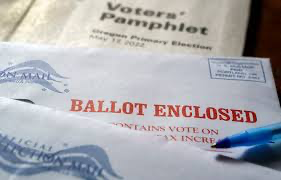
Portland’s voter education project on the city’s new ranked choice voting system to be utilized in the November 2024 election seems to be like that.

Request for Proposals on a voter education contract “…from qualified proposers with demonstrated experience in voter and community education and outreach” went out on April 7, 2023 asking that proposals be submitted by May 3, 2023. The intent was to post an intent to award the contract to a specific bidder on June 9, 2023.

The first slip-up occurred when a winning bidder wasn’t chosen until July 2023.

The winner of the $675,000 contract was United Way of the Columbia-Willamette in collaboration with Democracy Rising, Portland United for Change (a fiscally sponsored project of the United Way) and Brink Communications of Portland. United Way of the Columbia-Willamette was the sole legal entity awarded the contract and has oversight over it.

Portland United for Change was tasked with leading the day-to-day management of contract activities and to support subcontractor grant recipients working to implement the education and outreach effort for harder-to-reach voters. Samantha Gladu, Coalition Director at Portland United for Change, was expected to manage the overall project.

Democracy Rising was expected to apply its expertise in voter education efforts in five states on ranked choice voting.

Brink, which described itself as “…a queer woman-owned, BIPOC and LGBTQIA2S+-led marketing and communications agency united around justice, equity and solidarity”, was expected to provide four members of a six-person Project Team working on the voter education effort. 

A second slipup occurred two months later, however, when Brink, a 12-year-old 43-employee firm, unexpectedly ceased operations. “The disruptions of the pandemic, the recent economic downturn and upheavals in the marketing industry have been very difficult for our small business,” the company said in a LinkedIn post. 

Rather than switch to another bidder, the city left it to United Way to find a replacement firm for Brink. It took until January 2024 for United Way to accomplish that by selecting Hearts & Minds Communications LLC of Portland, a company founded in 2021 which describes itself as “…a growing collective of communicators, designers and strategists united by our approach to center racial justice in our work”.

Hearts & Minds has not responded to inquiries seeking information on who on its staff would replace the Brink employees serving on the Project Team, details on their roles and qualifications and specifics on their projected hourly rates.  

Then another problem. 

Two months later, on March 13, 2024, Samantha Gladu, Coalition Director at Portland United for Change, abruptly left the organization and transitioned to another employer. She had been expected to be the day-to-day contact with the city, helping to coordinate all the meetings and directing the appropriate people to meetings regarding various elements of the project. 

As of May 16, 2024, United Way had still not replaced Gladu and it’s not clear who’s running the show. “I think we can all agree that this is a very competitive market for employees, and we are not at all surprised that Samantha was poached away from her role at United Way. United Way is recruiting for this position,” said Shoshanah OppenheimCharter Transition Project Manager with the city.

All this turmoil occurred while the original timeline for the entire project had  envisioned that two key phases of the project would be underway.

First, Nov. 2023 – Feb. 2024 was supposed be spent identifying and engaging local voter education partners, building out infrastructure and collateral for different campaign focuses and working with election officials on ranked choice voting implementation.

Then, during Feb. 2024 – June 2024, the project team was expected to focus on outreach to coalition partners to extend capacity, the recruitment and training of organizational and volunteer leaders on voter education, and engagement of stakeholders and media to facilitate their understanding of the new election system.

The winning bidder was expected to use this time to offer sub-grants to “…local non-profit and community-based organizations who can assist in disseminating this vital information through trusted mediums to members of populations who traditionally lacked access to inclusive voter education and are most likely to benefit from focused, supplemental outreach.”

United Way’s original bid said the voter education effort aimed “to be operating on all cylinders” in June. The way things are going, it’s doubtful that will be the case. 

What Were They Thinking? Multnomah County’s Non-Citizen Voting Proposal

The election’s over, and Measure 26-231, an appalling proposal to let non-citizens vote in Multnomah County, lost 52.79% – 47.21%. But the fact it even got on the ballot should worry us all. 

What in heaven’s name would have propelled a group of citizens to advocate undermining their constitutional rights with such an alarming proposal? And the fact the measure got 163,163 votes is a distressing reminder that the idea of non-citizen voting is in danger of being normalized.

We need to stop pretending like this is okay or normal because it’s not,”  Rep. Jeff Duncan (R-SC) said earlier this year, Non-citizen voting is explicitly un-American and disrespectful to those who fought and died for the preservation of our freedoms and democracy.”

A Charter Review Committee appointed by state senators and representatives who represent districts in Multnomah County initiated the proposal. 

The committee members, all appropriately listing  their She/Her, She/They, They/Them, He/Him pronouns on the committee’s website, were a cabal of overzealous progressives akin to a left-leaning social justice advocacy non-profit intent on remaking the body politic to advance their agenda.

Samantha Gladu (She/They) was described as“…committed to addressing power inequities by building representative and progressive anti-racist leadership.” 

Ana I. González Muñoz (She/Her)…works at Latino Network as the Director of Community Engagement & Leadership Development” and her “… professional and personal commitment revolves around serving her community to advocate for equity, inclusion, and social justice.” 

Jude Perez (They/Them)“…is the Grants Manager at Seeding Justice…an organization that practices community-led grantmaking to distribute funds to grassroots groups that are working towards long-term, systemic solutions, and community-centered strategies to dismantle oppression in Oregon.”

The civic groups that supported the measure[1] deserve to be admonished as well. 

The ACLU of Oregon made the illogical argument that the measure advanced its commitment to the civil liberties and civil rights fundamental to our democracy, ignoring the fact it would mean one less benefit to be gained from becoming a citizen and erode  the integrity of America’s  democracy,

The Oregon Food Bank exceeded its mandate when it endorsed Measure 26-231 because it would “extend voting rights to more local residents who are affected by county policies.”

Measure 26-231 was not just an example of progressive overreach, but of moral rot. It was a sign not of appreciation, but of contempt, for liberal democracy. At its root, it was a progressive attempt to enlarge their base.

The idea made a mockery of citizenship, removing the long-standing linkage between the responsibilities of citizenship and voting rights. 

Before the Nov. 8 election, Ricardo Lujan-Valerio, a policy director to Portland City Commissioner Carmen Rubio and former policy associate at ACLU of Oregon, told OPB he estimated the committee’s proposal “…could potentially affect up to 100,000 people if the final definition of ‘noncitizen’ includes the roughly 22,000 undocumented residents living in Portland.” It’s not clear if that estimate included not just undocumented people in the county illegally, but also people admitted to the US legally, but not yet US citizens.  

That many non-citizens added to Multnomah County’s voting rolls would have resulted in a substantial dilution of the power of the county’s citizen voters.

Justice Ralph J. Porzio, a State Supreme Court justice on New York City’s Staten Island, raised the dilution issue when, on June 27, 2022, he struck down a law that would have allowed non-citizens to vote in local elections in New York City, saying it violated the State Constitution.

“This Court finds that the registration of new voters will certainly affect voters, political parties, candidate’s campaigns, re-elections, and the makeup of their constituency and is not speculative.,” the judge said in his ruling. “The weight of the citizens’ vote will be diluted by municipal voters and candidates and political parties alike will need to reconfigure their campaigns. Though the Plaintiffs have not suffered any harm today, the harm they will suffer is imminent, and it is reasonably certain that they will suffer their claimed harm if the proposed municipal voters are entitled to vote.”

“Voting is of the most fundamental significance under our constitutional structure…The addition of 800,000 to 1,000,000 non-eligible votes into municipal elections significantly devalues the votes of the New York citizens who have lawfully and meaningfully earned the right to vote pursuant to constitutional requirements.”

The Charter Review Committee’s non-citizen voting proposal would have devalued the votes of citizens in Multnomah County and run counter to the values of our constitutional republic. May it rest in peace.


[1] ACLU of Oregon; Adelante Mujeres; APANO (Asian Pacific American Network of Oregon); Center for Migration, Gender, and Justice; Coalition of Communities of Color; IRCO (Immigrant and Refugee Community Organization); Latino Network; Next Up; Oregon Food Bank; Oregon Interfaith Movement for Immigrant Justice.

Say No to Non-Citizen Voting in Multnomah County

The proposal by Multnomah County’s Charter Review Committee to allow non-citizens to vote in county elections is a sign not just of progressive overreach, but of moral rot.

It is a sign not of appreciation, but of contempt, for liberal democracy.

The idea makes a mockery of citizenship, removing the long-standing linkage between the responsibilities of citizenship and voting rights. And while the idea might appeal to the rabid left, it’s likely to alienate the broad middle whose support will be essential if the Committee’s entire reform package is to be approved.

Just as unrestricted immigration to the United States was once standard and legal voting by noncitizens was once common in as many as 40 states, limitations or prohibitions in both arenas have been in place for almost 100 years. In that same vein, federal law prohibits contributions, donations, expenditures(including independent expenditures) and disbursements solicited, directed, received or made directly or indirectly by or from foreign nationals in connection with any federal, state or local election.

The Charter Review Committee members, all appropriately listing their She/Her, She/They, They/Them, He/Him pronouns on the committee’s website, are essentially a cabal of overzealous progressives intent on remaking the body politic to advance their agenda.

A review of the committee’s membership, who are appointed are appointed by state senators and representatives who represent districts in Multnomah County, reveals an organization more akin to a left-leaning social justice advocacy non-profit than a county charter review body.

Samantha Gladu (She/They), for example, is described as “…committed to addressing power inequities by building representative and progressive anti-racist leadership.” Ana I. González Muñoz (She/Her)…works at Latino Network as the Director of Community Engagement & Leadership Development” and her … professional and personal commitment revolves around serving her community to advocate for equity, inclusion, and social justice.” Jude Perez (They/Them) “…is the Grants Manager at Seeding Justice…an organization that practices community-led grantmaking to distribute funds to grassroots groups that are working towards long-term, systemic solutions, and community-centered strategies to dismantle oppression in Oregon.”

While they and the other committee members unanimously supported the effort to legitimize and implement non-citizen voting and have expressed lofty theoretical sentiments for its adoption, beneath the surface it is little more than a power grab, an effort to further the political fortunes of specific ethnic groups. 

As Ronald Hayduck, a professor at San Francisco State University who endorses non-citizen voting, has written, for allies it is important to drive “home the potential benefits of non-citizens to forge progressive political majorities.”

The practical downsides of non-citizen voting are rarely mentioned. 

When a spokesman for the New York City Law Department told the Wall Street Journal the New York ruling “… is a disappointing court ruling for people who value bringing in thousands more New Yorkers into the democratic process,” he inadvertently revealed a major problem with allowing non-citizen voting. 

Ricardo Lujan-Valerio, a policy director to Portland City Commissioner Carmen Rubio and former policy associate at ACLU of Oregon, told OPB he estimated the committee’s proposal “…could potentially affect up to 100,000 people if the final definition of ‘noncitizen’ includes the roughly 22,000 undocumented residents living in Portland.” It’s not clear if that estimate includes not just undocumented people in the county illegally, but also people admitted to the US legally, but not yet US citizens.  

That many non-citizens added to Multnomah County’s voting rolls could result in a substantial dilution of the power of the county’s citizen voters.

Justice Ralph J. Porzio, a State Supreme Court justice on New York City’s Staten Island, raised the dilution issue when, on June 27, 2022, he struck down a law that would have allowed non-citizens to vote in local elections in New York City, saying it violated the State Constitution.

“This Court finds that the registration of new voters will certainly affect voters, political parties, candidate’s campaigns, re-elections, and the makeup of their constituency and is not speculative.,” the judge said in his ruling. “The weight of the citizens’ vote will be diluted by municipal voters and candidates and political parties alike will need to reconfigure their campaigns. Though the Plaintiffs have not suffered any harm today, the harm they will suffer is imminent, and it is reasonably certain that they will suffer their claimed harm if the proposed municipal voters are entitled to vote.”

“Voting is of the most fundamental significance under our constitutional structure…The addition of 800,000 to 1,000,000 non-eligible votes into municipal elections significantly devalues the votes of the New York citizens who have lawfully and meaningfully earned the right to vote pursuant to constitutional requirements.”

Some liberal politicians may express support for non-citizen voting because they see a pool of potentially supportive voters for their re-election. But they should be careful what they wish for. 

The New York Times wrote recently about an unexpected turn of immigrants in South Texas away from leftist Democrats and toward the GOP. 

An article titled How Immigration Politics Drives Some Hispanic Voters to the G.O.P. in Texas noted:

“Democrats are destroying a Latino culture built around God, family and patriotism, dozens of Hispanic voters and candidates in South Texas said in interviews. The Trump-era anti-immigrant rhetoric of being tough on the border and building the wall has not repelled these voters from the Republican Party or struck them as anti-Hispanic bigotry. Instead, it has drawn them in.”

“Our parents came in a certain way — they came in and worked, they became citizens and didn’t ask for anything,” said Ramiro Gonzalez Jr., a 48-year-old rancher from Raymondville, on the northern edge of the Rio Grande Valley. “We were raised hard-core Democrats, but today Democrats want to give everything away.”

Republican candidates in South Texas appealing to Latinos “…are building on a decades-long history of economic, religious and cultural sentiment that has veered toward conservatives,” the story said.

CNN recently reported a similar shift, saying voters of color are backing the GOP at historic levels, with Democratic support from Asian AmericanBlackand Hispanic voters much lower than it has usually been. Part of that is because of the changing demographic makeup of voters of color. “They’re a lot more Hispanic than they used to be,” CNN said. “At the same time, they’re a lot less Black. Hispanic voters don’t support Democrats as much as Black voters.” 

Multnomah County advocates of non-citizen voting and their political allies should take heed.