Of Intrepid Men and Their Flying Machines

The plane was flying 3500 ft. above the vast Atlantic Ocean.

“Then, just as he was looking at the needle of the air-speed indicator, it froze in front of his eyes. He could smell smoke. Its sensor, mounted above his head, had become packed with sleet and jammed. The indicator was now useless. The turbulent wind made the aircraft sway and judder…To try to get his equilibrium back, he drew back the control column, hoping to pull the nose up. The aeroplane hung motionless for a second. Then it fell into a steep spiral dive.”

Charles A. Lindbergh in a single-engine plane, the Spirit of St. Louis, in May 1927, trying to complete the first solo, nonstop transatlantic flight?

Negative. 

It was eight years earlier in May 1919. The courageous pilot was Jack Alcock, a British aviator flying a modified Vickers Vimy bomber powered by two Rolls-Royce Eagle engines. Alcock was trying to complete a nonstop flight from St. John’s, Newfoundland, to Clifden, Ireland. Accompanying him as navigator was Arthur Whitten Brown. Brown, nicknamed “Teddy,” was born in Glasgow, Scotland, though his parents were Americans.
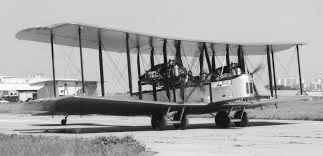
Alcock and Brown’s modified Vickers Vimy bomber

I’ve admired Lindbergh since I was a child, thrilled at his derring-do, self-reliance and a triumph of will against the odds. (Yes, I know he also had some less than admirable qualities) On a trip to Hawaii as an adult, I even made a special trip to visit his grave at the end of the road to Hana under the shade of a Java plum tree at Palapala Ho‘omau Church on Maui. I’ve read multiple books about Lindbergh, who became a sensational and lasting celebrity, and I always thought, as most Americans likely do, that he was the first to complete a nonstop transatlantic flight.

Then I came across a fascinating, dramatic, fast-paced book published in 2024, The Big Hop, by David Rooney. 

At a time when there seems to be few real heroes, Rooney’s compelling account reveals that Alcock and Brown, both veterans of WW I, were among a hardy group of men who took on the challenge of a contest sponsored by Lord Northcliffe, owner of The Daily Mail newspaper. Northcliffe   offered a £10,000 prize to the first aviators to fly non-stop across the Atlantic.

Alcock and Brown were no strangers to peril. Alcock had fought in multiple terrifying dogfights during WWI, earning a Distinguished Service Cross. Brown, captured by the Germans in 1915 after crashing his Flying Corps B.E.2c biplane in northeastern France during WWI, endured atrocious conditions in German prisoner-of-war camps. The camps, often run by sadistic commanders, offered scandalously meagre food rations, were often freezing, swarming with rats and mice, and were inattentive to the multiple injuries and health issues suffered by POWs.

To be eligible for Northcliffe’s prize, competitors had to comply with three basic conditions: the flight had to be between any point in Great Britain and any point in Canada, Newfoundland or the United States; the flight had to be non-stop; the flight had to be completed within 72 hours.

Three teams joined Alcock and Brown in Newfoundland to make the attempt at a continuous Atlantic crossing:

  • Harry Hawker and Kenneth Mackenzie-Grieve in a single engine Sopwith Atlantic
  • Frederick Raynham and C. W. F. Morgan in a single-engined Martinsyde Raymor
  •  A team led by Mark Kerr in a four-engined Handley Page V/1500 bomber Atlantic
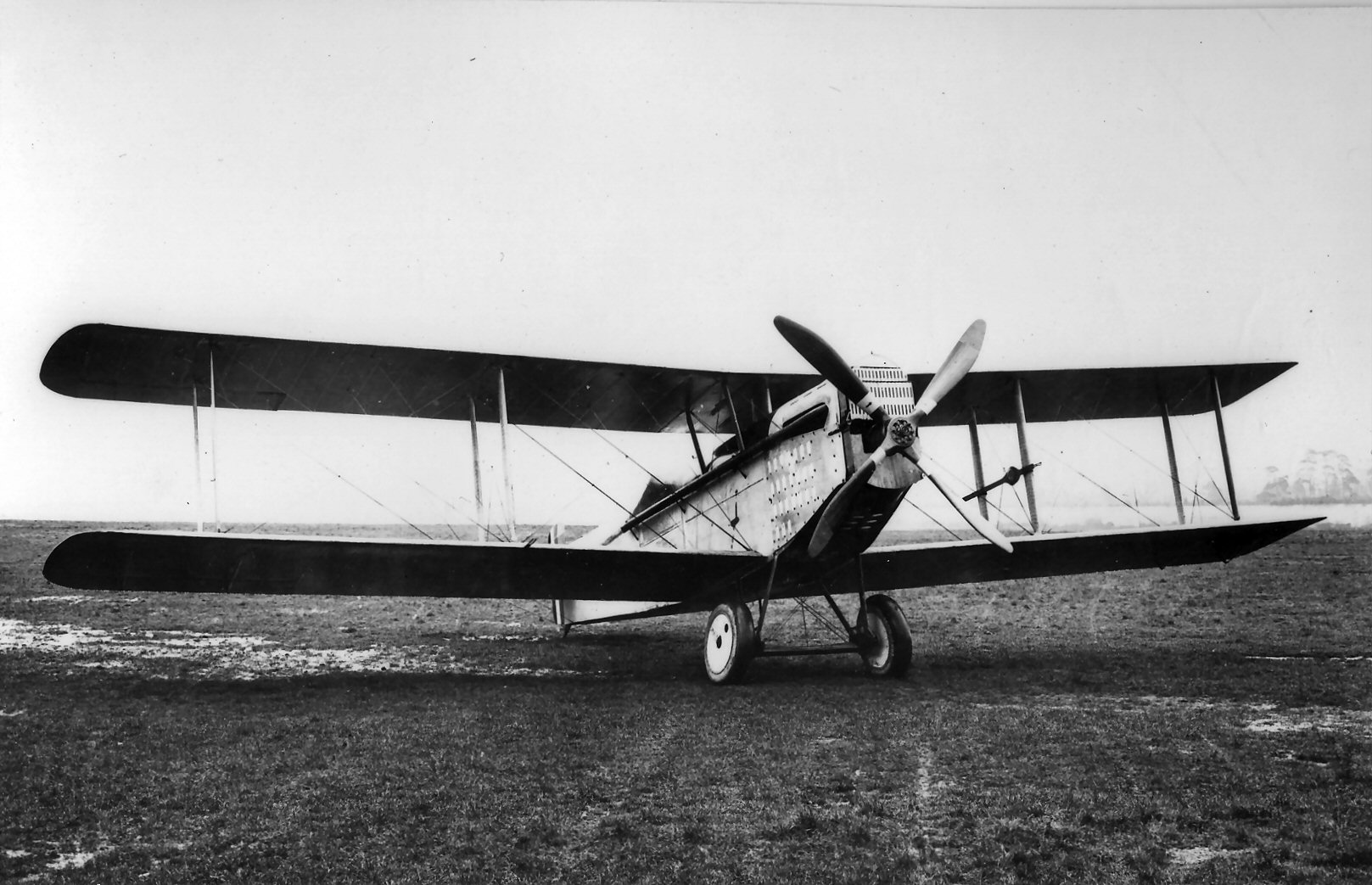
Hawker’s Sopwith Atlantic

Hawker had a successful takeoff and managed to fly about 1000 miles, but the Sopwith’s engine failed and the plane went down in the ocean about 750 miles from Ireland. Hawker and Mackenzie-Grieve were rescued by a Danish steamer, the SS Mary.

Raynham and Morgan’s plane crashed on takeoff on Newfoundland, likely due to a heavy fuel load and rough terrain.

Raynham and Morgan’s Martinsyde Raymor

Mark Kerr’s team abandoned their attempt at a transatlantic crossing after Alcock and Brown successfully crossed the Atlantic.

Mark Kerr’s Handley Page V/1500 bomber Atlantic

Alcock later said that when his  modified Vickers Vimy bomber fell into a steep spiral dive during the transatlantic flight, the plane “began to perform circus tricks”—plunging toward the ocean while he fought desperately to remain aloft. One moment the altimeter read 1,000 feet, the next only 100. When they were just 65 feet above the waves, he succeeded in regaining control.

On 15 June 1919 a telegram from Alcock and Brown arrived at the Royal Aero Club with the message: ‘Landed Clifden, Ireland, at 8.40 am Greenwich mean time, June 15, Vickers Vimy Atlantic machine leaving Newfoundland coast 4.28 pm GMT, June 14, Total time 16 hours 12 minutes. Instructions awaited.’ 

As David Rooney wrote in The Big Hop, “Today, a transatlantic flight is an unremarkable part of everyday life. It is almost a chore. But somebody had to go first.”
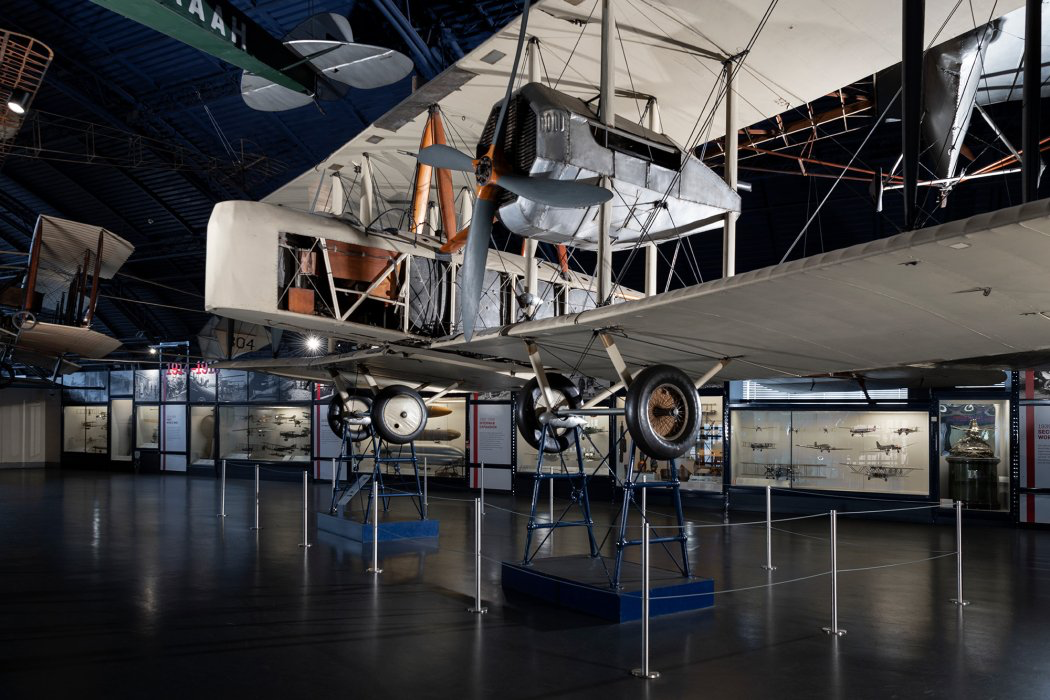
The Vickers Vimy that Alcock and Brown flew on display in the London Science Museum

Memorials at Clifden and London’s Heathrow International Airport also commemorate their achievement.

A statue of Alcock & Brown. Originally on display at Heathrow Airport, it was relocated at the Heathrow Academy but was moved to Clifden in Ireland on 7 May for an eight-week stay to commemorate the 100th anniversary of the flight on 15 June.

Correcting history: no more good guys (or girls)

In the face of student protests, Princeton University has decided that while it will retain Woodrow Wilson’s name on the Woodrow Wilson School of Public and International Affairs, it will be transparent about Wilson’s “failings and shortcomings”. A special Woodrow Wilson legacy committee of the Princeton Board of Trustees called for the University “to acknowledge that Wilson held and acted on racist views”.

Some students, under the banner of a Black Justice League, had demanded that Princeton remove Wilson’s name from the school because of his clear racism during his academic and political careers.

So now that we’re on the path of publicly highlighting not just the achievements, but also the warts-and-all failings, of Americans in the context of current thinking, I offer the following new text to accompany all monuments, displays, etc. intended to honor some prominent people.

Thomas Woodrow Wilson

woodrowWilson

Wilson (1856-1924) served honorably as President of Princeton University and as the 28th President of the United States (1913-1921) After WWI, he tried to build an enduring peace through creation of the League of Nations. He was also a leader of the Progressive Movement. In 1918 he endorsed the 19th Amendment whose ratification provided all women the right to vote by its ratification in 1920.

P.S. Arguing that segregation lessened “friction” between the races, Wilson permitted it throughout the government during his presidency. Though Wilson had initially been friendly to the Russian Revolution, his attitude changed once labor strikes, race riots, and anarchist attacks broke out across the United States in 1919. In response, Wilson’s attorney general deported left-wing activists, raided political groups, and arrested thousands. In the words of one historian, Wilson’s “legacy of repression lasted for decades”; his administration’s violation of civil liberties served as a precedent for McCarthyism in the 1950s.

In short, Wilson was a sleazeball.

Charles Augustus Lindbergh

charles-lindbergh-E

Lindbergh (1902-1974), an American aviator, made the first solo nonstop flight across the Atlantic Ocean on May 20-21, 1927.

P.S. Because of his initial opposition to U.S. entry into WWII, some accused him of being a fascist sympathizer. Also, after his and his wife’s death, it was learned that Lindbergh had maintained three secret families in Europe that included seven out-of-wedlock children borne by three different mothers. So much for the greatness of The Lone Eagle. What a sleazeball.

Franklin Delano Roosevelt

Franklin_Delano_Roosevelt-H

Roosevelt, who assumed the Presidency at the depth of the Great Depression as 32nd President (1933-1945), guided America through one of its greatest domestic crises and helped lead the Allies to victory over Germany and Japan in WWII.

P.S. Roosevelt cheated on his wife, Eleanor, all over the place, most notably with Lucy Mercer (later Rutherfurd), endorsed the internment of thousands of Japanese, Italian and German aliens and U.S. citizens in American internment camps during WWII, tried to “pack” the U.S. Supreme Court to impose his will, and failed to protect millions of Jews from being slaughtered by Hitler’s armies. In short, he was a cheating, power-hungry, civil rights ignoring sleazeball.

Martin Luther King Jr.

martinlutherKing

Dr. Martin Luther King is widely regarded as America’s pre-eminent advocate of nonviolence and one of the greatest nonviolent leaders in world history.

During the years of his leadership of the modern American Civil Rights Movement, African Americans achieved major, genuine progress toward racial equality in America. Dr. King’s “I Have a Dream” speechNobel Peace Prize lecture and “Letter from a Birmingham Jail” are among the most revered orations and writings in the English language.

P.S. King’s critics accused him of an overblown need for adulation and a complex personal life that included a myriad of affairs during his marriage to Loretta Scott King. Dr. Ralph Abernathy, a close associate of King, said in his 1989 autobiography And the Walls Came Tumbling Down that King had a “weakness for women.”Clayborne Carson—who was engaged by King’s widow, Coretta Scott King, to compile a collection of her husband’s writings—said extensive portions of the dissertation King prepared for his Ph.D. in theology from Boston University, “A Comparison of the Conception of God in the Thinking of Paul Tillich and Henry Nelson Wieman,” was plagiarized. In summary, King was actually a sleazeball.

Suzie Baldwin

SuzieQ

Baldwin, a senior at Princeton University, comes from Lexington, Kentucky and graduated from Eastview Prep School as an AP Scholar with distinction. She was captain of the debate team and earned several awards in regional competitions. She also participated in the National Honor Society and student government. At Princeton, she is pursuing a major in Political Science with a minor in Religion. She is a member of the Varsity Equestrian Team and volunteers at the Eastside Homeless Shelter. After graduation, Baldwin intends to travel in Europe, enter Harvard Law School and then work for the ACLU.

P.S. Baldwin, born in 1996, was raised an only child on a massive estate with a thoroughbred horse farm in Kentucky where she was a spoiled brat. She frequently threw temper tantrums, both in public and at home, hated to hear the word “no”, refused to clean up and put her toys away, expected to be listened to at all times, and frequently interrupted adult conversations. In high school, Baldwin exuded an air of condescension and was widely disliked by teachers for her unwillingness to listen to opposing points of view. At Princeton, she’s a royal pain-in-the-ass in class, where she constantly insists that “the revolution is coming”.  Baldwin is, in essence, a sleazeball.

John Q. Smith

johnQpublic

Smith, born Feb. 4, 1960, has, to all appearances, lived a fairly ordinary and honorable life. Raised in Hillsboro, OR, during his early summers he sold lemonade in front of his home and sent the proceeds to a local homeless shelter. In high school he played quarterback on the football team and participated in the robotics program. He graduated from the University of Oregon with a degree in accounting, after which he went to work for Precision Castparts in Portland. He is married to the former Jamie Lynn Wilkinson and has two children.

P.S. Smith presents a public picture of himself as a normal, stand-up guy.However, as a child he had a habit of shoplifting items at major retailers, in college he bought liquor for underage fraternity brothers and he hid a brief cheat sheet in his shoe when taking his CPA exam. He repeatedly overvalued his old clothes contributions to Goodwill on his tax returns and fudged on his resume.In addition, at an accounting convention in New Orleans in his 30s, he smoked some marijuana and engaged a prostitute (though he thought, at first, that she was just an attractive woman at the hotel bar). In short, beneath his thin veneer of respectability, Smith is a sleazeball.