U.S. vs. China: Cutting Our Own Throats

Under Xi Jinping, general secretary of the Chinese Communist Party (CCP), China’smilitary might , including its nuclear capabilities, have been expanding rapidly while it “has demonstrated an increasing willingness to use military coercion and inducements to achieve its aims”, according to the U.S. Department of Defense.

China’s dominance in global manufacturing is greater than it’s ever been. Its government subsidies are giving industries leverage to out-compete with American products. It had a nearly $1 trillion trade surplus with the rest of the world in 2024. 

China has an aggressive, global spy network and influence operation aimed at expanding and solidifying its power.

China is supporting the Russian war machine and is openly preparing for a war to take over Taiwan. 

China is aggressively bullying the Philippines and other countries with its claims on the South China Sea. 

The U.S is falling further and further behind China in shipbuilding, threatening maritime security around the world. A new report by the U.S. Trade Representative found, that U.S. international trade is “carried out on vessels made in China, financed by state-owned Chinese institutions, owned by Chinese shipping companies, and reliant on a global maritime and logistics infrastructure increasingly dominated by China.”

All together, China presents a clear and present danger to the United States,

But American consumers continue to subsidize the Community regime by procuring the countries products as though there’s a fire sale, American companies continue strengthening their ties to China and the strongest signal President-elect Donald Trump is sending to China isn’t, “I’m determined to protect American security”, but “Let’s make a deal”. 

Nothing illustrates that better than Trump’s words and actions with respect to TikTok, owned by the Chinese company ByteDance.

In April 2024, with bipartisan concern about the national security threat TikTok posed to the United States and its use as a tool to spread misinformation and propaganda, the House of Representatives voted 360 to 58 in the House and the Senate voted 78 to 18 for a bill requiring the sale of the social media platform to a U.S. company or face a shutdown.

Trump actually tried to ban the app himself in his first term by signing an executive order in August 2020 asserting that the app was capturing mass amounts of information about Americans and raising risks for the country.

“These risks are real,” the order said. “This data collection threatens to allow the Chinese Communist Party access to Americans’ personal and proprietary information − potentially allowing China to track the locations of Federal employees and contractors, build dossiers of personal information for blackmail, and conduct corporate espionage.”

In March 2024, however, Trump flipped his position, saying he was opposed to banning the app or forcing a sale. “Frankly, there are a lot of people on TikTok that love it,” Trump said on CNBC . “There are a lot of young kids on TikTok who will go crazy without it.”

On January 18, TikTok  did shut down, but after Trump promised to issue an executive order on Monday to “extend the period of time before the law’s prohibitions take effect,” it came back up. It announced, “In agreement with our service providers” the company “is in the process of restoring service. We thank President Trump for providing the necessary clarity and assurance to our service providers that they will face no penalties providing TikTok to over 170 million Americans and allowing over 7 million small businesses to thrive.”

The law allows Trump to grant a 90-day reprieve to TikTok, but only if he can certify at that point “evidence of significant progress” toward a sale. During that 90 days, of course, China’s alleged efforts to undermine United States security would continue, an issue of apparently little concern to Trump.

Trump’s inclination to pacify China and TikTok, reminds me of the protests of young Americans against the TikTok shutdown, favoring their personal TikTok addiction over American security.  These same self-absorbed young people are likely many of the same people who  are sustaining China’s economy by buying massive amounts of cheap fast fashion from Chinese companies like Temu and Shein, despite extensive reports  that the apparel hides the dirty laundry of environmental damage and labor exploitation.

Trump’s moves are not, however, going unchallenged.

Sen. Pete Ricketts (R-Nebraska), chair of the Senate Foreign Relations Committee, has urged US companies to halt operations with TikTok. “For TikTok to come back online in the future, ByteDance must agree to a sale that satisfies the law’s qualified-divestiture requirements by severing all ties between TikTok and Communist China,” Ricketts said.

Also breaking with Trump, U.S. Senator Tom Cotton, chair of the Senate Intelligence Committee, also issued a stern warning for companies deciding to work with TikTok after its resumption of service. “Any company that hosts, distributes, services, or otherwise facilitates communist-controlled TikTok could face hundreds of billions of dollars of ruinous liability under the law, not just from DOJ, but also under securities law, shareholder lawsuits, and state AGs, Cotton posted on X. “Think about it.”

Meanwhile, TikTok’s CEO is planning to attend a Trump victory rally at the Capitol One Arena in Washington, D.C. tonight (Sunday) and is expected to sit on the dais for Trump’s inauguration on Monday.

It’s a good time to remember Franz Stangl, the commandant of the Nazi concentration camp Treblinka in occupied Poland from Sept. 1942 to August 1943. Gitta Sereny, an Austrian born journalist, biographer and historian. wrote “Into That Darkness” based on interviews with Stangl after the war. Trying to understand how he acclimated to running the camp, she asked him how he managed to do it.  “It was the small steps. Small compromises,” he said. ” You see, if you can get people to stop believing in absolute right and wrong, you can get them to do anything.”

Americans succumbing to the allure of Chinese goods, American companies allowing their drive for profits to justify strengthening China’s economy and American politicians setting aside their legitimate concerns about the challenges from China are guilty of small steps, too.

Stay tuned.

Addendum

In still engaging wholeheartedly with China, American companies are repeating how so many have responded (or not) to Russia’s aggression in Ukraine.  According to Foreign Policy, as of 2023, around 800 multinational companies from Western and like-minded countries were still operating in Russia—either because they decided to stay or because they were still generating revenues there despite having pledged to leave. Around 60 percent of those global firms that operated in Russia before the full-scale invasion began in February 2022 still continue to do so. Second, Germany, the United States, and France are—by far—the top three countries of origin for Western firms that retain a presence in Russia, accounting for around half of them.

What is undeniably true , according to Foreign Policy, is that the hundreds of Western firms staying in Russia are helping Moscow finance the war in Ukraine. The data is eye-popping. In 2022 and 2023, firms from the G-7, European Union, and like-minded economies generated around $370 billion in revenues on Russian soil, which was more than Moscow’s military budget over the same period. In the first two years of the war, Western firms transferred more than $11 billion in corporate taxes to Russian state coffers, with Austrian bank Raiffeisen alone accounting for one-tenth of this amount. The data is not available yet for 2024, but a ballpark estimate suggests that Western firms probably paid another $4-6 billion in corporate taxes, bringing the total to roughly $16 billion funneled to the Kremlin since the invasion began.


Capturing Luigi Mangioni: A Cautionary Tale

A host of clues helped law enforcement profile Luigi Mangioni as they tried to track down the alleged killer of UnitedHealthcare CEO Brian Thompson. 

There’s a cautionary tale in one element of that profiling effort.

One of the clues to learning more about Mangioni was his reading habits, which were revealed when media found his account on the online book review site, Goodreads, used by over 150 million members.

A key feature of the Goodreads site is an ability for members to post the titles of books they’ve read. Any member accessing the site can go to another  member’s profile to see and search their bookshelf if they haven’t set their account to private. Members can even find out if anybody in their Gmail account is a Goodreads member. 

Before Mangioni’s Goodreads account was deleted, Wall Street Journal reporters discovered Mangioni had written at least 13 book reviews there. Four included links to public Google drive folders containing his thoughts and feedback. 

“A review of his reading diet suggested that, at some point, his ideas about activism had crossed into an interest in violence,” the Wall Street Journal reported, including a  “chilling” January 2024 review of  Theodore Kaczynski’s “Industrial Society and Its Future,” also known as “The Unabomber Manifesto.”

In the review, he wrote: “A take I found online that I think is interesting…Had the balls to recognize that peaceful protest has gotten us absolutely nowhere and at the end of the day, he’s probably right…. When all other forms of communication fail, violence is necessary to survive. You may not like his methods, but to see things from his perspective, it’s not terrorism, it’s war and revolution.”

Who would have thought Goodreads would be a treasure trove of information about a suspected killer.

Your first reaction might be, “Great news. A potentially dangerous person’s online actions revealed his reading habits, political opinions and behavior inclinations.”

But let’s take a look at another situation where online actions are monitored.

Earlier this month, the New York Times reported on how some students’ online typing was being monitored by local school districts: 

“Dawn was still hours away when Angel Cholka was awakened by the beams of a police flashlight through the window. At the door was an officer, who asked if someone named Madi (a student at Neosho High School ) lived there. He said he needed to check on her. Ms. Cholka ran to her 16-year-old’s bedroom, confused and, suddenly, terrified.

Ms. Cholka did not know that A.I.-powered software operated by the local school district in Neosho, Mo., had been tracking what Madi was typing on her school-issued Chromebook.

While her family slept, Madi had texted a friend that she planned to overdose on her anxiety medication. That information shot to the school’s head counselor, who sent it to the police. When Ms. Cholka and the officer reached Madi, she had already taken about 15 pills. They pulled her out of bed and rushed her to the hospital.”

The Times story noted that from 2014 to 2018, Neosho had eight student suicides. It would later be learned that the students had often told friends of their plans, but they had not reported concerns to adults. The district decided to contract with GoGuardian, a company offering software tools that scanned what students type on their computers, alerting school staff members if they appeared to be contemplating self-harm or suicidal ideation.

“Millions of American schoolchildren — close to one-half, according to some industry estimates — are now subject to this kind of surveillance,” the Times reported. “Most systems flag keywords or phrases, using algorithms or human review to determine which ones are serious. During the day, students may be pulled out of class and screened; outside school hours, if parents cannot be reached by phone, law enforcement officers may visit students’ homes to check on them.”

At first glance, all this may seem like a good idea that helps protect kids.  But the systems are incredibly intrusive, false positives can become consequential for children and their families when they prompt dramatic interventions, and there are potential privacy violations.

 “Using these tools, schools can filter web content; monitor students’ search engine queries and browsing history; view students’ emails, messages and social media content; and/or view their screens in real-time,” says EdSurgea digital news and research magazine about education. To stay the least, that can turn schools into Big Brother, invading students’ privacy not just for signs of suicide, but also for “unpopular” political opinions, signs of interest in LGBTQ issues, indications of drug use, the notes of student journalists and more.

Research by the Center for Democracy and Technology (CDT), a nonprofit organization that works to shape tech policy and architecture, shows that monitoring can have a “chilling impact” on students who won’t share their true thoughts or feelings online if they know they’re being monitored. It also raises potential concerns that the data collected through the activity monitoring will be used out of context.

Amelia Vance, founder and president at Public Interest Privacy Consulting, told EdSurge that Districts also tend to collect and store too much sensitive data that can be used to paint a very detailed, intimate profile of “everything that kids are doing, and that may be retained far longer than it should be,” said Vance. That data could be subject to a data breach.

Schools’ online surveillance is permitted through the Children’s Internet Protection Act, which requires schools to monitor students’ online activity and educate them about appropriate behavior on the internet. Some organizations are advocating that the act should be amended to make it clear it “does not require broad, invasive, and constant surveillance of students’ lives online.”

It’s also useful to remember that in today’s culture young people are always online, not just when they are doing schoolwork, so pervasive monitoring can capture their whole life. Just about every time I’m in a public place I see teenagers in groups totally absorbed in their screens, staring at them oblivious to what’s around them and likely unaware that their activity is open to capture by others.

And all of this debate about online monitoring of students is part of growing concern that it is becoming far too intrusive in the broader population. Many people who responded to a recent Pew Research Center study on the pros and cons of a digital life expressed deep concerns about people’s well-being in the future.

“Much like a mutating virus, digital services and devices keep churning out new threats along with the new benefits – making mitigation efforts a daunting and open-ended challenge for everyone,” said David Ellis, Ph.D, course director of the department of communication studies at York University in Toronto.

“The technologies that 50 years ago we could only dream of in science fiction novels, which we then actually created with so much faith and hope in their power to unite us and make us freer, have been co-opted into tools of surveillance,” the study said.

And all the data being accumulated from that surveillance is not lying in repose. It is being actively mined to build rich, detailed dossiers on each and every one of us. not just Luigi Mangioni.

America’s Elites Showcase TikTok, National Interests Be Damned.

Supporting Tik Tok is chic. 

At least that’s the message I get from the decision by Vogue’s Anna Wintour to choose Shou Chow, TikTok’s chief executive, as an Honorary Chair of this year’s over-the-top Met Gala in New York City tonight. 

TikTok declined to reveal to The New York Times its financial contribution to the Met Gala, but sponsors in previous years are known to have each kicked in roughly $5 million (TikTok and China are probably delighting in how cheaply the glitterati can be bought off).

The New York Times even took note of Chow’s high profile at the Met Gala with an article in Sunday’s paper, “TikTok’s Boss Takes On a Flashy Gig”.

All the official co-chairs of the splashy event – Zendaya, Jennifer Lopez, Bad Bunny and Chris Hemsworth – are likely on board, too, caring less about matters of substance than celebrity visibility.

All this at the same time as Washington, D.C. is focused on TikTok’s corrosive influence in the United States, its massive collection of potentially sensitive user information and its ownership by the Chinese company ByteDance. Those concerns have prompted the U.S. government to pass legislation banning the social media platform unless it is sold to a government-approved buyer.

China has criticized the congressional action, saying it undermines US claims of support for free speech, an ironic assertion since speech is tightly controlled in China, where the government maintains a vise-like grip on media, the internet, and personal expression and any dissent can result in arrest, torture and imprisonment. Moreover, American platforms such as Facebook, YouTube and X (formerly Twitter) have been banned in China for years.

(TikTok filed a federal lawsuit on May 7, 2024 challenging the constitutionality of the new law. The lawsuit accuses the government of trampling on TikTok’s First Amendment rights—as well as the free-speech rights of Americans—under the banner of national security)

Still, the style elite seem perfectly happy to help TikTok elevate its presence and influence, national interests be damned.

It may be because in their jaded eyes they see moral equivalence between the United States and authoritarian countries such as China, even though the evidence is clear that, as Douglas Murray, a British political commentator, wrote in The Free Press, “We have enormous moral authority, and…there is an oceanic gulf separating the many failures and shortcomings of the United States and the intentional and wanton taking of human life that is all too common in more authoritarian climes.”

It brings to mind Donald Trump’s admiration of authoritarian leaders. In a 2023 interview with Tucker Carlson on Fox, Carlson asked, “How smart is [Xi]? Could you tell?” “Top of the line,” Trump replied. “President Xi is a brilliant man. If you went all over Hollywood to look for somebody to play the role of President Xi, you couldn’t find [them], there’s nobody like that: the look, the brain, the whole thing.”

You may think that elites elevating questionable or authoritarian figures shouldn’t be of any concern. But people who enable dark forces, and even cheer them on, are ignoring the threat that China poses to democracy and rule of law around the world. 

China’s abdication of its responsibilities under the 1985 Sino-British Joint Declaration, where China promised to preserve the judicial system, legislative and executive autonomy, and all the key freedoms to which Hong Kong people had become accustomed, is hard evidence of China’s intentions.

The fact is that dismissal of China’s threat is naive. China is seeking to displace the United States and restore China to its rightful place. Lionizing people like Shou Chow ignores that reality. 

Confronting Chaos: Today’s New York Times

NY Times Book Review interview with Brontez Purnell, 02/25/2024:

NY Times – “What’s the last book that made you cry?”

Purnell – “The newspaper is the only thing I read that makes me cry.”

Excerpts from the Sunday New York Times, Feb. 25, 2024

Predators Leer as Moms Put Girls on Instagram, NY Times
  • Seeking social media stardom for their underage daughters, mothers post images of them on Instagram. The accounts draw men sexually attracted to children, and they sometimes pay to see more.  Interacting with the men opens the door to abuse. Some flatter, bully and blackmail girls and their parents to get racier and racier images. The Times monitored separate exchanges on Telegram, the messaging app, where men openly fantasize about sexually abusing the children they follow on Instagram and extol the platform for making the images so readily available.

          “It’s like a candy store 😍😍😍,” one of them wrote. 

  • A record number of people across the country are experiencing homelessness. The federal government’s annual tally last year revealed the highest numbers of unsheltered people since the count began in 2007.
  • …the principal challenge has come at home, where additional U.S. military assistance to Ukraine has been stymied by Donald Trump-aligned House Republicans who question the importance of Ukraine for American security and in some cases even the centrality of the North Atlantic Treaty Organization alliance itself.
  • “You feel totally helpless, totally abandoned by authorities and society in general. You feel like nothing,” said Araceli Gatica, a 32-year-old who left San Luis Acatlán, a mountain village in Guerrero (Mexico). A local gang threatened to kill her after she refused to keep paying $200 a month in extortion. She arrived recently with her three children in Ciudad Juárez, across the border from El Paso, Texas, hoping to seek asylum in the U.S.
  • Bombs that struck houses, markets and bus stations across Sudan, often killing dozens of civilians at once. Ethnic rampages, accompanied by rape and looting, that killed thousands in the western region of Darfur. And a video clip, verified by United Nations officials, that shows Sudanese soldiers parading through the streets of a major city, triumphantly brandishing the decapitated heads of students who were killed on the basis of their ethnicity.
  • Ms. Haley’s loss in South Carolina follows a string of early defeats. She argued in her speech that the nation needed new leadership in the midst of “a world on fire.” “It seems like our country is falling apart,” she said, adding that she was worried “to my core” for its future. “America will come apart if we make the wrong choices. “
  • Prominent epidemiologists have estimated that an escalation of the war in Gaza could cause up to 85,000 Palestinian deaths over the next six months from injuries, disease and lack of medical care, in addition to the nearly 30,000 that local authorities have already reported since early October.
  • And yet, even if parts of society came to terms with natural bodies, the same cannot be said for the natural process of women aging. Wrinkles are the new enemy, and it seems Gen Z — and their younger sisters — are terrified of them. Gen Z-ers are being introduced to the idea of starting treatments early as “preventative” treatment. They are growing up in a culture of social media that promotes the endless pursuit of maintaining youth — and at home, some of them are watching their mothers reject aging with every injectable and serum they can find. But considering the speed at which social media is pushing ever more unattainable beauty standards onto children, it’s time for us to consider our moral obligation to minimizing damage for the next generation.
  • … increasingly in recent months, scrolling the (Tik Tok) feed has come to resemble fumbling in the junk drawer: navigating a collection of abandoned desires, who-put-that-here fluff and things that take up awkward space…(T)he malaise that has begun to suffuse TikTok feels systemic, market-driven and also potentially existential, suggesting the end of a flourishing era and the precipice of a wasteland period.

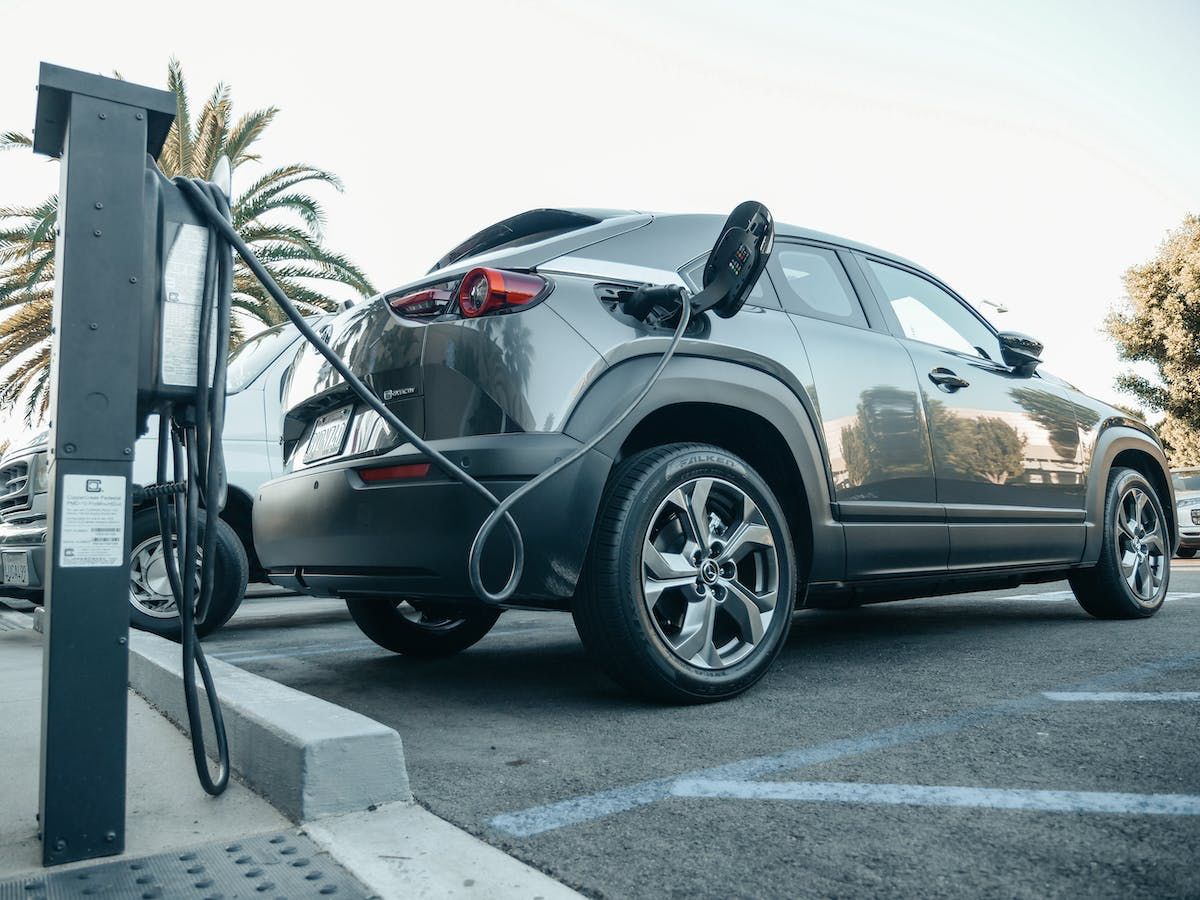
Oregon’s EV Predictions Are A Pipe Dream

Oregon’s hyper-projections for electric vehicle adoption are proving to be wishful thinking.

On Nov. 6, 2017, Gov. Kate Brown signed Executive Order 17-21 stating “It is the policy of the State of Oregon to establish an aggressive timeline to achieve a statewide goal of 50,000 or more registered and operating electric vehicles by 2020.” (emphasis in original). 

In 2019, Senate Bill 1044 restated the Zero Emission Vehicle (ZEV) adoption target as 50,000 registered on Oregon roads by 2020.

It didn’t happen.

According to information provided by the Oregon Department of Transportation on Dec. 25, 2023, there were just 5,537 registered and operating electric vehicles in Oregon in 2020, 13,572 in 2021 and 23,163 in 2022.

Senate Bill 1044 also set a target of 250,000 registered Zero Emission Vehicles on Oregon roads by 2025.

That ain’t gonna happen either.

As of July 2023, there were 51,355 Battery Electric Vehicles (BEVs), vehicles powered solely by an electric battery, with no gas engine parts, registered and operating in Oregon, according to the Oregon Department of Energy.[1] The number of Oregon-registered zero emission vehicles on Oregon roads as of September 2023 was just 70,000.  The likelihood that this number will grow to 250,000 over the next 12 months is nil.

In December 2022, Gov. Brown, in a burst of environmental overreach that slavishly followed California’s lead, announced that all new cars sold in Oregon would have to be emissions-free starting in 2035.

The way things are going, that’s a pipe dream.

The fact is adoption of zero emission EVs is falling far behind earlier exuberant expectations. Sales are growing, but the rate of growth is slowing and unsold inventory is piling up for multiple brands., despite car companies offering discounts and low-interest rates in an attempt to propel demand. The only segment seeing significant growth in demand is hybrids, which are not zero emission vehicles.

“The first wave of buyers willing to pay a premium for a battery-powered car has already made the purchase, dealers and executives say, and automakers are now dealing with a more hesitant group, just as a barrage of new EV models are expected to hit dealerships in the coming years,” according to the Wall Street Journal.  

Some resistance to EVs may also be emerging because of their environmental costs, particularly the need for minerals for the batteries. And as The Washington Post has pointed out, mining the minerals is only the first step. 

“The ore is almost never pure and needs to be refined, or processed, to become the minerals that go into batteries, the Post reported. ” When it comes to processing, there is one major player: China, which handles more than half of the minerals critical to EV batteries. These elements aren’t used only to power EVs; they also appear in everything from building materials to toys. But as the demand for EV components soars, so could dependency on China’s refining infrastructure.”

Resistance to EVs in Oregon may also be related to the insufficiency of charging ports. Oregon is hoping to install about 370 new electric vehicle charging ports across the state in 2024 as part of an Oregon Department of Transportation rebate program.

In the meantime, car companies are cutting back on plans for battery plants and EV production. 

In mid-December, for example, Ford announced it was cutting its 2024 F-150 Lightning products by half. Ford has delayed about $12 billion in new EV investments, reducing some Mustang Mach-E production and postponing opening one of two planned Kentucky planned battery plants. 

The high cost of EVs is one major factor that will likely continue to hold back their widespread adoption in Oregon. EVs remain much more expensive than internal combustion engine vehicles, especially in North America. High interest rates will also restrain purchases. Consumer frustrations with the availability of EV chargers, excessive charging times, questions about reliability and high repair costs are also undermining early robust sales predictions. 

While maintenance costs for EVs are proving to be lower than for internal combustion vehicles (EV-owners spend half as much maintaining their vehicles as their gasoline-owning counterparts, according to Consumer Reports), repairs after collisions can cost thousands of dollars because the fixes tend to require more replacement parts, the vehicles are more complicated and fewer people do such repairs.

The market is reflecting the concerns about EVs as investors have responded to the changed outlook for them. The iShares Self-Driving EV and Tech ETF | IDRV, set up in July 2019, seeks to track the investment results of an index composed of developed and emerging market companies that may benefit from growth and innovation in and around electric vehicles, battery technologies and autonomous driving technologies. A $10,000 investment at the fun’s inception would have more than doubled in value to $22,815 as of Nov. 2, 2021, but had declined to $14,432.58 as of Dec. 13, 2023.

So don’t bet the farm on EV predictions by politicians and bureaucrats. Their track record so far isn’t great.


[1] There were also 23,328 Plug-in Hybrid Electric Vehicles (PHEVs) similar to a Hybrid, but with a larger battery and electric motor, plus a charging port and a gas tank, which cannot truly be considered Zero Emission Vehicles.