Hiring Ex-Cons to Patrol the Streets. Is That Really The Answer for Portland’s Troubles?

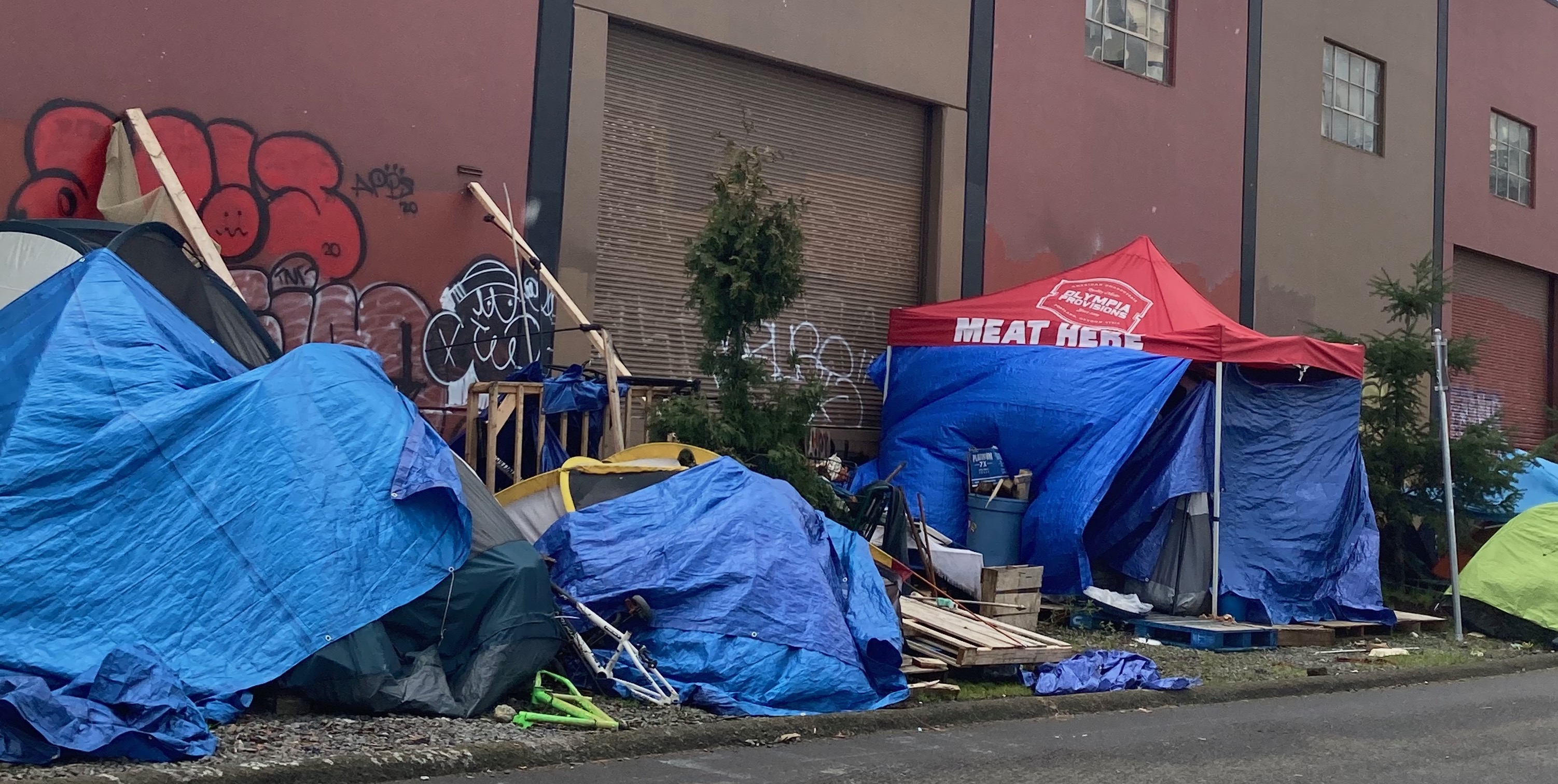
Portland’s flailing Mayor, Ted Wheeler, has a new idea, bring in ex-cons who have served decades in prison after being convicted of serious crimes, which can include murder, to patrol the city’s troubled streets.,

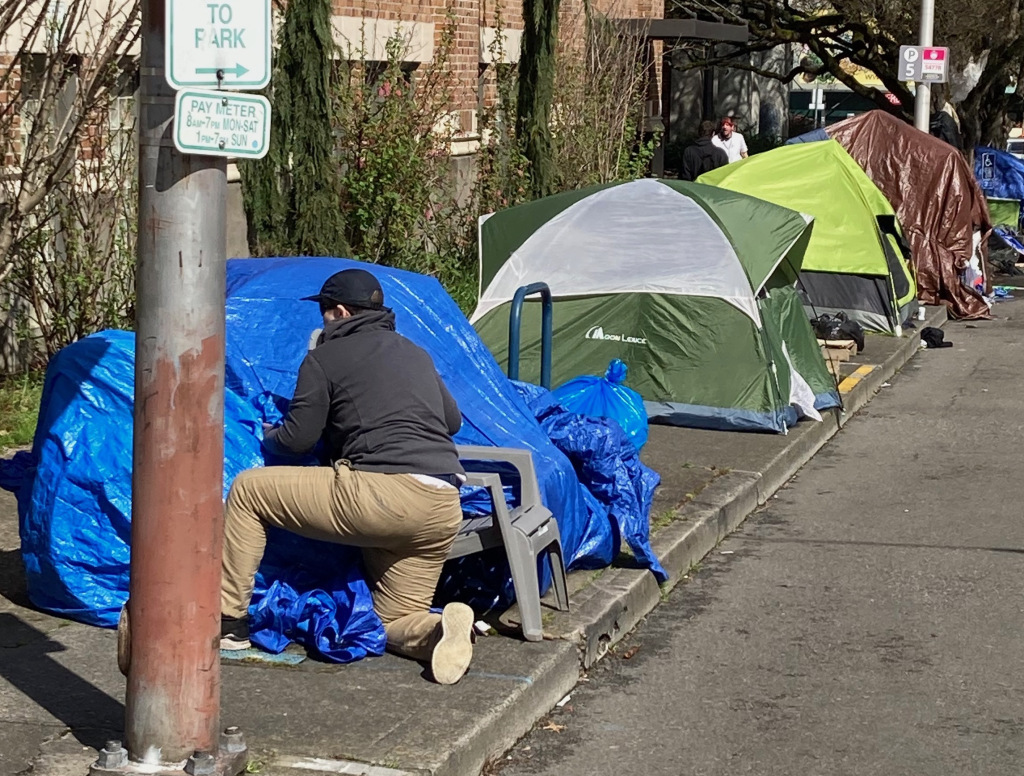
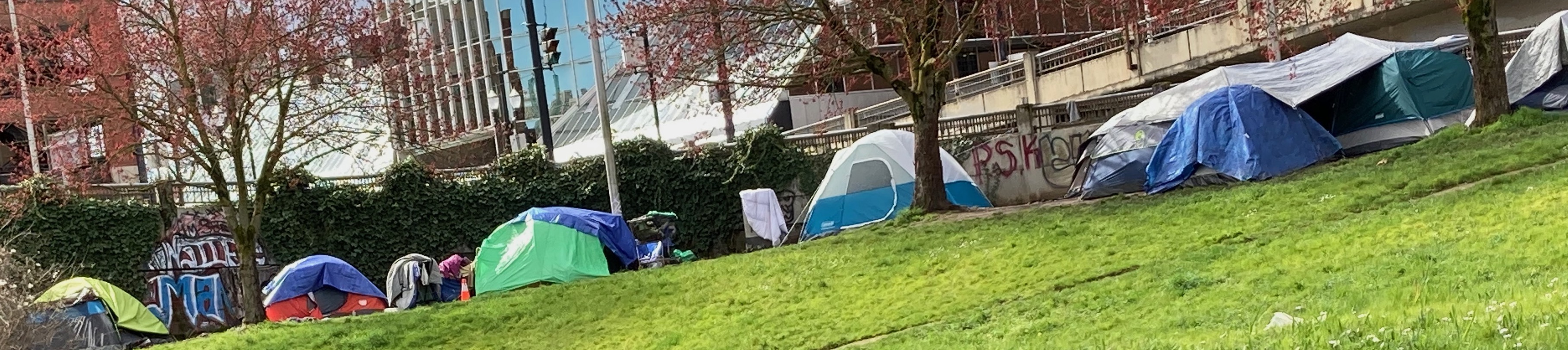
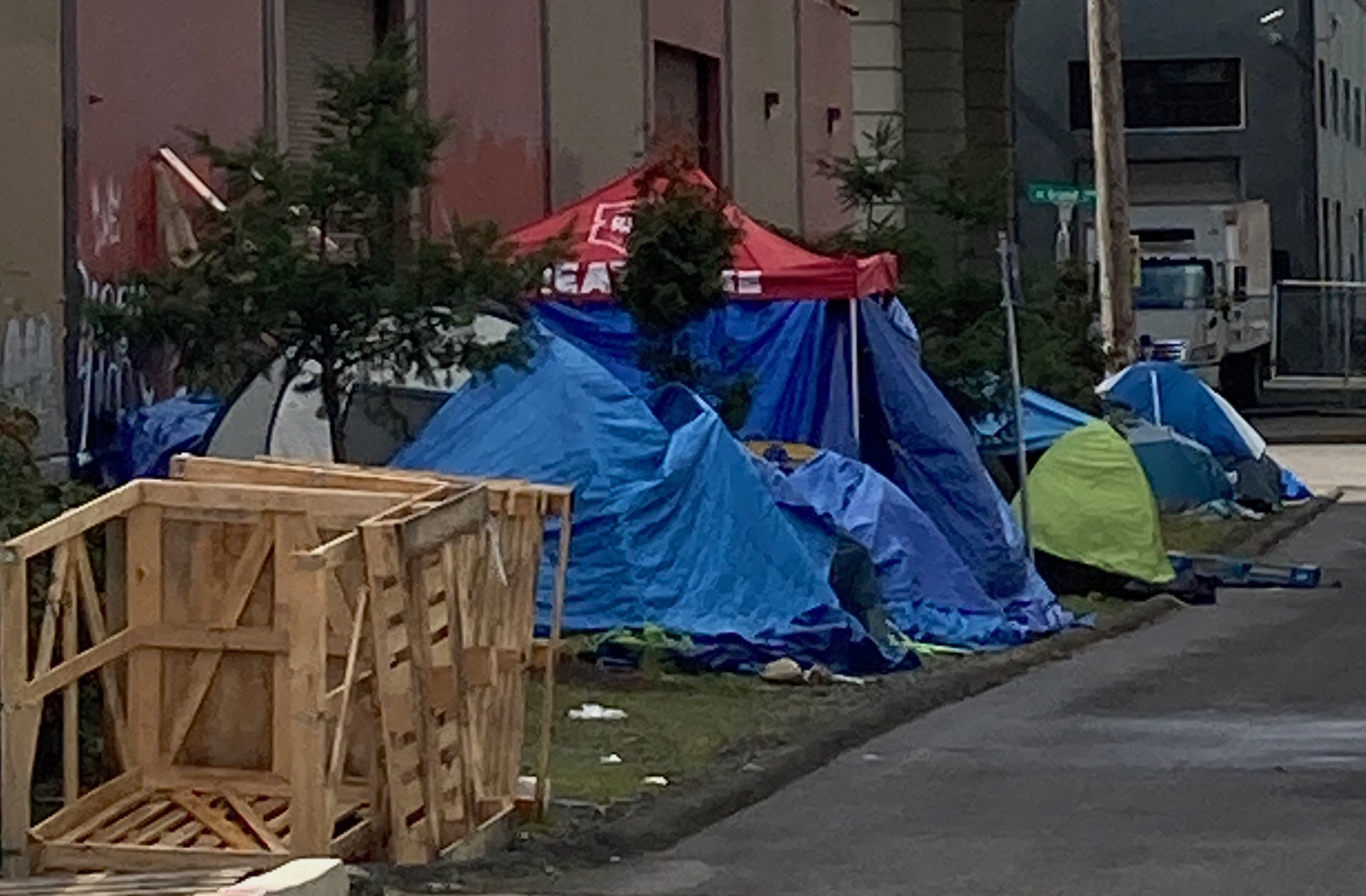
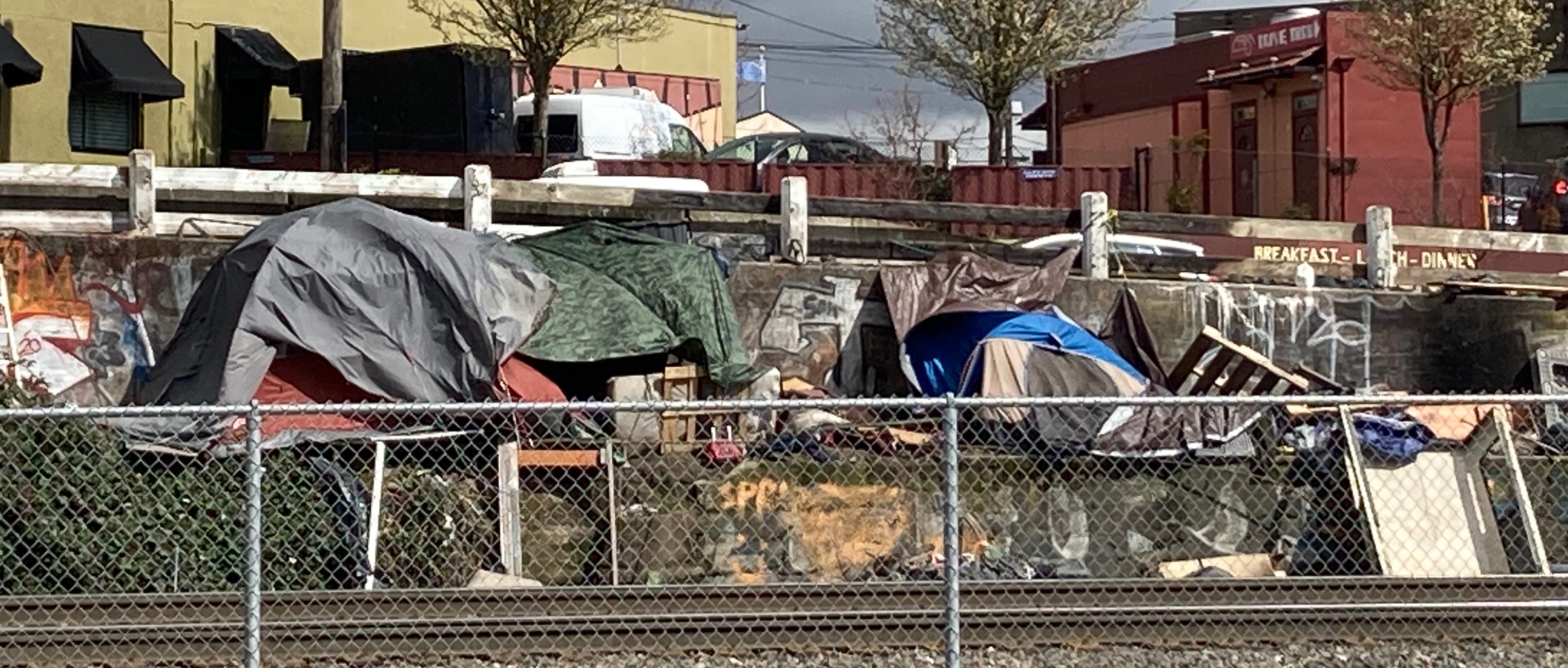
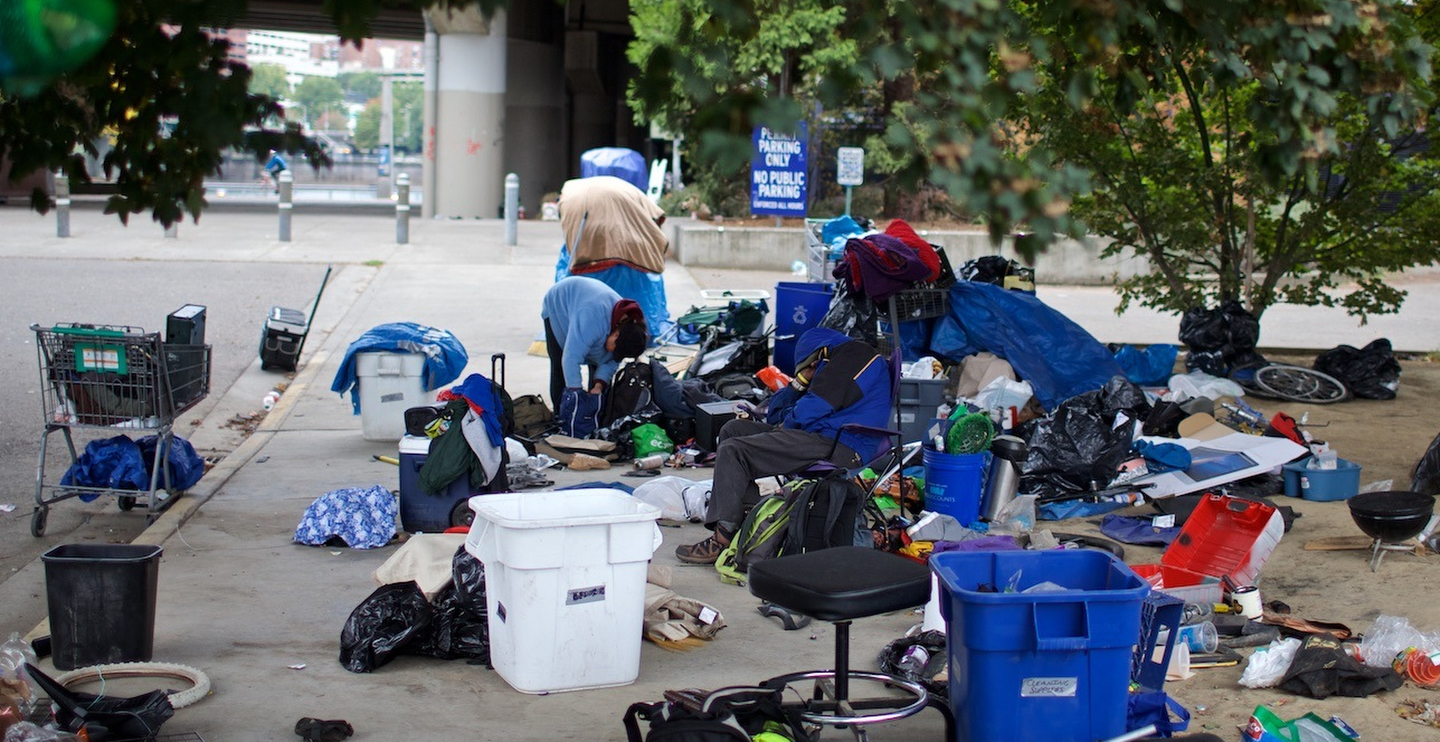
He wants to contract with a San Francisco-based nonprofit, Urban Alchemy (UA) that hires formerly incarcerated convicts to patrol troubled areas to address street-level issues rooted in addiction, mental illness and homelessness. The plan is for Urban Alchemy to deploy outreach patrols in the city center where Portland police have struggled to maintain patrols.

“We want to make sure that that presence, the things we need in place to keep downtown Portland on the path to recovery, is there 24/7,” said Jon Isaacs, the Portland Metro Chamber’s assistant director for public affairs.

In April, UA was awarded a five-year contract for up to $50 million to operate temporary, congregate shelter sites in Portland.

The new patrol idea is reminiscent of Curtis Sliwa’s Guardian Angles, formed in the 1970s to patrol New York’s subways and streets combat crime and violence in the city. The group, unarmed, but trained in karate and prepared to make citizens’ arrests , drew strong public reactions, positive and negative. 

The New Yorker described the group as “… a civilian crime-watch group whose recruits became street icons for patrolling scuzzy subway cars, intimidating chain snatchers, making the occasional citizen’s arrest, and irritating the police.”

What are the chances Urban Alchemy will be another ill-advised fiasco for Portland? 

According to a story in The Nation, UA “practitioners” or “ambassadors” guard corners and patrol Market Street, in San Francisco respond to emergency calls relating to homelessness, and monitor tent encampments and shelters. Some wear sunglasses and balaclavas with their uniform: a camouflage jacket emblazoned on the back with the group’s all-seeing-eye logo.

In February,  San Francisco selected Urban Alchemy to operate a Community Response Team, a one-year, $2.75 million police alternative that would handle low-level calls about homelessness that come in via 911.

“We should be excited,” Lena Miller, who has a PhD in psychology and co-founded UA in 2018, told The Nation. “You got long-term offenders who’ve done 30, 40 years in prison. They’re the alternatives to the police. And furthermore, the police and the police unions are with it.”

But not everybody is on board.

As Mara Math of San Francisco puts it,  “Urban Alchemy is not beloved here in San Francisco.”

Some criticize UA for policing public space, providing not compassionate care, but alternative policing. “It sounds good on paper,” Couper Orona, a street medic, told The Nation. “It’s a security force that can bully people into doing what they want—but it’s OK because it’s not the police.” Or as Street Sheet, a San Francisco street newspaper, put it, Urban Alchemy “…is structured to manage public space, not to address homelessness.”

Earlier this year the San Francisco Chronicle reported that Urban Alchemy faced multiple lawsuits over sexual harassment, unpaid overtime and forcing people to move without cause. Two employees were  shot in 2022l in the city’s Tenderloin district, raising concerns about placing them in dangerous scenarios without adequate training. 

Street Roots, a weekly alternative newspaper that covers homeless issues, has reported on a lawsuit which alleges UA “has deployed hundreds of inadequately-trained, reformed long-term felons in public spaces to assume certain government functions traditionally performed by professionally-trained law enforcement personnel.”

CityWatch, a news and information website and newsletter, has described UA as “…an agency with questionable claims to success and an unproven business strategy. The reasons for hiring such a controversial organization run the gamut of possibilities, from being too lazy to check prior performance, to desperation to hire anyone as a sign of taking bold action…”

Based on past experience, that’s Portland’s credo. Do something, anything, to make it appear like the city is taking bold action.


What Media Coverage of Portland’s Walmart Closures Has Missed

In late February, Walmart announced it would be closing a batch of its US stores, including its two stores in Portland, OR at 4200 82nd Ave. SE and 1123 N Hayden Meadows on March 24, 2022. Dr. Multiple media have subsequently reported on the Portland closures, initially focusing on the loss of employee’s jobs and the company’s assertion that the closures were due to “several factors,” including profitability concerns.

The 82nd Ave. store will close to the public on 3/24/2023. All 379 employees at the facility will be terminated effective June 02, 2023. The Hayden Meadows store will close to the public on 3/24/2023. All 201 employees at the facility will be terminated effective June 02, 2023. 

On March 4, a Twitter contributor, Evan Watson, observed that the tone of media coverage began to shift when Fox Business put out a story headlined, Walmart to shutter Portland locations just months after CEO’s warnings on crime.

Fox said a Walmart spokesperson told Fox News Digital “…there is no single cause for why a store closes. We consider many factors, including current and projected financial performance, location, population, customer needs, and the proximity of other nearby stores when making these difficult decisions.”

But Fox chose to also highlight that the closure announcements for the Portland stores and multiple others across the country came “…just a few months after the Walmart CEO warned stores could close and prices could increase in light of sky-high retail crimes affecting stores across the country.”

“Theft is an issue. It’s higher than what it has historically been,” Walmart CEO Doug McMillon said in December on CNBC, Fox reported. “He added that “prices will be higher and/or stores will close” if authorities don’t crack down on prosecuting shoplifting crimes.”

Fox went on to note that Walmart’s announcement came after other Portland stores had closed, citing crime as a reason, including a Nike store that shut down following rampant shoplifting incidents and a Cracker Barrel that shut down with employees citing security issues. Fox reported one store that shut down in November 2022, Rains PDX, had posted a note on the shop’s doors after a string of break-ins saying, “Our city is in peril. Small businesses (and large) cannot sustain doing business, in our city’s current state. We have no protection, or recourse, against the criminal behavior that goes unpunished.”

The crime connection to the Portland Walmart closure was then also picked up on The NY Post. Yahoo and local TV stations affiliated with KPTV.

Next up was Texas Gov. Greg Abbot, no doubt stimulated by the crime connection, who jumped into the fray with a tweet: “All Portland Walmart stores to close in late March. This is what happens when cities refuse to enforce the rule of law. It allows the mob to take over…”

This spurred Portland Mayor Ted Wheeler to put in his two cents, Tweeting, “Governor Abbott, are the dozens of Walmart stores that have closed in Texas in recent years all communities that “refuse to enforce the rule of law?” The retail industry is changing and retail theft is a national issue.”

And of course. dozens of people responded to Wheeler’s Tweet.

What no media mentioned, however, is the diversity of Walmart’s workforce affected by the closures or the impact of the closures on Walmart’s customers, most of whom are the lower-income Portlanders progressive political leaders always claim to be so concerned about.

I don’t have a breakdown of the workforce at the two Portland stores, but a recent analysis of Walmart’s total workforce showed that 56were women, with 42% of those are part of management and 42% of the total workforce were people of color, with 31% of them part of management.

The only saving grace for these workers is that the hiring environment is strong. Weekly jobless claims have remained near or below the 2019 prepandemic average of about 220,000 for several months, even in the face of job cuts at larger employers in white-collar industries, particularly in technology, finance and real estate.  In other words, it is still a tight labor market, so laid-off Walmart workers may have less difficulty finding work. That could change, however, as the Federal Reserve continues its aggressive effort to fight inflation and there are signs that the job market’s extreme tightness might be easing.

As for shoppers’ income, analyses by Business Insider, Kantar Media; and Statista show that, although more higher income Americans have been gravitating to Walmart groceries and other items in the current inflationary environment, more than a quarter of Walmart shoppers have an annual income of $25,000 or less and the next quarter have an annual income of just $25,000 – $49,900. 

Walmart Shoppers by Income

$25,000 or less: 26.1%

$25,000 to 49,900:  26.8%

$50,000 to 74,900:  18.3%

$75,000 to 99,900:  11%

$100,000 or more: 17.4%

Why do lower income Americans shop at Walmart? Because generally they save more of their hard-earned dollars there, particularly on generics and Walmart’s store brands. 

 “…in general, most shoppers will find that groceries at Walmart can cost less overall, even for higher-end brands that will cost significantly more elsewhere, which means if you’re on a tighter budget, grocery shopping at Walmart can help you ensure your dollar goes further,” says Julie Ramhold, consumer analyst at DealNews.com.

And the savings can be significant. 

A November 2022 Consumers’ Checkbook review of spending at Washington area grocery chains and stores concluded that a family that spends $250 per week at the supermarket, could save $2,080 per year by shopping at Walmart versus an all-store average. 

In other words, the loss of these two Walmart stores is a bigger blow to Portland than the media has been saying. Politicians need to make note of that. 

Oregon evictions: the deluge is coming

In September 2020, Portland Mayor Ted Wheeler urged more measures to help rental tenants. “While we’re in the middle of this pandemic, we need to do our part to protect renters from the tidal wave of evictions that we know is coming,” he said. 

A “tidal wave” is right. There’s now documentation that renter households across Oregon are on track to owe as much as $378 million in past-due rent by January 2021. Up to 150,000 of those households could be hit with an eviction filing at that point, a substantial number of them lower-income households.

A nationwide moratorium on evictions the U.S. Centers for Disease Control and Prevention issued is set to expire on January 1, 2021. An Oregon moratorium protects any renter unable to pay rent from being evicted until at least Jan. 8, 2021.

Moody’s Analytics analysis estimates that by the end of 2020, the average back-rent owed by renters across the United States will be $5,400, accumulating to $70 billion by the end of the year. That could translate into up to 8.4 million renter households (20.1 million individual renters) experiencing an eviction filing by January 2021. 

That’s the warnings just issued by The National Council of State Housing Agencies in a report produced by the advisory firm Stout, Risius Ross LLC.

Many renters are struggling to cover their housing costs as the coronavirus outbreak, and its economic fallout, have now stretched about seven months, and as the pandemic takes a heavier financial toll on people who are at the lower end of the earnings ladder.

“Given what appears to be a slow economic recovery, it is reasonable to expect ongoing elevated unemployment, high rent burden among low-income renter households, continued accumulation of unpaid rent, and continued risk of eviction beyond January 2021,” said the report. 

The National Council of State Housing Agencies says state housing finance agencies in 33 states , including Oregon, have established emergency rental assistance programs since the virus struck. But the group says the programs will fall short of demand.

Get ready for chaos.

Confronting the homeless: after Denver, whither Portland?

It hasn’t gotten much media coverage in Oregon, but on May 7, 2019, Denver voters defeated a ballot initiative that would have allowed homeless people to camp in outdoor public spaces like parks, sidewalks and vehicles.

Fed up voters didn’t just soundly reject the initiative; they pummeled it 83% to 17%.

Portland Mayor Wheeler says he’s going to run again. If he doesn’t resolve Portland’s homelessness crisis, he’s likely to face the same level of public rancor.

portlandcampers2

Portland, OR campers.

In 2011, only 1% of those surveyed an annual poll of Portland-area voters by DHM Research that was commissioned by the Portland Business Alliance said homelessness was the biggest issue facing Portland. By 2017, the share of those polled identifying homelessness as Portland’s biggest problem had risen to 24%.

In a Jan. 2019 telephone survey of 510 likely voters in the Portland Metro Region, including an oversample of City of Portland voters, homelessness remained the top-of-mind issue, jumping to 33% overall and 47% among voters in the City of Portland alone. Nearly one in three who said the Portland City Council was ineffective pointed directly to its failure to address homelessness as the reason.

At the same time, half the people polled said they felt the Portland area was headed in the wrong direction. A majority of voters said the region’s quality of life was declining— continuing a trend from a December 2017 study. Only 7% said the quality of life in the Portland Metro Region was getting better.

“just last weekend, a homeless couple set up a tent next to my house in broad daylight…, “ wrote a commenter on OregonLive.” I find more and more used condoms and needles by my house (which I have to dispose of), while my neighborhood experiences daily burglaries and car thefts, all of which the city does nothing about. These problems have exploded just in the past few years. I pay thousands of dollars in property and other taxes per year and get nothing in return. When is enough, enough?”

“Wheeler keeps putting more and more money in to coddling them and tells police to not help residents when harassed or attacked by transients,” wrote another commenter. “Transients have more rights in this city than tax paying voting residents and thus more and more keep coming. We need a tough policy and kick them out. Portland is slowly becoming the shelter for America’s homeless by choice, mentally ill and young lazy transients.”

Even though Portland still has a reputation as an ultra-left city, it’s clear Portlanders’ tolerance and patience are slipping.

That’s clearly what happened in Denver. another liberal (some would say more of a live-and-let-live libertarian) city,

Responding to an explosion of complaints by downtown businesses, Denver began enforcing an urban camping ban to keep people from spending the night on city sidewalks, in parks and other public spaces. In 2016, the city began sweeps to enforce the ban, picking up tents, sleeping bags and other detritus.

denverhomelesssweep

Police sweep homeless camps in downtown Denver, CO in 2016

Still, surveys in 2018 showed the homeless population increasing, with more people camping instead of staying in shelters.

“Something needs to happen. It’s gotten to the point where it is hard to live down there,” River North (RiNo) resident Josh Rosenberg, told Denver’s Channel 7 in late 2018. “It’s not just one or two homeless guys sleeping on the street; there’s been times where they will set up camp and have tarps and suitcases and shopping carts and kind of make a little village out of it and they’ll be there until somebody calls the police.”

In late 2017, homeless advocates submitted enough signatures to get Initiative 300, referred to as the “Right to survive initiative, on the ballot. The initiative wouldhave effectively overturned Denver’s urban camping ban.

“Denver faces a choice: to do nothing, and let Denverites experiencing homelessness struggle to survive, to sleep at night, and to make it to their jobs, or to take action, and take the first step toward empathy, dignity and realistic solutions,” the Yes on 300 supporters said.

But opposition quickly became obvious. “The election was a referendum on quality of life,” said one online Denver Post commenter. “If you just moved here you don’t know, but those of us that have lived in Denver for 30 years have drastically seen quality of life decrease…”

An increasing number of Portlanders feel that way as well. If he’s not careful, Ted Wheeler could get pummeled, too.

_____________

You can find more about the survey and results at the Portland Business Alliance:

https://portlandalliance.com/assets/pdfs/2019-PBA-Jobs-Economy-DHMReport-January.pdf