Oregon’s EV Predictions Are A Pipe Dream

Oregon’s hyper-projections for electric vehicle adoption are proving to be wishful thinking.

On Nov. 6, 2017, Gov. Kate Brown signed Executive Order 17-21 stating “It is the policy of the State of Oregon to establish an aggressive timeline to achieve a statewide goal of 50,000 or more registered and operating electric vehicles by 2020.” (emphasis in original). 

In 2019, Senate Bill 1044 restated the Zero Emission Vehicle (ZEV) adoption target as 50,000 registered on Oregon roads by 2020.

It didn’t happen.

According to information provided by the Oregon Department of Transportation on Dec. 25, 2023, there were just 5,537 registered and operating electric vehicles in Oregon in 2020, 13,572 in 2021 and 23,163 in 2022.

Senate Bill 1044 also set a target of 250,000 registered Zero Emission Vehicles on Oregon roads by 2025.

That ain’t gonna happen either.

As of July 2023, there were 51,355 Battery Electric Vehicles (BEVs), vehicles powered solely by an electric battery, with no gas engine parts, registered and operating in Oregon, according to the Oregon Department of Energy.[1] The number of Oregon-registered zero emission vehicles on Oregon roads as of September 2023 was just 70,000.  The likelihood that this number will grow to 250,000 over the next 12 months is nil.

In December 2022, Gov. Brown, in a burst of environmental overreach that slavishly followed California’s lead, announced that all new cars sold in Oregon would have to be emissions-free starting in 2035.

The way things are going, that’s a pipe dream.

The fact is adoption of zero emission EVs is falling far behind earlier exuberant expectations. Sales are growing, but the rate of growth is slowing and unsold inventory is piling up for multiple brands., despite car companies offering discounts and low-interest rates in an attempt to propel demand. The only segment seeing significant growth in demand is hybrids, which are not zero emission vehicles.

“The first wave of buyers willing to pay a premium for a battery-powered car has already made the purchase, dealers and executives say, and automakers are now dealing with a more hesitant group, just as a barrage of new EV models are expected to hit dealerships in the coming years,” according to the Wall Street Journal.  

Some resistance to EVs may also be emerging because of their environmental costs, particularly the need for minerals for the batteries. And as The Washington Post has pointed out, mining the minerals is only the first step. 

“The ore is almost never pure and needs to be refined, or processed, to become the minerals that go into batteries, the Post reported. ” When it comes to processing, there is one major player: China, which handles more than half of the minerals critical to EV batteries. These elements aren’t used only to power EVs; they also appear in everything from building materials to toys. But as the demand for EV components soars, so could dependency on China’s refining infrastructure.”

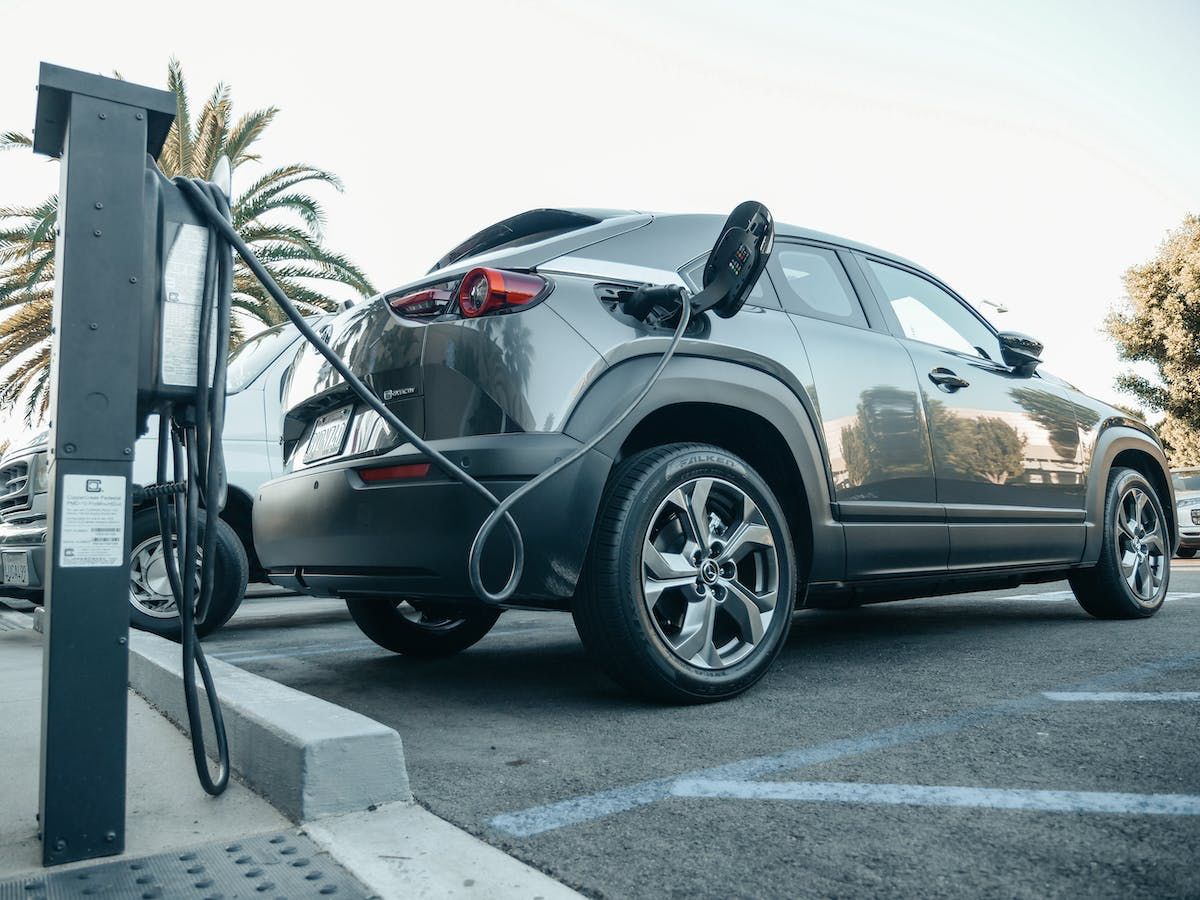
Resistance to EVs in Oregon may also be related to the insufficiency of charging ports. Oregon is hoping to install about 370 new electric vehicle charging ports across the state in 2024 as part of an Oregon Department of Transportation rebate program.

In the meantime, car companies are cutting back on plans for battery plants and EV production. 

In mid-December, for example, Ford announced it was cutting its 2024 F-150 Lightning products by half. Ford has delayed about $12 billion in new EV investments, reducing some Mustang Mach-E production and postponing opening one of two planned Kentucky planned battery plants. 

The high cost of EVs is one major factor that will likely continue to hold back their widespread adoption in Oregon. EVs remain much more expensive than internal combustion engine vehicles, especially in North America. High interest rates will also restrain purchases. Consumer frustrations with the availability of EV chargers, excessive charging times, questions about reliability and high repair costs are also undermining early robust sales predictions. 

While maintenance costs for EVs are proving to be lower than for internal combustion vehicles (EV-owners spend half as much maintaining their vehicles as their gasoline-owning counterparts, according to Consumer Reports), repairs after collisions can cost thousands of dollars because the fixes tend to require more replacement parts, the vehicles are more complicated and fewer people do such repairs.

The market is reflecting the concerns about EVs as investors have responded to the changed outlook for them. The iShares Self-Driving EV and Tech ETF | IDRV, set up in July 2019, seeks to track the investment results of an index composed of developed and emerging market companies that may benefit from growth and innovation in and around electric vehicles, battery technologies and autonomous driving technologies. A $10,000 investment at the fun’s inception would have more than doubled in value to $22,815 as of Nov. 2, 2021, but had declined to $14,432.58 as of Dec. 13, 2023.

So don’t bet the farm on EV predictions by politicians and bureaucrats. Their track record so far isn’t great.


[1] There were also 23,328 Plug-in Hybrid Electric Vehicles (PHEVs) similar to a Hybrid, but with a larger battery and electric motor, plus a charging port and a gas tank, which cannot truly be considered Zero Emission Vehicles. 


EVs Threaten Auto Parts Retailers, Too

With the UAW strike against the Big Three automakers underway, much of the media coverage has focused on how the shift to EVs threatens jobs and profits.

The predominant story line is the automaker’s assertions that accommodating the union’s demands would make them uncompetitive against nonunionized domestic and foreign EV producers, such as Tesla and China’s BYD, when the automakers are making unprecedented and costly investments in EVs. On the other side of the coin, stories focus on the Big Three workers’ fear that the shift to EVs will threaten their jobs.

Lost in the shuffle is much discussion about what the changing automotive landscape is going to mean for ancillary auto-related businesses. And much of what has been written is oddly positive. 

The Wall Street Journal, for example, recently ran a story about AutoZone, a major auto-parts retailer. “Broader industry dynamics remain favorable for auto parts retail,” the paper reported. “Cars on the road have reached a record average age of about 12.5 years and the share of vehicles in the so-called sweet spot with robust auto parts demand – those aged four to 12 years – are rising…Autozone has a clear path to growth…” 

Don’t believe it.

Auto parts retailers are in for a shellacking. 

Just as EV manufacturing will require a lot fewer workers, battery EVs are not going to need many of the products auto parts retailers sell.

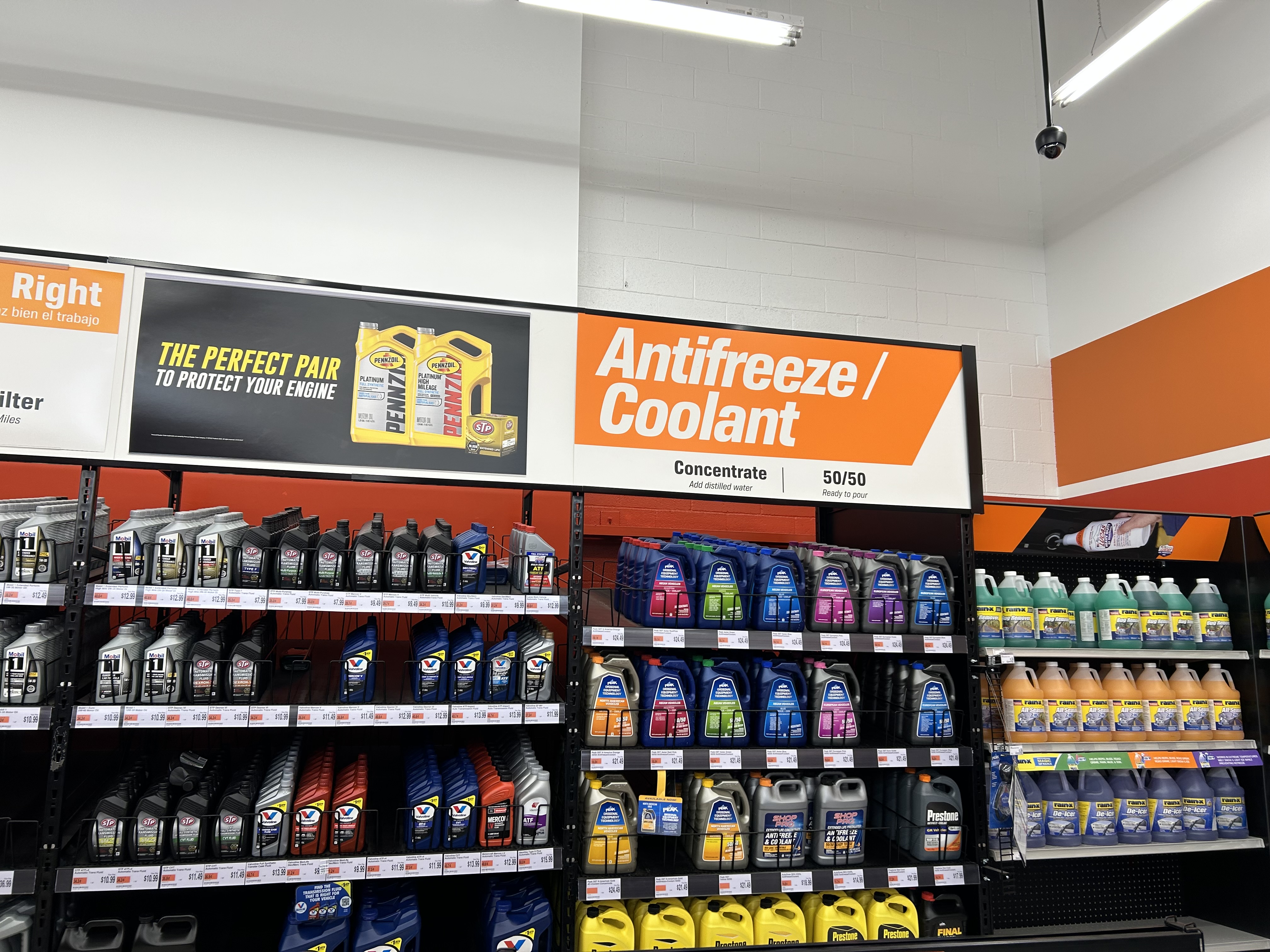
I visited a massive AutoZone store in Tigard today. “Your one-stop shop for top-quality auto parts, accessories and trustworthy advice to keep your car, truck, or SUV running smoothly,” the store’s website says.

Memphis, Tennessee-based AutoZone, Inc. (NYSE: AZO) has 7,014 stores across the United States, Mexico, Puerto Rico, Brazil and the US Virgin Islands.

A casual stroll through the Tigard store reveals the threats it faces, with shelf after shelf of products an EV owner won’t need:

 “In an EV, there is no internal combustion engine, fuel tank, or fuel pumps, “ the Natural Resources Defense Council (NRDC), points out on its website.  “You won’t need to go get an oil change, and due to the use of regenerative braking, you won’t need to get your brakes changed as often either. Many EVs don’t even need or have a transmission. Those that do have a much simpler, single-speed system as opposed to the multi-speed gearboxes in gas-burning vehicles.”

Lawrence Burns, a former vice president of research and development at General Motors Co. until 2009 who now advises companies on the future of mobility, put it this way: “You don’t have an exhaust system, so you don’t have all those parts and the catalytic converter that goes with it. You don’t have the transmission. The transmission has an enormous number of parts — torque converters and clutches and gears. The automatic transmission is one of the most sophisticated mechanisms ever created. None of those are needed on an electric car.”

Tesla says its drivetrain, what provides the power to move the wheels, only has about 17 moving parts, compared to the hundreds of parts in a typical drivetrain for an internal combustion engine vehicle.

Ernst & Young has estimated that vehicles with conventional powertrains have as many as 2,000 components in their powertrains, with even more components if parts used for engine cooling and exhaust and sensors used in emissions control systems are added. 

Green Car Future, an EV evangelist organization, emphasizes the difference in complexity between an EV and an internal combustion with the following:

Your Tesla – Complete Without…

  • Oil pump or filters
  • Fuel pump, filters or fuel injection systems
  • Air intake system
  • Exhaust system
  • Belts of any kind
  • Air filters (outside of a/c)
  • Muffler
  • Gudgeon pins
  • Chains
  • Alternator
  • Clutch
  • Multi-speed transmission
  • Conrods
  • Balance shafts
  • Spark plugs
  • Valve springs
  • Pressure regulators
  • Ignition leads
  • Main bearings
  • Piston rings
  • Coils
  • …and so the list goes on.

As Consumer Reports and the Argonne National Laboratory, a science and engineering research center, have reported, the reduction in complexity means EVs generally cost less for maintenance and have fewer maintenance requirements in comparison with internal combustion vehicles. 

With all this, my advice to investors contemplating putting their money into auto parts retailers like AutoZone for the long term?

Don’t.

Talk about inequality!

Buying a Tesla? You’re probably pretty well off.

2016_tesla_Model_S

2016 Tesla Model S

After all, the 2016 Tesla Model S 70 has a Manufacturer’s Suggested Retail Price (MSRP) of $71,200. For the high-horsepower Model S P85D, you’ll shell out $106,200. Check off all the options boxes and you’ll be looking at more than $131,000.

Or how about other electric car options, such as a 2016 BMW i8 for $141,695, a 2016 Cadillac ELR for $64,995, a 2016 Porsche Panamera S E-Hybrid for $94,250 or a 2016 Porsche Cayenne S E-Hybrid for $78,250.

If you want to go downscale, there’s also the 2016 Nissan Leaf at $29,860, the 2016 Chevrolet Volt  at $33,995 or the 2016 Volkswagen e-Golf at $29,815.

Whatever the price, the rest of us will be helping you out with a federal tax credit of up to $7500. Maybe that would make some sense if the credit was helping a broad swath of the population. But it’s not.

Even though some electric vehicles on the market are relatively low-priced, it’s the affluent who are buying them. Well-off people who have incomes in the top 20% of all taxpayers are claiming 90 percent of federal electric vehicle (EV) tax credits, according to a recent study out of the Energy Institute at Haas, at the University of California, Berkeley.

The impact of the tax credit on the federal budget is the same as it would have been with a direct subsidy because the federal government ends up with less revenue.

Maintaining such tax credits for the affluent is insane public policy.

At a time of rising national debt, and struggling efforts to meet the country’s essential needs, subsidizing the well-off to encourage them to buy electric vehicles makes no sense and exacerbates inequality.

Perhaps  Oregon State Representative Phil Barnhart, D-Eugene, Chair of the House Revenue Committee, could be the Oregon leader of an effort to repeal of the federal electric vehicle tax credit and state-level electric vehicle tax breaks. After all, Barnhart, who is always railing about the need to close tax loopholes that favor big business and the rich and to adjust our tax system to increase fairness, owns a Tesla.


Subsidizing electric cars in Oregon: a shockingly bad idea

Batteries don’t charge up electric cars; government subsidies do. At least that’s what supporters of a bill now before the Oregon House seem to believe.

The bill, H.B. 2092, would establish an Incentive Fund to make rebates of up to $3000 to purchasers of alternative fuel vehicles, including those that are powered by batteries or hydrogen fuel and gasoline-electric vehicles. Rebates from the fund could total as much as $30 million per biennium and would be on top of the already absurd federal subsidy of up to $7500.

Just what we need, a $30 million government subsidy to purchasers of pricey cars, when Oregon is already one of the top states for EV market share and the state has many other more pressing concerns to address.

The House Energy and Environment Committee held a public heating on the bill on April 2 and has a work session on the bill scheduled for today, April 16.

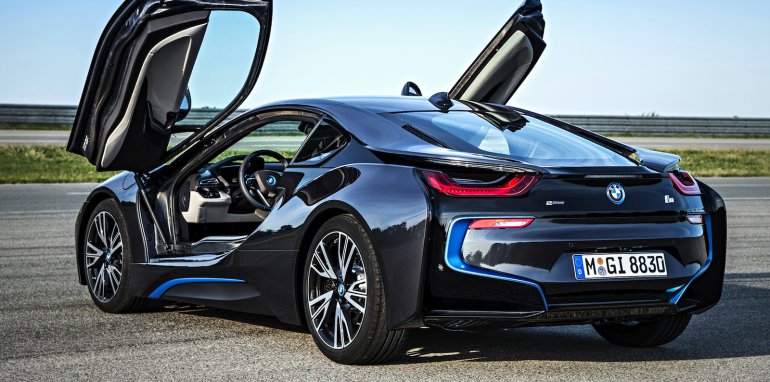
Under the bill, state rebates would help affluent Oregonians buy vehicles such as the $43,000 BMW i3 and $135,000 i8, the $42,000 Mercedes B-Class, the $106,000 Tesla Model S P85D, and the $35,000 Chevy Volt.

The purchaser of a $135,000 BMW i8 would be eligible for a $3,000 rebate from the state under H.R. 2092

The purchaser of a $135,000 BMW i8 would be eligible for a $3,000 rebate from the state under H.R. 2092

To put things in perspective, $30 million is more than the TOTAL state income tax liability of all personal filers in 16 Oregon counties in 2013: Baker County ($13.1 million), Crook ($18.2 million), Curry ($19.6 million), Gilliam ($12.1 million), Grant ($5.9 million), Harney ($5.1 million), Jefferson ($15.5 million), Lake ($6.2 million), Malheur ($17.6 million), Morrow ($11.1 million), Sherman ($2.6 million), Tillamook ($23.6 million), Union ($24.7 million), Wallowa ($6.1 million), Wasco ($23.6 million) and Wheeler ($1.3 million).

If I lived in one of those counties I wouldn’t look kindly on all my personal state income tax payments going to this alternative fuel vehicle boondoggle.

Let’s be honest here, folks. There are a lot of other places $30 million could be invested more wisely in Oregon.

Seven Oregon counties have been losing population, Coos, Baker, Wallowa, Malheur, Grant, Wheeler, and Sherman.

If the Legislature can find another $30 million to spend, why not use the $30 million to help these struggling counties attract businesses?

Deserving young people around the state are dealing with the stresses and strains of trying to find the money to pay for post-secondary education.

Why not put the $30 million in Oregon Opportunity Grants, the state’s need based financial aid program.

The state invests in Employment Related Day Care in support of the Early Learning initiative, providing greater access to quality childcare for Oregon’s working families.

How about adding $30 million to the budget for that?

A potential decline in lottery revenues during the 2015-17 biennium is likely to present budget issues for the Oregon Parks and Recreation Department, Oregon Watershed Enhancement Board, Department of Agriculture, Department of Environmental Quality, Oregon Department of Fish and Wildlife, and the Oregon State Police Division of Fish and Wildlife. In addition, the Oregon Department of Fish and Wildlife is facing a significant budget shortfall.

The legislature could help out the Natural Resource Program area by adding $30 million to its budget.

The logical decision? Short-circuit this bill.