Say “No” to Oregon Republican Push for No Taxes on Tips

What’s in the water in Salem?

On one side you have a phalanx of Democrats proposing the ludicrous idea of paying strikers unemployment benefits, which would make Oregon the only State in the country to grant unemployment benefits to striking public and private sector workers.

Not to be outdone in making nonsensical proposals, now you have a raft of Republicans, mimicking President Trump, proposing that the state forego taxing tips.

Here’s a tip – exempting tips from state taxes is a bad idea.

In their determination to position themselves as supporters of the working man (and woman), 21 of Oregon’s House Republicans have proposed a bill, HB 3914, to end taxation of tips, which are generally perceived as discretionary payments determined by a customer that employees receive from customers.

As written, the bill would not count “service charges” as tips. A restaurant, for example, recently added an automatic service charge equal to 18% of my bill. Even if that was intended to cover for a “no tipping” policy, it would be part of the server’s wages because it was not discretionary.

The 129-word Oregon bill gets right to the point, “There shall be subtracted from federal taxable income any amount of tips properly reported as wages on the taxpayer’s federal income tax return.”  That would automatically subtract tips from taxable income in Oregon, too. 

The bill deserves a quick death.

According to the IRS, “All cash and noncash tips received by an employee are income and are subject to Federal income taxes. All cash tips received by an employee in any calendar month are subject to social security and Medicare taxes and must be reported to the employer.” So, tip income is taxable income.

Charges automatically added to a customer’s check by an employer and subsequently distributed to employees are not tips; they are “service charges”. These service charges, which are appearing more often on Oregon restaurant bills, are non-tip wages and are subject to Social Security tax, Medicare tax, and federal income tax withholding.

Many consumers think the expanding pressure on customers to leave tips is already out of hand. A no tax on tips policy would likely expand the use of tipped work even further, potentially leading to consumers being asked to tip on virtually every purchase everywhere. 

A  New York Times article about tipping generated a lot of comments, many of which lamented the seeming spread of tipping expectations to multiple businesses and regardless of the amount of actual service by an employee. “Collectively, we cringe when the iPad is swiveled into our face at the coffee counter or deli; we know it is extortion rather than appreciation for services rendered,” said one person.  

There’s also a sense that some businesses are customizing the tip configuration on screen to exploit customers. Most people tip between 15-20%. If you buy a $2.85 espresso and the screen offers 15%, 20% and 25% tip options, you are likely to hit 15%, generating a tip of 43 cents. If a business wants to jack that up, however, it can give you $1, $2, or $3 options on purchases below $10, instead of a percentage. If you pick $1, you have paid a 35% tip. Devious, but effective.

Despite the massive increase in tipping expectations in recent years at multiple businesses, tax experts say a relatively small share of the workforce depends on tips. Only about 2.5% of American workers are in occupations that depend on tips, according to the IRS.  Among those workers, 37% earn less than the federal standard deduction. So, they already don’t have to pay federal income taxes.

Other tipped workers benefit from the earned income tax credit (EITC) and/or child tax credit (CTC) to the extent that they don’t have any federal income tax liability. In addition, because tipped workers would keep more of their income, employers could use this law as a justification for lowering workers’ base pay if it is currently above the minimum wage.

In fact, exempting tips from taxation can actually lead to situations where low-income workers end up effectively losing income through losing eligibility to tax credits such as the Earned Income Tax Credit (EITC) and Child Tax Credit (CTC).

The Budget Lab at Yale, a non-partisan policy research center, estimates that less than 3 percent of families would benefit from a broad-based income tax deduction for tips in 2026, but it would still cost the federal government more than $100 billion over the next decade. Restricting eligibility to workers in the leisure and hospitality industries would reduce the cost by more than 40 percent, but that would still leave a big hit on the deficit unless taxes were raised elsewhere.

Even the liberal Oregon Center for Public Policy opposes the no tax on tips idea.

In October 2024, Daniel Hauser, Deputy Director of the Center, said that ending taxes on tips “makes the tax system less fair” because workers receiving tips would get a tax break, but not low-paid workers in general.

If you have two workers, one a bartender who earns about $10,000 of his $40,000 annual income in tips and the other a warehouseman who makes all of his $40,000 income in wages, it wouldn’t make sense to give the bartender a tax break but leave the warehouse worker hanging out to dry, Hauser argued. 

 It also “creates openings for people to think about, how can my income be categorized as a tip and get this tax break too?,” Hauser wrote.  Third, he said, “if the goal is to help the economic security of low-income workers, it’s not very effective…and there are much better ways for us to try and help low-income families in Oregon.” 

He’s right.

Here’s a Tip For Oregon Businesses: Stop Demanding Tips

The consumer-price index rose 8.5% in March from a year earlier, the fastest annual pace since December 1981, the Wall Street Journal reported on April 20. That’s the figure most consumers think of when they worry about rising prices.  But there’s another number too often ignored – the cost of tips and the insidious spread of tip expectations.

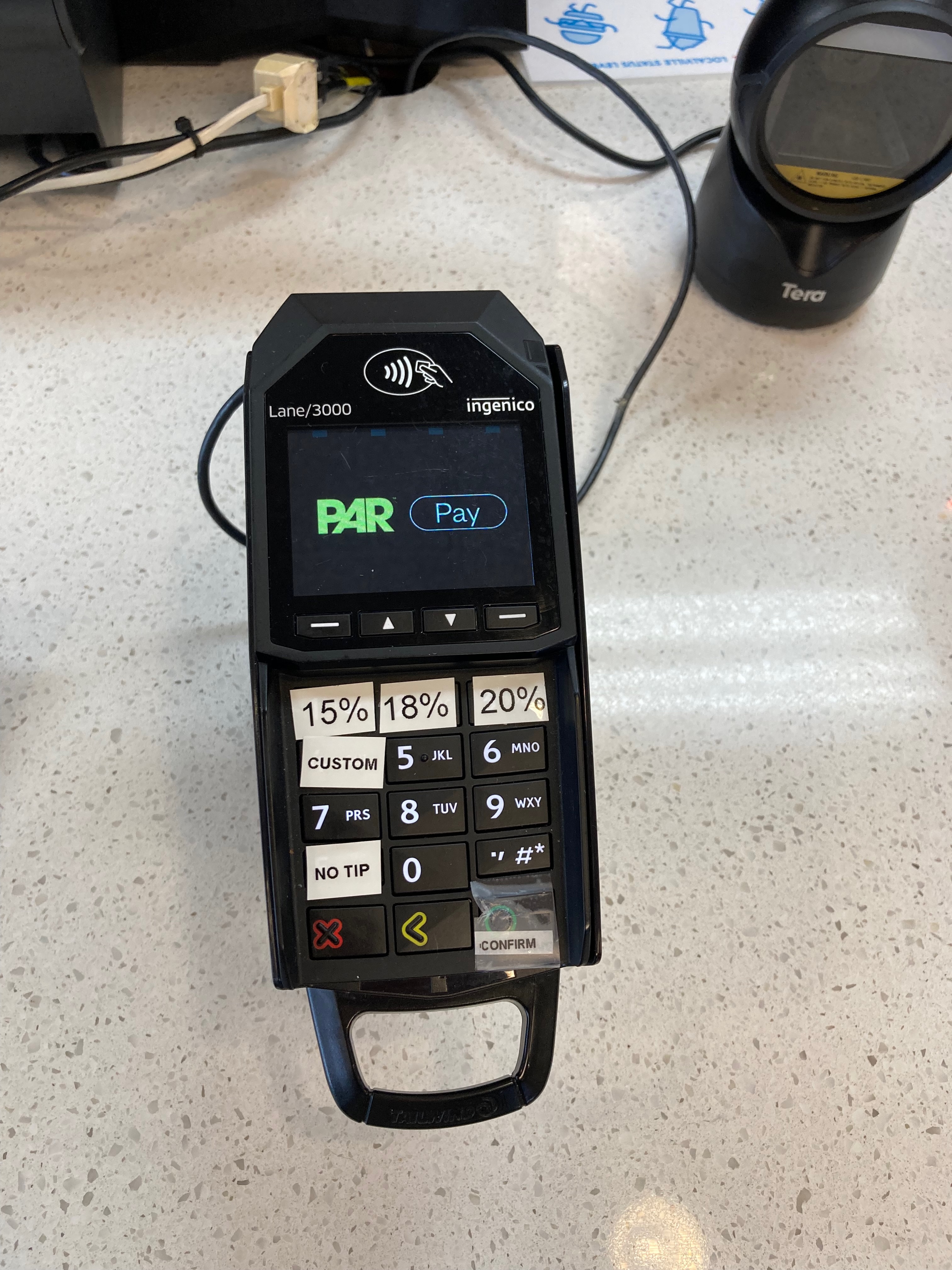
In a recent stop at a local Burgerville, I encountered a Uniden digital payment device with tip options: 15%, 18% 20%, custom and no tip.

The evil digital tip trap

At another burger place, their digital payment device presented me with tip options of 15%, 20% and 25%.

A 20% or 25% tip, where there used to be no tip expectation at all, is equivalent to a 20-25% price increase on top of any inflationary increase in the price of the food itself. 

Tip requests on electronic devices are becoming so pervasive that they are starting to feel like demands, particularly when the transactions are occurring under the watchful eyes of employees. 

As consumers are becoming more price sensitive over a host of goods and services, the reality that tips are increasingly becoming part of the price is raising concerns.

“Seems like anyone doing anything for you these days, even if it is in the scope of their responsibilities/expectations, has their hand out,” a recent commenter on a Tripadvisor Forum complained. “You don’t tip at a fast food restaurant,” another commenter said emphatically.

Consumer concerns are growing, particularly in states like Oregon where workers, such as servers, must be paid the state’s minimum wage ($14 in the Portland Metro Area, one of the highest in the United States according to the National Conference of State Legislatures) even if the worker also receives tips.

Regular minimum wage laws often don’t apply to restaurant workers, such as servers, who earn a lot of their income from tips. Federal law stipulates that employers can pay tipped workers as little as $2.13 an hour (an amount unchanged since 1991), so long as their tips bring them up to at least the federal minimum wage of $7.25. 

Shoppers are generally sympathetic to the plight of low-wage workers, but public resentment seems to be growing when tips are expected in food service and other situations where a worker is also guaranteed earning an elevated minimum wage or in situations where tip expectations are new. We don’t generally tip retail workers in a mall who are also guaranteed a respectable minimum wage in Oregon, for example.

A recent New York Times article about tipping generated a lot of comments, many of which lamented the seeming spread of tipping expectations to multiple businesses and regardless of the amount of actual service by an employee:

“Travelling to the USA each year from Europe I notice this just getting more extreme and expensive with zero additional benefits to the consumer. The next screen flip I get, I would like to flip my own card with discount options for the proprietor that is forcing us to shoulder his staffing costs.”

“I hate the companies that use payment systems like Square, and I particularly hate the companies, like Square, that have brought this new dystopian world upon us. Down with tipping!”

“Collectively, we cringe when the iPad is swiveled into our face at the coffee counter or deli; we know it is extortion rather than appreciation for services rendered.” 

Enough!

A tip for Marriott: pay your housekeepers better

You know how hotels keep adding extra charges, like resort fees, housekeeping fees and energy surcharges? Marriott International, Inc. has come up with a new way to pick your pocket.

Apparently Marriott thinks its housekeepers deserve to make more. But it doesn’t want to pay them more. So it announced today that it is initiating a program under which some of its hotels will be placing envelopes in rooms, encouraging guests to leave tips.

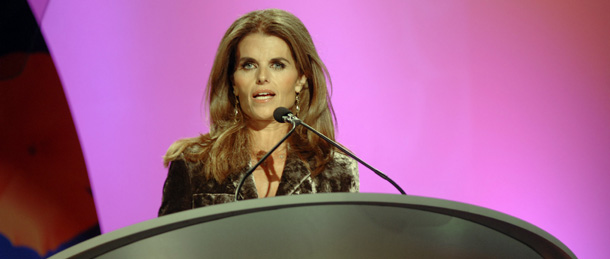
Marriott will be the first partner in the program, called The Envelope Please, an initiative of A Woman’s Nation, founded by Maria Shriver.

Maria Shriver, Founder of A Woman's Nation, initiator of The Envelope Please

Maria Shriver, Founder of A Woman’s Nation, initiator of The Envelope Please

“The Envelope Please was born from having conversations with women I’ve met who have taken care of my room during hotel stays. Their stories of hard work and perseverance inspired and informed me,” Shriver said.

Starting this week, Marriott will place envelopes in more than 160,000 guest rooms at participating Marriott-managed hotels in the U.S. and Canada.

In a news release, Marriott noted that The American Hotel and Lodging Association, a trade association, suggests tipping housekeepers between $1 and $5 per night, and recommends tipping daily rather than at the end of a stay to ensure that the money goes to the person cleaning the room each day, who is paid by the hour.

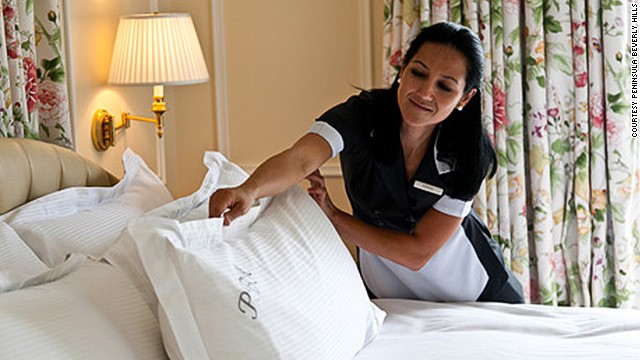
housekeeper

Maids and housekeepers earned a median salary of $19,780, or approximately $9.51 per hour, according to the U.S. Bureau of Labor Statistics. Hourly pay can vary depending on the location and quality of a hotel.

Marriott says on its job applications that: (1) A Marriott housekeeper generally starts out earning around minimum wage; (2) Pay rates for housekeepers may increase over time; and (3) On average, a Marriott housekeeper earns $10.00 per hour.

The likely result of this new tip policy will be increased income for some housekeepers, but don’t be too quick to praise Marriott for its public-spirited generosity, because the program won’t cast the hotel chain a dime. Instead, it will be one more hidden fee, although a voluntary one.

So here’s a tip for Marriott. If you really care about what your housekeepers are making, pay them more.