Separate but equal: a discredited idea re-emerges at Reed College

reedcollege

“We envision a vibrant, safe, and inclusive living environment…,” says Portland’s Reed College.

So much for that.

Like many other colleges and universities in the United States moving away from true diversity, Reed has approved an exclusive residential living space, Students of Color (SOC) Community, in the school’s Canyon House.

According to Reed, The SOCis an intentional living community for returning students of color to heal together from systemic white supremacy, recover the parts of ourselves and our cultures that have been stolen through colonization, and dream new visions as we build vibrant, loving community together.”

With schools blasting out their commitment to diversity, why are so many heading down the path of separateness? Why such sophistry by week-kneed administrators in their efforts to justify “separate but equal” facilities?

Controversy has already erupted over other “themed” residential housing programs, with schools establishing separate living quarters for groups such as Native Americans, LGBTQ, non gender-binary, Asian/Pacific American,  and so on.

Two members of the United States Commission on Civil Rights —Gail Heriot and Peter Kirsanow, recently sent letters to the University of Connecticut and the Department of Education’s Office for Civil Rights, lambasting UConn’s establishment of ScHOLA2RS House, a “Learning Community designed to support the scholastic efforts of students who identify as African-American/Black through academic and social support, access to research opportunities, and professional development.”

“We are deeply concerned that ScHOLA2RS House was established for the purpose, and will have the effect, of racial separation of African-American male students from others living in University of Connecticut dormitories,” Heriot and Kirsanow wrote. “… It is hard to avoid the conclusion that ScHOLA2RS House was intended to promote racial isolation on campus.  Moreover, it is impossible to avoid the conclusion that it will in fact promote racial isolation on campus.”

“…we cannot understand how race-separate “learning communities” help achieve its ideals of “meaningful diversity” or prepare students to work in a racially diverse marketplace. Rather, by limiting students’ exposure to persons of other racial and ethnic backgrounds, they are more likely to do the opposite,” their letter to UConn said.

Cal State Los Angeles is embroiled in the same issue.

In November 2015, Cal State Los Angeles’ Black Student Union sent a list of demands to William A. Covino , the school’s (president). One of the demands was for “…the creation and financial support of a CSLA housing space delegated for Black students and a full time Resident Director who can cater to the needs of Black students. “


In response, this year the school debuted the Halisi Scholars Black Living-Learning Community.

The Black Student Union posted on its Instagram account,…we have finally launched our Black student housing that we demanded from President Covino back in November. The Halisi Scholars Black Living Learning Community is intended for the students on our campus that identify as Black/African American. “

Cal State LA says it is not sponsoring a segregated housing community because “This community is open to all students”, but students who identify as African-American are prioritized in selection.

 After Americans have struggled for decades to bring us all together, universities across the country are acquiescing in, even heartily endorsing, racial and ethnic separateness.

When the University of Oregon recruited Bobbie Robinson and Charles Williams as its first black athletes in 1926, they weren’t allowed to live in university dormitories. All students of color were required to rent housing off campus.

It was a long struggle, but universities across the country eventually opened their dormitories to residents of all colors and cultures. How ironic that many universities have now turned back the clock by establishing separate housing by race, ethnicity, sexual orientation and more.

It’s all being done under the guise of building cultural bonds, uniting people with shared values and strengthening identities.

At Brown University in Rhode Island there’s Hispanic House and Harambee House, which is “…focused on perpetuating a sense of community, academic excellence, and leadership for all people of African descent.”

Harambee is Swahili for ” pulling or working together.” But self-segregation isn’t pulling people together; it’s pushing them apart, capitulating to pressure and reinforcing separatism.

Some academics, perhaps eager for student approval, argue that faculty support for self-segregation is a good thing because it stimulates bonding. “We teachers have an opportunity to stand in solidarity with our students who call for programmed houses on the basis of politicized racial identities,” wrote Amie A. Macdonald, a professor at John Jay College of Criminal Justice/CUNY.

“…anyone concerned with the long-range goal of securing broad-based freedom and autonomy should be committed to the continued existence of racially defined communities on the grounds that different racial identities provide people with different experiences of the world,” Macdonald said. “The preservation of racially defined communities of meaning secures the continued diversity of interpretations of the social world, thereby providing a richer array of know/edges from which to construct social, political, aesthetic, spiritual, and scientific accounts of our experience.”

Except for the fact this is very professorial, it sounds suspiciously like something Alabama Governor George C. Wallace would have said in less flowery language to affirm “segregation today . . . segregation tomorrow . . . segregation forever.”


Black student demands to erase history at the University of Oregon: just say no.

DeadyHall

The University of Oregon’s first building opened on Oct. 16, 1876. It was named Deady Hall for Judge Matthew Deady in 1893.

On November 17, 2015, the University of Oregon’s Black Student Task Force sent a list of twelve demands to four top university administrators.

The group asserted that “the historical structural violence and direct incidents of cultural insensitivity and racism” on campus create an environment that prevents black students from succeeding.

In order to create “a healthy and positive campus climate” for black students, the Black Student Task Force said:

“We…DEMAND that you work with us and implement the following list of programs:

  • Change the names of all of the KKK related buildings on campus. DEADY Hall will be the first building to be renamed.
  • We cannot and should not be subjugated to walk in any buildings that have been named after people that have vehemently worked against the Black plight, and plight of everyone working to achieve an equitable society.
  • Allowing buildings to be named after members who support these views is in direct conflict with the university’s goal to keep black students safe on campus.
  • We demand this change be implemented by Fall 2016”

University President Michael Schill appointed a committee of administrators, faculty, and students to develop criteria for evaluating whether to strip the names off Deady Hall and Dunn Hall, part of Hamilton residence hall, because of their association with racist actions in Oregon in the nineteenth and early twentieth centuries.

Once the criteria were established, Schill assembled a panel of three historians to research the history of Matthew P. Deady and Frederick S. Dunn to guide his decision-making.

The historians recently released an exhaustive, extensively footnoted 34-page report.

The report described the complex lives of both men, lives filled with negatives, positives, ambiguity and contradictions.

Deady, though a territorial legislator, constitutional convention delegate and presiding officer, and U.S. District Judge for thirty-four years, supported slavery.

Dunn, though he graduated from the University of Oregon, spent the vast majority of his career there and enjoyed a national reputation as a classics scholar, was also a prominent member of the Ku Klux Klan and led the Eugene chapter.

Based on the historians’ report, there is no question that both men held views and engaged in activities that would be considered loathsome today.

But that does that mean their names should be summarily erased from history at the University of Oregon.

To surrender to the Black Students Task Force’s demands would be to embrace presentism in all its intellectual weakness, to endorse interpreting historical events without any reference to the context or complexity of the time.

If there’s one thing students should learn in college, it’s that It makes no sense to see the world entirely in the present tense.

In looking at history, it is critical to acknowledge the degree to which our position and experiences color how we look at bygone days, places and people.

Presentism “…encourages a kind of moral complacency and self-congratulation,” said Lynn Hunt, president of the American Historical Association. “Interpreting the past in terms of present concerns usually leads us to find ourselves morally superior…,”

Many of our forbears espoused racial views that are today considered abhorrent, including people we still consider exemplars of the American experience.

In addition, somebody’s historical goodness and worth should not be based on just one criteria.

“…making race the only basis of judgment…does violence to the spirit of historical investigation, because it reduces complex individuals to game show contestants who must simply pass or fail a single test,” says David Greenberg, a professor of history and journalism and media studies at Rutgers University.

In April 2016, Schill and Vice President for Equity and Inclusion Yvette Alex-Assensoh published a letter to the campus community saying, “…we recognize that we can and must do more as an institution to meet the needs of Black students”, but made no commitments on the building renaming issue.

When Schill does make a decision, I earnestly hope he will just say no.


The minimum wage mess: what hath we wrought?

brownminimumwage

Governor Kate Brown signs the bill to raise Oregon’s minimum wage, March 2, 2016

If you listen just to Democrats in the Oregon Legislature, the just-signed law upping the minimum wage is an unalloyed victory for all.

Tell that to Oregon universities that are faced with big pay increases and to the students who aren’t going to get a job because their school can’t afford to pay them.

According to The Oregonian, Oregon’s new minimum is likely to lead to cutbacks in student hiring or in the number of hours they’re allowed to work, and possibly higher tuition to cover added costs.

At the University of Oregon, the annual wage increases will translate into an estimated $2.3 million in additional wages

In the 2017-19 biennium, $3.4 million in the next funding cycle and $6.1 million by the 2021-23 biennium.

With similar impacts expected at Oregon State University, the school could be looking at reducing the number of student jobs by 650 to 700 positions by FY2019 to cut costs, said OSU spokesman, Steve Clark.

Small businesses across the state are agonizing over the minimum wage increases, too. They’re not going to be talking about ‘What do we do to expand? What do we do to hire more people?’,” said Anthony K. Smith, Oregon state director for the National Federation of Independent Business.

“They’re going to be making some very difficult decisions, none of which are going to help them grow. They have to decide whether to reduce hours for employees, raise prices on customers, make a reduction in their workforce, relocate their business, or maybe even close their doors.

Then, of course, Oregon’s minimum wage changes will contribute to the increased hodgepodge of pay rates in the Pacific Northwest.

If you are an employer in the Pacific Northwest, the minimum wage you will have to pay your employees early next year could, depending on the type and specific location of your business, the age of the employee, and other factors, be any one of the following: $8.05, $9.25, $9.47, $10.15, $10.50, $12.00, $12.50, $13.00, $15.24, $10.35, $11.15, $14.50, $15.00, or $15.24.

If you have to pay prevailing wage rates, your minimum wage rate will be even more expansive. In Oregon, for example, if an employer chooses to include the fringe rate with the basic hourly rate, the minimum hourly wage will be $57.26 for a boilermaker, $52.36 for a dredger and $34.31 for a Highway & Parking Striper.

Clearly, the plethora of minimum wages is going to generate maximum confusion for employers and employees alike. What a mess.

Want to know the whole bewildering picture? See below.

FEDERAL

2016 Federal hourly minimum wage: $7.25 an hour

Federal (sub) Contractors hourly minimum wage

Rate: $10.15. Calculated annually based upon cost of living and rounded to the nearest multiple of $0.05

WASHINGTON

2016 Washington hourly minimum wage outside Seattle, SeaTac and Tacoma: $9.47

  • 14- and 15-year-olds may be paid 85% of the minimum wage ($8.05).
  • Businesses may not use tips as credit toward minimum wages owed to a worker.
  • Under Initiative 688, approved by Washington voters in 1998, the state makes a cost-of-living adjustment to its minimum wage each year based on the federal Consumer Price Index for Urban Wage Earners and Clerical Workers (CPI-W) (www.ssa.gov). The state’s minimum wage is recalculated each year in September. Th4 new wage takes effect the following year on January 1.

2016 Seattle hourly minimum wage

A wage includes salary, hourly pay, commissions, piece-rate, and non-discretionary bonuses. Wages do not include tips or payments towards medical benefits. However, payment toward medical benefits can reduce employers’ minimum wage requirements temporarily until 2018.

Small Employers – 500 or fewer employees

 To calculate employer size, count the employer’s total number of individual employees worldwide. For franchises, count all employees in the franchise network.

All small employers are required to pay minimum compensation. Small employers can meet this requirement in two ways:

  • Pay hourly minimum compensation rate; or
  • Pay hourly minimum wage and make up the balance with employee tips reported to the IRS and/or payments toward an employee’s medical benefits plan. For an employee’s medical benefits to qualify toward the minimum wage, the plan must be the equivalent of a “silver” level or higher as defined in the federal Affordable Care Act. An employer cannot pay a reduced minimum wage if the employee declines medical benefits or is not eligible for medical benefits.
  1. Hourly Rate

Small employers pay hourly minimum compensation rate based on the following schedule:

  Minimum Compensation
2016 (January 1) $12.00/hour
2017 (January 1) $13.00/hour
2018 (January 1) $14.00/hour
2019 (January 1) $15.00/hour
  1. Tips and/or Medical Benefits

Small employers pay an hourly minimum wage and reach the minimum compensation rate through employee tips reported to the IRS and/or payments toward an employee’s medical benefits plan. If the tips and/or payments toward medical benefits do not add-up to the minimum compensation rate, the small employer makes up the difference.

  Minimum Compensation Minimum Wage
2016 (January 1) $12.00/hour $10.50/hour
2017 (January 1) $13.00/hour $11.00/hour
2018 (January 1) $14.00/hour $11.50/hour
2019 (January 1) $15.00/hour $12.00/hour
2020 (January 1) $15.75 $13.50/hour
2021 (January 1) $16.49 $15.00/hour

In 2025, small employers will pay the same minimum wage rate as large employers and will no longer count employee tips and/or payments toward an employee’s medical benefit plan toward minimum compensation. The City of Seattle will calculate percentage changes to the minimum wage based on the Consumer Price Index (CPI).

Large Employers: 501 or more employees

To calculate employer size, count the employer’s total number of individual employees worldwide. For franchises, count all employees in the franchise network.

Large employers can meet Seattle’s minimum wage requirements in two ways:

  • Pay hourly minimum wage; or
  • Pay reduced hourly minimum wage if the employer makes payments toward an employee’s silver level medical benefits plan. For an employee’s medical benefits to qualify toward the minimum wage, the plan must be the equivalent of a “silver” level or higher as defined in the federal Affordable Care Act. An employer cannot pay a reduced minimum wage if the employee declines medical benefits or is not eligible for medical benefits.
  1. Hourly Rate

Large employers who do not pay towards an employee’s medical benefits plan pay hourly minimum wage based on the following schedule:

  Minimum Wage
2016 (January 1) $13.00/hour
2017 (January 1) $15.00/hour
  1. Medical Benefits

Large employers who do make payments toward an employee’s medical benefits plan pay a reduced minimum wage based on the following schedule:

  Minimum Wage
2016 (January 1) $12.50/hour
2017 (January 1) $13.50/hour
2018 (January 1) $15.00/hour

Once Seattle’s minimum wage reaches $15.00/hour, payments toward medical benefits no longer impact employees’ minimum wage. In subsequent years, the City of Seattle will calculate percentage changes to the minimum wage based on the Consumer Price Index (CPI).

SeaTac Minimum Wage 

Rate: $15.24 for workers in and near Seattle-Tacoma International Airport.

 Tacoma, WA hourly minimum wage

11/04/15 – Tacoma, WA voters approved a $12 city minimum wage phased in over two years. The new minimum wage will apply to most employees who work 80+ hours per year within Tacoma city limits and begins with an increase to $10.35 an hour on February 1, 2016, Jan.1, 2017: $11.15; Jan. 1, 2018: $12.


OREGON

Current:  $9.25

 Tier 1 (the Portland urban growth boundary)

July 1, 2016: $9.75

July 1, 2017: $11.25

July 1, 2018: $12

July 1, 2019: $12.50

July 1, 2020: $13.25

July 1, 2021: $14

July 1, 2022: $14.75


Tier 2 (Benton, Clackamas, Clatsop, Columbia, Deschutes, Hood River, Jackson, Josephine, Lane, Lincoln, Linn, Marion, Multnomah, Polk, Tillamook, Wasco, Washington and Yamhill counties)


July 1, 2016: $9.75

July 1, 2017: $10.25

July 1, 2018: $10.75.

July 1, 2019: $11.25

July 1, 2020: $12

July 1, 2021: $12.75

July 1, 2022: $13.50


Tier 3 (Malheur, Lake, Harney, Wheeler, Sherman, Gilliam, Wallowa, Grant, Jefferson, Baker, Union, Crook, Klamath, Douglas, Coos, Curry, Umatilla and Morrow counties)


July 1, 2016: $9.50

July 1, 2017: $10

July 1, 2018: $10.50

July 1, 2019: $11

July 1, 2020: $11.50

July 1, 2021: $12

July 1, 2022: $12.50


Milwaukie hourly Minimum Wage for city employees

10/22/15 – The Milwaukie City Council adopted a $15 minimum wage for all city employees. The resolution passed unanimously, putting in place a $15 minimum wage for not only full-time employees of the city of Milwaukie, but also part-time and seasonal workers, as well as interns.

Prevailing Wage Rates

In January and July of each year, Oregon’s Bureau of Labor and Industries publishes the prevailing wage rates that are required to be paid to workers on non-residential public works projects in the state of Oregon. Quarterly updates are published in April and October.

REGION #2

Clackamas, Multnomah and Washington Counties

Under the Davis-Bacon Act, employers can either choose to pay the fringe benefits as additional cash wages (which would result in an effective hourly wage of $38) or provide a “bona fide” benefit plan. Benefits that might be included in such a plan are retirement accounts (401(k) or pensions), medical insurance, vision insurance, dental insurance and life insurance.


Basic hourly rate             Fringe rate

Boilermaker               $33.92                           $23.34

Dredger                       $39.08                           $13.28

Fence constructor

(non-metal)               $24.10                         $10.12

(Metal)                          $20.50                         $ 5.09

Highway & Parking

Striper                            $26.11                          $ 8.20

In responsione: OSU and state support for higher education

After I wrote about Oregon’s abandonment of higher education, focusing on the situation at the University of Oregon, Steve Clark, Vice President for University Relations at OSU, responded to me with some informative comments.

Steve Clark, Oregon State University

Steve Clark, Oregon State University

Mr. Clark agreed to let me share them:

Like you, at Oregon State, we worry about the cost of higher education for Oregonians. I would like to share with you a number of steps we have taken to minimize the impacts of this change in state funding, but we do realize that there is more work to do in this regard. And while our efforts are many and have had a positive impact, we continue to urge Oregon legislators to restore higher education funding at least to levels provided in 2007.

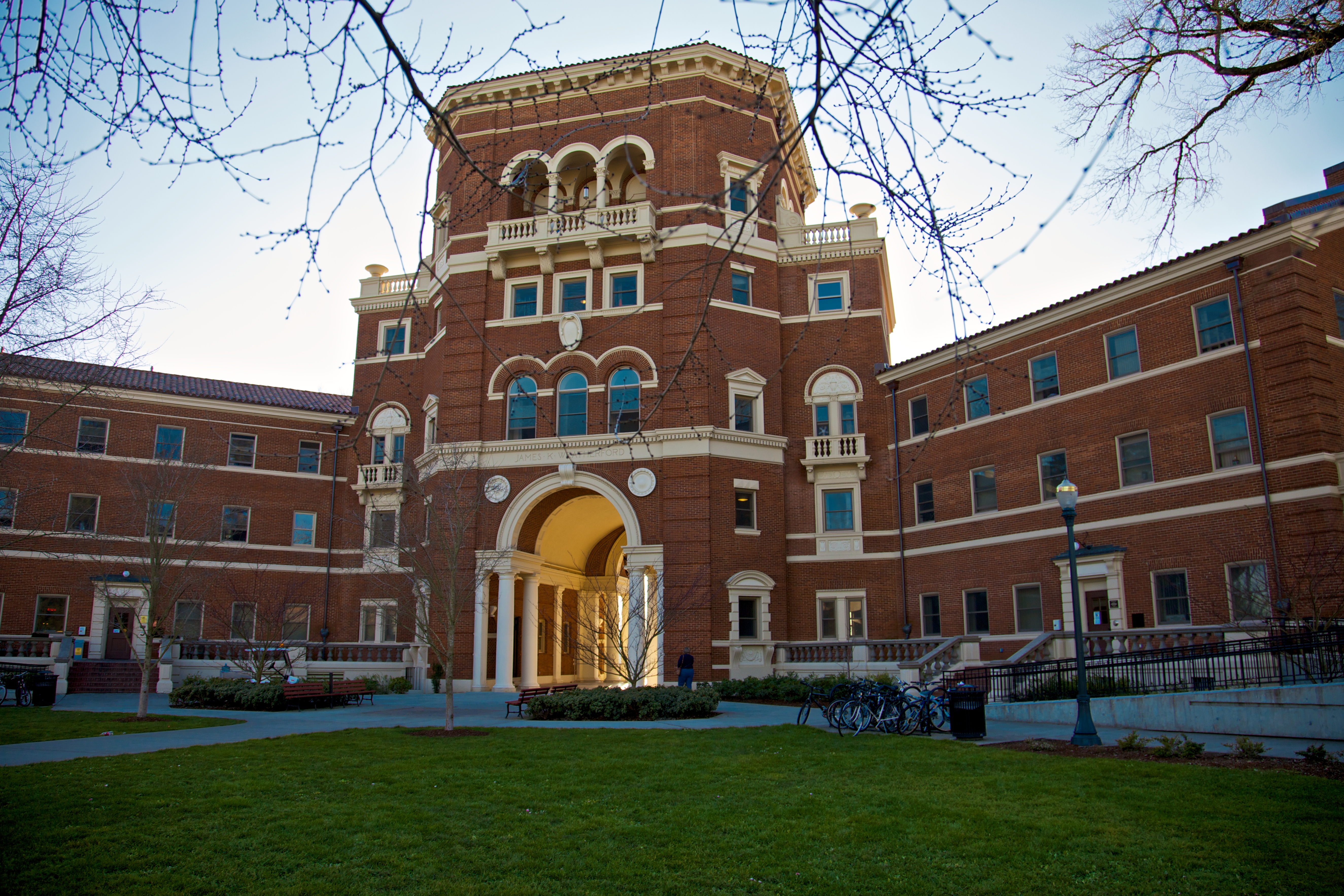
Weatherford Hall at Oregon State University

Here is some information that I hope aids you and shows how Oregon State remains a public university for Oregonians.

I realize that while your column largely shared statistics about the University of Oregon, your point was that all of Oregon’s public universities are public in name only.

While OSU’s out-of-state and international enrollment has grown over the past decade, OSU’s undergraduate enrollment is still 74% made up of Oregonians. That percentage has declined over the past decade, but we have pledged to not let it fall below 66%. That’s our land grant mission.

Meanwhile, we have launched OSU Open Campus to bring educational programs directly to Oregon communities in partnership with local school districts, ESDs and community colleges. And we have dual degree partnerships with all of our Oregon’s 17 community colleges … so students can simultaneously enroll at OSU and the community college near their home and then transfer after a year or two of community college to attend Oregon State without losing credits. In some cases – such as in an agricultural sciences program with Klamath Community College – a student can graduate in four years without ever having to come to Corvallis, but instead take community college courses for two years or so and then complete their degree taking OSU on-line distance learning classes.

We do recognize tuition and fees are expensive. OSU’s in-state tuition and fees are $9,123 per year compared to the $9,918 you pointed out about UO. Still that is a lot more than students paid 7 to 10 years ago. Out-of-state tuition at OSU is $26,295 per year compared with $30,888 at UO.

With such a heavy tuition load in mind, we launched many years ago our Bridge to Success program. It enables 2,600 to 3,000 Oregonians per year to attend OSU without paying any tuition and fees. The program combines Oregon Opportunity Grants, federal Pell funds and university funds. And then there is our OSU Foundation philanthropy – The Campaign for OSU has raised more than $183 million for student scholarships.

Yes, there is a significant issue with how the state funds higher education in Oregon and we are working with the legislature to change that. Time will tell about such efforts. Meanwhile, as Oregon’s statewide university, we will not abandon Oregonians. And we will work hard to moderate costs, bring higher education to many Oregon communities, and grow funding for financial aid for students.

Steve Clark

Oregon’s abandonment of higher education: it’s criminal

The Oregon Legislature should be declared a crime scene.

Oregon’s state universities are increasingly that in name only. Because of the Legislature’s calculated callousness or pure indifference in funding Oregon universities, young people across the state are facing soaring college loan debts and diminished opportunities for higher education.

The state is also sabotaging its goal of ensuring that 40 percent of all adult Oregonians have a bachelor’s degree or higher by 2025 and undermining the rationale for the state having a say in the operations of what are still called public universities.

SONY DSC

Governor John Kitzhaber says he deserves to be re-elected because he froze tuition at Oregon colleges.

Sure, for one year.

In June, the state Board of Higher Education approved a tuition freeze for in-state undergraduates for the 2014-2015 academic year.

But that was after steadily escalating tuition rates for in-state undergraduates, particularly after voters approved Measure 5 in 1990 and K-12 school funding shifted to the state, with a devastating impact on state support for higher education that has continued to today.

Over the past 15 years, tuition and fees at the University of Oregon, for example, leaped from $3810 for the 1999-2000 academic year to $9918 for the 2014-2015 academic year.

In other words, since the 1999-2000 academic year, tuition and fees for in-state undergraduates have increased 160 percent. You can’t duck the fact that this
substantially outpaced the 42.8 percent rate of inflation.

During that same period, the state’s share of the University of Oregon’s annual operating budget has been in steady retreat from 17.1 percent in 1999-2000 to 5.5 percent in 2013-2014. Extrapolating this trend, state investment will reach zero by 2022.

Coincident with the loss of state support has been an increase in out-of-state students. In the 2013-2014 academic year, non-residents, undergraduate and graduate, reached 46.5 percent of total enrollment.

The University cloaks the leap in out-of-state students as a well-intentioned effort to ensure diversity, but it’s really all about money. In 2014-2015, for example, while in-state students are paying $9918 in tuition and fees, out-of-state students are paying $30,888.

It could be argued that out-of-state students aren’t displacing in-state students, given that the number of undergraduate in-state students has increased about 20 percent since 1999-2000. The number of out-of-state students, however, mushroomed by 250 percent during the same period.

What that means is that the university is likely drawing fewer students from low-income Oregon families and competing more aggressively for students who can afford a more expensive education. In addition, as the state’s population has increased, it’s getting tougher for in-state students to get in.

Had the state not cut university funding so severely, it could have or kept tuition and fees down or accommodated more in-state students.

The pullback in state funding raises the question of why the state continues to impose its will on the universities in so many ways. “The defunding of public higher education by the states inevitably inaugurates a new conversation about who controls them and whose interests are to be served,” says Thomas Mortenson, senior scholar at The Pell Institute for the Study of Opportunity in Higher Education.

Indeed.


Originally published in the Hillsboro Argus, Oct. 28, 2013