Detention Centers and Worse: It Can Happen Here

“Last year’s One Big Beautiful Bill Act helped roughly triple the ICE budget, allocating $45 billion for building new immigration centers and hiring 10,000 new ICE agents. One dispiriting lesson of the imperial boomerang is that, once. bought and paid for, structures of intimidation and oppression tend to endure.” David Wallace-Wells, 1/25/2026

Update, 1/30/2026 – The Washington Post reported that local officials are raising logistical and humanitarian concerns in 23 towns where U.S. Immigration and Customs Enforcement plans to convert industrial buildings into detention centers that combined would hold up to 80,000 people. ICE has offered few details about its plan since The Washington Post first reported on it  in December 2025. One detention center the Department of Homeland Security wants to open would be a more than 1 million sq. ft. industrial warehouse in Social Circle, Georgia that would be retrofitted to hold 8,500 detainees and hundreds of staff, more than the city’s total population. The City Manager, Eric Taylor, has said the city does not have the water or sewer infrastructure to support the facility. Unaddressed is the question of why the government needs such huge detention facilities when it says it’s objective is to deport people.

Update, 2/12/2026 – It’s not just more detention centers coming down the pike. Wired reported that ICE and DHS have quietly carried out a months-long expansion, securing more than 150 new leases and office expansions across nearly every state, often in or near major metro areas. Many new facilities sit near schools, medical offices, and places of worship, with DHS pressing the GSA to bypass standard procurement rules and hide lease details under claims of “national security.”

Update, 2/21/2026 – Funding for the Department of Homeland Security expired has expired and Democrats have made   10 demands to rein in Trump’s surge of deportation forces into U.S. cities. One of those demands is “Compliance with Basic Detention Standards and Oversight of Facilities.” Think about it. Incarceration facilities are already legally required to be humane and hygienic., but as Radley Balko has reported on SubStack in The Unpopulist, there is a growing pile of reports from attorneysjournalistshuman rights groupsjudges, and others about shocking, inhumane conditions at facilities around the country.

Update, 3/7/2026 – So far, DHS has completed the purchase of 10 of the 23 detention center properties it initially pursued, spending more than $890 million, according to deed records or statements by local officials. Efforts to acquire 10 other properties — in Indiana, Minnesota, Mississippi, Missouri, New Hampshire, New York, Oklahoma, Tennessee, Texas and Virginia — have failed, according to statements by local officials or building owners.


In the years preceding his death in 1875, George Templeton Strong, a prominent Wall Street attorney, kept a voluminous journal of his life and times. In April 1865, near the end of the American civil war, he wrote, “These four years have reduced me to something like pauperism, But I am profoundly grateful for them nevertheless. They have given me — & my wife & my boys, — a country worth living in & living for, & to be proud of.”

I can’t say President Trump’s inhumane crackdown on immigrants and harassment and murder of American citizens in the past year have given me a country worth living in, living for and to be proud of.

Not while the Trump administration promotes hatred of “the other”. David Masciotra. David Masciotrar ecently wrote in the Washington Monthly, “Through (Elie) Wiesel’s story and the stories he told and created, two truths become inescapable. The first is that it is naïve, if not catastrophic, to underestimate the power of hatred. “

I doubt 7-year-old Diana Crespo, a second grader at Gresham’s Alder Elementary School, and 5-year-old Liam Ramos, the bunny-hatted child detained by immigration agents in Minneapolis, see America as a country worth living in and living for and to be proud of either. They are both being held at the U.S. Immigration and Customs Enforcement’s South Texas Family Residential Center in Texas.

U.S. Immigration and Customs Enforcement has spread its detention center tentacles across the United States: 
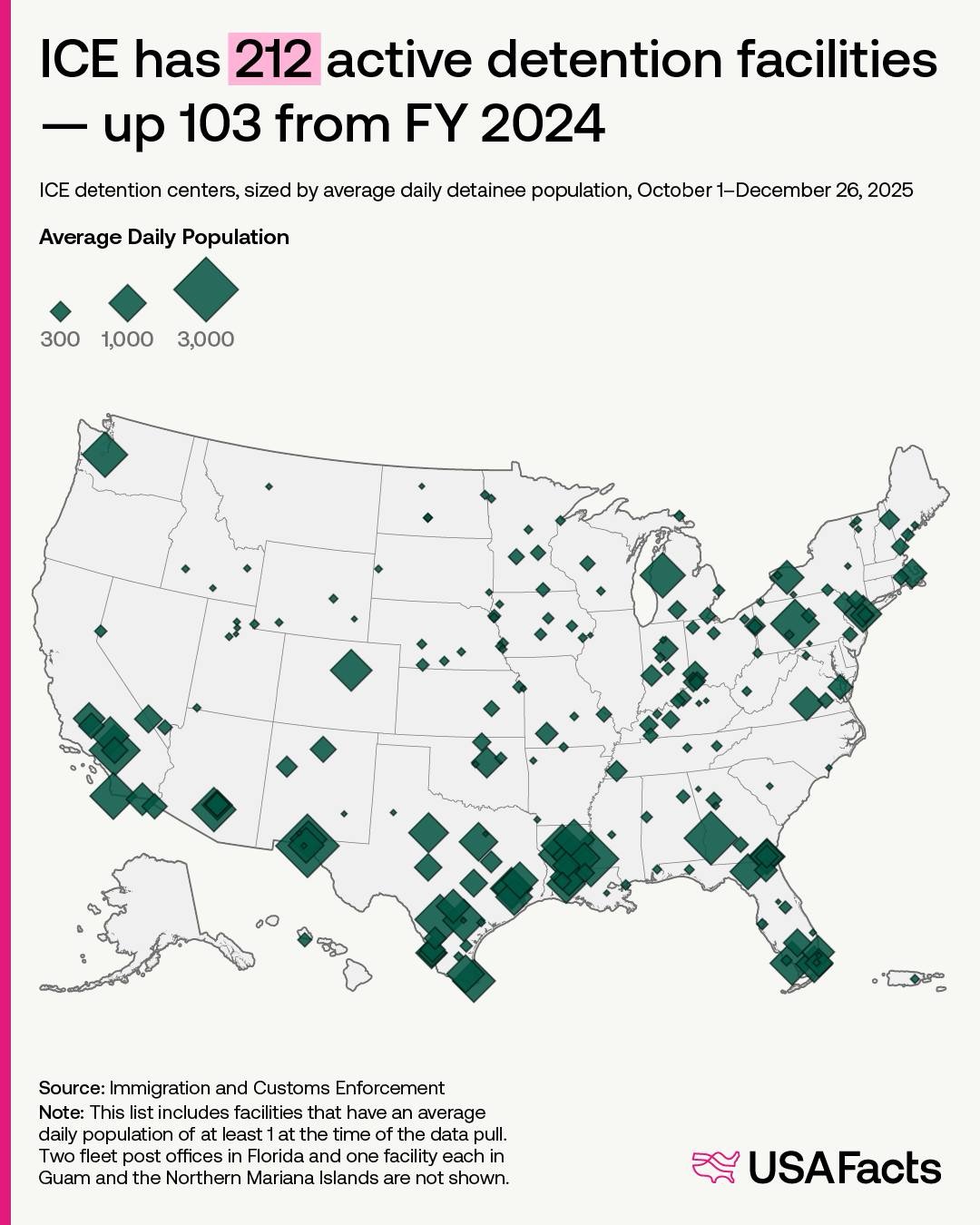
Oregon Public Broadcasting (OPB) reported on January 29, 2026 that ICE is planning another detention center in Newport, Oregon as soon as May.

The Atlantic reported that the warehouses expected to be detention centers could become white elephants if there’s a change in ICE policies and the detainee population decreases. “If the goal is to not have endless illegal immigration, those centers will be obsolete in three to five years,” a longtime ICE official told me. “The amount of money going into them is abhorrent.”

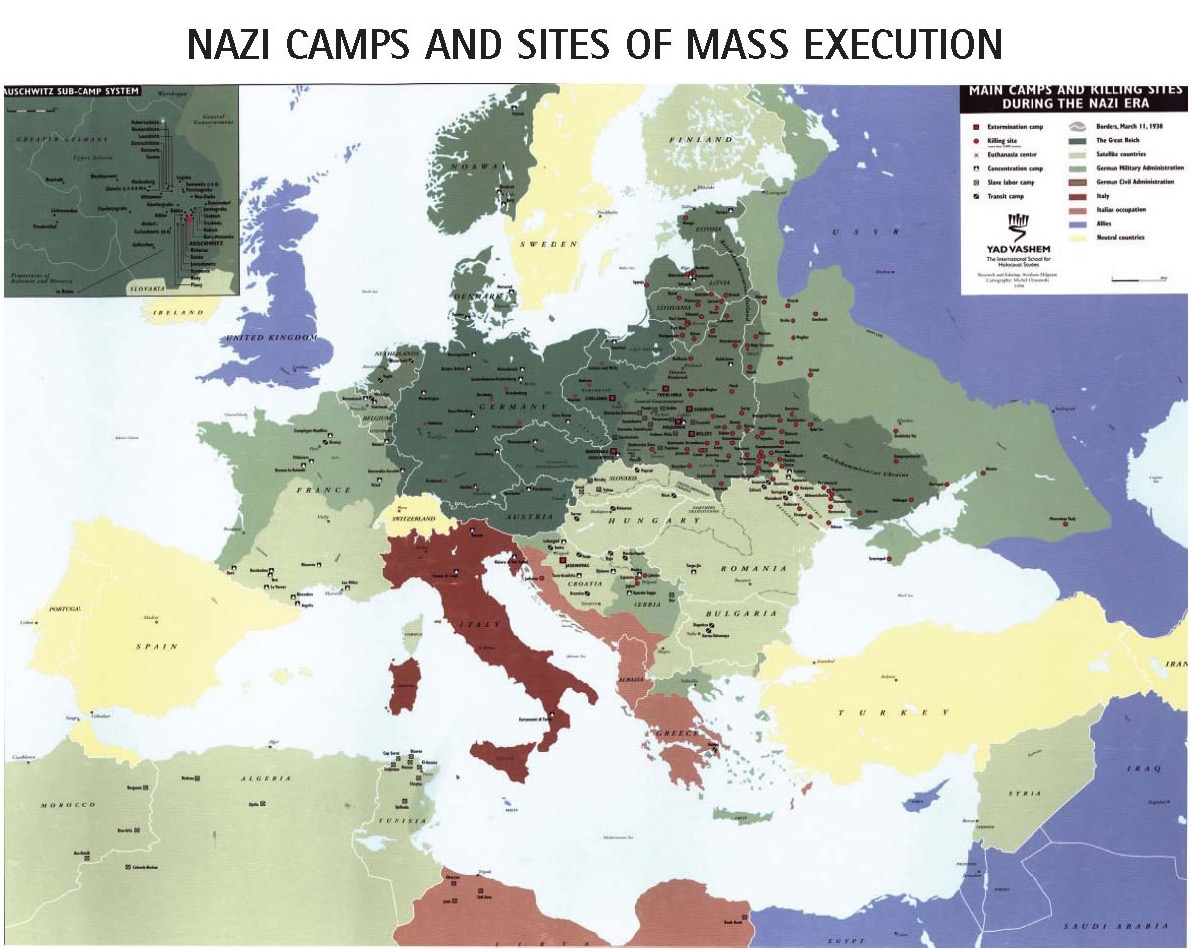
The spread of these. detention centers reminds me of another brutal time.

Most of us know the names of a few Nazi concentration camps, like Dachau,  Auschwitz and Bergen-Belsen, where Anne Frank died. But they were part of a massive complex of more than 850 ghettos, concentration camps, forced-labor camps and extermination camps CNN has identified. They stretched from France and the Netherlands in the west to Estonia, Lithuania and Poland in the east that the Nazis established during the 12 years Adolf Hitler was in power. Their purpose — to  segregate  , oppress and persecute their opponents.

Like the ICE detention centers, the Nazi system started small and then metastasized like a cancer, according to the Wiener Holocaust Library

Initially there were so-called SA camps. (Sturmabteilung (SA), or “Brownshirts,” was the Nazi Party’s original paramilitary wing). After the Night of Long Knives in 1934, the SS and Heinrich Himmler shut down the SA camps and consolidated control of all camps in Germany. Himmler and the SS used Dachau, an original SS camp, as a blueprint  for all camps. From 1934 onwards, the SS developed and then operated the camp system, which lasted until Germany’s defeat in 1945.

The SS started building major camps, beginning with Sachsenhausen in 1936, then Buchenwald in 1937, Flossenbürg and Mauthausen in 1938 and Ravensbrück for women in 1939. Political prisoners were the first inmates. Then people with previous criminal convictions. Next were the  so-called “asocials”, such as Roma, homosexuals, prostitutes, the homeless and the “work-shy”. The mass imprisonment of Jews began in 1938 after the Anschluss and  Kristallnacht.

As the Second World War began in earnest, foreign citizens from newly occupied countries such as Czechoslovakia and the Netherlands began to be imprisoned , followed by Soviet prisoners of war (POW’s) after the invasion of the Soviet Union in June 1941.
Those who believe U.S. Immigration and Customs Enforcement can and will be restrained under the Trump administration might want to stop and reconsider.

With an administration where cruelty is the point, it can happen here.

On the Cusp of Chaos: Trump’s Deportation Purge

The American people have given Donald Trump ultimate power,” says Paul Glastris, editor in chief of the Washington Monthly, “They’re going to get the Trump agenda, good and hard.”

America’s “immigration crisis” is a “massive invasion” spreading “misery, crime, poverty, disease and destruction to communities all across our land” and the nation’s cities are being “flooded” by the “greatest invasion in history” of undesirables from “every corner of the earth, not just from South America, but from Africa, Asia, Middle East,” Donald Trump bellowed at the Republican National Convention in July 2024. “They’re coming from prisons. They’re coming from jails. They’re coming from mental institutions and insane asylums. We have to stop the invasion into our country that’s killing hundreds of thousands of people a year.”

Did you miss Trump describing migrants as “vermin” who would “poison the blood of the country”? How about when he said in 2023 that some South American countries were deliberately emptying their “insane asylums” and “mental institutions” to send the patients to the United States as migrants.

You likely didn’t miss Trump’s solution? “Carry out the largest deportation operation in American history” the Republican platform said in “one of a series of bold promises that we will swiftly implement” Trump promised.  Huddled masses, yearning to breathe free? Not in Trump country. Deport ’em all.

Easier said than done.

First, let’s talk about numbers.

In 2021, when Joe Biden took office, the figures thrown around for the number of undocumented/illegal/unauthorized/ (whatever word you choose) immigrants in the United States varied by a million or so. The Migration Policy Institute (MPI) put the number at 11.2 million. The Center for Migration Studies said there were approximately 10.3 million.

Curiously, much of the media coverage of the immigration situation today continues to use the 11 million figure, despite the upsurge in border crossings. That may be a sign of lazy reporting, purposefully misleading numbers for ideological reasons, different collections methods or confusion over how to count migrants.

Trump’s numbers have been all over the map. In March 2024, he said 15 million migrants had crossed into the United States border over just the past two years. In August, he said 10 million had come across the border since Biden took office. In later election rallies, he cited a 20 million crossings figure during Biden’s tenure as president. .And in his one televised debate with Kamala Harris he claimed 21 million migrants were crossing the border every single month.

One number often used to track migrants is “encounters” with migrants, including people who tried to cross into the US illegally and people who tried to enter legally but were deemed inadmissible.  According to the Border Patrol, since Biden became president in January 2021, there have been more than 10 million encounters, about 8 million of those at the southwest land border with Mexico, up from 2.4 million encounters during the Trump administration. The number is not, however, a reliable count of people who stay in the US. Some are sent back and some are counted multiple times from multiple attempts to cross the border. The encounters number also, obviously, do not count those who manage to slip across the border and escape undetected.

Compounding the numbers problem, the Wall Street Journal reports that Trump wants to “revoke deportation protections from millions of immigrants, including tens of thousands of Afghans evacuated after the fall of Kabul and hundreds of thousands of Ukrainians allowed in after the Russian invasion.”

Whatever the accurate number, it’s one hell of a lot of people, about equal to the entire population of Georgia.

How exactly does Trump plan to deport them all?

Is he going to demand that the military, the FBI, the Border Patrol, local police, the whole shebang of law enforcement, round them up and put them in detention centers?

On Nov. 18, The New York Times reported Trump had confirmed that he intended to declare a national emergency and use the U.S. military in some form to assist in his plans for mass deportations of undocumented immigrants.

The Times said Trump used his social media platform, Truth Social, to respond to a post made earlier in November by Tom Fitton, who runs the conservative group Judicial Watch, and who wrote that Mr. Trump’s administration would “declare a national emergency and will use military assets” to address illegal immigration “through a mass deportation program.” At around 4 a.m. on the 18th, Mr. Trump reposted Mr. Fitton’s post with the comment, “TRUE!!!”

Trump’s top immigration policy adviser, Stephen Miller, told the Times earlier in 2024 said that military funds would be used to build “vast holding facilities that would function as staging centers” for immigrants as their cases progressed and they waited to be flown to other countries. The Homeland Security Department would run the facilities, Miller said.

Is he going to commandeer railroad lines, planes and riverboats to ferry them to the Mexican border?

How’s Trump going to pay for this massive deportation program? The American Immigration Council, an admittedly pro- immigrant group, says the cost of deporting 13 million immigrants in the U.S. illegally could cost $968 billion over a little more than a decade.

Then there are the courts. Do Trump’ and his henchmen expect the American Civil Liberties Union and immigrant advocacy groups to forego court battles if Trump again tests the bounds of his legal authority. The ACLU’s website already promises, “Starting on day one, we’re ready to fight for our civil liberties and civil rights in the courts, in Congress, and in our communities. We did it during his first term – filing 434 legal actions against Trump while he was in office – and we’ll do it again.”

Of course, no matter what Trump wants to do, not all countries will be willing to accept the return of their citizens. Trump faced that problem in his first term.

In a 2016 speech in Phoenix, Trump said, “There are at least 23 countries that refuse to take their people back after they’ve been ordered to leave the United States, including large numbers of violent criminals. They won’t take them back. So we say, ‘Okay, we’ll keep them.’ “Not going to happen with me, not going to happen with me.”

Not so fast, Mr. Trump. U.S. Immigration and Customs Enforcement (ICE) defines any country that fails to cooperate with the U.S. immigration removal process as “recalcitrant”. According to ICE, “Uncooperative countries significantly exacerbate the challenges presented to ICE by the U.S. Supreme Court’s decision in Zadvydas v. Davis, 533 U.S. 678 (2001). In this case, the Supreme Court ruled that: With narrow exceptions, noncitizens with final orders of removal — including noncitizens determined to pose threats to the community or considered flight risks — may not be detained by ICE beyond a presumptively reasonable period of six months if there is no “significant likelihood of removal in the reasonably foreseeable future”.

The Trump administration may also encounter enforcement resistance from so-called “sanctuary” jurisdictions across the country, which include: Alameda, Berkeley, Fremont, Los Angeles, Oakland, San Francisco (county and city), San Mateo County, Santa Ana, Santa Clara County, and Watsonville in California; Boulder and Denver in Colorado; King County, Seattle, and Walla Walla County in Washington; Portland in Oregon; and even Washington, D.C. The Los Angeles City Council has already voted to prohibit city resources from being used for federal immigration enforcement.

“Americans are being squeezed out of the labor force and their jobs are taken,” Trump said at the Republican Convention. “By the way, you know who’s taking the jobs, the jobs that are created? One hundred and seven percent of those jobs are taken by illegal aliens.” But not all employers will likely be cooperative in immigrant sweeps. The Pew Research Center estimated that unauthorized immigrants represented about 4.8% of the U.S. workforce in 2022.  About two-thirds of U.S. crop-farm workers are foreign-born, for example, and 42% aren’t legally authorized to work in the country,  About two-thirds of U.S. crop-farm workers are foreign-born, and 42% aren’t legally authorized to work in the country, according to a Labor Department report.

“Implementing Trump’s (deportation) plan would be a logistical nightmare and social tragedy, with consequences reverberating beyond the deportees and into the lives of over 20 million people living in mixed-status households, including 5.5 million U.S.-born children suddenly missing one or both parents,” the Center asserts.

Then, no matter how individuals voted, there’s the question of how Americans across the board are going to respond to Trump’s draconian deportation program once it hits their neighborhood. I expect there will be a backlash. I couldn’t put it better than Yascha Benjamin Mounk, Associate Professor of the Practice of International Affairs at Johns Hopkins University’s School of Advanced International Studies. In a post-election podcast conversation with American political scientist Francis Fukuyama, Mounk said:

“When you have very lax policies and high levels of illegal immigration, people say, “clamp down, we want to close the border,” and the moment you start doing the things you actually need to do to clamp down, they start to say, “well, hang on a second, I didn’t want this kid to die. I didn’t want those kids to be separated from their parents. I didn’t want this particular member of the community, who’s been here for 25 years and who seems like a very good and reasonable person, to suddenly be taken and sent back to where they came from.” And so I think even on that issue, which was a winning issue of Trump’s and which he clearly has a popular mandate…he may quite quickly lose public support, nevertheless.”

Well put.