Hillary wants campaign finance reform….later.

Frankly, it makes me sick.

votecounts.gif

Hillary Clinton says she wants aggressive campaign finance reform to end the stranglehold that wealthy interests have over our political system and restore a government of, by, and for the people—not just the wealthy and well-connected.

Meanwhile, behind the scenes, Hillary Clinton and the Democratic National Committee are working arm in arm to jigger campaign finance rules to spur more donations from fat cats. Maybe they figure nobody cares.


hillary-clintonWhatdoesitmatter

What difference at this point does it make?

In 2008, when Obama was running for president, he set in place restrictions that banned donations to the Democratic National Committee from federal lobbyists and political action committees. The Washington Post just reported that the Committee has rolled back those restrictions, opening up the floodgates for more big money to go to the Hillary Victory Fund, a joint fundraising committee between the Clinton campaign and the Democratic Party.

The Victory Fund collects money from big donors and then distributes it to Clinton’s campaign and 33 state Democratic Party committees. According to the Post, a recent Clinton solicitation asked supporters to give up to $366,100 to the fund. Her campaign then received $2,700 of the total for the primary period, while the rest went to the DNC and 33 state party committees.

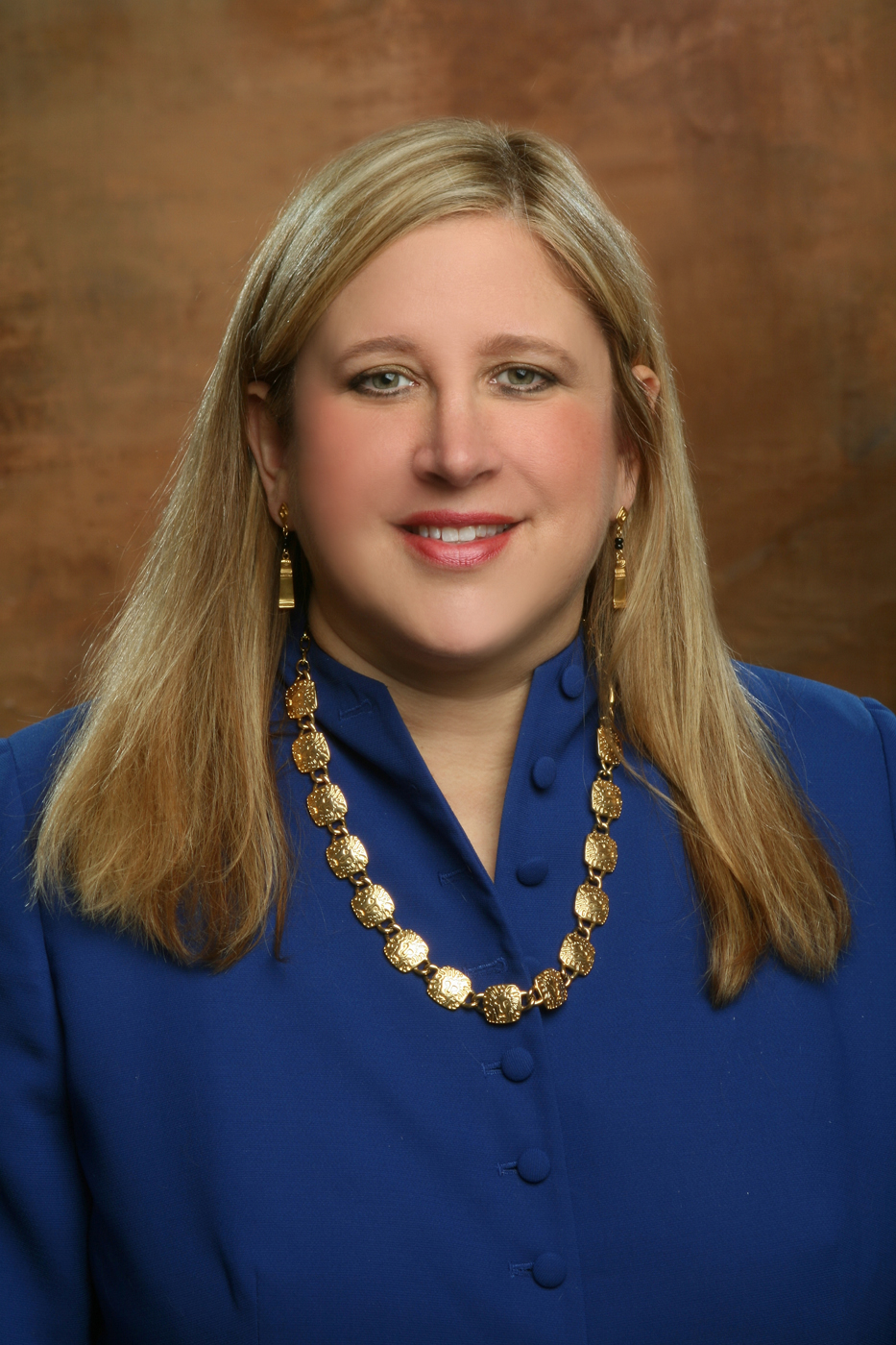
The largest donor to the Victory Fund to date is the Bay Area Lyme Foundation, which has donated $366,400. Portola Valley, CA philanthropist Laure Woods, president of the Lyme Foundation, has also donated $750,000 to Priorities USA Action, a super PAC supporting Hillary Clinton, according to OpenSecrets.org.

In December 2015, NPR reported that Clinton can now ask donors to give nearly three-quarters of a million dollars each. Here’s how:

According to NPR, Donors who are rich — and willing — can give $5,400 to the Clinton campaign, $33,400 to the Democratic National Committee and $10,000 to each of the state parties, about $360,000 in all. A joint fundraising committee lets the donor do it all with a single check.

On Jan. 1, the contribution limits reset for the party committees, and the Hillary Victory Fund can go back to its donors for another $350,000 in party funds.

All told, a single donor can give more than $700,000 for the election. That’s a hell of  lot more than most of us could ever afford.

OpenSecrets.org recently revealed how complicated and corrupt this whole process has become. Open Secrets noted that the Hillary Victory Fund reported taking in $26.9 million during 2015 and has transferred $7.4 million to the participants as of Feb. 19, 2016. The largest single contributions to this joint effort are not $86,000 (which would have been roughly the limit had the rules not been struck down) but rather $358,400 –including $2,700 to the Clinton campaign for the primary and $2,700 for the general along with $33,400 to the DNC and as much as $320,000 to state party committees.

These contributions would seem to have improved the financial health of many state party organizations that would never have received support from many of their donors without the JFC process.

But the way the contributions were used tells another story, OpenSecrets said. Virtually none of the $1.86 million given to state parties as of mid-February2016 spent more than one night with its designated recipient. In nearly every case, all of the funds given to state parties by the Hillary Victory Fund were immediately sent to the DNC. This structure has allowed a small number of elite Democratic donors to give hundreds of thousands of dollars to the DNC for the purpose of affecting the presidential campaign.

If you are a federal lobbyist, the revised DNC rules amount to a shakedown. Donate more or your failure to do so will be remembered. If you’re a regular Joe (or Jane), you’re out of luck.



Shakedown: The Clinton money machine

The Clinton’s aren’t public-spirited philanthropists. They’re shakedown artists.

Michael Gerson, a columnist at the Washington Post, recently asked, “..what compels the Clintons to operate so close to the ethical line when public scrutiny is so likely?”

Greed and power, sir, pure greed, a quest for power. and no shame.

Chelsea, Hillary and Bill Clinton bask in the limelight.

Chelsea, Hillary and Bill Clinton bask in the limelight.

When the Clintons moved out of the White House, thy hauled off $190,000 worth of china, flatware, rugs, televisions, sofas and other gifts. Greed without shame.

When Bill Clinton left the White House he initially wanted to lease a fancy high-rise office in midtown Manhattan for $800,0000 a year, $500,000 of that to be covered by taxpayers, more than the annual office rent for ex-presidents Reagan, Carter and Ford combined. Greed without shame.

The Bill, Hillary and Chelsea Clinton Foundation has raised about $2 billion since it was founded in 2001. The money has come from foreign governments, corporate tycoons, politically-connected influencers, and other moneyed interests.

Meanwhile, Bill and Hillary have raked in millions from speeches, many to groups with interests in government policies.

Just between January 2001, when Bill Clinton left the White House, and January 2013, when Hillary stepped down as Secretary of State, Bill Clinton was paid $104.9 million for 542 speeches around the world, according to an analysis by the Washington Post. After leaving the State Department, Hillary joined the money rush with speeches for which she earned $200,000 or more per appearance.

Even the Clintons’ daughter, Chelsea, has learned “the family business.” With no media experience, she secured a $600,000 a year job as a “special correspondent” for NBC News in 2011 that lasted until mid-2014. Her uninspiring performance earned her the distinction of being called “one of the most boring people of her era” by Washington Post Style reporter, Hank Stueverof.

“We came out of the White House not only dead broke but in debt,” Hillary said. Not any more.

At its essence, the Clinton’s money haul, both the personal haul and the fundraising for their foundation, are part of a massive pay-to-play scheme.

The foundation’s programs run the gamut from climate change and economic development to public health and woman and girls, and it claims to be impacting lives around the world.

But the simple fact is that thousands of other non-profits in the U.S. and around the world were doing the same work when the Clinton Foundation was created and are continuing to do so, often while starved for funds.

If the Clintons really wanted to advance causes dear to their hearts after leaving the White House, they could have checked Charity Navigator and advocated on behalf of already established, exemplary non-profits, rather than creating another hydra-headed creature focused on promoting the brand of its founders. In short, there was absolutely no need to create the behemoth that is the Clinton Foundation.

The only reason for creating it was to give the Clintons a platform for self-aggrandizement, to allow powerful U. S. and foreign interests to curry favor with a former President and maybe a future one.

NOTE: Charity Navigator refuses to rate the Bill, Hillary and Chelsea Clinton Foundation, noting that “…this charity’s atypical business model can not be accurately captured in our current rating methodology.” Instead, the Foundation has been placed on Charity Navigator’s “Watchlist” in light of issues raised about its operations. “…given that our primary obligation is to donors, Charity Navigator has determined that the nature of this/these issue(s) warrants highlighting the information available so that donors are aware of the issues in question which may be relevant to their decision whether to contribute to this organization.” Another non-profit on the Watchlist is Al Sharpton’s National Action Network, cited for failing to pay payroll taxes. “With the tax liability outstanding, Mr. Sharpton traveled first class and collected a sizable salary, the kind of practice by nonprofit groups that the United States Treasury’s inspector general for tax administration recently characterized as ‘abusive,’ or ‘potentially criminal’ if the failure to turn over or collect taxes is willful,” the New York Times reported in 2014.

Observations on media: Bill O’Reilly’s excellent wartime adventures and gotcha journalism

Bill O’Reilly’s excellent wartime adventures

Oh come on now, Billy.

Bill O'Reilly

Bill O’Reilly

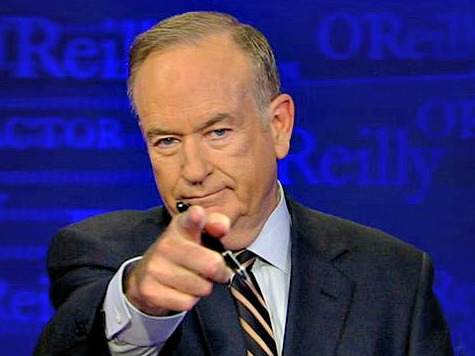
Just admit it. You misspoke, fabricated, misled. Oh hell, you lied. You’ve claimed you reported from the Falkland Islands during the 1982 conflict between Britain and Argentina. Now you’re saying you didn’t.

“I said I covered the Falklands war, which I did,” he says, citing how he covered popular protests in Buenos Aires, about 1,200 miles from the Falklands, as a CBS News reporter.

But the fact is that in 2001 he wrote in his book, “The No Spin Zone: Confrontations With the Powerful and Famous in America”:

“You know that I am not easily shocked. I’ve reported on the ground in active war zones from El Salvador to the Falkland Islands, and in chaotic situations like the collapse of the Berlin Wall and the Rodney King riots in Los Angeles.”

And in 2013, he said in a TV interview that he’d covered a protest “…in a war zone in Argentina, in the Falklands.”

Politico was right on when it noted that O’Reilly would likely attempt to dismiss the reporting on his lies by David Corn and Daniel Schulman of Mother Jones by dismissing them “…as left-wing zealots bent on his destruction.”

Yep.

Gotcha Journalism 

On the other side of the coin, eporters and opinionators are jamming Republican Gov. Scott Walker of Wisconsin with inane questions about things they don’t really care about, but give them a chance to be annoying.

Wisconsin Governor Scott Walker

Wisconsin Governor Scott Walker

It reminds me of when KOIN-TV played a gotcha game with five U.S. Senate candidates from Oregon in 1995, asking each of them seven questions. Congressman Ron Wyden got all seven wrong and suffered some embarrassment as a result. But few people would probably have gotten them right. One Wyden missed, for example, asked, “What is the average cost for a gallon of milk, a loaf of bread, a gallon of gas, and a pair of Levi’s jeans?”

And this was critical to serving effectively as a U.S. Senator?

In Walker’s case, a television reporter in London asked him whether he believes in evolution, the Washington Post asked him whether the president is a Christian, and reporters at a National Governors Association meeting in Washington hounded him on whether he agreed with former New York Mayor Rudy Giuliani who accused President Obama of not loving America.

Walker’s answers, and non-answers, generated media criticism of his qualifications, including an over- the-top opinion column in the Washington Post by Dana Milbank asserting that Walker had “displayed a cowardice unworthy of a man who would be president” and “…ought to disqualify him as a serious presidential contender.”

Let the campaign silly season begin.

Hillary & Brian: two peas in a pod

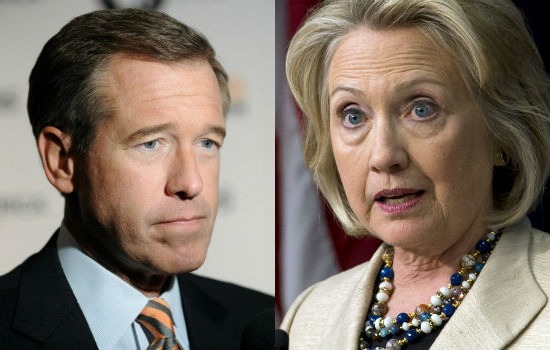
Hillary Clinton surely knows how Brian Williams feels after his lie about being in a helicopter in Iraq that was hit by a rocket-propelled grenade.

WilliamsHillary

In March 2008, Hillary tried to embellish her foreign policy chops by reminiscing about a trip she made to Bosnia in 1996.

“I remember landing under sniper fire,” she said. “There was supposed to be some kind of a greeting ceremony at the airport, but instead we just ran with our heads down to get into the vehicles to get to our base.”

The problem was, that never happened. Instead, she disembarked without any disruptions at all, unless you consider a charming little girl greeting her with a poetry reading.

The Washington Post’s Factchecker reported that the entertainer, Sinbad, who was also on the trip, refuted Hillary’s telling of the story, saying the “scariest” part of the visit was deciding where to eat.

Hillary not only dismissed Sinbad as just “a comedian,” but doubled down on the danger she claimed to have encountered. “I was moved up into the cockpit,” she told reporters. “Everyone else was told to sit on their bullet proof vests. We came in in an evasive maneuver. Those of you who have been on a C-17 or C-130 know that one of their great characteristics is that they can take off very quickly and they can maneuver agilely to avoid incoming fire. There was no greeting ceremony and we were basically told to run to our cars. Now that is what happened.”

Not so. Further media analysis concluded that Hillary and her plane were never confronted by any security threats.

Still, Bill Clinton defended his wife’s recollections on the campaign trail, attributing her possible error to her age.

Perhaps it was age that also led Clinton to claim she was instrumental in bringing peace to Northern Ireland. When challenged and accused of substantially inflating her role, including by Nobel Peace Prize winner Lord Trimble of Lisnagarvey who said her claim was a “wee bit silly”, Hillary dismissed the criticism as “nitpicking.”

Maybe Brian Williams should follow Hillary’s lead; just insist that all the uproar over his lying is nitpicking. Instead of being censured, he could end up a candidate for President of the United States.

Let the dogs out: the assault on Steve Scalise

Rep. Steve Scalise, R-LA, has had a reputation throughout his political career for being open to talking with just about anybody, regardless of their ideological persuasion. Horrors!

In today’s hyper-partisan world, that’s apparently a bad thing.

“I live in a rather special world,” influential film critic Pauline Kael commented after the 1972 presidential election. “I only know one person who voted for Nixon. Where they are I don’t know. They’re outside my ken.”

The provincialism and narrow-mindedness of that observation came to mind in thinking about the Steve Scalise controversy. Progressives in the media and government were all too ready to accept the controversial allegation from a left-leaning blogger and attack Scalise in a frenzy because they wouldn’t, or couldn’t, think outside their echo-chamber of like thinkers.

But consider the source, and wonder whether the media have failed the public.

The melee started when a left-leaning blogger, Lamar White Jr., posted that twelve years ago a Louisiana state legislator, Steve Scalise, addressed the European-American Unity and Rights Organization (EURO) about a tax and spending ballot measure.

Lamar White

Lamar White

Rep. Steve Scalise, R-LA

Rep. Steve Scalise, R-LA

White later said he learned about the incident after getting a tip from Robert Reed, the son and campaign manager of a Democrat who lost to Scalise in a 2008 special election to fill an open House seat in Louisiana.

White said he verified the tip by checking Reed’s source, a post on Stormfront, a race-baiting website run by white nationalists and other racial extremists.

Stormfront logo

Stormfront logo

When the media discovered White’s allegation, they leapt at the story, apparently without bothering to do much fact-checking. The progressive posse, eager to believe the worst about a conservative, went ballistic.

Because EURO was founded by David Duke, a prominent former Ku Klux Klan leader, critics excoriated Scalise for even talking to a racist group, no matter the topic, even though Scalise said he had no recollection of speaking at the EURO conference.

The national Democratic Congressional Campaign Committee (DCCC) enthusiastically bashed Scalise, now House Majority Whip, with a guilt- by-association pronouncement.

DCCC National Press Secretary, Josh Schwerin

DCCC National Press Secretary, Josh Schwerin

“Steve Scalise chose to cheerlead for a group of KKK members and neo-Nazis at a white supremacist rally and now his fellow House Republican Leaders can’t even speak up and say he was wrong,” said DCCC National Press Secretary Josh Schwerin. “Republicans in Congress might talk about improving their terrible standing with non-white voters, but it’s clear their leadership has a history of embracing anti-Semitic, racist hate groups.”

Rep. Sean Maloney (D-N.Y.), piled on, calling for Scalise to resign from the Republican House Leadership team.

Alexandra Petri, author of the Washington Post’s ComPost blog, said, “Why would you possibly think speaking at this event was a good idea? Why would you think attending this event was a good idea?”

Similarly, Eugene Robinson wrote an opinion piece in the Washington Post titled, “The GOP has a bad habit of appealing to avowed racists”.

“Here’s some advice for House Majority Whip Steve Scalise that also applies to the Republican Party in general: If you don’t want to be associated in any way with white supremacists and neo-Nazis, then stay away from them,” Robinson said.

Robinson went on, “Do not give a speech to a racist organization founded by former Ku Klux Klan grand wizard David Duke, as Scalise did when he was a Louisiana state legislator before running for Congress.”

This has just gone too far.

Now it’s apparently not only wrong to say something that’s offensive to progressives or something provocative that might challenge preconceptions and “trigger” discomfort, but it’s impermissible for politicians to address people progressives don’t agree with.

No wonder we have political gridlock if electeds are rebuked for even talking with people who have a different point of view.

What makes this whole thing even more bizarre is that Louisiana’s Times-Picayune newspaper now reports that Scalise may not, in fact, have spoken at the Euro event.

On Dec. 31, the paper said the man who arranged Scalise’s appearance at the event he addressed now says Scalise didn’t attend the EURO conference, but rather a small meeting of the Jefferson Heights Civic Association that was held in the same hotel conference room earlier the same day.

Wouldn’t it be something if all this sturm and drang has been over nothing.


Stuck: running in place in Oregon

I work in Hillsboro, OR where evidence of a strong economy is everywhere. It’s tempting to assume that family income must be growing by leaps and bounds in Washington County, too, and to extrapolate and assume all is well statewide.

Not so much.

In fact, even Washington County isn’t doing that great, despite the presence of Intel, which has been growing like kudzu, feverishly sprouting buildings and good jobs.

Way back, growth in the U.S. economy was accompanied by income increases across the board, improving the lot of the poor and expanding the middle class. Everybody shared in the rising tide.

middle_class_family

But that hasn’t been happening for a long time. Now a lot of people find themselves working harder, but just treading water.

“Over the past 25 years, the (U.S.) economy has grown 83 percent, after adjusting for inflation — and the typical family’s income hasn’t budged,” according to a recent analysis by the Washington Post. “In that time, corporate profits doubled as a share of the economy. Workers today produce nearly twice as many goods and services per hour on the job as they did in 1989, but as a group, they get less of the nation’s economic pie.”

The result? In 81 percent of America’s counties, median family income is lower today than it was 15 years ago, the Post analysis revealed.

What about in Oregon? I decided to look deeper. The data shows that in 25 Oregon counties, the inflation-adjusted median family income is lower today than it was 15 years ago.

That’s true even in Washington County where median household income, adjusted for inflation, actually peaked in 1999 at $72,787. That year was also the peak for such wildly dispersed counties as Clackamas, Deschutes and Malheur.

The situation is even worse in counties such as Baker and Lake where median family income, adjusted for inflation, hit its peak 35 years ago.

If you really want to hit bottom, there are six counties, including Curry, Lane and Wheeler, where medium family income, adjusted for inflation, peaked 45 years ago. That’s right, almost half a century ago, when Richard Nixon was inaugurated President and the Apollo 11 astronauts, Neil Armstrong and Edwin E. Aldrin, Jr., took their first walk on the moon.

So what we have in Oregon is an economy in which few of us are really better off economically then we were years ago.

Here’s the county-by-county breakdown of when median household income, adjusted for inflation, peaked in each of Oregon’s 36 counties and the level at which it peaked.

Oregon-county-map

County Peak Year Amount
Hood River 2013 $56,725
Sherman 2009 $52,664
Washington 1999 $72,787
Clackamas 1999 $72,264
Columbia 1999 $63,555
Yamhill 1999 $62,070
Polk 1999 $59,218
Benton 1999 $58,558
Deschutes 1999 $58,159
Multnomah 1999 $57,733
Marian 1999 $56,673
Linn 1999 $52,326
Crook 1999 $50,759
Jackson 1999 $50,734
Clatsop 1999 $50,289
Jefferson 1999 $49,678
Tillamook 1999 $48,026
Wallowa 1999 $44,726
Josephine 1999 $43,406
Malheur 1999 $42,525
Morrow 1979 $57,126
Wasco 1979 $54,645
Harney 1979 $54,318
Umatilla 1979 $50,513
Lake 1979 $49,714
Grant 1979 $48,786
Union 1979 $48,006
Lincoln 1979 $47,053
Baker 1979 $42,760
Lane 1969 $52,736
Coos 1969 $52,171
Gilliam 1969 $49,892
Klamath 1969 $49,511
Curry 1969 $49,042
Wheeler 1969 $40,675

SOURCES: U.S. Census and American Community Survey. Amounts in 2013 dollars.

United Streetcar and Earl Blumenauer’s misplaced boosterism

Only a politician would want to throw good money after bad, arguing that a failed company should get MORE federal dollars.

The Washington Post, in a Nov. 29 story picked up by both Willamette Week and the Portland Business Journal, told of how Portland’s United Streetcar, supposedly destined to reinvigorate the U.S. streetcar business, failed miserably.

unitedStreetcar

In 2005, Oregon’s own Rep. Peter DeFazio (D) secured $4 million for Portland to buy an American-made streetcar. The contract went to Clackamas-based United Streetcar, a company founded that year, “Leading the way for today’s urban transport needs,” the company’s website says.

United Streetcar was formed in December 2005. It is a subsidiary of Oregon Iron Works, Inc., which recently became a division of Vigor Industrial.

Despite White House cheerleading, United Streetcar became a symbol of ineptitude, with frequent missed deadlines and cost overruns. It ended up building just 18 streetcars for three customers, and still couldn’t deliver them on time. According to the Post, the company has no new orders and the facility built to produce up to 24 streetcars a year is dormant.

But Blumenauer, arguing that the U.S. needs to make streetcars and not give the business to foreigners, wants the government to double down. Specifically, he wants the Feds to order 500 or 1,000 streetcars and give some U.S. companies a shot at making 50 or 100 each.

“That would get production humming,” Blumenauer told the Post.

Does he even remember the United Streetcar fiasco, or care?

In a classic instance of the Peter Principle at work, in August 2010, President Obama appointed Chandra Brown, President of United Streetcar, to the Department of Commerce Manufacturing Council. “Throughout her career, Chandra Brown has demonstrated how good leadership can allow smart companies to do well on the bottom line, do right by their employees, and do good for the country,” said Senator Jeff Merkley (D-OR).

Chandra Brown

Chandra Brown

Then, in March 2013, President Obama again helped Brown fail upwards again by appointing her Deputy Assistant Secretary for Manufacturing at the U.S. Department of Commerce.

I guess Blumenauer figures that if Brown can mess up and move up, there’s no reason why he shouldn’t help United Streetcar do the same.