Corvallis, Oregon has finally gotten its moment in the sun.
The television commercial keeps popping up like a bad penny.
“My name is Karen and I’m the head pharmacist at Corvallis Drug,” it begins. “We’ll get customers come in and they’re looking for a brain supplement and Prevagen is the one I recommend…It’s just a product I believe in.”

Well, good for you, Karen, and probably for your pocketbook, but not so good for your customers.
Because Prevagen is marketed as an over-the-counter dietary supplement rather than a prescription drug, standard celebrity or professional testimonial rules apply rather than strict prescription drug broadcast laws enforced by the Food and Drug Administration (FDA). That’s Karen’s the escape hatch.
Quincy Bioscience, the privately held company that manufactures Prevagen, used to hype that’s its secret was “an ingredient originally discovered in jellyfish”, a protein called Apoaequorin found in bioluminescent crystal jellyfish, scientifically known as Aequorea victoria.

In 2024, a jury found Quincy’s advertising deceptive and fraudulent. The ruling, which came on charges first filed by the Federal Trade Commission and Attorney General of New York in 2017, forbid Quincy from making claims that Prevagen-branded products can improve memory or cognition, that Prevagen can show results within 90 days, and that Prevagen is “clinically proven” to work.
But you still see the Prevagen commercials and the product can be found at most major retailers. How come? It’s because Quincy shifted its marketing to vague taglines like “For Your Brain” instead of pulling ads its entirely. And the commercials still work.
Quincy launched Prevagen in 2007. According to the FTC, the supplement had already generated more than $165 million in sales by 2017. Because Quincy is a private company, sales since then are not public, but are believed to be substantial, and the product isn’t cheap. Amazon, for example, is advertising 60 capsules of Prevagen Extra Strength with 20mg of Apoaequorin for $193.89.
Unfortunately, Prevagen is not the only heavily promoted brain supplement. Another is Neuriva, an over-the-counter dietary supplement, not an FDA-approved drug.
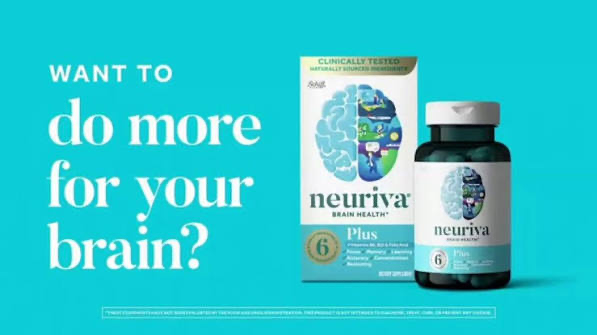
Neuriva is marketed to fuel multiple “indicators of brain health” such as focus, memory, learning, accuracy, and concentration. Its key active ingredients are 100mg of coffee cherry extract and 100mg of plant-sourced phosphatidylserine.
But its brain health claims also lack strong support from well-designed clinical trials and Neuriva, like Prevagen, has faced legal challenges over how its products are advertised.
So, don’t take Karen’s advice or rely on yucky jellyfish to make you sharper.
“There’s no evidence to suggest there’s an ingredient in supplements that can improve brain health,” says Dr. Pieter Cohen, an internist with Harvard-affiliated Cambridge Health Alliance, whose research focuses extensively on dietary supplements. “Nothing legally contained in supplements has been proven to improve your thinking or prevent memory loss.”
That’s right. Nothing.

