Progressives say “Nyet” to the free market

For all their bleating about conservatives wanting to constrain personal choice, as in their anti-abortion stance, progressives are quite comfortable limiting the choices of others themselves. The result is a kind of ruthless do-gooderism, forcing others to live their lives according to the narrow precepts of smug true believers who know best.

Take retail gun and music sales.

The members of the Trinity Wall Street Church, an Episcopal parish in New York City that champions progressive causes, want Walmart shareholders to have a say on whether the company should establish policies governing the sale of offensive items.

Gus for sale at Walmart

Gus for sale at Walmart

That would include products that are “(1) especially dangerous to the public, (2) pose a substantial risk to company reputation and (3) would reasonably be considered offensive to the community and family values that Wal-Mart seeks to associate with its brand.”

The church’s objective?  To force Walmart to remove from its shelves high-capacity rifles and sexually-charged or violent music.

What’s next, shareholder votes on stores stocking water pistols, banned or challenged books, white American Girl dolls, 50 Shades of Grey or American Sniper DVDs, gory video games like Gears of War 3 and Call of Duty Black Ops, or the “Plan B” contraceptive pill?

In essence, the church wants to substitute its judgment and the judgment of other left-leaning true believers for the free market.

Just like the plastic water bottle zealots.

plastic-water-bottles

I’m no fan of paying for water in plastic bottles. For one, It’s obscenely expensive, compared with household tap water. Two-thirds of the bottled water sold in the United States is in individual 16.9-ounce bottles, which comes out to roughly $7.50 per gallon. That’s about 2,000 times higher than the typical cost of a gallon of tap water. Most often the bottled water isn’t of higher quality than tap water either and the containers generate tons of wasted plastic.

But progressives aren’t satisfied with urging people not to buy bottled water, to use a reusable water bottle instead. They want to go much further. “Rally your schools, workplaces, and communities to ban bottled water,” they implore.

Another case of progressives wanting to impose their values and choices on me.

Companies should be free to develop and market safe products and consumers should be free to decide whether to buy them. Banning stuff because some slice of the population opposes a product for ideological reasons is offensive.

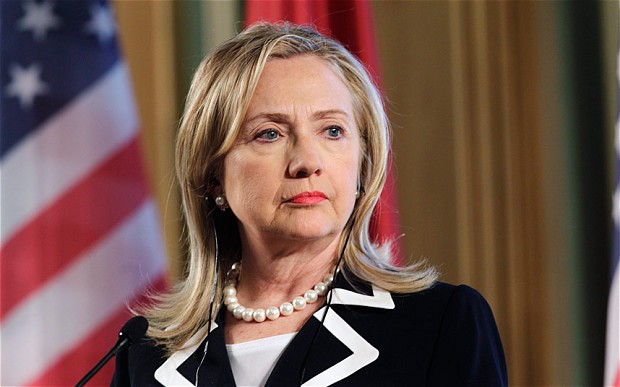
And of course I can’t pursue this topic without talking about Hillary Clinton.

HillaryClinton_2326613b

Hillary wants to require that prescription-drug companies spend a set portion of their revenue on research and development, or forfeit federal support such as tax credits or research money.

Does Clinton really think the government should go so far as to instruct how private businesses spend their revenue, all in the name of a higher good as defined by Hillary? And Bernie says he’s the socialist in the race.

Technology marches on: 15-blade razor launched

Bowing to consumer pressure for bigger multi-blade razors, SizeMatters Corp. has introduced a 15-blade razor cartridge.

15_blade_razor

The North Korean razor-maker has already launched the new 15-blade razor and hopes to move into the U.S. market before Christmas. The new model tops SizeMatters’ own seven-bladed razor and has ten more blades than the dominant U.S. brands, Proctor & Gamble Co. ’s Gillette and Edgewell Personal Care Co. ’s Schick.

SizeMatters’ bold move to cram more blades onto limited real estate was applauded by North Korea’s Supreme Leader, Kim Jong-un. “It is a technological revolution on par with our invention of the microprocessor,” he said.

Supreme Leader Kim Jung Un celebrating the launch of the new 15-blade razor.

Supreme Leader Kim Jong-on celebrating the launch of the new 15-blade razor.

The challenge for SizeMatters Corp. is that some already dumbfounded consumers might not equate more blades with a better shave, especially when each addition comes with a higher price tag.

Ken Worthy, chief executive of SizeMatters Corp. USA and a former Schick executive, acknowledged that there is skepticism to overcome. “Our R&D group really believes that the fifteen blade is a much better shave than the five blade,” Mr. Worthy said. “Also, we completely understand that some consumers may be put off by a North Korean company with abused employees barging into the American market, but we believe progress will win out over moral qualms.”

SizeMatters’ upcoming razor comes as sales of razors and blades are falling, due in part due to greater acceptance of men coming to the office looking like hoboes with stubble.

SizeMatters started in the Pyongyang garage of inventor and entrepreneur, Jim Choo Zun, in 2012 and is a very small player, with a direct-to-consumer business of just $3,082 in 2014. The company hopes its innovative technology will allow it to expand to the US market.

As for what’s next, Kim Jong-un said fifteen blades might be the max. “At least for a couple of years,” he said.

S—t happens, and the media go off the rails

You know what Jeb Bush was saying. I know what Jeb Bush was saying. President Obama and the Democrats know what Jeb Bush was saying. Media of all stripes know what Jeb Bush was saying.

But that hasn’t stopped the media from serving as part of an echo chamber for the manufactured outrage.

FILE - In this Sept. 30, 2015 file photo, Republican presidential candidate former Florida Gov. Jeb Bush speaks during a campaign stop in Bedford, N.H. Potential voters who take their curiosity about presidential candidates to Google are interested in Hillary Clinton's age, Jeb Bush's height, Chris Christie's weight, Donald Trump's net worth, Carly Fiorina's marital status and Bobby Jindal's birthplace. Those were among the top questions that the Internet search engine was asked about each candidate over the past couple of months.  (AP Photo/Jim Cole, File)

Yesterday (Friday, Oct 2), speaking at en event in Greenville, S.C., following on the horrific shooting deaths at Umpqua Community College (UCC) in Oregon, Bush talked about how people respond to school shootings.

“We’re in a difficult time in our country and I don’t think that more government is necessarily the answer to this,” Bush said. “I think we need to reconnect ourselves with everybody else. It’s just, it’s very sad to see. But I resist the notion — and I did, I had this, this challenge as governor, because we have, look, stuff happens, there’s always a crisis and the impulse is always to do something and it’s not necessarily the right thing to do.”

Bush said hasty, ill-considered responses to events that lead to more government intrusion in our lives are not always the best answer to troublesome events.

He didn’t casually dismiss the Umpqua deaths with the sentiment, “Shit happens”.   He didn’t callously shrug off the UCC deaths as inconsequential.

But in today’s hyper-divisive political climate, liberal critics saw an opening. Without a second to lose, the web lit up with pejorative comments about Bush’s statement.

As CNN reported, Democrats pounced when Bush’s comments went viral.

At the White House, in what the New York Times described as a “sharp rebuke” to Bush, President Obama opined, “…the American people can decide whether they consider (mass shootings) ‘stuff happening’.”

Rep. Debbie Wasserman Schultz (D-Fla.), chair of the Democratic National Committee, quickly tweeted: “A message for Jeb Bush: 380 Americans have been killed in 294 mass shootings in 2015 alone. “Stuff” doesn’t just “happen.” Inaction happens.”

The liberal Mother Jones magazine described Bush’s comment as an “astonishingly callous summation of Thursday’s deadly rampage that killed 10 people and injured seven others”.

The New York Daily News said Bush, in making his comments, was “flippant” and “shrugged-off the slaughter of nine people at an Oregon community college by a gun-toting maniac”.

Exaggerated rage reigns in this political season. And to think we have more than a year of all this ahead.


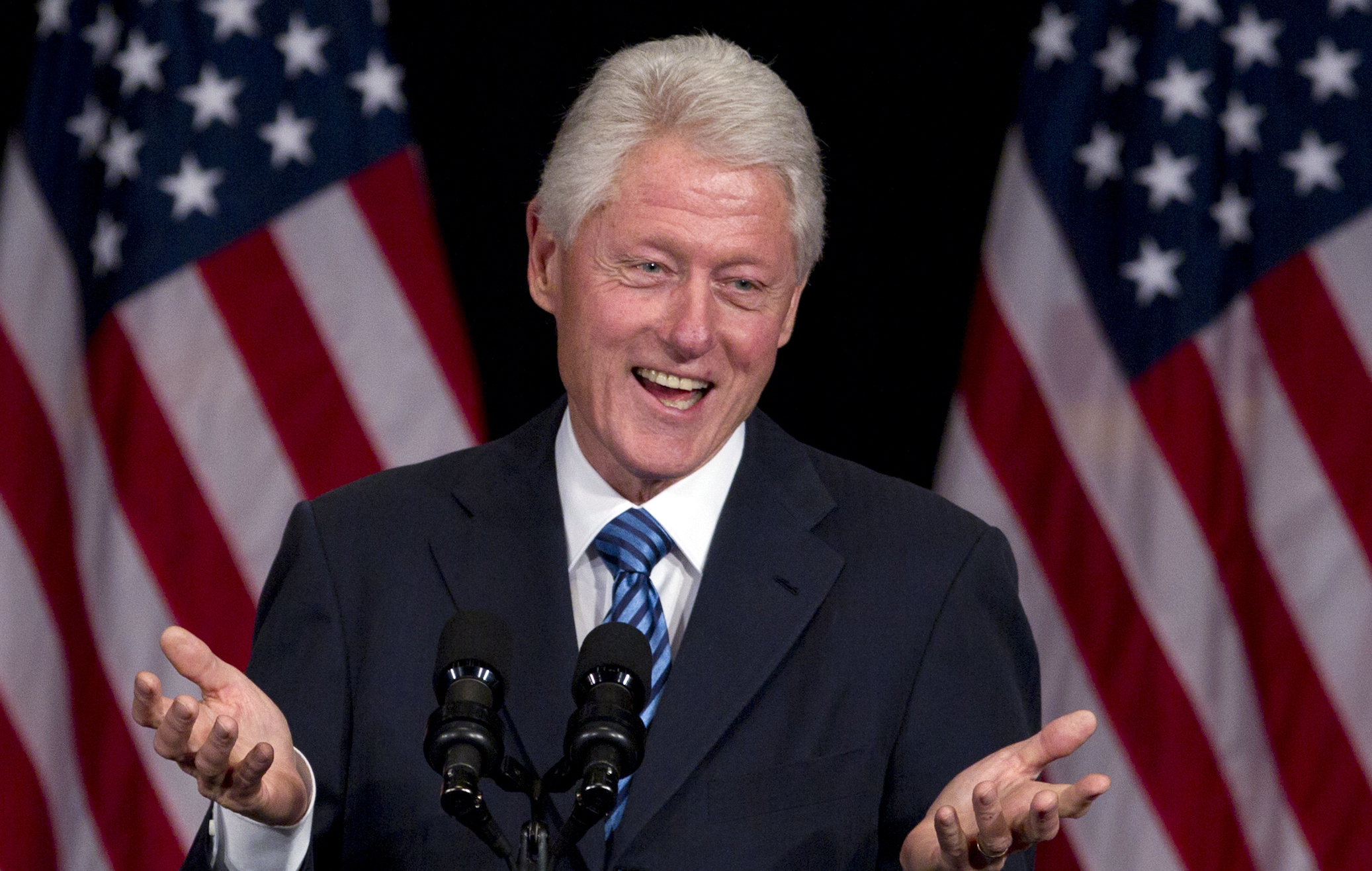
Shameless: Bill Clinton and Laureate Education Inc.

During his 1992 campaign for the presidency, Bill Clinton proclaimed that if he was elected the county would benefit because it would “get two for the price of one”, him and Hillary.

Now there are indications that, with Hillary slipping in the polls, Bill plans to hit the hustings again to reinforce the “two for one” mantra. If that’s true, he may bring more controversy than help given his tarnished past.

Part of that past is his association with Laureate Education Inc.

Selling out as a corporate shill has rarely been so lucrative as it has been for ex-president Bill Clinton.

clinton

In 2010, he signed on to become an “Honorary Chancellor” for Laureate International Universities, part of Baltimore, MD-based Laureate Education Inc. In return for serving as a front man for the privately held for-profit education company, Clinton collected $16.5 million between 2010 and 2014. Laureate also has donated between $1 million and $5 million to the Clinton Foundation.

Logos Laureate

While Clinton worked for Laureate, he and the company consistently refused to say how much he was being paid, but an analysis of the Clinton’s tax returns in July revealed the numbers. In the statement released with their tax returns, Hillary Clinton said of their financial success, “…we owe it to the opportunities America provides.” Well, that’s one way to look at it.

Laureate aggressively marketed its relationship with Bill Clinton and it often paid off. New York Magazine described Clinton as the “face” of Laureate. When Laureate secured approval to build a new for-profit university, Torrens University Australia, in Adelaide, South Australia (where for-profits are called “private” institutions), the headline in The Australian newspaper read: “First private uni in 24 years led by Clinton.”

Bill Clinton at Torrens

Bill Clinton at Torrens

(Subsequent reporting on the school has, however, not been all that positive. The consensus world university rankings for Australia put Torrens dead last in a list of 41 Australian universities in 2015.)

Clinton resigned his Honorary Chancellor position at Laureate in April 2015. “Laureate students represent the next generation of leadership. I have seen a commitment to quality and leadership throughout the Laureate network, and I have enjoyed being a part of it,” Clinton said in announcing his resignation.

Had Clinton not resigned, Laureate likely intended to use its close ties with him to bolster a planned $1 billion initial public offering (IPO). In April 2015,

Clinton may hold the Laureate network in high regard, but if he’d done his homework he’d have found a lot of reasons not to sign on to Laureate’s marketing campaign (aside from avoiding blatant money-grubbing).

As New York Magazine put it, “While some of the company’s schools are highly ranked, others have been accused of low admissions and academic standards, “turbocharging enrollment” to boost revenues, and deceptiveness about tuition costs — the same troubling practices that caused the Obama administration to try to stanch the flow of federal-student-loan dollars to for-profit schools in the United States.”

Even Bill’s wife has been critical of for-profit colleges. “Unfortunately there are some programs that take people’s money and do not produce the results that were promised, and we’ve got to crack down on that and put them out of business,” Hillary said during a June 2015 event at Trident Technical College in South Carolina.

Laureate has 86 schools serving about 1 million students online and on physical campuses in 28 countries across the Americas, Europe, Asia, Africa and the Middle East. It’s 5 schools in the U.S. include: NewSchool of Architecture & Design, San Diego, CA; Santa Fe University of Art & Design, Santa Fe, NM; Kendall College, Chicago, Il; University of St. Augustine for Health Sciences, St. Augustine, FL; and the online-only Walden University, Minneapolis, MN.

Laureate also operated The National Hispanic University in East San Jose, CA, but it closed in August 23, 2015. The San Jose Mercury News attributed the closure to the U.S. Department of Education reducing financial aid and online opportunities for students enrolled in programs that did not offer good prospects for employment. Other media reported that the school also failed to meet its goals in enrollment for online coursework.

Laureate grew out of the K-12 tutoring company, Sylvan Learning Systems, in 2004 when Sylvan was spun off.

The company was taken private in a $3.8 billion deal in 2007. Investors included KKR & Co., Soros Fund Management, Paul Allen’s Vulcan Capital, Steve Cohen’s SAC Capital Advisors, Citi Private Equity, Sterling Capital and others.

In 2013, the International Finance Corp, part of the World Bank Group, joined the list of supporters when it made an equity investment of $150 million in Laureate “to expand access to career-oriented higher education in emerging markets and support the growth of Laureate’s global network of institutions.”

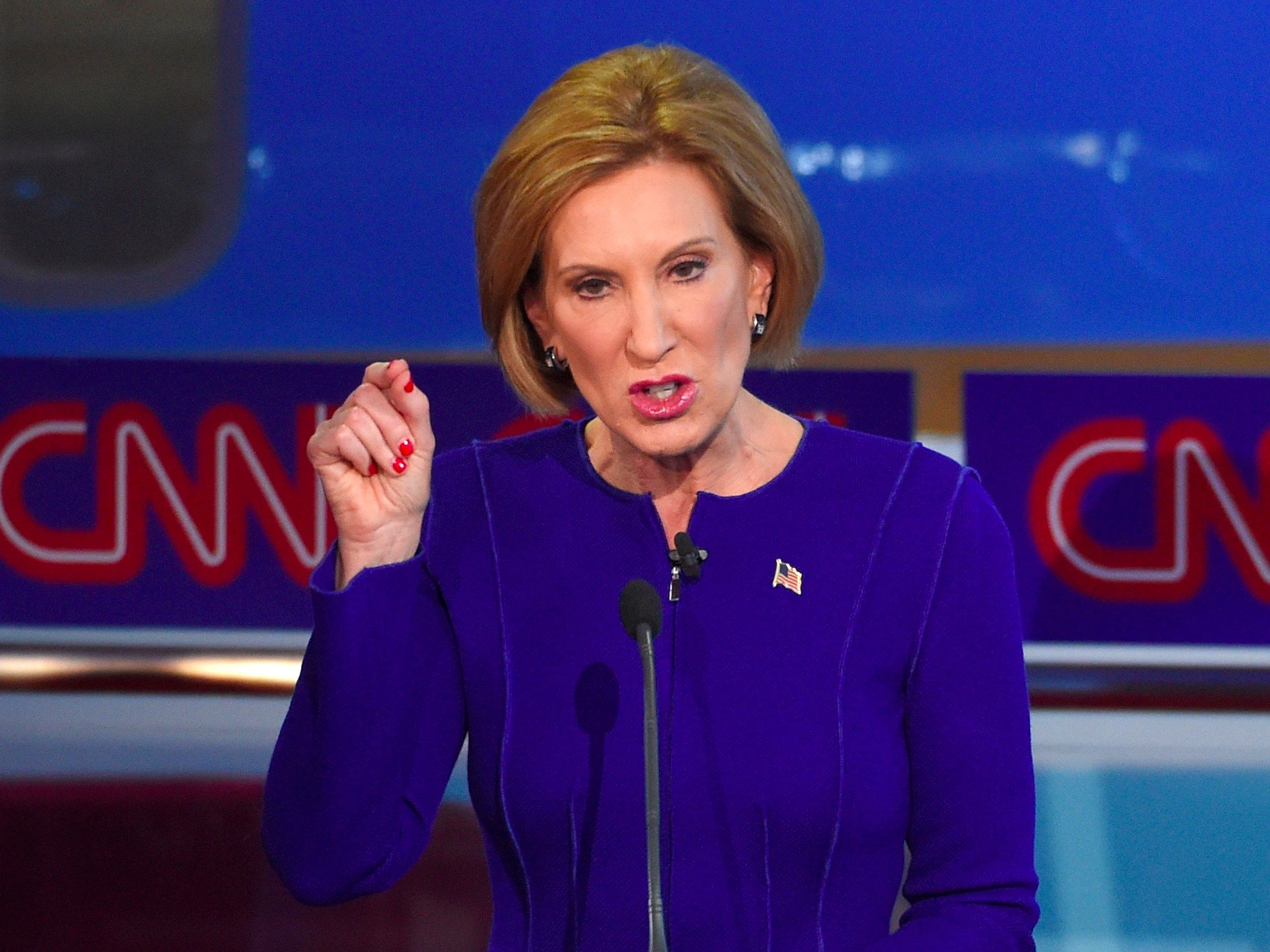
Dear Carly: let’s talk

Dear Carly,

Carly Fiorina at the Sept. 16 GOP debate

Carly Fiorina at the Sept. 16 GOP debate

You’re probably feeling pretty good right now about your much-praised performance at the marathon Republican debate on Sept. 16. But before you settle in with a self-congratulatory attitude that you must have done everything right, let’s talk about what you said about dealing with Vladimir Putin.

“Having met Vladimir Putin, I wouldn’t talk to him at all. We’ve talked way too much to him,” you said defiantly, when the discussion turned to foreign policy. “Russia is a bad actor…”

Your campaign then doubled down, sending out a tweet, “Putin won’t listen to talk. We need leadership and resolve. Pitch in $3. Carlyforpresident.com/debate”

Wrong, Carly. Wrong.

That kind of blunt rhetoric may be red meat to the crowd, but it’s a simplistic, wrongheaded and potentially dangerous approach to foreign policy.

Despite their antipathy to communism and hostility toward the Soviet Union, Republican Presidents Nixon and Ford and Democrat Carter all talked with their Soviet adversaries and signed strategic-arms limitation agreements with the Soviet Union.

Though he denounced the Soviet Union as an “evil empire” Reagan kept open the lines of communication. Should Reagan, often praised for bringing the Cold War to an end, not have talked to the Soviets?

President Ronald Reagan visiting Berlin in 1987, where he said, "Mr. Gorbachev, tear down this wall."

President Ronald Reagan visiting Berlin in 1987, where he said, “Mr. Gorbachev, tear down this wall.”

As Strobe Talbott, who served as Deputy Secretary of State from 1994-2001, said, in his efforts to drive the Soviet Union to a more accommodating direction, Reagan emerged “as an archpragmatist and operational optimist who adjusted his own attitudes and conduct in order to encourage a new kind of Kremlin leader.”

Sure, there are times when talking or negotiating with adversaries is the wrong move. But refusing to talk with an adversary under any circumstances is not a viable option.

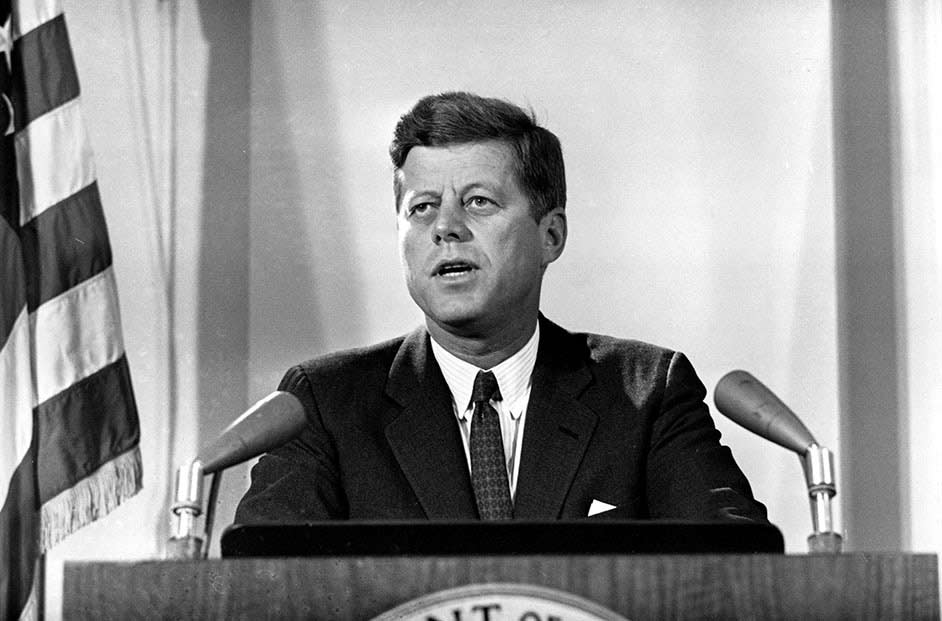
In the Cuban missile crisis, for example, had President Kennedy obstinately refused to negotiate with Soviet leader Nikita Khrushchev, a nuclear war might have been the outcome.

President Kennedy addressing the nation on the Cuban missile crisis

President Kennedy addressing the nation on the Cuban missile crisis

Would we really be better off today if President Nixon and Henry Kissinger had refused to talk with Chinese leaders and, instead, tried to isolate China and keep it from the world stage?

President Richard Nixon toasts with Chinese Premier Zhou Enlai in February 1972 in Beijing

President Richard Nixon toasts with Chinese Premier Zhou Enlai in February 1972 in Beijing

Foreign policy experts argue that America’s 21st century “War on terror” has overemphasized military responses and ignored the potential of diplomacy and that this had had “profound effects in misdirecting American power, alienating allies and discrediting worthy goals, including democratization and development.”

“Diplomacy include coercion and threats,” the experts note, “but it also requires discussion and room for bargaining between participants.”

So, before you get too far down this anti-talk road, take a breather and look at history. America will be best served by a president who acknowledges that we need to engage the world’s nations, both our allies and our adversaries. As John Donne put it so simply and eloquently:

No man is an island,

Entire of itself,

Every man is a piece of the continent,

A part of the main.


Thanks for your time,

Regards,

Bill MacKenzie


SoulCycle: all that glitters is not gold

Pssst. Wanna make it big? Buy this hot stock.

This post diverges a bit from my usual subjects, but some of today’s breathless talk about can’t lose IPOs (initial public offerings) reminds me of the late 1990s when colleagues at work talked constantly about the run-up in tech stocks like Inktomi, Infospqce and pets.com, and how they were going to make a killing.

StockMarketBubble-Invest10MinutesAgo-BSmallerAug1998-450px

During the dot-com bubble of the late 1990s, too many investors abandoned common sense and ignored standard metrics, as upstart companies rose like a rocket and then flamed out.

Inktomi, which provided software for internet service providers, soared to a market capitalization of $25 billion and a stock price of $241 a share in March 2000. Over the next 18 months the stock declined by 99.9% and in March 2003 Yahoo acquired the company for $250 million, or $1.63 a share.

Today all the talk’s about can’t lose companies like SoulCycle, a souped-up indoor cycling studio.

Remember Bally Total Fitness? Once owned by slot-machine maker Bally Manufacturing, it was the world’s largest owner and operator of fitness centers in 1987. In May 1998, it listed on the New York Stock Exchange under the ticker symbol BFT. After two bankruptcy filings, it now operates just 3 sites in New York.

Now we have SoulCycle.

A SoulCycle class

A SoulCycle class

In a July 30, 2015 Prospectus for its planned IPO, the company says it’s “a rapidly growing lifestyle brand that strives to empower our riders in an immersive fitness experience” and a company that believes “fitness should be joyful, inspiring and help people connect with their true and best selves.”

Wow! Who could resist investing their hard-earned money in that?

SoulCycle began as a small cycling studio in New York City in 2006. Since then SoulCycle has opened 47 locations nationwide, with plans to open 50-60 studios worldwide by 2016. It says it believes there’s enough opportunity to grow its domestic footprint to at least 250 studios.

The wealthy investors behind SoulCycle hope to reap a windfall when the company goes public, and there’s a lot of positive talk on the street.

But investors who are salivating over the IPO may be getting too exuberant.

As SoulCycle’s Prospectus notes, risk factors include the company’s ability to maintain the reputation and value of its brand, to attract and retain riders and to gain acceptance outside its Eastern geographic base.

There’s also competition. Current competitors already include similar cycling studios, like BurnCycle, Flywheel, and Portland’s Revocycle, as well as other fitness boutiques and thousands of athletic clubs that offer spinning classes. Revocycle, for example, is positioning itself as “the higher ground” of exercise, part of an “Organic, Artisanal Indoor Cycling Revolution.”

“Soul Cycle created a super high-intensity atmosphere ‘dance party on a bike’ class taught by ‘rockstar’ model/actor instructors,” says Revocycle. “…we try to treat our cycle classes like a yoga class, or barre….we practice excellent form and technique for safety, speak with a calming voice, use respectful and positive language, and we really tune into our bodies.”

SoulCycle is also going to have to deal in a timely way with inevitable changing trends. It could, frankly, be just another fitness fad.

In addition, there’s the issue of changing economic circumstances.

At $34 a session, if you go three mornings a week, you’ll spend $5304 a year. If you want to go whole hog, you can reserve your favorite instructors or classes by signing up for 50 SuperSoul classes at $3500, or $70 a session.

If you’re part of the 1 percent, that’s no big deal. But that may be too much for enough customers to fill 250 studios across the United States.

The experience of other recent IPOs should send a warning, too.

Of the 35 companies that went public with a valuation larger than $1 billion and started trading in the past year, 40 percent of them have fallen below their IPO price, BloombergBusiness reported earlier this month.

Bloomberg noted that investors had initially been excited about getting a piece of companies like Etsy Inc., which surged 87.5 percent on its first day of trading, and LendingClub Corp., which climbed 56.2 percent, but both stocks have slid more than 11 percent below their offering prices.

The Motley Fool just highlighted that even much-vaunted Twitter (NYSE:TWTR) stock has been hammered recently. After rising to $53 earlier this year, shares have since been halved. Now trading at around $24, Twitter stock’s year-to-date return is a disappointing -32%.

So as Sergeant Phil Esterhaus used to say on Hill Street Blues, “Hey, let’s be careful out there.”

Pssst. Wanna make it big? Buy this hot stock.

This post is a little different than my usual, but some of today’s breathless talk about can’t lose IPOs (initial public offerings) reminds me of the late 1990s when colleagues at work talked constantly about the run-up in tech stocks like Inktomi, Infospqce and pets.com, and how they were making a killing.

During the dot-com bubble of the late 1990s, too many investors abandoned common sense and ignored standard metrics, as upstart companies rose like a rocket and then flamed out.

Inktomi, which provided software for Internet service providers, soared to a market capitalization of $25 billion in March 2000 and a stock price of $241 a share. Over the next 18 months the stock declined by 99.9% and in March 2003 Yahoo acquired the company for $250 million, or $1.63 a share.

Today all the talk’s about can’t lose companies like SoulCycle, a souped-up indoor cycling studio.

Remember Bally Total Fitness? Once owned by slot-machine maker Bally Manufacturing, it was the world’s largest owner and operator of fitness centers in 1987. In May 1998, it was listed on the New York Stock Exchange under the ticker symbol of BFT. After two bankruptcy filings, it now operates just 3 sites in New York.

Now we have SoulCycle.

In a July 30, 2015 Prospectus for its planned IPO, the company says it’s “a rapidly growing lifestyle brand that strives to empower our riders in an immersive fitness experience” and a company that believes “fitness should be joyful, inspiring and help people connect with their true and best selves.”

Wow! Who could resist investing their hard-earned money in that?

SoulCycle began as a small cycling studio in New York City in 2006. Since then SoulCycle has opened 47 locations nationwide, with plans to open 50-60 studios worldwide by 2016. It says it believes there’s enough opportunity to grow its domestic footprint to at least 250 studios.

The wealthy investors behind SoulCycle hope to reap a windfall when the company goes public, and there’s a lot of positive talk on the street.

But investors who are salivating over the IPO may be getting too exuberant.

As SoulCycle’s Prospectus notes, risk factors include the company’s ability to maintain the reputation and value of its brand, to attract and retain riders and to gain acceptance outside its Eastern geographic base.

There’s also competition. Current competitors already include similar cycling studios, like BurnCycle, Flywheel, and Portland’s Revocycle as well as other fitness boutiques and thousands of athletic clubs that offer spinning classes. Revocycle, for example, is positioning itself as “the higher ground” of exercise, “the Portland Organic, Artisanal Indoor Cycling Revolution.”

“Soul Cycle created a super high-intensity atmosphere ‘dance party on a bike’ class taught by ‘rockstar’ model/actor instructors,” says Revocycle. “…we try to treat our cycle classes like a yoga class, or barre….we practice excellent form and technique for safety, speak with a calming voice, use respectful and positive language, and we really tune into our bodies.”

SoulCycle is also going to have to deal in a timely way with inevitable changing trends. It could, frankly, be just another fitness fad.

SoulCycle will also have to deal with people’s changing economic circumstances.

At $34 a session, if you go three mornings a week, you’ll spend $5304 a year. If you want to go hole hog, you can reserve your favorite instructors or classes by signing up for 50 SuperSoul classes at $3500, or $70 a session.

If you’re part of the 1 percent, that’s no big deal. But that may be too much for enough customers to fill 250 studios across the United States.

The experience of other IPOs also should send a warning, too.

Of the 35 companies that went public with a valuation larger than $1 billion and started trading in the past year, 40 percent of them have fallen below their IPO price, BloombergBusiness reported earlier this month.

Bloomberg noted that investors had initially been excited about getting a piece of companies like Etsy Inc., which surged 87.5 percent on its first day of trading, and LendingClub Corp., which climbed 56.2 percent, but both stocks have slid more than 11 percent below their offering prices.

The Motley Fool just highlighted that even much-vaunted Twitter (NYSE:TWTR) stock has been hammered this year. After rising to $53 earlier this year, shares have since been halved. Now trading at around $24, Twitter stock’s year-to-date return is a disappointing -32%.

So as Sergeant Phil Esterhaus used to say on Hill Street Blues, “Hey, let’s be careful out there.”
SoulCycle: all that glitters is not gold

Pssst. Wanna make it big? Buy this hot stock.

Some of today’s breathless talk about can’t lose IPOs (initial public offerings) reminds me of the late 1990s when colleagues at work talked constantly about the run-up in tech stocks like Inktomi, Infospqce and pets.com, and how they were making a killing.

During the dot-com bubble of the late 1990s, too many investors abandoned common sense and ignored standard metrics, as upstart companies rose like a rocket and then flamed out.

Inktomi, which provided software for Internet service providers, soared to a market capitalization of $25 billion in March 2000 and a stock price of $241 a share. Over the next 18 months the stock declined by 99.9% and in March 2003 Yahoo acquired the company for $250 million, or $1.63 a share.

Today all the talk’s about can’t lose companies like SoulCycle, a souped-up indoor cycling studio.

Remember Bally Total Fitness? Once owned by slot-machine maker Bally Manufacturing, it was the world’s largest owner and operator of fitness centers in 1987. In May 1998, it was listed on the New York Stock Exchange under the ticker symbol of BFT. After two bankruptcy filings, it now operates just 3 sites in New York.

Now we have SoulCycle.

In a July 30, 2015 Prospectus for its planned IPO, the company says it’s “a rapidly growing lifestyle brand that strives to empower our riders in an immersive fitness experience” and a company that believes “fitness should be joyful, inspiring and help people connect with their true and best selves.”

Wow! Who could resist investing their hard-earned money in that?

SoulCycle began as a small cycling studio in New York City in 2006. Since then SoulCycle has opened 47 locations nationwide, with plans to open 50-60 studios worldwide by 2016. It says it believes there’s enough opportunity to grow its domestic footprint to at least 250 studios.

The wealthy investors behind SoulCycle hope to reap a windfall when the company goes public, and there’s a lot of positive talk on the street.

But investors who are salivating over the IPO may be getting too exuberant.

As SoulCycle’s Prospectus notes, risk factors include the company’s ability to maintain the reputation and value of its brand, to attract and retain riders and to gain acceptance outside its Eastern geographic base.

There’s also competition. Current competitors already include similar cycling studios, like BurnCycle, Flywheel, and Portland’s Revocycle as well as other fitness boutiques and thousands of athletic clubs that offer spinning classes. Revocycle, for example, is positioning itself as “the higher ground” of exercise, “the Portland Organic, Artisanal Indoor Cycling Revolution.”

“Soul Cycle created a super high-intensity atmosphere ‘dance party on a bike’ class taught by ‘rockstar’ model/actor instructors,” says Revocycle. “…we try to treat our cycle classes like a yoga class, or barre….we practice excellent form and technique for safety, speak with a calming voice, use respectful and positive language, and we really tune into our bodies.”

SoulCycle is also going to have to deal in a timely way with inevitable changing trends. It could, frankly, be just another fitness fad.

SoulCycle will also have to deal with people’s changing economic circumstances.

At $34 a session, if you go three mornings a week, you’ll spend $5304 a year. If you want to go hole hog, you can reserve your favorite instructors or classes by signing up for 50 SuperSoul classes at $3500, or $70 a session.

If you’re part of the 1 percent, that’s no big deal. But that may be too much for enough customers to fill 250 studios across the United States.

The experience of other IPOs also should send a warning, too.

Of the 35 companies that went public with a valuation larger than $1 billion and started trading in the past year, 40 percent of them have fallen below their IPO price, BloombergBusiness reported earlier this month.

Bloomberg noted that investors had initially been excited about getting a piece of companies like Etsy Inc., which surged 87.5 percent on its first day of trading, and LendingClub Corp., which climbed 56.2 percent, but both stocks have slid more than 11 percent below their offering prices.

The Motley Fool just highlighted that even much-vaunted Twitter (NYSE:TWTR) stock has been hammered this year. After rising to $53 earlier this year, shares have since been halved. Now trading at around $24, Twitter stock’s year-to-date return is a disappointing -32%.

So as Sergeant Phil Esterhaus used to say on Hill Street Blues, “Hey, let’s be careful out there.”

The faux fight against ISIS

dronesISIS

ISIS is on the run. Just read the headlines.

Official: local ISIS leader killed in western Mosul, Sept. 2015; US Airstrikes In Iraq Kill Three Senior ISIS Leaders, Including Baghdadi’s Key Aide, Sept. 2015; White House confirms key ISIS leader killed in US air strike, Aug. 21, 2015; Afghan agency: ISIS leader killed in drone strike, July 2015; U.S.: ISIS No. 2 killed in U.S. drone strike in Iraq, Aug. 2015; Pentagon officials: Prominent ISIS recruiter killed in airstrike, Aug. 2015; Top ISIS leader killed in coalition airstrike, July 2015; ISIS Leader Killed in Airstrike in Syria, June 2015; ISIS hacking leader killed by drone strike, Aug. 2015; Senior ISIS leader killed in extremist-held Hawija, July 2015; ISIS leader confirmed killed by U.S. forces, May 2015; Special Ops Kill ISIS Commander, Free His Family Slave, May 2015; Senior ISIS leader killed during raid, May 2015; Senior ISIS leader killed in U.S. raid in Syria, May 2015; U.S. special forces storm Syria’s Deir ez-Zor, kill senior ISIS commander, May 2015; Isis leader Abu Bakr al-Baghdadi ‘seriously wounded in air strike’, April 2015; CNN: US Has Secret ‘Kill List’ of Top ISIS Leaders, Feb. 2015; Iraqi police: new ISIS commander in Anbar killed, Jan. 2015; U.S. Secretary of State John Kerry announces that Iraq and the U.S.-led coalition have killed 50 percent of the Islamic State of Iraq and Syria’s (ISIS) top commanders, Jan. 2015.

HAVE WE WON YET?

Danger ahead: the dismal performance of some minorities on the SAT

The College Board recently reported the results for SAT test-takers in the class of 2015…and the news isn’t good.

african-american-teenagers-taking-the-sat

On average, high school graduates in the class of 2015 had lower scores in all three subject areas (critical reading, math and writing) than in 2014 and overall the lowest performance since the 2,400-point scale was developed about a decade ago.

The mainstream media covered this pretty well, but most ignored or said little about a more disturbing aspect of the report: the results for Native American, African American and Hispanic students were appalling.

Just 41.9% of SAT takers in the class of 2015 (712,000 students) met the SAT College and Career Readiness Benchmark. That means they have a 65% probability of obtaining a first-year GPA of B- or higher at a four-year college. It indicates a student’s readiness to enter college or career-training programs and to succeed in credit-bearing, entry-level college courses.

But look at the percent of U.S. test-takers who met the benchmark broken down by race/ethnicity:

  • Asian: 61.3%
  • White: 52.8%
  • Native American: 32.7%
  • Hispanic: 22.7%
  • African American: 16.1%

The numbers for native Americans, Hispanics and African-Americans in Oregon who met the College and Career Readiness Benchmark were pretty dismal, too: 

  • Native American: 31%
  • Hispanic: 22.6%
  • African American: 24.9%

Some argue that the averages for minority students are low because the number of them taking the test is expanding: 32.5% were underrepresented minority students in the class of 2015, compared to 31.3% in the class of 2014 and 29.0% in the class of 2011.

Others argue that this is avoiding the real issue, that too many minority students are not getting a good education. “Without access to challenging courses and assessments that measure their progress, students will not be able to get the most out of their opportunities to prepare for college and careers.” The College Board said in its report.

The College Board noted that there continue to be striking differences in academic preparation between white and Asian students and African Americans, Native Americans and Hispanics that affect college readiness. White and Asian students taking the SAT, for example, are more likely to have taken AP and Honors courses. They are also more likely to have completed a full “core curriculum,” which includes four or more years of English, three or more years of mathematics, three or more years of natural science, and three or more years of social science and history.

“Nowhere is there more of a need to expand access to more rigorous coursework than among low-income and minority students,” said Cyndie Schmeiser, Chief of Assessment at the College Board.

The U.S. Census projects that racial and ethnic minorities will represent more than half of all children in the United States by 2023, and that the U.S. population will be 54 percent minority by 2050. As noted by the Association of American Colleges & Universities, “Youth from these communities need full preparation for and access to higher education. It would be both immoral and impractical to ignore the disparities facing these young people, as a brighter future for them means a brighter future for all.”

Disillusionment and despair: the Trump turmoil

Donald Trump isn’t a candidate.

Donald-Trump-Caricature

He’s a stand-in for the alienation and disillusionment so many Americans feel as both the Republican and Democratic parties have failed us.

How could it be otherwise when so much seems so wrong and fakery, misdirection, and outright lies by both parties have been so pervasive?

Consider:

  • The past several decades have seen the most sustained rise in inequality in the United States since the 19th century after more than 40 years of narrowing inequality following the Great Depression. By some estimates, income and wealth inequality are near their highest levels in the past hundred years.
  • The 2009 $830 billion stimulus package, with a claimed focus on shovel-ready projects, was supposed to fix things after the Great Recession. The legacy instead – a slow growth economy. The first 23 quarters of the recovery, which officially began in June of 2009, had an annual rate of growth of just 2.1 percent.
  • The distribution of wealth in the United States is even more unequal than that of income. The wealthiest 5 percent of American households held 54 percent of all wealth reported in 1989, rose to 61 percent in 2010 and reached 63 percent in 2013.
  • 71 percent of Americans say life has gotten worse for middle-class Americans over the past 10 years.
  • Today’s fifty-somethings may be part of the first generation in American history to experience a lifetime of downward mobility, in which at every stage of adult life, they have had less income and less net wealth than did people who were their age ten years before.
  • There is now less economic mobility in the United States than in Canada or much of Europe. A child born in the bottom one-fifth of incomes in the United States has only a 4 percent chance of rising to the top one-fifth.
  • Young Americans (ages 18-34) are earning less (adjusted for inflation) than their peers in 1980 ; the college graduating class this year left with an average student debt of $35,051.
  • In 1986, President Reagan signed legislation that was supposed to fix the illegal immigration issue once and for all. Three million applied for legal status and about 2.7 million received it. Today, about 11.7 million immigrants are living in the United States illegally. So much for the fix.
  • Despite all the “mission accomplished” and “victory is at hand” assurances, America has been at war in the Middle East for the past 15 years, with little to show for it, billions of dollars down a rathole, thousands of American soldiers dead and wounded, and continuing chaos in Afghanistan, Iraq, Libya and Yemen.
  • Despite the billions the government has spent on poverty-related programs, half of children age three and younger live in poverty.
  • The White House wants to “press the reset button” on one of Washington’s biggest challenges: its increasingly troublesome relationship with Russia,” Vice President Biden, 2/7/2009; “We’re going to hit the reset button and start fresh (with Russia),” Secretary of State Hillary Clinton, 3/6/2009
  • “If you like the plan you have, you can keep it.  If you like the doctor you have, you can keep your doctor, too.” President Obama, 6/6/2009.
  • “I ended the war in Iraq, as I promised. We are transitioning out of Afghanistan. We have gone after the terrorists who actually attacked us 9/11 and decimated al Qaeda.” President Obama, 9/14/2012
  • Despite assurances from some politicians that all’s well, the Medicare program has $28.1 trillion in unfunded liabilities over the next 75 years. Together with Social Security’s $13.3 trillion shortfall, the government has accumulated entitlement spending commitments that far exceed our capacity to pay for them.
  • In the 2012 election cycle, a tiny elite of the U.S. population, just 0.40 %, made a political contribution of more than $200, providing 63.5% of all individual contributions to federal candidates, PACs and Parties, according to the Center for Responsive Politics.
  • Fewer than four hundred families are responsible for almost half the money raised in the 2016 presidential campaign to date, a concentration of political donors that is unprecedented in the modern era.

As H.L. Mencken said, “Under democracy one party always devotes its chief energies to trying to prove that the other party is unfit to rule — and both commonly succeed, and are right.”