The Oregon Convention Center Hotel: paying off the unions

Ask any informed person without a vested interest in the proposed Oregon Convention Center Hotel whether they think it will be a fiasco and you’re likely to get a loud and clear, “Yep!”

But public opinion has little to do with whether the hotel will get built. The fix is in, with Metro, liberal politicians and labor unions joined at the hip.

Metro Council President Tom Hughes, the hotel’s principal cheerleader, was first elected to Metro in 2010 with the strong support of labor organizations; they continued that support in his successful 2014 race.

“I want to build a hotel,” Hughes once told union workers. “I want it to be built by union workers, and I want union workers running it.”

unite here

Portland has just three union-operated hotels, all organized by Unite Here Local 8: the Benson; the Paramount; and the Portland Hilton Hotel and Executive Tower.

The unions got their first break on the Convention Center project when Metro mandated that the hotel be built by union building trades.

Prospective developers were also told to bid the privately-owned and operated project under union-supported prevailing wage guidelines where wages are set artificially high above the market.

Metro stacked the deck in favor of the unions again when the Council required that Hyatt sign a labor peace agreement with Unite Here before Metro would begin negotiating the details of the project. Hyatt, long a non-union hotel chain, subsequently agreed to a national labor peace agreement with Unite Here.

Metro also gave unions an edge in organizing the eventual hotel workers by requiring that they use a voting process despised by employers and many workers called card check. Under card check, instead of holding a federally-supervised secret ballot election, workers get to vote under the watchful eyes of union organizers, Lucky them.

Once a majority of employees have signed cards, the union is immediately recognized.

As the AFL-CIO’s Southeastern Oregon Central Labor Council put it, the hotel workers “…will come into a workplace where their management has promised to leave any decisions to the workers without wasting money on deceiving anti-union campaigns.”

Yep, folks, the fix is in.

Sure it’s ugly, but at least it’s expensive.

I passed an all-electric BMW i3 today and it’s the ugliest thing ever. It reminded me of the ungainly 2001-2005 Pontiac Aztec, one of the ugliest vehicles ever made, according to consumer polls. Even legendary GM executive, Bob Lutz, said it and other GM products looked like “angry kitchen appliances.”

BMW i3

BMW i3

What is it that drives people to buy the i3, with a MSRP up to $46,250, and other horrendously pricey, but ugly, products?

It’s the weirdness itself.

It’s not that people want an ugly car. What they want is to stand out, to express their identity.to have their friends, neighbors and even strangers see them in their distinct, peculiar, expensive car. If it’s an electric or hybrid car, so much the better because it crows, “I can afford this. Admire me and my environmental credentials.”

Same thing with a host of other products.

Want an expensive watch? You could spend tons on an exhorbitantly priced, but bland-looking one. But who will notice? Instead, try the Roger Dubuis Excalibur Quatuor, priced at 1 million Swiss francs (about US $1,125,000).

Roger Dubuis Excalibur Quatuor watch

Roger Dubuis Excalibur Quatuor watch

The maker says it’s worth it because its case is made entirely of silicon (according to the brand, the first such watch of its kind), a material with half the weight of titanium and four times the hardness. It’s big advantage? It’s really ugly, so people will notice.

How about shoes? Some women are apparently willing to spend $2495 on Giuseppe Zanotti white crystal-embellished peep-toe leather mid-calf booties. It can’t be because they are so elegant, but they certainly will be noticed.

Giuseppe Zanotti booties

Giuseppe Zanotti booties

Of course, some people will buy expensive things even if they aren’t ugly, so long as they carry status. Aspirational Americans keep buying Land Rovers, for example, even though they consistently get terrible reliability ratings.

Range Rover Evoque

Range Rover Evoque

When JD Power recently released the results of its newest Customer Service Index study, Land Rover finished right at the bottom, in the basement, dead last.

Typical of owner complaints is this from the owner of a Land Rover with 28,000 miles on it: “…after a year of owning it – the electronic park brake got stuck and was a huge expense to fix. Shortly after that the rear anti roll bar was leaking – another huge expense…After 50K miles front suspension arms have gone wheel bearings have gone and front anti roll bar has gone, another 4.5K to fix all. Just got the car back – and now the right side turbo has gone. Another 5K fix… Range rovers are nice to look at – but are built so poorly – its not worth owning this car.”

Oh well, at least people blowing all their money on overpriced things are keeping the people who make them employed. And that’s good for the economy, right?

Baltimore: The seeds of black despair

The past is prologue.

If you want to understand Baltimore’s current turmoil, look at the childhoods of its inner-city blacks and their progress to adulthood.

Despite the American ideal of social mobility, we are not all masters of our own fortune able to pull ourselves up by our bootstraps. That’s the conclusion of “The Long Shadow”, a report on a groundbreaking 25-year study led by three Johns Hopkins University academics.

blacksbaltimore

The study showed how hard it is for inner city blacks in Baltimore to break out from the straitjacket of poverty, dysfunctional families, limited education and crime-ridden neighborhoods.

The study followed 790 urban youth who began first grade at 20 Baltimore elementary schools in 1982 and tried to forge lives for themselves into the first decade of the twentieth century.

It’s not a pretty picture.

The de-industrialization, downsizing and impoverishment of Baltimore has left thousands of blacks behind.

In 1950, Baltimore was a major American city with 950,000 people and thriving industries. Today, downtown Baltimore is a jewel, but the city’s population is just 623,000 and it’s economy is sharply divided between well-paid professionals and an underclass with no jobs or with low-wage, low or no benefit jobs with limited potential for advancement.

A cumulative disadvantage begins in the early elementary school years. “Lower socioeconomic status and disadvantaged black youth begin school already behind on all criteria commonly used to gauge school readiness,” the study says. Then the black children who start behind find it hard to ever catch up.

The study points out that the urban disadvantaged are not all disadvantaged in the same way and to the same extent.

Disadvantaged blacks in Baltimore find life harsher than low-income whites. This is due partly to growing up in neighborhoods with more pervasive violent crime, high levels of single teen parenthood, low levels of schooling and high unemployment.

In contrast, many disadvantaged whites with low education levels in Baltimore still manage to find decent employment as adults in the remaining industrial and construction crafts. That’s partly cause they have a broader network of job contacts that grow out of their blue-collar residential enclaves.

“The networks were relics of Baltimore’s well-documented Jim Crow past, when blacks were systematically shut out of most skilled trades,” the study reported. “Modern anti-discrimination laws ended such practices’ official sanction, but white employers continued to hire mostly white workers through family and social connections rather than through formal job postings.”

And the pattern of failure for too many Baltimore blacks repeats itself when parents with little formal education and erratic employment in low-level dead-end jobs are in no position to be role models for the kinds of behaviors that will help their children succeed.

Then there are drugs and criminal records. Higher levels of drug-related arrests of blacks, even though their drug usage is comparable to that of whites, and higher rates of incarceration mean more blacks have the stain of a criminal record, further limiting employment opportunities. “To be young, black and a dropout in today’s economy is trebly disadvantaging, and a criminal record adds another strike,” the report says.

The result? A dispirited, frustrated, fatalistic black population with bleak prospects. Perfect tinder for combustion.

Shakedown: The Clinton money machine

The Clinton’s aren’t public-spirited philanthropists. They’re shakedown artists.

Michael Gerson, a columnist at the Washington Post, recently asked, “..what compels the Clintons to operate so close to the ethical line when public scrutiny is so likely?”

Greed and power, sir, pure greed, a quest for power. and no shame.

Chelsea, Hillary and Bill Clinton bask in the limelight.

Chelsea, Hillary and Bill Clinton bask in the limelight.

When the Clintons moved out of the White House, thy hauled off $190,000 worth of china, flatware, rugs, televisions, sofas and other gifts. Greed without shame.

When Bill Clinton left the White House he initially wanted to lease a fancy high-rise office in midtown Manhattan for $800,0000 a year, $500,000 of that to be covered by taxpayers, more than the annual office rent for ex-presidents Reagan, Carter and Ford combined. Greed without shame.

The Bill, Hillary and Chelsea Clinton Foundation has raised about $2 billion since it was founded in 2001. The money has come from foreign governments, corporate tycoons, politically-connected influencers, and other moneyed interests.

Meanwhile, Bill and Hillary have raked in millions from speeches, many to groups with interests in government policies.

Just between January 2001, when Bill Clinton left the White House, and January 2013, when Hillary stepped down as Secretary of State, Bill Clinton was paid $104.9 million for 542 speeches around the world, according to an analysis by the Washington Post. After leaving the State Department, Hillary joined the money rush with speeches for which she earned $200,000 or more per appearance.

Even the Clintons’ daughter, Chelsea, has learned “the family business.” With no media experience, she secured a $600,000 a year job as a “special correspondent” for NBC News in 2011 that lasted until mid-2014. Her uninspiring performance earned her the distinction of being called “one of the most boring people of her era” by Washington Post Style reporter, Hank Stueverof.

“We came out of the White House not only dead broke but in debt,” Hillary said. Not any more.

At its essence, the Clinton’s money haul, both the personal haul and the fundraising for their foundation, are part of a massive pay-to-play scheme.

The foundation’s programs run the gamut from climate change and economic development to public health and woman and girls, and it claims to be impacting lives around the world.

But the simple fact is that thousands of other non-profits in the U.S. and around the world were doing the same work when the Clinton Foundation was created and are continuing to do so, often while starved for funds.

If the Clintons really wanted to advance causes dear to their hearts after leaving the White House, they could have checked Charity Navigator and advocated on behalf of already established, exemplary non-profits, rather than creating another hydra-headed creature focused on promoting the brand of its founders. In short, there was absolutely no need to create the behemoth that is the Clinton Foundation.

The only reason for creating it was to give the Clintons a platform for self-aggrandizement, to allow powerful U. S. and foreign interests to curry favor with a former President and maybe a future one.

NOTE: Charity Navigator refuses to rate the Bill, Hillary and Chelsea Clinton Foundation, noting that “…this charity’s atypical business model can not be accurately captured in our current rating methodology.” Instead, the Foundation has been placed on Charity Navigator’s “Watchlist” in light of issues raised about its operations. “…given that our primary obligation is to donors, Charity Navigator has determined that the nature of this/these issue(s) warrants highlighting the information available so that donors are aware of the issues in question which may be relevant to their decision whether to contribute to this organization.” Another non-profit on the Watchlist is Al Sharpton’s National Action Network, cited for failing to pay payroll taxes. “With the tax liability outstanding, Mr. Sharpton traveled first class and collected a sizable salary, the kind of practice by nonprofit groups that the United States Treasury’s inspector general for tax administration recently characterized as ‘abusive,’ or ‘potentially criminal’ if the failure to turn over or collect taxes is willful,” the New York Times reported in 2014.

Do no evil: Google’s Digital News Initiative is a bad deal

Want to know how to win friends and influence publishers: give them money.

So much for Google’s “Do no evil” mantra. Its decision to launch a “Digital News Initiative” with eight news publishers in Europe is a clear effort to influence news coverage and political activity.

Publishers that value their integrity and know journalism should just say no.

googledonoevil

Google is facing a European Union investigation into allegations that it has abused its monopoly positions in online search and has improperly bundled its Android apps.

Despite the timing, Google insists that the digital initiative is not simply a P.R. effort or an attempt to discourage major media from undermining the company’s business goals. Sure.

In Google’s early years, it declared that one of the ten things it knew to be true was, “You can make money without doing evil.” Apparently it’s changed its mind.

At the same time, newspapers used to believe that their job was to be speak the unvarnished truth. As Adolph S. Ochs, the founding father of the modern New York Times, declared more than a century ago, 100 years ago, the paper was committed “…to give the news impartially, without fear or favor, regardless of party, sect, or interests involved…” Apparently some newspapers trying to adapt to the new digital world have changed their mind, too.

Google announced today (April 28) that the initiative will initially have eight publishing partners: the Financial Times; Les Echos in France; NRC Media in the Netherlands; El Pais in Spain; La Stampa in Italy, Faz and Die Zeit in Germany; and the Guardian in the U.K. Publications from Rupert Murdoch’s News Corp are noticeably absent.

Founding partners also include The European Journalism Centre (EJC), The Global Editors Network (GEN), and The International News Media Association (INMA). Publications from Rupert Murdoch’s News Corp are noticeably absent.

Under the partnership, Google plans:

  • to work with the publishers to establish a ‘product working group’ to enable a close, on-going dialogue exploring product developments to increase revenue, traffic and audience engagement
  • Create a €150m ($164 million) innovation fund to support and stimulate innovation in digital news journalism over the next three years.
  • Invest in new training and development resources for journalists and newsrooms across Europe

News publishers may try to rationalize such a partnership with Google, but the fact is this does not auger well for the their independence. As the saying goes, you are judged by the company you keep.

Facebook: the emerging para-site

The seeds of your newspaper’s demise are being planted by Facebook.

In Oct. 2014, David Carr disclosed in the New York Times that Facebook had plans to host entire news stories from publications on its website, rather than just providing links to publishers’ sites. Stories would live inside Facebook and be hosted by its servers, accompanied by ads sold by Facebook.

Under such an arrangement, Facebook would decide what stories go on the site. It would become the news gatekeeper for millions of people and the relationship between news producers and their audience would be severed. News originators would get wider distribution of their content, but data gathered on users would be owned and used by Facebook, not the news creators. “Media companies would essentially be serfs in a kingdom that Facebook owns,” Carr wrote.

Or as I’d put it, Facebook would be a para-site, sucking the lifeblood out of other media and reaping most of the benefits in eyeballs, revenue and influence.

Facebook: the new para-site

Facebook: the new para-site

Numerous online news sites already provide access to news stories, but most have a symbiotic relationship, with the aggregator providing just headline teases and links to the originating publication. The aggregator, such as Google News, News360, and Drudge Report is doing no original reporting, while benefiting from advertising revenue, but the originator benefits from additional traffic.

Andy Mitchell, Facebook’s Director of News and Global Media Partnerships, said earlier this month that 30 percent of adults and 88 percent of millennials in the United States get news via Facebook each month. That makes Facebook one of the most powerful news distributors on the planet. If it starts displaying entire stories, it will not only be displaying news, but determining who will see content.

“Facebook is not, and knows quite well it is not, a neutral machine passing on news,” says George Brock, a British professor who writes on 21st century journalism.

As Jay Rosen, who comments on the media in his blog PressThink, notes, Facebook operates quite differently from a traditional news editor in that a carefully designed algorithm chooses what users see. “It’s not mimicking the trained judgment of experienced journalists. Instead, it’s processing a great variety of signals from users and recommending stories based on…maximizing time on site…The end-in-view isn’t an informed public or an entertained audience but a user base in constant contact with Facebook.”

Hillary’s listening tour: Authenticity? Not!

In the alternative world of politics, nothing is real. Nowhere is that more the case than in presidential campaigns. As the saying goes, “The secret of success is sincerity. Once you can fake that you’ve got it made.”

Hillary’s supposed low-key listening tour with the Scooby van this week was pitched as a spontaneous, truth-telling, interactive, unscripted escapade with everyday folks, a chance to reveal her authenticity. “It isn’t about her, it isn’t about us. It’s about Iowans, everyday Iowans, their hopes, their dreams,” Clinton’s campaign said. “That’s what you can expect for the next few weeks…real conversations about what matters for the country,” said Katie Dowd, digital director of Hillary’s campaign.

But Hillary’s in a league of her own in terms of trying to manipulate reality, apparently believing that you can fool all the people all the time.

It started when her armored Express Explorer Limited SE van stopped (in a handicapped parking spot, no less) at the Jones Street Java House in Le Claire, Iowa for a roundtable with “ordinary Americans.”

Hillary Clinton has a "spontaneous" conversation with patrons at a coffee shop in Le Claire, Iowa.

Hillary Clinton has a “spontaneous” conversation with patrons at a coffee shop in Le Claire, Iowa.

“Clinton surprises customers at LeClaire coffee shop,” read the headline in a regional paper the next day.

I don’t think so.

The initial reporting said Clinton spent an hour at the coffee shop talking with ordinary Americans Austin Bird, Sara Sedlacek and Carter Bell. Clinton ordered drinks, inquired about the menu and talked casually with the three. Sedlacek said they talked about education, health care and child care. It all looked so genuine, so unrehearsed.

Aggressive media follow-up revealed, however, that the whole thing was carefully choreographed, a faux event, so to speak.

Far from being regular folks who happened to be chatting over coffee when Hillary strolled in, all have Democratic party ties. Bird is a government and community relations coordinator at Genesis Health System in Davenport, Iowa, according to his LinkedIn profile. He interned with President Obama’s 2012 presidential re-election campaign and chauffeured Vice President Joe Biden when he visited Davenport in Oct. 2014.

Bell is president of the University of Iowa College Democrats. Sedlacek is an employee at Planned Parenthood of the Heartland. Planned Parenthood’s PAC contributed $588,918 to federal candidates in 2014, every single penny to Democrats, according to the Center for Responsive Politics.

Bird admitted that Troy Price, political director of Clinton’s Iowa campaign, called and asked him, Bell and Sedlacek to meet him Tuesday morning at a the Village Inn restaurant in nearby Davenport, Iowa. Price vetted them for about half an hour and then drove them to the coffee house to meet Clinton.

Authenticity. Spontaneity. Openness. Not exactly. Expect more of the same over the next 18 months or so.

Subsidizing electric cars in Oregon: a shockingly bad idea

Batteries don’t charge up electric cars; government subsidies do. At least that’s what supporters of a bill now before the Oregon House seem to believe.

The bill, H.B. 2092, would establish an Incentive Fund to make rebates of up to $3000 to purchasers of alternative fuel vehicles, including those that are powered by batteries or hydrogen fuel and gasoline-electric vehicles. Rebates from the fund could total as much as $30 million per biennium and would be on top of the already absurd federal subsidy of up to $7500.

Just what we need, a $30 million government subsidy to purchasers of pricey cars, when Oregon is already one of the top states for EV market share and the state has many other more pressing concerns to address.

The House Energy and Environment Committee held a public heating on the bill on April 2 and has a work session on the bill scheduled for today, April 16.

Under the bill, state rebates would help affluent Oregonians buy vehicles such as the $43,000 BMW i3 and $135,000 i8, the $42,000 Mercedes B-Class, the $106,000 Tesla Model S P85D, and the $35,000 Chevy Volt.

The purchaser of a $135,000 BMW i8 would be eligible for a $3,000 rebate from the state under H.R. 2092

The purchaser of a $135,000 BMW i8 would be eligible for a $3,000 rebate from the state under H.R. 2092

To put things in perspective, $30 million is more than the TOTAL state income tax liability of all personal filers in 16 Oregon counties in 2013: Baker County ($13.1 million), Crook ($18.2 million), Curry ($19.6 million), Gilliam ($12.1 million), Grant ($5.9 million), Harney ($5.1 million), Jefferson ($15.5 million), Lake ($6.2 million), Malheur ($17.6 million), Morrow ($11.1 million), Sherman ($2.6 million), Tillamook ($23.6 million), Union ($24.7 million), Wallowa ($6.1 million), Wasco ($23.6 million) and Wheeler ($1.3 million).

If I lived in one of those counties I wouldn’t look kindly on all my personal state income tax payments going to this alternative fuel vehicle boondoggle.

Let’s be honest here, folks. There are a lot of other places $30 million could be invested more wisely in Oregon.

Seven Oregon counties have been losing population, Coos, Baker, Wallowa, Malheur, Grant, Wheeler, and Sherman.

If the Legislature can find another $30 million to spend, why not use the $30 million to help these struggling counties attract businesses?

Deserving young people around the state are dealing with the stresses and strains of trying to find the money to pay for post-secondary education.

Why not put the $30 million in Oregon Opportunity Grants, the state’s need based financial aid program.

The state invests in Employment Related Day Care in support of the Early Learning initiative, providing greater access to quality childcare for Oregon’s working families.

How about adding $30 million to the budget for that?

A potential decline in lottery revenues during the 2015-17 biennium is likely to present budget issues for the Oregon Parks and Recreation Department, Oregon Watershed Enhancement Board, Department of Agriculture, Department of Environmental Quality, Oregon Department of Fish and Wildlife, and the Oregon State Police Division of Fish and Wildlife. In addition, the Oregon Department of Fish and Wildlife is facing a significant budget shortfall.

The legislature could help out the Natural Resource Program area by adding $30 million to its budget.

The logical decision? Short-circuit this bill.

The new economy, Lyft and Mac’s List: caveat emptor

The ad on Mac’s List, the job openings site, is pretty straightforward:

Lyft (Portland Metro) is hiring a Lyft Driver. Salary: $1,500/wk.


MacsListLogo72dpi-150x150

The problem is, like so many independent contractor jobs in our new economy, this one doesn’t really guarantee any salary at all. But Lyft doesn’t are, and apparently Mac’s List doesn’t either.

In this case, how much the Lyft driver makes will depend on the number of rides given and how much each one pays. Then you have to cover gas, car cleanings, insurance, tolls, car payments, maintenance and self- employment taxes. And of course, you’ll have to deal with heavier wear and tear on your car.

Then consider that under current law, independent contractors aren’t entitled to: A minimum wage; Health benefits; Unemployment insurance; Retirement plans; Workers’ compensation; Job protections.

I asked Mac’s List how they could allow such a deceptive ad promising a $1500 a month salary. “You wouldn’t run an ad for a salesperson and say the salary is $2000 a month if income was totally dependent on commissions, would you?”

Their response:

“Thanks for your feedback. As always we work to ensure that all job listings are accurate and up-to-date…We encourage you to email Lyft if you want to bring your concern to their attention. We are not responsible for the salary range they advertise for the job.”

In other words, not their problem.  Caveat emptor, folks.

Indianapolis Mayor Greg Ballard is the latest to join boycott-Oregon movement

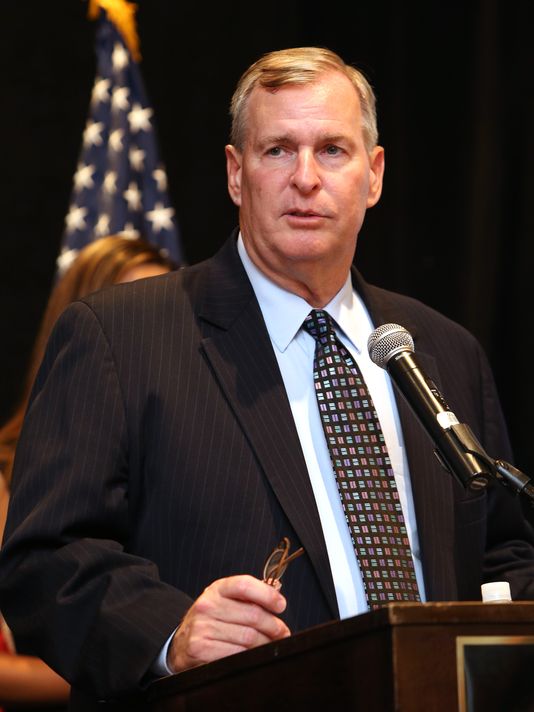
Indianapolis, Indiana Mayor Greg Ballard said Monday that he would ban city-funded travel to Oregon because Oregon is implementing controversial liberal laws that are offensive and just plain wrong.

Indianapolis, Indiana Mayor Greg Ballard says he's fed up with Oregon's liberal laws

Indianapolis, Indiana Mayor Greg Ballard says he’s fed up with Oregon’s liberal laws

Oregon has implemented various disagreeable laws, sparking criticism from the Indianapolis community and allies around the country.

The measures considered particularly repellant by Indianapolis leaders and residents are:

  • Oregon’s Death with Dignity Act, which allows terminally-ill Oregonians to end their lives through the voluntary self-administration of lethal medications
  • The Oregon Legalized Marijuana Initiative, Measure 91, approved on Nov. 4, 2014
  • A just passed law that will automatically register to vote any legal citizen with a driver’s license or state ID.

It’s unclear whether Indianapolis city employees have any trips planned for city-related business in Oregon. Ballard said the city is still trying to account for travel that could be jeopardized.

Ballard’s statement follows similar declarations from the mayors of San Francisco and Seattle. Connecticut Gov. Dan Malloy said he would also outlaw publicly funded travel to Oregon.

In a statement Monday, Ballard called Oregon’s actions “blatant idiocy and cretinism.”

“Gov. Kate Brown and the Oregon Legislature have to understand that such blatant asininity cannot stand,” Ballard said, adding that respectful states have moved beyond “those shameful practices.”

“It is regrettable that the great State of Oregon, including the great liberal bastion of Portland, led by its very effective mayor, Charlie Hales, is being dragged down by the reactionary efforts of the State Legislature and the governor,” Ballard said.

Ballard plans to introduce a formal resolution Wednesday for the City Council to consider. The resolution also calls on “civic and business leaders” to follow suit.

Dana Haystack, Ballard’s spokesman, said the mayor is “a big fan of Oregon and Portland”, whom Haystack described as “a very progressive mayor.” Haystack said Ballard, Brown and Hales are friends, and the Portland leader and his wife were in Indianapolis in August and spent time with Ballard.

Haystack said Ballard is confident Oregon will recognize “its folly” and react to the growing controversy over its mindless laws. The temporary travel ban would be reversed if Oregon lawmakers repealed the laws.

In related news, on Monday California Gov. Jerry Brown said he would ban state-funded travel to other states with Republican governors, Louisiana Gov. Bobby Jindal said he would ban state-funded travel to other states with Democratic governors, and Barack Obama said he would ban government-funded travel, period, so people can learn to appreciate what they have at home.